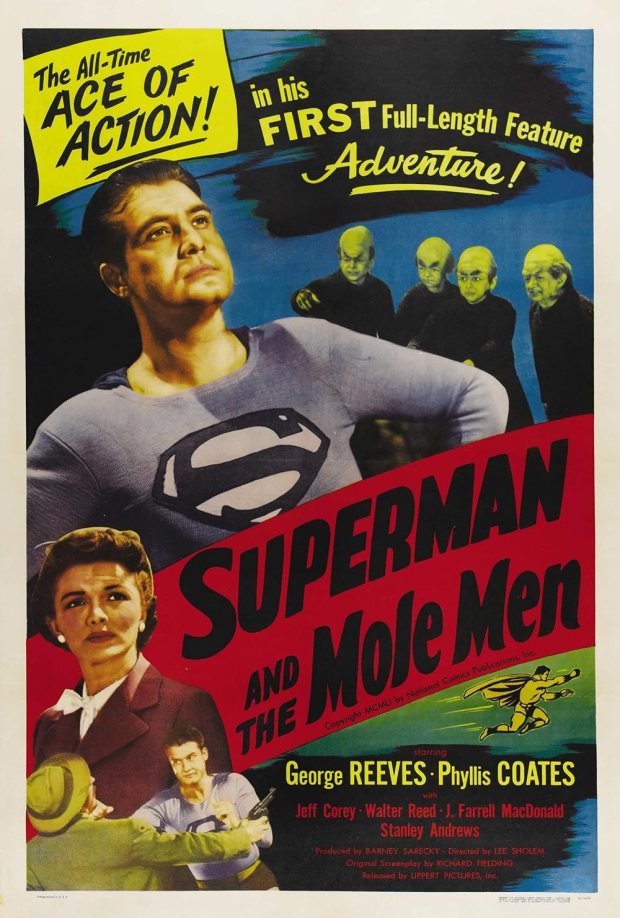
Between the Superman radio series’ colossal decade-long run, the Fleischer cartoons and two multi-part film serials, I have to wonder if audiences in 1951 were starting to experience superhero fatigue. Remember how people complained when we got the Ed Norton Incredible Hulkso soon after Eric Bana’s? That at least was a five year gap. Kirk Alyn had barely flown offscreen before George Reeves stepped into his bright red boots.
Now, you might be a little confused as to why I’m covering this. If I’m only doing the theatrical live action Superman movies, what is George Reeves doing here? Didn’t he play Superman on TV? Indeed he did. Reeves, as well as being the reason why everyone gets Christopher Reeve’s name wrong, was the star of The Adventures of Superman which ran for a mighty impressive 106 episodes in the fifties. However, this movie served as a pilot of sorts for the TV show and was released in theatres. Alyn was apparently offered the chance to return to the role but he declined for two reasons. One, like many movie actors at the time he thought that TV was a passing fad (incorrect) and two, he worried that being typecast as Superman would kill his acting career stone dead (sadly, right on the money).
And so, the mantle passed to George Reeves, a military veteran and B-movie player whose acting career prior to becoming Clark Kent had deteriorated to the point that he’d been forced to take work digging cesspools just to make ends meet. Reeves was a fascinating and admirable man who deserved so much better than his tragic and mysterious death. But, if nothing else, he was for decades THE definitive onscreen Superman.
Heeeeey it’s me, Unshaved Mouse, your favourite writer/blogger who overpromises because he’s terrified of disappointing people and ends up taking on WAAAAY too many writing projects and then spirals and completely burns out!
“You know! THAT fucking idiot! Ha ha!”
So, as you all know I’m currently preparing for my first North American book tour at the end of this month while also facing a huge quivering mass of deadlines so this review is going to be shorter than the queues for Melania.
I’m sorry, I’m sorry, but I do have things to say about this movie.
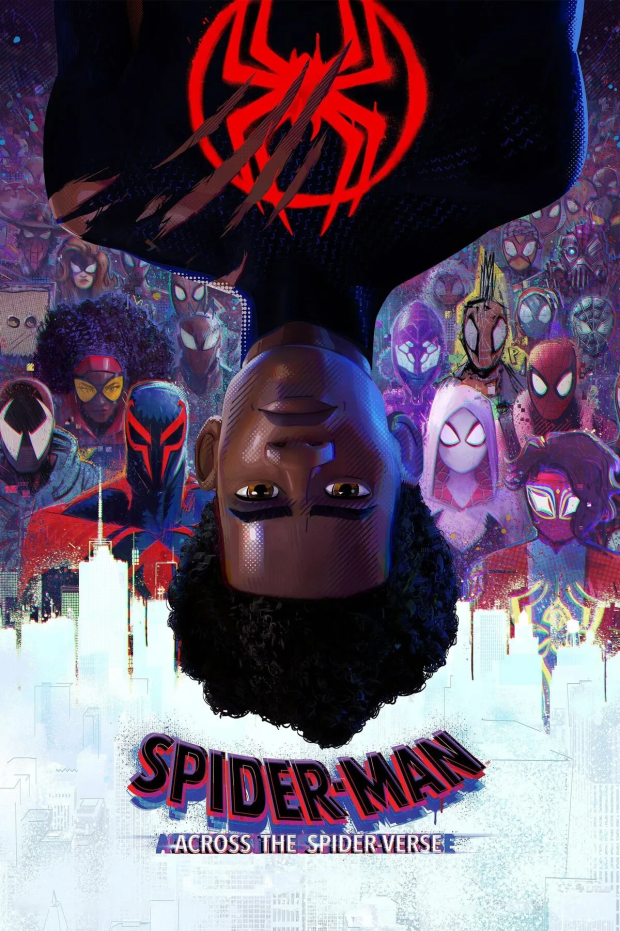
Sometimes, less is more. This is true with most things, but it’s especially true with writing. While there are definitely times when it’s fun to get fancy or even downright purple with your prose, the real masters know that when you want a piece of writing that cuts a reader right to the bone and leaves them wondering what the hell you just did to them, you keep it simple. Take, for example, the opening monologue of Spider-Man: Across the Spider-Verse.
Let’s do things differently this time… SO differently.
His name is Miles Morales.
He was bitten by a radioactive spider.
And he’s not the only one.
He hasn’t always had it easy.
And he’s not the only one.
Now he’s on his own.
And he’s not the only one.
You think you know the rest.
You don’t.
I thought I knew the rest.
But I didn’t.
I didn’t want to hurt him.
But I did.
And he’s not the only one
On paper the prose seems incredibly basic. But there is a cadence to it, and a power that comes from the constant repetition. It’s like a drum beat, growing in intensity. And, when given to an actor like Hailee Steinfeld who absolutely knows how to wring every ounce of emotion out of it?
Which is a weird point to start a review of this film with, because while less is sometimes more, more is also sometimes more. And Across the Spider-Verse is one of the greatest arguments for cinematic maximalism since Ben Hur.
This movie is HUGE. It boasts the largest animation team of any cartoon in history. It has a cast of hundreds of characters and stretches across six universe each with their own distinct artistic style. It is a truly epic work, one of the most ambitious projects in the history of animation as a medium.
And, fittingly, even its production problems were epic in scope. A writer’s strike. A global pandemic. Whatever the hell happened to Shameik Moore. And, of course, the now notorious levels of crunch and overwork that the animators were subjected to. I won’t say Spider-Verse 2’s doctrine of “biggest of all time” extended to the suffering meted out to those who worked on it because North Korea produces animation and they probably have that particular category locked up but STILL. It’s definitely something that shouldn’t be forgotten.
I mean, I’ll still watch it but I still watch The Shining and that movie damn near killed Shelley Duvall, you come to me for movie reviews, not moral guidance.
Jesus, I hope you don’t come to me for moral guidance.
Considering the character kickstarted the comic-book superhero genre (asterisk, asterisk) Superman has always been the comic book character least beholden to that medium. In 2025, while it is accurate to call Superman a “comic book character”, it’s also incredibly reductive. Superman is more like Santa Claus. He doesn’t belong to one medium, he simply is. And, unlike almost every other comic book character, I would argue that virtually all of his most important and iconic stories took place outside of the medium of comics. Very early on, Superman expanded beyond the panels of the comic book page and appeared in radio dramas, newspaper strips, novels, cartoons, movie serials and TV shows, to the point that a vast majority of Superman fans aren’t even regular comic book readers.
Consider this: The years between the end of the second world war and the start of the sixties was marked by the near collapse of the superhero genre in comics. And yet Superman not only survived the implosion of the genre he’d birthed, in the fifties he was bigger than he’d ever been, as The Adventures of Superman became one of the first major hits of the television era. But we’re not there yet.
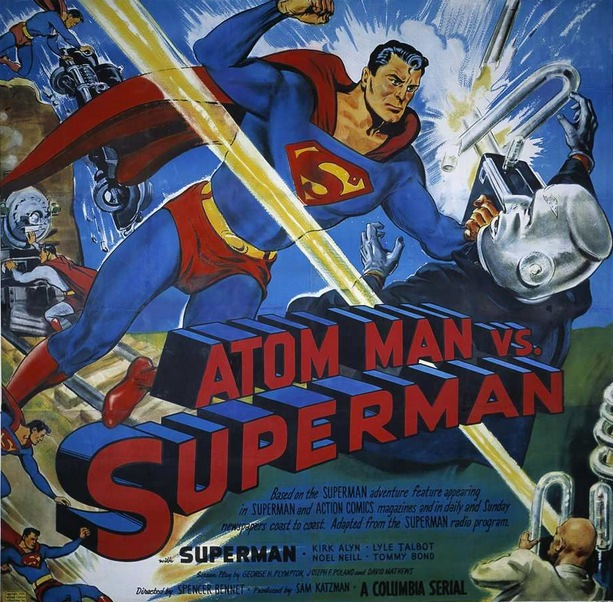
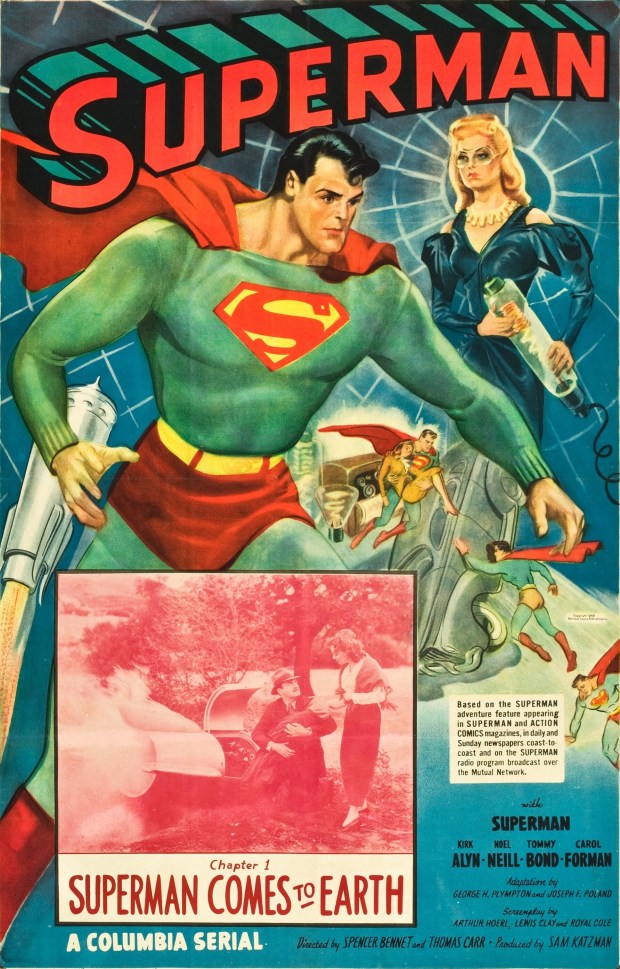
Before he get to George Reeves, we must see out the Kirk Alyn era in style. I won’t lie, I was a little apprehensive approaching 1950’s Atom Man versus Superman. Superman1948 was a very pleasant surprise but crappy sequels aren’t a recent Hollywood invention and the very few reviews I was able to find (this is, almost certainly, the most obscure Superman movie to ever be put on the big screen) agreed that it was inferior to the first one. There was also the fact that serials from the fifties, the last dying gasp of the medium, are notoriously cheap and ropy.
So colour me shocked that I actually prefer Atom Man versus Superman to its predecessor.
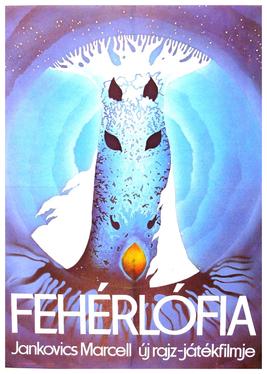
Because the experience of watching Son of the White Mare again could never top the experience of watching it for the first time.
And you know what’s crazy? This is…drumroll please…my final reader’s request. And the reason I left this one to last was because the requester simply asked me to review “something Eastern European” and I just chose this because it looked interesting. I picked this one almost at random.
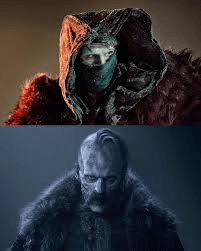
Funny how these things work out. I was pretty sure I had run out of candidates for this particular feature and then look what happens! A Dracula* AND a Frankenstein movie arrive within a year of each other. Both critically acclaimed, big budget adaptations directed by genuine auteur directors. Bats versus Bolts is back from the dead like a…what’s a good analogy. A mummy? Sure, that works.
So join me in what promises to be a real knock-down drag out fight. Robert Eggers 2024 Nosferatu versus Guillermo Del Toro’s Frankenstein. FIGHT! (Oh, and spoilers past this point).
I saw a Stan Lee interview a long time ago where he was recounting the creation of Spider-Man, where halfway through he mischeviously winked at the camera and said “I’ve told this story so many times that for all I know it’s true”.
That caveat pretty much applies to any story Lee told about the birth of Marvel’s second wave of superheroes in the nineteen sixties. Even if we discount Stan’s (well earned) legendary reputation for self promotion and myth-making, he was an old man with a failing memory. But, screw it. That’s pretty much all of human history. A story we’ve told ourselves so many times, that for all we know it’s true.
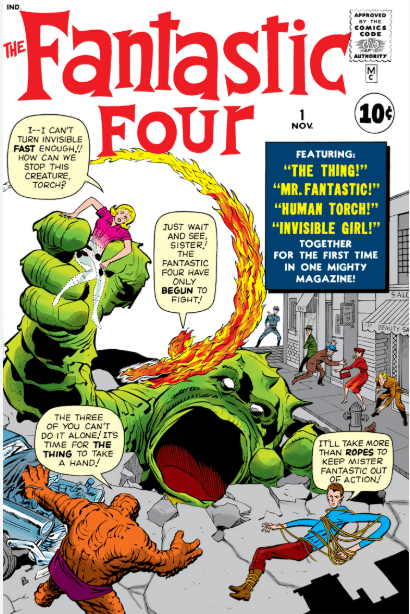
There are conflicting versions of how the Fantastic Four came to be. Stan Lee said that he conceived the idea after publisher Martin Goodman asked him to come up with a superhero team to compete with DC’s then-new Justice League of America. Jack Kirby disputed this, claiming that the team was principally his idea and functioned as a continuation of his work on Challengers of the Unknown for DC. My opinion is…it really doesn’t matter. The book is credited as the co-creation of Jack Kirby and Stan Lee, and if you read it, it becomes immediately clear that it is a co-creation of Jack Kirby and Stan Lee. If you replaced either Kirby’s art or Lee’s writing, it wouldn’t be the same thing. Both men put their stamp on it, and hard. What is, I think, un-contestable is that The Fantastic Four #1 is the single most influential comic book issue since Action Comics debuted in 1938.
While Superman’s debut launched the comic book superhero genre, it had peaked and waned in the years after World War 2. The Fantastic Four not only re-kindled interest in the genre, it set it on the path to near total conquest of the American comic book landscape. This one book acted as a cauldron for concepts that shaped the entire industry, both in a fictional and technical sense. It was working on this book where Kirby and Lee pioneered the “Marvel Method”, where instead of a full script, the writer contributed a broad outline, leaving the artist discretion to shape individual story beats, with the writer then returning at the end of the process to craft dialogue. This was the method that allowed Stan Lee to be so insanely prolific throughout the sixties and much of the seventies. The book also introduced more psychological and narrative complexity than was typical of comic books of the era, when they were still seen as a medium for children. And, of course, I could spend all day listing the iconic characters that were introduced in the pages of this one book and how it acted as the Big Bang for the nascent Marvel comics universe. Fantastic Four was the book where Stan Lee became STAN LEE and Jack Kirby became JACK KIRBY. Although they were both seasoned industry veterans, it was here that Lee honed his trademark mix of action, medodrama and wise-acre comedy. And Kirby? Kirby underwent a transformation from a talented artist to a one-of-a-kind icon of the medium.
As for adaptation to other media, the Four has been well represented with numerous animated series and a radio show in the seventies starring NO FUCKING WAY THAT IS TRUE! BILL MURRAY?! BILL MURRAY PLAYED THE HUMAN TORCH!!!?!
“No one will ever believe you.”
But for such an important property, the jump to live action took a lot longer. This is just a difficult property to adapt. It’s one thing to stick a stuntman in a Spider-man costume and have him punch a few goons. It’s quite another to set him on fire and launch him into space to battle world-devouring space gods (the union will fucking eat you alive). So it wasn’t until the late eighties when special effects driven science fiction was having a moment that the rights were finally sold. That resulted in a movie so good that Roger Corman hid it under the floorboards to ensure it was never tainted by the eyes of a sinful world. Come the 2000s the rights were picked up by Fox and we got the Time Story duology which, while undergoing something of a positive reappraisal these days, were deeply compromised.
Then there was JESUS CHRIST WHAT EVEN IS THIS?
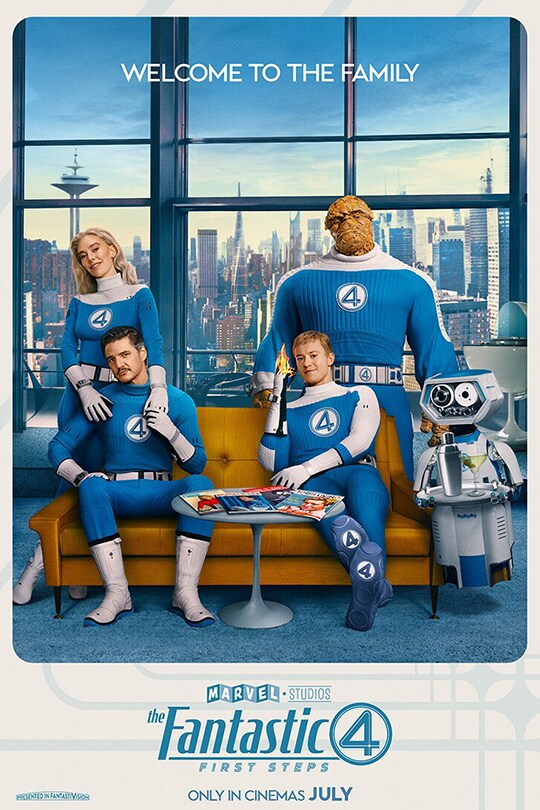
But, at last, here we are. The Fantastic Four, in the MCU, as God and Kevin Feige intended, coming back to rekindle interest in a superhero genre that had almost died due to lack of interest.
Yeah, I’m sure you’re all shocked. After watching James Gunn’s Superman I decided it was high time that the big blue boy scout got the same treatment as a certain pointy eared co-worker of his.
So yes, we’re going to be looking at every live action Superman movie while we wait for Matt Reeves to finish the script for The Batman 2 roughly around the time of the heat death of the universe (I am not bitter, I am passionate.)
Let’s begin at the beginning. It’s 1948, a mere decade after Superman’s debut in Action Comics and the character is already a bona fide cultural icon with a radio series, newspaper strips, some of the greatest cartoon shorts ever made and a metric shit ton of merchandise. But, weirdly, despite kicking off the entire superhero genre (asterisk asterisk) Superman was actually pretty late to the party when it came to being adapted into live action.
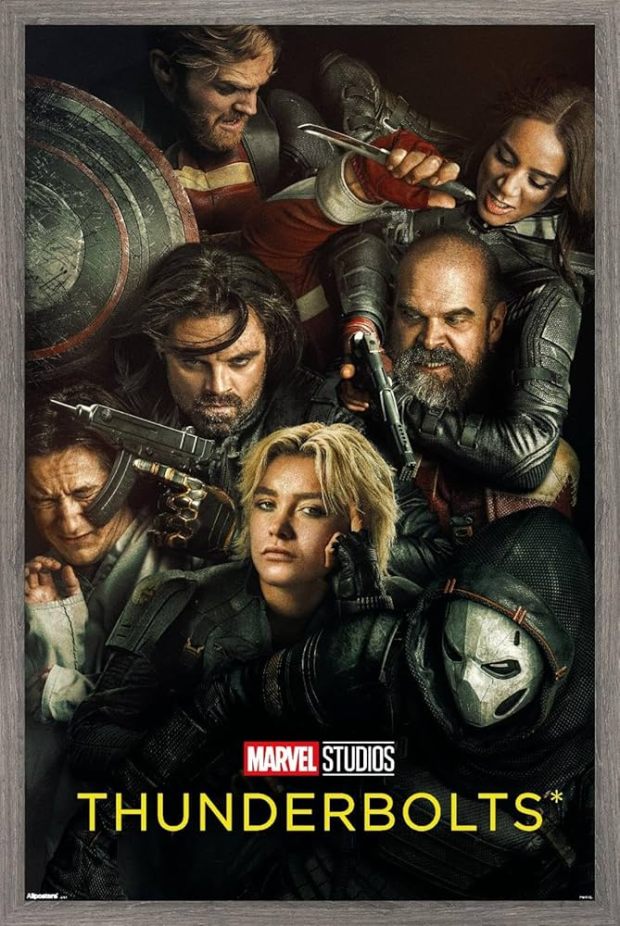
The nineties, as we’ve discussed previously, were a pretty damn bad time to be a Marvel comics fan but there were still bright spots here and there. One of these was TheThunderbolts, a new superhero team that was introduced in The Incredible Hulk. They were presented as a new team stepping up to replace the Avengers who were all believed dead after the events of Onslaught (in actuality, they were all in a parallell universe being drawn by Rob Liefeld).
Sometimes dead’s better.
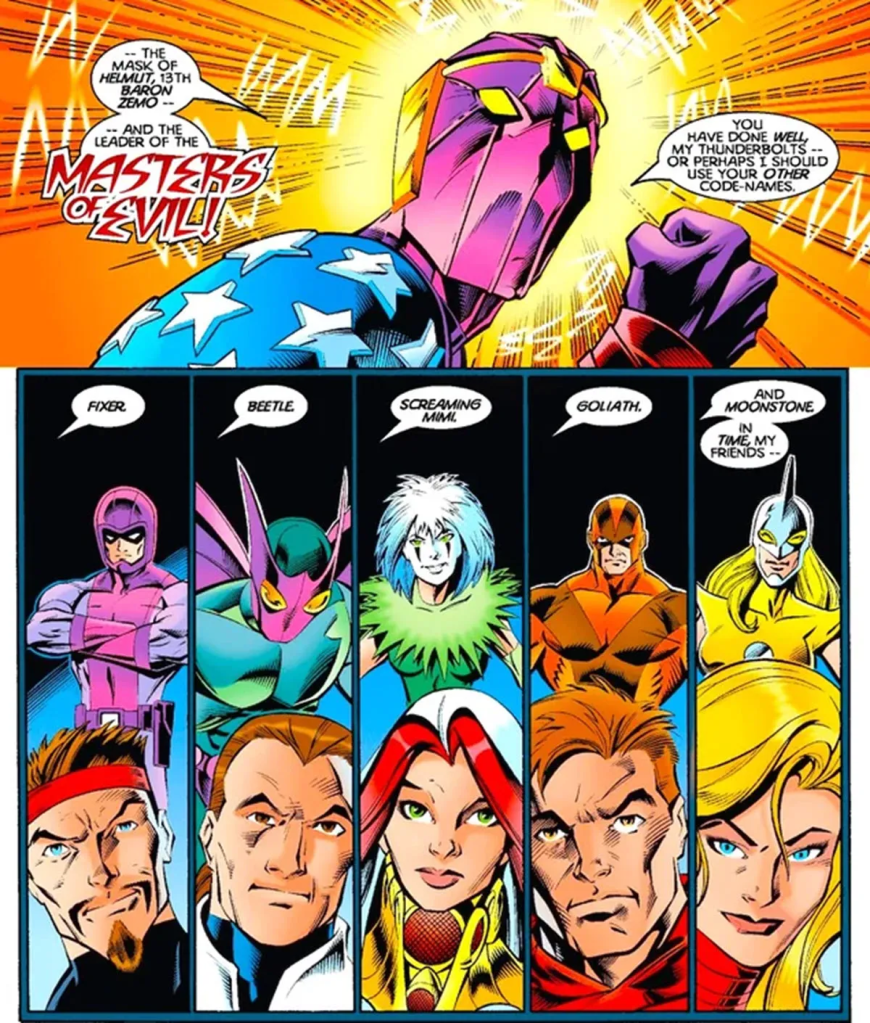
Anyway, the Thunderbolts then returned for their own series written by Kurt Busiek. It’s a pretty standard superhero team story right up until the shocking twist at the end of the first issue.
The Thunderbolts were actually villains, a team put together by Captain America’s enemy Baron Zemo to pose as superheroes while he consolidated his grip on the underworld. Of course, they eventually decide they actually like being superheroes and turn face, and since then the Thunderbolts team has basically been, well, Marvel’s Suicide Squad let’s not dance around the issue. It’s a team for former supervillains to try and reform and be good guys. The version of the team that today’s movie is based on comes from the mid-2000s Dark Reign…
” Mouse stop the review right now!”
“What? Why?
“Me and the other maps are boycotting this movie! Artie Rosen created the Sentry, and yet his estate hasn’t been paid a cent in royalties!”
“Artie…oh crap. Guys I’m sorry to have to tell you this. Artie Rosen doesn’t exist. He never did.”
“What? But then who delivers gifts to good little maps on Rosenmas?”
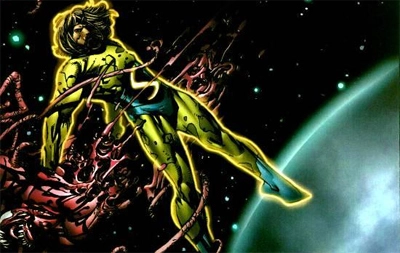
Okay, okay. Detour. Let’s talk about the Sentry, one of the first original Marvel superheroes of the new millennium and the subject of one of the most ingenious pieces of guerilla marketing I can recall. If you want a full breakdown of the history of the Sentry hoax, this has got you covered but here’s the cliffnotes version: Marvel basically fooled the comic reading public into believing that there was an artist named Artie Rosen who worked with Stan Lee back in the late fifties who had recently passed away. And in Rosen’s possessions his wife found sketches for a lost superhero that he had supposedly been working on with Stan Lee. This, of course, would be the comic book equivalent of the finding of the Lost Caravaggio. They even got Stan Lee himself in on the scam. In reality, this was all marketing to build up hype for the release of The Sentry by Paul Jenkins and Jae Lee, a mini-series about a superhero who was erased from the history of the Marvel universe and who no one remembers. It’s a good story, not an all time classic, but it’s a fun read. We get to see Bob Reynolds interacting with different Marvel heroes in different eras, drawn and written in the style of the time. But here’s the thing. The series ends with Reynolds realising why everyone forgot him: he and his arch-enemy The Void are the same person and every act he does as the Sentry is balanced with an evil act committed by the Void. Therefore, the only way to protect the world from the Void is for the Sentry to go away again. So the series ends with Bob once again wiping the world’s collective memory of his existence and going back to his normal humdrum life. All well and good. But then…
Brian Michael Bendis reintroduced the Sentry as a member of his New Avengers team. And this is where Bob Reynold’s troubles really began, and how he began his journey to become one of the most mishandled characters in Marvel’s eighty year history.
Here was the problem. You may have heard Sentry described as “Marvel’s Superman”.
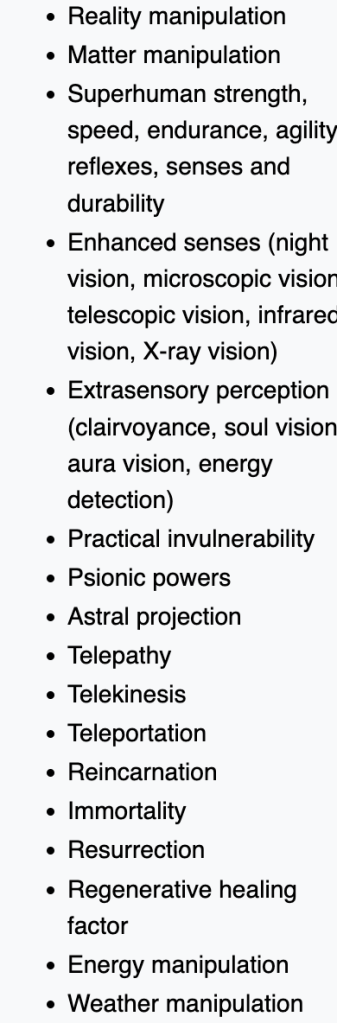
No. No no no. The Sentry makes Superman look like a coughing baby. The Sentry makes PRE-CRISIS SUPERMAN look like a coughing baby. The Sentry is so powerful I have to break up the list of his powers into two separate screencaps:
Also, he plays the ‘cello.
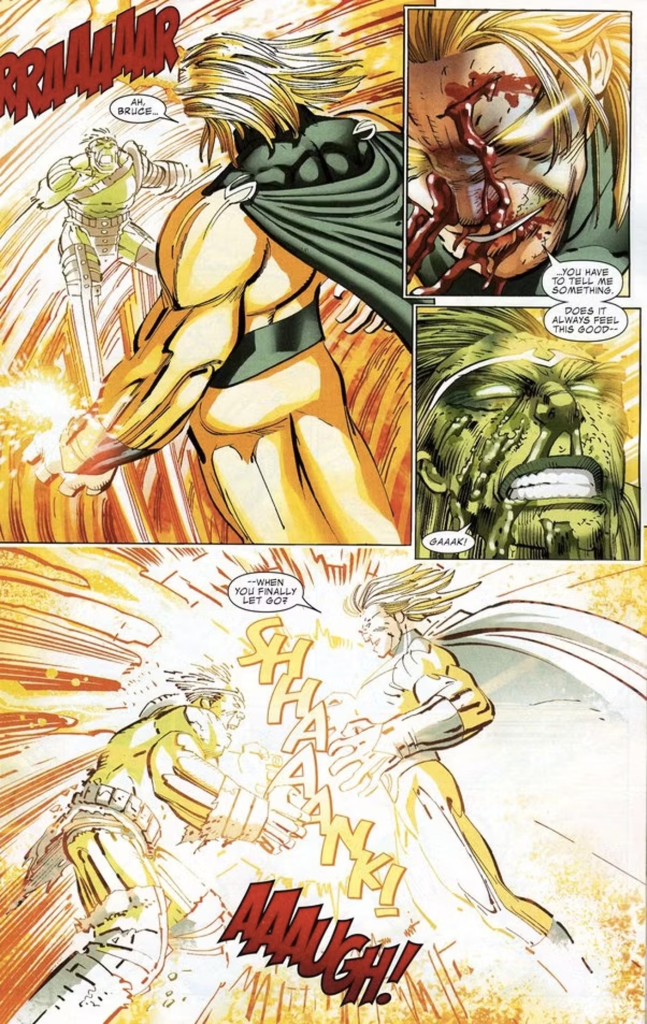
Like, fucking LOOK at that list. This guy is the physical embodiment of “fuck you I win”. You put him on any team and he renders every other member instantly useless. He should be able to solo the entire rogue’s gallery of the Marvel universe in a single afternoon. Bendis got around this by establishing that Bob was suffering from severe depression and agoraphobia and would only come out of his room to save the world if everyone was super nice to him. This admittedly, led to some pretty awesome moments, like Sentry’s iconic battle with the Hulk during the World War Hulk storyline.
Over the years, Bob’s mental problems got worse and worse and it was an admittedly effective source of tension; what happens if God stops taking his meds and snaps? But that just reduced the character to a ticking bomb and that’s not really sustainable over the long haul. Either the bomb has to go off or the audience realises that the bomb is never going to go off. What the character needed was a stable status quo, a default baseline. And every attempt to give him one failed. Everything about Bob was constantly being re-written every time a new writer got his hands on him, particularly his relationship with the Void. Writer A says the Void never existed and was all in Bob’s head. Writer B says the Void was the angel of death from Exodus. Writer C says he was a loving family man. Writer D says he was an abuser who cheated on his wife. Was he once a lab assistant, a junkie, or made the Sentry as part of the Weapon X programme? Flip a three-sided coin, bucko.
Within an impressively short period of time the character had been reduced to an unsalvageable mess and was killed off, only to be periodically brought back as a super-powered threat that needs to be killed off again. But, as someone who always had a soft spot for the character, I was happy to hear that the Sentry was going to be making his debut in the MCU. Surely they’ve learned from past mistakes and are finally ready to do this character right?
Hurrah! It’s back. Yes folks, this year September fell at a time when I’m not currently sweating a deadline like a hoor in church having taken on far too many writing projects.
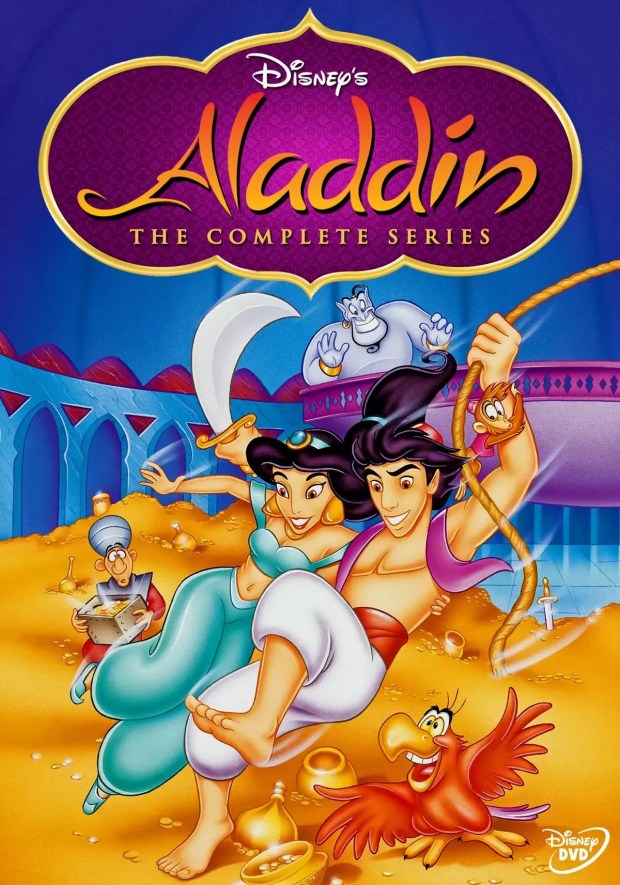
I have been sitting on doing a review for Aladdin the series for what feels like forever because I was being good and waiting for the series to pop up on Disney Plus. Unfortunately, it’s not on there and it’s starting to look like it never will be. This is pretty shocking because the series was one of the biggest successes of Disney’s TV division in the nineties, running to an utterly staggering 86 episodes. Nobody seems to know why, either.
Some have suggested that Disney were worried some of the episodes haven’t aged particularly well, or that Genie’s pop culture references risked copyright infringement or simply that Dan Castellaneta’s royalties would be prohibitively expensive. Well, whatever the reason, I am forced to review this series from memory. That’s right. I am reviewing these episodes entirely, and perfectly legally, from my own perfect memory from thirty years ago. And the screencaps I’m using? Drawn by me. From my own memory. Allll nice and legal like. Got it? Good.
The series aired between 1994 and 1995 and takes place between Return of Jafarand King of Thieves. And if you’re wondering “how the hell did they crank out 86 episodes in two years?” it’s probably best not to think about it too hard.
But it probably helped that a whopping eight studios worked on this thing, which, if I know nineties cartoons (and I know nothing else) means that the animation consistency will be scattered over a ten mile radius.
The series is very episodic and doesn’t really do arcs so I’m just diving in and picking out episodes that sound interesting to talk about.
Season 2, Episode 6- One Enchanted Genie
Wha Happen’?
This episode opens with recurring villain Abis Mal (Jason Alexander), now paired with a…servant (?) named Haroud Hazi Bin (James Avery) having just successfully stoled Genie’s lamp from the palace in Agrabah. And it shows how long I’ve been out of the game that my first thought was “oh shit! So he’s Genie’s master now?! What stakes!”
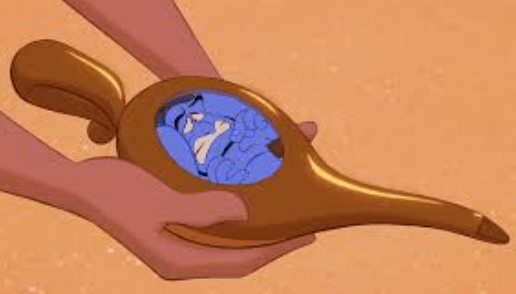
But no, as I obviously should have remembered, Genie is free by this point and the lamp is now just what he sleeps in. There’s a funny bit where Haroud grouses that Abis Mal raised the alarm by treading on Abu and we then see Genie racing across the desert yelling “LAMP THIEF! MONKEY MASHER!”
Abis Mal manages to escape with the lamp, however, leaving Genie miserable. Which, hang on, didn’t Genie hate living in the lamp? Why is he so nostalgic for it now? I dunno, maybe the housing market’s gotten a lot worse. I can understand that.
Pictured: The average Dublin renter.
But Genie perks up when he realises that as soon as Abis Mal rubs the lamp, Genie will know where he is and kick his ass. But Abis Mal is so paralysed by trying to choose his first wish that he takes ages to rub it, leading Genie to wail “why won’t he rub my lamp?!” like a one night stand frantically waiting by the phone for him to call. Anyway, Abis Mal finally decides on a wish (a new hat) and Genie flies away to confront him only to come across a street urchin who has discovered a bottle with a genie.
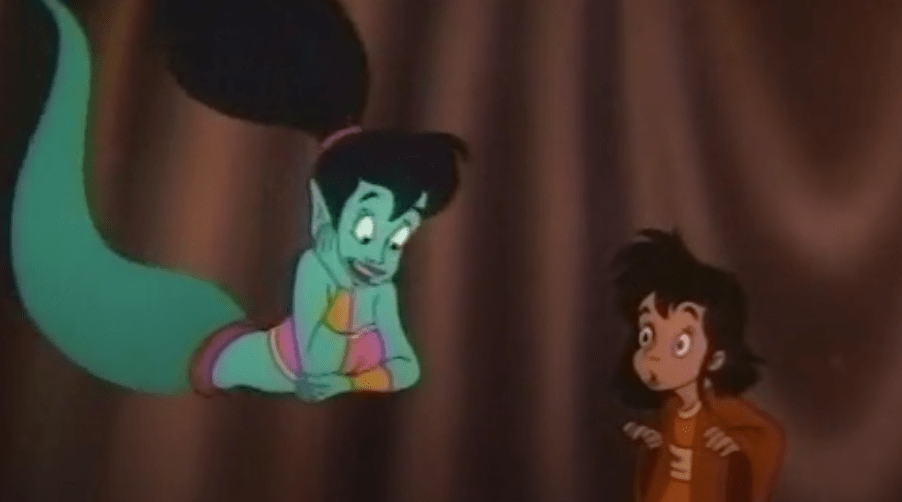
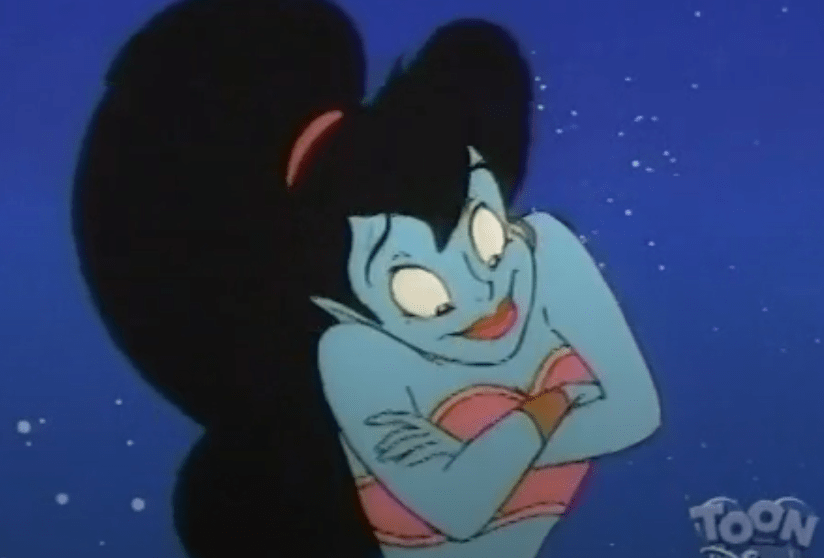
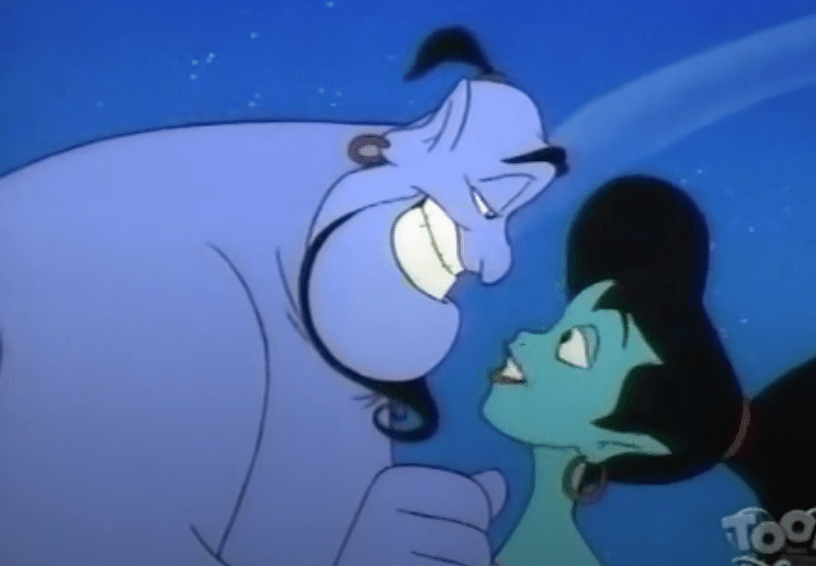
These characters are introduced so fucking abruptly I cannot tell you. It feels like a different episode got randomly spliced into this one. Anyway, the girl genie is named Eden and she endears herself pretty quickly I gotta say. When Dhandhi, the urchin, makes her first wish for a sandwich, Eden flat out refuses to let her squander a wish like that and instead tells her to wish to never go hungry again. And that’s honestly heart-warming. Genie instantly falls in love with Eden and tries to impress her by also granting Dhandhi’s wishes but that just makes Eden pissed at him for muscling in on her turf. Their competition results in a stack of pepperoni pizza a mile high (guys, you do know that’s pork right?) which draws the attention of Abis Mal.
Once Eden realises that Genie already has a master (wait) it turns out she is super in to him. Dhandhi tells her to go for it and they agree to a date.
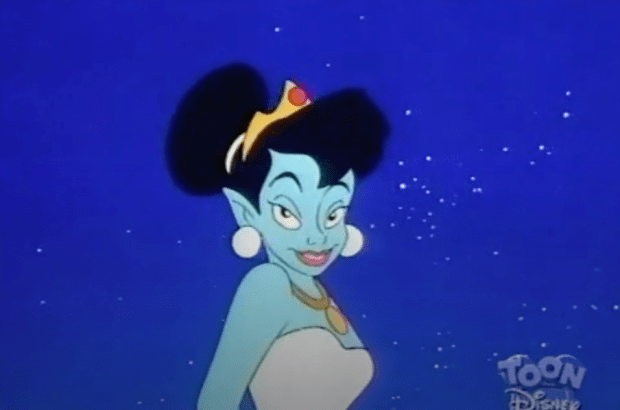
Eden shows up at the palace dressed to the nines and having switched skin colour…
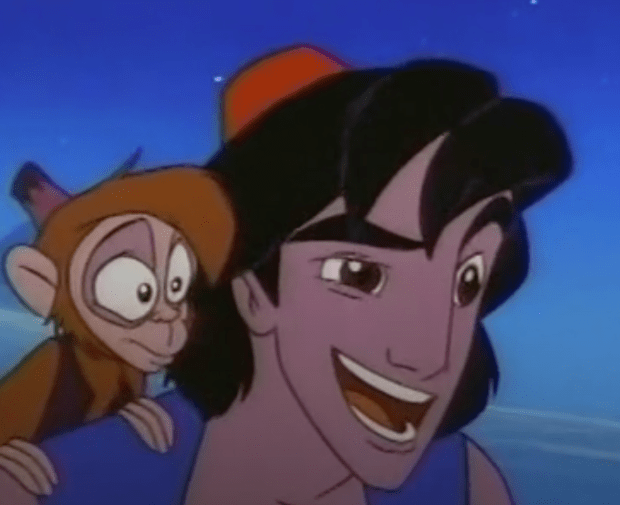
…and they have a magical evening dancing amongst the stars. But, Eden feels her bottle being rubbed and promises Genie she’ll be back in a flash. But, when she returns to Dhandhi she finds that Abis Mal has the bottle and is her new master. When she doesn’t return, Genie assumes he’s been dumped and goes back to Aladdin who suggests that they continue their search for Genie’s lamp. While looking like he is off his face on something.
“Okay guys, for this scene we’re going to draw his eyes in a way to suggest that he has Bush Baby ancestry.”
They find Abis Mal and are shocked to see that Eden is now under his control. Genie goes on a furious tirade, accusing her of secretly working for Abis Mal the whole time to trick him (“the kid was a nice touch!”) which is just fucking bananas. Dude, you’re a GENIE. YOU KNOW SHE HAS NO CHOICE HERE.
Wow. Why is Genie voluntarily working with Jafar here? What an asshole!
Haroud effortlessly incapacitates Aladdin and tells Abis Mal to wish for Eden to imprison Genie at the bottom of the ocean. “Why is Haroud even working for Abis Mal when he is infinity times more competant?” is a question, sadly, that will not be answered in this episode.
After granting this wish, Eden apologises to Aladdin and he’s all “hey, no, I understand, you literally have no free will I don’t blame you” because, y’know, Aladdin’s not a fucking idiot. Abis Mal’s second wish is, hang on, let me get this word for word: “make me the biggest tough guy ever, a cosmic one! I want to blow up things and, eh, possess MEGA BRAIN ENERGY!”
So she turns him into a kaijiu and he starts trying to stomp Aladdin. But, Eden gets a message to Genie telling him how to escape because, while Abis Mal wished him to the bottom of the ocean, he didn’t wish him forever. Genie shows up, high on love, and he’s quickly able to undo Abis Mal’s wish and turn him back to normal size. So Abis Mal uses his final wish to transform Aladdin and Genie into cockroaches so that he can stamp on them. But, Abu grabs the bottle and tosses it to to Dhandhi who wishes that Abis Mal’s wish not come true and Eden instead turns Abis Mal and Haroud into cockroaches. When Dhandhi points out that she didn’t actually wish for that Eden shrugs and says “freebie”.
Now THAT’S customer service. The little extras.
Dhandhi decides that she’s going to use her last wish to free Eden, but says “I only wish we could always stay together” and wouldn’t ya know it? This means Eden has to stay with her and she and Genie can’t be together. For some reason. But she reminds Genie that they have eternity and that she’ll be free for a date in a century or so.
“You had me at “one day this child will be dead’.
How was it?
You know what? Not bad at all! It helps that this episode has an insanely high quality voice cast, like, my God. But the writing has this absurdist streak running through it that got more than a few guffaws out of me and the animation is zippy and surprisingly fluid. Yeah, we are off to a great start! Let’s see if that lasts (not foreshadowing, I am flying completely blind on this. I have no idea what episode I am going to…remember…next).




 unshavedmouse