You have probably never heard of Theodore Kaufman, an obscure American self-published author who wrote in the 1940s. Hell, even if you’d been living in America in the 1940s you almost certainly would never have heard of him. However, if you were a German living in the Third Reich during the war you would absolutely have known who he was, and would have believed him to be one of the most dangerous men alive.
In 1941 Kaufman self-published Germany Must Perish!, a bright little volume about how Germans are pure evil, just bad on the genetic level, and that the only way to ensure the peace of the world was to sterilise the entire nation and let them die out. Now, you might (I really hope you wouldn’t, but you might) argue that race-based genocide is fine if the other guy started it first, but that’s because you forgot about Goebbels.

Goebbels milked Kaufman’s little pamphlet for everything it was worth, using it to turbocharge Germany’s propaganda machine and convince ordinary Germans, even those who hated the regime, that the war was a literal battle for their survival as a people. Goebbels presented Kaufman as FDR’s Svengali, the intellectual driving force behind America’s war against Germany. When, in reality, he was the forties equivalent of the least unhinged political Tiktoker. Germany Must Perish! was such a gift to Goebbels that the American journalist Howard Smith remarked:
“No man has ever done so irresponsible a disservice to the cause his nation is fighting and suffering for than Nathan Kaufman.”
Which is why, even at the risk of friendly fire, it is so important to call out people on your own side of the aisle who are saying evil, crazy shit. Not just because it’s evil and crazy (though that should be enough reason) but because it’s tactically vital.
We can dismiss Kaufmann’s thesis out of hand, just as any racially essentialist argument should be dismissed out of hand, but that still leaves the questions:
Why Germany? Could it have happened anywhere and Germany just drew the short straw? Or was there something particular about Germany that made its local manifestation of fascism so uniquely malevolent? And if so, how much blame do ordinary Germans bear for the actions of the regime?
My, this is a fun one, isn’t it?
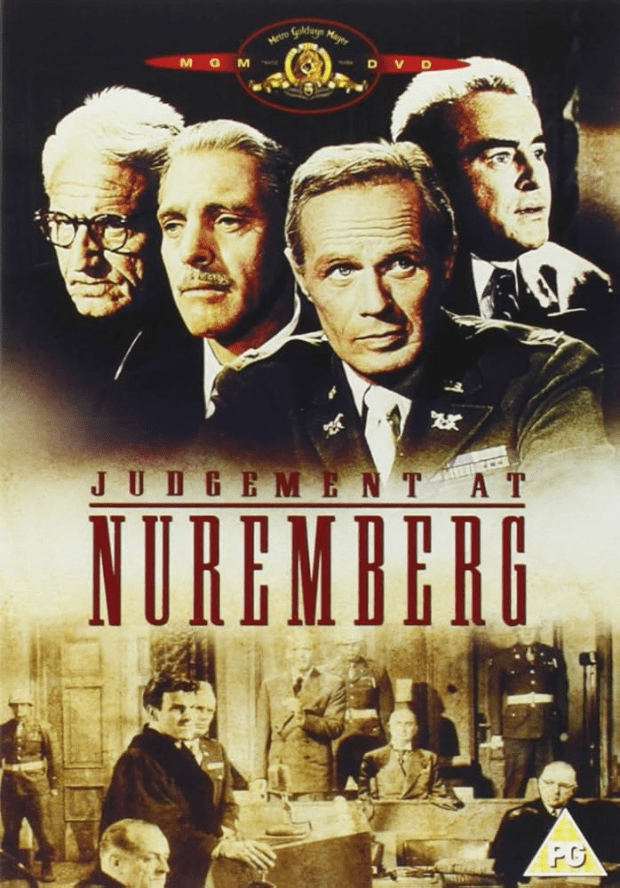
It’s not something that can ever be objectively proved. I’ll keep my own answers until the end of the review but they’re just, like everything else on this blog, my own opinion. Today’s movie grapples with those very questions. And it begins within a man arriving in the ruins of Nuremberg, as the ashes of the last war still cool, and a cold wind has begun to blow in from the East…
(more…)






















 unshavedmouse