Humour

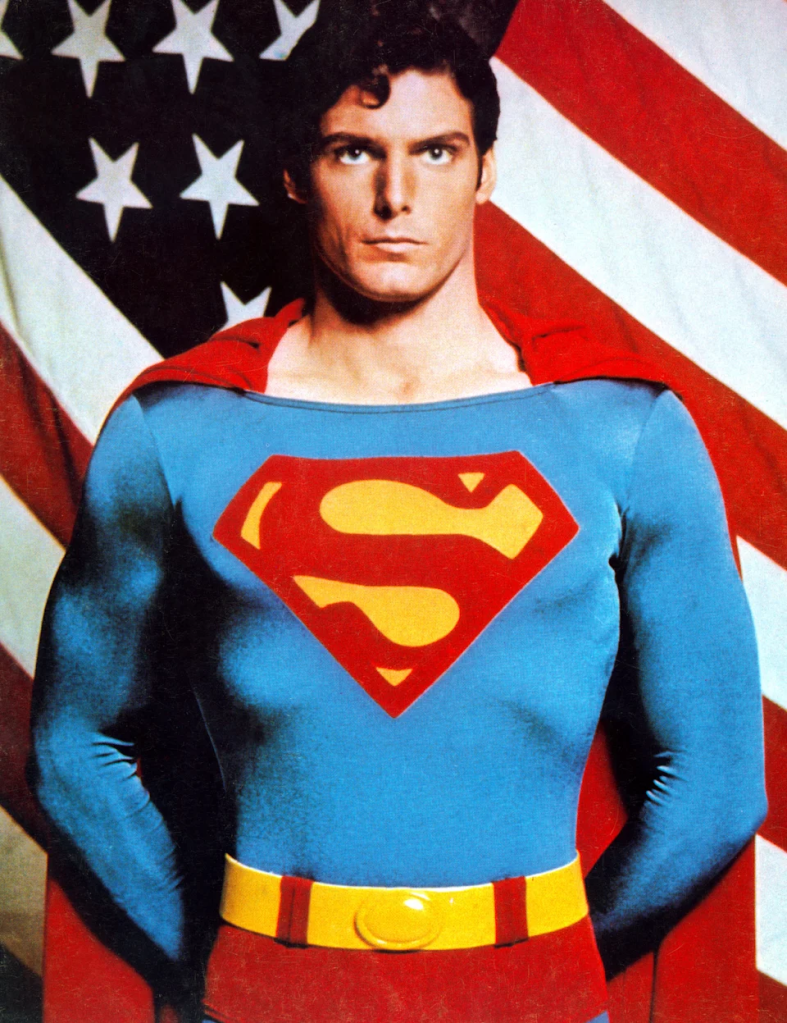
“I’m here to fight for truth, and justice, and the American way.”

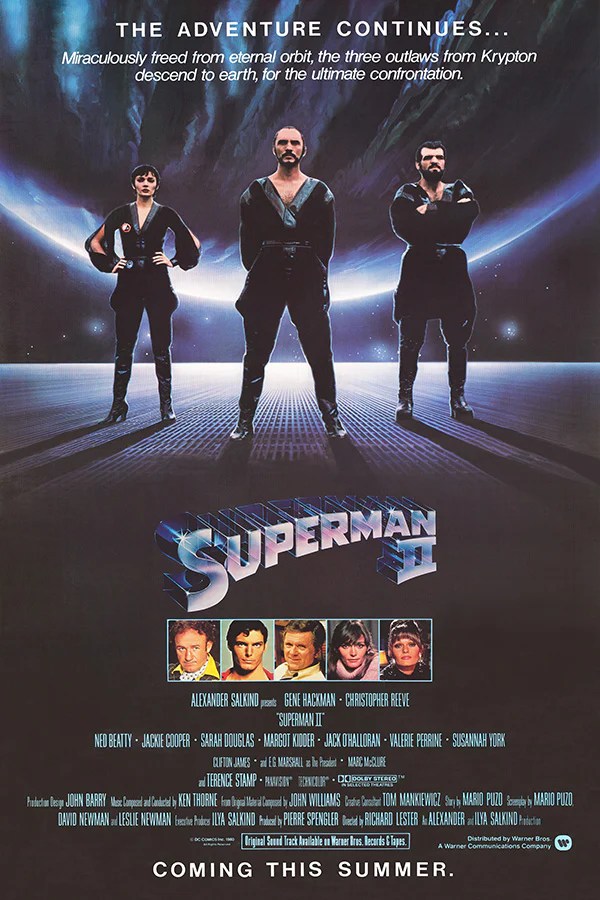
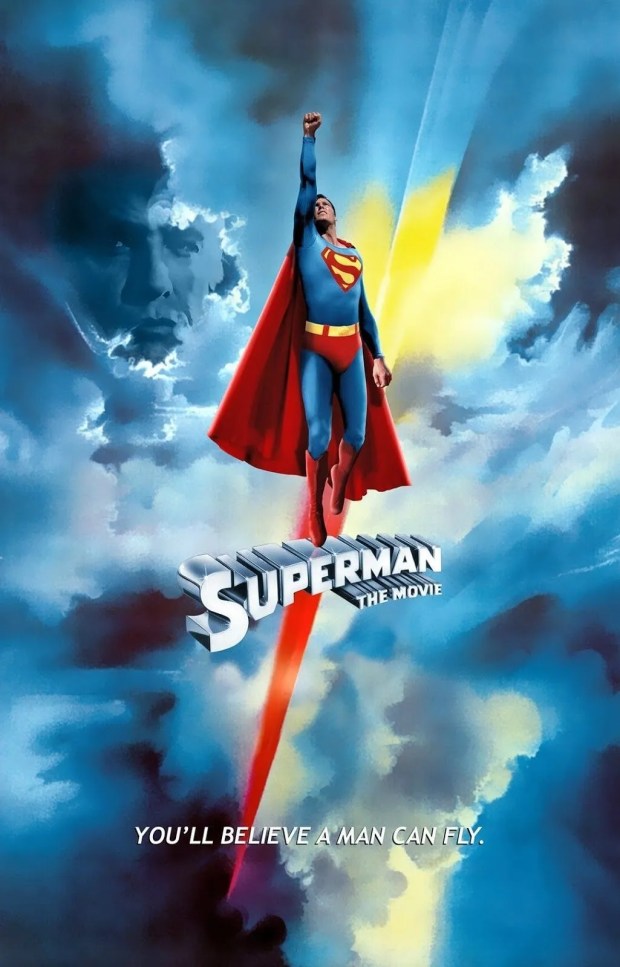
Superman (1978) is the greatest movie of the eighties.

I know what I said.

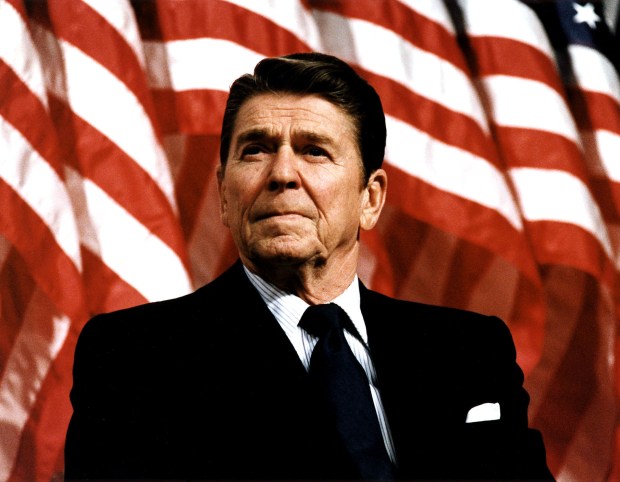
Yes, fine, there’s the number “1978” after the title but who are you going to believe, me or your lying eyes? Superman for me is the starting pistol of that era of huge populist genre blockbusters (Indiana Jones, ET, Back to the Future, Never Ending Story et al) that roared into American cinemas as the stings of Vietnam and Watergate began to fade and America discovered a new Reaganite swagger, for good and ill. It is the harbinger of the cultural era that would climax with the collapse of the Berlin wall and the apex of American power and prestige, a victory so total that serious people were able to proclaim the end of history itself and not be laughed out of the room.

And it’s the ultimate eighties movie with regards to the logic that went into creating it. I can almost picture Alexander and Ilya Salkind (the father-son producing team behind the film) chomping on cigars as they hash out their vision.

“We’re gonna make a movie about the BIGGEST SUPERHERO OF THEM ALL!”

“Yeah, and we’ll spend MORE MONEY THAN ANY PICTURE IN HISTORY!”

“Know who we’ll get to write the script? MARIO PUZO, WHO WROTE THE GODFATHER WHICH IS THE BEST MOVIE OF ALL TIME WHICH MEANS HE’LL WRITE THE BEST SUPERHERO MOVIE OF ALL TIME!”

*pause for vigorous puffing of cigars*

“Yeah, and we’ll get the BIGGEST MOVIE STAR IN THE WORLD AND PAY HIM MORE THAN ANY ACTOR IN HISTORY FOR TEN MINUTES OF SCREENTIME!”

“And we’ll film the sequel SIMULTANEOUSLY! BACK TO BACK!”

“But Pop, what if the first movie’s a flop?”

“HOW COULD IT BE A FLOP?! LOOK AT HOW MUCH MONEY WE’RE SPENDING!”

“I LOVE YOU POP!”

“I LOVE YOU SON!”

“AND WE BOTH LOVE CIGARS!”

And when you think about it like that, it feels like it had to fail right? It’s like with the Titanic. Once people start talking about how God couldn’t sink this ship, you damn well know that iceberg’s coming. That kind of hubris can’t go unpunished.

And yet.

(more…)

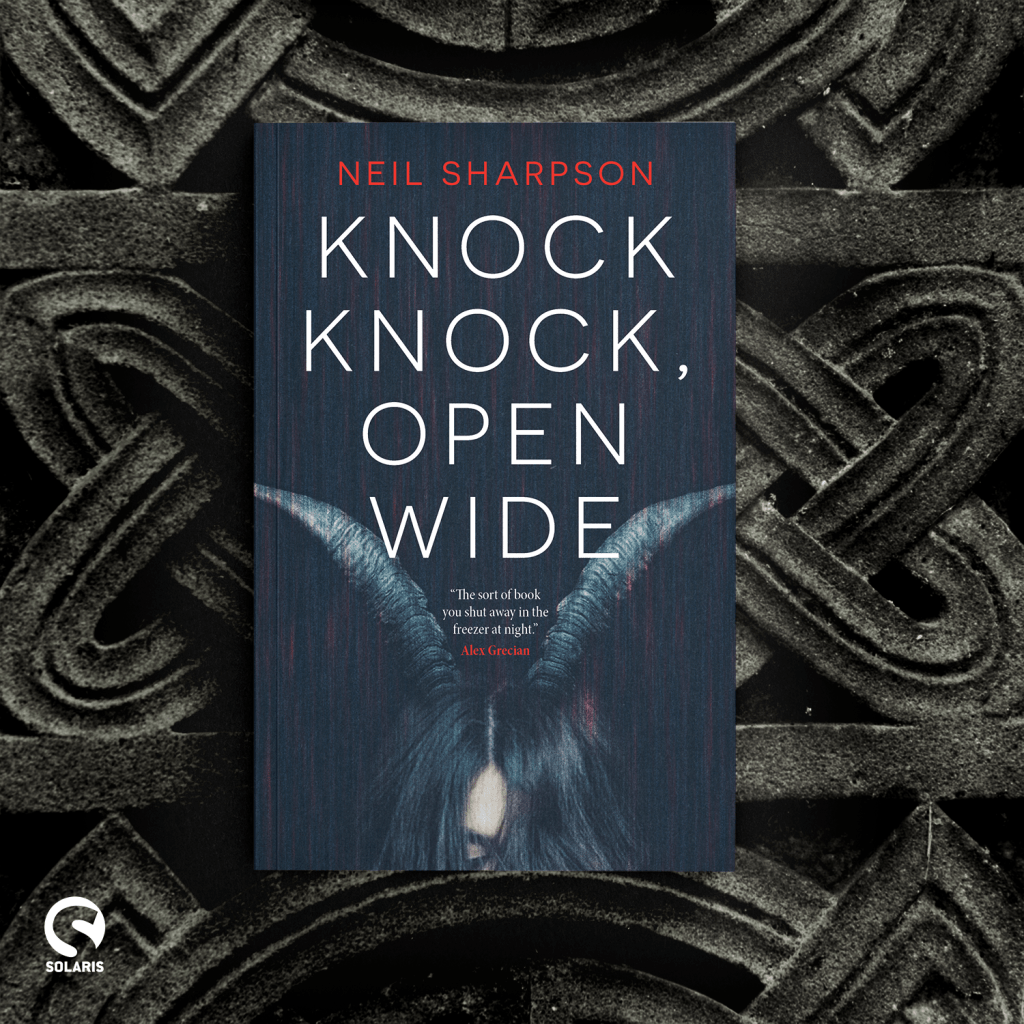
Knock Knock UK/Ireland cover reveal!

Hello folks!

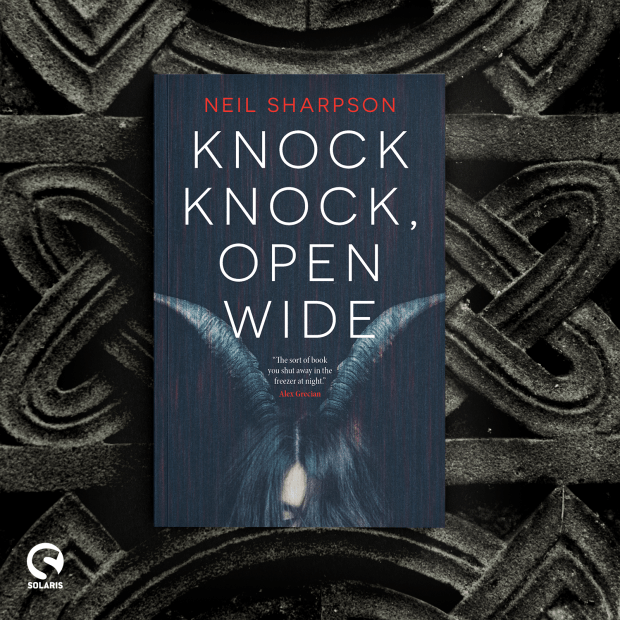
Great news! I can at last reveal that the UK/Ireland rights to Knock Knock Open Wide have been acquired by British publisher Solaris for release March next year with an absolutely gorgeous new cover by Sam Gretton.

BEHOLD!

And in a weird bit of synchonicity I had the absolute pleasure to be interviewed by Violet and Aurora for their podcast Totally Not Illiterate (they’re not, I checked). I’ll post that when it’s up but for now enjoy their review of Knock Knock. They’re a super young channel and they really deserve to get as big an audience as possible so please do.

“I’m going to give you one last chance to stop acting like Nazi stormtroopers.”

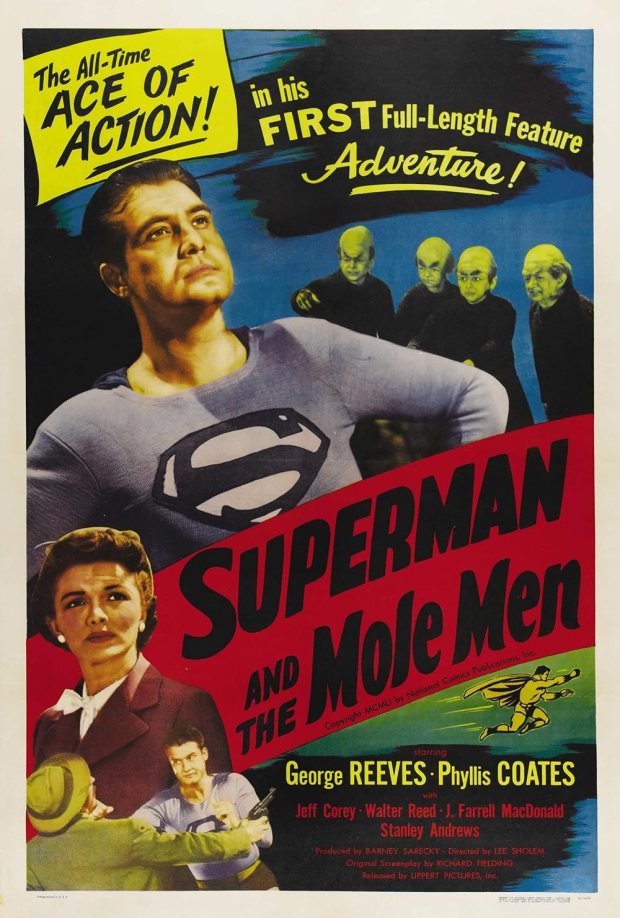
Between the Superman radio series’ colossal decade-long run, the Fleischer cartoons and two multi-part film serials, I have to wonder if audiences in 1951 were starting to experience superhero fatigue. Remember how people complained when we got the Ed Norton Incredible Hulk so soon after Eric Bana’s? That at least was a five year gap. Kirk Alyn had barely flown offscreen before George Reeves stepped into his bright red boots.

Now, you might be a little confused as to why I’m covering this. If I’m only doing the theatrical live action Superman movies, what is George Reeves doing here? Didn’t he play Superman on TV? Indeed he did. Reeves, as well as being the reason why everyone gets Christopher Reeve’s name wrong, was the star of The Adventures of Superman which ran for a mighty impressive 106 episodes in the fifties. However, this movie served as a pilot of sorts for the TV show and was released in theatres. Alyn was apparently offered the chance to return to the role but he declined for two reasons. One, like many movie actors at the time he thought that TV was a passing fad (incorrect) and two, he worried that being typecast as Superman would kill his acting career stone dead (sadly, right on the money).

And so, the mantle passed to George Reeves, a military veteran and B-movie player whose acting career prior to becoming Clark Kent had deteriorated to the point that he’d been forced to take work digging cesspools just to make ends meet. Reeves was a fascinating and admirable man who deserved so much better than his tragic and mysterious death. But, if nothing else, he was for decades THE definitive onscreen Superman.

(more…)

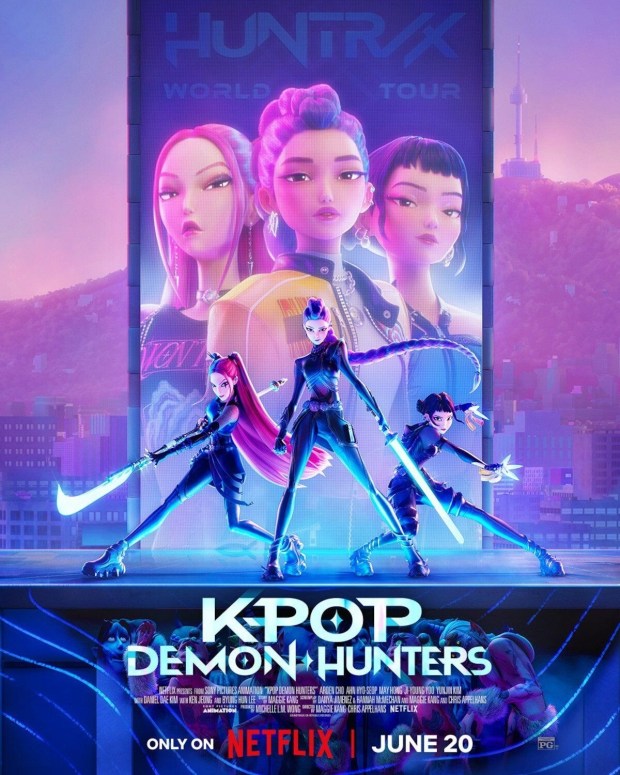
K-Pop Demon Hunters (2025)

Heeeeey it’s me, Unshaved Mouse, your favourite writer/blogger who overpromises because he’s terrified of disappointing people and ends up taking on WAAAAY too many writing projects and then spirals and completely burns out!

“You know! THAT fucking idiot! Ha ha!”

So, as you all know I’m currently preparing for my first North American book tour at the end of this month while also facing a huge quivering mass of deadlines so this review is going to be shorter than the queues for Melania.

I’m sorry, I’m sorry, but I do have things to say about this movie.

(more…)

“Everyone keeps telling me how my story is supposed to go. Nah. Imma do my own thing.”

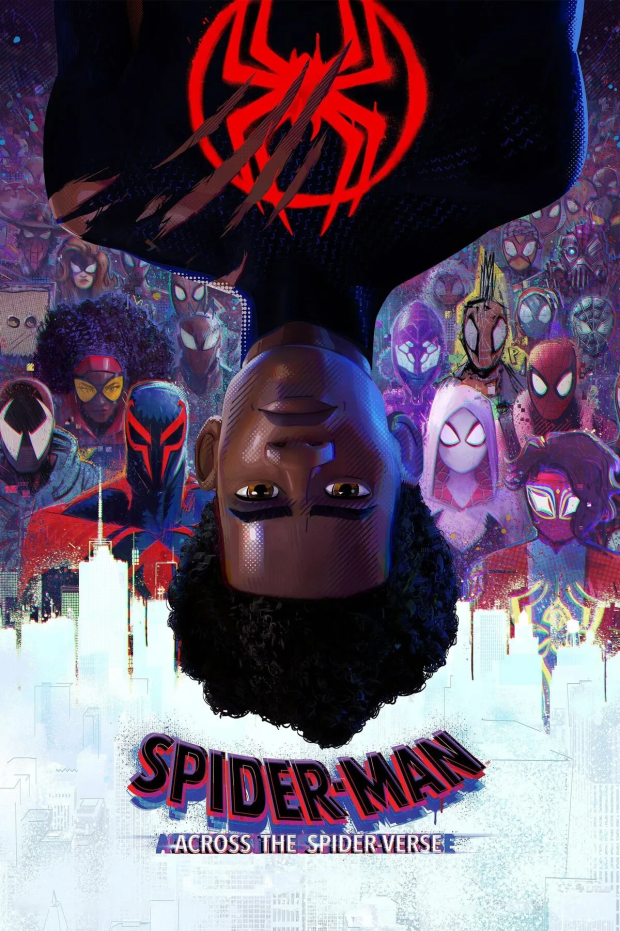
Sometimes, less is more. This is true with most things, but it’s especially true with writing. While there are definitely times when it’s fun to get fancy or even downright purple with your prose, the real masters know that when you want a piece of writing that cuts a reader right to the bone and leaves them wondering what the hell you just did to them, you keep it simple. Take, for example, the opening monologue of Spider-Man: Across the Spider-Verse.

Let’s do things differently this time… SO differently.

His name is Miles Morales.

He was bitten by a radioactive spider.

And he’s not the only one.

He hasn’t always had it easy.

And he’s not the only one.

Now he’s on his own.

And he’s not the only one.

You think you know the rest.

You don’t.

I thought I knew the rest.

But I didn’t.

I didn’t want to hurt him.

But I did.

And he’s not the only one

On paper the prose seems incredibly basic. But there is a cadence to it, and a power that comes from the constant repetition. It’s like a drum beat, growing in intensity. And, when given to an actor like Hailee Steinfeld who absolutely knows how to wring every ounce of emotion out of it?

Which is a weird point to start a review of this film with, because while less is sometimes more, more is also sometimes more. And Across the Spider-Verse is one of the greatest arguments for cinematic maximalism since Ben Hur.

This movie is HUGE. It boasts the largest animation team of any cartoon in history. It has a cast of hundreds of characters and stretches across six universe each with their own distinct artistic style. It is a truly epic work, one of the most ambitious projects in the history of animation as a medium.

And, fittingly, even its production problems were epic in scope. A writer’s strike. A global pandemic. Whatever the hell happened to Shameik Moore. And, of course, the now notorious levels of crunch and overwork that the animators were subjected to. I won’t say Spider-Verse 2’s doctrine of “biggest of all time” extended to the suffering meted out to those who worked on it because North Korea produces animation and they probably have that particular category locked up but STILL. It’s definitely something that shouldn’t be forgotten.

I mean, I’ll still watch it but I still watch The Shining and that movie damn near killed Shelley Duvall, you come to me for movie reviews, not moral guidance.

Jesus, I hope you don’t come to me for moral guidance.

(more…)

“If you still refuse to deal with me after that? I’ll reduce your city to dust.”

Considering the character kickstarted the comic-book superhero genre (asterisk, asterisk) Superman has always been the comic book character least beholden to that medium. In 2025, while it is accurate to call Superman a “comic book character”, it’s also incredibly reductive. Superman is more like Santa Claus. He doesn’t belong to one medium, he simply is. And, unlike almost every other comic book character, I would argue that virtually all of his most important and iconic stories took place outside of the medium of comics. Very early on, Superman expanded beyond the panels of the comic book page and appeared in radio dramas, newspaper strips, novels, cartoons, movie serials and TV shows, to the point that a vast majority of Superman fans aren’t even regular comic book readers.

Consider this: The years between the end of the second world war and the start of the sixties was marked by the near collapse of the superhero genre in comics. And yet Superman not only survived the implosion of the genre he’d birthed, in the fifties he was bigger than he’d ever been, as The Adventures of Superman became one of the first major hits of the television era. But we’re not there yet.

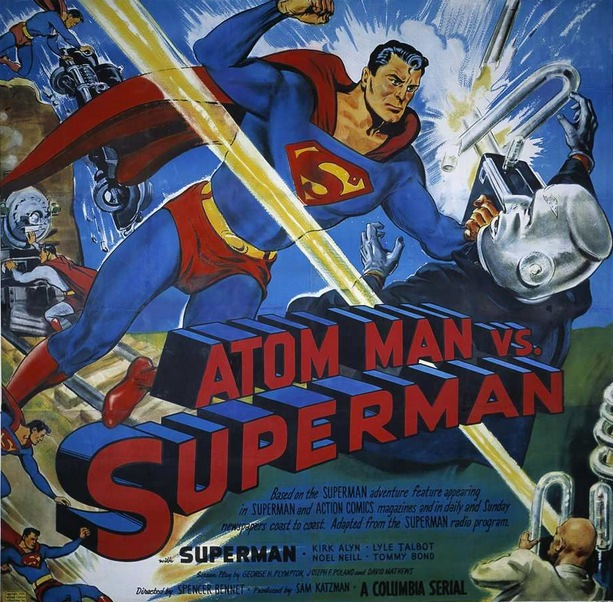
Before he get to George Reeves, we must see out the Kirk Alyn era in style. I won’t lie, I was a little apprehensive approaching 1950’s Atom Man versus Superman. Superman 1948 was a very pleasant surprise but crappy sequels aren’t a recent Hollywood invention and the very few reviews I was able to find (this is, almost certainly, the most obscure Superman movie to ever be put on the big screen) agreed that it was inferior to the first one. There was also the fact that serials from the fifties, the last dying gasp of the medium, are notoriously cheap and ropy.

So colour me shocked that I actually prefer Atom Man versus Superman to its predecessor.

Like, by a lot.

(more…)

Son of the White Mare (1981)

I will probably never watch this movie again.

Not because it is bad.

Because the experience of watching Son of the White Mare again could never top the experience of watching it for the first time.

And you know what’s crazy? This is…drumroll please…my final reader’s request. And the reason I left this one to last was because the requester simply asked me to review “something Eastern European” and I just chose this because it looked interesting. I picked this one almost at random.

And it ended up being…well, we’ll get to that.

(more…)

Bats versus Bolts: The 2020s

Funny how these things work out. I was pretty sure I had run out of candidates for this particular feature and then look what happens! A Dracula* AND a Frankenstein movie arrive within a year of each other. Both critically acclaimed, big budget adaptations directed by genuine auteur directors. Bats versus Bolts is back from the dead like a…what’s a good analogy. A mummy? Sure, that works.

So join me in what promises to be a real knock-down drag out fight. Robert Eggers 2024 Nosferatu versus Guillermo Del Toro’s Frankenstein. FIGHT! (Oh, and spoilers past this point).

(more…)

“How’s that sauce coming? Yeah, I’ll be the judge of that.”

I saw a Stan Lee interview a long time ago where he was recounting the creation of Spider-Man, where halfway through he mischeviously winked at the camera and said “I’ve told this story so many times that for all I know it’s true”.

That caveat pretty much applies to any story Lee told about the birth of Marvel’s second wave of superheroes in the nineteen sixties. Even if we discount Stan’s (well earned) legendary reputation for self promotion and myth-making, he was an old man with a failing memory. But, screw it. That’s pretty much all of human history. A story we’ve told ourselves so many times, that for all we know it’s true.

There are conflicting versions of how the Fantastic Four came to be. Stan Lee said that he conceived the idea after publisher Martin Goodman asked him to come up with a superhero team to compete with DC’s then-new Justice League of America. Jack Kirby disputed this, claiming that the team was principally his idea and functioned as a continuation of his work on Challengers of the Unknown for DC. My opinion is…it really doesn’t matter. The book is credited as the co-creation of Jack Kirby and Stan Lee, and if you read it, it becomes immediately clear that it is a co-creation of Jack Kirby and Stan Lee. If you replaced either Kirby’s art or Lee’s writing, it wouldn’t be the same thing. Both men put their stamp on it, and hard. What is, I think, un-contestable is that The Fantastic Four #1 is the single most influential comic book issue since Action Comics debuted in 1938.

While Superman’s debut launched the comic book superhero genre, it had peaked and waned in the years after World War 2. The Fantastic Four not only re-kindled interest in the genre, it set it on the path to near total conquest of the American comic book landscape. This one book acted as a cauldron for concepts that shaped the entire industry, both in a fictional and technical sense. It was working on this book where Kirby and Lee pioneered the “Marvel Method”, where instead of a full script, the writer contributed a broad outline, leaving the artist discretion to shape individual story beats, with the writer then returning at the end of the process to craft dialogue. This was the method that allowed Stan Lee to be so insanely prolific throughout the sixties and much of the seventies. The book also introduced more psychological and narrative complexity than was typical of comic books of the era, when they were still seen as a medium for children. And, of course, I could spend all day listing the iconic characters that were introduced in the pages of this one book and how it acted as the Big Bang for the nascent Marvel comics universe. Fantastic Four was the book where Stan Lee became STAN LEE and Jack Kirby became JACK KIRBY. Although they were both seasoned industry veterans, it was here that Lee honed his trademark mix of action, medodrama and wise-acre comedy. And Kirby? Kirby underwent a transformation from a talented artist to a one-of-a-kind icon of the medium.

As for adaptation to other media, the Four has been well represented with numerous animated series and a radio show in the seventies starring NO FUCKING WAY THAT IS TRUE! BILL MURRAY?! BILL MURRAY PLAYED THE HUMAN TORCH!!!?!

“No one will ever believe you.”

But for such an important property, the jump to live action took a lot longer. This is just a difficult property to adapt. It’s one thing to stick a stuntman in a Spider-man costume and have him punch a few goons. It’s quite another to set him on fire and launch him into space to battle world-devouring space gods (the union will fucking eat you alive). So it wasn’t until the late eighties when special effects driven science fiction was having a moment that the rights were finally sold. That resulted in a movie so good that Roger Corman hid it under the floorboards to ensure it was never tainted by the eyes of a sinful world. Come the 2000s the rights were picked up by Fox and we got the Time Story duology which, while undergoing something of a positive reappraisal these days, were deeply compromised.

Then there was JESUS CHRIST WHAT EVEN IS THIS?

But, at last, here we are. The Fantastic Four, in the MCU, as God and Kevin Feige intended, coming back to rekindle interest in a superhero genre that had almost died due to lack of interest.

(more…)

“Up! Up! And AWAY!”

Yeah, I’m sure you’re all shocked. After watching James Gunn’s Superman I decided it was high time that the big blue boy scout got the same treatment as a certain pointy eared co-worker of his.

So yes, we’re going to be looking at every live action Superman movie while we wait for Matt Reeves to finish the script for The Batman 2 roughly around the time of the heat death of the universe (I am not bitter, I am passionate.)

Let’s begin at the beginning. It’s 1948, a mere decade after Superman’s debut in Action Comics and the character is already a bona fide cultural icon with a radio series, newspaper strips, some of the greatest cartoon shorts ever made and a metric shit ton of merchandise. But, weirdly, despite kicking off the entire superhero genre (asterisk asterisk) Superman was actually pretty late to the party when it came to being adapted into live action.

(more…)