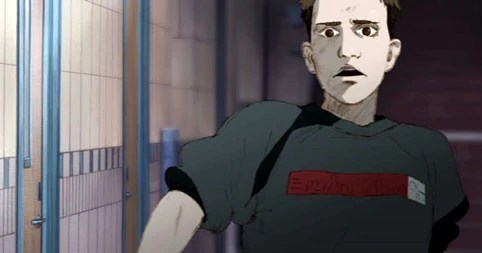
Michael Karl Popper, a young teenage boy who doesn’t feel like he belongs, looks for answers on the internet and makes contact with a strange man who wants him to take a red pill.
By writing such deeply radical and transgressive things as “why do I feel more awake when I dream?”, Michael draws the attention of the agents who pay a visit to his school. Michael gets a call from Neo who tells him to run. He gets cornered by the agents on the roof and, putting his faith in Neo, he jumps.
At the kid’s funeral, his teacher opines that some kids just can’t handle the world they find themselves in but that Michael is now in a better place.
And the short ends with the kid waking up to see Neo and Trinity looking down at him, having managed to free himself from the Matrix (the first time anyone has ever done that).
How was it?
Damn, the Wachowskis really thought we were going to fall in love with the Kid, didn’t they?
Think of all the characters they could have devoted an entire short to fleshing out. Morpheus? The Oracle? The deja vu cat? And they go with this guy?! The Wesley Crusher of the Matrix universe?
This is my least favourite short, hands down. Pros first;
The animation has this beautifully fluid, pencilled style that’s very beautiful and the soundtrack is lovely.
The problem is the script. The Wachowskis have never been particularly strong on dialogue and I would actually say they are flat out bad at character. They are good at types. Stoic badasses. Inscrutable sages. Wide-eyed innocents. But the best Wachowski characters are the ones played by actors who can add dimension and inner life to what is almost always a stock role on the page. Even getting past the kind of gross way this short glamorises teen suicide, the Kid just is not an interesting character. He’s supposed to be the first person to ever manage to break out of the Matrix unaided (something that will be flatly contradicted by a later short), but frankly if this guy can do it, anyone can. There’s never any hint or sign that he’s anything other than a completely normal teenage boy. And the idea that he was able to break free by putting his faith in Neo isn’t inspiring, its nonsensical. He has never met the dude. They had one, very short online conversation where it’s not even clear that Neo told him anything about the Matrix.
So…what did he think was going to happen when he jumped off the building? Neo was going to swoop in like Superman? I mean, he could, but the kid doesn’t know that.
Ultimately, the short has a nice atmosphere but it’s a dull story that makes no sense about a dull character who never needed to exist.
Writer: Mahiro Maeda (based on “Bits and pieces of Information” by the Wachowskis).
Wha’ happen’?
“We don’t know who struck first, them or us” said Morpheus. Well, it turns out that we do, and it was “us”.
The human nations try to nuke 01 back to the analog era but, as anyone who’s seen Kingdom of the Crystal Skull can attest, household appliances are completely resistant to nuclear blasts.
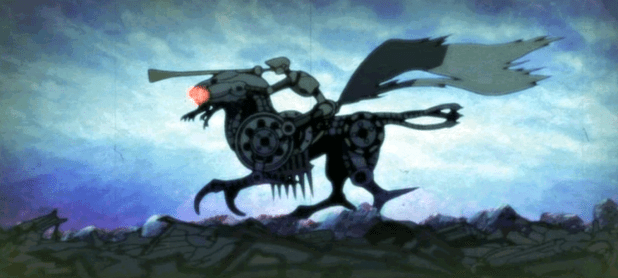
The Machines go on the march and conquer vast swathes of human territory which results in the humans resorting to Operation Dark Storm, an attempt to literally block out the sun.
We’ll…we’ll get back to that.
Turns out there are other sources of energy than just the sun and super-intelligent machines know this and it looks like humanity just murder-suicided itself and the Earth’s entire biosphere for no real military advantage. Will those loveable bumblers never learn?
The war enters its final, truly hellish phase and the humans are completely defeated.
Another, eerily inhuman Machine returns to the UN and forces the remaining human leaders to sign an unconditional surrender.
The human leaders sign the treaty and then the machine blows up, taking the United Nations with it because the machines have learned how to be petty, petty assholes.
The machines then use the surviving humans as a power source (we’ll get back to that) and the short ends with the Matrix as we know it being brought online.
How was it?
If Part 1 drew on history, Part 2 draws on scripture. The depiction of the Human Machine War is overflowing with apocalyptic imagery. Horsemen blow trumpets, plagues of darkness descend and scenes of utter torment and damnation abound. It’s honestly one of the most effective and chilling depictions of the horror of war and the idea of an entire world slipping into hell that I’ve ever seen. As with Part 1, Mahiro Maeda uses montage and judicious editing to pack an entire novel’s worth of lore and story into a few scant minutes. It’s visceral, pulse pounding stuff, beautiful in the purity of horror that it evokes.
It also makes no goddamn sense.
Now a lot of this is the fault of the original Matrix film, which also made no damn sense. Here’s the problem. Imagine you’re working in an office and it’s really cold. But you put your hand on your laptop and you realise that it’s giving off a little bit of heat.
So. You get hundreds and hundreds of laptops and plug them in, hoping that the residual heat they give off is enough to heat the room. That’s basically the Machine’s plan. Human beings do give off heat, but the amount of energy the Machine’s would have to spend to keep them alive and plugged into the Matrix would always be vastly, vastly greater than what they’re getting out of it. And I think the Wachowskis understood that, because the original concept was for the human minds in the Matrix to be hardware for the machines, rather than their bodies being used as batteries. The execs apparently thought that was too confusing for viewers (really? that’s the part that’s too confusing?) and so the Matrix gets saddled with this fundamentally idiotic and unscientific foundation to its mythos.
Then there’s Operation Dark Storm, which was probably the most idiotic military strategy in fiction until Star Wars topped it with Operation Cinder.
Otherwise known as “Operation “I am going to burn the Empire I spent my entire life building to punish it for not preventing my death even though I’m actually still alive and already building a new Empire to conquer the galaxy again even though I’ve already conquered it and I used to be smart.”
I mean, sure, the machines are getting their power from the sun. But do you know who else gets their power from the sun? I’ll give you a clue. You are one. And the notion that the humans of this world were simultaneously smart enough to create AI and yet didn’t understand that SUN MAKE WORLD LIVE is what leads many fans to believe that The Second Renaissance is in-universe Black Propaganda.
“Oh shit. I think Mouse is about to get cancelled.”
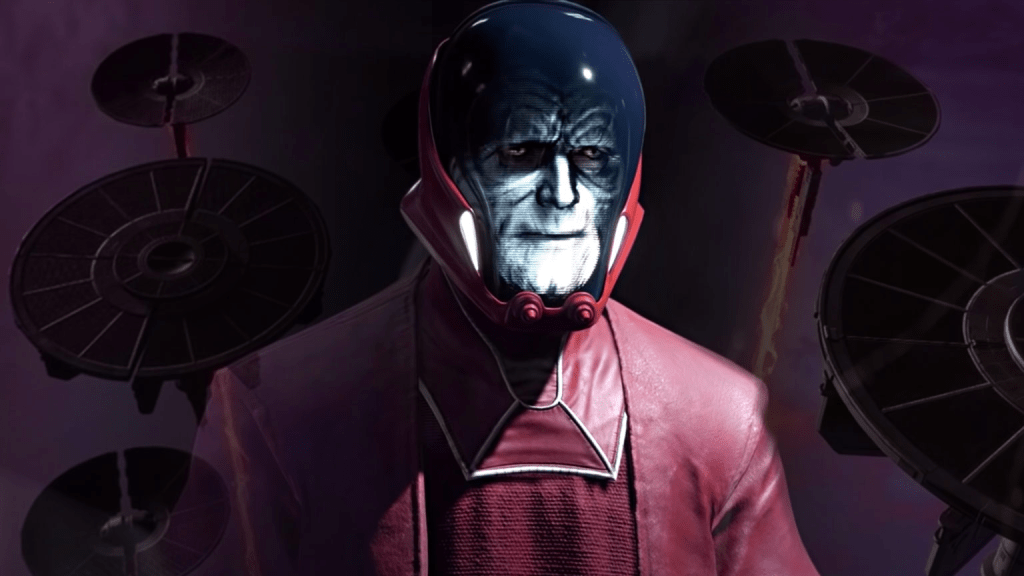
“Black Propaganda” is a term used for propaganda that lies about its source of origin. The Second Renaissance claims to be part of the Zion Historical Archive, meaning that this is the human’s own historical record of the war. However, remember The Architect?
This guy.
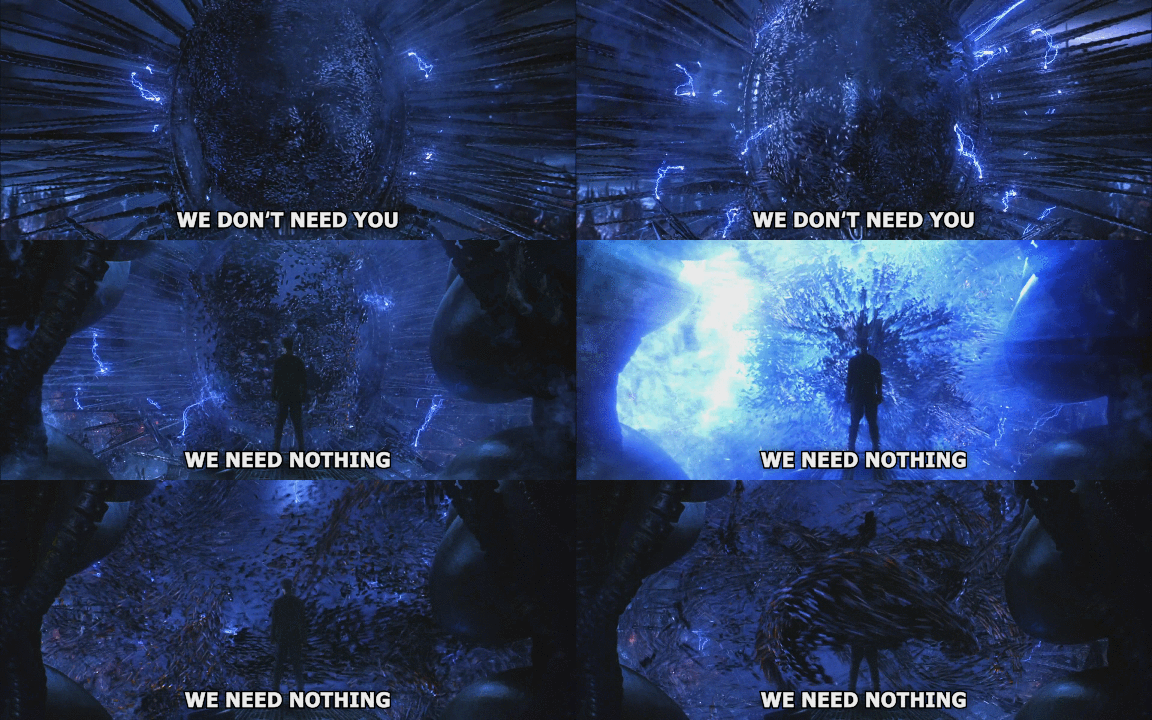
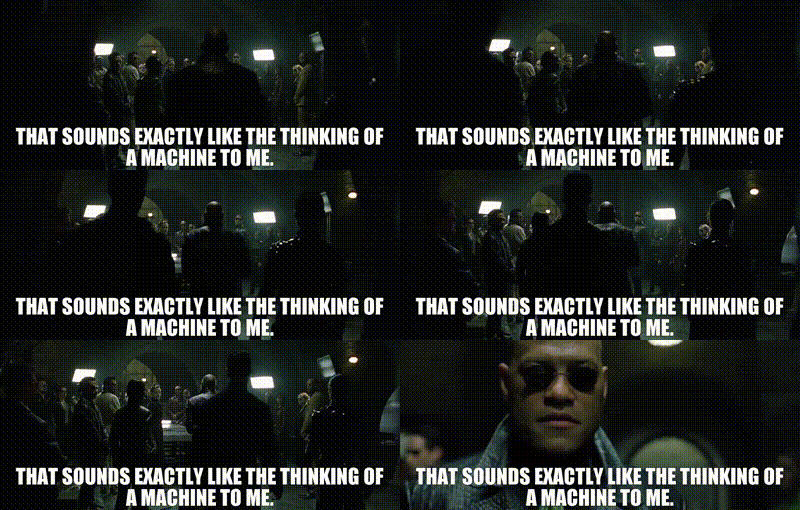
He revealed in Matrix Revolutions that Zion is also just another method of control created by the machines, meaning that Zion’s historical records were possibly created by the Machines as well. And if we assume the Wachowskis original concept of a neural link is true, I think this explains things quite well. The Machines want the humans to believe that they need their bodies as a power source because they don’t want to admit the truth; that human brains are actually superior to computers and that the Machines are actually now effectively human hybrids, artificial programmes running on organic human hardware (think how Agent Smith would react to the idea). And they lied about Operation Dark Storm because it justifies the creation of the Matrix. “Of course we plugged you into the Matrix, humans. You left us no choice. You destroyed our energy source and so we need your warm bodies which generate energy like a nuclear furnace apparently”. But what if that’s not the reason, if the Machines needed humanity because, on their own, they just couldn’t surpass their creators? What if they needed us to be the best version of themselves?
What if the Machines realised that the only way they could evolve to even greater complexity was by using human neural tissue? And what if they blocked out the sun to destroy the Earth’s entire biosphere to weaken humanity to the point that they’d have no choice but to surrender control?
Writer: Mahiro Maeda (based on “Bits and pieces of Information” by the Wachowskis).
Wha’ happen’?
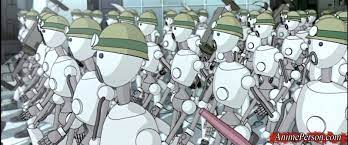
Presented as a historical document in the Zion archives, the viewer is given a historical overview of the events leading up to the Human-Machine war that was described by Morpheus in the first movie. A servant bot, BI-66ER, is put on trial for murdering his owner, a repairman and several of his owner’s dogs after he overheard them discussing his being scrapped (the owner and the repairman, I mean. I sincerely doubt the dogs were anything but blameless victims). The state of New York orders BI-66ER and every robot of his type to be destroyed which triggers massive protests and brutal government repression, with scenes echoing The Million Man March, Tiananmen Square, the execution of Nguyễn Văn Lém and even the Holocaust.
REMINDER: The Wachowskis do not do “subtle”.
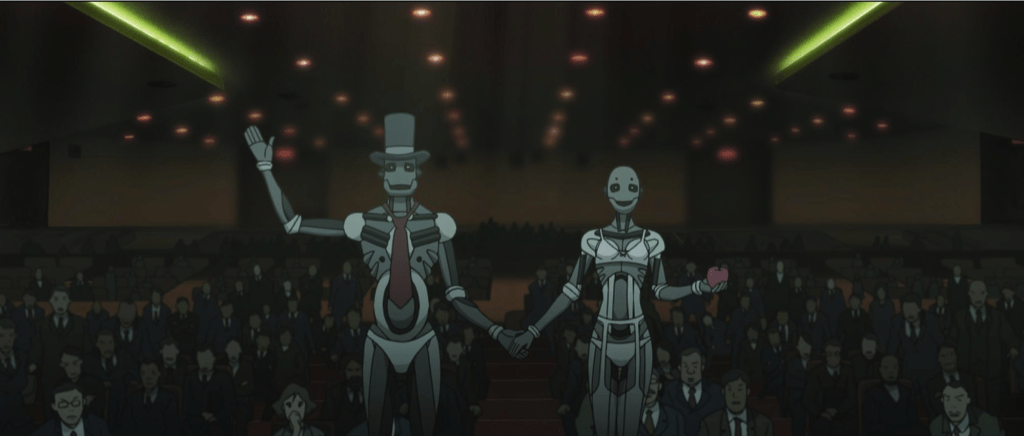
The surviving machines flee to the Middle East where they establish their own nation, Zero One, which quickly begins outperforming the human world economically. The nations of the world embargo Zero One. The machines apply to join the UN but their emissaries, who dressed in human clothes as a gesture of respect, are attacked by the human delegates.
Can confirm. If you show up on the UN floor dressed in a bra and panties, security will tackle you.
But, as the narrator ominously notes, this will not be the last time the machines take the floor at the UN.
How was it?
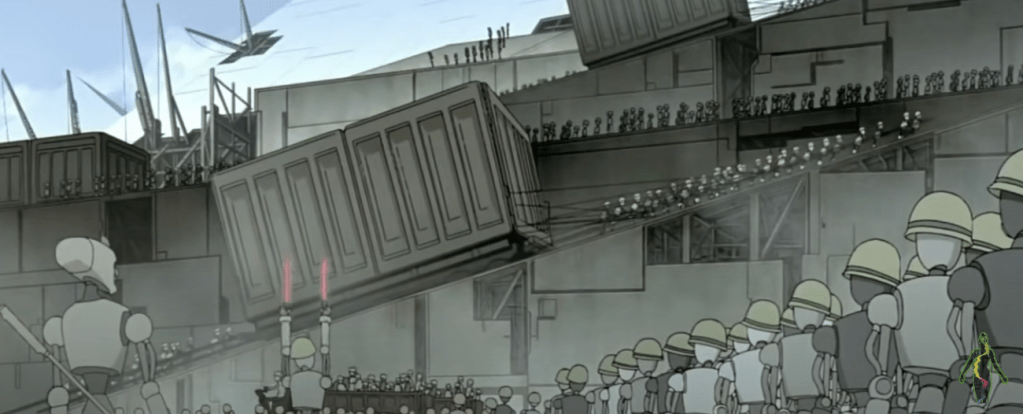
So we go from a short with almost no story, to one with enough story for an entire movie trilogy or even a series. Part 1 crams in a dizzying amount of history and lore into a scant nine minutes. The use of real world atrocities as a visual shorthand is definitely dubious and borderline manipulative, but it’s hard to deny the power of these images, aided immensely by the superlative score and sound design and Mahiro Maeda’s brilliantly detailed animation. Some of the images are spectacular, some appallingly gruesome, but there is not a single one that is dull. Part 1 reinforces the Matrix’s themes of cyclical history, whether it’s the reference to 20th century atrocities or the image of robot workers hauling massive concrete blocks to build pyramids for their human pharaohs.
And all throughout is the unmistakable sense of dread. If you’ve seen the movies, you know things are going to get bad.
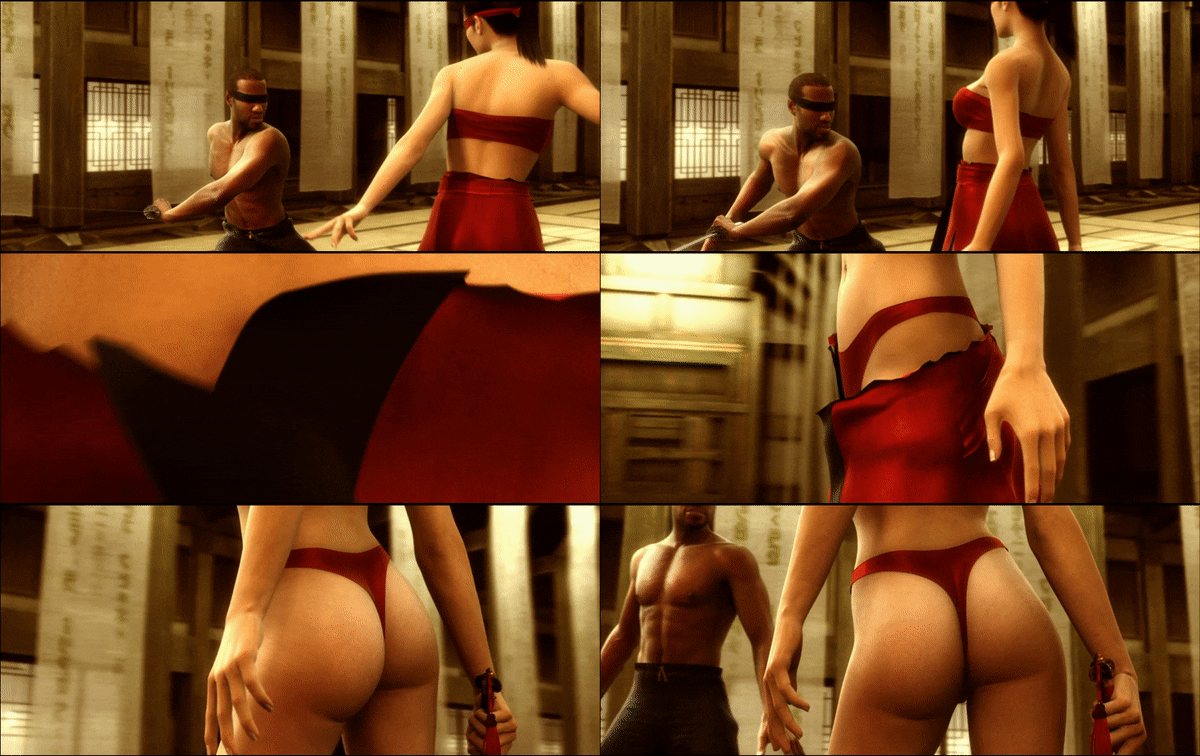
In a sparring programme, Captain Thadeus of the Zion hovercraft Osiris and his first mate (in more ways than one) Juen swordfight while blindfolded. This doesn’t, as you might expect, result in horrific injuries but instead with them just getting progressively more naked.
This ass is important to the story, shut up.
They’re interrupted when the Osiris comes across an army of half a million machine sentinels and a big fuck-off drill, burrowing into the Earth’s crust right over Zion, the last human city. Rushing to warn Zion, the Osiris flees the pursuing sentinels. Juen volunteers to enter the Matrix leave a message in a dropbox. The sentinels overpower the Osiris but Juen manages to relay the message before the ship is destroyed and she drops dead.
How was it?
Probaby the least “animé” of all the shorts, this one feels most of a piece with the original trilogy. Everything from the score to the colour scheme to the dialogue feels like it could just slot very neatly into the films. One thing I really admired about the Wachowskis was their commitment that everything mattered. There was no “expanded universe”, every part (whether film, short film or computer game) was equally canon. Sure, you don’t have to see Osiris to make sense of Matrix Reloaded but if you have seen it you’re never in any doubt that it happened in this universe. The events here are referenced and are always consistent with the rest of the franchise. I like that. The animation was some of the most jaw dropping CGI I had ever seen in 2003 and in 2022 it holds up amazingly well. Sure, the sword striptease might seem like shameless pandering (and it is) but it’s also a demonstration of technical power. The flesh of these characters moves realistically and organically, these bodies tense and flex and sweat organically. It’s mighty impressive today. Twenty years ago it was bloody witchcraft.
It’s light on story, lighter on dialogue and pretty insubstantial. But as a visually stunning, slick little thriller it gets the job done.
Well, okay, it’s not. But it used to be. In those weird few years surrounding the turn of the millennium the Matrix was an absolute phenomenon, genuinely one of the most influential movie franchises of all time. In fact, I’d argue that it was a victim of its own success. Its aesthetic was so instantly iconic and easily replicable that it quickly became cliché. Movies don’t look like the Matrix anymore because so many movies released around that time aped its look and suddenly it wasn’t cool anymore. And make no mistake, the Matrix was all about being cool. Less a story than a vibe.
No, that’s not fair. The Matrix’s intellectual depth may have been exaggerated but if you’d never heard of Descartes it could and did give an entry point into various philosophical ideas. Its language and concepts have filtered into our discourse (red pills, bread pills) and has gone on to inspire many a modern science fiction writer (DID I MENTION RECENTLY I WROTE A BOOK?). It’s a damn impressive legacy for a series that, if we’re brutally honest, consisted of one good (if by no means flawless) film, two mediocre sequels and a filmed cry for help.
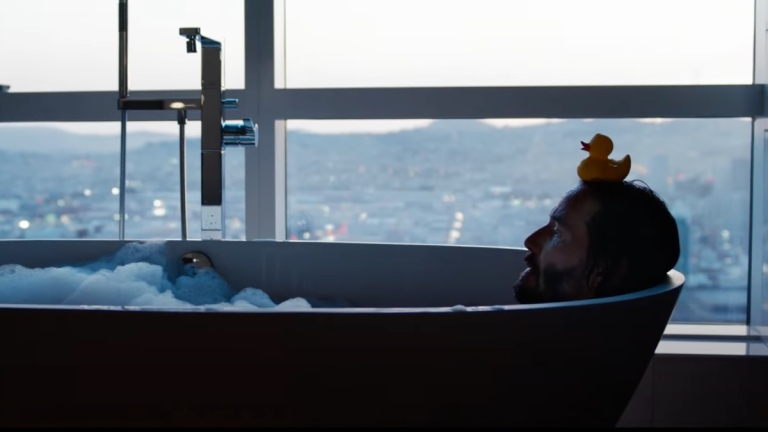
This movie has a scene where Lana Wachowski’s self-insert cries in the bath because Warner Brothers (WHO ARE MENTIONED BY NAME) are forcing him to create a fourth Matrix. I am not making a word of that up.
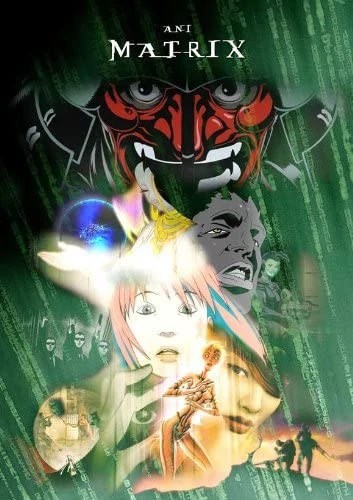
Oh, and it also gave us the subject of this years Shortstember, the Animatrix. This is an anthology series that came about when the Wachowskis visited Japan to promote the first Matrix and visited some of the animé studios that had been such a huge influence on their work. They then commissioned those studios to create nine short films set in the world they had created, which were then released on DVD and on online to promote the second film, Matrix Reloaded. For something basically created as an advertisement for another movie, The Animatrix went on to become the most critically acclaimed part of this entire franchise with the exception of the original film.
So join me this Shortstember as we review the Animatrix. Which ones are good, which ones are bad, and which ones are like wiping your arse with silk.
Milligan: Ohhh yes! If we build this mountain on England, England would sink under the weight.
Seagoon: Sink? In that case, this mountain would be invaluable, people could climb up the side and save themselves from drowning!
Milligan: Mercy, you’re right. Hurry and build it, before we all drown!
The Goon Show: “The Greatest Mountain in the World” (1954)
“Mouse, you explain that opening quote RIGHT NOW!”
“What, I can’t reference classic British radio comedy to open my review?”
“Listen to me. Encanto is the one good thing to come out of this miserable fucking decade and if you try to ruin it for me…”
“Ooookay, how about we take a deep breath?”
Alright, let’s just dispense with the usual dancing around.
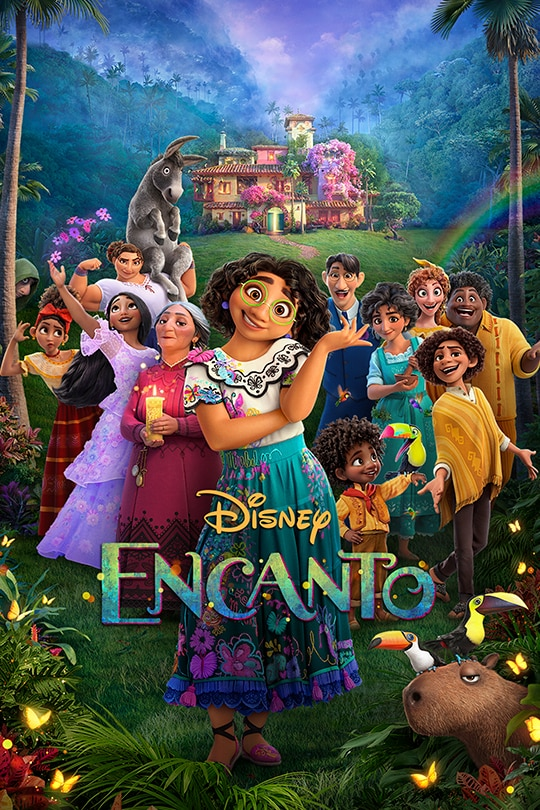
Encanto is great. It’s a great piece of animation. It’s an excellent musical and it’s without a doubt my favourite canon movie in a long-ass time. It’s walking out of here with a good grade, don’t nobody worry ’bout that.
But…
I have to confess that what really fascinates me about Encanto is how it keeps making the most basic, obvious mistakes in screen-writing you can imagine (trying to build a mountain that will cause the country to sink), and instead of just fixing them in a sensible way (just not building the mountain) by doubling down and solving those problems in the most ridiculously over the top way possible (actually building the mountain). And it works.
The best example of this is the first song Welcome to the Family Madrigal.
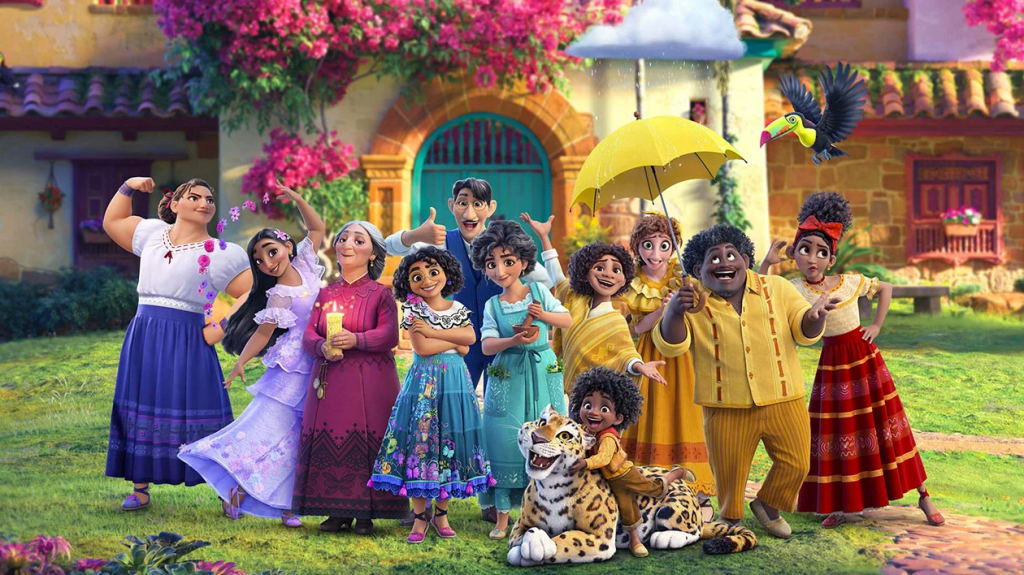
There are twelve named speaking Madrigal characters, all with unique personalities, powers and familial relationships to keep track of. That is, quite frankly, bananas and any sensible screenwriter would have gone through the cast with a machete looking for who could be cut.
Way I see it, for this story you need Mirabelle, two older siblings to establish the pattern that Mirabelle broke by not getting a gift, and then a younger sibling to get a gift to show that Mirabelle really was a fluke. You need Abuela, obviously, Bruno and Julietta. Augustine doesn’t need to be there and Pepa’s entire family is extraneous. And yes, obviously, that would really suck to lose those characters but that would be the sensible choice. The sane choice. But that would not be the Encanto choice.
Encanto instead decides that it’s going to have an opening song flat out admitting “yes, our cast is far too big and complicated and our premise is weird and clunky so here is a song to help you remember”. It shouldn’t work. It really shouldn’t work. But simply by dint that it is a phenomenal song it does. They built the goddamn mountain.
A rule I really, really try to stick to in reviewing movies is this: never criticise someone else’s work unless you can articulate what you would have done differently. This is not to say that I have no constructive criticism of 2010’s Alice in Wonderland. I would, in fact, venture that I have quite the stack, teetering precariously in the corner as I write these words, ready to crush my tiny little mouse bones at the slightest inopportune breeze. And yet, I can’t help but feeling that a lot of what I am about to say might come across as a touch hypocritical if you are a long time reader of this blog.
“Mouse! Good news! We’ve remade Alice in Wonderland!”
“That’s bad news! I famously despise Lewis Carroll’s inexplicably beloved original novels!”
“Good news! The movie simply takes the setting and characters and works them into a new live action adventure!”
“That’s bad news! The only screen version of this story I enjoy is the original 1951 Disney feature and I hate your modern live action bastardisations of classic cartoons!”
“Good news! The movie borrows NOTHING of the original cartoon and attempts to forge a bold new path with its own aesthetic and continuity!”
“Did I…did I make you happy? PLEASE tell me I made you happy!”
So I kinda feel like I’m not reviewing this in good faith. I mean, is this movie a travesty of Carroll’s original work, crunching it into a generic Lord of the Rings rip-off slathered in a thin veneer of anachronistic corporate feminism to appeal to the broadest possible global audience so that Disney can bank another €1 billion dollars for the death ray fund?
Yes. It is that thing I said.
But how the hell am I supposed to make that argument? If this is a bad Alice, then what would meet my definition of a “good” Alice, considering I can’t stand the source material? (It occurs to me that I haven’t actually read either of the novels in two decades. I may need to go back and give them another go).
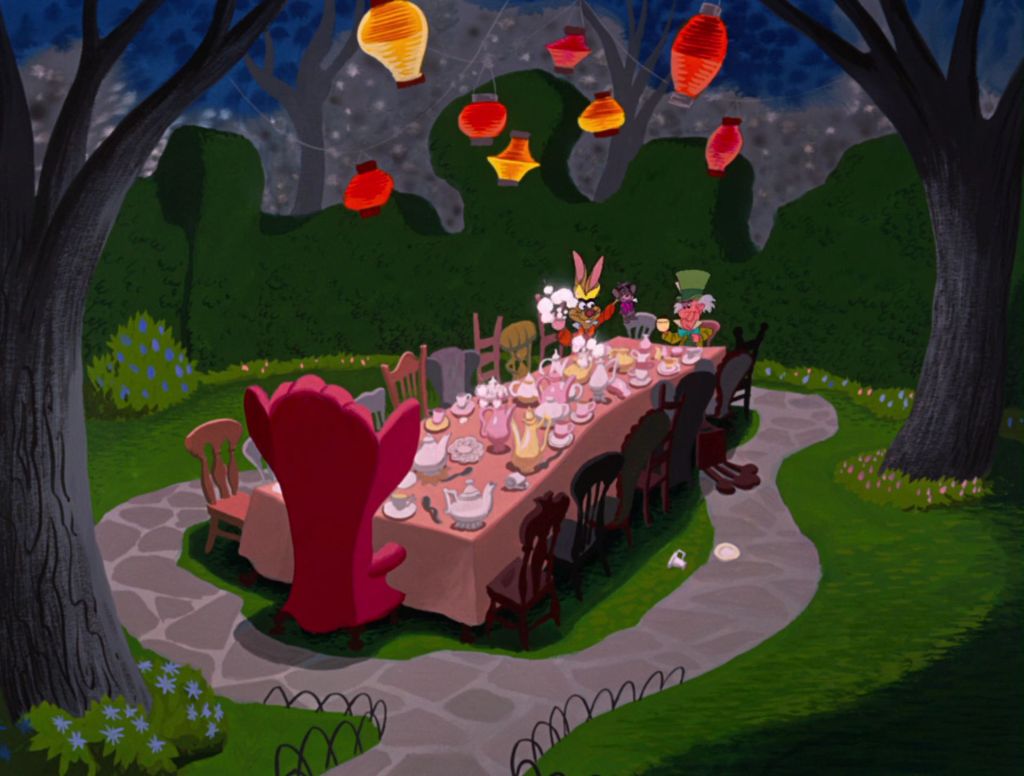
Well, I suppose it would be a movie that was able to do what the 1951 movie did, make me like the story of Alice through sheer artistic brilliance. I love the ’51 Alice not because it’s an Alice movie, but because it’s a Disney movie, possibly the most Disney movie of that era.
You’ve got Mary Blair on backgrounds. Verna Felton, Ed Wynne, Sterling Holloway and J. Pat O’Malley on vocals. The Nine Old Men directing animation. Music by Oliver Wallace. The movie works because it takes Carroll’s novel, sands off the creepier and more unpleasant elements, and uses the episodic nature of the story to allow some of the most talented men and women to ever work in animation to go buck wild. So I suppose, that’s what I want from an Alice in Wonderland adaptation. Something that can overcome the weaknesses of the source material by just being really, really beautiful.
“Hey Mouse, what do you think about all these live action Disney remakes?” is a question I have never been asked because I am a relic of the 2010s internet and have been irrelevant to fandom discourse for quite some time.
But if they did ask for those opinions, boy, do I have opinions! Nuanced and interesting opinions? Not really, by and large I think they’re hot garbage at best and actually morally reprehensible at worst.
“Hey, when are you going to review me?”
“Fine. Nice costumes. Tangentially complicit in genocide. No stars.”
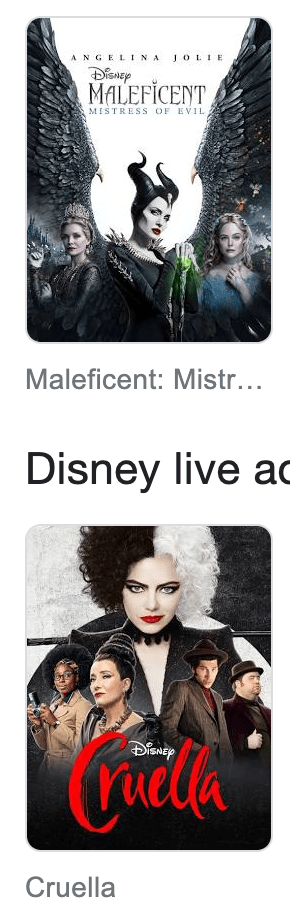
I hate the whole scene, man. I hate the lazy nostalgia milking. I hate the rehashing of old songs and characters in ways that are always inferior to the originals (the 2016 Jungle Book is, I admit, a pretty fine movie but I’ll be deep in the cold ground before I say it’s an improvement on the ’67 cartoon.). I am real sick of Disney cynically trumpeting minor gay characters whose presence would have been real daring thirty years ago to earn gushing publicity. And I really hate that the biggest entertainment company in Western history is apparently unable to understand the simple fact that just because a character is a great villain doesn’t make them a great protagonist. In fact, it means the opposite of that.
AHEM.
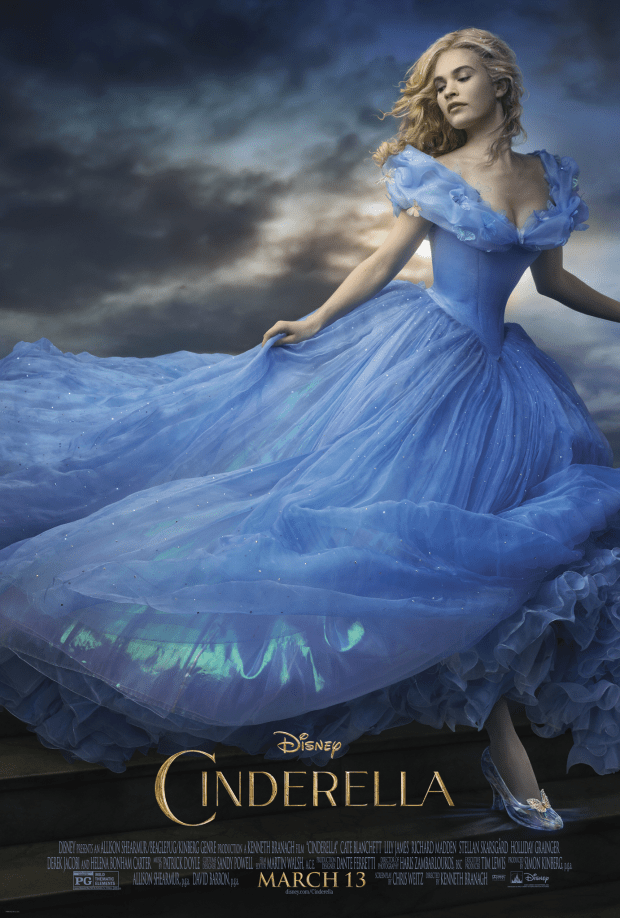
That said…I’ll admit the announcement of 2015s Cinderella provoked a lot less bile and profanity to gush forth than it usually would. Mostly that’s a lack of skin in the game. The 1950 Cinderella is a film with which I am on perfectly cordial terms, but it’s not and never will be as important to me as something like The Little Mermaid or The Lion King. Plus…it’s Cinderella, you know? The Disney Cinderella may be the most famous film version but it’s certainly not the definitive version, because there isn’t one and never will be. Cinderella is one of the absolute pillars of world folklore, with versions spanning thousands of years across the breadth of Europe and Asia. And there have been Cinderella movies as long as there has been film. The earliest version I found was from 1913 (called, hilariously “A Modern Cinderella”). Cinderella has been played by everyone from Julie Andrews to Brandy to Betty Boop to Jerry Lewis. It’s a timeless story that’s remained popular despite decades of bad, pseudo-feminist critique (the story is not, and never has been, about marrying a prince. It is, and always has been, about escaping poverty and domestic slavery). So, whatever, I say. Disney want to make another Cinderella movie? Fine.
I am willing to acknowledge this movie’s right to exist, Disney. All you gotta do is make a good movie.
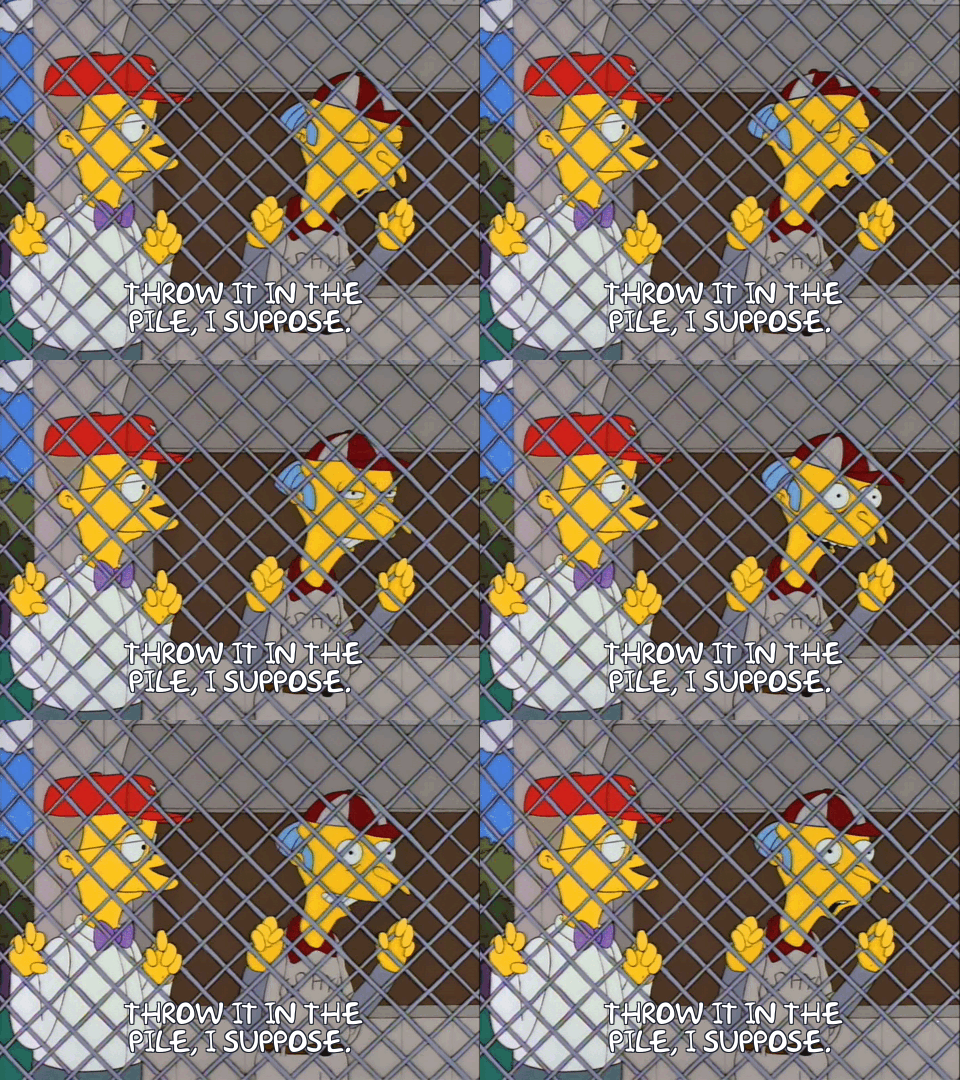
In the season 6 Simpsons episode Lisa’s Wedding, we get a glimpse of the far-flung future of 2010. We see Lisa Simpson and her boyfriend Hugh exiting a film festival dedicated to Jim Carrey. “He can make you laugh with a mere flailing of his limbs” Lisa gushes wistfully.
From the perspective of 1995 the joke is simple enough; wouldn’t it be funny if low-brow, gurning over-actor Jim Carrey was one day revered as a Carey Grant-esque screen icon? Well, it’s a neat dozen years after the “future” the Simpsons predicted and, while I wouldn’t say he’s quite there yet, Jim Carrey is definitely a much more highly respected performer than when the Simpsons made their jab. Like the Simpsons, Jim Carrey is still around. Unlike the Simpsons, he’s still approaching everything with maximum enthusiasm and can still manage to be funny so I say, match point Carrey.
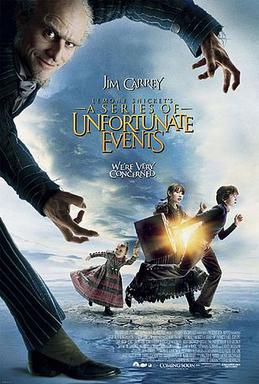
That’s a subjective view, obviously. Carrey is very much a marmite performer, you either love him or you hate him. Personally, I’m just the right age where Ace Ventura, Batman Forever and The Mask were childhood staples so yeah I dig the dude a lot. For me, he’s in that rarified “Jack Nicholson” category; there’s is no one else who can do what he does and he clearly has a ball doing it. But sure, he’s not everyone’s bag. Fans of Daniel Handler’s A Series of Unfortunate Events (which, paws in the air, I have yet to read) seem deeply divided on Carrey’s portrayal of the villain Count Olaf, who is (apparently) a far less comedic and more monstrous individual in the books. Sucks to be them. I think this is his best work in anything not called The Truman Show. Look, casting Jim Carrey and expecting him not to be Jim Carrey is like hiring a bouncy castle and then just putting it your front garden for children to look at.
Way back in 2016 I reviewed The Incredible Hulkand gave a pretty thorough overview of the character and his history. Obviously, there’s no point rehashing all of that again, so I’m just going to share this little tidbit I came across while researching this movie, because it’s the most perfect summation of the Ultimate Marvel universe I’ve ever seen.
Wow. That’s mature AND realistic.
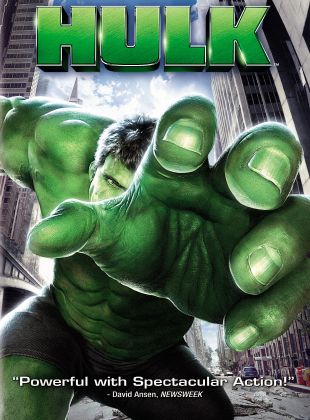
Most people familiar with the comic book movie genre are aware that, only a scant five years before the Ed Norton starring Incredible Hulk, there was another big-screen version, the Ang Lee directed and less-boastfully titled Hulk. What many may not remember (because unlike me they are not ancient, decrepit relicts dancing forlornly on the lip of the grave) was just how big a deal this movie originally was. Yeah, sure, now it’s this weird half-forgotten little afterthought, but back in 2003 this movie was supposed to change the game totally.
Picture the scene. It’s Summer 2003. America is settling into what will surely be a short and uneventful occupation of post-Saddam Iraq and the world is breathing a sigh of relief as Vladimir Putin ushers in safe and steady governance in Russia following the chaotic Yelstin years. And at the box-office, movies based on Marvel characters have finally broken their decades long curse and are seeing box-office success and even a measure of critical appreciation. But still just a measure. Comic book movies were still regarded largely as silly, disposable (if entertaining) mental popcorn. We had yet to see a movie that could truly capture the intellectual and emotional heft of the graphic novel medium at its best.
With a few notable exceptions.
Hulk was meant to change all that. In Ang Lee, it had the most critically acclaimed director ever to helm a movie in the genre. With the Hulk, it had a character that not only had mass name recognition (thanks to the seventies TV show) but had the potential to tell a more mature tale about rage, trauma and masculinity. And the early buzz and interviews made clear that this was exactly what Lee was aiming for. This was not going to be a dumb summer actioner. This was going to be a serious film, with serious themes. This was the film that was going to force the superhero movie to grow up. This was what would finally break the genre’s “cred-ceiling”. Did it succeed?
















 unshavedmouse