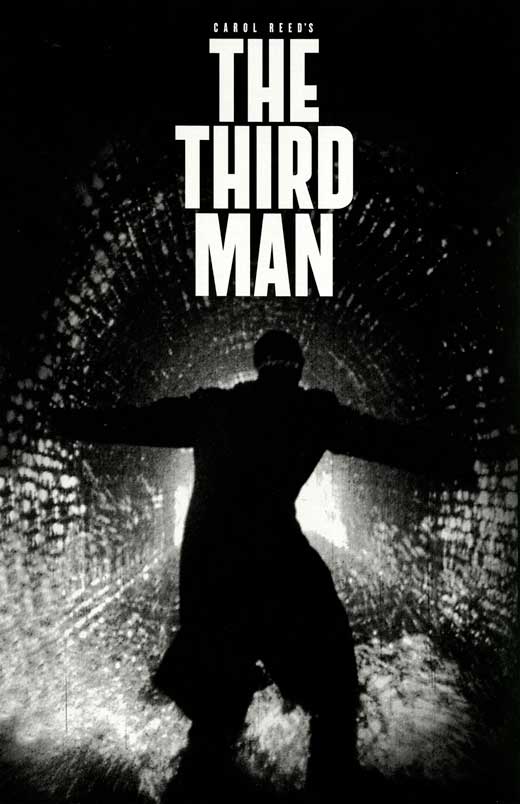
I don’t honestly know if I should feel sorry for Joseph Cotten or envy him. He had a long and storied career in theatre and film, appearing in several movies that are the mainstay of any respectable list of greatest films of all time. How could you pity any actor whose CV includes The Third Man, The Magnificent Ambersons and of course the big gorilla in the room, Kane?
At the same time, when you think of those movies Cotten’s name isn’t exactly the first one that comes to mind, is it? Of course not.
It certainly doesn’t appear that Cotten resented the fact that Orson Welles was essentially the star around which Cotten’s career orbited, as the two men maintained a close and warm friendship right up until Welles’ death in 1985. And it’s not like he was completely overlooked, either. In fact, it’s so common to say that Joseph Cotten was one of the most underrated stars of Hollywood’s Golden Age that he probably no longer even qualifies as underrated. But screw it, it’s my blog, and if I want to turn it into a Joseph Cotten appreciation corner who of you will stop me? That’s what I thought. We’ve Gotten Cotten Fever up in here!
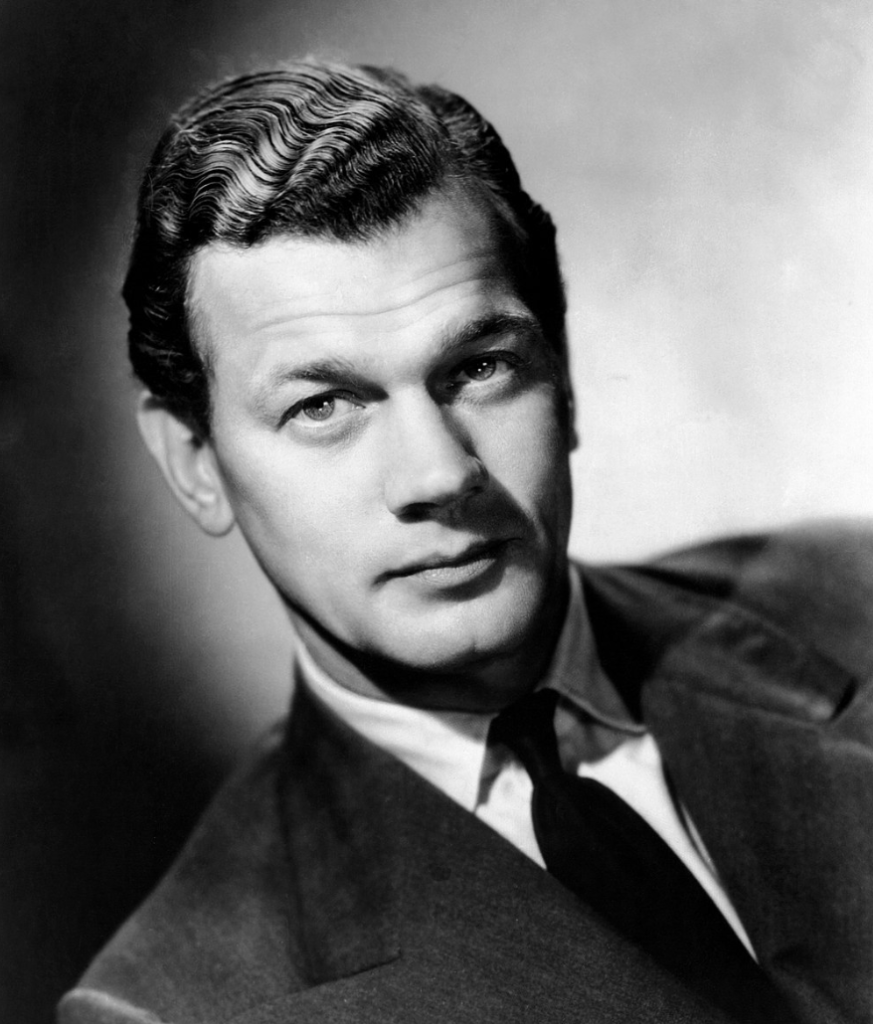
Before Monty Norman’s James Bond theme debuted in 1962, the piece of music that was indelibly linked to the spy genre was Anton Karas’ Zither theme for The Third Man. Which is weird for a number of reasons. Firstly, and I hope I’m not shocking any delicate constitutions here, but The Third Man is not a spy thriller. Nothing remotely connected to the world of espionage occurs during the run time of the film. It just feels like a spy thriller. And it’s also weird because Karas’ theme is just so wrong a choice for this kind of film. It’s bouncy and happy. It feels like a day at the beach. And yet it ends up complimenting the film so wonderfully. The Third Man feels like nothing else I’ve ever seen. Partly that’s the visuals. Partly the great script and the thoroughly inspired decision to film on location in the wrecked guts of post war Vienna. But a huge part is Karas’ score, which amplifies the weirdness and black comedy of the movie’s world and its situation. For this, if you’re in the right mood, is a wonderfully funny movie right from the off. Over a brief montage of life in Vienna the narrator (director Carol Reed) tells us:
“I never knew the old Vienna before the war with its Strauss music, its glamour and easy charm. Constantinople suited me better. I really got to know it in the classic period of the black market. We’d run anything if people wanted it enough and had the money to pay. Of course a situation like that does tempt amateurs…
(CUT TO A DEAD BODY FLOATING FACE DOWN IN THE DANUBE)
“… but, well, you know, they can’t stay the course like a professional. Now the city is divided into four zones, you know, each occupied by a power: the American, the British, the Russian and the French. But the center of the city that’s international: policed by an international patrol. One member of each of the four powers. Wonderful! What a hope they had! All strangers to the place and none of them could speak the same language. Except a sort of smattering of German. Good fellows on the whole, did their best you know. Vienna doesn’t really look any worse than a lot of other European cities. Bombed about a bit. Oh, I was going to tell you, wait, I was going to tell you about Holly Martins, an American…”
I love this monologue and the way it puts us, the audience, in the character of someone who’s just sat down in a bar in Vienna and gotten chatting to some old scoundrel who’ll happily spin us a yarn in exchange for a round or two. It’s also hilarious to me that the central story, the entire reason we’re here, Holly Martins’ search for Harry Lime, is so inconsequential that the narrator almost forgot it altogether. I don’t know who described this movie as “the anti-Casablanca” but that’s pretty much a perfect description. In Casablanca, even the smallest acts are vitally important in a great, epic struggle between good and evil (“play Les Marseillais”). In The Third Man, nothing Holly does matters and everything he tries to achieve ends in failure. If Casablanca is the epitome of World War 2 heroism and optimism on the eve of victory, The Third Man is all about the messy, ugly reality of post-war Europe and the early Cold War. It sounds bleak, and it is, but there’s a lot of humour to be mined from a bleak situation if you’re a sick enough bastard. As, I hope, we all are.
So, Holly Martins (Joseph Cotten) has arrived in post-war Vienna on the invitation of his friend, Harry Lime, who’s promised him a job. Worried when Harry fails to meet him at the train station, he goes to his hotel only to be told by the porter that Harry was struck by a truck and killed just outside the door of the hotel. Rushing to his funeral, Holly is just in time to watch his friend’s coffin being lowered into the earth and a mysterious beauty leaving his graveside.
Another of the “mourners” is Royal Military Police officer Major Calloway played with absolute perfection by Trevor Howard, and his adjunct Sergeant Paine, played by future M, Bernard Lee. Calloway takes Martins to a bar to find out what he knows about Lime and tells the American that his good friend was actually one of the most ruthless and notorious black marketeers in Vienna. Martins doesn’t like Calloway and doesn’t like cops and guesses that the Major is trying to frame the now dead Lime just so he can close the books on a few cases. He takes a swing at Calloway and gets laid on his ass by Paine, who’s very apologetic because it turns out he’s actually read Holly’s novels and he’s a huge fan. Calloway gives Martins some military money so he can stay the night at the British army’s hotel base and tells him he’ll get him a seat on a flight out of Vienna in the morning. But Holly smells a rat and decides to stay in Vienna and investigate Lime’s death.
He gets his first lead when he’s approached by a man claiming to be a friend of Lime’s, an Austrian named Baron Kurtz. Kurtz tells Holly that he and another friend of Harry’s, a Romanian named Popescu, were with him when he was struck and carried him to the side of the road and waited with him until the doctor arrived on the scene. Kurtz tries to convince Holly to give up his investigation and leave Vienna, but does steer him towards the woman at Harry’s grave; an actress named Anna Scmidt.
Anna is played by Alida Valli who was one of those mid-century European actresses. You know the kind I mean. Phenomenal performer. Brilliant. Spoke six languages. Personal life full of intrigue and tragedy and grand romance. You know the kind. Also, she was called “the most beautiful woman in the world” by Fascist leader Benito Mussolini.
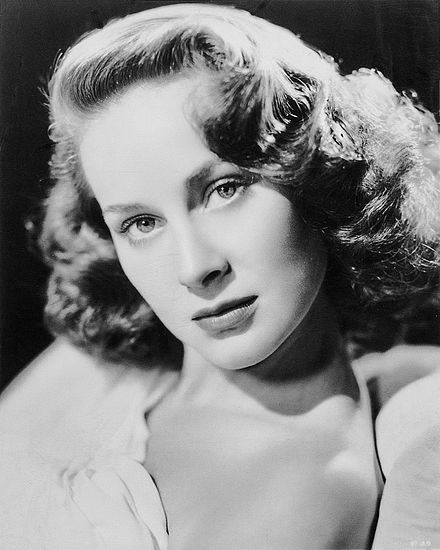
Holly goes to see Anna’s show and meets her in her dressing room. Anna says that Harry was actually hit and killed by his own driver, and that the doctor who attended him was his personal physician, a man named Winkel, who just happened to be walking down that street. This sets Holly’s bullshit detector into overdrive as he realises that everyone on that street the night Lime was killed, the driver, Kurtz, Popescu and Winkel were all connected to Harry in some way. Anna admits she thought it was strange too and wondered if his death was really an accident (CUE OMINIOUS ZITHER MUSIC).
Holly goes back to Harry’s hotel with Anna acting as his translator, and is able to get more information out of the porter who tells them that it wasn’t just Popescu and Kurtz who moved Harry’s body. There was a third man.

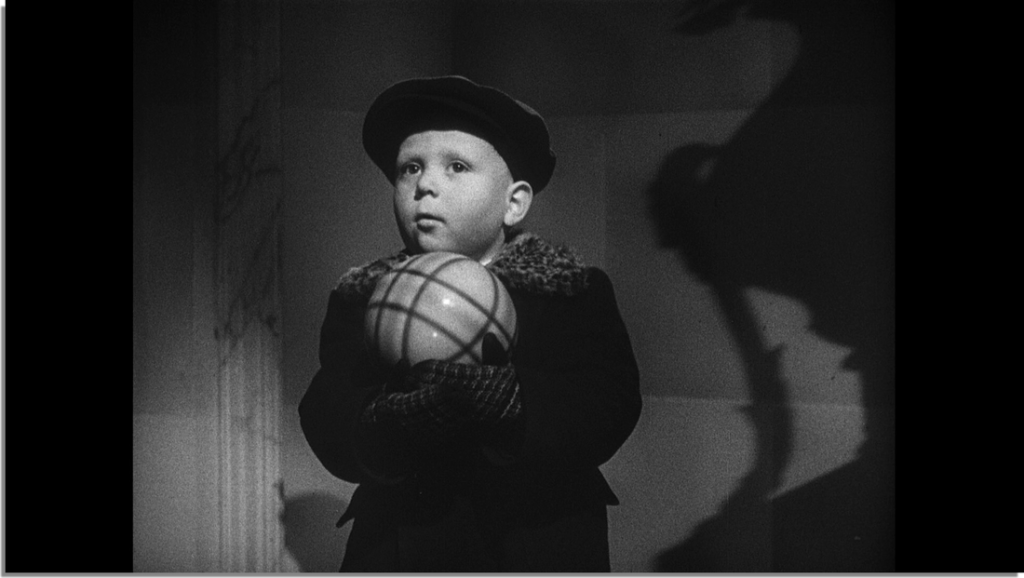
Holly tells the porter that he needs to go to the police and tell them and the porter’s all “nah man, I ain’t snitchin’ and angrily tells Holly and Anna to get out. This altercation is seen by a little boy playing with a ball in the hall.
Holly leaves Anna home only to find Calloway there with a whole heap of military police turning her apartment over looking for information on Harry Lime. Calloway asks to see Anna’s papers and quickly deduces that they’re forged. Calloway tells Holly to go home and Holly says he won’t leave until he gets to the bottom of Harry’s death. Calloway replies “Death’s at the bottom of everything, Martins. Leave death to the professionals.”
Which is a line so badass that Holly asks if he can use it in his next book and I would absolutely say the same thing in his position.
Holly asks Anna what the problem is and she reveals that she’s actually Czechoslovakian and that if she’s discovered she would be deported to Stalin’s socialist paradise which she’s against for some unfathomable reason. What I love about this scene is that it shows that everyone here; Anna, Calloway, Paine and Holly…they’re all fundamentally good people. Anna’s facing deportation and still takes the time to ask Holly to give some cigarettes to her distraught landlady. Paine has to take Anna’s love letters to Lime but writes out a receipt and gently promises her that anything he sees will be in strictest confidence: “we’re like doctors, miss”. Even Calloway apologises to Anna after casually dismissing Lime’s death because he can see he hurt her. The movie is bleak, but never nihilistic, which is such a crucially important difference. None of these people may ultimately end up changing anything, but they will still, in their little way, try. Good fellows on the whole. Did their best, you know.
Anna’s taken into custody and Holly pays a visit to Doctor Winkel who gives serious “planning a retirement in Argentina away from cameras” energy. He corroborates Kurtz’s story about there only being two men with Harry when he died, but does it in such a shifty way that he pretty much confirms the opposite.
Meanwhile Calloway interrogates Anna about a man called Joseph Harbin who worked at a military hospital. He says that in one of Harry’s letters to her he asked her to call Harbin and get him to come to Harry’s place and that he disappeared that night. Calloway is very anxious to find Harbin and Anna replies “you’ve got everything upside down” which, as we will see, is not wrong.
Returning to the hotel, Holly is approached by the porter who’s had an attack of conscience and tells Holly to come back at night when his wife is out so that he can tell him the truth.
Holly visits Anna in her apartment. She’s still heartbroken over Harry’s death and he comforts her by telling her stories about his schooldays. It’s a lovely, lovely scene. Cotten’s easy, low-key charm and Valli’s capital S Star charisma work perfectly together. Holly’s clearly falling for her but doesn’t want to push her. And she’s so glad just to have a friend in her darkest hour. Her heart still belongs to Harry even as she can see that Holly is something special and that, if things had been different…well.
There’s a wonderful moment where, just as they’re leaving to go talk to the porter and she turns and gives him this beautiful, sad smile and says.
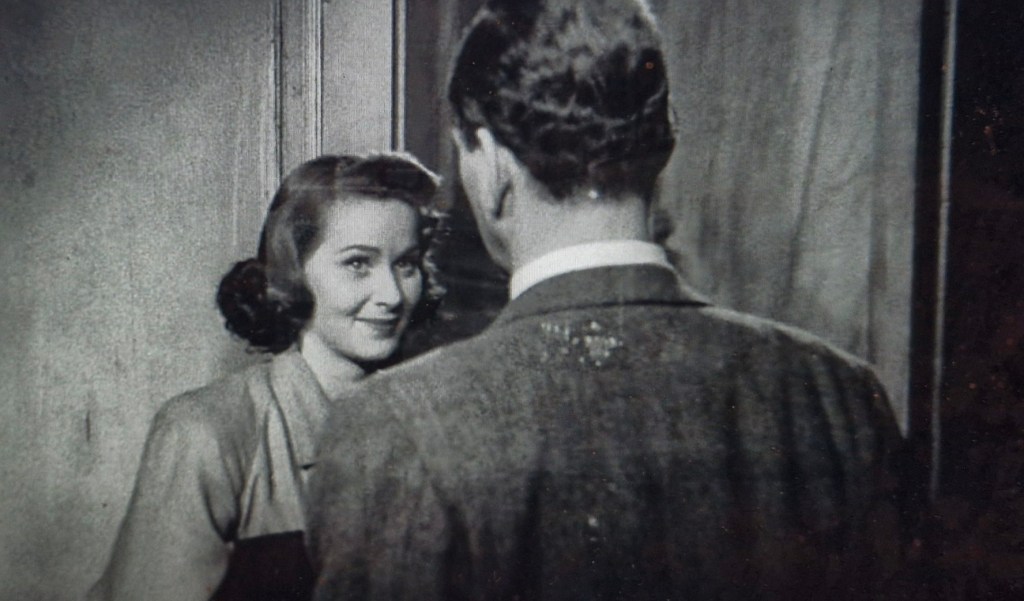
And every straight guy and lesbian in the audience thinks the same thought: what’s the point? She wouldn’t be you.
They go back to the hotel and find a crowd has gathered outside. They ask what happened and learn that Porter Kaput. The little boy recognises Holly and tells the crowd that he saw Holly arguing with the porter which is all it takes to turn the crowd into a mob. Holly and Anna have to amscray. Holly leaves Anna at a cinema and turns himself in to Calloway who believes that he didn’t kill the porter. Calloway then lays the whole thing out for Holly: Harry Lime was an absolute bastard. He was stealing penicillin from military hospitals, diluting it and selling it on the black market. When Holly asks if the police are too busy chasing stolen medicine to investigate murders, Calloway snaps that murder is exactly what they are talking about as dozens of men women and children have died, been injured or driven mad by Harry’s tainted drugs. He then proceeds to stuff Holly with so much evidence that his brain is walking funny afterwards.
Heartbroken, Holly says he’ll take that plane ticket and Calloway promises to send it along to his hotel. Meanwhile, the Russian envoy arrives in Calloway’s office and says that he needs Anna’s passport as she’s going to be repatriated. Calloway tries weakly to protest but even the Russian can only shrug and apologetically say “sorry, orders is orders”.
Holly gets proper messy drunk and shows up at Anna’s apartment with a bouquet of flowers to say goodbye. He tries playing with Anna’s cat but gets completely rejected which is probably symbolism for something. Anna says that the cat only ever liked Harry (okay, that’s definitely symbolism) and the cat then exits through the window and goes out into the street where it starts running up against a mysterious figure watching Anna’s apartment from the shadows. And I can’t believe it’s taken me THIS LONG to realise that this sequence uses three obviously different cats.
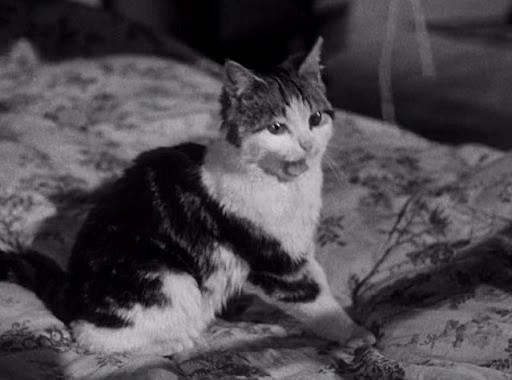
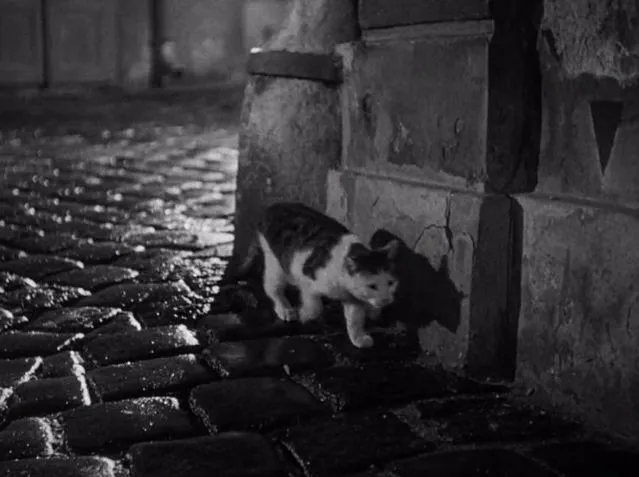
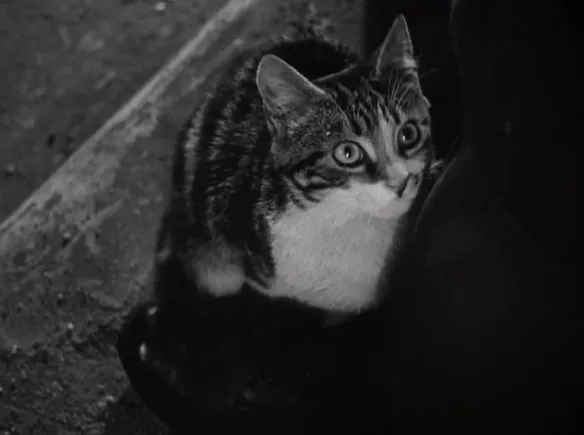
They’re all white and tabby. And they’re all cats. That’s literally all they have in common.
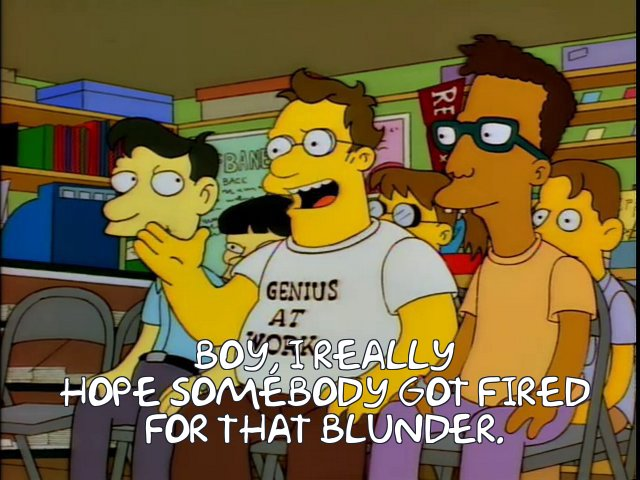
Holly and Anna commiserate on learning that the man they both loved was a monster, Holly makes a half-hearted drunken pass at Anna and then leaves. Out on the street, he notices the figure watching him from the shadows and calls on him to reveal himself. A light goes on, the figure is revealed and…we get one of the greatest character introductions in the history of cinema.
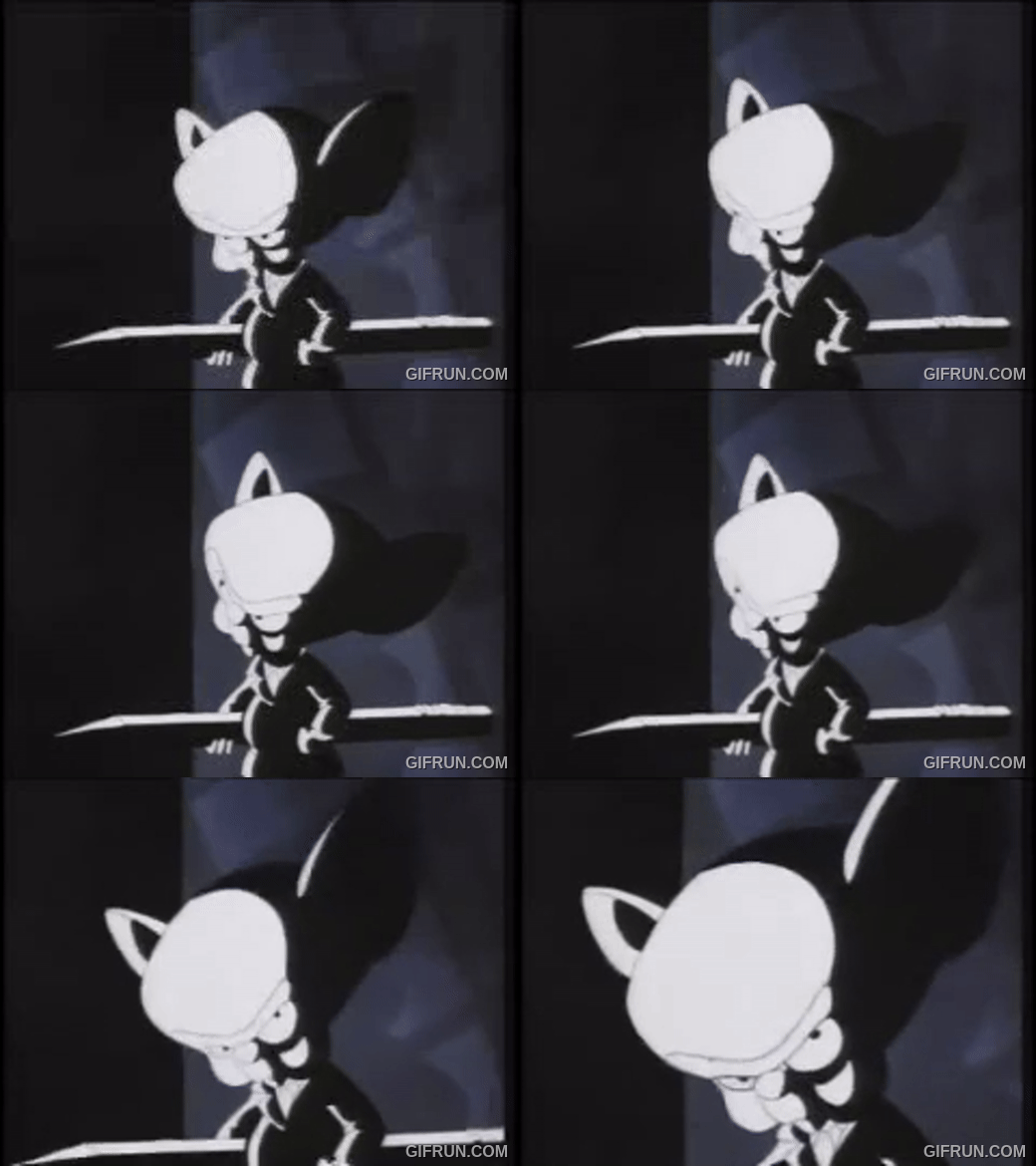
Shocked to see Harry alive, Holly chases his old friend through the streets but loses him after Lime vanishes through a secret passage that goes into Vienna’s sewer system. Meanwhile, Anna is arrested and brought to the police station. Holly meets her there and gives her the good (?) news that Harry’s still alive. Calloway offers to help Anna if she’ll help the police track Lime down but she stonewalls him, just happy that Lime’s still alive.
The next day, Holly shows up at Kurtz’s place and tells him to tell Harry to meet him in the fairground or he’ll go to the police.
Sure enough, Harry makes their date and suggests they go for a little ride on the Ferris Wheel. What could be more fun?
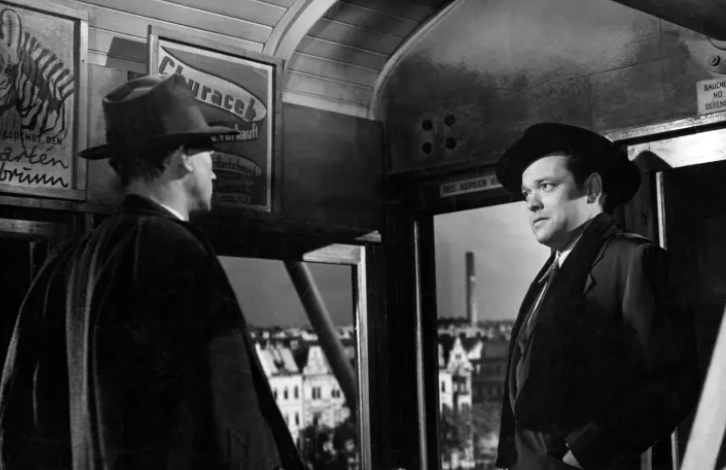
So what can I say about this scene? As the carriage gets higher and higher over the gutted, bombed out corpse of Vienna, Holly slowly starts to realise that the war has turned his charming, mischievous childhood friend into a cold-blooded psychopath. I love just about every second of this scene. The dots monologue. Free of income tax, old man. Free of income tax.
The look, and Holly’s slow, deliberate embrace of the wooden pillar. Innocent, but no fool this one.
Once he learns that the police know that he had Harbin murdered and faked his death, Harry becomes much more conciliatory, offering to cut Holly in on his racket and promising to meet up with him again. Before he leaves he gives the famous speech written, of course, by Welles himself:
“Don’t be so gloomy. After all, it’s not that awful. Like the fella says, in Italy for 30 years under the Borgias they had warfare, terror, murder, and bloodshed, but they produced Michelangelo, Leonardo da Vinci, and the Renaissance. In Switzerland they had brotherly love – they had 500 years of democracy and peace, and what did that produce? The cuckoo clock.”

Which honestly? Makes it even better.
Holly goes to Calloway and agrees to help him bring Harry in, in exchange for getting Anna safely out of Vienna into the west. Calloway agrees and Holly watches Anna board her train from the train station bar. She sees him and confronts him, and figures out very quickly why Calloway let her go. Furious, she says:
“If you want to sell your services, I’m not willing to be the price. I loved him. You loved him. What good have we done him? Love. Look at yourself. They have a name for faces like that.”
Sick of everyone’s bullshit, Holly goes back to police headquarters and tells Calloway he’s out. His only motive for betraying Harry was to save Anna, if he can’t do that he doesn’t see a point. Calloway pretend to take him to the airport but stops in at a local children’s hospital so that Holly actually has to face the monstrosity of what Harry has done. Holly, reluctantly, re-joins operation Squeeze Lime.
He waits in a café for Harry but Anna arrives, having been tipped off by Kurtz right before he was arrested. She angrily demands to know what Calloway is paying Holly this time and, when Harry arrives, warns him that there are soldiers waiting to arrest him. Calloway, Paine and half the allied armed forces of Europe chase Harry into the sewers of Vienna.
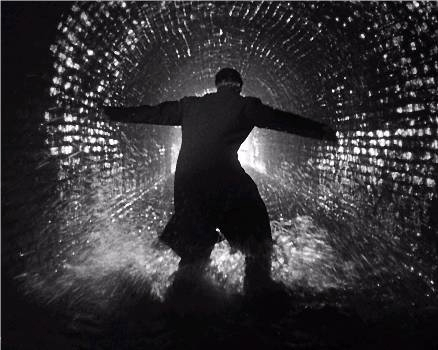
Lime shoots Paine dead before being gunned down by Martins, dying in the sewer like the piece of shit he is.
The next day, Holly attends the second funeral of Harry Lime and afterwards, is offered a lift to the airport by Calloway. But he gets out and waits for Anna.
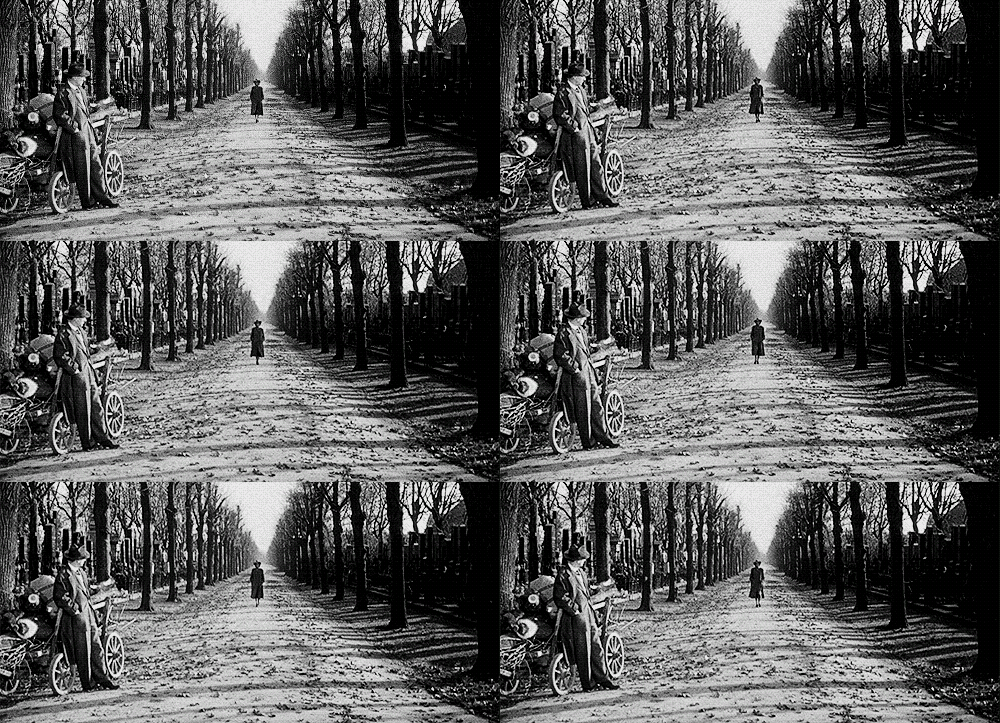
Perfectly framed between two rows of trees, she walks towards him, a tiny figure in the distance.
And the movie makes us wait. And wait. And wait.
And while you’re waiting you start anticipating what’s going to happen when they finally meet.
Will he take her in his arms?
Will they kiss passionately?
Will she have forgiven him?
Will she realise that he did the right thing by betraying the man she loved?
Will she finally realise that, let’s be honest here, he kinda earned this?
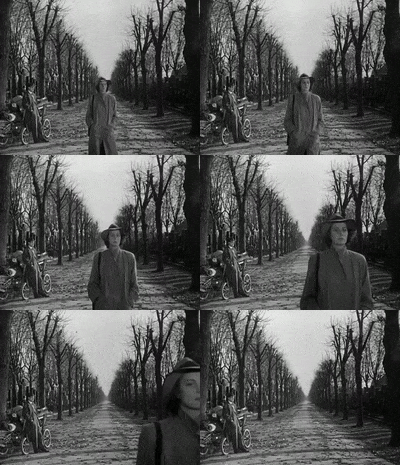
Nope.
It’s the Cold War, Holly.
Good intentions don’t get you jack shit.
***
If there was ever a movie that you could hold my feet to the fire and make me admit that it is actually, utterly perfect, I think this is the one. Every scene reveals new layers on every rewatch. Every time I find something new to entrance me. A stone cold classic.
Merry Christmas everyone.
NEXT REVIEW: 08 January 2025
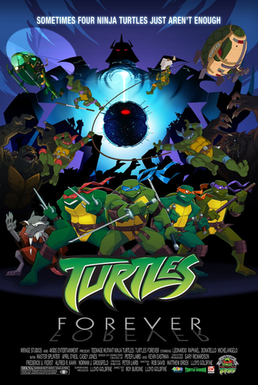
NEXT TIME: Cowabunga dudes.
 unshavedmouse
Love this movie, one of those that I think everyone NEEDS to see. There are books everyone read in school, cinema is over a century old, time to add some classic movies to the national curriculum, and this is one of them. It just so perfectly captures an era and mood.
Wonderful review as well, Mouse. Makes me immediately want to go watch the movie again, that’s how you know you’ve captured something in the retelling.
Though I think you meant to type Trevor Howard, not Terrence Howard. Terrence Howard is the guy who’s still waiting patiently by the phone to be asked to be War Machine, and wondering if the silence means this whole MCU thing never got off the ground.
Feck! Thanks.
100% agree with your assessment, this is simply a masterpiece of a movie.
And night I also add that this is one of those cases where I hope that this film never, ever gets remade in color, because being in Black & White is just perfect for this kind of movie. The fact that everything is tinged in Shadows , tainted by the war, and that everyone and everything is in shades of grey, only with some darker than others with nothing (or no one) standing out as really “right” and “good” just fits perfectly in a way that I can’t imagine being re-created in color. Great shots, great direction, great skript, great acting, just… Great.
The funniest time a cartoon referenced this movie was Avenger Penguins, where the villain’s henchman was called “Harry Slime” even though the main villain was the one based on Welles and Slime was based on Peter Lorre.
I remember when you announced the Turtles Forever review around 8 years ago. Only a few more weeks.
Holy shit, was it really?
I was exaggerating meaning a while, but now I have to check.
This post is over 9 years old, and it was part of the death match, but I see it did not win.
This post is from just under 5 years, and there you made the actual promise to review it.
In other words it has been just short of 5 years, but you first talked about reviewing it over 9 years ago.
Also yikes. There are so many more films on that list, and I think Into the Woods sounds like a really hard review to write.
I watched this movie on a whim at 4 in the morning one day. I’m pretty hit-or-miss with old films, but I was just entranced by this one. The setting, the mood, the cinematography, the acting…there’s barely any action in it, but I love it all the same. I love how evil Harry is, how dark Vienna is, how hopeless the tone is, and how much of a Spiritual Antithesis this is to Casablanca, like you mentioned.
My only source of frustration is that when I try to bring up Harry Lime to my fellow Gen Z peers, everyone thinks I’m talking about Joe Pesci. Gah.
“ The Third Man “ has rightly got a top reputation, as well the Music Theme is just so memorable. But personally I found it very slow going early so perhaps it takes some discipline to stick with it. Thought that Trevor Howard as Major Calloway and Bernard Lee as Sergeant Paine did liven things up somewhat, so good performances by Howard and Lee. I am sure I read somewhere that Orson Welles when playing the character of Harry Lime refused to work in The Sewers of Vienna but he was the only one. Apparently Welles’ Sewer Shots were actually taken at the Film Studio in England. Welles apparently believed that Severe Illnesses could be transmitted via the Air in such Environments and Sewers were dangerous fertilisers of same. Most disagreed with Welles at the time but in the light of the recent catastrophic pandemic, it does seem that the great man was right, would any Film Company actually Film in a sewer now, I think not !
It’s not “old movies are hit-or-miss”, it’s movies in general: in the past, in the present, in the future. That’s art. And movies are so incredibly diverse across genres, styles, directors and so on, that no one will be in love with all that, you will always gravitate far more towards some over others. That said, we should always try to keep an open mind and broaden our tastes.
Overall, I liked your comment on The Third Man! Have you seen Double Indemnity? Please watch it, filled with witty dialogue and extremely captivating from the first frame! Nail-biting!
“The anti-Casablanca“
Dang, that is the perfect description.
World War II is often depicted with this almost mythic vision, a battle of good versus evil for the fate of the world. An age of Villains and the Heroes who vanquished them.
What’s not talked about nearly enough is all the little things that led to the Cold War. The immediate switch from camaraderie to paranoia, the growing reliance on new weapons that have changed the face of war, and the grasping claws of the West and the East snatching away pieces of a scarred and hollowed out world. Because in this strange, new world it’s rats like Harry Lime that have thrived and survived.
And as you put it so well, just because a rat like Lime is gone that doesn’t change the fact that too many have been lost by his greed. And just because a villain is vanquished, it doesn’t mean a happy ending. Because this isn’t an age of heroes, this is an age of people. People who have to live with the hard choices they’ve made. And there’s nothing romantic about a hard choice.
The fact that a chance to bring down someone who fed bad medicine to anyone foolish enough to pay him for it counts as a ‘hard’ choice is not something I find easy to swallow.
Anyway, I have yet to see this film hope to someday do so
I mean the movie openly says that Holly loves him. Love isn’t rational.
Also, MAMA MIA, Signorina Valli was so beautiful it would take several extra syllables to pronounce the word ‘beautiful’ appropriately.
Now I’m wondering who would win in a walk-off between herself and the fantabulously gorgeous Sophia Loren (Actually, that’s a lie, the answer is blatantly obvious – “The audience”).
One of the best films ever made! I would love for you to review more classic films like this.
That is very, very tempting. I’ll admit, Disney and the MCU ain’t doing much for me lately
I sure as heck wouldn’t mind. And Disney seems to be dialing it back after a disastrous 2023, so even if you keep up with those there’s sure to be room for other things.
I too would love to see more classic movies being reviewed. I never even heard of “Night of the Hunter” until you reviewed it.
Please review Double Indemnity, such an amazing film!
(1) I’m stunned that another commenter has “Quaker” in their nom de plume. Cool. There ain’t enough of us.
(2) I comment VERY infrequently — maybe once every few years — but I was inspired to break my silence to say that yours is a terrific recap/review, Mr Mouse.
(3) There’s so much to note about this movie (and you did, and did them well) that you can be forgiven for not including other things, but the use of Dutch Angles in this is both crazy-frequent and awesome. It’s as if there’s not a single place to get solid, safe footing in the whole city besides the cemetery.
I’d not heard “the anti-Casablanca” before but I love it (with the not terribly bold assumption that it’s a statement of theme, not quality — Casablanca is amazing too, of course). And the phrase reminded me of reading Rebecca and Jane Eyre — I felt like Rebecca was the anti-Jane Eyre and was amazing, and I think it is, but afterwards I re-read Jane Eyre for the first time since high school and loved it… while still loving Rebecca for its take on… relationships.
Hi mouse! Lovely review as always! This is a classic that is timeless.
I would challenge your opinion about the music though. It may be jaunty, but it’s not joyful.I liken it to a guy who’s smiling, but the smile doesn’t reach his eyes.
The movie’s almost like a farce on the hero who leaves completely unfulfilled and humiliated.
His best friend betrays him after lying to him about his ‘demise’, he doesn’t get the girl in the end, etc.
I feel like the music is inviting us, the audience to laugh at the hero, laugh at this moron, laugh! It may be humourous, but we laugh in derision.
If you’d like to see Joseph Cotten excel in a movie that Orson Welles had nothing to do with, I think I first saw him in Shadow of a Doubt, as the heroine’s uncle; Alfred Hitchcock chose this as his favorite movie directed by himself.
Favorite movie of all time. Glad you took the time to review it!
Dear Mouse, if you’re looking for another hit of Cold War unscrupulousness, you could do worse than THE IPCRESS FILE (Which is rather a classic in it’s own right) or even FUNERAL IN BERLIN (Which is even more shameless, but doesn’t have quite the directorial finesse of the former).
I am, of course, assuming that you have already seen TINKER TAILOR SOLDIER SPY (In some form) for reasons that should go without saying.
…
Also, no lie, I would absolutely love to see the Holly Martins novel that Line wound up in (Bet you there’d be at least one heroic character called ‘Paine’ in it).
If I remember correctly Martins is an author of Westerns, so you can probably bet on the plot featuring peace officers trying to collar the sort of jackass handing out the sort of rotgut hooch that is literally Poison to the most vulnerable.
It’s not “old movies are hit-or-miss”, it’s movies in general: in the past, in the present, in the future. That’s art. And movies are so incredibly diverse across genres, styles, directors and so on, that no one will be in love with all that, you will always gravitate far more towards some over others. That said, we should always try to keep an open mind and broaden our tastes.
Overall, I liked your comment on The Third Man! Have you seen Double Indemnity? Please watch it, filled with witty dialogue and extremely captivating from the first frame! Nail-biting!