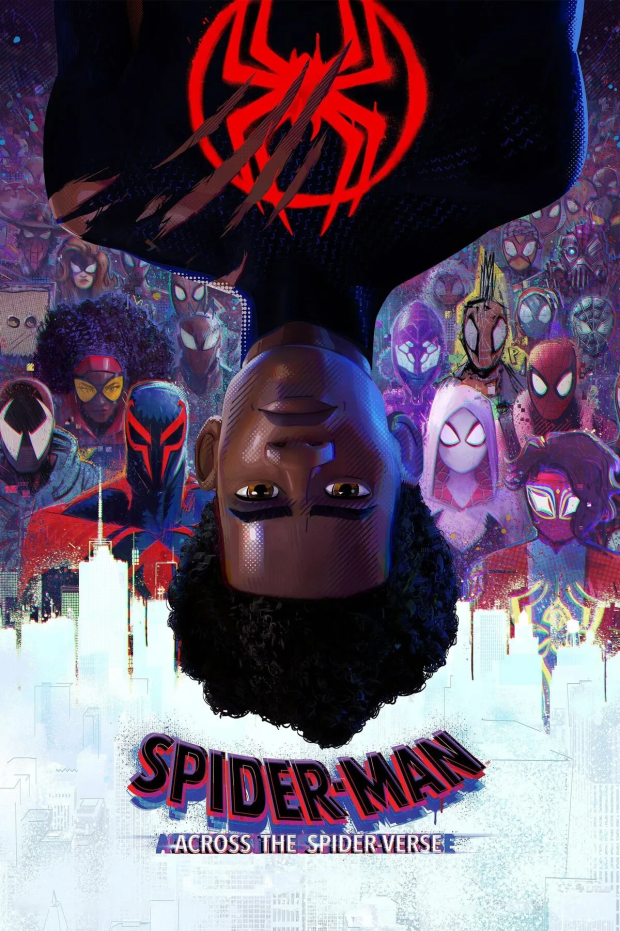
Sometimes, less is more. This is true with most things, but it’s especially true with writing. While there are definitely times when it’s fun to get fancy or even downright purple with your prose, the real masters know that when you want a piece of writing that cuts a reader right to the bone and leaves them wondering what the hell you just did to them, you keep it simple. Take, for example, the opening monologue of Spider-Man: Across the Spider-Verse.
Let’s do things differently this time… SO differently.
His name is Miles Morales.
He was bitten by a radioactive spider.
And he’s not the only one.
He hasn’t always had it easy.
And he’s not the only one.
Now he’s on his own.
And he’s not the only one.
You think you know the rest.
You don’t.
I thought I knew the rest.
But I didn’t.
I didn’t want to hurt him.
But I did.
And he’s not the only one
On paper the prose seems incredibly basic. But there is a cadence to it, and a power that comes from the constant repetition. It’s like a drum beat, growing in intensity. And, when given to an actor like Hailee Steinfeld who absolutely knows how to wring every ounce of emotion out of it?
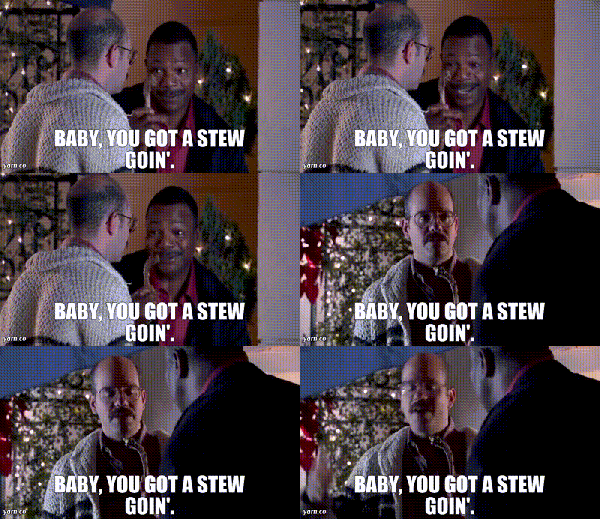
Which is a weird point to start a review of this film with, because while less is sometimes more, more is also sometimes more. And Across the Spider-Verse is one of the greatest arguments for cinematic maximalism since Ben Hur.
This movie is HUGE. It boasts the largest animation team of any cartoon in history. It has a cast of hundreds of characters and stretches across six universe each with their own distinct artistic style. It is a truly epic work, one of the most ambitious projects in the history of animation as a medium.
And, fittingly, even its production problems were epic in scope. A writer’s strike. A global pandemic. Whatever the hell happened to Shameik Moore. And, of course, the now notorious levels of crunch and overwork that the animators were subjected to. I won’t say Spider-Verse 2’s doctrine of “biggest of all time” extended to the suffering meted out to those who worked on it because North Korea produces animation and they probably have that particular category locked up but STILL. It’s definitely something that shouldn’t be forgotten.
I mean, I’ll still watch it but I still watch The Shining and that movie damn near killed Shelley Duvall, you come to me for movie reviews, not moral guidance.
Jesus, I hope you don’t come to me for moral guidance.
 unshavedmouse