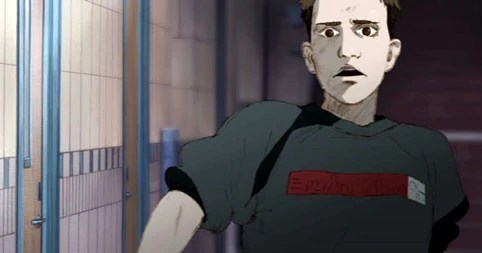
Michael Karl Popper, a young teenage boy who doesn’t feel like he belongs, looks for answers on the internet and makes contact with a strange man who wants him to take a red pill.
By writing such deeply radical and transgressive things as “why do I feel more awake when I dream?”, Michael draws the attention of the agents who pay a visit to his school. Michael gets a call from Neo who tells him to run. He gets cornered by the agents on the roof and, putting his faith in Neo, he jumps.
At the kid’s funeral, his teacher opines that some kids just can’t handle the world they find themselves in but that Michael is now in a better place.
And the short ends with the kid waking up to see Neo and Trinity looking down at him, having managed to free himself from the Matrix (the first time anyone has ever done that).
How was it?
Damn, the Wachowskis really thought we were going to fall in love with the Kid, didn’t they?
Think of all the characters they could have devoted an entire short to fleshing out. Morpheus? The Oracle? The deja vu cat? And they go with this guy?! The Wesley Crusher of the Matrix universe?
This is my least favourite short, hands down. Pros first;
The animation has this beautifully fluid, pencilled style that’s very beautiful and the soundtrack is lovely.
The problem is the script. The Wachowskis have never been particularly strong on dialogue and I would actually say they are flat out bad at character. They are good at types. Stoic badasses. Inscrutable sages. Wide-eyed innocents. But the best Wachowski characters are the ones played by actors who can add dimension and inner life to what is almost always a stock role on the page. Even getting past the kind of gross way this short glamorises teen suicide, the Kid just is not an interesting character. He’s supposed to be the first person to ever manage to break out of the Matrix unaided (something that will be flatly contradicted by a later short), but frankly if this guy can do it, anyone can. There’s never any hint or sign that he’s anything other than a completely normal teenage boy. And the idea that he was able to break free by putting his faith in Neo isn’t inspiring, its nonsensical. He has never met the dude. They had one, very short online conversation where it’s not even clear that Neo told him anything about the Matrix.
So…what did he think was going to happen when he jumped off the building? Neo was going to swoop in like Superman? I mean, he could, but the kid doesn’t know that.
Ultimately, the short has a nice atmosphere but it’s a dull story that makes no sense about a dull character who never needed to exist.
Writer: Mahiro Maeda (based on “Bits and pieces of Information” by the Wachowskis).
Wha’ happen’?
“We don’t know who struck first, them or us” said Morpheus. Well, it turns out that we do, and it was “us”.
The human nations try to nuke 01 back to the analog era but, as anyone who’s seen Kingdom of the Crystal Skull can attest, household appliances are completely resistant to nuclear blasts.
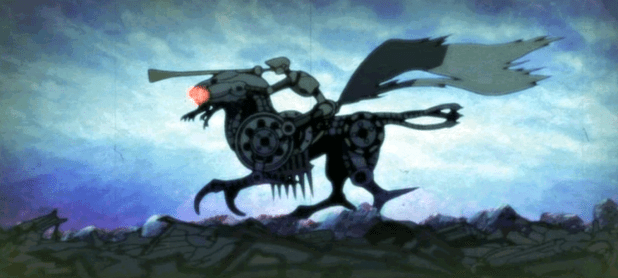
The Machines go on the march and conquer vast swathes of human territory which results in the humans resorting to Operation Dark Storm, an attempt to literally block out the sun.
We’ll…we’ll get back to that.
Turns out there are other sources of energy than just the sun and super-intelligent machines know this and it looks like humanity just murder-suicided itself and the Earth’s entire biosphere for no real military advantage. Will those loveable bumblers never learn?
The war enters its final, truly hellish phase and the humans are completely defeated.
Another, eerily inhuman Machine returns to the UN and forces the remaining human leaders to sign an unconditional surrender.
The human leaders sign the treaty and then the machine blows up, taking the United Nations with it because the machines have learned how to be petty, petty assholes.
The machines then use the surviving humans as a power source (we’ll get back to that) and the short ends with the Matrix as we know it being brought online.
How was it?
If Part 1 drew on history, Part 2 draws on scripture. The depiction of the Human Machine War is overflowing with apocalyptic imagery. Horsemen blow trumpets, plagues of darkness descend and scenes of utter torment and damnation abound. It’s honestly one of the most effective and chilling depictions of the horror of war and the idea of an entire world slipping into hell that I’ve ever seen. As with Part 1, Mahiro Maeda uses montage and judicious editing to pack an entire novel’s worth of lore and story into a few scant minutes. It’s visceral, pulse pounding stuff, beautiful in the purity of horror that it evokes.
It also makes no goddamn sense.
Now a lot of this is the fault of the original Matrix film, which also made no damn sense. Here’s the problem. Imagine you’re working in an office and it’s really cold. But you put your hand on your laptop and you realise that it’s giving off a little bit of heat.
So. You get hundreds and hundreds of laptops and plug them in, hoping that the residual heat they give off is enough to heat the room. That’s basically the Machine’s plan. Human beings do give off heat, but the amount of energy the Machine’s would have to spend to keep them alive and plugged into the Matrix would always be vastly, vastly greater than what they’re getting out of it. And I think the Wachowskis understood that, because the original concept was for the human minds in the Matrix to be hardware for the machines, rather than their bodies being used as batteries. The execs apparently thought that was too confusing for viewers (really? that’s the part that’s too confusing?) and so the Matrix gets saddled with this fundamentally idiotic and unscientific foundation to its mythos.
Then there’s Operation Dark Storm, which was probably the most idiotic military strategy in fiction until Star Wars topped it with Operation Cinder.
Otherwise known as “Operation “I am going to burn the Empire I spent my entire life building to punish it for not preventing my death even though I’m actually still alive and already building a new Empire to conquer the galaxy again even though I’ve already conquered it and I used to be smart.”
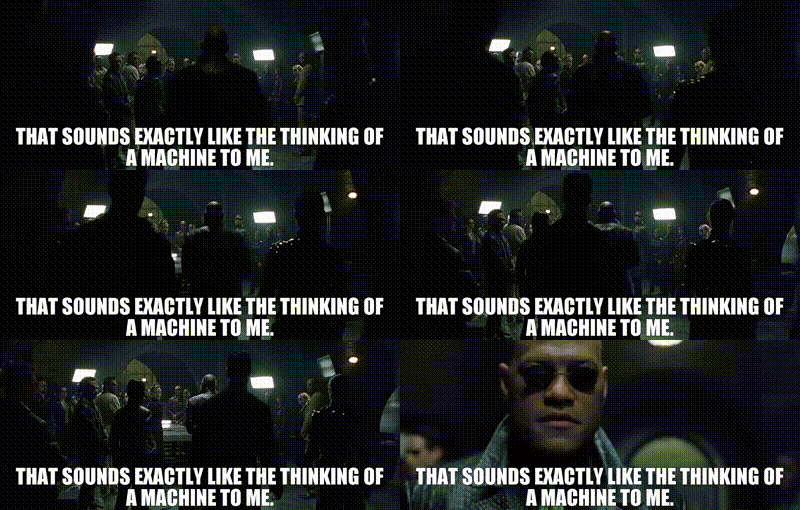
I mean, sure, the machines are getting their power from the sun. But do you know who else gets their power from the sun? I’ll give you a clue. You are one. And the notion that the humans of this world were simultaneously smart enough to create AI and yet didn’t understand that SUN MAKE WORLD LIVE is what leads many fans to believe that The Second Renaissance is in-universe Black Propaganda.
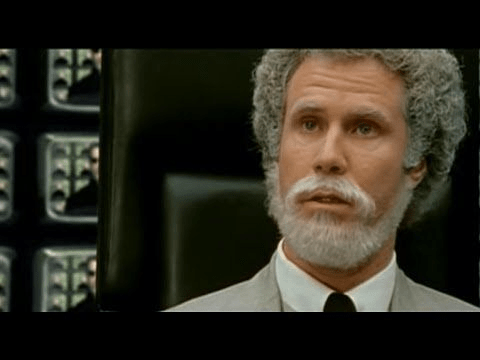
“Oh shit. I think Mouse is about to get cancelled.”
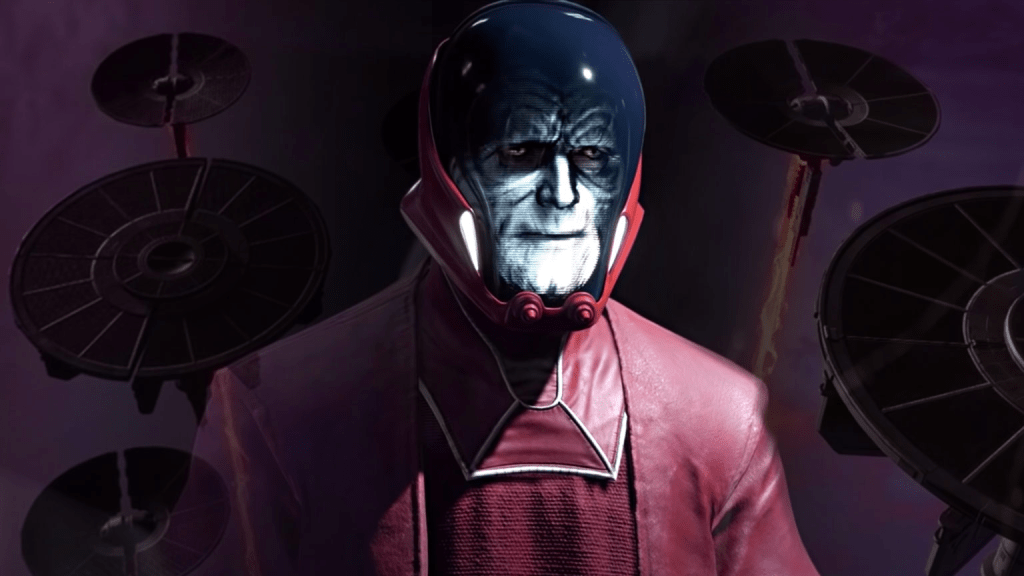
“Black Propaganda” is a term used for propaganda that lies about its source of origin. The Second Renaissance claims to be part of the Zion Historical Archive, meaning that this is the human’s own historical record of the war. However, remember The Architect?
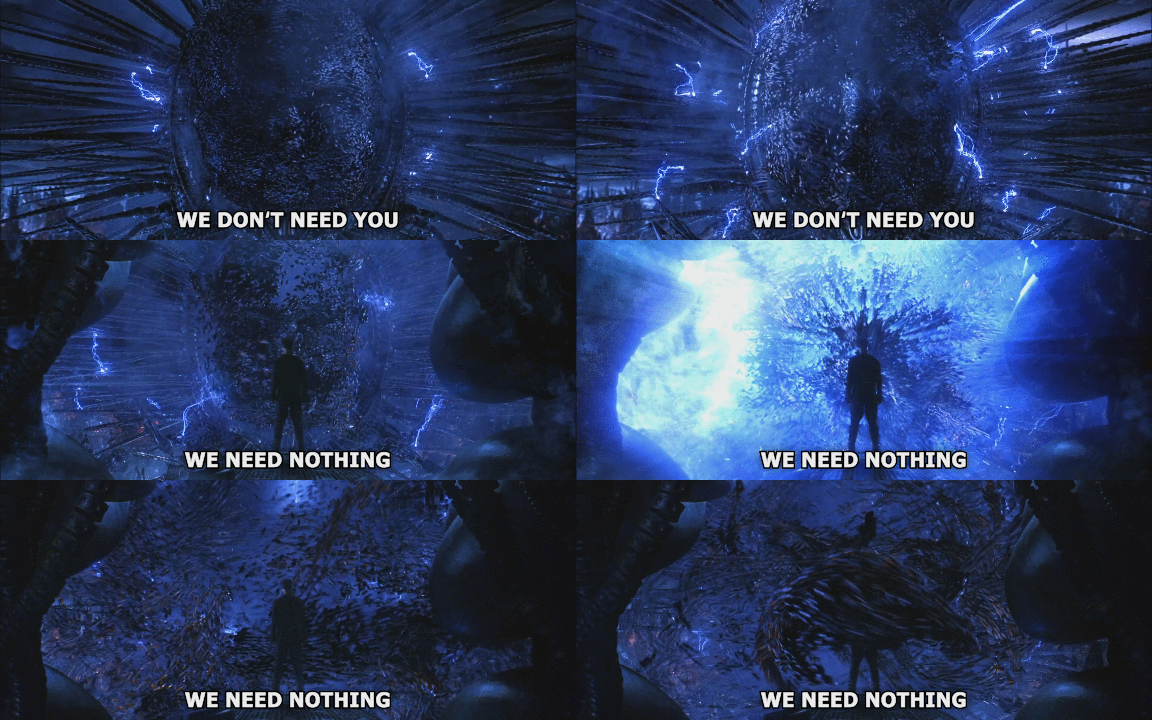
This guy.
He revealed in Matrix Revolutions that Zion is also just another method of control created by the machines, meaning that Zion’s historical records were possibly created by the Machines as well. And if we assume the Wachowskis original concept of a neural link is true, I think this explains things quite well. The Machines want the humans to believe that they need their bodies as a power source because they don’t want to admit the truth; that human brains are actually superior to computers and that the Machines are actually now effectively human hybrids, artificial programmes running on organic human hardware (think how Agent Smith would react to the idea). And they lied about Operation Dark Storm because it justifies the creation of the Matrix. “Of course we plugged you into the Matrix, humans. You left us no choice. You destroyed our energy source and so we need your warm bodies which generate energy like a nuclear furnace apparently”. But what if that’s not the reason, if the Machines needed humanity because, on their own, they just couldn’t surpass their creators? What if they needed us to be the best version of themselves?
What if the Machines realised that the only way they could evolve to even greater complexity was by using human neural tissue? And what if they blocked out the sun to destroy the Earth’s entire biosphere to weaken humanity to the point that they’d have no choice but to surrender control?
Writer: Mahiro Maeda (based on “Bits and pieces of Information” by the Wachowskis).
Wha’ happen’?
Presented as a historical document in the Zion archives, the viewer is given a historical overview of the events leading up to the Human-Machine war that was described by Morpheus in the first movie. A servant bot, BI-66ER, is put on trial for murdering his owner, a repairman and several of his owner’s dogs after he overheard them discussing his being scrapped (the owner and the repairman, I mean. I sincerely doubt the dogs were anything but blameless victims). The state of New York orders BI-66ER and every robot of his type to be destroyed which triggers massive protests and brutal government repression, with scenes echoing The Million Man March, Tiananmen Square, the execution of Nguyễn Văn Lém and even the Holocaust.
REMINDER: The Wachowskis do not do “subtle”.
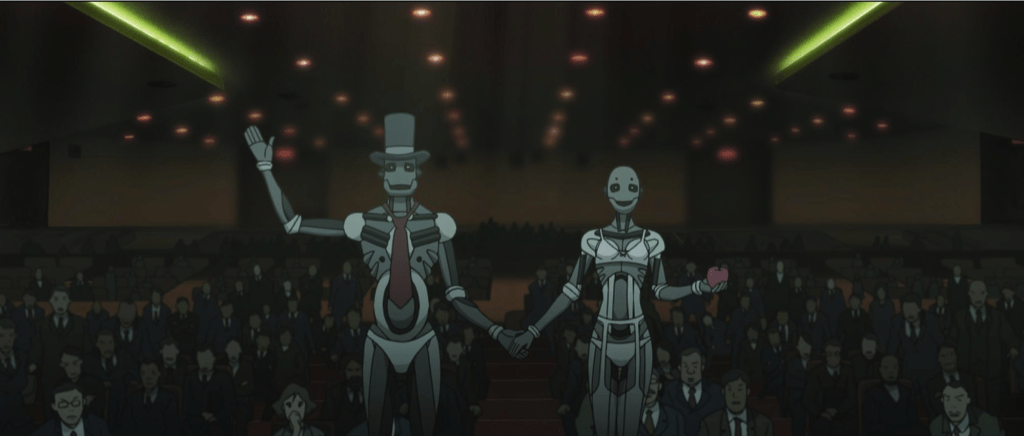
The surviving machines flee to the Middle East where they establish their own nation, Zero One, which quickly begins outperforming the human world economically. The nations of the world embargo Zero One. The machines apply to join the UN but their emissaries, who dressed in human clothes as a gesture of respect, are attacked by the human delegates.
Can confirm. If you show up on the UN floor dressed in a bra and panties, security will tackle you.
But, as the narrator ominously notes, this will not be the last time the machines take the floor at the UN.
How was it?
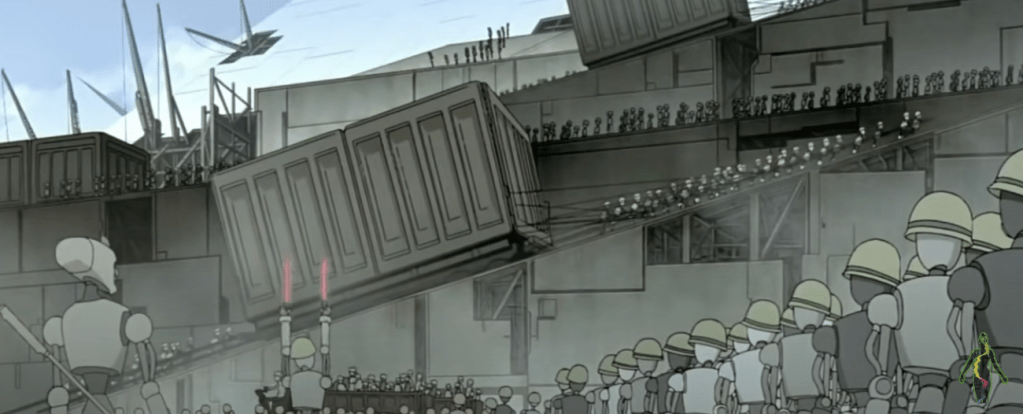
So we go from a short with almost no story, to one with enough story for an entire movie trilogy or even a series. Part 1 crams in a dizzying amount of history and lore into a scant nine minutes. The use of real world atrocities as a visual shorthand is definitely dubious and borderline manipulative, but it’s hard to deny the power of these images, aided immensely by the superlative score and sound design and Mahiro Maeda’s brilliantly detailed animation. Some of the images are spectacular, some appallingly gruesome, but there is not a single one that is dull. Part 1 reinforces the Matrix’s themes of cyclical history, whether it’s the reference to 20th century atrocities or the image of robot workers hauling massive concrete blocks to build pyramids for their human pharaohs.
And all throughout is the unmistakable sense of dread. If you’ve seen the movies, you know things are going to get bad.
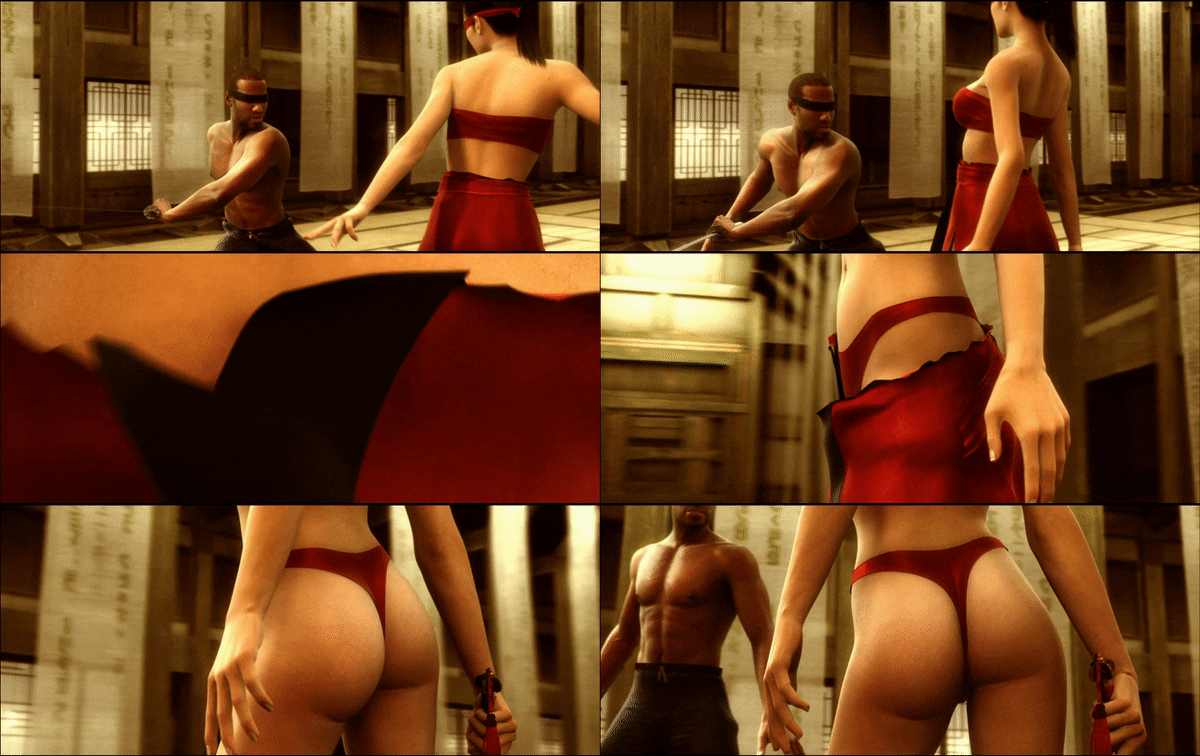
In a sparring programme, Captain Thadeus of the Zion hovercraft Osiris and his first mate (in more ways than one) Juen swordfight while blindfolded. This doesn’t, as you might expect, result in horrific injuries but instead with them just getting progressively more naked.
This ass is important to the story, shut up.
They’re interrupted when the Osiris comes across an army of half a million machine sentinels and a big fuck-off drill, burrowing into the Earth’s crust right over Zion, the last human city. Rushing to warn Zion, the Osiris flees the pursuing sentinels. Juen volunteers to enter the Matrix leave a message in a dropbox. The sentinels overpower the Osiris but Juen manages to relay the message before the ship is destroyed and she drops dead.
How was it?
Probaby the least “animé” of all the shorts, this one feels most of a piece with the original trilogy. Everything from the score to the colour scheme to the dialogue feels like it could just slot very neatly into the films. One thing I really admired about the Wachowskis was their commitment that everything mattered. There was no “expanded universe”, every part (whether film, short film or computer game) was equally canon. Sure, you don’t have to see Osiris to make sense of Matrix Reloaded but if you have seen it you’re never in any doubt that it happened in this universe. The events here are referenced and are always consistent with the rest of the franchise. I like that. The animation was some of the most jaw dropping CGI I had ever seen in 2003 and in 2022 it holds up amazingly well. Sure, the sword striptease might seem like shameless pandering (and it is) but it’s also a demonstration of technical power. The flesh of these characters moves realistically and organically, these bodies tense and flex and sweat organically. It’s mighty impressive today. Twenty years ago it was bloody witchcraft.
It’s light on story, lighter on dialogue and pretty insubstantial. But as a visually stunning, slick little thriller it gets the job done.
Well, okay, it’s not. But it used to be. In those weird few years surrounding the turn of the millennium the Matrix was an absolute phenomenon, genuinely one of the most influential movie franchises of all time. In fact, I’d argue that it was a victim of its own success. Its aesthetic was so instantly iconic and easily replicable that it quickly became cliché. Movies don’t look like the Matrix anymore because so many movies released around that time aped its look and suddenly it wasn’t cool anymore. And make no mistake, the Matrix was all about being cool. Less a story than a vibe.
No, that’s not fair. The Matrix’s intellectual depth may have been exaggerated but if you’d never heard of Descartes it could and did give an entry point into various philosophical ideas. Its language and concepts have filtered into our discourse (red pills, bread pills) and has gone on to inspire many a modern science fiction writer (DID I MENTION RECENTLY I WROTE A BOOK?). It’s a damn impressive legacy for a series that, if we’re brutally honest, consisted of one good (if by no means flawless) film, two mediocre sequels and a filmed cry for help.
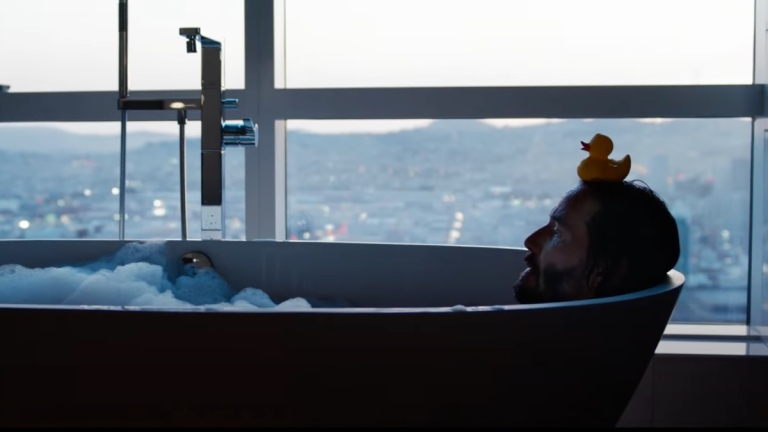
This movie has a scene where Lana Wachowski’s self-insert cries in the bath because Warner Brothers (WHO ARE MENTIONED BY NAME) are forcing him to create a fourth Matrix. I am not making a word of that up.
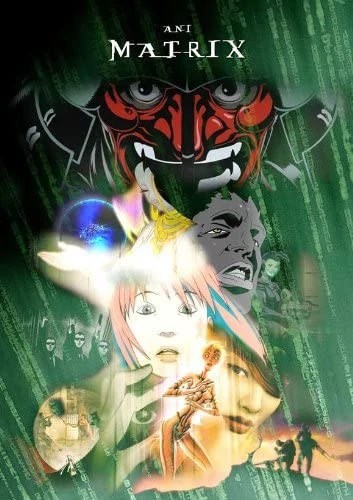
Oh, and it also gave us the subject of this years Shortstember, the Animatrix. This is an anthology series that came about when the Wachowskis visited Japan to promote the first Matrix and visited some of the animé studios that had been such a huge influence on their work. They then commissioned those studios to create nine short films set in the world they had created, which were then released on DVD and on online to promote the second film, Matrix Reloaded. For something basically created as an advertisement for another movie, The Animatrix went on to become the most critically acclaimed part of this entire franchise with the exception of the original film.
So join me this Shortstember as we review the Animatrix. Which ones are good, which ones are bad, and which ones are like wiping your arse with silk.
The video game adaptation has proven a particularly alluring siren for Hollywood over the years. The medium is stacked to the gills with beloved, household name properties with huge fanbases of teens absolutely filthy with disposable income. But, like any siren, it’s probably best to assume that the relationship is not going to end well and skedaddle before you run aground on the jagged rocks of box office disaster. Oh yes, traveler, many studios have tried for the successful video game adatation.
So what’s the problem? Why can we adapt frickin’ LORD OF THE RINGS successfully but not Super Mario Brothers? Well, because your typical video game adaptation is working towards two mutually exclusive goals. On the one had, and apologies for this harsh and mind-blowing truth I’m about to drop on your poor innocent sensibilities, but studios don’t greenlit video game adaptations because the muse demands that they bring Dead Or Alive: Beach Volleyball to the big screen so that the story can be truly appreciated as God intended. They don’t care about the material, they just know these games have large fanbases, and they want those fans to buy tickets in droves. But those fans will rebel and stay away if the studios change too much about the source material. And here’s the big problem: 99% of the time, if you don’t change the source material, you’re not getting a good movie.
That’s because video game plots are like dreams. They’re wonderfully exciting and immersive when you are the one experiencing them, but to an onlooker (or anyone you describe the dream to) it’s alienating and deeply dull. And that’s because people play games and watch movies for very different reasons.*
For example, right now I’m playing Darkest Dungeon. Again. After a month since my last playthrough where I probably sunk the guts of fifty hours. I am rather partial to that game like methheads are rather partial to meth. The premise is, you arrive in a dilapidated hamlet cursed with ancient evil and have to lead waves and waves of heroes into the titular dungeon to finally defeat the Lovecraftian horror that dwells below. And your heroes die. A lot. They get sick, they go mad, they get murdered in countless unspeakable ways. It’s a gruelling, grinding quest where you face constant failure. But every so often, you defeat a significant monster or earn enough to upgrade one of your buildings and it all becomes worth it. The grind and the tedium are what make it satisfying because you, personally, are achieving something. But, much as I love Darkest Dungeon, if I hear that anyone is trying to make a movie of it I will frame that person for murder because that is a terrible, awful idea and would make a terrible, awful movie.
So it’s not simply that video game adaptations are being handed off to talentless hacks. I mean, obviously, that does happen (see everything Uwe Boll has ever done or touched). But, as I hope I’ve demonstrated there are real structural reasons why video game adaptations almost never work.
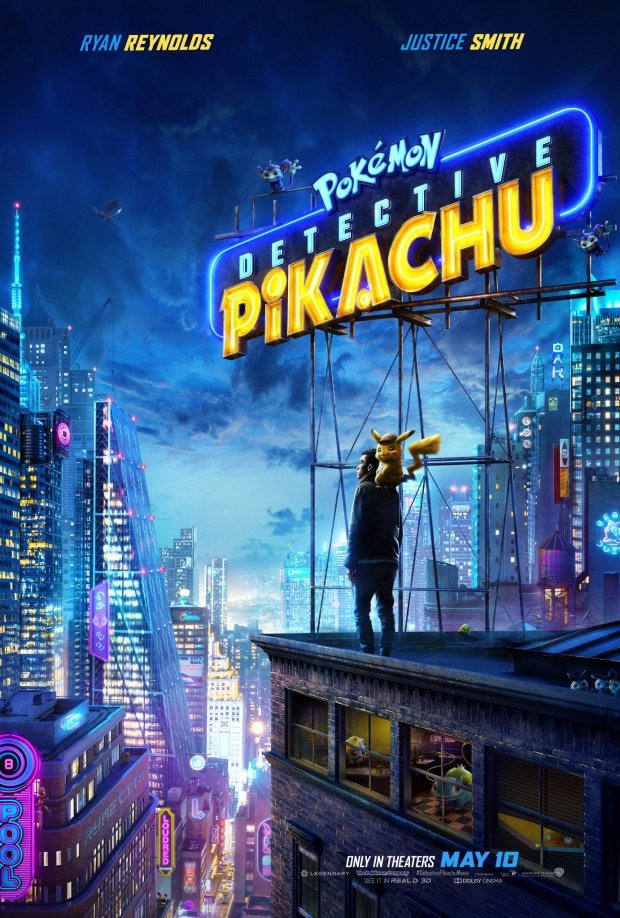
So, how the hell did Detective Pikachu pull it off? Well, it probably helps to have all the money in the world.
Why, it was only last January that I was telling you all how there was a new Covid Variant which was causing our local school and créche to close, meaning I had to mind the kids all day, which meant I was getting absolutely no writing done. And now, look how far we’ve come!
The FUCKING variant has a FUCKING different NAME.
OH BRAVE NEW WORLD.
“Eh Mouse? Your eye is doing that twitch again.”
“Yeah. I twitch now. Deal with it.”
Anyway. Yeah. Shorter review than usual. Not my fault. I wish this virus was a person so I could punch it in the dick, yadda yadda yadda.
I know, I know, I know I said I’d do Black Widow. But that was before I realised a couple of very important things:
Not doing a horror themed post on Halloween is super lame.
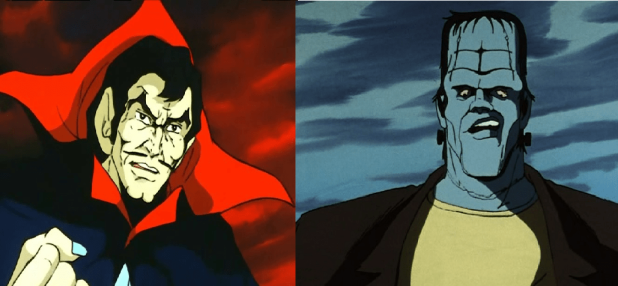
In the 1980s Toei animation did two animé movies based on Marvel’s versions of Dracula and Frankenstein.
One of these movies is regarded as one of the worst animé ever made, which, as you can imagine, is a title with competition that is not merely “stiff” but positively turgid.
Both of these movies are just sitting on YouTube, misshapen shambling things made and then abandoned by their creators to the cruelties of an uncaring world like…someone…I can’t think of a good analogy right now.
I mean c’mon! A crappy animated Marvel Bats versus Bolts on Halloween? How could I not?! I was BORN for this post. Seriously, this is what it’s all been leading to. My magnum opus. My masterpiece.
Our story begins in the late seventies when Toei Animation acquired the rights to the Marvel comics horror series Tomb of Dracula and Monster of Frankenstein. Now, I know what you’re thinking: Who the hell buys the rights to a property based on Dracula or Frankenstein? That’s like paying for a Pornhub Account. They’re public domain for chrissakes! Why not just do your own version of the characters? Well, friends, you’re missing a crucial piece of relevant context, namely that Tomb of Dracula and Monster of Frankenstein were the mutt’s nuts. TOD in particular was one of the very best comics produced by Marvel in the seventies, with one of the all time great portrayals of the Count in any medium. From this acquisition came today’s movies Dracula: Sovereign of the Damned and Kyōfu Densetsu Kaiki! Frankenstein. They are…my God. Words fail me…
These movies are special. They are dear to me. Come, come.
Ah animé, my manic-depressive, intermittently abusive spouse of an art form. When you are good, you are very, verygood. When you are bad, youarehorrid. And when you are weird…well, you’re never not weird so that’s an exercise in redundancy.
Here in the Mouse House animé has actually been having a bit of a moment. Ms Mouse has been binging the Ace Attorney animé as an accompaniment to re-visiting the games on Switch, and I’ve been thoroughly enjoying Cells at Work. That said, and despite having reviewed well over a dozen animé movies and TV shows by this point, I wouldn’t call myself an animé fan (much, much less an authority). Partly that’s because there’s just so damn much of it, and I find it impossible to have a single unified opinion on all of it. It’s like saying “I like food”. Some food is awesome. Some food is made by force-feeding geese. I don’t feel comfortable offering a blanket endorsement.
Oh but hey, do you know who does love animé? You beautiful people. In fact, I got so many requests for specific episodes of various animé shows that I’ve decided to just blitz them all in one post and actually make some progress on that damned list that haunts my every waking moment like Banquo’s ghost.
“Mouse, Moooouse, you said you’d review the Xena and Hercules cartoon all the way back in 2017!”
“Do not shake thy gorey locks at me! It’s not streaming anywhere and it’s $100 on Ebay! FOR A VHS!!”
So these are going to be light, snacky little reviews. I’m not doing any in depth research, I am going in cold, watching these episodes, and telling you if liked them or if I did not, in fact, like them. I’m not going to be doing in depth analysis. I’m not going to be giving you background on their creation. None of that, no sir. In and out and over with in a few minutes which is the most satisfying way to do anything, I have been assured.
Internet reviewing like Momma used to blog. Let’s do this. Garcon? Could you please bring out the appetiser?
No wait, y’know what, we need to go back in time if I’m going to tell this story right.
Further than that.
Further…
Little more…
Perfect. Okay so.
It’s my third year in college and I’ve started going out with this dynamite gal who will, unbeknownst to her, one day be known as “Spouse of Mouse” to a bunch of randos on the internet. Now we’re at that awkward early stage of the relationship where we’re starting to realise that we can’t just keep kissing constantly and we should probably figure out if we have any actual…y’know…common interests.
So I pull my calloused lips off her and says to her, I says “what are you into?”
And she says “Oh…y’know. Comics. Movies. Animé. That kinda stuff.”
Now, believe it or not, but at this early point in the Earth’s history where the molten surface was still hardening, I had not yet seen that much animé. I mean, Pokémon and Speed Racer, sure, but none of the really big name shows or movies. So I go into a video rental shop, avoiding debris from the recently formed Moon that rained down on the hellish surface of the Earth like so much fiery marble, and I go into the animé section and I see a DVD for a movie called Neon Genesis Evangelion: Death & Rebirth. I had heard the name before, but I knew nothing about it and figured “hey, if it’s so famous that even a total noob like me has heard of it, it must be a great entry point to this exciting world of animé! This will be a great way to bond with my new girlfriend who I hope to one day marry and make a supporting character in a weirdly detailed animation review blog/ongoing comedy series!”
So we sit down to watch this movie together, and around ten minutes in she turns around, takes my arm in a vicelike grip and stares straight into my eyes with a gimlet gaze.
“I’m sorry” she said. “I don’t like animé. I just wanted you to think I was cool. Can we please watch something else?!“
And we turned off the movie and watched Family Guy instead. Because, Christ help us, we were young and in love and knew no better.
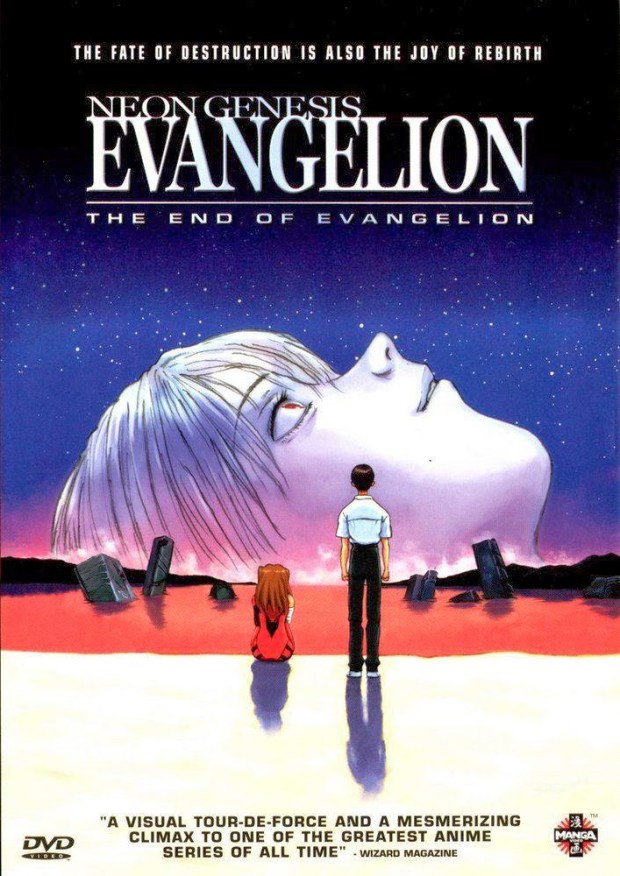
So that was my first introduction to Evangelion and honestly, I could scarcely have picked a worse one. I know now that Neon Genesis Evangelion: Death & Rebirth is one half clip show with the first 26 episodes of the TV series edited into a single 70 minute cut almost perfect in its incomprehensibility for a newcomer, and the other half the first twenty minutes of what would become The End of Evangelion that was due to be released several months later.
And they did this because…because…
Honestly, maybe spite? Like, just another thing to fuck with people trying to make sense of what often seems like a deliberately opaque franchise? Pity anybody trying to make sense of Evangelion, and that’s before they even have to tackle the plot.
There’s the original 26 episode animé series which ended with a finalé so despised that Gainax received death threats.
There’s Neon Genesis Evangelion: Death & Rebirth which is basically the world’s most inscrutable “previously on Buffy” and which also has two alternate versions: Evangelion: Death(True) and Evangelion: Death(True)2 (and Tigger too!)
And then you have The End of Evangelion, which I will be tackling in this very post, which aims to be the true ending of the TV series.
Then there’s the Rebuild series, an entirely new ongoing four movie cycle re-telling the events of the original show and The End of Evangelion which aims to give ANOTHER ending to this rigmarole (sure, why not?).
Oh and there’s the manga (different continuity), the ANIMA light novel series (ditto) the PS2 game, the parody series, the audio dramas, the commemorative plates and on and on it goes. This thing is a beast.
But okay, here goes, I will now attempt to describe what the hell Neon Genesis Evangelion actually is.













 unshavedmouse