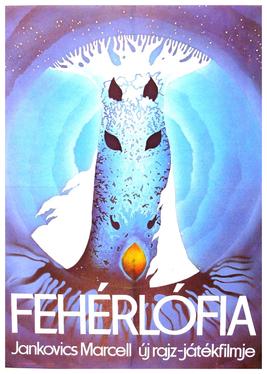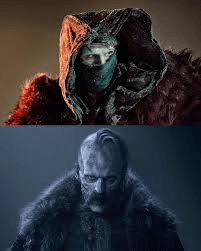
Because the experience of watching Son of the White Mare again could never top the experience of watching it for the first time.
And you know what’s crazy? This is…drumroll please…my final reader’s request. And the reason I left this one to last was because the requester simply asked me to review “something Eastern European” and I just chose this because it looked interesting. I picked this one almost at random.
Back around the time the first eukaryotic organisms were developing on the Earth’s sea floor, I coined the term “Tar and Sugar Movies” to describe the earliest films of the Walt Disney Animated Feature canon. I chose the name in reference to the often jarring tonal shifts between cloying cutsiness and shocking darkness of those films. In retrospect though, I think I got it wrong. The true Golden Age of the Tar and Sugar aesthetic was not the late thirties and forties, but the nineteen eighties.
Here is the typical eighties cartoon experience:
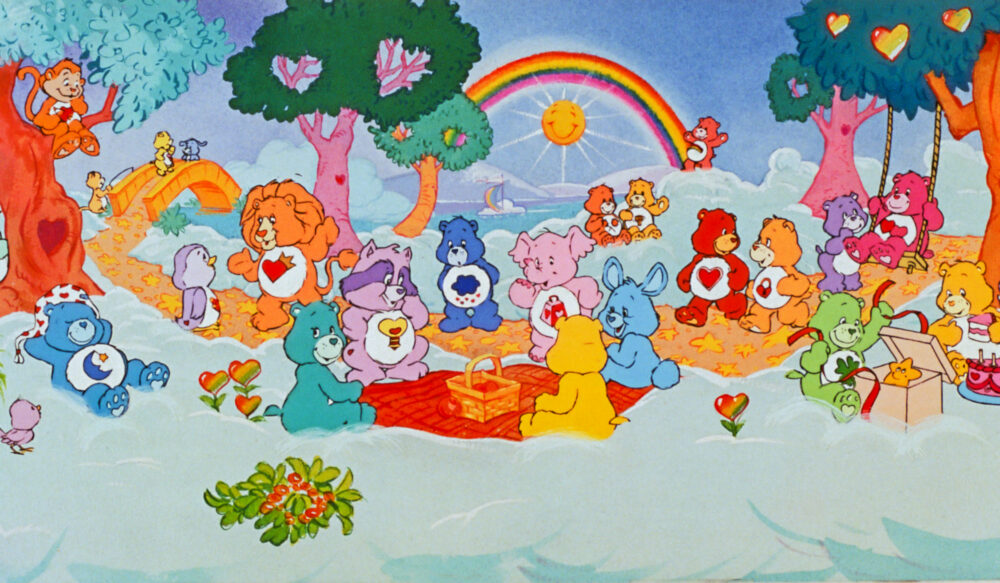
“Golly Gee! This sure is a fun picnic! I just hope that mean ol’ Lord Hexxodrexx doesn’t show up to spoil everything.”
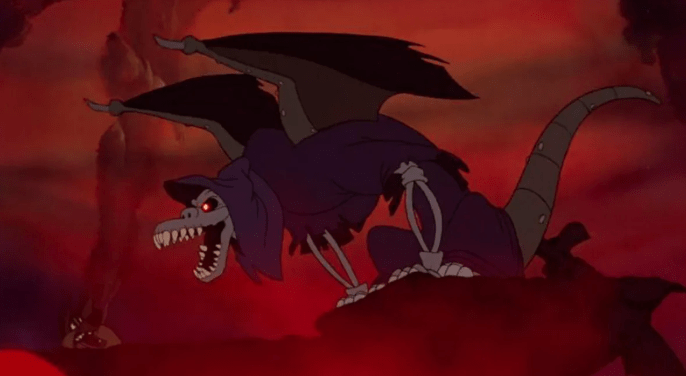
“I HAVE COME TO DEVOUR YOUR FUCKING SOULS!!! GRAAAAAAAA!!!”
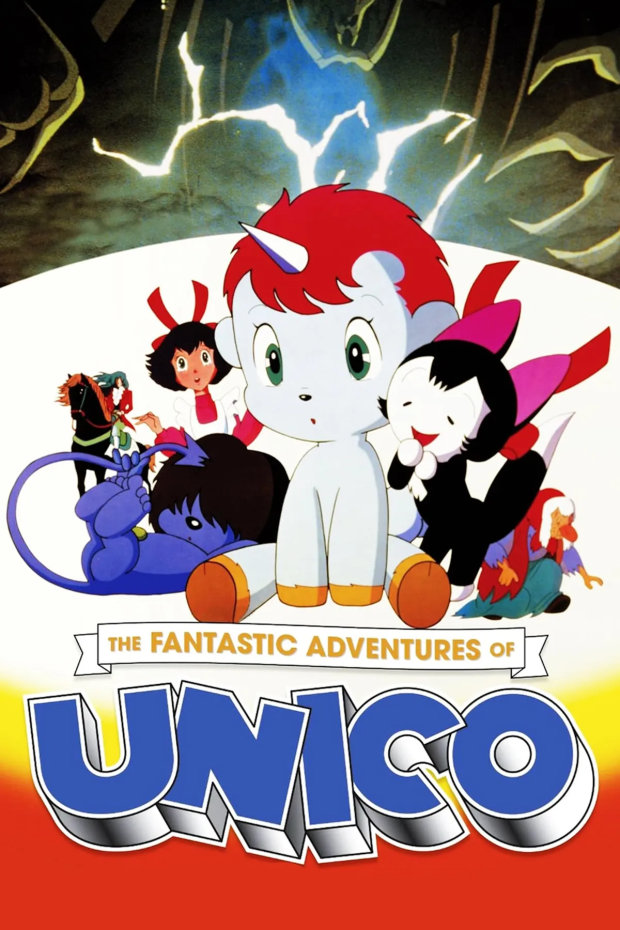
And I think, with today’s movie, I may have found the ultimate Tar and Sugar movie. And, as in most things in this life, they do it better in Japan.
I don’t have to introduce Osamu Tezuka by this point, do I? Born in 1920s Osaka, created manga and animé as we know it, the Japanese Walt Disney, one of the most influential animators of all time you know all this. He was also quite possibly one of the most prolific creators in history, writing and drawing well over 700 manga series in his lifetime encompassing virtually any genre you could think of and targeted at every possible age demographic. The basis for today’s movie was the children’s manga Unico, about a cute little unicorn who has magical powers that he uses to bring happiness and joy to everyone he meets.
Well, I’m sure there’s no way that could possibly take a dark turn.
Funny how these things work out. I was pretty sure I had run out of candidates for this particular feature and then look what happens! A Dracula* AND a Frankenstein movie arrive within a year of each other. Both critically acclaimed, big budget adaptations directed by genuine auteur directors. Bats versus Bolts is back from the dead like a…what’s a good analogy. A mummy? Sure, that works.
So join me in what promises to be a real knock-down drag out fight. Robert Eggers 2024 Nosferatu versus Guillermo Del Toro’s Frankenstein. FIGHT! (Oh, and spoilers past this point).
I saw a Stan Lee interview a long time ago where he was recounting the creation of Spider-Man, where halfway through he mischeviously winked at the camera and said “I’ve told this story so many times that for all I know it’s true”.
That caveat pretty much applies to any story Lee told about the birth of Marvel’s second wave of superheroes in the nineteen sixties. Even if we discount Stan’s (well earned) legendary reputation for self promotion and myth-making, he was an old man with a failing memory. But, screw it. That’s pretty much all of human history. A story we’ve told ourselves so many times, that for all we know it’s true.
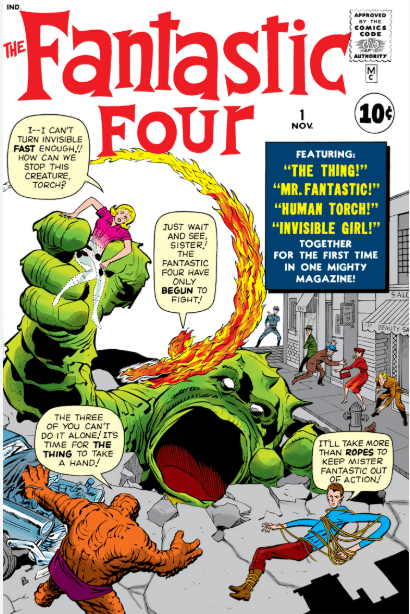
There are conflicting versions of how the Fantastic Four came to be. Stan Lee said that he conceived the idea after publisher Martin Goodman asked him to come up with a superhero team to compete with DC’s then-new Justice League of America. Jack Kirby disputed this, claiming that the team was principally his idea and functioned as a continuation of his work on Challengers of the Unknown for DC. My opinion is…it really doesn’t matter. The book is credited as the co-creation of Jack Kirby and Stan Lee, and if you read it, it becomes immediately clear that it is a co-creation of Jack Kirby and Stan Lee. If you replaced either Kirby’s art or Lee’s writing, it wouldn’t be the same thing. Both men put their stamp on it, and hard. What is, I think, un-contestable is that The Fantastic Four #1 is the single most influential comic book issue since Action Comics debuted in 1938.
While Superman’s debut launched the comic book superhero genre, it had peaked and waned in the years after World War 2. The Fantastic Four not only re-kindled interest in the genre, it set it on the path to near total conquest of the American comic book landscape. This one book acted as a cauldron for concepts that shaped the entire industry, both in a fictional and technical sense. It was working on this book where Kirby and Lee pioneered the “Marvel Method”, where instead of a full script, the writer contributed a broad outline, leaving the artist discretion to shape individual story beats, with the writer then returning at the end of the process to craft dialogue. This was the method that allowed Stan Lee to be so insanely prolific throughout the sixties and much of the seventies. The book also introduced more psychological and narrative complexity than was typical of comic books of the era, when they were still seen as a medium for children. And, of course, I could spend all day listing the iconic characters that were introduced in the pages of this one book and how it acted as the Big Bang for the nascent Marvel comics universe. Fantastic Four was the book where Stan Lee became STAN LEE and Jack Kirby became JACK KIRBY. Although they were both seasoned industry veterans, it was here that Lee honed his trademark mix of action, medodrama and wise-acre comedy. And Kirby? Kirby underwent a transformation from a talented artist to a one-of-a-kind icon of the medium.
As for adaptation to other media, the Four has been well represented with numerous animated series and a radio show in the seventies starring NO FUCKING WAY THAT IS TRUE! BILL MURRAY?! BILL MURRAY PLAYED THE HUMAN TORCH!!!?!
“No one will ever believe you.”
But for such an important property, the jump to live action took a lot longer. This is just a difficult property to adapt. It’s one thing to stick a stuntman in a Spider-man costume and have him punch a few goons. It’s quite another to set him on fire and launch him into space to battle world-devouring space gods (the union will fucking eat you alive). So it wasn’t until the late eighties when special effects driven science fiction was having a moment that the rights were finally sold. That resulted in a movie so good that Roger Corman hid it under the floorboards to ensure it was never tainted by the eyes of a sinful world. Come the 2000s the rights were picked up by Fox and we got the Time Story duology which, while undergoing something of a positive reappraisal these days, were deeply compromised.
Then there was JESUS CHRIST WHAT EVEN IS THIS?
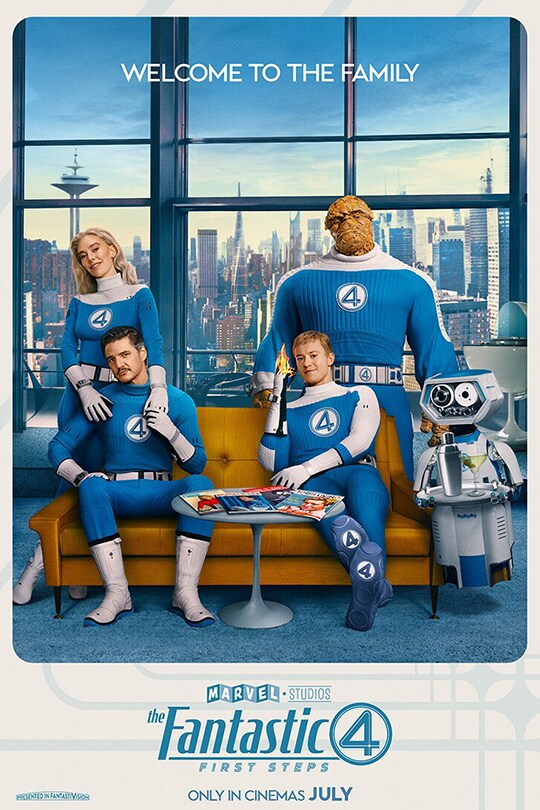
But, at last, here we are. The Fantastic Four, in the MCU, as God and Kevin Feige intended, coming back to rekindle interest in a superhero genre that had almost died due to lack of interest.
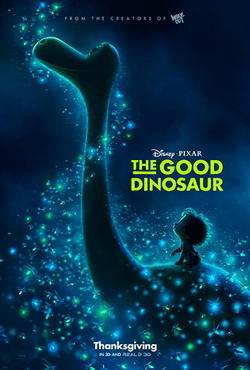
Maybe it’s me. Maybe I just shouldn’t be allowed near CGI animated dinosaur films. I don’t know why this particular mircogenre of movies manages to so consistently stick in my damn craw. I, of course, have Dinosaursitting proudly at the very bottom of my rankings of the Disney canon and I have every hope that it will remain that way for a long time.
And I would still gladly watch Dinosaur over TheGood Dinosaur. Mainly because, I can at least watch Dinosaur from beginning to end. The Good Dinosaur is the second last movie on my requested reviews because I have put it off over and over and over again. I cannot finish this thing. It bores the piss out of me.
But, before we crack on, I want to explain why I’m not doing a full plot recap for this one.
Still not entirely sure this isn’t my wife pulling off an amazingly ambitious prank.
3. This movie has practically no plot to recap.
4. Disney Plus was dicking me around something fierce, constantly crashing and freezing and making the experience of watching this movie even more interminable than normal. This, by the way, was also during Kimmelnacht so you can understand why I was eyeing my Disney Plus subscription with a steely eye and whispering…
So, not a recap, more a series of observations about why this fucking movie annoys me so much.
Yeah, I’m sure you’re all shocked. After watching James Gunn’s Superman I decided it was high time that the big blue boy scout got the same treatment as a certain pointy eared co-worker of his.
So yes, we’re going to be looking at every live action Superman movie while we wait for Matt Reeves to finish the script for The Batman 2 roughly around the time of the heat death of the universe (I am not bitter, I am passionate.)
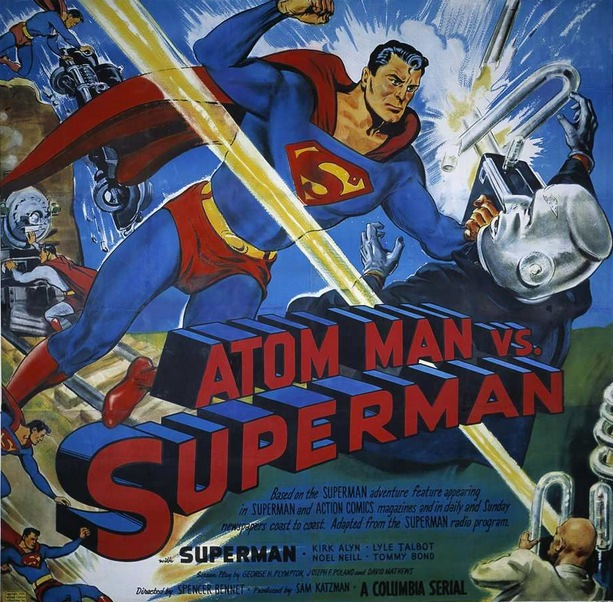
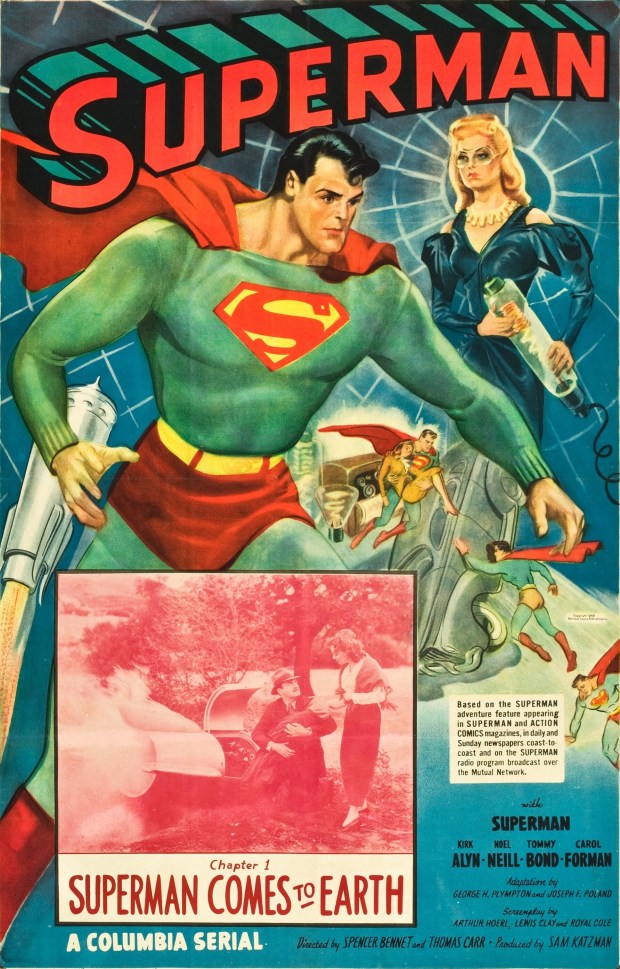
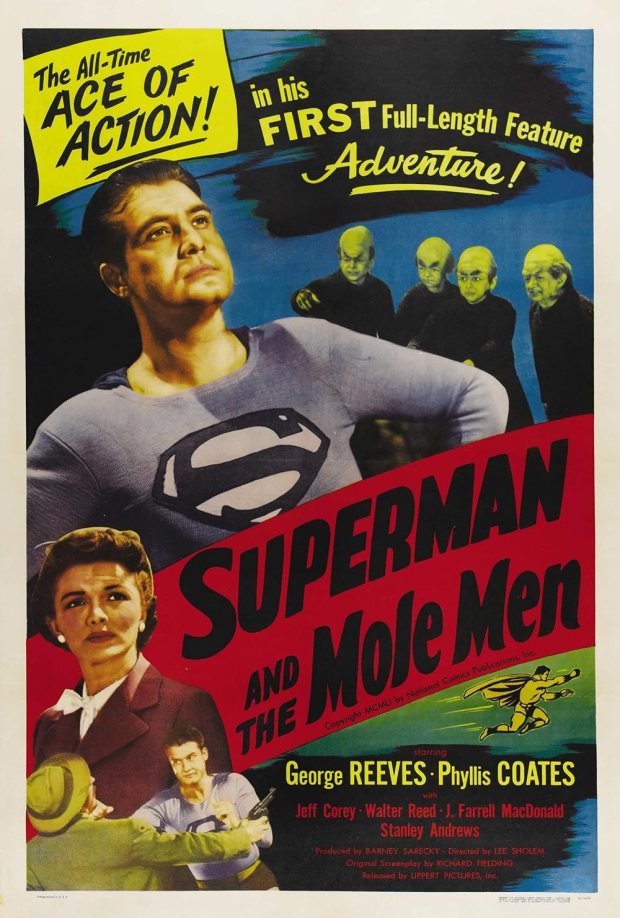
Let’s begin at the beginning. It’s 1948, a mere decade after Superman’s debut in Action Comics and the character is already a bona fide cultural icon with a radio series, newspaper strips, some of the greatest cartoon shorts ever made and a metric shit ton of merchandise. But, weirdly, despite kicking off the entire superhero genre (asterisk asterisk) Superman was actually pretty late to the party when it came to being adapted into live action.
The nineties, as we’ve discussed previously, were a pretty damn bad time to be a Marvel comics fan but there were still bright spots here and there. One of these was TheThunderbolts, a new superhero team that was introduced in The Incredible Hulk. They were presented as a new team stepping up to replace the Avengers who were all believed dead after the events of Onslaught (in actuality, they were all in a parallell universe being drawn by Rob Liefeld).
Sometimes dead’s better.
Anyway, the Thunderbolts then returned for their own series written by Kurt Busiek. It’s a pretty standard superhero team story right up until the shocking twist at the end of the first issue.
The Thunderbolts were actually villains, a team put together by Captain America’s enemy Baron Zemo to pose as superheroes while he consolidated his grip on the underworld. Of course, they eventually decide they actually like being superheroes and turn face, and since then the Thunderbolts team has basically been, well, Marvel’s Suicide Squad let’s not dance around the issue. It’s a team for former supervillains to try and reform and be good guys. The version of the team that today’s movie is based on comes from the mid-2000s Dark Reign…
” Mouse stop the review right now!”
“What? Why?
“Me and the other maps are boycotting this movie! Artie Rosen created the Sentry, and yet his estate hasn’t been paid a cent in royalties!”
“Artie…oh crap. Guys I’m sorry to have to tell you this. Artie Rosen doesn’t exist. He never did.”
“What? But then who delivers gifts to good little maps on Rosenmas?”
Okay, okay. Detour. Let’s talk about the Sentry, one of the first original Marvel superheroes of the new millennium and the subject of one of the most ingenious pieces of guerilla marketing I can recall. If you want a full breakdown of the history of the Sentry hoax, this has got you covered but here’s the cliffnotes version: Marvel basically fooled the comic reading public into believing that there was an artist named Artie Rosen who worked with Stan Lee back in the late fifties who had recently passed away. And in Rosen’s possessions his wife found sketches for a lost superhero that he had supposedly been working on with Stan Lee. This, of course, would be the comic book equivalent of the finding of the Lost Caravaggio. They even got Stan Lee himself in on the scam. In reality, this was all marketing to build up hype for the release of The Sentry by Paul Jenkins and Jae Lee, a mini-series about a superhero who was erased from the history of the Marvel universe and who no one remembers. It’s a good story, not an all time classic, but it’s a fun read. We get to see Bob Reynolds interacting with different Marvel heroes in different eras, drawn and written in the style of the time. But here’s the thing. The series ends with Reynolds realising why everyone forgot him: he and his arch-enemy The Void are the same person and every act he does as the Sentry is balanced with an evil act committed by the Void. Therefore, the only way to protect the world from the Void is for the Sentry to go away again. So the series ends with Bob once again wiping the world’s collective memory of his existence and going back to his normal humdrum life. All well and good. But then…
Brian Michael Bendis reintroduced the Sentry as a member of his New Avengers team. And this is where Bob Reynold’s troubles really began, and how he began his journey to become one of the most mishandled characters in Marvel’s eighty year history.
Here was the problem. You may have heard Sentry described as “Marvel’s Superman”.
No. No no no. The Sentry makes Superman look like a coughing baby. The Sentry makes PRE-CRISIS SUPERMAN look like a coughing baby. The Sentry is so powerful I have to break up the list of his powers into two separate screencaps:
Also, he plays the ‘cello.
Like, fucking LOOK at that list. This guy is the physical embodiment of “fuck you I win”. You put him on any team and he renders every other member instantly useless. He should be able to solo the entire rogue’s gallery of the Marvel universe in a single afternoon. Bendis got around this by establishing that Bob was suffering from severe depression and agoraphobia and would only come out of his room to save the world if everyone was super nice to him. This admittedly, led to some pretty awesome moments, like Sentry’s iconic battle with the Hulk during the World War Hulk storyline.
Over the years, Bob’s mental problems got worse and worse and it was an admittedly effective source of tension; what happens if God stops taking his meds and snaps? But that just reduced the character to a ticking bomb and that’s not really sustainable over the long haul. Either the bomb has to go off or the audience realises that the bomb is never going to go off. What the character needed was a stable status quo, a default baseline. And every attempt to give him one failed. Everything about Bob was constantly being re-written every time a new writer got his hands on him, particularly his relationship with the Void. Writer A says the Void never existed and was all in Bob’s head. Writer B says the Void was the angel of death from Exodus. Writer C says he was a loving family man. Writer D says he was an abuser who cheated on his wife. Was he once a lab assistant, a junkie, or made the Sentry as part of the Weapon X programme? Flip a three-sided coin, bucko.
Within an impressively short period of time the character had been reduced to an unsalvageable mess and was killed off, only to be periodically brought back as a super-powered threat that needs to be killed off again. But, as someone who always had a soft spot for the character, I was happy to hear that the Sentry was going to be making his debut in the MCU. Surely they’ve learned from past mistakes and are finally ready to do this character right?
The Moomins are a topic that I feel I understand less the more I try to get my head around them. I tackled another Moomin film, Moomin and Midsummer Madness, around ten years ago so I should have been ready for this. And yet, here I am, looking at this film all…
A brief refresher, the Moomins are a multimedia franchise created by Finnish author Tove Jansson that encompasses picture books, novels, short stories, TV shows, movies, theme parks and a comic strip written and illustrated by Jansson herself. The comic strip that inspired today’s film, Moomins on the Riviera, began in 1954 and ran until 1975. This was actually the second Moomins comic strip, the first having appeared in a left wing newspaper but which failed because the readership considered the Moomins to be “too bourgeois”, because even in the late forties there were people who needed to touch some fucking grass.
So what’s it all about?
The series features things called Moomins doing stuff.
I can’t really get more specific than that.
Sometimes they don’t do stuff. Sometimes they just chill.
Okay, I gotta be careful here. Last time I reviewed a critically acclaimed 2010s animé I did an almost complete 180 on my opinion of it in the process of writing the review with the result being the most schizophrenic thing I’ve ever written on this blog.
“Mouse. You know that’s not true.”
“Yeah, you’re right, picture of a map I’ve been talking to for thirteen years.”
My point is, I’ve been holding off on writing this review just in case I have a similar reversal in opinion on Lu Over the Wall, but I’m pretty certain that my feelings on it are settled:
I think this is a mildly charming (if frustratingly unoriginal) “lonely boy makes friends with supernatural creature” story that is thoroughly undone by disastrous visuals and animation.
This is entirely subjective. I’m not saying the art style is bad per se. I’m just saying I hate it with every fibre of my being.
It’s not a job I’d want as a writer, I’ll tell you that much.
Trying to write the first movie about a black Captain America in such a viciously polarised time is a hell of a poisoned chalice and I don’t envy the approximately eighteen thousand screenwriters who worked on Captain America: Brave New World. What does it mean for a black man to represent America given, y’know, the whole business? That has to be delved into right?
Or does it? Is it fair to insist that Sam Wilson has to make some great serious statement on The Issue of Race, when you would never ask that of Steve Rogers? Shouldn’t Sam Wilson just be able to be Captain America without it being a whole thing?
Personally, and this is just my instinct as a writer, I would have focused on winning the crowd over in the first movie with a really kickass Captain America movie and keep the heavy stuff for further movies down the line once Wilson/Mackie had been accepted by a critical mass of the fanbase as the new Cap.
I don’t know how I would have done that exactly.
I can tell you one thing: I wouldn’t have done this.
This being a stealth sequel to 2008’s The Incredible Hulkwhere Captain America feels like a supporting character in his own damn movie.