“You sons of bitches, we were so close. We were so close!“
After a string of godawful mediocrities and outright turds the likes of which the canon hadn’t seen since the earliest years of the millennium, the opportunity was ripe for Disney to start filling the executive-grade wicker basket with heads and put some people in charge with fresh ideas and real talent.
But noooooooooooo.
Disney pulled the old “take the first three episodes of a scrapped TV show, wash it off and serve it up as a new movie” trick they used to pull in the direct-to-video sequel era and what did you do? Did you laugh? Did you scorn such obvious desperate chicanery? Did you hell!
ONE BILLION AT THE BOX OFFICE. FOR THIS.
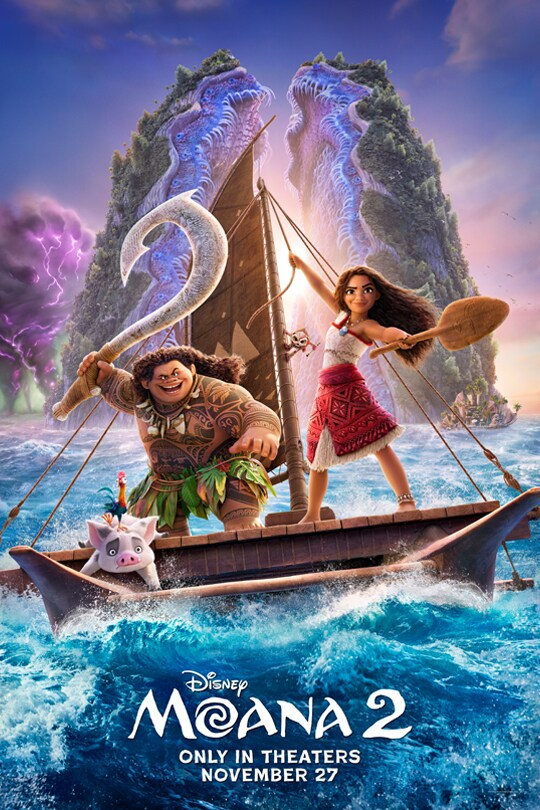
We could have had another Renaissance with a bit of luck. Instead, I’m going to be reviewing Frozen 13 when I’m in my nineties. Because obviously the reason Strange World, Rayaand Wish flopped was not that they were poop on a bun, it’s because they were original ideas (kinda). I mean, it’s hard to make the argument that quality was the issue when all it took them to make a billion dollars was to put the number “2” after the title of one of their most popular films.
The future is bleak, and I’m not just saying that because the proliferation of AI slop online means that every time I search for images to use I run the risk of seeing something that will make me want to put my head in a mouse-trap.
If you want to imagine the future, picture pregnant cross-eyed Moana stamping on a human face, forever.
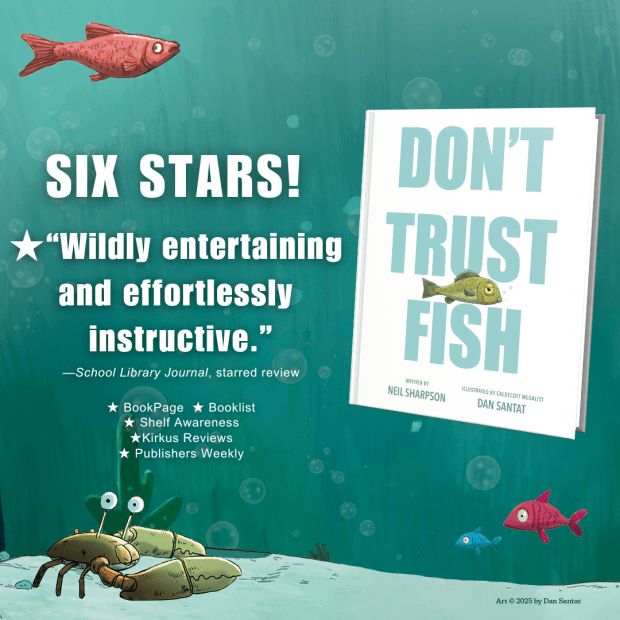
Here’s a lovely starred review from Shelf Awareness for Readers and HERE is a link to the March 2025 issue of Story Monsters including an interview with yours truly.
Do I wish I lived in a world where shameless self promotion wasn’t necessary to sell a book about fish? Yeah. What’s your point?
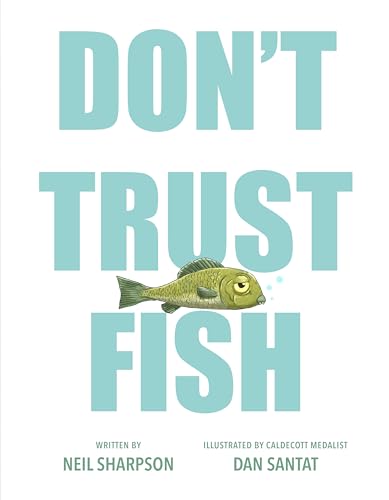
My first kid’s book with illustrations by the inestimable Dan Santat is now out! Swim to your nearest bookseller and get your copy of Don’t Trust Fish!
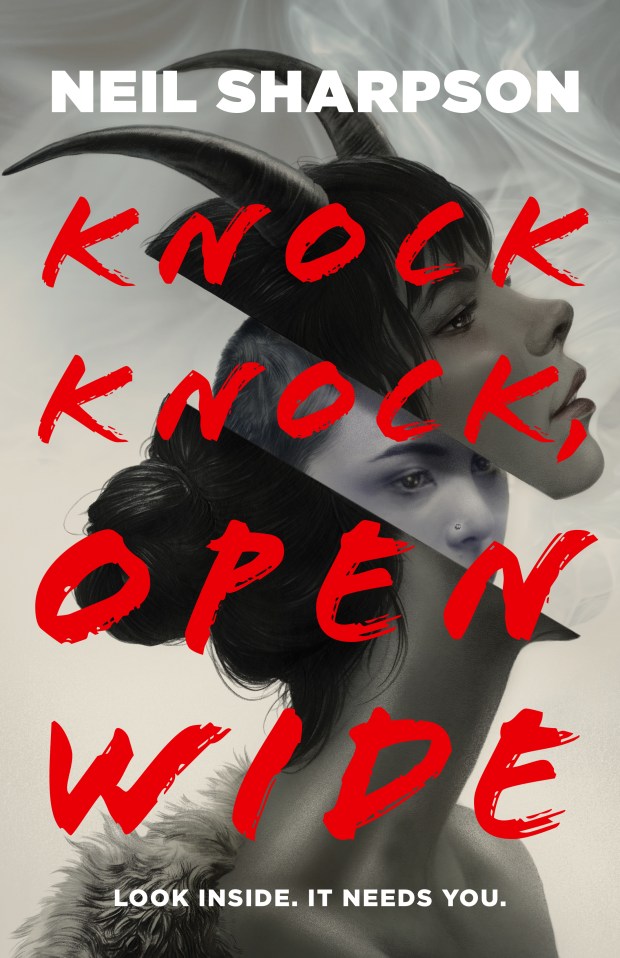
Great news! At long last, Knock Knock, Open Wide will be getting an audiobook version set for release on June 17th. It’s being produced by Tantor Media and will be narrated by Irish actress Aoife McMahon!
Hello boyos and cailíní, new episode of Now That’s What I Call Nostalgia has dropped and, appropriately, it’s a massive retrospective on Irish themed cartoon episodes from the the 90s like Gargoyles, Teenage Mutant Ninja Turtles, Johnny Bravo and *shudder* Captain Planet and the Planeteers.
You have probably never heard of Theodore Kaufman, an obscure American self-published author who wrote in the 1940s. Hell, even if you’d been living in America in the 1940s you almost certainly would never have heard of him. However, if you were a German living in the Third Reich during the war you would absolutely have known who he was, and would have believed him to be one of the most dangerous men alive.
In 1941 Kaufman self-published Germany Must Perish!, a bright little volume about how Germans are pure evil, just bad on the genetic level, and that the only way to ensure the peace of the world was to sterilise the entire nation and let them die out. Now, you might (I really hope you wouldn’t, but you might) argue that race-based genocide is fine if the other guy started it first, but that’s because you forgot about Goebbels.
You forgot about Goebbels, you utter chump.
Goebbels milked Kaufman’s little pamphlet for everything it was worth, using it to turbocharge Germany’s propaganda machine and convince ordinary Germans, even those who hated the regime, that the war was a literal battle for their survival as a people. Goebbels presented Kaufman as FDR’s Svengali, the intellectual driving force behind America’s war against Germany. When, in reality, he was the forties equivalent of the least unhinged political Tiktoker. Germany Must Perish! was such a gift to Goebbels that the American journalist Howard Smith remarked:
“No man has ever done so irresponsible a disservice to the cause his nation is fighting and suffering for than Nathan Kaufman.”
Which is why, even at the risk of friendly fire, it is so important to call out people on your own side of the aisle who are saying evil, crazy shit. Not just because it’s evil and crazy (though that should be enough reason) but because it’s tactically vital.
We can dismiss Kaufmann’s thesis out of hand, just as any racially essentialist argument should be dismissed out of hand, but that still leaves the questions:
Why Germany? Could it have happened anywhere and Germany just drew the short straw? Or was there something particular about Germany that made its local manifestation of fascism so uniquely malevolent? And if so, how much blame do ordinary Germans bear for the actions of the regime?
My, this is a fun one, isn’t it?
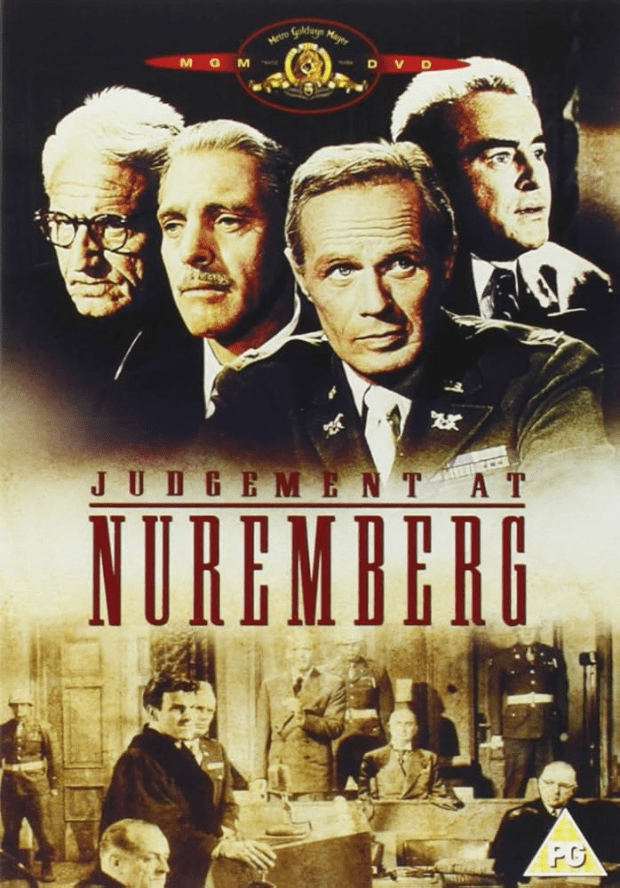
It’s not something that can ever be objectively proved. I’ll keep my own answers until the end of the review but they’re just, like everything else on this blog, my own opinion. Today’s movie grapples with those very questions. And it begins within a man arriving in the ruins of Nuremberg, as the ashes of the last war still cool, and a cold wind has begun to blow in from the East…
Join us for the latest episode of Now That’s I Call Nostalgiawhere we talk about Thomas the Tank Engine Labor disputes! Police corruption! Crime! Prejudice! And an all train remake of The Cask of Amontillado!
Probably the most thankless job a director can set himself is trying to adapt a beloved stage musical to screen, as the people you most need to win over for your movie to be a success (fans of the stage version) are also the people most likely to tar and feather you in the streets over the slightest deviation from the source material. You may think comic fans get salty about adaptation changes, but they have nothing on musical theatre nerds.
That’s probably why, despite musicals still being a lucrative movie genre, stage musicals adapted to screen are a rare beast and only getting rarer. Of the 50 top grossing movie musicals, only six began life on stage. The rest are either originals like The Greatest Showman, animated musicals or jukebox musicals like Bohemian Rhapsody or (sigh) Alvin and the Chipmunks.
Of course, it wasn’t always thus. The middle decades of the 20th century were a golden age for adaptations for stage musicals as that was the point where theatre and cinema were most alike. Colour photography and improvements in sound tech meant that cinema could finally match the visual and audio splendour of theatre. But, cinema had yet to fully embrace the freedom inherent in the medium and movies of the first half of the century often closely resembled filmed plays with constructed sets and static cameras. As cinema became less and less indebted to its theatrical roots, adapting stage musical to screen became a lot more challenging. To put it simply: movies are not plays and plays are not movies. And trying to turn one into the other can result in some pretty radical changes. And all those challenges are right up on screen in Into the Woods, a movie based on one of the most inherently theatrical musicals of the modern era.