fantastic four

“How’s that sauce coming? Yeah, I’ll be the judge of that.”

I saw a Stan Lee interview a long time ago where he was recounting the creation of Spider-Man, where halfway through he mischeviously winked at the camera and said “I’ve told this story so many times that for all I know it’s true”.

That caveat pretty much applies to any story Lee told about the birth of Marvel’s second wave of superheroes in the nineteen sixties. Even if we discount Stan’s (well earned) legendary reputation for self promotion and myth-making, he was an old man with a failing memory. But, screw it. That’s pretty much all of human history. A story we’ve told ourselves so many times, that for all we know it’s true.

There are conflicting versions of how the Fantastic Four came to be. Stan Lee said that he conceived the idea after publisher Martin Goodman asked him to come up with a superhero team to compete with DC’s then-new Justice League of America. Jack Kirby disputed this, claiming that the team was principally his idea and functioned as a continuation of his work on Challengers of the Unknown for DC. My opinion is…it really doesn’t matter. The book is credited as the co-creation of Jack Kirby and Stan Lee, and if you read it, it becomes immediately clear that it is a co-creation of Jack Kirby and Stan Lee. If you replaced either Kirby’s art or Lee’s writing, it wouldn’t be the same thing. Both men put their stamp on it, and hard. What is, I think, un-contestable is that The Fantastic Four #1 is the single most influential comic book issue since Action Comics debuted in 1938.
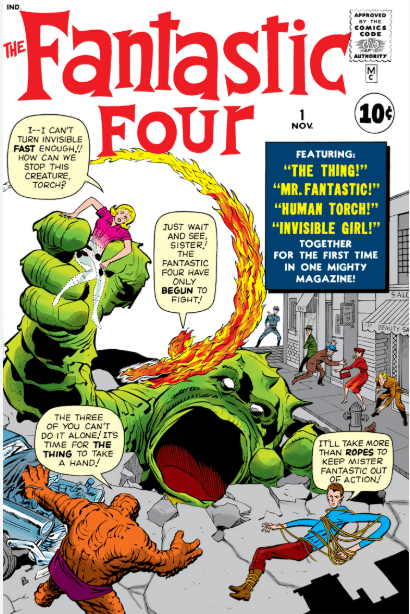
While Superman’s debut launched the comic book superhero genre, it had peaked and waned in the years after World War 2. The Fantastic Four not only re-kindled interest in the genre, it set it on the path to near total conquest of the American comic book landscape. This one book acted as a cauldron for concepts that shaped the entire industry, both in a fictional and technical sense. It was working on this book where Kirby and Lee pioneered the “Marvel Method”, where instead of a full script, the writer contributed a broad outline, leaving the artist discretion to shape individual story beats, with the writer then returning at the end of the process to craft dialogue. This was the method that allowed Stan Lee to be so insanely prolific throughout the sixties and much of the seventies. The book also introduced more psychological and narrative complexity than was typical of comic books of the era, when they were still seen as a medium for children. And, of course, I could spend all day listing the iconic characters that were introduced in the pages of this one book and how it acted as the Big Bang for the nascent Marvel comics universe. Fantastic Four was the book where Stan Lee became STAN LEE and Jack Kirby became JACK KIRBY. Although they were both seasoned industry veterans, it was here that Lee honed his trademark mix of action, medodrama and wise-acre comedy. And Kirby? Kirby underwent a transformation from a talented artist to a one-of-a-kind icon of the medium.
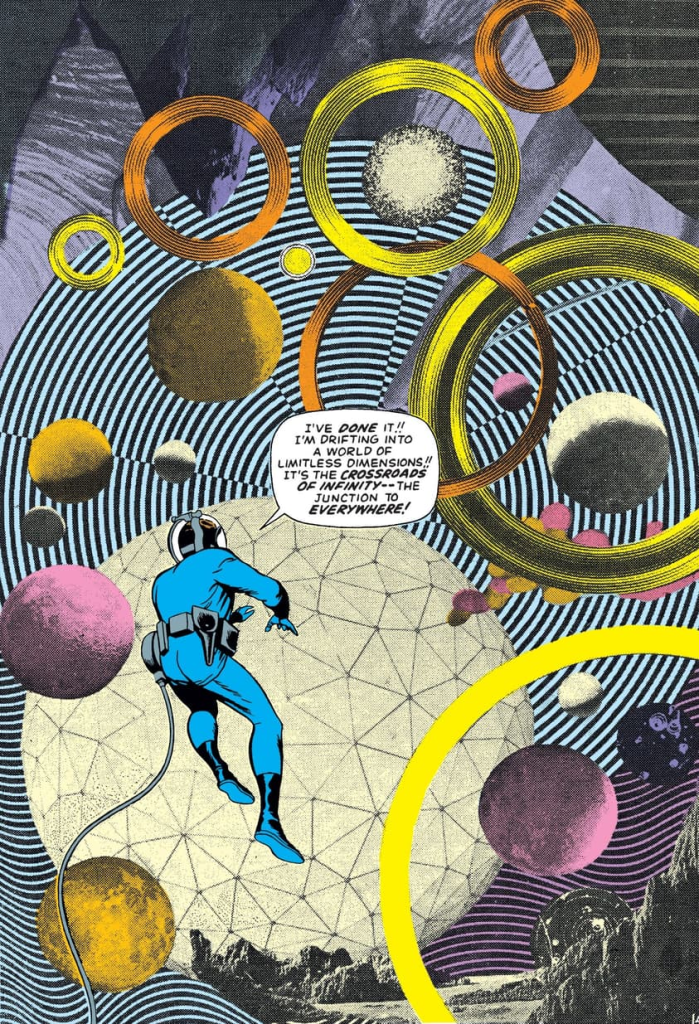
As for adaptation to other media, the Four has been well represented with numerous animated series and a radio show in the seventies starring NO FUCKING WAY THAT IS TRUE! BILL MURRAY?! BILL MURRAY PLAYED THE HUMAN TORCH!!!?!
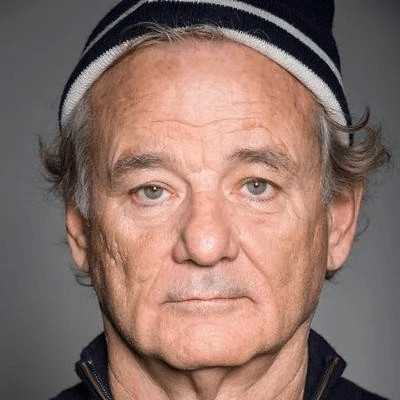
“No one will ever believe you.”

But for such an important property, the jump to live action took a lot longer. This is just a difficult property to adapt. It’s one thing to stick a stuntman in a Spider-man costume and have him punch a few goons. It’s quite another to set him on fire and launch him into space to battle world-devouring space gods (the union will fucking eat you alive). So it wasn’t until the late eighties when special effects driven science fiction was having a moment that the rights were finally sold. That resulted in a movie so good that Roger Corman hid it under the floorboards to ensure it was never tainted by the eyes of a sinful world. Come the 2000s the rights were picked up by Fox and we got the Time Story duology which, while undergoing something of a positive reappraisal these days, were deeply compromised.

Then there was JESUS CHRIST WHAT EVEN IS THIS?
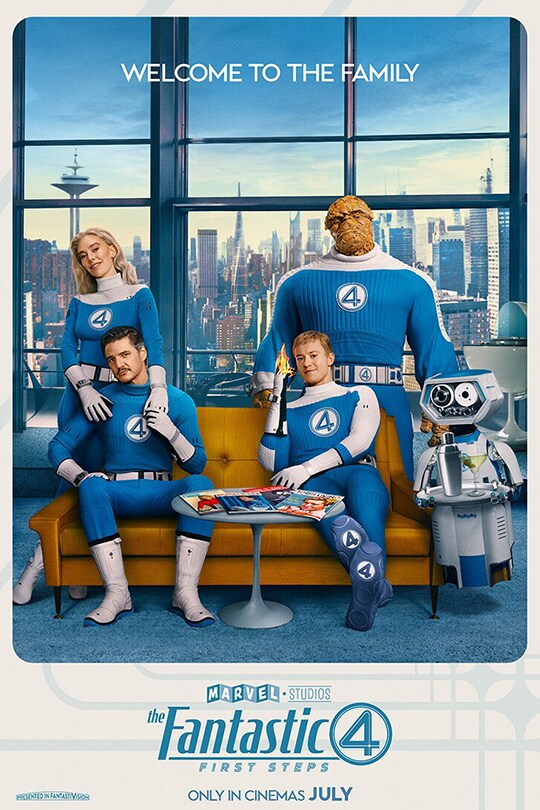
But, at last, here we are. The Fantastic Four, in the MCU, as God and Kevin Feige intended, coming back to rekindle interest in a superhero genre that had almost died due to lack of interest.
(more…)

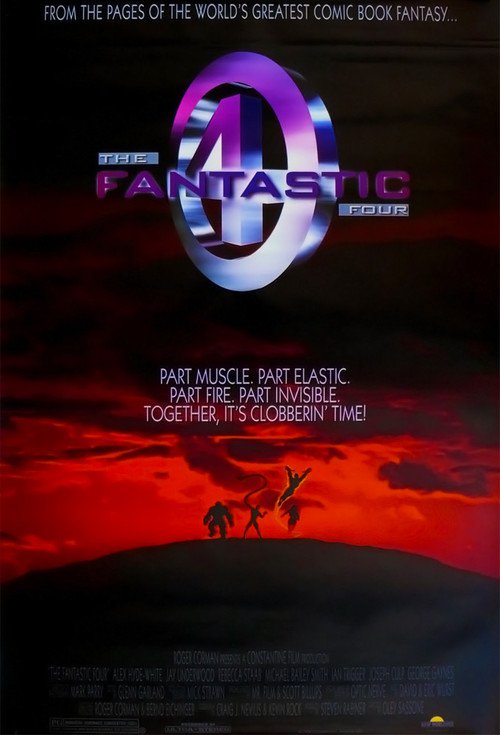
The Fantastic Four (1994)

(DISCLAIMER: This blog is not for profit. All images and footage used below are property of their respective companies unless stated otherwise. I do not claim ownership of this material. New to the blog? Start at the start with Snow White.)

Sometimes, a movie comes along that is so notorious, so terrible, so gosh-fucked appalling that no one reviewer may safely tackle it alone. To that end, Unshaved Mouse has teamed up with the illustrious NewtCave and Erik Copper to review the never-released Roger Corman-produced superhero movie; The Fantastic Four. 

UM: Hi guys and welcome to Unshaved Mouse. Make yourselves comfortable, don’t touch the continents. They bite.

“Hssssssssssss!”


UM: So. Erik. Newt. What the fuck did we just watch?

EC: I was under the impression that we were just witness to the birth of the anti-christ of comic book movies.

NC: Pretty much. This thing gets my vote for “Worst Marvel Film.” Including Howard the Duck.

UM: Was it though? I mean, can’t we grade of a curve? There were extenuating circumstances here.

NC: Fair point, furry one. But let me put it this way. Elektra? Released in theatres. Hulk? Released in theatres. Howard the Duck? For some reason, still released in theatres. Roger Corman’s Fantastic Four? Kept secret. Kept safe.

EC: Gandalf’s wise words were still not strong enough to keep this mess off of the internet, though. Because as we all know, technology is the MOST powerful of the dark arts.

UM: Speaking of dark arts, Erik, aren’t you supposed to be dead? 

EC: Huh?

UM: Yeah. I totally fed you to a shark at the end of our last review.

EC: Oh yeah. Dick! That was the single most tortorous experience of my life! I had to chew my way out of the shark’s stomach! I still have nightmares! I

UM: Heh.

EC: It’s not funny!

UM: It was funny to everyone who wasn’t you. Which, y’know, was the entire human race. Needs of the many, Erik.

NC: Should I step outside while you two work through your prior history?

UM: Nah baby, we cool. Let’s get started. Newt, as our resident Marvel buff, what can you tell us about the good ol’ Fantastic Four?

NC: Probably more than is either necessary or interesting. But, limiting myself to relevant information, the Fantastic Four have often been referred to as “Marvel’s First Family.” and that’s only because that’s exactly what they are. Back in the ancient past of 1961, Stan Lee took it upon himself to create a team of superheroes like none that had come before. Instead of a bunch of square-jawed Super Friends, he elected to make a team that was more like a family trying to make the best of a bad situation.

UM: With Square Jaws.

EC: Rather rubbery and slightly malleable jaws, too.

NC: When The Fantastic Four #1 hit newsstands, they didn’t even have costumes or secret identities. They were all about breaking the norms of what people had come to expect from the superhero genre.

UM: I think the FF was really the big bang of the modern Marvel universe. So many of the characters and concepts that make up that world got their start in the pages of Fantastic Four. Doctor Doom, Black Panther, the Inhumans, the Skrulls, the Kree, the list just goes on and on.

NC: Exactly. The company wasn’t even called “Marvel” before the FF came along. Anything before that was published under the not-so-timeless brand of “Timely.”

EC: It was incredible how fast the superhero boom took off. Most of the heroes we know today didn’t even start off as anything other than one-off stories that were just too popular to remain that way. Spider-Man? He first appeared in Amazing Fantasy #15. Thor? He was first introduced in Journey into Mystery. Iron Man? Tales of Suspense. These heroes didn’t start off timeless, but they slowly captured our hearts. The Fantastic Four is no different.

UM: Which is kind of why it’s so sickening how Marvel are treating this title now, basically sweeping it under the rug because they can’t get the movie rights back from Fox.

NC: Well, to be fair, they’re doing that with ALL the properties they haven’t regained the movie rights to, which seems a bit like dirty pool to me.

UM: I dunno dude. The day I see Wolverine and Spidey at the dole office maybe. It seems like the Fantastic Four have gotten it worse than anyone.

EC: I don’t even know who’s side to be on. Fox is being a child not willing to share its toy, and Marvel is being a child throwing a tantrum because they want that toy SO VERY BAD.

NC: It’s a crappy situation, and I think everybody involved lost. I mean, I know we’re supposed to reserve judgement on Fant-four-stic… but yeah. ‘Nuff said, am I right?

UM: I will lay good money on it being the best Fantastic Four film ever.

EC: I will lay good money on it being an attempt. And that’s about all I can give it.

NC: I will lay good money on the team being rebooted with the SAME DAMN STORY enough times that the filmmakers all throw their hands in the air and finally adapt Neil Gaiman’s Marvel 1602.

UM: Ah, the Fantastick Four!

EC: Yes, and Peter Parquagh! (GOD WHY?!)

UM: Okay, but what about today’s movie? If I may?

NC: Go right ahead.

UM: I thank ye. So, back before Marvel decided to stop letting other companies fuck up their characters and just do it right themselves, they sold the movie rights to the Fantastic Four for a song and a wink to a German producer named Bernd Eichinger. Eichinger had a limited amount of time to make the movie or else the rights would revert to Marvel so, when he couldn’t get the money in time, he teamed up with legendary cheapo movie-maker Roger Corman to make a superhero movie in three weeks with $1 million. The resulting…thing…was never meant to be seen by human eyes. It was solely created to allow the company to hold on to the movie rights. Thankfully, such shady business practices would never occur in Hollywood today.

Ha! It's a joke! Because it happens all the damn time!

Now how did that get there?

UM: So, just how bad can it be?

(more…)