humour

“You think me strange? Good strange, or bad strange?”

First dates are essentially scams. You sit down to dinner with someone you don’t know, and try to pretend that you’re someone else. Someone charming, and succesful, and definitely not into doing weird things with fish. No sir. Not you. The second and third dates are more or less the same. But by the time the fourth date rolls around you need to start being honest. That’s where you take your date on a long walk and say “Look. I really like you. I like where this is going. But if we’re going to have something together I’m going to have to tell you just how much of a freak I actually am.”
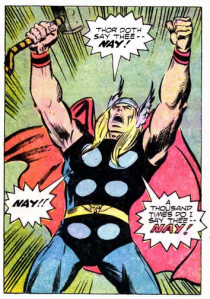
“This. This is me. This is what I get up to.”

“This. This is me. This is what I get up to.”

The Marvel Cinematic Universe has essentially been a long, meticulous romancing of the mainstream. Thor is the part of the relationship where Marvel finally says “I’m glad you like the snarky businessman in the robot suit and the scientist who turns into a green monster. Now here’s where we get nuts.” As a title, The Mighty Thor has always been an unapologetically melodramatic, ridiculous, camp, epic, nonsensical, glorious, mess. In short, it is one of the purest comic books ever written. It’s huge men with long flowing hair and fabulous capes yelling cod-Shakespearean insults at each other and not understanding the difference between “thee” and “thou”.
It, quite simply, does not give a fuck.
But first, a little history.
The character of Thor was created early in the first millennium by the Germanic peoples inhabiting what is now Scandinavia. Some stuff happened. Then, in 1962, the character was introduced into the Marvel universe by Stan Lee, Larry Lieber and Jack Kirby in the pages of Tales to Astonish. There’s a little bit of confusion as to who actually came up with the idea (aside from the ancient Vikings, I mean). Stan Lee claims that the idea came to him when he realised that the only way to create a character stronger than the Hulk would be to make him a god, and that rather than go with the more well-known Greek or Roman deities he decided to delve into Norse mythology.
Meanwhile, Cúchulainn sits on the damn shelf.

Meanwhile, Cúchulainn sits on the damn shelf.

Jack Kirby, on the other hand, claims that he created the character because of his love of Norse mythology and to be honest, I think the evidence is on Kirby’s side. Kirby had already created not one but two versions of Thor for DC in the golden age, so he clearly had an interest in the character. Not only that, but “comic book characters as post-industrial mythology” was kind of Jack Kirby’s whole deal. Thor’s sales have never exactly set the world on fire but this is nonetheless a character with some serious cred. There are many who consider Lee and Kirby’s run on the character the finest work of either men in the sixties (damn high praise) and he’s also had some celebrated runs, none greater than Walt Simonson’s glorious, batshit insane epic in the eighties.
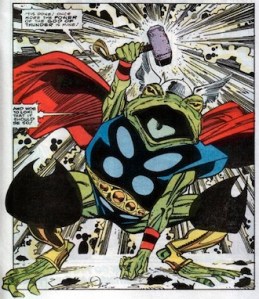
This is normally the part of the review where I would say “we do not speak of the Frog of Thunder” but even this was AWESOME.

This is normally the part of the review where I would say “we do not speak of the Frog of Thunder” but even this was AWESOME.

He’s also been a  very consistent presence in the Marvel universe, showing up in almost everyone else’s books at one time or another and, if there’s a team of Avengers that Thor’s not on, it’s probably only because he’s dead again. He’s always been one of the company’s “faces”, one of their most visible and iconic characters. And yet, Thor has always struggled outside of comics. His live action appearances before 2011 was just a single episode of The Incredible Hulk, and he hasn’t headlined his own cartoon series since the frickin’ sixties (compare that to Spider-man, who gets a new cartoon show every time Stan Lee sneezes). Same Raimi originally pitched a Thor movie to Marvel all the way back in 1990 and from there it was dropped, picked up again, briefly re-conceived as a TV show starring Tyler Mane before bouncing to Sony, then to Paramount before finally arriving back at Marvel. The decision to nominate Kenneth Branagh to direct was surprising but also kind of inspired. Branagh is famous as an interpreter of Shakespeare for the masses, and Stan Lee is of course one of the biggest Shakespeare fanboys out there.
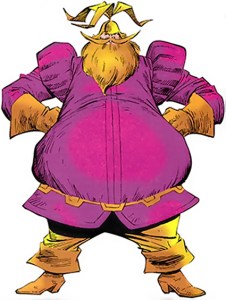
He made Falstaff into a superhero, people.

He made Falstaff into a superhero, people.

Branagh was the perfect candidate to make the overblown, melodramatic bluster of Thor work for a mainstream audience.  Just, for the love of God, don’t subject yourself to his commentary on the DVD.
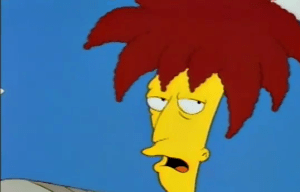
"The director's an ass."

“The director’s an ass.”

Marvel knew going in that compared to Iron Man and Hulk, this movie was the real test. This is where they’d learn if a mainstream audience could really accept all the comic book nuttiness they were about to bring. It was time to see if this relationship had legs.
Blucatt ad

(more…)

“Like all guilty men, you try to rewrite your history…”

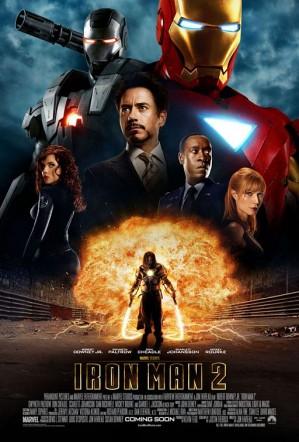
I’m still feeling my way around reviewing these Marvel movies. I was thinking that, when I review the first movie featuring a hero I’ll give you some history and overview of that specific character, and when the time comes to review the sequel I might take a look at their rogues gallery and what their villains say about that particular hero. Problem: Iron Man has quite possibly the worst rogues gallery of any major superhero. Notoriously so. Legendarily so. If you were to make a chart of superheroes by the quality of their rogues’ gallery it would be Batman at the top, closely followed by Spider-man and the Fantastic Four, then respectable mid-carders like Captain America and Superman and then waaaaaaaaaaaay way down at the bottom Iron Man and Wonder Woman are hanging out and getting sloshed on Ouzo. Yeah, yeah, no such thing as bad characters, only bad writers. True as far as it goes. Any villain, no matter how lame, can be made compelling with the right scribe working on them.
Some, however, take more heavy lifting than others.

Some, admittedly, take more heavy lifting than others.

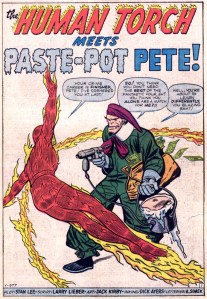
But Iron Man’s villains probably require more heavy lifting than probably any other hero’s. Even Tony’s arch-nemesis, The Mandarin, while certainly a cool villain, doesn’t really have that much that sets him apart from similar bad guys like Doctor Doom or Baron Mordo other than the fact that in his early days he looked like Mickey Rooney in Breakfast at Tiffany’s.

Oh sixties.

Oh sixties.

As for the rest, they were mostly just an interchangeable series of commies in robot armour and rival industrialists. I mean hell, when the time came to find a villain for Iron Man 2, they actually just slapped two of them together. Ivan Vanko is a mishmash of Whiplash and the Crimson Dynamo. And nobody even cared. Think about that for a minute. Can you imagine if they did a Batman movie and they just merged the characters of Joker and the Penguin into one guy and called him the Penker? My God, the fans would skin them alive and hang their carcasses in the online forums as a warning to others. That’s how lame Iron Man’s rogues gallery is. Not even Iron Man fans care enough to get mad about changes to the source material.  But, did it work? Were they able to reverse Iron Man’s traditionally awful luck with villains? Will our hero triumph over the Penker? Let’s find out! Right after these messages.

AD

(more…)

If I said I was happy, I’d be lion.

“Disney?”

“Disney?”

“Um…yeah?”

“Um…yeah?”

“Are you tarnishing the legacy of one of your beloved classics again? I thought we were past this.”

“Are you tarnishing the legacy of one of your beloved classics again? I thought we were past this.”

“I’m not! I swear!”

“I’m not! I swear!”

“Then what, pray tell, is this the fuck?“

“Then what, pray tell, is this the fuck?”

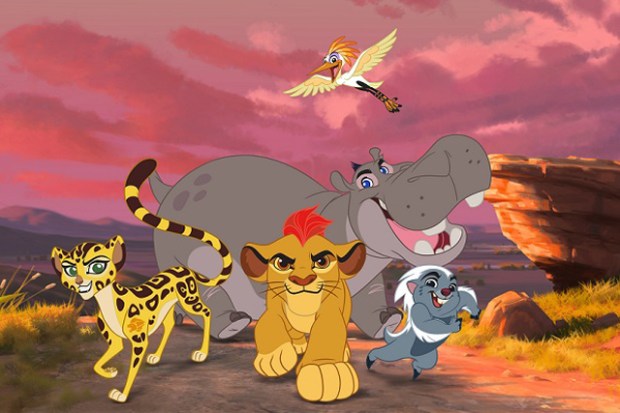
THE LION GUARD - The epic storytelling of Disney's "The Lion King" continues with "The Lion Guard: Return of the Roar," a primetime television movie event starring Rob Lowe, Gabrielle Union and James Earl Jones, reprising his iconic role as Mufasa.  Premiering this November on Disney Channel, the movie follows Kion, the second-born cub of Simba and Nala, as he assumes the role of leader of the Lion Guard, a team of animals tasked with preserving the Pride Lands. "The Lion Guard" television series will premiere in early 2016 on Disney Channels and Disney Junior channels around the globe. (Disney Junior) FULI, KION, ONO , BESHTE, BUNGA

“Oh it’s an exciting new chapter in the Lion King mythos!”

“Oh it’s an exciting new chapter in the Lion King mythos!”

“You have ten seconds to explain yourself, sir.”

“You have ten seconds to explain yourself, sir.”

“Okay, see it stars Kion, Simba and Nala’s son, as he forms the Lion Guard, an elite group of animals whose sworn duty it is to protect the Pride Lands from danger.”

“Okay, see it stars Kion, Simba and Nala’s son, as he forms the Lion Guard, an elite group of animals whose sworn duty it is to protect the Pride Lands from danger.”

“Okay. That actually sounds like a pretty decent premise if handled well...”

“Okay. That actually sounds like a pretty decent premise if handled well…”

“See, Scar used to have superpowers…”

“See, Scar used to have superpowers…”

“WOW. Stop right there.”

“WOW. Ok. Stop right there. Pull this bus over…”

“See, Scar had the magical Roar of the Elders and led the Lion Guard…”

“See, Scar had the magical Roar of the Elders and led the Lion Guard…”

“Scar? “Shallow end of the gene pool” Scar?”

“Scar? “Shallow end of the gene pool” Scar?”

“And when he tried to get the Lion Guard to turn against Mufasa and they refused he used the roar to destroy them.”

“And when he tried to get the Lion Guard to turn against Mufasa and they refused he used the roar to destroy them.”

“No. No. That never happened. You lying media conglomerate.”

“No. No. That never happened. You lying media conglomerate.”

“But then because he used the roar for evil he lost it.”

“But then because he used the roar for evil he lost it.”

“So why didn’t he just use it against Mufasa in the first…no, you know what I’m not even going to engage with the idea. So tell me, does this travesty ignore Simba’s Pride or take place in the same continuity?”

“So why didn’t he just use it against Mufasa in the first…no, you know what I’m not even going to engage with the idea. So tell me, does this travesty ignore Simba’s Pride or take place in the same continuity?”

“Neither! It canonises some aspects while blatantly contradicting others!”

“Neither! It canonises some aspects while blatantly contradicting others!”

“Ah! So everybody’s angry!”

“Ah! So everybody’s angry!”

“Yeah!”

“Yeah!”

 “WHAT ARE YOU ON?”

“WHAT ARE YOU ON?”

“Everything…everything…so much…I…I can see God…”

“Everything…everything…so much…I…I can see God…”

“Disney you’ve got to stop this. You’ve got to stop this now. You’ve got to pull every episode and pretend this never happened. When people ask, tell them it was a hoax by Dreamworks. Tell them that the perpretrators will be caught and justice will be swift.”

“Disney you’ve got to stop this. You’ve got to stop this now. You’ve got to pull every episode and pretend this never happened. When people ask, tell them it was a hoax by Dreamworks. Tell them that the perpetrators will be caught and justice will be swift.”

“But I haven’t told you the best part!”

“But I haven’t told you the best part!”

“Down we go, down and down.”

“Down we go, down and down.”

Bungaclose

"Who's the tatted up chipmunk?"

“Who’s the tatted up chipmunk?”


(more…)

“I don’t want to control it. I want to get rid of it.”

When comic fans and writers talk about a character’s “status quo” they don’t  just mean the existing state of affairs in that character’s book. The Status Quo is sort of like the Platonic Ideal of a comic character, the version of the character that everyone thinks of when they hear the character’s name. For example, Spider-man’s status quo is:
  • Spider-man is mild-mannered Peter Parker, who gained incredible spider powers when he was bitten by a radioactive spider during a science presentation.
  • He wears a red and blue spider-suit.
  • He lives in Queens with his elderly Aunt May.
  • His love interest is Mary Jane Watson.
  • He works as a freelance photographer for the Daily Bugle, where his boss is J. Jonah Jameson.
  • His life is a never ending parade of misery.
Now, you could pick up any comic featuring Spider-man since 1962 and the odds are good that at least one of those bullet points is not true for the book you’re currently reading (except the last one. That never changes). Spider-man might be dating Gwen Stacy. He might be working as a science teacher. He might not be Peter Parker at all, but instead Ben Reilly or Miles Morales or Otto Octavius or Miguel O’Hara. Aunt May might be dead again. But still, that’s the default version of the character. Whenever the comic goes off the rails, chances are they’ll return Spider-man to his roots and have him back at the Daily Bugle, back with Mary Jane, living with Aunt May. Sooner or later, he will return to status quo like he’s attached to it with a bungee cord.
The Hulk, who debuted a few months prior to Spider-man in 1962 also has a default version; When he gets angry, scientist Bruce Banner turns into the Hulk, a massive rampaging green giant with the mental capacity of a three year old who destroys everything in his path. He is a man of few words, and those words are “Hulk” and “Smash”.
This is the version of the character that everyone is familiar with, and to comic fans he’s known as “Savage Hulk”. What’s interesting about the Hulk is that I can think of very few superheroes who spend less time “at status quo” than the Hulk. And the reason for that is, there’s not really that much you can do with Savage Hulk. Savage Hulk is less a character than an event that other characters react to. He’s like Godzilla. What kind of story can you do with Godzilla? What journey can he go on? Is he going to adopt an orphaned child and raise him as his ward? No. He’s going to stomp on buildings and go “SKRONK!”. Is he going to discover a shocking secret about his past that throws everything he though he knew about himself into doubt? No. He’s going to stomp on buildings and go “SKRONK!”. Is he going to serve as an allegory for the horrors of nuclear war? Yes. While he stomps on buildings and goes “SKRONK!”
That’s basically Hulk’s problem (just swap out “SKRONK” for “HULK SMASH”) and probably why the character often had trouble maintaining a series of his own while still being a very popular guest character in the books of other superheroes. Writers have gotten around this by staying as far away from the Savage Hulk status quo as they can. Often the Hulk will be made more intelligent, or a different side of Banner’s personality will emerge as a new Hulk. Or Banner and the Hulk will merge personalities. Or they’ll swap personalities. Or the writers will huff paint and do something really stupid.
We do not speak of the time Hulk tried to bang his cousin.

We do not speak of the time Hulk tried to bang his cousin.

 Despite that, Savage Hulk retains a near total grip on the general public’s perception of the character, especially since all the non-comic depictions of the (the seventies TV Show, the two cartoon series and both movies) have been pure Savage Hulk. And the reason for that is that Savage Hulk, despite the limitations he brings from a story-telling point of view, is a fanastic concept because he is so universal. Everyone can relate to the Hulk. When we see Bruce Banner finally lose his temper and transform into a huge, rampaging monster it’s cathartic as all hell because on some level we all wish we could do that.
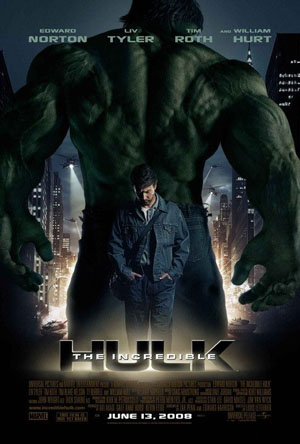
Following the success of Iron Man it was time for the difficult second album and Hulk seemed an obvious candidate for the studio’s sophomore effort. He was, without question, the highest profile character in Marvel’s stable that they owned the movie rights to, thanks to the success of the Bill Bixby series. But there was a problem, looming over the production like a big hulking…hulk.
 p32133_p_v8_aa
In a way, it would have been easier if Ang Lee’s 2003 Hulk: A Mediation on Moss has been an out and out flop. That way Marvel could have simply said “Don’t worry, we’ll fix it! The grownups are in charge now!” and completely ignore it other than to work a few sarcastic swipes at it into to the script. But here’s the thing, Lee’s Hulk might not have been popular with comic fans but it actually did fairly decently at the box office and got not a little critical love. Personally, I appreciate what Lee was going for and think that there are some beautiful moments and really good performances but yeah, the movie is kind of a snooze fest. It has its fans though, putting Marvel in a bit of a tricky position. Should they embrace Lee’s Hulk and make their version a straight up sequel, or start again with a new origin story that firmly established their Hulk as a new, separate beast?  In the end, they did neither.

(more…)

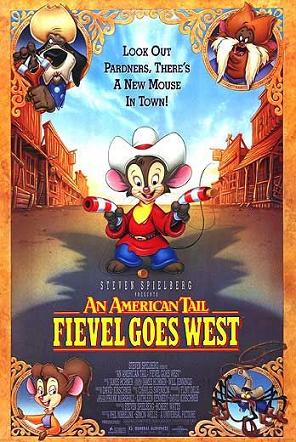
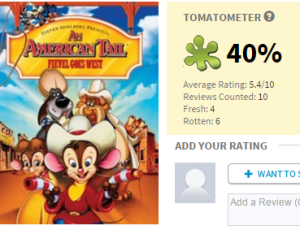
An American Tail: Fievel Goes West (1991)

Hey everybody. Merry Christmas, Happy Hanukkah and for all you other religions…um…good luck with whatever you got goin’ on right now. Keep on truckin’. Yes it’s the night before Christmas, and despite belonging to a species that traditionally is known for not stirring at this time of year,  I’ve decided to review…
"Mouse...Moooooouuuuuse..."

“Mouse…Moooooouuuuuse…”

“Jacob Marley?”

“Jacob Marley?”

“I wear the chain I forged in life! Link by link! Yard by yard…”

“I wear the chain I forged in life! Link by link! Yard by yard…”

“Stop. Stop. No. Look, this is not going to be a Christmas themed review. We’re not doing the Christmas carol thing. Sorry.”

“Stop. Stop. No. Look, this is not going to be a Christmas themed review. We’re not doing the Christmas Carol thing. Sorry.”

“But it’s a tradition…”

“But it’s a tradition…”

“Yes. One that’s been done to death. Sorry, not happening. Get lost.”

“Yes. One that’s been done to death. Sorry, not happening. Get lost.”

“Dude, I’m a ghost, you’re going to have to do better than “Get lost!”

“Dude, I’m a ghost, you’re going to have to do better than “Get lost!”

“Sigh. AVAUNT THEE FOUL SPIRIT! RETURN TO THE NETHERWORLD FROM WHENCE THOU CAME!”

“Sigh. AVAUNT THEE FOUL SPIRIT! RETURN TO THE NETHERWORLD FROM WHENCE THOU CAME!”

“Oooh, nice. “Avaunt”. That takes me back.”

“Oooh, nice. “Avaunt”. That takes me back.”

Right. So. Today’s movie is An American Tail 2: Fievel Goes West, a sequel to a Don Bluth movie made without the imput of Don Bluth. Now, “Sequel to a Don Bluth movie made without the imput of Don Bluth” is a sub-category of film with a slightly lower degree of prestige and respect than “Uwe Boll video game adaptation” or “hobo snuff film” and this film’s reputation is not exactly sterling.
40! There are Police Academy movies with higher scores than that!

40%?! There are Police Academy movies with higher scores than that!

So, following the stunning success of An American Tail (which, I remind you, was a big freaking deal) Stephen Spielberg wanted a sequel to be the first production of his new animation studio, Amblimation. Bluth by this time was based in Ireland and was working on The Land Before Time with Sullivan Bluth so Spielberg had to bring in a new team of animators under the direction of Phil Nibbelink and Simon Wells. Amblimation is a weird little footnote in the annals of American animation history, tapping out after only three films (this one, We’re Back and Balto). I haven’t seen Balto and I do NOT care for We’re Back...
IT DID.

IT DID.

…but I think Amblimation could have been a real contender under different circumstances. Why? Because, if nothing else, the animation in these movies was SMURGES. Let’s take a look.

(more…)

“That’s how Dad did it. That’s how America does it. And it’s worked out pretty well so far.”

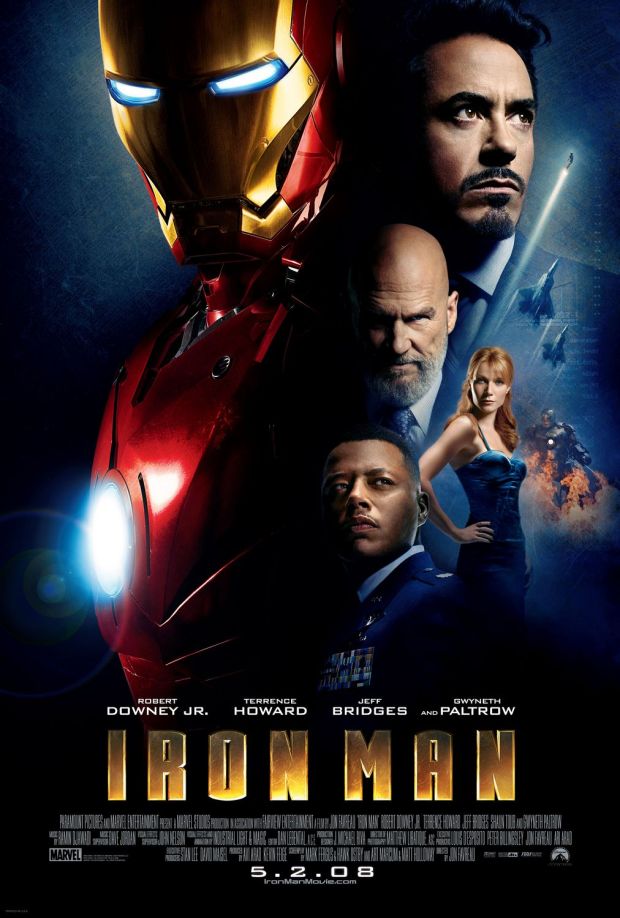
Iron Man is one of the five most recognisable superheroes in the world today and that is goddamn insane.
From pretty much the early forties to the turn of the millennium there were only two comic book characters that everyone knew, even if they’d never picked up a comic in their lives and that was the two DC icons; Batman and Superman. And despite the fact that Marvel’s actual comics had consistently outsold DC’s for most of their history, no one Marvel character had ever managed to achieve that kind of cultural purchase with maybe the possible exception of Spider-man. And if you were to pick a character that would upend that status quo and be the first Marvel hero to achieve that kind of instant, iconic, worldwide recognition…you probably wouldn’t pick Iron Man.
Here’s the thing, for most of its existence, the Avengers was not the cool kids’ table at Marvel. The Avengers comic book was a support network for characters who needed exposure and whose solo titles weren’t doing so hot (if they even had their own books). Know why Spider-man and Wolverine didn’t join the Avengers until 2005? Because their books were selling just fine thank you very much. So the fact that Iron Man is a founding member of the Avengers and has been with the team for almost its entire history should tell you a lot. This guy was kind of a B-lister, with more than his fair share of knocks from the bad story stick.
We do not speak of teen Tony.

We do not speak of teen Tony.

So how did this character go from perennial also-ran to the most recognised face of the Marvel Cinematic Universe? Sit down and I’ll learn ya.
The initial idea for Iron Man was Stan Lee’s because he is a massive, massive troll and we love him for it.
See, it was the sixties and Stan knew that most of his readers were college kids who hated the military and capitalism and bathing so he thought it would be an interesting challenge to sell them on a character that embodied all those traits.
iron man 160 b

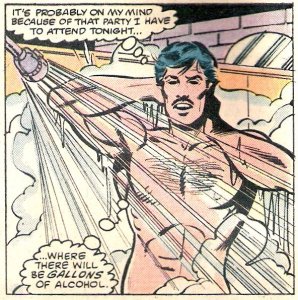
He’s a capitalist arms-dealer in the shower. Can you handle that, hippies?

I don’t think this was really a political thing (Stan seems to be a fairly middle of the road Democrat) but simply came from Stan’s unwavering ability to find niches that hadn’t been filled yet. The great Jack Kirby did the cover and so created the character’s first visual design, and then the actual first issue that Iron Man appeared in was written by Stan’s brother Larry Lieber and drawn by Don Heck. Iron Man therefore had four daddies, which probably explains why he’s trying to form a gay polyamorous harem with Steve Rogers, Rhodey and Sam Wilson in every second piece of fan fiction featuring the character.
So why was this character chosen to launch Marvel’s massively ambitious experiment in inter-movie continuity porn? Basically, he got it by default.
By the mid 2000s Marvel had sold the movie rights to most of their major properties and were starting to feel like they were getting screwed. Sony had the rights to Spider-man, Fox had X-Men, Daredevil and Fantastic Four which combined represented a huge swathe of some of Marvels’ most iconic heroes, villains and supporting characters. When the time came for Marvel to set up their own movie studio they realised they were basically left with the Avengers who, at the time at least, were very much second stringers. It was deemed that the time was not right for another Captain America movie (too soon, we needed time to heal) and the corpse of Ang Lee’s Hulk was still warm. That left…Thor? Well, Thor’s great and all but…
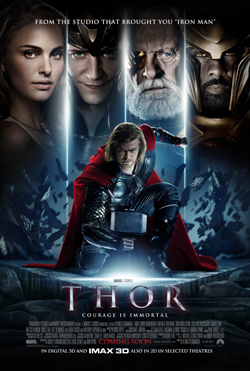
Thor
Yeah, so they went with Iron Man. How did it turn out? Weeeelllllll it was one of the most critically acclaimed movies of the year, completed Robert Downey Junior’s journey from washed up recovering drug addict to A-list superstar and created the future in which we now live. But does it hold up as a movie? Let’s take a look.

(more…)

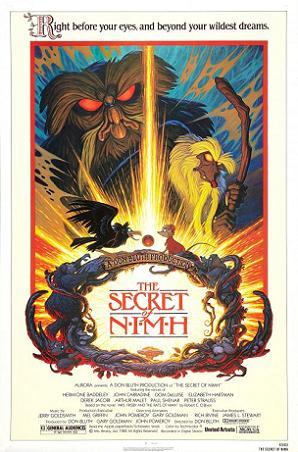
The Secret of Nimh (1982)

Know what movie I’m absolutely dreading having to review? Go on. Guess. You’ll never guess.
Seriously. You’ll never see this coming. Ready?
Land Before Time.
Toldja.
Why? Do I hate it? Do I think it’s a bad movie? Do I project some of my utter loathing for Dinosaur onto it inadvertently? No, absolutely not and yes, but I’m working through my issues with the help of friends and the love of Jesus. No, the reason is that any review of that movie has to address the elephant in the room, said elephant being the awful, awful tragedy that was the death of Judith Barsi.
I mean, you have to make note of it, and then you have to go back to reviewing the rest of the movie and cracking jokes and “Bahia! Kookaburras!” and…yeah. I don’t know how I could pull that off. Today’s movie offers me something of a dry run because it is another beloved Don Bluth film with the spectre of tragedy draped over it like a quilt (albeit not quite as awful). Elizabeth Hartman, the actor who voiced Mrs Brisby, tragically took her own life in 1987.
The Secret of Nimh was Hartman’s last major Hollywood role, a beautiful coda to a tragic career that exploded into existence with her rapturously received performance opposite Sidney Poitier in A Patch of Blue. At 22 she became the youngest woman ever nominated for Best Actress at the time but as the years went by both the roles she was offered and her problems with depression grew steadily worse. So it goes.
Since her death, Mrs Brisby has become Hartman’s defining role, to the point that amongst the movie’s fandom Mrs Brisby’s full name is “Mrs Elizabeth Brisby” (we never learn her first name in the film). And there’s no denying that the struggles of Mrs Brisby take on a special resonance when watched once you know what happened to her.
A mouse trying to stop a tractor.
As accidental analogies for the struggle with depression go, I’ve certainly heard worse.
As I went into in the Fox and the Hound review, in 1979, Don Bluth and nine other animators left the Walt Disney company with a simple mission; to save the feature length American animation as an artform. Bluth recognised that Disney basically had not made any major innovations in their animation techniques since the studio’s near-death experience with Sleeping Beauty in 1959. Ever since then, in order to keep costs down, the animation had been cheaper, scrappier and less technically challenging. Bluth envisioned a return to the dark, moody animation of Disney’s golden age; a film that would challenge formula rather than using it as a crutch. Basically, Bluth wanted to create a Tar and Sugar movie.
Did he succeed? Let’s take a look.

(more…)

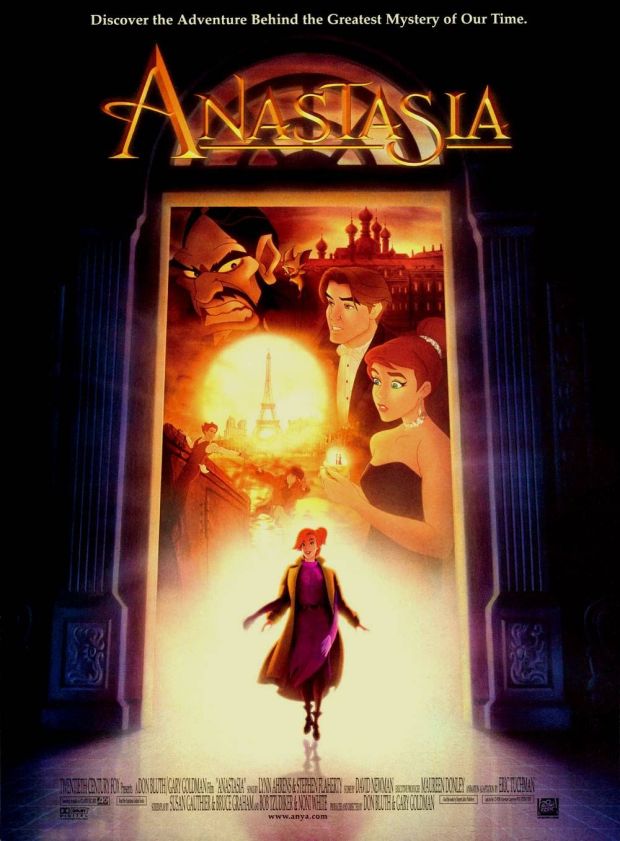
Anastasia (1997)

(DISCLAIMER: This blog is not for profit. All images and footage used below are property of their respective companies unless stated otherwise. I do not claim ownership of this material. New to the blog? Start at the start with Snow White.)

I love reading history. I have a copy of Tacitus’ Annals on my bedside table (because I’m just that kind of pretentious prick) and as a modern reader there’s something really bizarre about reading history written in ancient times.
See, you’ll be into a very serious passage about corruption in the Senate or the war against the Parthians (those Parthians, buncha troublemakers I tell ya what) and suddenly ol’ Tacitus will veer off into describing all the dire portents about Nero’s future rule and it’s all dreams of blood, and visions of locusts and more virgins giving birth to two-headed snakes than you know what to do with.
And then he’ll talk about taxes.
As if the previous stuff was just perfectly mundane. But here’s the thing; for Tacitus it was perfectly mundane. Magic and visions and miracles and supernatural powers were just an accepted fact of life back then. And as a modern reader, sure, we might be a bit sceptical but…we kinda just have to accept all that stuff as part of the historical record. Because Tacitus said it happened and he’s our guy on this stuff, you know? You going to call Tacitus a liar? Did you write one of the greatest works of Latin literature, serve in the Senate and later become governor of Asia?
Yeah. That’s what I thought.
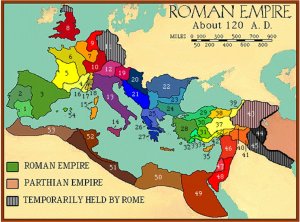
Rome

It’s less impressive when you realise that “Asia” was just a chunk of Turkey back then.

Of course, when you start getting into more recent history, magic and mysticism aren’t part of the picture anymore. Or, at least, they’re not supposed to be.
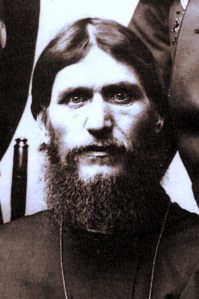
I think that’s the reason I was always fascinated as a kid by Grigory Rasputin. Here was a twentieth century figure who seemed to come from a time when magic was still real. In the early years of the twentieth century, the Russian royal family had their own wizard.
Wizard
That is awesome.
In secondary school I actually did my final year project on Rasputin and the Romanovs and I’m something of a buff on this whole period of Russian history. And that low sound you just heard is all the Anastasia fans (of which there are a great many) in the audience groaning “Oh God. He’s going to pan it.”
And sure. I can get why you might think that. I mean, if I tore Saving Mr Banks a new one because PL Travers was crying for the wrong reason, I’m probably not going to look too kindly on the February Revolution being started by zombie Rasputin. Or am I? Maybe not. Or maybe yes? Ha ha ha ha! Which door do you choose, Anastasia fans?! Which door?!
“Ugh. Is this some kind of joke? I thought you were going to review one of my good films?”

“Ugh. Is this some kind of joke? I thought you were going to review one of my good films?”

“But…everyone loves Anastasia! It’s one of your most critically beloved movies! It made the most money of all of your films!”

“But…everyone loves Anastasia! It’s one of your most critically beloved movies! It made the most money of all of your films!”

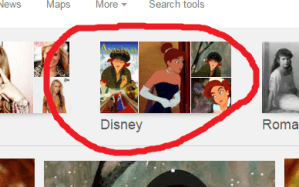
“UGH. Yeah. And google it and see what comes up.”

“UGH. Yeah. And google it and see what comes up.”

Ooooh...thats gotta hoirt.

Ooooh…that’s gotta hoirt.

“Fox asked me to make a Disney princess movie. I was desperate for the cash so I sold out. How was I supposed to make a good movie under those circumstances?”

“Fox asked me to make a Disney princess movie. I was desperate for the cash so I sold out. How was I supposed to make a good movie under those circumstances?”

I dunno Don. But I’ve seen where you can go with unfettered creative control and it often involves trolls and penguins with teeth. If it wasn’t for artists just doing it for a paycheck we wouldn’t have I, Claudius, Sherlock Holmes or half of Shakespeare’s stuff. Maybe, just maybe, you managed to make an accidental classic.
So without further ado, let’s take a look at Disney’s Anastasia.
"UGH."

“UGH.”

Sorry. That just slipped out.

(more…)

Fantastic Mr Fox (2009)

(DISCLAIMER: This blog is not for profit. All images and footage used below are property of their respective companies unless stated otherwise. I do not claim ownership of this material. New to the blog? Start at the start with Snow White.)

I’ve got a lot of love for Roald Dahl, even if he was a bit of an unpleasant cuss. He taught me how to read, after all. When I was around four or five years old I was taken to Temple Street children’s hospital for one of my periodic lung re-inflations (I had asthma and smog in Dublin in the eighties was so thick you could chip your teeth on it). While waiting to be seen I picked up a copy of The Magic Finger, which I remember being the first book I ever read through from beginning to end. Dahl was huge when I was growing up. He was our JK Rowling. That probably says something about us, but then again, I think it’s often overstated just how violent and horrifying his stories were. I mean, sure, they were violent and horrifying, but it was all a matter of tone. Roald Dahl was like Rebecca Black, he sounded a lot worse than he actually was. A plot description The BFG or The Witches is arguably more horrific than the books themselves. Roald Dahl took horror and made it so ridiculous and luridly over the top that you couldn’t help but laugh at it. In doing so, he made our terrors ridiculous. I think that’s why so many children loved his work, even nervous kids like me. Roald Dahl didn’t make us feel scared. He made us feel brave.

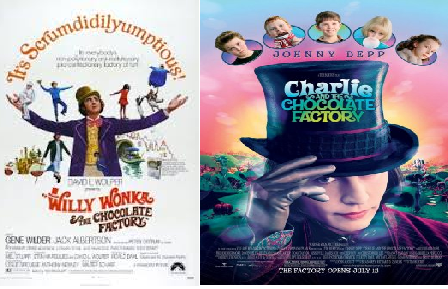
The trouble with adapting Roald Dahl for screen is that, by necessity, you lose the author’s voice and that tone I talked about often goes out the window. That’s how you get something like the 1989 BFG film which, while certainly not bad, is just cussing terrifying. There have been just under a dozen films based on Dahl’s work (not counting his own screenplays like Chitty Chitty Bang Bang) and they range in quality from “terrible” to “one of the greatest movie musicals of all time”.
Chocolate

With the same story at both poles, oddly enough.

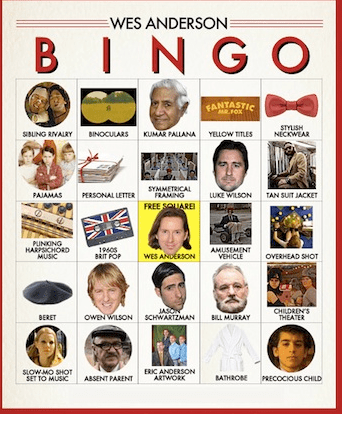
Today’s movie, Fantastic Mr Fox, is based on Dahl’s 1970 novella of the same name. It’s probably fair to call the book “minor Dahl”, it’s certainly not as well known or beloved as Matilda, BFG or The Witches but I really loved it as a child. It’s a simple enough story, Mr Fox steals poultry from three horrible farmers, said farmers roll up with some serious firepower and blast Mr Fox’s tail off but he gets the last laugh in the end by tunnelling into their farms and stealing all their cuss and throwing a big cuss-off party. Whatever, I really liked it. But as you can probably tell it’s a fairly slight story which honestly is perfect for adaptation. You see, the best Dahl movies are those where someone with their own distinctive voice comes and builds a story around Dahl’s basic framework. And there are few voices in Hollywood as distinctive as Wes Anderson, who’s work is so distinctive that Slate created a Wes Anderson bingo card.
Would you like to play a game?

Would you like to play a game?

(more…)

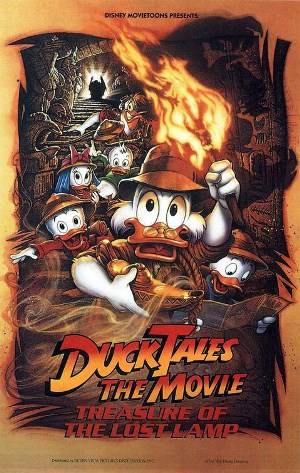
DuckTales the Movie: Treasure of the Lost Lamp (1990)

(DISCLAIMER: This blog is not for profit. All images and footage used below are property of their respective companies unless stated otherwise. I do not claim ownership of this material. New to the blog? Start at the start with Snow White.)

Eighties kids have a tendency to loudly proclaim that the cartoons they grew up with, your Masters of the Universe, your Transformers, your My Little Ponies were so much better than the cartoons made for kids today.

Why do they say that? Lead. Lead was in everything back then. Paint, exhaust fumes, you name it. And lead is well known to have a harmful effect on intelligence. Couple this with the radiation from the hole in the ozone layer frying their brains and the still lingering effects of Chernobyl and quite frankly it’s a wonder that your typical eighties kid can tied their own shoes, much less attempt an objective assessment of the state of made for TV animation then and now. God love them, they’ve suffered through so much. Now, I am an eighties kid by birth but I converted to the church of 21st century animation a looooong time ago so let me put this one to bed. No. Cartoons were not better in the eighties than they are now. Know how I know? Because cartoons have never been as good as they are now. Pretty much every cartoon made for television from the nineteen fifties to late eighties was garbage. Sure, there were talented people working on them, but they were people, not gods, and there simply was no way to contend with the forces of microscopic budgets, corporate mandated toy-schilling and stiflingly conservative broadcast standards and create something consistently excellent or even good. Yes, occasionally an episode of Transformers might get through that still holds up today but these were very, very rare exceptions (I’m talking exclusively about American TV animation I should hasten to add). Contrast that with today: American animation studios are consistently making shows for kids that are better than most of the stuff they make for adults. Pearl from Steven Universe is one of the most fascinating, layered, tragically flawed characters on television right now, period. Gravity Falls is unfolding an ongoing mystery plot with a skill and intelligence that The X-Files and Lost could only dream about. Adventure Time takes Twin Peaks to school with its pure surrealism. Eighties, I hate to break it to you, even our remakes of your shows are a tenfold improvement. You have Transformers? We have Transformers: Prime. You have Thundercats? We have Thundercats 2011. You have My Little Pony? We have Friendship is Magic.  

GIJoeHeader

You have an army?

We have a HULK.

We have a HULK.

So what happened? Whence came this huge leap forward in quality?

Where else?

Where else?


So some time in the late eighties Disney rolled up their sleeves and decided it was time to show these chumps who the big dog was. Disney began producing high quality TV animation intended for syndication. Critics scoffed, saying that this was an expensive folly that would bring the Disney company into bankruptcy.
"Ha. Motherfuckers never learn."

“Ha. Motherfuckers never learn.”

Instead, these shows completely revolutionised the American animation TV landscape. Soon after, Warner Bros also got in on the act with Tiny Toons, Animaniacs and Batman the Animated Series to name a few. In essence, all modern TV animation owes its existence to Disney’s gamble in the late eighties, and in particular to their most popular show; DuckTales.
The massive popularity of DuckTales is something that’s always confused me a little. I mean sure, I watched the show and I liked it fine, but what is it about this story about three duck kids and their miserly grunkle that made it to 100 episodes? Couple of things. Firstly, simply by dint of the fact that it wasn’t terrible it was already head and shoulders above pretty much any other cartoon on the air. But I think another key to its longevity was the fact that it’s quite similar to Doctor Who. One of the reasons that show is older than Jesus is because, aside from the fact that they can recast the main actor, the Doctor has a machine that lets him go anywhere in space or time. There is literally no end to the stories you can tell with that basic premise. And in a way, Scrooge McDuck also has a TARDIS. He’s so wealthy that there’s literally nowhere on Earth he can’t afford to go. Want to do a story on the bottom of the ocean? Scrooge buys a submarine. Want to take him to space? Scrooge buys a spaceship. Want to do a story with dinosaurs? Scrooge gets his personal mad scientist to build him a time machine. Want Scrooge to meet Satan? He has a heart attack and goes to hell because it is easier for a camel to pass through the eye of a needle than for a rich man to see heaven. Again, you will never run out of stories.
Another thing to consider is that DuckTales was based on a hugely popular comic book, by the legendary Carl Barks. Although Donald Duck was of course created by Walt Disney, it was Barks who did more than anyone else to flesh out everyone’s favourite psychotic waterfowl, creating Duckburg and a whole host of supporting characters; Scrooge McDuck, Gyro Gearloose, Flintheart Glomgold, Magica deSpell (it truly was a duck blur). The Duck comics have never really been huge in the States where the comics scene is of course SUPERHEROES SUPERHEROES SUPERHEROES NOW UNTIL THE END OF TIME but they’re very popular in what I like to call “Asterix country”, Europe, Latin America and Asia. In fact, I even tried to get my hands on a copy of The Many Lives of Scrooge McDuck for this review from my local comic shop. This lead to the following exchange. I swear to almighty God I am not making this up.
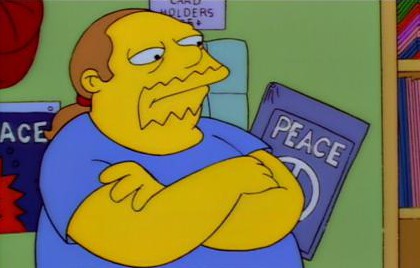
Comic_Book_Guy_WEE

“Sorry, it’s sold out. We sold the last copy to Killian Murphy.”

“…Killian Murphy? The actor?”

“…Killian Murphy? The actor?”

“The Scarecrow himself, yes. He came in here and asked specifically for anything pertaining for Scrooge McDuck. Who were we to refuse him?”

“The Scarecrow himself, yes. He came in here and asked specifically for anything pertaining to Scrooge McDuck. And who were we to refuse him?”

I SWEAR TO GOD.
But yes, Donald Duck comics are a big effing deal in many parts of the world. Personally though, I always found the entire concept of DuckTales the TV show to be really depressing. Think about it. Hewey, Dewey and Louie get sent to live with their uncle, Donald. I don’t think we ever found out why in the show, but there is no good reason that happens. And then, after losing their parents, Donald passes them off on his uncle, a miserly one-percenter who clearly cares more about his money than his nephews while Donald is off in the navy. Those three little ducks must be carting around a metric ton of abandonment issues. The reason why Donald isn’t present in the series apart from a few cameos is that Roy Disney didn’t want any of Uncle Walt’s classic characters getting TV stink on ’em. Instead, the character of Launchpad was created to fill the role Donald usually did in the comics. Today’s movie, Treasure of the Lost Lamp, came out in 1990 and served as a season finale of shorts to the beloved series. Did DuckTales go out with a bang or a whimper? Let’s take a look.