Wow. That’s mature AND realistic.

With a few notable exceptions.

Wow. That’s mature AND realistic.

With a few notable exceptions.
NOTE: This review was written mostly before the stunning and unprecedented events in Ukraine. If you wish to donate to one of a number of vetted charities to help those suffering due to the criminal actions of the Putin regime, you can do so HERE.
Here’s a challenge for you. Try to find a book, article or blog post about the phenomenon of “Yellow Peril” that does not include a reference to Sax Rohmer’s fictional creation Doctor Fu Manchu.

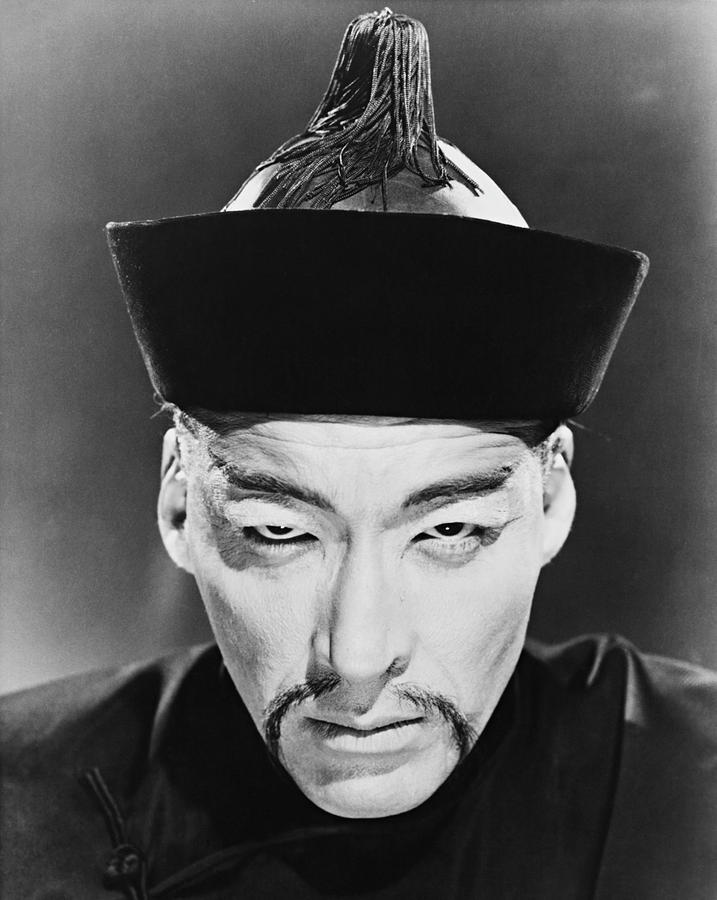
One of the earliest fictional supervillains, Fu Manchu was a brilliant, devious Chinese scientist and master criminal who sought world domination and was basically the entire concept of the Yellow Peril incarnate in one man. And if you think I’m being unfair to Sax Rohmer, please be aware that the phrase “Yellow Peril incarnate in one man” is a direct quote describing Fu Manchu from the first novel he appears in. He is a hugely controversial creation, and no, not just in these more enlightened times. Fu Manchu has never been uncontroversial and every fresh wave of popularity for the character has prompted massive backlash and accusations of racism which are pretty damn hard to refute as, by his own admission, Rohmer basically just monetized anti-Asian xenophobia and based the character on Bayard Taylor’s notoriously racist descriptions of the Chinese.
But, here’s the thing…Fu Manchu also kinda rules? I mean, he is like Asian Dracula. He is badass. He is cool. He has menace and charisma to burn. He has a moustache named after him. He is a fantastic villain and pretty much codified the whole archetype of the brilliant, dastardly criminal mastermind, even more so than (I would argue) Professor Moriarty. And he has been incredibly influential in film too, having been played by such notable Asian actors as Christopher Lee, Boris Carloff and Nicholas Cage (oh shit, I think we took a wrong turn and ended back in Racism Town).
So on the one hand you have an extremely compelling villain with ninety years of rich history, but on the other hand you have the incredibly uncomfortable creation of the character. It’s a very thorny problem. How do you extricate Fu Manchu from Rohmer and Taylor? Could you do a non-racist Fu Manchu? Is it worth trying? Who would even want to take that on? And how would you go about it?
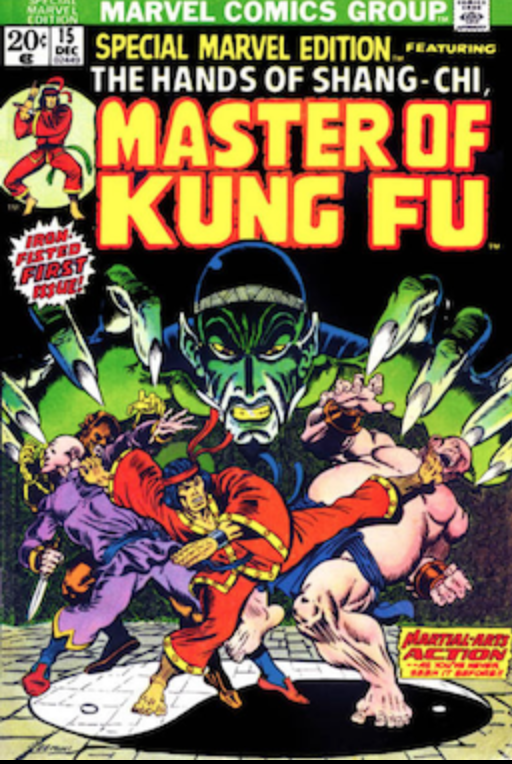
Well, Steve Englehart and Jim Starlin took a crack at it in 1973.

The comic that would eventually become Shang-Chi was initially pitched to DC as an adaptation of the hugely popular TV series Kung Fu starring noted Asian actor David Carradine. DC passed and Englehart and Starlin took the idea to Marvel who agreed to the basic premise of a kung fu themed comic with the following stipulations:
Why 2? Well, Marvel had recently tried to cash in on the blaxploitation craze with their character Luke Cage but had been burned when some Southern retailers had refused to display a comic with a black main character. By making Shang-Chi half white, they hoped to avoid a repeat. Which…how does that work exactly?


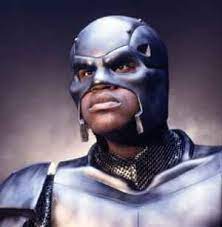
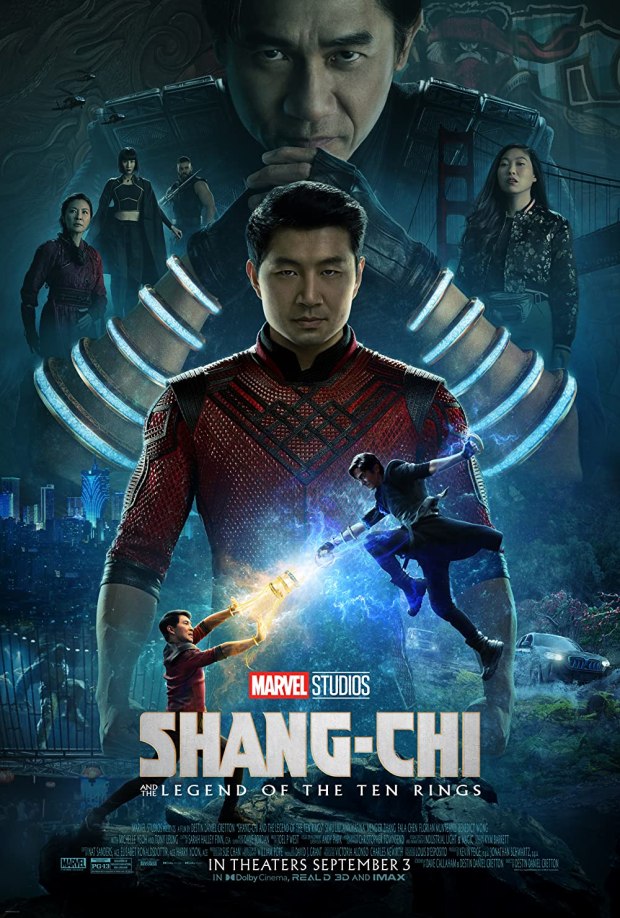
Despite that deeply compromised beginning, Shang-Chi went on to become Marvel’s first Asian superstar character, carrying his own book for a very respectable 125 issues (which was only cancelled when Marvel declined to renew their rights to Fu Manchu). While he’s never recaptured the same prominence in the comics that he did during the Kung Fu craze of the seventies and eighties, he’s always been a well respected and popular mainstay of the Marvel universe. So when the time came for Disney/Marvel to turn their all-seeing rapacious eye to the martial arts genre, naturally they first thought of…

But when the time came for Disney/Marvel to make their second attempt at the martial arts genre, this time with an eye to Asian representation (and absolutely nothing to do with cracking the obscenely lucrative Chinese market they’re perennially eyeing like a dragon’s horde to the point that they will desecrate their own properties and literally collaborate with a genocidal regime just for a chance of making some cold hard yuan and I think need to wrangle this sentence back into shape) they chose Shang-Chi.
(more…)
Paws in the air, the real reason why I delayed reviewing this movie was that I honestly can’t remember a review I’ve had less appetite to write.
I re-watched Black Widow for this review only a few days ago, and yet whenever I try to remember anything about it I get the mental equivalent of this:

And it’s not like it’s a bad movie! It’s not like it’s an anything movie frankly. It’s just…a movie. It’s a glass of cinematic water. Absolutely flavourless. It’s…I what am I even talking about again?
Oh right. Sorry, I keep forgetting.
My point is, I can write about good movies and I can write about bad movies but bland, perfectly acceptable movies are my kryptonite and I literally cannot remember a film that left me so utterly emotionally unmoved, in either a positive or negative sense, as this. So I probably am not going to break any word count records for this review. Hey, maybe a brief comics history of the titles character will help pad this thrill ride out? Worked before.
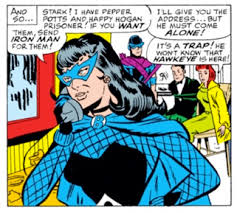
So like pretty much every interesting female superhero created during the Golden or early Silver ages, Natalia Alianovna “Natasha” Romanova was introduced as a villain. She first appeared in 1964 in the pages of Tales of Suspense as a Soviet spy tasked with bringing down Tony Stark, embodying his two greatest weaknesses: beautiful women and Communism. In her early days she was less an ass-kicking super-spy and more a seductress, using her wiles to get any man she wanted to carry out her sinister schemes. And with a whole pantheon of super powered beings to choose from she used this power to ensnare…um…Hawkeye?

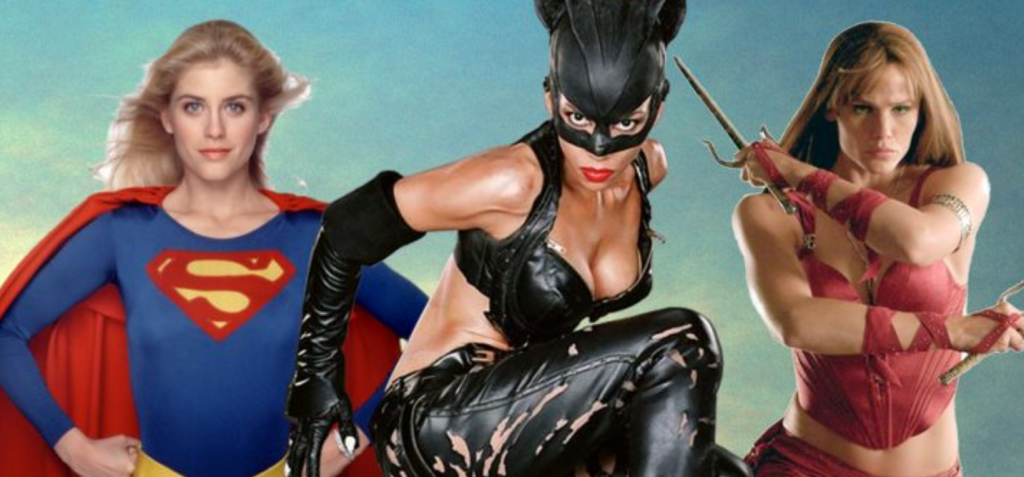
By the end of the sixties she’d defected to America and become a superhero and proceeded to spend the next fifty years bouncing around the Marvel Universe. Never an A-tier character, she nonetheless maintained a fairly high profile and you could usually count on her being in someone’s book. Natasha as a character is something of a renaissance woman. She’s an Avenger. She’s a SHIELD agent. She’s Daredevil’s ex-girlfriend. She’s a superhero. She’s a morally dubious black ops assassin. She’s friends with Spider-man, Wolverine, Hercules…basically she’s the Kevin Bacon of the Marvel universe. If a given hero doesn’t know her, they know someone who knows her. And then something strange happened. In 2012, The Avengers was released and Black Widow, by dint of various factors like Marvel not owning the movie rights to some of their own most high profile female characters (like Sue Storm and regular Storm), won the position of Token Female Avenger almost by default. And suddenly, Black Widow was the most high profile female superhero in the world complete with lunchboxes, action figures (fucking eventually) and kids’ Halloween costumes. And…that’s kinda weird, right? That’s like if the most famous male superhero in the world was Punisher instead of Superman. Weird though it was, it didn’t last long. While there was a clamour for a Black Widow movie almost as soon as she appeared in Iron Man 2, work couldn’t begin until Ike Perlmutter was prized from Marvel’s hide with a set of tweezers. And by then, well, the moment had passed. It’s not 2010 anymore. We have had female superhero movies. We have had BIG female superhero movies. We have had superhero movies with female directors. Black Widow’s biggest claim to historical significance is that it is the first ever mainstream, big-budget Hollywood summer movie with Jewish women as its star and producer, director, and supporting actress and frankly that feels a bit strained (which is in no way intended to dismiss the oppression of three-person creative teams of Jewish women in the film industry and the incredibly specific hurdles they have had to overcome). And, as a trailblazer myself (what with being the first Greek-Cypriot Irish bisexual science fiction author), I think that’s great! It’s great that simply being a female led superhero movie is not enough any more to be considered a big deal. It’s great that the movie wasn’t burdened with the same expectations that Wonder Woman faced with being the first female superhero movie…

…whose existence decent God-fearing people will acknowledge. It’s good that it has a reason to exist other than being THE FEMALE SUPERHERO MOVIE.
Doesn’t it?
(more…)
Wha’ Happen’?
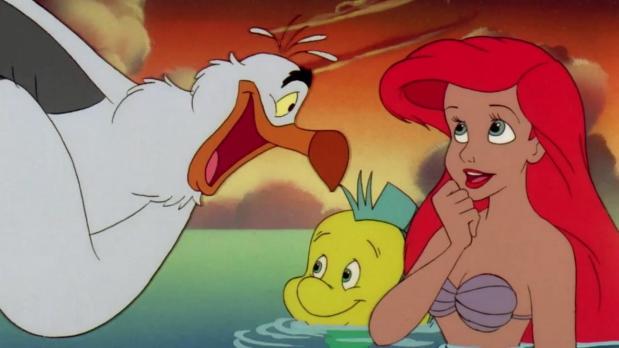
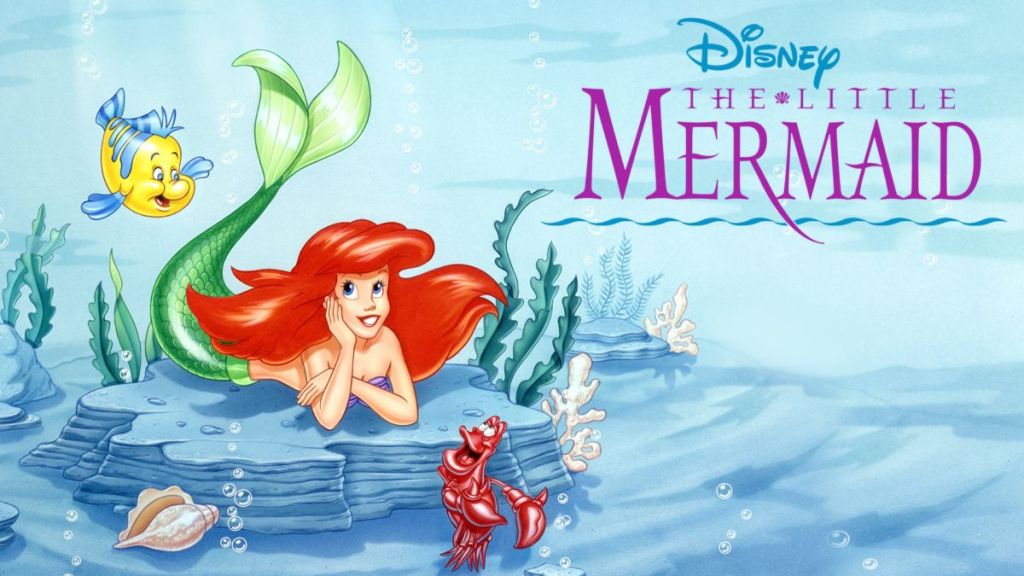
Oh Disney’s The Little Mermaid The Series, how could I ever have doubted ye? After the snore-fest of Metal Fish I was resigned to this retrospective ending in a disappointing (if thematically appropriate) damp squib. Oh Mouse of little faith. Strap in folks, we’re riding this train all the way to crazy town.
(more…)
Wha’ Happen’?
There’s an episode of Blackadder Goes Forth where Captain Edmund Blackadder is being courtmartialed for eating a carrier pigeon. He’s not worried, though, as he tells his jailer that he’s retained the services of Massingbird, the greatest lawyer of the age:
Jailer: I hear he’s a dab hand at the prosecution as well, sir.
Blackadder: Yes, well, look at Oscar Wilde.
Jailer: Ol’ butch Oscar.
Blackadder: Yep! Big, bearded, bonking, butch Oscar. The terror of the ladies. 114 illegitimate children, world heavyweight boxing champion and author of the best-selling pamphlet “Why I Like To Do It With Girls.” And Massingbird had him sent down for being a whoopsie.
That scene kept running through my mind as I watched Metal Fish with its depiction of Hans Christian Andersen as a flame haired, barrel-chested adventurer of the deepest depths of the sea and not, as he was in real life, a wee Danish pastry who spent much of his life in an undisclosed location hiding from his own erections. But I get ahead of myself.
(more…)


Wha’ Happen’?
Of all the nerve! I’m going to be absolutely brutal on this one. Wish Upon a Starfish begins with Sebastien looking for Ariel and telling her she’d better be studying for her “Crab Philosophy” test…okay, I already have a million and one questions here.
Ariel is receiving some kind of education? Sebastien is her tutor now (why am I not surprised)? But most importantly, which crab philosophers are on the curriculum? Crabistotle? Socrabstes? Crab Camus?

Anyway, Sebastien tells Ariel that there’s a storm going on overhead so she swims to the surface to see if she can get some of that sweet, sweet human swag. She finds a music box with a ballerina figurine (I would really have liked if this was the same music box we see in Part of Your World but alas) but Sebastien and Flounder yell at her to come back because the storm is dangerous. Somehow.

Well yes, actually. They get hit by a wave and we next see Ariel unconscious, washed up on a beach with Flounder beside her. And Flounder’s first words are “Ariel, are you okay?!”

Like, sweet and all that he cares about her so much but sometimes it’s okay to prioritise your own needs, y’know?
(more…)
Wha’ Happen’?
The episode begins with Ariel riding a sea horse throughout the entire ocean to wish every single sea creature a good morning and to continue her descent into self-parody. One creature who is not having a good morning however, is whatever the hell this thing is:

So this…flipped bird from evolution itself is a Bad Luck Creature and none of the other sea creatures will have anything to do with it because it’s supposedly unlucky which, clearly from the fact that it’s living, it is. The creature, which we shall call Lucky, is very sad because all of the other ocean denizens shun it and call it names.

Ariel comes across this abomination and starts make cooing noises and oh God, you know what this means don’t you?

Wha’ Happen’?
If my kids ever ask me about the nineties I’ll tell them of a wondrous time when the Soviet Union had collapsed, the Cold War was over and we were all free to focus on what was really important: dinosaurs and whales. Seriously, if it wasn’t big, extinct or going extinct it could get fucked. The mania of interest in dinosaurs obviously followed in the wake of Jurassic Park, whereas the world’s global bout of cetaphilia was a result of the movie Free Willy, a film about boys and whales and whales jumping over boys.


This episode deals with Spot, a baby killer whale that Ariel adopted in the pilot for this series which I haven’t reviewed because Disney, in their infinite wisdom, decided to not put it on Disney plus. And this episode is a sequel to that one where Spot returns because Disney was decided in 1993 that having an episode about a killer whale trying to escape from a water park might be an easy sell.

Actually I can’t be sure of that. This episode aired in October 1993, a mere three months after Free Willy premiered which seems like an awfully quick turnaround. I mean, that would mean that this episode was just slapped together in ninety days and ohhhhhhhh I see…

Wha’ Happen’?
Ariel and Flounder are out minding their own damn business when a naval battle between some pirates and the Royal Navy breaks out overhead. During the battle, one of the pirates drops a boot and Ariel, little hoarder that she is, is fascinated by it and takes it back to Atlantica to show to her friends. Now, The Little Mermaid the film had a lean, tight little screenplay with very little fat which was to its credit. But it does mean that Ariel’s world is really under-populated. She has literally two friends in that movie (Sebastien is more of an authority figure), Flounder and Scuttle and she hasn’t actually met Scuttle yet. So the episode has to create some new fish friends for Ariel. Who are these fresh new additions to the rich Mermaid canon? Well, we get an unnamed posh lady fish who loves fashion dahling and an uninspired Woody Allen impression. God, uninspired Woody Allen impersonations used to be everywhere in cartoons and they were never a good sign. Foodfight! had one. That should teach you plenty. By a rather morbid coincidence this episode would have aired right around the time Dylan Farrow went public.

Wha’ Happen’?
Things get off to a bad start right away when The Little Mermaid the series violates the unwritten rule that all Disney series from the nineties have to have an absolute banger as a theme song. Instead, TLM has a wordless medley of the themes for Under the Sea and Part of Your World. Fantastic pieces of music no doubt, but it still feels more than a little lazy.
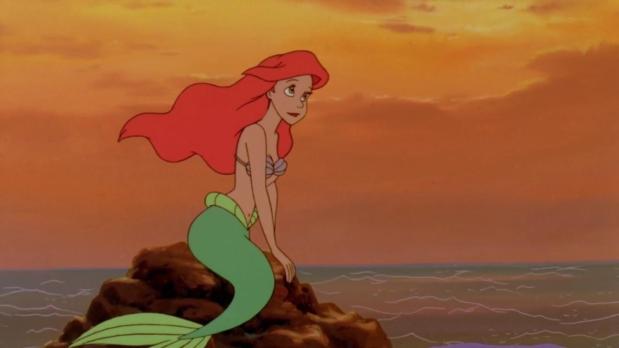
Anyway, remember the Under the Sea sequence from the original movie? Sure ya do. Well, it turns out that’s just how life is in Atlantica all the time, a never-ending calypso-infused bacchanal under the kindly patrician gaze of beloved despot King Triton. So Triton and Sebastien are taking a trip see the “turtle races” and Ariel and Flounder take the opportunity to go exploring. Near a sinister looking volcano they hear a weak, pathetic voice begging them for help and discover an unseen creature trapped in the volcano’s crater. Ariel wants to help but Flounder reminds her of the legend of a terrible monster that was trapped in a volcano (much like this one actually) by the ancient Atlanticans and that would certainly doom their entire civilization if it was ever freed. Ariel, naturally, tells Flounder not to be such a little bitch and frees the creature which turns out to be…the thing, the thing I just said.