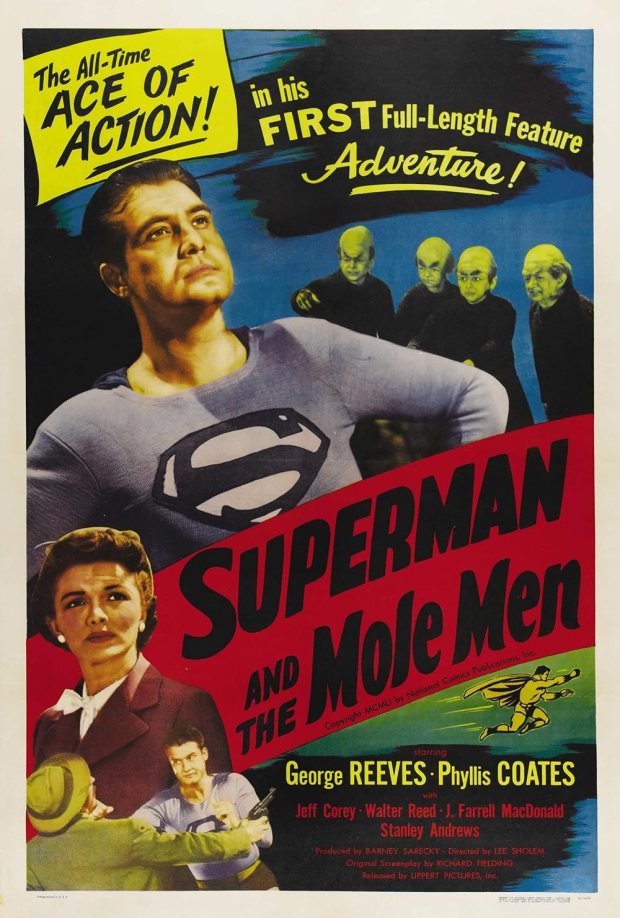
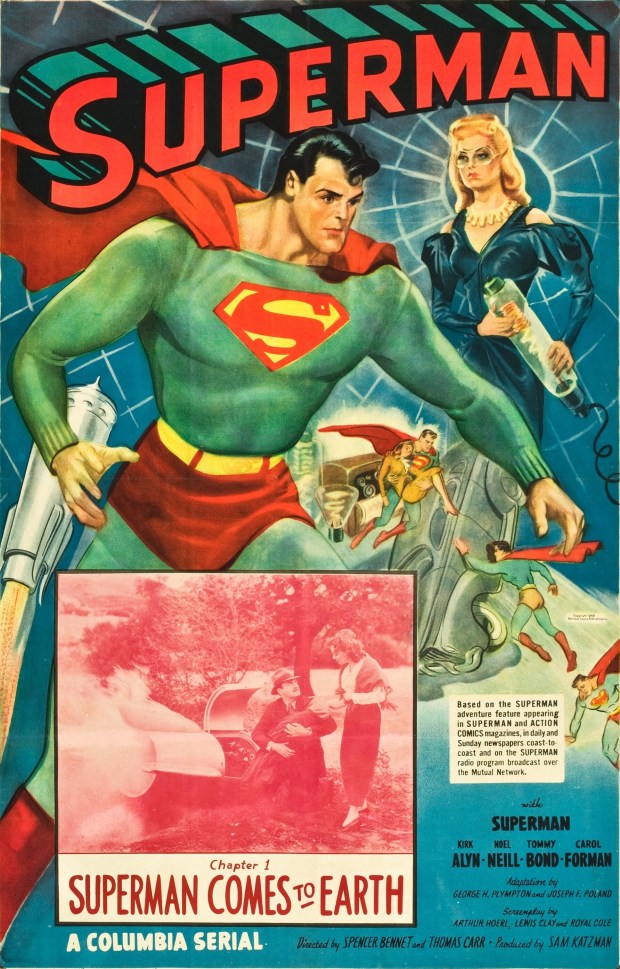
Between the Superman radio series’ colossal decade-long run, the Fleischer cartoons and two multi-part film serials, I have to wonder if audiences in 1951 were starting to experience superhero fatigue. Remember how people complained when we got the Ed Norton Incredible Hulkso soon after Eric Bana’s? That at least was a five year gap. Kirk Alyn had barely flown offscreen before George Reeves stepped into his bright red boots.
Now, you might be a little confused as to why I’m covering this. If I’m only doing the theatrical live action Superman movies, what is George Reeves doing here? Didn’t he play Superman on TV? Indeed he did. Reeves, as well as being the reason why everyone gets Christopher Reeve’s name wrong, was the star of The Adventures of Superman which ran for a mighty impressive 106 episodes in the fifties. However, this movie served as a pilot of sorts for the TV show and was released in theatres. Alyn was apparently offered the chance to return to the role but he declined for two reasons. One, like many movie actors at the time he thought that TV was a passing fad (incorrect) and two, he worried that being typecast as Superman would kill his acting career stone dead (sadly, right on the money).
And so, the mantle passed to George Reeves, a military veteran and B-movie player whose acting career prior to becoming Clark Kent had deteriorated to the point that he’d been forced to take work digging cesspools just to make ends meet. Reeves was a fascinating and admirable man who deserved so much better than his tragic and mysterious death. But, if nothing else, he was for decades THE definitive onscreen Superman.
Considering the character kickstarted the comic-book superhero genre (asterisk, asterisk) Superman has always been the comic book character least beholden to that medium. In 2025, while it is accurate to call Superman a “comic book character”, it’s also incredibly reductive. Superman is more like Santa Claus. He doesn’t belong to one medium, he simply is. And, unlike almost every other comic book character, I would argue that virtually all of his most important and iconic stories took place outside of the medium of comics. Very early on, Superman expanded beyond the panels of the comic book page and appeared in radio dramas, newspaper strips, novels, cartoons, movie serials and TV shows, to the point that a vast majority of Superman fans aren’t even regular comic book readers.
Consider this: The years between the end of the second world war and the start of the sixties was marked by the near collapse of the superhero genre in comics. And yet Superman not only survived the implosion of the genre he’d birthed, in the fifties he was bigger than he’d ever been, as The Adventures of Superman became one of the first major hits of the television era. But we’re not there yet.
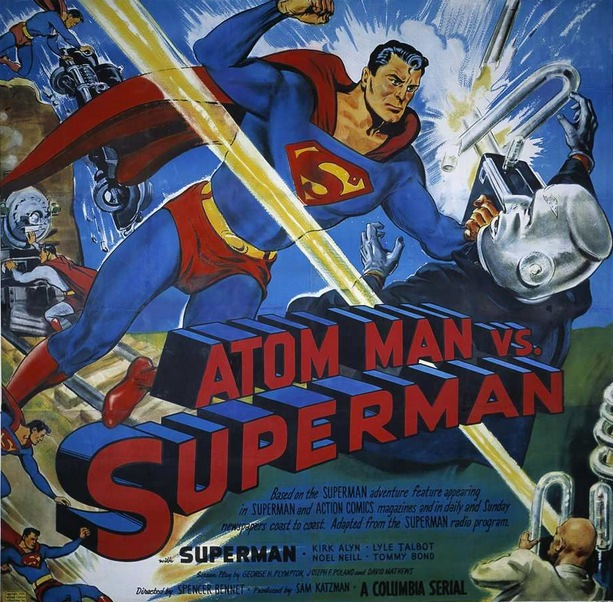
Before he get to George Reeves, we must see out the Kirk Alyn era in style. I won’t lie, I was a little apprehensive approaching 1950’s Atom Man versus Superman. Superman1948 was a very pleasant surprise but crappy sequels aren’t a recent Hollywood invention and the very few reviews I was able to find (this is, almost certainly, the most obscure Superman movie to ever be put on the big screen) agreed that it was inferior to the first one. There was also the fact that serials from the fifties, the last dying gasp of the medium, are notoriously cheap and ropy.
So colour me shocked that I actually prefer Atom Man versus Superman to its predecessor.
Yeah, I’m sure you’re all shocked. After watching James Gunn’s Superman I decided it was high time that the big blue boy scout got the same treatment as a certain pointy eared co-worker of his.
So yes, we’re going to be looking at every live action Superman movie while we wait for Matt Reeves to finish the script for The Batman 2 roughly around the time of the heat death of the universe (I am not bitter, I am passionate.)
Let’s begin at the beginning. It’s 1948, a mere decade after Superman’s debut in Action Comics and the character is already a bona fide cultural icon with a radio series, newspaper strips, some of the greatest cartoon shorts ever made and a metric shit ton of merchandise. But, weirdly, despite kicking off the entire superhero genre (asterisk asterisk) Superman was actually pretty late to the party when it came to being adapted into live action.
Here’s the big problem with writing a character like Superman: he can’t change the world.
The superhero genre is about taking our world, the recognisable world we live in, and adding a few discreet fantastical elements. That’s the appeal. Ordinary people, trudging to their ordinary jobs look up and see a brightly coloured figure streaking through the air. Is it a bird? Is it a plane? No! It’s Superman!
That’s the magic that the entire genre runs on. Which can create problems when, say, certain real world events have to be incorporated into the fictional reality of the universe.
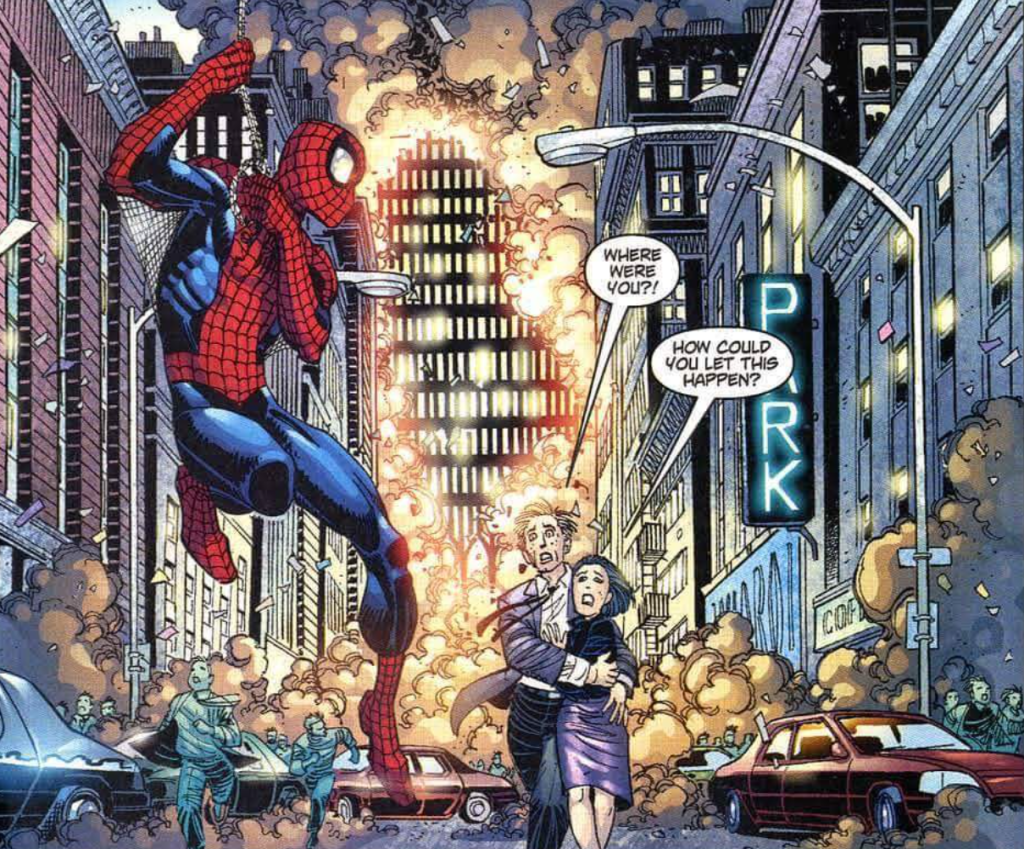
Yeah Spider-man. You should have used your…webs…to stop 9/11.
And that can throw up all kinds of logical head-scratchers. Like (and I’m really, really not trying to be offensive here) ask yourself; would 9/11 even be that big a deal in the Marvel universe? Given that this is the same world where Kang the Conqueror once wiped out the entire population of DC or New York is under constant attack from Galactus, Symbiotes and God knows what else?
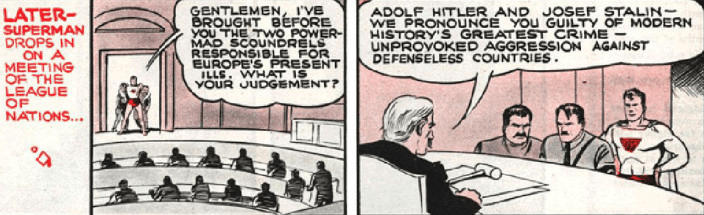
This is not a new problem. In 1940, Siegel and Schuster wrote a non-canon Superman story for Look magazine called “How Superman would End the War”, where Supes abducts Hitler and Stalin and drags them before a tribunal to stand trial.
The League of Nations being useful. There’s some comic book logic for you.
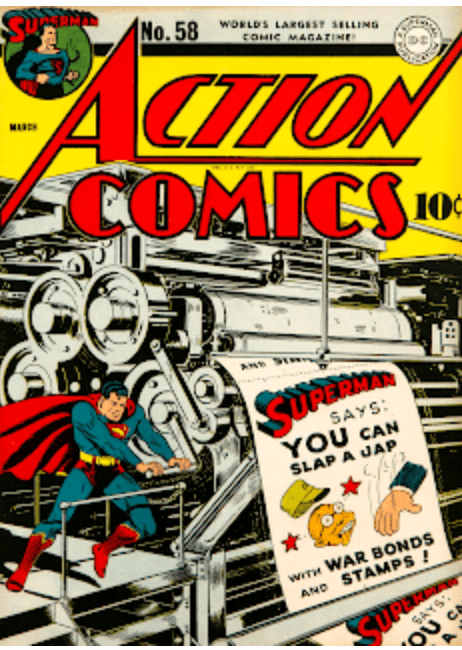
But in the main Action Comics and Superman titles the war went largely unmentioned apart from some now deeply uncomfortable covers schilling war bonds.
Out of universe, the reason for that is obvious. If Superman takes a more active role in world affairs and gets rid of Hitler (or Stalin. Or Saddam Hussein. Or Putin) then his world diverges too far from our own and the story loses that central appeal. It stops being our world and becomes an almost alien alternate reality.
But in-universe, you need to explain why Superman doesn’t just stop every dictator and despot around the world. It’s a problem that a lot of great Superman media has grappled with, and a lot of shitty media too.
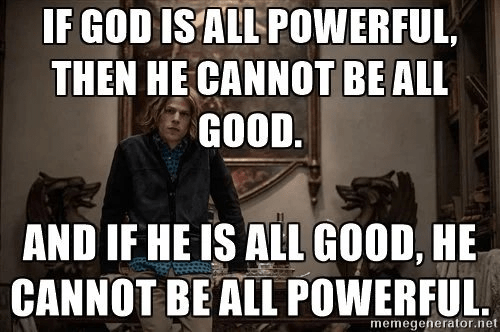
Oh fuck, the Problem of Evil. What a radical new concept.
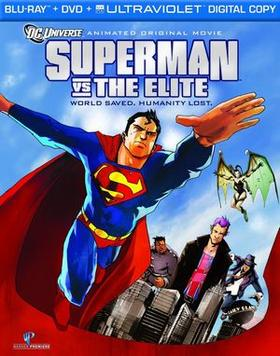
So in 1999, Warren Ellis and Bryan Hitch launched The Authority, a series about a Justice League pastiche that actually does take out dictators and get its hands dirty in global geo-politics. While Ellis intended the Authority to be seen as villain protagonists, when Mark Millar (OF FUCKING COURSE) took over as writer the team’s extreme and violent tactics were portrayed much more positively. The incredible popularity of this run prompted some fans and critics to claim that the nice old status-quo reliant heroes like Superman were strictly squares-ville, daddio, and that political assassinations and low-key fascism were what the cool kids were into. This prompted Superman writer Joe Kelly to pen What’s so Funny about Truth, Justice and the American Way?, where Supes comes face to face with a very thinly veiled pastiche of the Authority and demonstrates that wanting Big Daddy Strongman to come in and fix all our problems and punish our enemies is the cause of, like, 90% of the bad shit in our history as a species.
And…here’s where I have to confess to being a fraud and a coward. I haven’t actually read it. Yeah, I know. Even though I self righteously quoted it in the Dawn of Justice review I haven’t actually read the entire story. But, I have seen the 2012 animated adaptation Superman versus The Elite. And I am going to review it. And that is the thing you are reading now. If you’re a long time reader, you probably knew that, but I try to keep things accessible for the newbies.
Hi guys! We are now halfway there to getting Mauricio safely out of Venzuela and, as promised, here is the second of the war era animated short reviews. Because you’re all superheroes, and because I thought it might be particularly cathartic right now to watch some Nazis get punched in the face, today we’re looking at one of the Superman shorts from the 1940s. Enjoy, and please consider donating if you haven’t already.
***
Studio: Famous Studios
Country of Origin: United States
First Screened: March 26, 1943
Recently, the internet came down with a case of the vapours when it was announced by the BBC that the next Doctor would be played by Jodie Whittaker, who has lady bits.
Jolly good, quite right, good idea, quite right, jolly good and not before time. Now, when it comes to Who I haven’t really had skin in the game since Ecclestone left but I’m sure she’ll kill in the part. There have been bad Who writers, bad Who directors and even bad Who seasonsbut they have never cast a bad actor in the lead role (no, not even him) and I doubt very much they’ve started here. But Whittaker’s casting does raise some interesting questions. How will people in the past react to a character whose main defining trait is showing up out of nowhere and bossing everyone around when it’s a woman doing the bossing? How will, say, the Puritans react to this trouser wearing lady with a mysterious blue box and what can only be described as a magic wand? Will every episode of Doctor Who consist of angry peasants trying to ascertain if Jodie Whitaker weighs as much as a duck? It’ll be interesting to see how they handle it.
Of course, the status of women in society has swung wildly upwards and downwards over the millennia depending on the era and society in question. Progress is not a hill, but a rollercoaster. Consider Lois Lane, who, as the perennial love interest of one of the most famous pop-culture icons of the last century has had an unbroken presence in various media for almost eight decades now, and so represents a useful yardstick for the portrayal and status of women in American culture. In the Silver Age, this was Lois Lane.
The fifties saw Lois’ role as a daring and accomplished journalist minimised to almost nothing so that she could engage in an unending spiteful love rivalry with Lana Lang over who could dupe Superman into marrying her first. It was a terrible time to be a woman in America, and it was a terrible time to be Lois Lane.
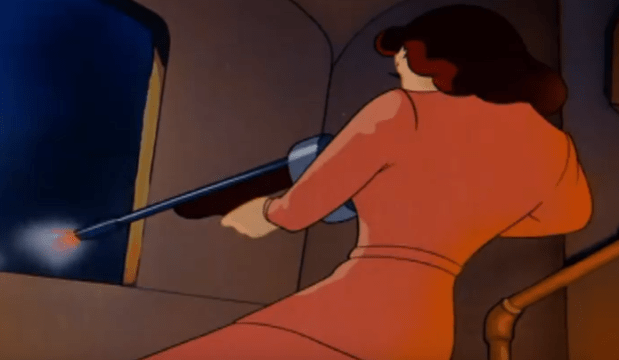
Contrast this with a decade earlier, where we find Lois Lane wasting bitches with an uzi.
“Take that ya rat bastards! When you get to hell, tell em Lois sent ya!”
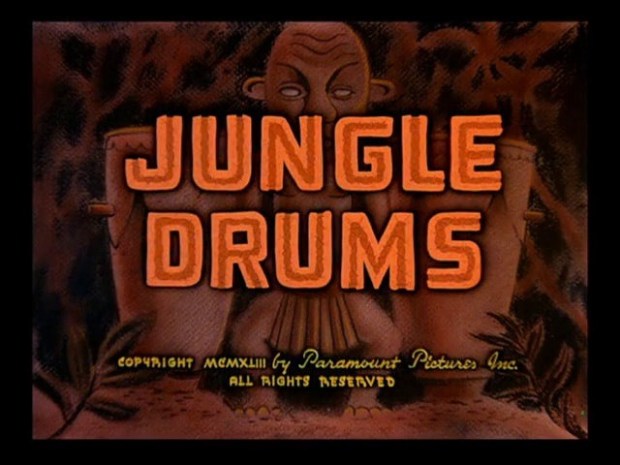
World War 2 brought huge advances both for women and minorities because America had to either make the most use of every available person regardless of race or gender or risk total defeat to the forces of fascism and America was all “Ugh, fine.” You see this in the Fleischer (later Famous) studios Superman shorts with their depiction of Lois Lane, still one of the finest interpretations of the character three quarters of a century later. And possibly the character’s finest hour is today’s short, Jungle Drums.
As Buzz Aldrin once noted “second comes right after first” and the Fleischer Brothers, Max and Dave, seem to have been cursed to always be the Buzz Aldrin to Walt Disney’s Neil Armstrong. A mere year after Snow White, Paramount pictures released Gulliver’s Travels, the second cel-animated feature film ever, directed by Dave and produced by Max. Of course, just because Buzz Aldrin went second, does that mean he was somehow an inferior astronaut to Armstrong? Course not, but while Gulliver’s Travels was a fantastically animated feature, it just didn’t create the same sensation that Snow White did and while it certainly was a success at the box office, the Fleischer’s studio quickly found itself treading water financially. Smarting from the financial strain of Gulliver’s Travels, mired in the production hell of their second feature Mr Bug Goes to Townand with Max and Dave’s relationship having degenerated to Cain and Abel levels and with all parties coming to the realisation that animation is a demon bitch that burns alive all who dare love her, now was really not the time to take on an ambitious new project. So when Paramount approached the Fleischers asking them to make shorts featuring this new Superman character all the kids were going cuckoo over, Max and Dave told them that they could only do it with a budget of $100,000 an episode (or, around four times the cost of the most expensive Disney shorts). In 1940s dollars that was equal to “Holly Hannah! That’s a lotta scratch!” and Max and Dave expected Paramount to tell them to screw off, so they were stunned when the execs made them a counter offer of $50,000 and episode (equal to “Nice little pile. Goddamn, that’s a nice little pile”). Unable to turn down that kind of money, the Flesichers started work on what is still, adjusted for inflation, the biggest budgeted series of animated shorts ever made. And I cannot overstate how amazing these shorts are.
Look.
Look at this.
Here is some more.
Do you see?
Do you see?
Look at this.
Do you understand?
Do you?
DO YOU?!
This series had it all, the cast of the Superman radio show doing the voices, rotoscoping used to set a new standard for realistic animation of human figures, an epic score, one of THE all-time great Lois Lanes and the art design YE GODS! There’s a reason Bruce Timm cites this as one of the major influences on Batman the Animated Series. This series is the reason that Superman flies instead of just jumping everywhere like a grasshopper.
Comic Book historians divide the history of superhero comics into “ages”. The Golden Age lasted from the late thirties to the end of the second world war. It began with the creation of Superman and saw the births of Batman, Wonder Woman, Captains America and Marvel, the original incarnations of the Green Lantern and the Flash as well as a host of others. Owing to the ongoing unpleasantness at the time, many of these characters were patriotic, Japanazi fighting do-gooders like the greatest superhero for all time, the Original Human Torch.
“Mouse, stop showing that panel of the Original Human torch calling Hitler a liar while burning him a…” “NEVER!”
Also, owing to the fact that this was a brand new genre and folks were still figuring out the rules these comics tended to be absolutely batshit insane.
In the forties we had a superhero who was a giant flying eyeball. How’s that for diversity?
And then, with the war over, the superhero fad died about as quickly as it had ignited and superheroes pretty much vanished from the shelves with the exception of a few stubborn holdouts like Superman.
Now, I want you to imagine that you wake up tomorrow and everyone is playing POGs. Like, POGS are suddenly huge again. Kids are playing POGs, college students are playing POGs, journalists are writing long earnest think pieces about the cultural ramifications of the POGsurgance instead of doing actual work. This weird fad from fifteen or twenty years back suddenly comes roaring to prominence again and never leaves and before you know it movie studios are making massive-budget spectacle movies with inter-connected continuity and people are lining down the street to watch Pog versus Pog: Dawn of Pog. That’s kind of what happened with the dawn of the Silver Age of comics in the late fifties/early sixties. So what happened?
“Two words. Sput! Nik!”
With the dawn of the space race, America became obsessed with science and its wild, stoner little sister science fiction. Whereas Golden Age heroes tended to have magical or mythical based powers, the new crop of superheroes belonged firmly in the realm of science fiction. Instead of getting his powers from an old magic lantern, the new Green Lantern was a space cop gifted with fabulous technology by a race of all powerful aliens. The new Flash was police scientist Barry Allen who eschewed the Roman mythology inspired look of his predecessor, Jay Garrick. Even the few surviving Golden Age heroes adapted to the times; I mean look at what poor Batman had to deal with for chrissakes:
“I AM THE NIGHT!”
Over at Marvel, the hottest new properties were Spider-man, a science student turned superhero, and the Fantastic Four, a quartet of astronauts who literally got their powers as a result of the space race.
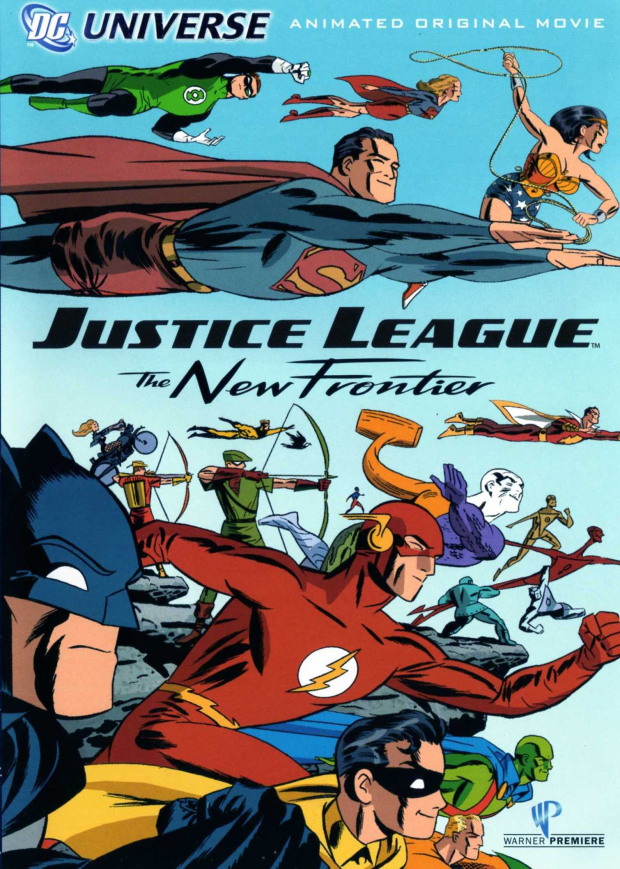
Much like “the sixties” doesn’t simply mean the years between 1960 and 1969 but refers to an entire cultural…thing, “silver age” has come to represent a specific attitude and aesthetic in comics. The comics of this period tended to be bright, optimistic, occasionally goofy as hell and suffused with a spirit of Moon Shot era can-do. New Frontier, Darwyn Cooke’s classic 2004 love letter to that whole era, simultaneously interrogates the period in which those stories were written while simultaneously celebrating what made them great. In 2008, Cooke teamed up with his old partner Bruce Timm (Batman the Animated Series) to adapt this story as part of Warner’s line of direct to to DVD animations. Did Cooke’s work make the transition unscathed? Let’s take a look.








 unshavedmouse