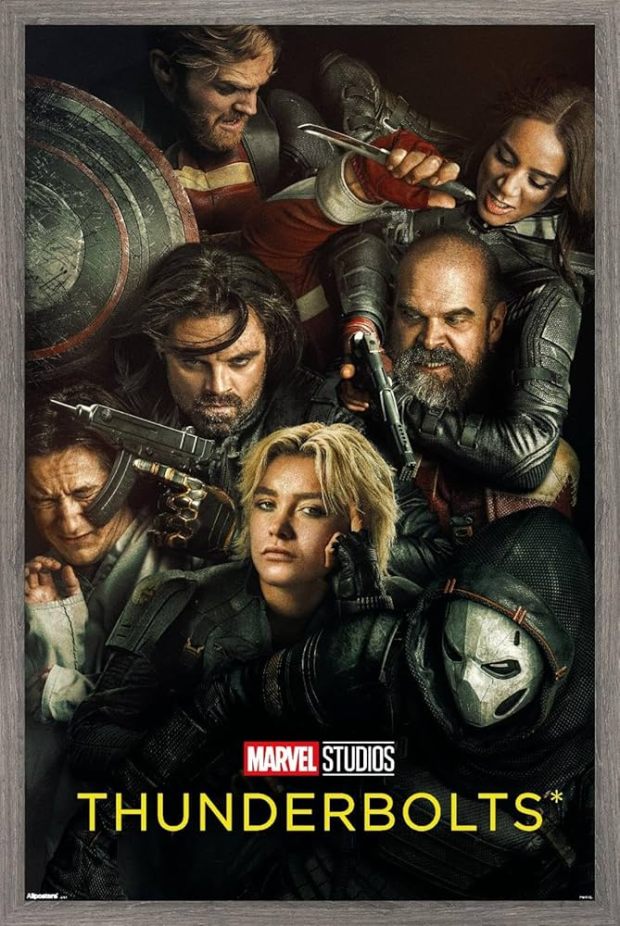
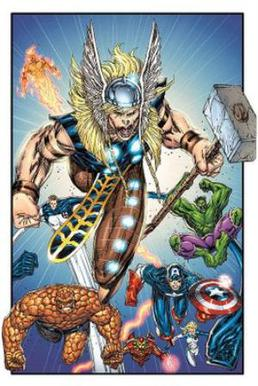
The nineties, as we’ve discussed previously, were a pretty damn bad time to be a Marvel comics fan but there were still bright spots here and there. One of these was The Thunderbolts, a new superhero team that was introduced in The Incredible Hulk. They were presented as a new team stepping up to replace the Avengers who were all believed dead after the events of Onslaught (in actuality, they were all in a parallell universe being drawn by Rob Liefeld).
Anyway, the Thunderbolts then returned for their own series written by Kurt Busiek. It’s a pretty standard superhero team story right up until the shocking twist at the end of the first issue.
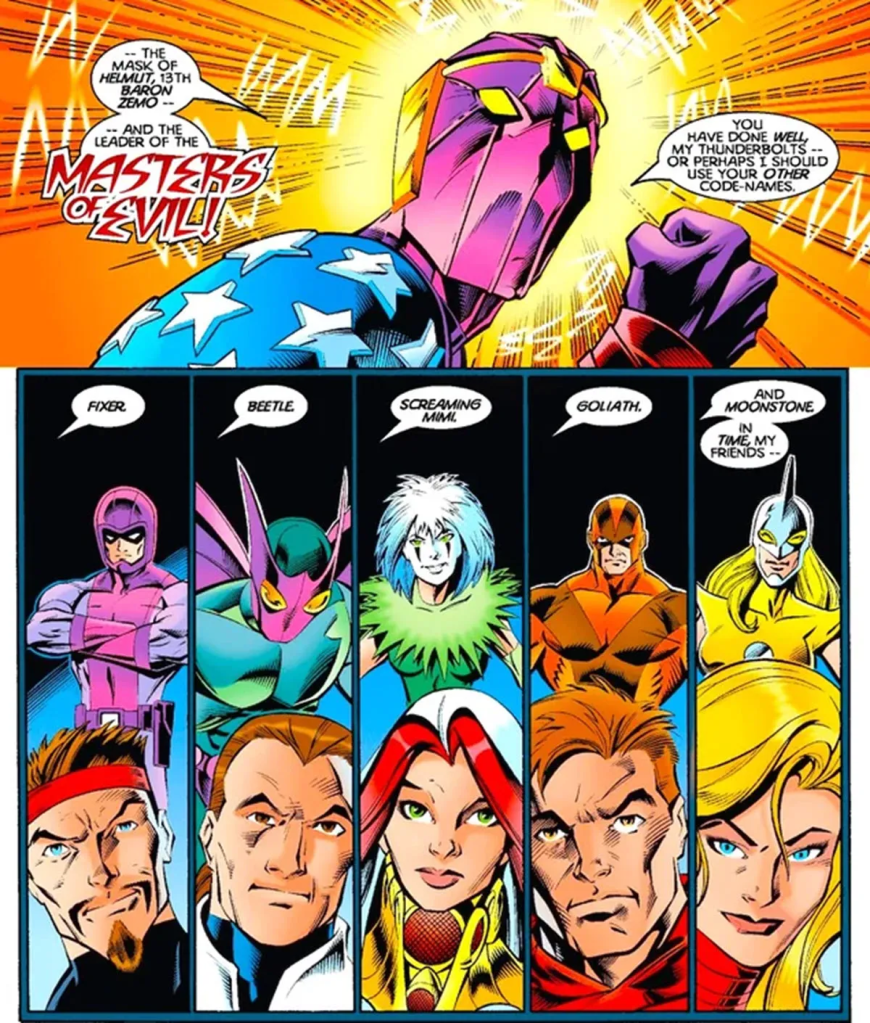
The Thunderbolts were actually villains, a team put together by Captain America’s enemy Baron Zemo to pose as superheroes while he consolidated his grip on the underworld. Of course, they eventually decide they actually like being superheroes and turn face, and since then the Thunderbolts team has basically been, well, Marvel’s Suicide Squad let’s not dance around the issue. It’s a team for former supervillains to try and reform and be good guys. The version of the team that today’s movie is based on comes from the mid-2000s Dark Reign…


Okay, okay. Detour. Let’s talk about the Sentry, one of the first original Marvel superheroes of the new millennium and the subject of one of the most ingenious pieces of guerilla marketing I can recall. If you want a full breakdown of the history of the Sentry hoax, this has got you covered but here’s the cliffnotes version: Marvel basically fooled the comic reading public into believing that there was an artist named Artie Rosen who worked with Stan Lee back in the late fifties who had recently passed away. And in Rosen’s possessions his wife found sketches for a lost superhero that he had supposedly been working on with Stan Lee. This, of course, would be the comic book equivalent of the finding of the Lost Caravaggio. They even got Stan Lee himself in on the scam. In reality, this was all marketing to build up hype for the release of The Sentry by Paul Jenkins and Jae Lee, a mini-series about a superhero who was erased from the history of the Marvel universe and who no one remembers. It’s a good story, not an all time classic, but it’s a fun read. We get to see Bob Reynolds interacting with different Marvel heroes in different eras, drawn and written in the style of the time. But here’s the thing. The series ends with Reynolds realising why everyone forgot him: he and his arch-enemy The Void are the same person and every act he does as the Sentry is balanced with an evil act committed by the Void. Therefore, the only way to protect the world from the Void is for the Sentry to go away again. So the series ends with Bob once again wiping the world’s collective memory of his existence and going back to his normal humdrum life. All well and good. But then…
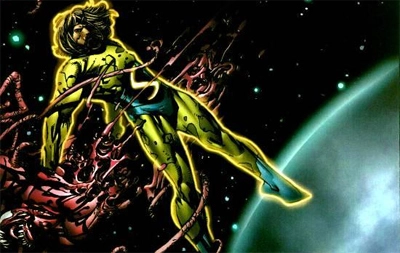
Brian Michael Bendis reintroduced the Sentry as a member of his New Avengers team. And this is where Bob Reynold’s troubles really began, and how he began his journey to become one of the most mishandled characters in Marvel’s eighty year history.
Here was the problem. You may have heard Sentry described as “Marvel’s Superman”.
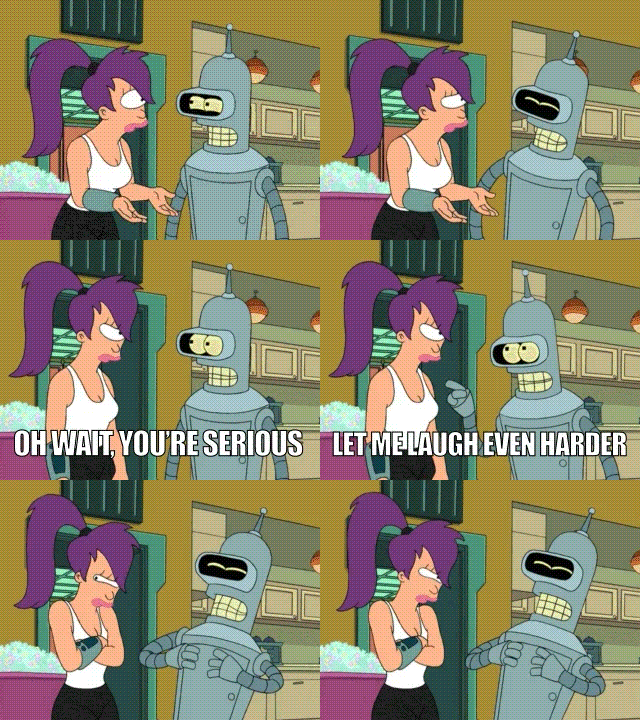
No. No no no. The Sentry makes Superman look like a coughing baby. The Sentry makes PRE-CRISIS SUPERMAN look like a coughing baby. The Sentry is so powerful I have to break up the list of his powers into two separate screencaps:
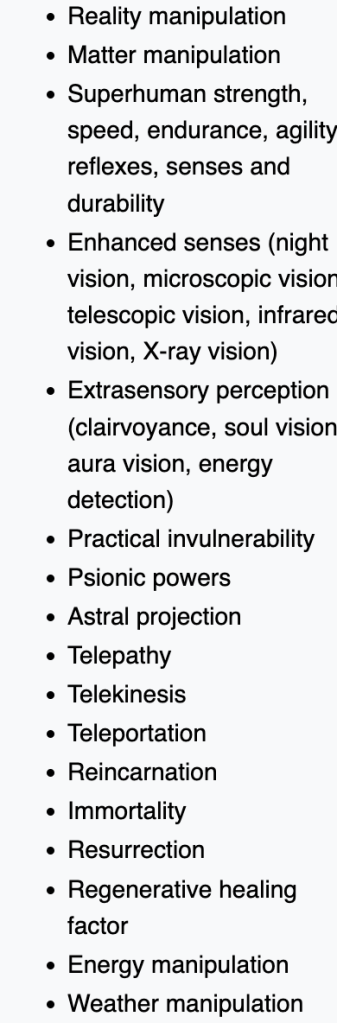

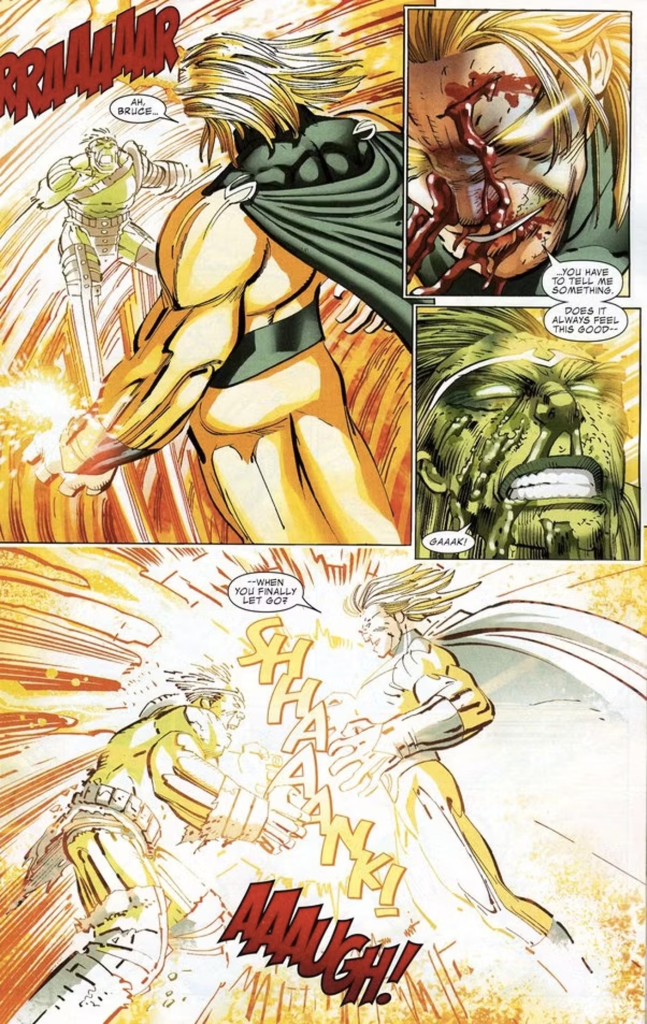
Like, fucking LOOK at that list. This guy is the physical embodiment of “fuck you I win”. You put him on any team and he renders every other member instantly useless. He should be able to solo the entire rogue’s gallery of the Marvel universe in a single afternoon. Bendis got around this by establishing that Bob was suffering from severe depression and agoraphobia and would only come out of his room to save the world if everyone was super nice to him. This admittedly, led to some pretty awesome moments, like Sentry’s iconic battle with the Hulk during the World War Hulk storyline.
Over the years, Bob’s mental problems got worse and worse and it was an admittedly effective source of tension; what happens if God stops taking his meds and snaps? But that just reduced the character to a ticking bomb and that’s not really sustainable over the long haul. Either the bomb has to go off or the audience realises that the bomb is never going to go off. What the character needed was a stable status quo, a default baseline. And every attempt to give him one failed. Everything about Bob was constantly being re-written every time a new writer got his hands on him, particularly his relationship with the Void. Writer A says the Void never existed and was all in Bob’s head. Writer B says the Void was the angel of death from Exodus. Writer C says he was a loving family man. Writer D says he was an abuser who cheated on his wife. Was he once a lab assistant, a junkie, or made the Sentry as part of the Weapon X programme? Flip a three-sided coin, bucko.
Within an impressively short period of time the character had been reduced to an unsalvageable mess and was killed off, only to be periodically brought back as a super-powered threat that needs to be killed off again. But, as someone who always had a soft spot for the character, I was happy to hear that the Sentry was going to be making his debut in the MCU. Surely they’ve learned from past mistakes and are finally ready to do this character right?
Well, let’s see.
(more…)







 unshavedmouse