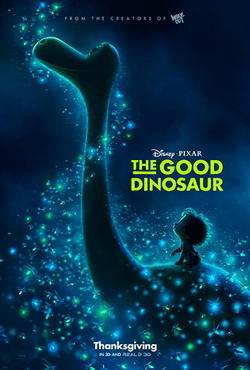
Maybe it’s me. Maybe I just shouldn’t be allowed near CGI animated dinosaur films. I don’t know why this particular mircogenre of movies manages to so consistently stick in my damn craw. I, of course, have Dinosaursitting proudly at the very bottom of my rankings of the Disney canon and I have every hope that it will remain that way for a long time.
And I would still gladly watch Dinosaur over TheGood Dinosaur. Mainly because, I can at least watch Dinosaur from beginning to end. The Good Dinosaur is the second last movie on my requested reviews because I have put it off over and over and over again. I cannot finish this thing. It bores the piss out of me.
But, before we crack on, I want to explain why I’m not doing a full plot recap for this one.
Still not entirely sure this isn’t my wife pulling off an amazingly ambitious prank.
3. This movie has practically no plot to recap.
4. Disney Plus was dicking me around something fierce, constantly crashing and freezing and making the experience of watching this movie even more interminable than normal. This, by the way, was also during Kimmelnacht so you can understand why I was eyeing my Disney Plus subscription with a steely eye and whispering…
So, not a recap, more a series of observations about why this fucking movie annoys me so much.
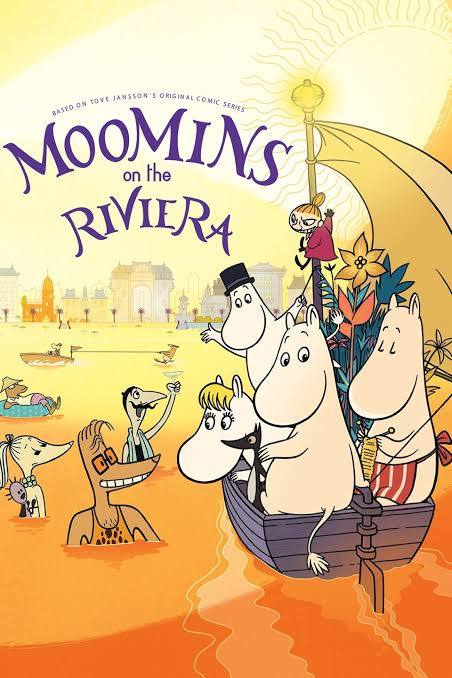
The Moomins are a topic that I feel I understand less the more I try to get my head around them. I tackled another Moomin film, Moomin and Midsummer Madness, around ten years ago so I should have been ready for this. And yet, here I am, looking at this film all…
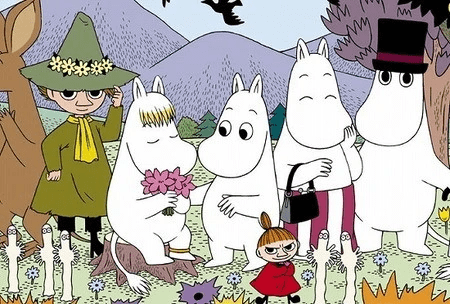
A brief refresher, the Moomins are a multimedia franchise created by Finnish author Tove Jansson that encompasses picture books, novels, short stories, TV shows, movies, theme parks and a comic strip written and illustrated by Jansson herself. The comic strip that inspired today’s film, Moomins on the Riviera, began in 1954 and ran until 1975. This was actually the second Moomins comic strip, the first having appeared in a left wing newspaper but which failed because the readership considered the Moomins to be “too bourgeois”, because even in the late forties there were people who needed to touch some fucking grass.
So what’s it all about?
The series features things called Moomins doing stuff.
I can’t really get more specific than that.
Sometimes they don’t do stuff. Sometimes they just chill.
Okay, I gotta be careful here. Last time I reviewed a critically acclaimed 2010s animé I did an almost complete 180 on my opinion of it in the process of writing the review with the result being the most schizophrenic thing I’ve ever written on this blog.
“Mouse. You know that’s not true.”
“Yeah, you’re right, picture of a map I’ve been talking to for thirteen years.”
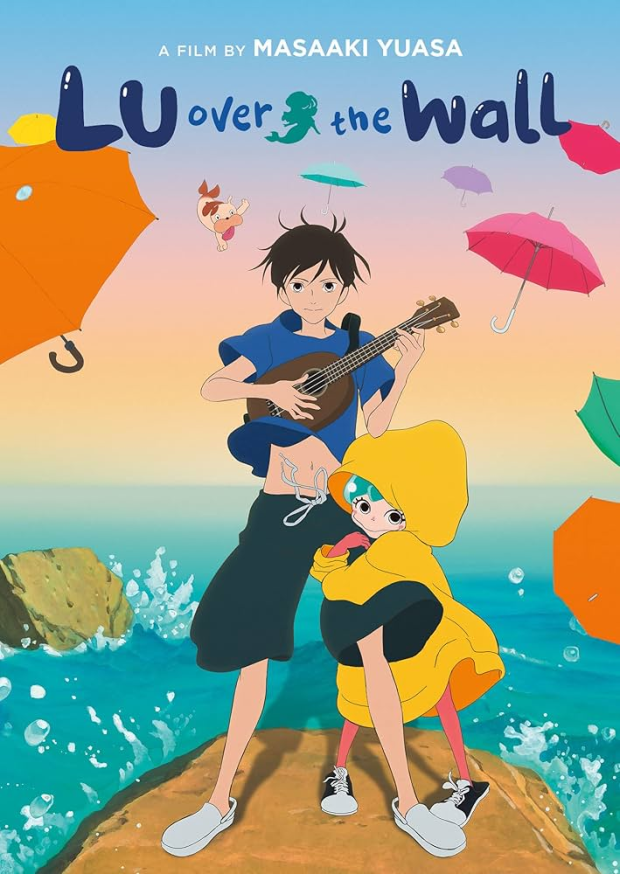
My point is, I’ve been holding off on writing this review just in case I have a similar reversal in opinion on Lu Over the Wall, but I’m pretty certain that my feelings on it are settled:
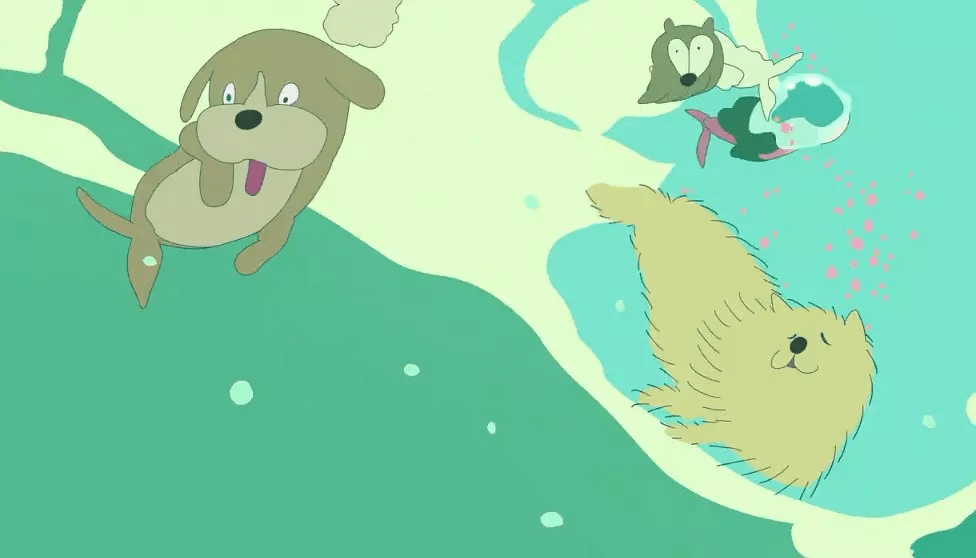
I think this is a mildly charming (if frustratingly unoriginal) “lonely boy makes friends with supernatural creature” story that is thoroughly undone by disastrous visuals and animation.
This is entirely subjective. I’m not saying the art style is bad per se. I’m just saying I hate it with every fibre of my being.
Some of the choices I stand by but jeez, I’ll probably have to re-do that list entirely. Or will I? Are listicles even a thing anymore? Are blogs? Is anyone out there reading this who’s not a bot? Hello? Hellooo?
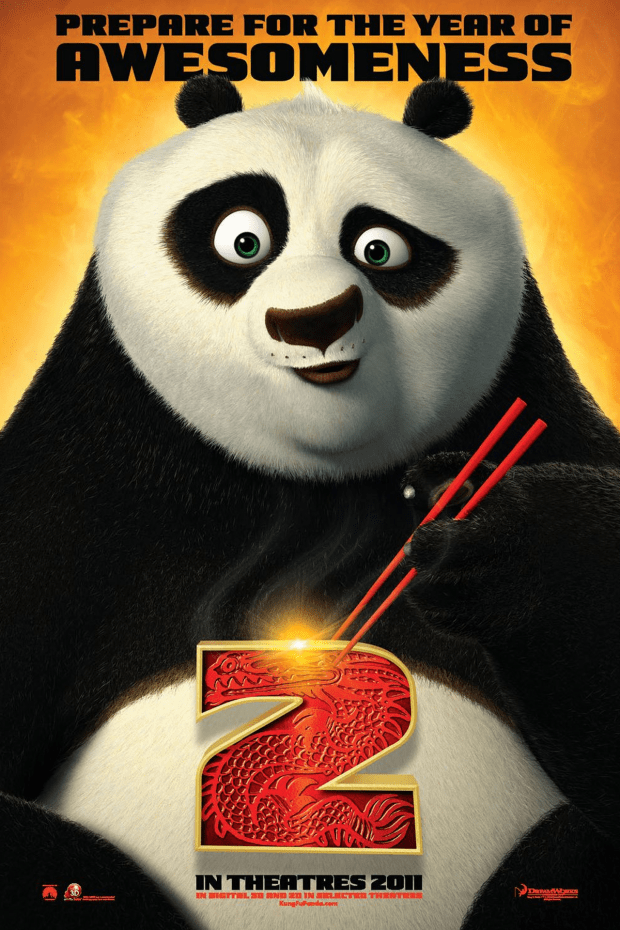
Anyway, existential dread aside, one of the big surprises for me was that 2014 Mouse apparently put 2008’s Kung Fu Panda on the list, a movie I think I have seen maybe once and have never had the urge to watch again. I have no idea why I did that. I feel like the years must have Ship of Theseus’d me into a completely different person because I cannot imagine that movie provoking that strong a reaction in me, either positive or negative. And I know that this is definitely a “me” problem. These movies are, structurally, very very good. Like, just put together magnificently well. I get the praise for them. Mostly. Some of the more rhapsodic critical responses to this movie I find a little baffling. Particularly the praise for the visuals. Again, they’re very good. But I came across one review (from a critic who’s opinion I rate very highly) who actually claimed that Kung Fu Panda 2 was the most visually beautiful film Dreamworks had made up to this point in their history.
Old lags on this blog know, from my review of Disney’s Peter Panwritten way back in the Hadean Epoch, that JM Barrie’s Peter and Wendy is one of my favourite books of all time. By a strange coincidence, I recently finished reading it to Mini-Mouse (my first full read-through in around fifteen years) and I was once more struck by how achingly beautiful it is purely as a piece of writing.
Look at this passage describing Hook’s ship:
One green light squinting over Kidd’s Creek, which is near the mouth of the pirate river, marked where the brig, the Jolly Roger, lay, low in the water; a rakish-looking craft foul to the hull, every beam in her detestable, like ground strewn with mangled feathers. She was the cannibal of the seas, and scarce needed that watchful eye, for she floated immune in the horror of her name.
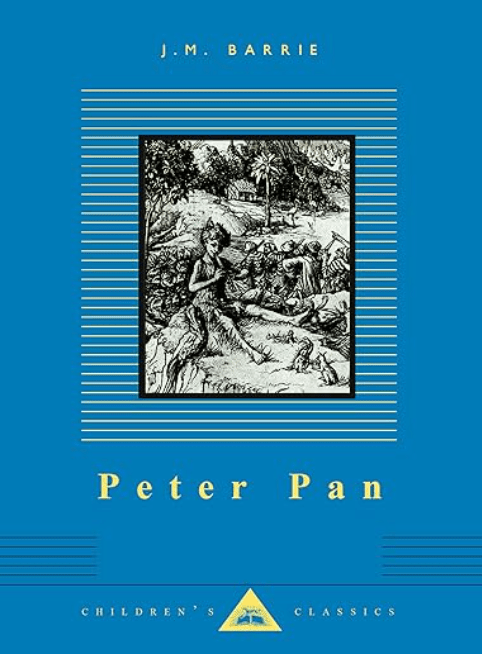
Now, I’m not normally one to gush about editions of books and what not. If it’s a good story, I don’t tend to care about the packaging. But I do make a special exception for my copy of Peter Pan.
The Everyman Children’s Classics edition with illustrations by F.D. Bedford. I got this one Christmas many years ago and it’s always been indescribably special to me.
When I see a bad adaptation of Peter Pan, it feels I leant this book to someone and got it back torn, stained and with obscene notes scribbled on every page.
I feel angry and appalled and betrayed.
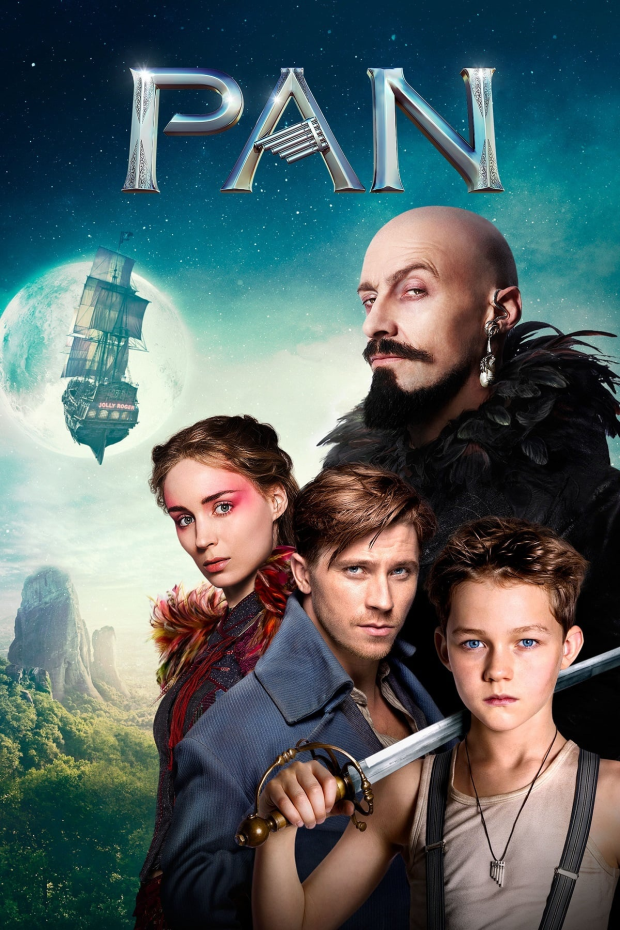
Watching Pan, however, felt like I leant this book to someone and they put it in a shredder and painstakingly re-arranged the shreds into a diorama depicting the Conference of Versailles.
Now we’re waaaaaay past angry. Now I’m just baffled and confused.
Probably the most thankless job a director can set himself is trying to adapt a beloved stage musical to screen, as the people you most need to win over for your movie to be a success (fans of the stage version) are also the people most likely to tar and feather you in the streets over the slightest deviation from the source material. You may think comic fans get salty about adaptation changes, but they have nothing on musical theatre nerds.
That’s probably why, despite musicals still being a lucrative movie genre, stage musicals adapted to screen are a rare beast and only getting rarer. Of the 50 top grossing movie musicals, only six began life on stage. The rest are either originals like The Greatest Showman, animated musicals or jukebox musicals like Bohemian Rhapsody or (sigh) Alvin and the Chipmunks.
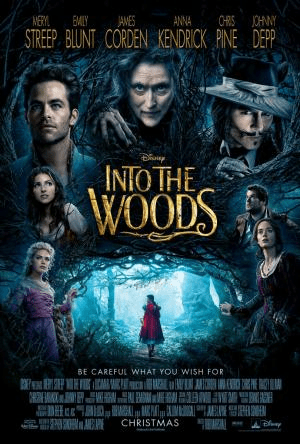
Of course, it wasn’t always thus. The middle decades of the 20th century were a golden age for adaptations for stage musicals as that was the point where theatre and cinema were most alike. Colour photography and improvements in sound tech meant that cinema could finally match the visual and audio splendour of theatre. But, cinema had yet to fully embrace the freedom inherent in the medium and movies of the first half of the century often closely resembled filmed plays with constructed sets and static cameras. As cinema became less and less indebted to its theatrical roots, adapting stage musical to screen became a lot more challenging. To put it simply: movies are not plays and plays are not movies. And trying to turn one into the other can result in some pretty radical changes. And all those challenges are right up on screen in Into the Woods, a movie based on one of the most inherently theatrical musicals of the modern era.
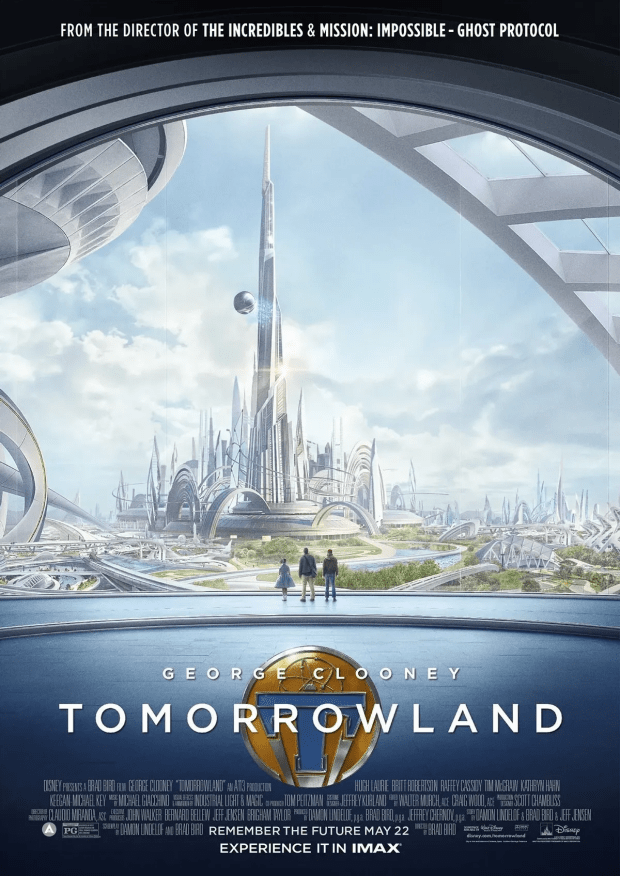
Hey remember that time Disney spent a load of money on a science fiction epic that was visually spectacular but also kinda inert, weirdly off-brand for them, with a load of tonal and pacing issues that ended up costing them a load of money?
I guess by this point it kinda IS on brand?
Anyway, Tomorrowland is the second (and to date last) live action feature directed by animation legend Brad Bird and it keeps alive the proud Disney tradition of sci-fi movies that I respect and want to like but are just fundamentally too dang flawed on the writing level to get anything other than a qualified endorsement.
In 1984, two broke young illustrators named Kevin Eastman and Peter Laird were trying to break into comics. Eastman randomly doodled a turtle in ninja attire and the pair decided that it was a Teenage Mutant Ninja Turtle, essentially a madlib of everything that was popular in comics at the time (except for turtles).
They then wrote a silly little issue parodying Frank Miller’s Daredevil run and that, of course, was that.
This one weird joke concept riffing on an incredibly specific moment in comic book history in a black and white indie vanished without a trace, the very definition of a flash in the pan.
Wait, no. *checks notes*
It went on to conquer the goddamn world. To this day, TMNT is quite possibly the most lucrative Western comic book property not published by either DC or Marvel. Third most successful toyline of all time. Seven TV series, seven films, multiple videogames, hundreds and hundreds of comic issues and a metric shit-ton of merch. Which, on the one hand, is crazy.
How did a concept so ridiculous, and so seemingly instantly dated become one of the most successful and enduring pop culture phenomena of the past half century? Well, success has many fathers. Firstly, I think the franchise’s longevity was sealed with this:
A theme tune that catchy only comes around once in a blue moon. Play it over NINE SEASONS and it’s practically brainwashing.
Then there’s the fact that TMNT relies on a template that has proven to be amazingly durable over the last 180 years.
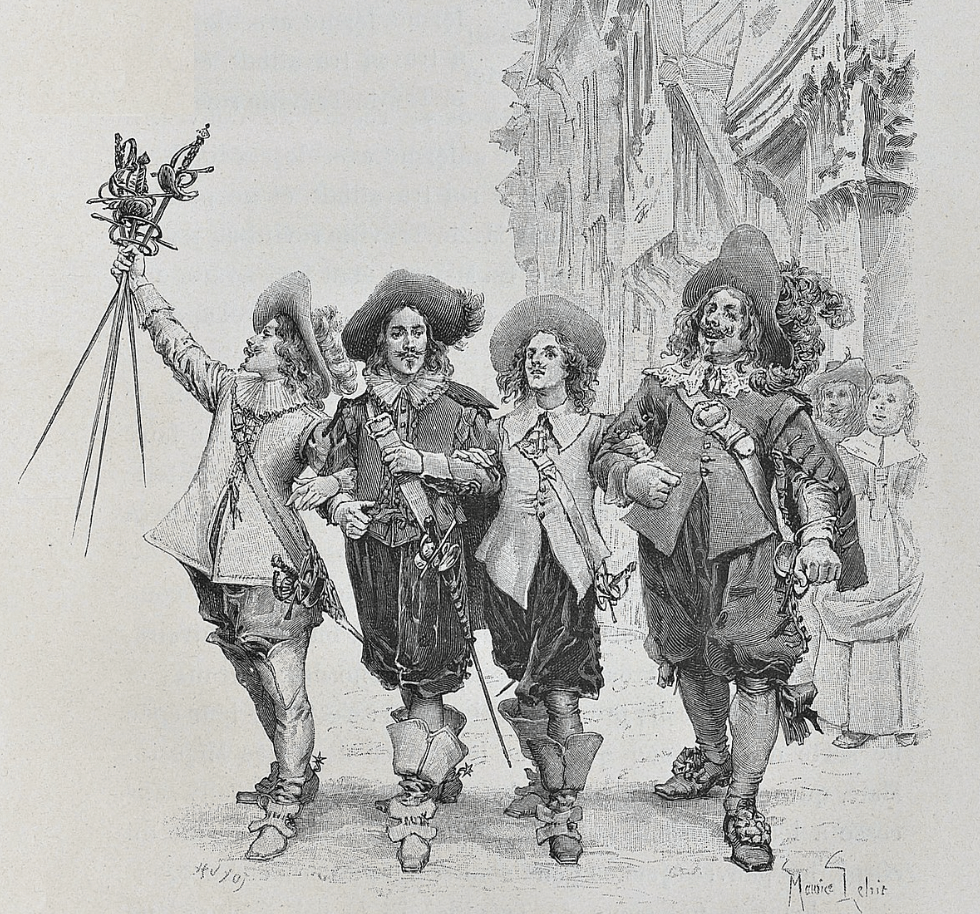
Hothead. Stoic Leader. Smart Guy. Big fun doofus.
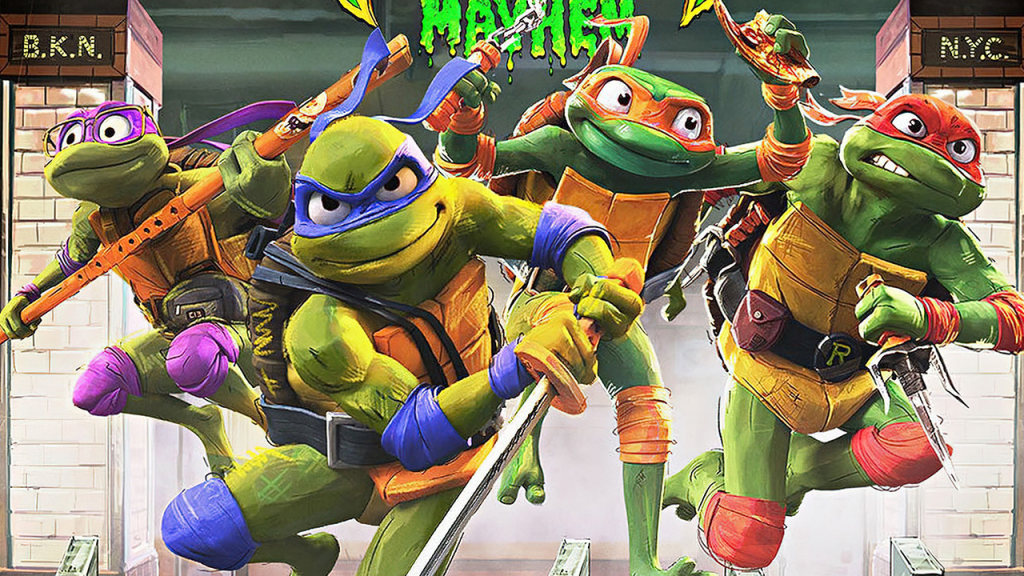
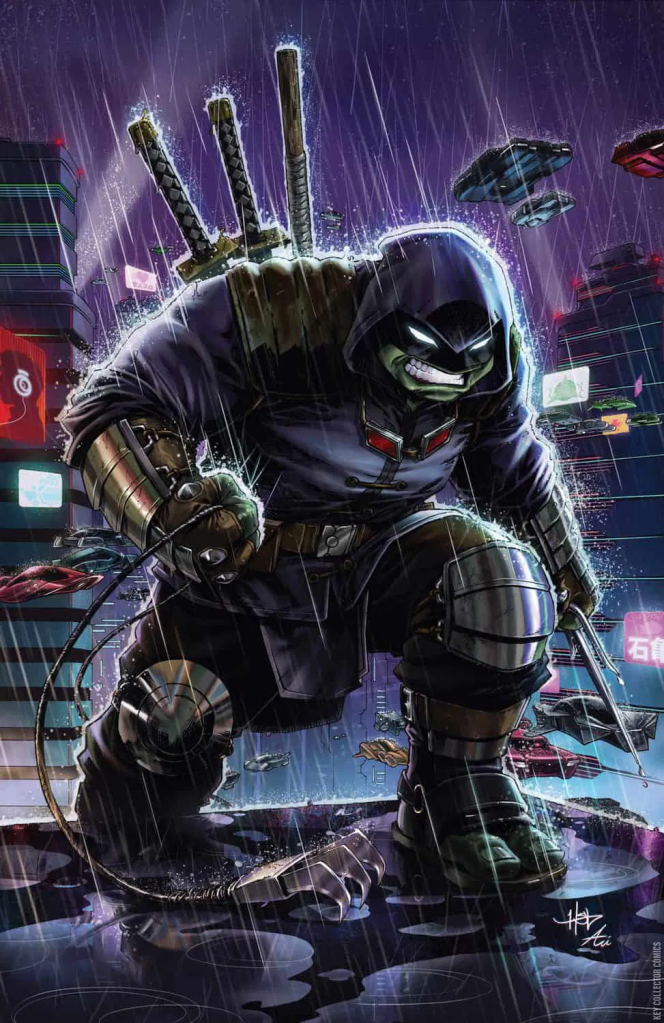
The Musketeer Archetypes are like the Four Chords of character writing. They’re bloody everywhere, but they’re there for a reason. They work, dammit. And these character traits (Leads, Does Machines, Cool but Rude, Party Dude) hold true across virtually all interpretations of the characters which gives continuity across the franchise. But, and this is crucial, with that stability and continuity there also comes incredible plasticity. The Turtles fandom is fantastically diverse in terms of its age range and that’s because TMNT can be this:
Or it can be THIS:
Once you get past the initially (very, very, very) silly premise, the Brothers Turtle can grow with their audience. There’s stuff for kids and there’s also stuff for adults. So, class, where have we heard that before? A character that has a rock solid core that’s also surprisingly adaptable and can tell stories for any and all ages?
So before we go any further, I owe you all an apology. I know I said I’d be reviewing Turtles Forever but you need to know three things:
My DVD of Turtles Forever didn’t arrive in time (that’ll teach me to support physical media).
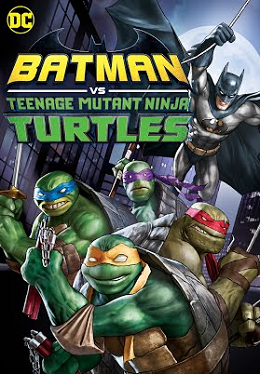
There’s a Turtles movie with Batman in it, how am I NOT going to review that?
I don’t know what Makoto Shinkai has against me but for some reason his reviews always show up on my schedule precisely when I have the least time to write them. Maybe he heard that I don’t particularly like trains or weather.
“Bastard!”
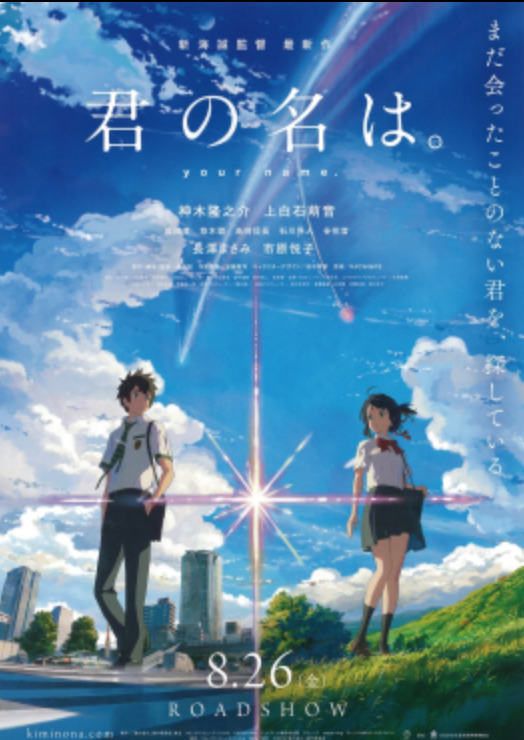
Anyway, this is the third movie of his that I’ve reviewed and, while I didn’t really love either of his previous offerings things are at least trending positive. I liked The Garden of Words quite a bit more than 5cm A Second and I like Your Name quite a bit more than either of them. I appreciate that “I like it okay” is so muted a response to this particular film that it might as well be scathing critique but…I dunno guys, I don’t know what to tell you. Shinkai’s stuff just leaves me kinda cold. EDIT: I wrote this opener before rewatching the film and I’ve since warmed to it quite a bit, as you will see.
But yeah, this movie is a huge deal. It was the most successful non-Western animated film of all time when it released, unseating Spirited Away in its native Japan before going on to conquer most of Asia.
Here’s the big problem with writing a character like Superman: he can’t change the world.
The superhero genre is about taking our world, the recognisable world we live in, and adding a few discreet fantastical elements. That’s the appeal. Ordinary people, trudging to their ordinary jobs look up and see a brightly coloured figure streaking through the air. Is it a bird? Is it a plane? No! It’s Superman!
That’s the magic that the entire genre runs on. Which can create problems when, say, certain real world events have to be incorporated into the fictional reality of the universe.
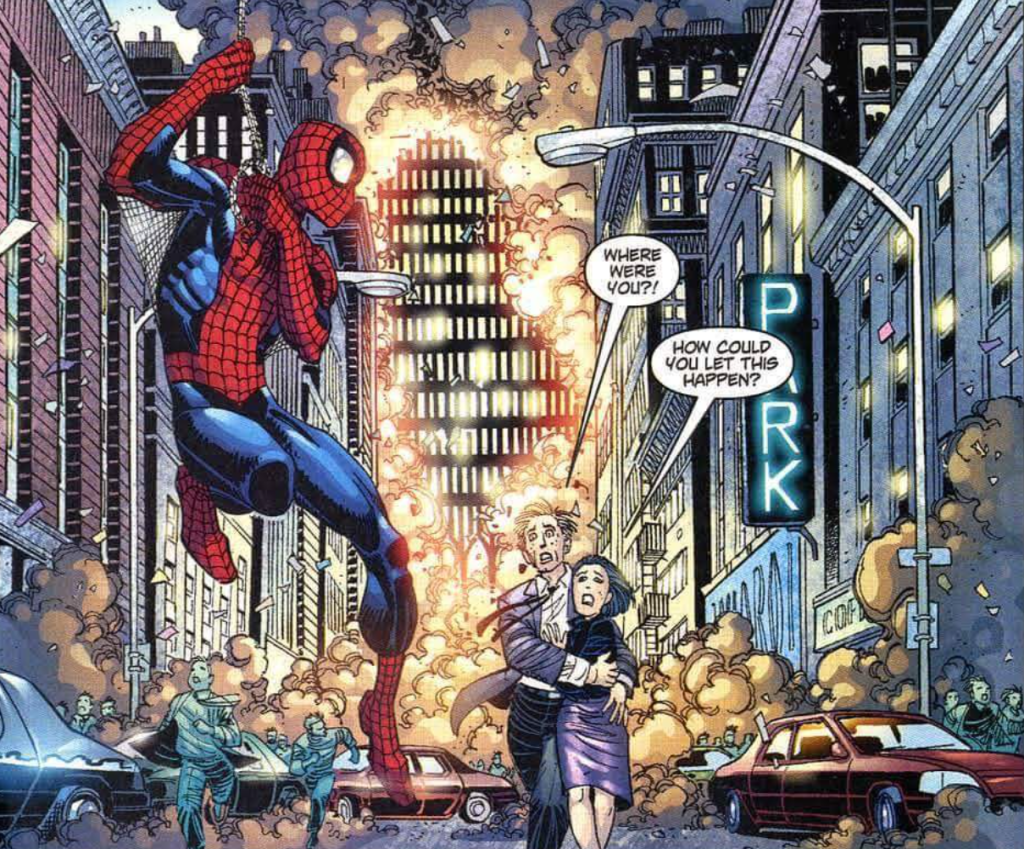
Yeah Spider-man. You should have used your…webs…to stop 9/11.
And that can throw up all kinds of logical head-scratchers. Like (and I’m really, really not trying to be offensive here) ask yourself; would 9/11 even be that big a deal in the Marvel universe? Given that this is the same world where Kang the Conqueror once wiped out the entire population of DC or New York is under constant attack from Galactus, Symbiotes and God knows what else?
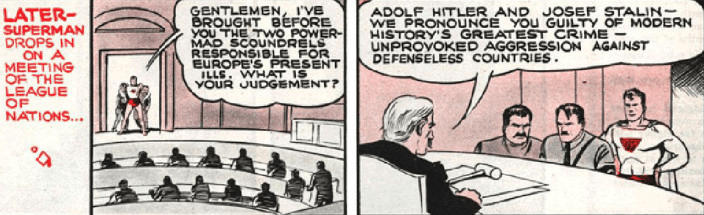
This is not a new problem. In 1940, Siegel and Schuster wrote a non-canon Superman story for Look magazine called “How Superman would End the War”, where Supes abducts Hitler and Stalin and drags them before a tribunal to stand trial.
The League of Nations being useful. There’s some comic book logic for you.
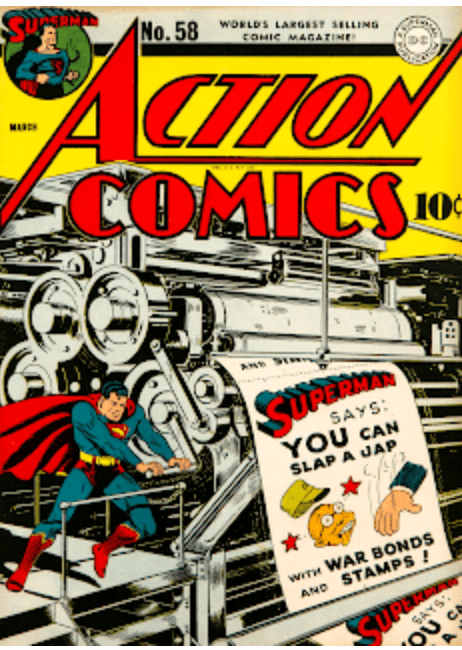
But in the main Action Comics and Superman titles the war went largely unmentioned apart from some now deeply uncomfortable covers schilling war bonds.
Out of universe, the reason for that is obvious. If Superman takes a more active role in world affairs and gets rid of Hitler (or Stalin. Or Saddam Hussein. Or Putin) then his world diverges too far from our own and the story loses that central appeal. It stops being our world and becomes an almost alien alternate reality.
But in-universe, you need to explain why Superman doesn’t just stop every dictator and despot around the world. It’s a problem that a lot of great Superman media has grappled with, and a lot of shitty media too.
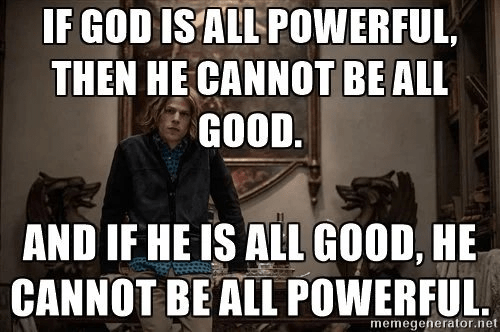
Oh fuck, the Problem of Evil. What a radical new concept.
So in 1999, Warren Ellis and Bryan Hitch launched The Authority, a series about a Justice League pastiche that actually does take out dictators and get its hands dirty in global geo-politics. While Ellis intended the Authority to be seen as villain protagonists, when Mark Millar (OF FUCKING COURSE) took over as writer the team’s extreme and violent tactics were portrayed much more positively. The incredible popularity of this run prompted some fans and critics to claim that the nice old status-quo reliant heroes like Superman were strictly squares-ville, daddio, and that political assassinations and low-key fascism were what the cool kids were into. This prompted Superman writer Joe Kelly to pen What’s so Funny about Truth, Justice and the American Way?, where Supes comes face to face with a very thinly veiled pastiche of the Authority and demonstrates that wanting Big Daddy Strongman to come in and fix all our problems and punish our enemies is the cause of, like, 90% of the bad shit in our history as a species.
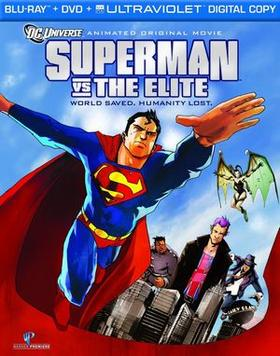
And…here’s where I have to confess to being a fraud and a coward. I haven’t actually read it. Yeah, I know. Even though I self righteously quoted it in the Dawn of Justice review I haven’t actually read the entire story. But, I have seen the 2012 animated adaptation Superman versus The Elite. And I am going to review it. And that is the thing you are reading now. If you’re a long time reader, you probably knew that, but I try to keep things accessible for the newbies.


 unshavedmouse