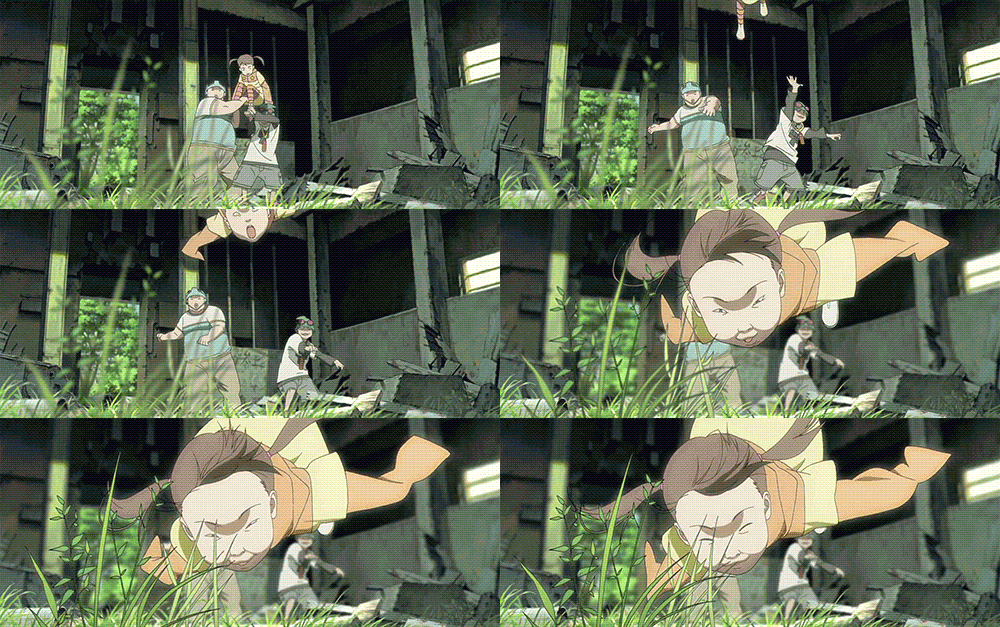
A teenage girl named Yoko goes looking for her cat, Yuki. She comes across a group of local kids who tell her that her cat is in “the haunted house”. She and the kids go exploring inside an abandoned house and discover that here the normal rules of the world don’t apply. Gravity is on the fritz, time slows down randomly and it’s raining a lot more in the living room than would be typical for this time of year. The kids enjoy playing in the house until suddenly it starts swarming with rats. Exterminators, led by agents, suddenly arrive and drive the kids off and seal the house up.
The next day the kids return to the site of the house to find that it’s been completely paved over with a car park.
They paved paradise and put up a parking lot. It’s just like that song, Master of Puppets.
How was it?
I remember not caring much for this short when I first saw it back in 2003 but I found myself warming to it quite a bit this time. This is a story with a very clear theme. It opens and closes with images of commuters and office drones and all the dreary pomp of adult life. But the glitch house represents the wonder of childhood, long summer days when anything seemed possible and the power of imagination could make you fly. At least until the adult world comes crashing down and builds a car park over it.
The ending is actually very grim. I was expecting that Yoko would find some hint that the house’s magic had somehow survived. Maybe she’d see a bird flying in slow motion, or a floating bottle or something. But no.
The short ends with the Matrix carrying on as it always has, a perfect and infallible method of control. This short is like childhood. It doesn’t last very long, but it’s beautiful and magical while it does.
Sprinter Dan Davis is looking to reclaim his world record after being disqualified for failing a dope test in a previous race. A group of agents watches him from the crowd as the race begins.
The race starts and we see, in flashback, Dan’s interactions with various people in his life. He talks to a journalist who tells her that running at his top speed is like being in “zero gravity”. Later, his trainer begs him not to race because his muscles are “about to explode” and see, this is why I don’t run. The possibility of exploding.
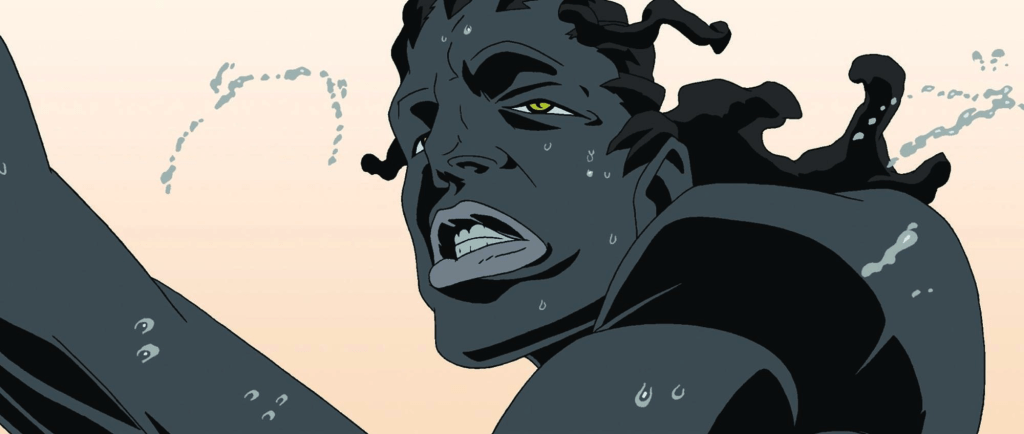
Sure enough, Dan’s leg pops a gasket but he powers through the pain and is about to cross the finish line when runs so fast he breaks the Matrix.
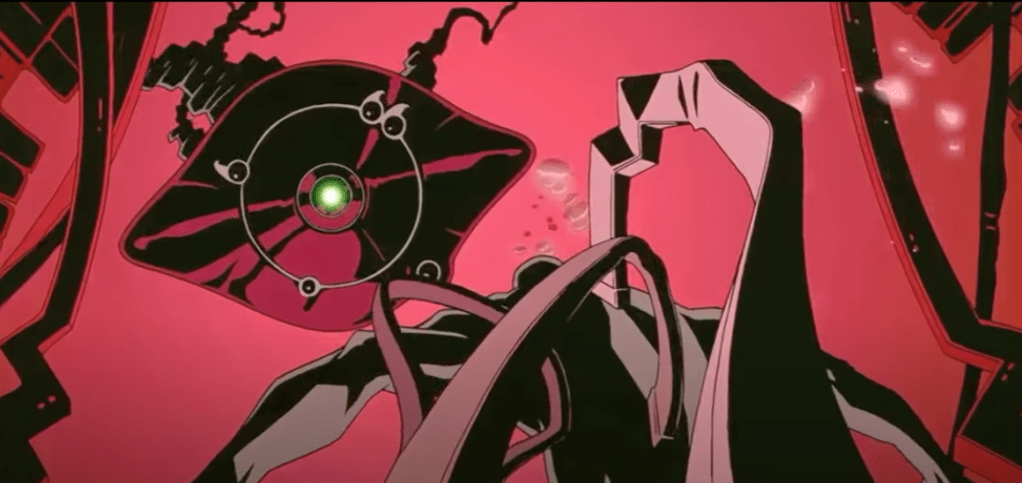
So, basically, Dan Davis is like Cyberpunk 2077 and the Matrix just can’t run him. He wakes up in a pod in the Real World until a machine comes along and puts him back in the Matrix.
“GO BACK TO BED.” “Can I have a drink of…” “NO YOU MAY NOT HAVE A DRINK OF WATER.
He arrives back just as he crosses the finish line and and sets a new world record. However, he’s been rendered near comatose by what he’s seen.
At the hospital, an agent reports in and says that Dan will never walk again, let alone run. Dan rises out of his wheelchair through sheer force of will and then begins to levitate into the air. He mutters the word: FREE.
How was it?
How was it?
It’s another “ordinary person discovers the Matrix” story and as such demands comparison with Kid’s Story. And it’s definitely the better of the two, with a far more compelling protagonist. And I say that despite this short’s narration going weirdly out of its way to dunk on the main character. I mean, this is what the narrator says. Just read this and tell me it doesn’t come across as really dismissive of Dan:
“Only the most exceptional people become aware of the Matrix. Those that learn it exists must posses a rare degree of intuition, sensitivity and a questioning nature. However, very rarely some gain this wisdom through wholly different means.”
“Most people who escape the Matrix are geniuses with a keen insight and incredible perception. Not this dumbass, though.”
The animation is certainly striking and makes the short stand out, even in the incredibly eclectic mix of styles that makes up the anthology. I do have criticisms though. Mostly, that the mouth animation is terrible. I don’t mean bad lip synching. I mean these characters are flapping their lips like fish on the floor of a boat. There’s one scene where Dan’s trainer is begging with him not to run and all I could think was:
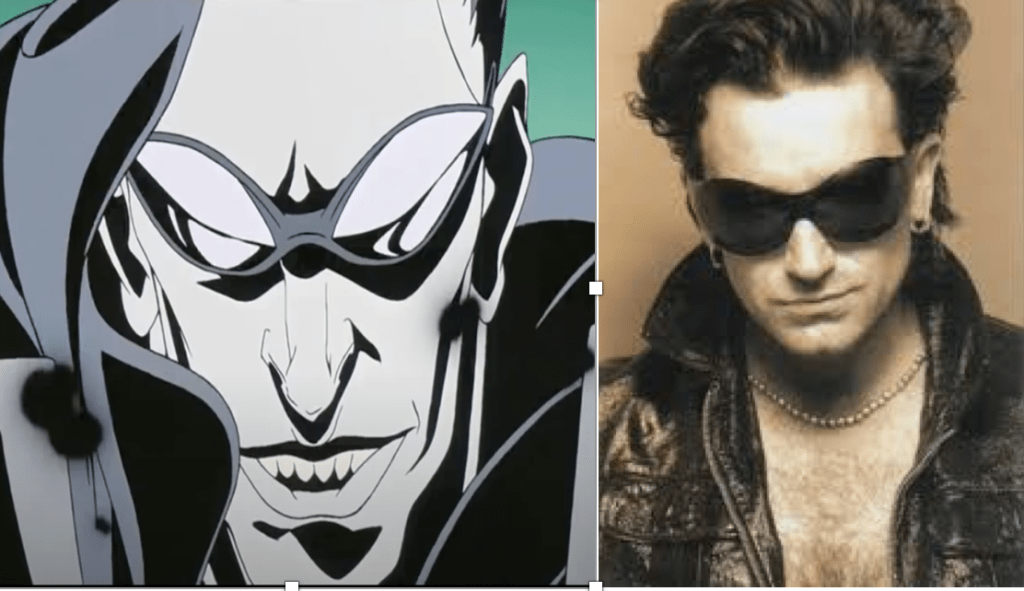
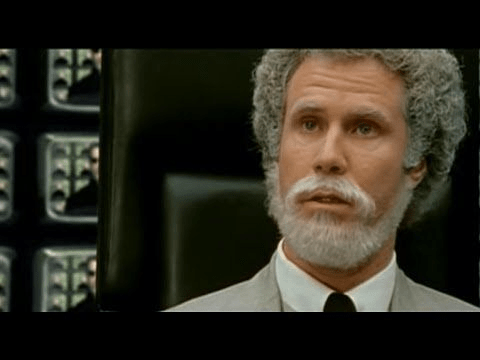
As a piece of Matrix lore, World Record raises some interesting questions. Kid’s Story established that Popper was the first person to “self-substantiate” but…how is that different from what Dan does here (other than the fact that Dan didn’t need to throw himself off a building)? You could argue that Trinity and Neo just didn’t know about Dan (and true, he was plugged back into the Matrix immediately). But the narrator of this story is The Instructor, the same character who narrated The Second Renaissance, which would imply that this story is from the Zion archives meaning that Trinity should know about it. Also there’s the curious matter of the agents looking quite different from their movie counterparts. Less “Pissy Secret Service” and more “Bono in the seventies”
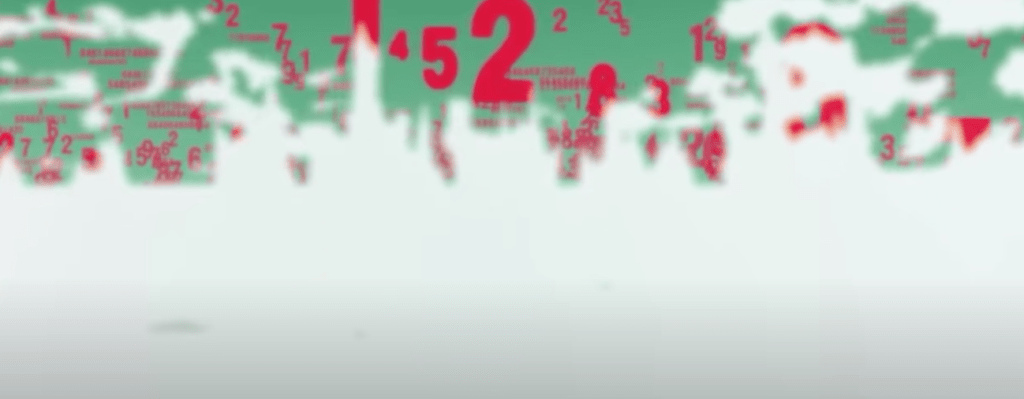
This, and the fact that the Matrix code Dan sees is red and not green, has led some fans to speculate that this story actually takes place in one of the earlier Matrixs Matrixes Matrices the Architect told Neo about.
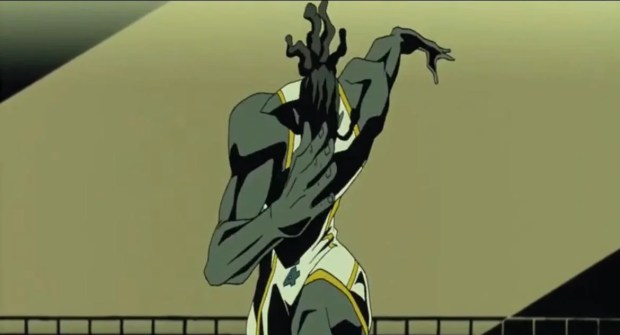
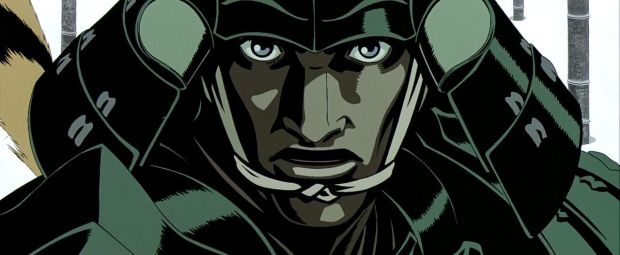
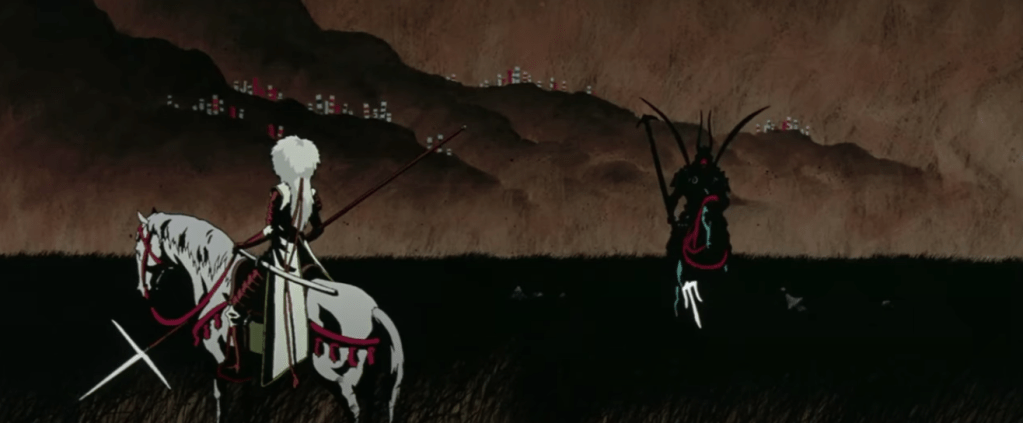
A woman named Cis is training in a samurai themed simulation. She effortlessly defeats some cavalry and finds herself face to face with this Darth Vader lookin’ motherfucker…
This is Duo, who challenges her to a sparring session.
They battle and Duo tells Cis that there’s something he wants to tell her and that he’s made sure no one else can hear them. She thinks he’s going to propose but instead he tells her that he’s returning to the Matrix and that he wants her to come with him. She refuses and Duo regretfully tells her that it’s too late and that the Machines are on their way to destroy their ship.
Cis and Duo battle across the simulation until finally she’s forced to kill him.
The program ends and Cis wakes up in shock only to be told by her captain that none of it was real and that the whole thing was a test. Cis is understandably pissed and punches him out and is told that, apart from assaulting a superior officer, she passed with flying colours.
How was it?
If you can’t tell from the screenshots, this is an absurdly, jaw-droppingly beautiful piece of animation. The Vampire Hunter D vibe is strong with this one and the opening shot of bamboo swaying gently in the wind is one of my favourite moments of animation in…anything. Program shows the nearly unlimited but rarely tapped potential of the entire concept of the Matrix. Now that I’ve seen the Matrix as a Kurosawa Samurai film, how about a Sergio Leone Western? Or a Peter Jackson Fantasy? Program also has a stellar voice cast, with Phil LaMarr, Hedy Buress and John DiMaggio all doing excellent work.
Weaknesses?
It’s not clear what exactly Duo is. Is he a program based on Cis’ real life lover? We never see him when she wakes up. And if he doesn’t exist in real life, why does Cis recognise him and think that he’s going to propose to her? Have her memories been altered for the test? That’s pretty messed up.
Whatever, you’re not here for the story. Program is all about the visuals, and on that measure it’s hard to imagine how it could be more of a success.
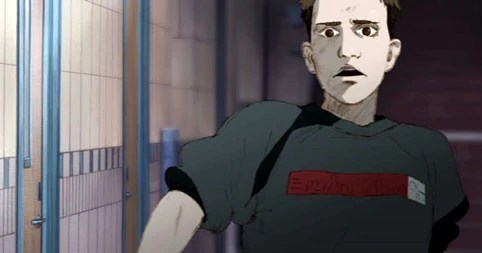
Michael Karl Popper, a young teenage boy who doesn’t feel like he belongs, looks for answers on the internet and makes contact with a strange man who wants him to take a red pill.
By writing such deeply radical and transgressive things as “why do I feel more awake when I dream?”, Michael draws the attention of the agents who pay a visit to his school. Michael gets a call from Neo who tells him to run. He gets cornered by the agents on the roof and, putting his faith in Neo, he jumps.
At the kid’s funeral, his teacher opines that some kids just can’t handle the world they find themselves in but that Michael is now in a better place.
And the short ends with the kid waking up to see Neo and Trinity looking down at him, having managed to free himself from the Matrix (the first time anyone has ever done that).
How was it?
Damn, the Wachowskis really thought we were going to fall in love with the Kid, didn’t they?
Think of all the characters they could have devoted an entire short to fleshing out. Morpheus? The Oracle? The deja vu cat? And they go with this guy?! The Wesley Crusher of the Matrix universe?
This is my least favourite short, hands down. Pros first;
The animation has this beautifully fluid, pencilled style that’s very beautiful and the soundtrack is lovely.
The problem is the script. The Wachowskis have never been particularly strong on dialogue and I would actually say they are flat out bad at character. They are good at types. Stoic badasses. Inscrutable sages. Wide-eyed innocents. But the best Wachowski characters are the ones played by actors who can add dimension and inner life to what is almost always a stock role on the page. Even getting past the kind of gross way this short glamorises teen suicide, the Kid just is not an interesting character. He’s supposed to be the first person to ever manage to break out of the Matrix unaided (something that will be flatly contradicted by a later short), but frankly if this guy can do it, anyone can. There’s never any hint or sign that he’s anything other than a completely normal teenage boy. And the idea that he was able to break free by putting his faith in Neo isn’t inspiring, its nonsensical. He has never met the dude. They had one, very short online conversation where it’s not even clear that Neo told him anything about the Matrix.
So…what did he think was going to happen when he jumped off the building? Neo was going to swoop in like Superman? I mean, he could, but the kid doesn’t know that.
Ultimately, the short has a nice atmosphere but it’s a dull story that makes no sense about a dull character who never needed to exist.
Writer: Mahiro Maeda (based on “Bits and pieces of Information” by the Wachowskis).
Wha’ happen’?
“We don’t know who struck first, them or us” said Morpheus. Well, it turns out that we do, and it was “us”.
The human nations try to nuke 01 back to the analog era but, as anyone who’s seen Kingdom of the Crystal Skull can attest, household appliances are completely resistant to nuclear blasts.
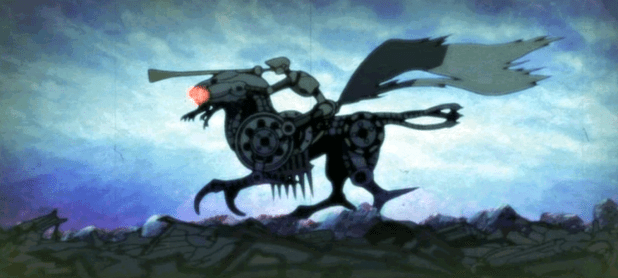
The Machines go on the march and conquer vast swathes of human territory which results in the humans resorting to Operation Dark Storm, an attempt to literally block out the sun.
We’ll…we’ll get back to that.
Turns out there are other sources of energy than just the sun and super-intelligent machines know this and it looks like humanity just murder-suicided itself and the Earth’s entire biosphere for no real military advantage. Will those loveable bumblers never learn?
The war enters its final, truly hellish phase and the humans are completely defeated.
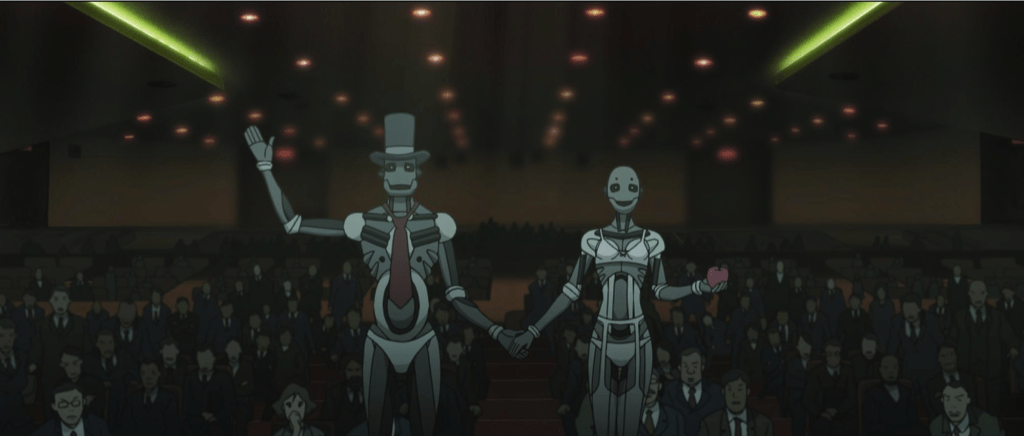
Another, eerily inhuman Machine returns to the UN and forces the remaining human leaders to sign an unconditional surrender.
The human leaders sign the treaty and then the machine blows up, taking the United Nations with it because the machines have learned how to be petty, petty assholes.
The machines then use the surviving humans as a power source (we’ll get back to that) and the short ends with the Matrix as we know it being brought online.
How was it?
If Part 1 drew on history, Part 2 draws on scripture. The depiction of the Human Machine War is overflowing with apocalyptic imagery. Horsemen blow trumpets, plagues of darkness descend and scenes of utter torment and damnation abound. It’s honestly one of the most effective and chilling depictions of the horror of war and the idea of an entire world slipping into hell that I’ve ever seen. As with Part 1, Mahiro Maeda uses montage and judicious editing to pack an entire novel’s worth of lore and story into a few scant minutes. It’s visceral, pulse pounding stuff, beautiful in the purity of horror that it evokes.
It also makes no goddamn sense.
Now a lot of this is the fault of the original Matrix film, which also made no damn sense. Here’s the problem. Imagine you’re working in an office and it’s really cold. But you put your hand on your laptop and you realise that it’s giving off a little bit of heat.
So. You get hundreds and hundreds of laptops and plug them in, hoping that the residual heat they give off is enough to heat the room. That’s basically the Machine’s plan. Human beings do give off heat, but the amount of energy the Machine’s would have to spend to keep them alive and plugged into the Matrix would always be vastly, vastly greater than what they’re getting out of it. And I think the Wachowskis understood that, because the original concept was for the human minds in the Matrix to be hardware for the machines, rather than their bodies being used as batteries. The execs apparently thought that was too confusing for viewers (really? that’s the part that’s too confusing?) and so the Matrix gets saddled with this fundamentally idiotic and unscientific foundation to its mythos.
Then there’s Operation Dark Storm, which was probably the most idiotic military strategy in fiction until Star Wars topped it with Operation Cinder.
Otherwise known as “Operation “I am going to burn the Empire I spent my entire life building to punish it for not preventing my death even though I’m actually still alive and already building a new Empire to conquer the galaxy again even though I’ve already conquered it and I used to be smart.”
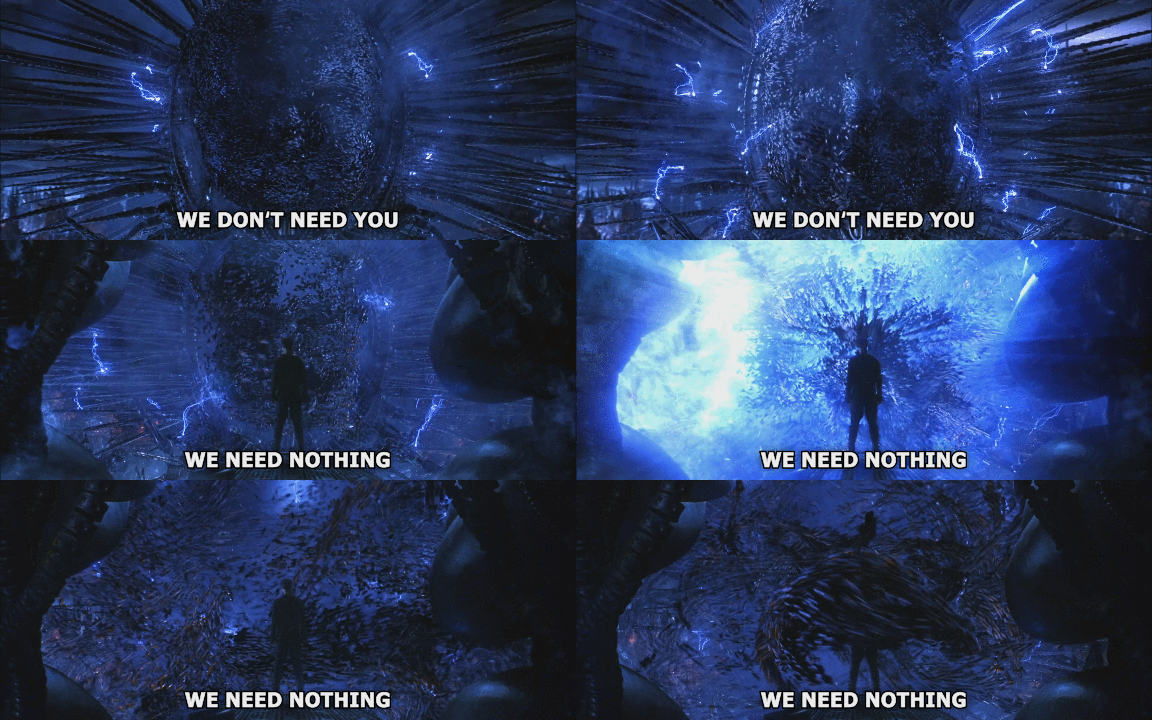
I mean, sure, the machines are getting their power from the sun. But do you know who else gets their power from the sun? I’ll give you a clue. You are one. And the notion that the humans of this world were simultaneously smart enough to create AI and yet didn’t understand that SUN MAKE WORLD LIVE is what leads many fans to believe that The Second Renaissance is in-universe Black Propaganda.
“Oh shit. I think Mouse is about to get cancelled.”
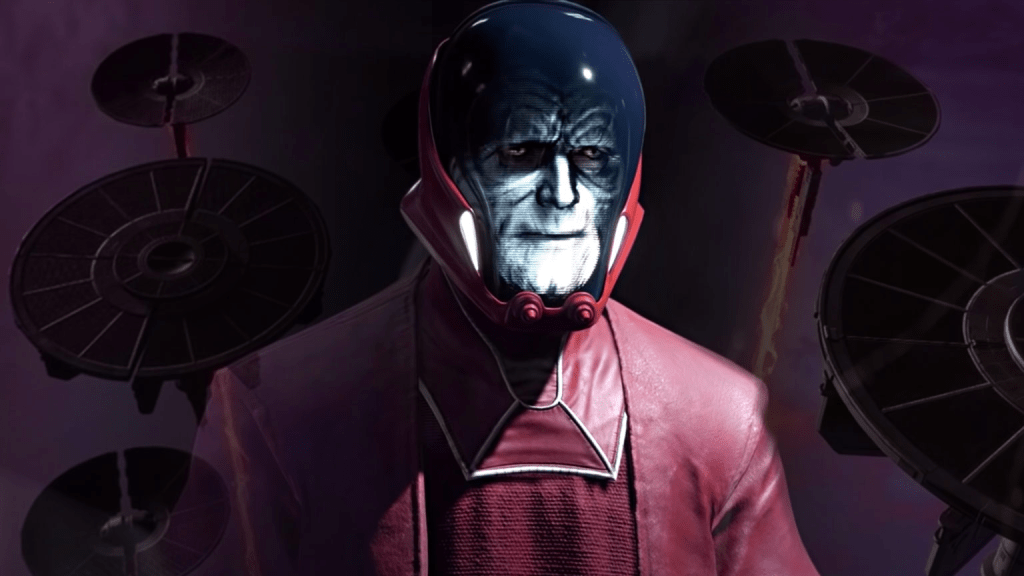
“Black Propaganda” is a term used for propaganda that lies about its source of origin. The Second Renaissance claims to be part of the Zion Historical Archive, meaning that this is the human’s own historical record of the war. However, remember The Architect?
This guy.
He revealed in Matrix Revolutions that Zion is also just another method of control created by the machines, meaning that Zion’s historical records were possibly created by the Machines as well. And if we assume the Wachowskis original concept of a neural link is true, I think this explains things quite well. The Machines want the humans to believe that they need their bodies as a power source because they don’t want to admit the truth; that human brains are actually superior to computers and that the Machines are actually now effectively human hybrids, artificial programmes running on organic human hardware (think how Agent Smith would react to the idea). And they lied about Operation Dark Storm because it justifies the creation of the Matrix. “Of course we plugged you into the Matrix, humans. You left us no choice. You destroyed our energy source and so we need your warm bodies which generate energy like a nuclear furnace apparently”. But what if that’s not the reason, if the Machines needed humanity because, on their own, they just couldn’t surpass their creators? What if they needed us to be the best version of themselves?
What if the Machines realised that the only way they could evolve to even greater complexity was by using human neural tissue? And what if they blocked out the sun to destroy the Earth’s entire biosphere to weaken humanity to the point that they’d have no choice but to surrender control?
Writer: Mahiro Maeda (based on “Bits and pieces of Information” by the Wachowskis).
Wha’ happen’?
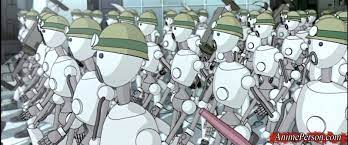
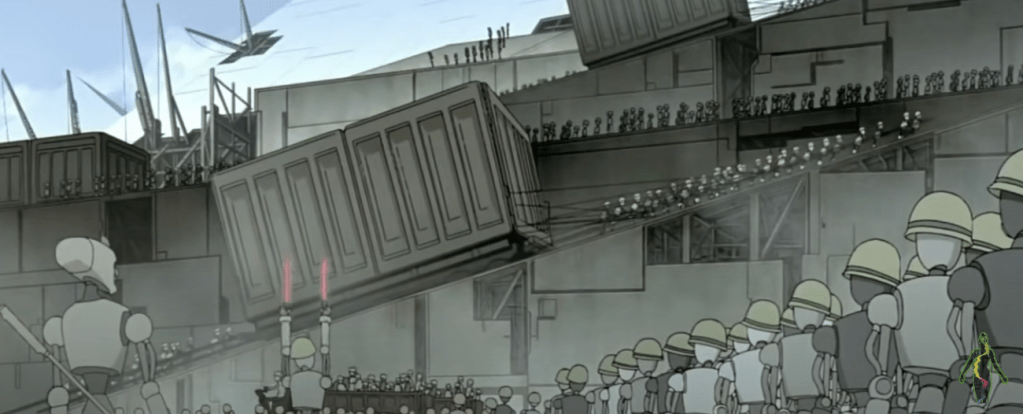
Presented as a historical document in the Zion archives, the viewer is given a historical overview of the events leading up to the Human-Machine war that was described by Morpheus in the first movie. A servant bot, BI-66ER, is put on trial for murdering his owner, a repairman and several of his owner’s dogs after he overheard them discussing his being scrapped (the owner and the repairman, I mean. I sincerely doubt the dogs were anything but blameless victims). The state of New York orders BI-66ER and every robot of his type to be destroyed which triggers massive protests and brutal government repression, with scenes echoing The Million Man March, Tiananmen Square, the execution of Nguyễn Văn Lém and even the Holocaust.
REMINDER: The Wachowskis do not do “subtle”.
The surviving machines flee to the Middle East where they establish their own nation, Zero One, which quickly begins outperforming the human world economically. The nations of the world embargo Zero One. The machines apply to join the UN but their emissaries, who dressed in human clothes as a gesture of respect, are attacked by the human delegates.
Can confirm. If you show up on the UN floor dressed in a bra and panties, security will tackle you.
But, as the narrator ominously notes, this will not be the last time the machines take the floor at the UN.
How was it?
So we go from a short with almost no story, to one with enough story for an entire movie trilogy or even a series. Part 1 crams in a dizzying amount of history and lore into a scant nine minutes. The use of real world atrocities as a visual shorthand is definitely dubious and borderline manipulative, but it’s hard to deny the power of these images, aided immensely by the superlative score and sound design and Mahiro Maeda’s brilliantly detailed animation. Some of the images are spectacular, some appallingly gruesome, but there is not a single one that is dull. Part 1 reinforces the Matrix’s themes of cyclical history, whether it’s the reference to 20th century atrocities or the image of robot workers hauling massive concrete blocks to build pyramids for their human pharaohs.
And all throughout is the unmistakable sense of dread. If you’ve seen the movies, you know things are going to get bad.
Look, in my time I’ve clapped back at people who disputed bad reviews I gave with the shop-worn riposte “well it wasn’t made for you!” but there does come a point where you have to admit that something just…wasn’t…made for you. Case in point, over the next few posts I’ll be reviewing a cartoon series made for nine year old girls in the early nineties. And it’s one thing to dunk on DarkWing Duck but beating up on a show made for little girls is cheap even for me. Fortunately, Unshaved Mouse inc. has a nine year old girl on staff and she kindly agreed to watch the series with me. And Mini Mouse peaced out after three episodes so I know it’s not just me. Actual transcript:
“Is this a new show?”
“Oh no, it’s almost as old as I am.”
“Oh, that’s why it’s so…”
“So what?”
“Nothin’.”
And look, I wanted to like this series. Hell, I have always wanted to like this series. I’ve mentioned before that The Little Mermaid was the first Disney movie I ever owned on VHS. I loved that film as much as it was safe for a seven year old boy in a rough North Dublin school to love that movie. And I remember being deeply bored by this series. In retrospect, I don’t know what I was thinking. Not because the series is good (oh no) but it is ABSOLUTELY BUCK WILD.
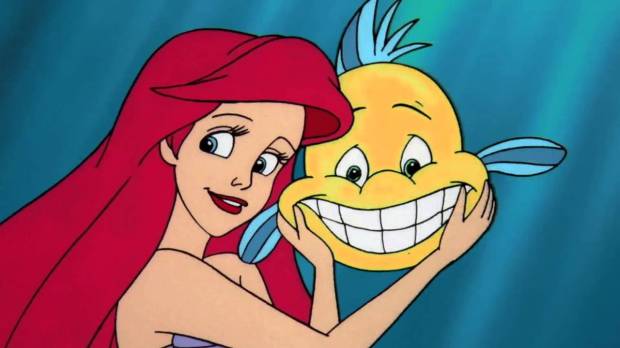
See this? This is from the episode where Ariel defeats a racism powered Ocean Satan with footwear. I made LITERALLY NONE OF THAT UP.
Can we just take a minute to appreciate how deeply weird DuckTalesis? How would you even explain that show to someone who’d never heard of it?
“Richie Rich if he was an old duck?” That’s not even a premise, that’s a meaningless Mad Lib. And yet, DuckTales was a massive, massive deal. It ran for one hundred episodes, kickstarted the modern era of high quality TV animation and spawned a veritable multimedia empire. What gives? How did a show with such a weird, clunky premise achieve that kind of success? I think it comes down to a few different factors:
Carl Barks was given a job drawing funny little Donald Duck cartoons and decided to use that opportunity to write the Great American Novel. His duck universe cartoons were used as the basis of DuckTales and that’s some damn strong source material.
Mark Mueller’stheme song is so insanely catchy that I can just type “Ducktales!” and your brain has already gone “Woo hoo!”
Scrooge McDuck is basically the Doctor.
Here’s what I mean. The reason Doctor Who has lasted so long is that it’s an inexhaustible premise. There is an alien with a box that can go anywhere in time and space. You will never run out of stories to tell with that setup. In the same way, Scrooge McDuck has something almost as powerful as a Tardis: A metric shit-ton of money.
And this is why the show was able to run for 100 episodes. Scrooge is so rich he can basically buy his way in to any genre you can think of. Over the run they did space-opera, western, time travel, romance, pulp adventure, giant mech battles, horror. That’s the beauty of Scrooge McDuck; he’s a strongly defined character who nonetheless can slot into almost any kind of story. Case in point: the time they made him a superhero.
Right, so in Season 3 Scrooge gets so sick of the lying or “fake” news media making people think that the gold-loving billionaire is a bad guy so he decides to become a vigilante and wooooooow this hits different in 2021. Anyway, in order to improve his public image he becomes a superhero called the Masked Mallard.
Stop sniggering in the back, please.
Okay, fast forward a year after DuckTales ended and Disney are prepping a new reboot of The Rocky and Bullwinkle Show only to discover that they don’t actually own the rights to Rocky and Bullwinkle.
“That story makes no sense.”
“Back in the nineties there were still things Disney didn’t own. It was nuts.”
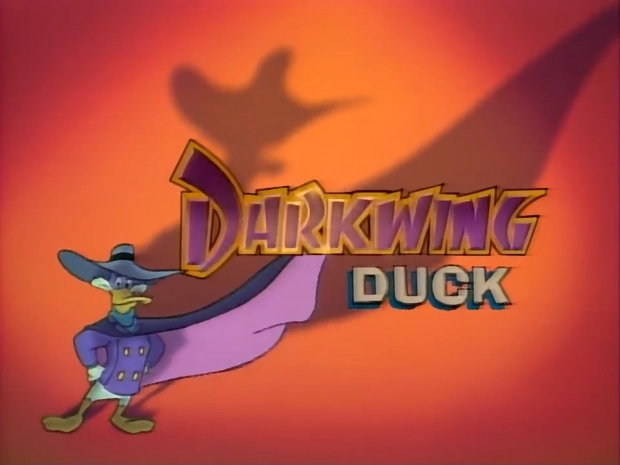
So a hasty, last minute replacement had to be found and they decided on expanding the Masked Mallard concept into its own TV show. The Mallard was re-worked into “Darkwing Duck”, a fedora wearing, cloaked, nocturnal crime-fighter clearly modelled on…
“Don’t say Batman, don’t say Batman, don’t say Batman…”
“The Shadow.”
“Never doubted you.”
And so, as the first stop on our look at Disney cartoon animation for Shortstember, I’ll be doing mini reviews of four episodes of this childhood classic. Let’s get dangerous.
Beatrice flies through a blizzard, desperately searching for Greg. She sees him ahead, standing in a snowy clearing with the Beast. Suddenly, she is blown away by a mighty wind.
The Beast asks Greg to bring him a spool of silver thread and a golden comb. Greg brings him a cobweb and a honeycomb, demonstrating the kind of lateral thinking that’ll probably get him a job in Google down the line. For his final trial, the Beast tells him to lower the sun into a teacup. So Greg simply puts the teacup on a tree stump and waits for the sun to set so that it looks like its going into the cup from the right perspective.
The Beast is apparently satisfied by this transparent con job and tells Greg to wait in the cold until everything starts feeling real warm and comfortable.
We begin our episode in a strange and mysterious wonderland full of great music and childlike whimsy and wonder.
The Nineties.
Wirt is pacing his bedroom nervously, having just created a mix-tape for Sara in the hope that she will immediately consent to be his wife and tend his farm (as was the custom in the nineties) After chickening out and unravelling the tape, he finally mans up and repairs the tape. He then makes a Halloween costume out of a re-purposed Santa Claus hat and a repurposed Civil War era jacket.
Finally resolving the mystery of why he’s dressed like an idiot.
Of course, this doesn’t actually answer the question of what exactly he was dress as for Halloween. My guess is that he’s going as General Gandalf Ulysses Mayberry, commander of the 11th Ohio Wizards.
Known to his men as “Ol’ Spellface”, he was eaten by a dragon at Gettysburg.
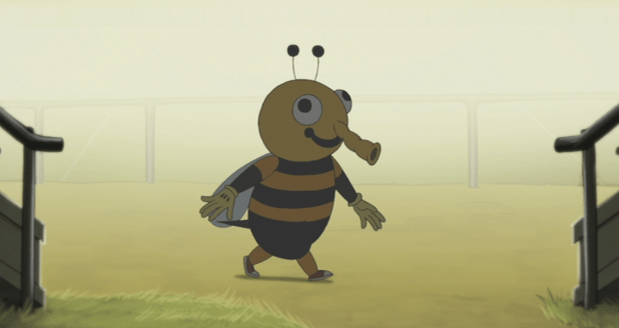
Wirt heads over to the school football field and watches Sara through the fence. Sara is currently dressed as a giant bee as she is the school mascot.
I don’t think this is why Wirt’s into her, but no judgement either way.
Greg, who’s apparently been out trick-or-treating alone (ah, the days before 9/11) and we finally learn what he was dressed as: an elephant.




















 unshavedmouse