We.
Are.
So.
Fucking.
BACK.
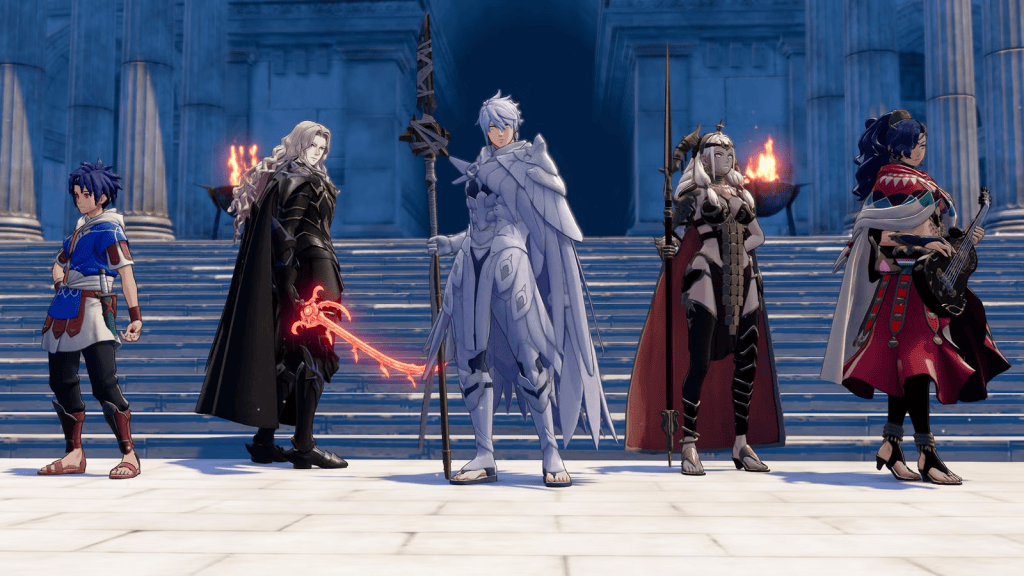
Ha ha, you fools! This cute little blog series where I talk about under appreciated indie games was just a cunning ruse to lure you into a false sense of security. Now, you are trapped and I can reveal my true motive; evangelising for my favourite game series of all time; Fire Emblem.
Fortunately for me, we’re in one of those blessed periods of history where creator Intelligent Systems actually seem to know what they’re doing and I don’t really have to hard sell this. Fortune’s Weave has been out for a few weeks now and is good enough to make a body not regret dropping half a grand on a Switch 2 despite the fact that its technical improvements on the Switch 1 seem purely hypothetical.
Trust me, if I was trying to sell you on this series in the aftermath of Fire Emblem: Engage it would be much rougher sledding.
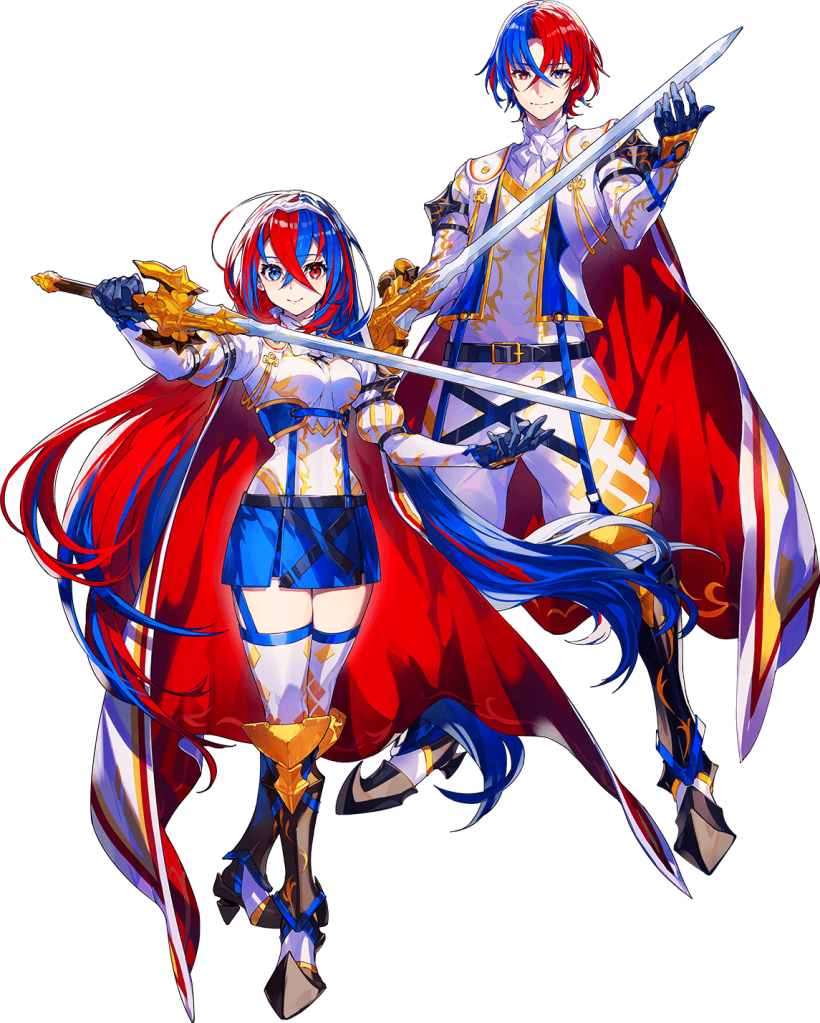
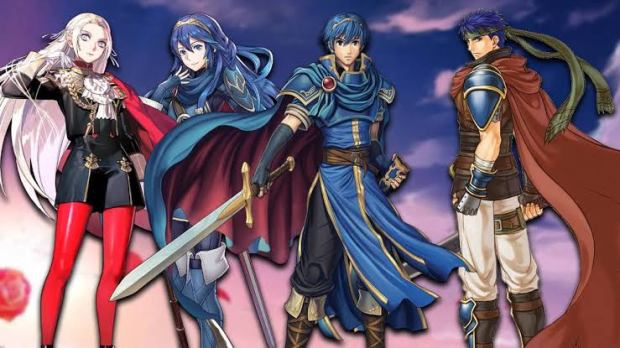
Fire Emblem is one of Nintendo’s longest running series, beginning on the Famicon in 1990 and being represented on every Nintendo console since then with the exception of the original Game Boy. But, unlike similar long-running series like Mario, Zelda or Metroid, Fire Emblem only really became a top-tier property in 2012 with the release of Fire Emblem: Awakening which was the real demarcation point between its classic and modern eras. There have been 18 main titles in the series as well as numerous spin-offs and each game takes place in its own continuity except when it doesn’t and some games imply that the entire series takes place in a single multiverse and…okay, I can hear you going cross-eyed. Let’s keep it simple. What is a Fire Emblem?
Basically, it’s this.
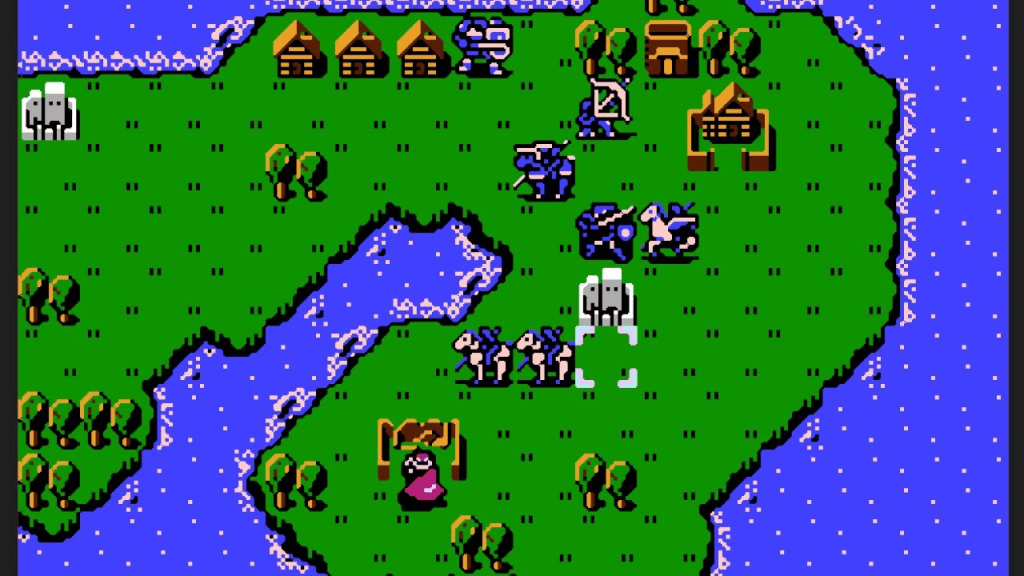
You’re in a fantasy kingdom. You have a small army of soldiers, mages and other fantasy tropes at your command. The computer has its own army. Each unit gets one turn, you move your troops across the map, you give the enemy as good a twatting as you can, then it’s the computer’s turn and it tries to twat you as well as it has been twatted.
Simple. One might even say, ludicrously basic. So what’s the appeal?
Well…
Fire Emblem: Shadow Dragon and the Blade of Light, the original game, introduced two mechanics that came to define the entire series:
- Each character in your army has a name and a backstory.
- When they die, they are dead. Gone. No more. Ceased to be. Run up the curtain and joined the choir invisible.
So simple, and yet it changes everything. I can play a game of (showing my age here) Age of Empires and send hundreds of axemen to their deaths without a qualm. But in Fire Emblem, simply because I know that one particular axe-man in my army is named Bort and likes pies I will be sweating every time he engages in battle because one unlucky hit will mean he never gets to taste pies again. Fire Emblem does what very few war games do; it makes you appreciate that war is bad because the people you care about die.
Now, the original Fire Emblem is a very dated game (to the point that it has been re-made not once, but twice) and many of the elements of the series that are now considered absolutely integral to the series (character supports, the axe/sword/lance weapon triangle) weren’t even present. But it established the template of a war game where you care about every soldier, something that each additional game would build and build upon again. And it showed the format’s wonderful potential for organic emergent story-telling.
To put it bluntly, Fire Emblem 1’s story is…well, it’s not bad exactly. It’s just very primitive. Hell, it’s the story of a noble prince who has to save his kingdom from a wicked dragon, I’m pretty sure when mankind discovered story-telling that was the free sample that came with the box. But when Bort the Axe Man who likes pies is stranded behind enemy lines on one remaining hit point and a pretty pegasus knight flies in and gives him a magic potion that saves his life, yes, that’s you playing smart as a player. But you’re also watching a completely unscripted story of survival, courage and kindness on the battlefield.
Later Fire Emblem games built on this with the support system, where fighters who spend a lot of time together can have conversations, deepen their friendships and even fall in love. The bigger picture storytelling also got much better, even if it did frequently still boil down to Noble Prince saves the land from an Evil Dragon. Now, at least, there was some really good world-building and character writing to go along with it. One benefit of the “everybody matters” philosophy is that Fire Emblem has a pleasantly egalitarian approach to its storytelling. Sure, your main character is usually a royal but that royal’s army will include mercenaries, clerics, merchants, professional soldiers, commoners and thieves and they all get their little moments to shine. It’s a little like Shakespeare’s Henry V, where you get to see a war from the perspective of all levels of society.
The series also leans heavily into the notion that just because people are on the wrong side of a war that doesn’t automatically make them evil (this is something of a recurring trope in Japanese media in general, for pretty obvious reasons). Often you will encounter enemy fighters (helpfully, they will usually be prettier than their comrades in arms) who can be persuaded to switch sides if you talk to them with the right person. The ninth game, Path of Radiance, took this to glorious extremes with the character of Jill.
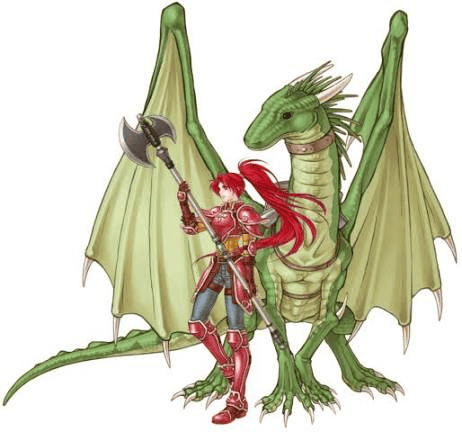
Jill appears as a fanatical soldier in the enemy army who will kamikaze charge your forces in an early chapter. Most players will kill her without thinking twice. Some of the more experienced, canny players will first try to recruit but, finding they can’t, will cut her down and move on with the game. But…if she somehow survives the level Jill follows your army like a red-haired wyvern riding Javert until she gets stranded at see and taken prisoner by you.
And, slowly, she starts to realise that the enemy she hated are just people, the prejudices she held were wrong and her whole worldview begins to change until eventually she joins you as a loyal and trusted comrade. She undergoes one of the most satisfying and rich character arcs in any game I’ve played. And it’s all for a character that 90% of players would probably kill on their first playthrough. It’s wonderful but it’s also deeply sobering. The game demands you to ask yourself, how many Jills have you already killed? How many people who could have been saved if circumstances had just been a little different?
During the classic era Fire Emblem went through many distinct phases, with my personal favourites being the three Game Boy Advance Games with their utterly charming 16-bit pixel sprites:
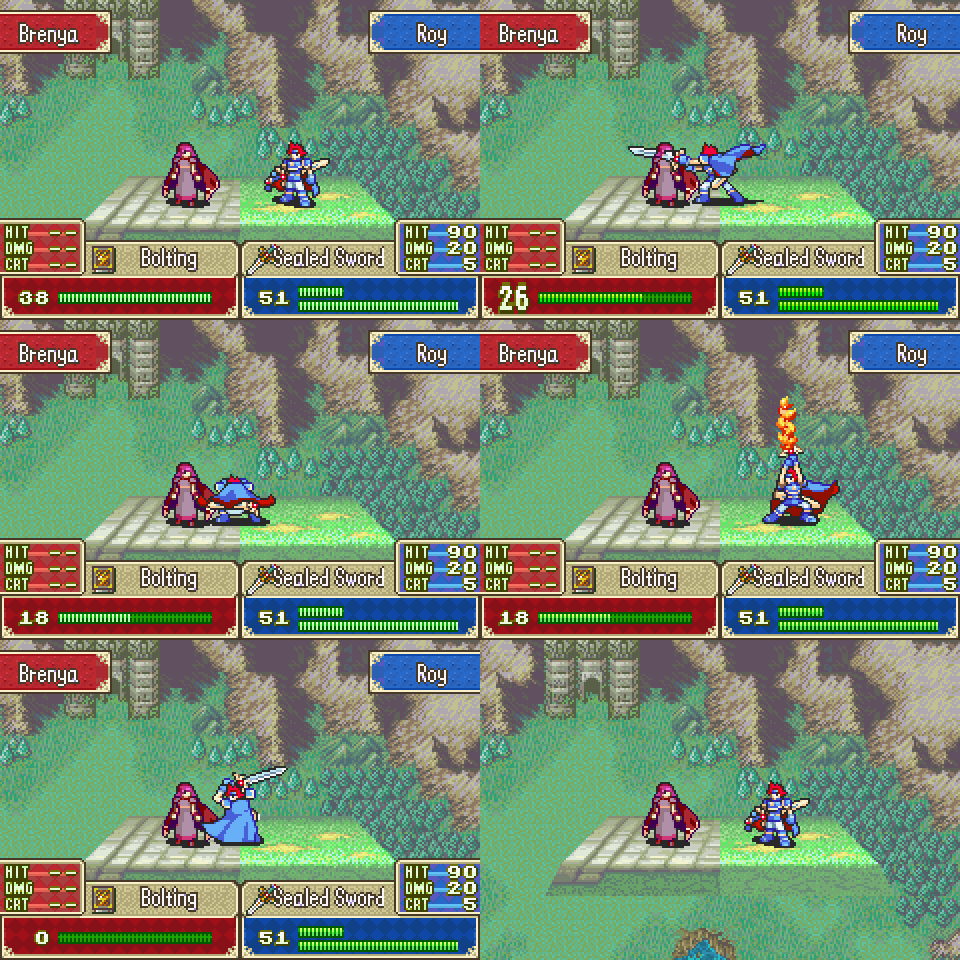
Those games are pretty easily available either on the Nintendo Store or…other equally legal and moral methods. I would also recommend the Tellius series, Path of Radiance and Radiant Dawn, an epic fantasy saga full of betrayal, tragedy and heroism. I would recommend them, but they were for the Game Cube and Wii and if you want to get your hands on them you will have to sell teeth and marrow.
But throughout all their iterations, Fire Emblem has retained the secret sauce of what makes the series so addictive; satisfying tactical combat with real emotional stakes combined with a big animé soap opera raging in the background. That social element, while always present, came to the forefront with Fire Emblem Awakening, the harbinger of a new era for good and ill.
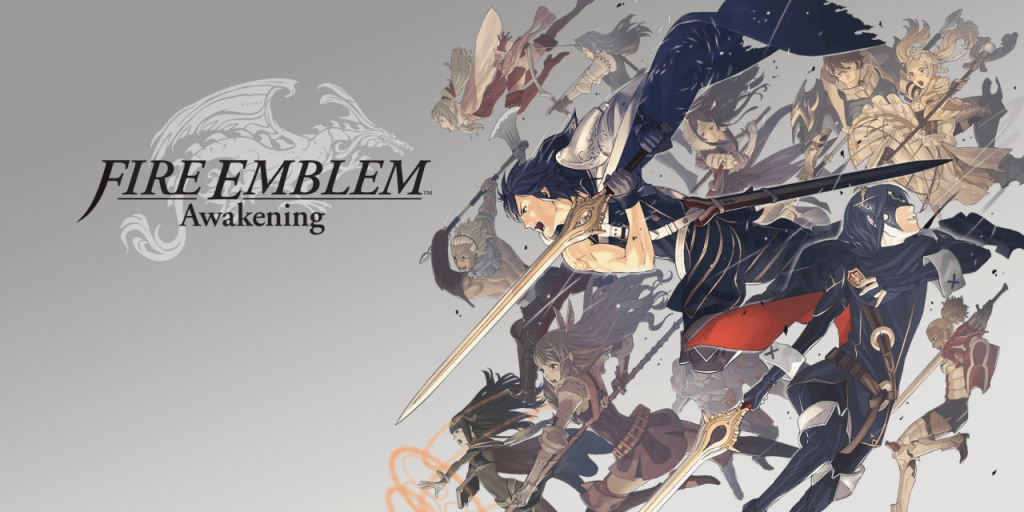
This game, which was originally intended to be a final swan song for a series that had been struggling to find an audience for years, ended up transforming Fire Emblem into an A-list Nintendo property. And for good reason. It kicks arse.
The story centres around that most classic of Fire Emblem protagonists, a blue-haired sword boy. In this case it’s Chrom, the prince of Ylisse who has to lead his soldiers against an undead incursion and finds himself aided by a mysterious swordsman who turns out to be his time-travelling daughter, Lucina, come from an apocalyptic future to change history and save her father and the kingdom. Here’s the real stroke of genius; if two of your soldiers become close and marry, their future child will then travel back in time to join your army, thereby giving the player both an emotional and tactical investment in their relationship.

There’s a reason they call them “Intelligent” Systems, ya know. They’re really quite bright.
Of course, genius is often accompanied by hubris. Caught flatfooted by how much the opportunity to become a professional animé character breeder caught the public’s imagination, IS proceeded to shoe-horn it into the next entry, Fire Emblem Fates, a bloated drunken hoor of a game.
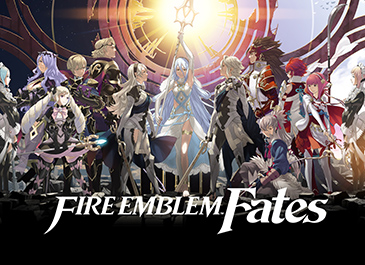
There’s many reasons Fates is my second least favourite entry. The weak character writing and anemic world-building is one. The overall story being at once being tiresomely cliched and ridiculously convoluted is another. And the fact that Fates is actually three different games which all have to be purchased seperately to get the full experience is, frankly, taking all the piss in the world. But what really ruins it for me is how it botched Awakening’s children mechanic. In Awakening, your characters can fall in love and their children can travel back in time to help you. This is excellent because it reinforces the central theme of the story, the younger generation rising up to help their parents create a better future. But in Fates, there is no time-travel. If two of your soldiers have a baby, they send that baby to be raised in an alternate reality by foster parents. Time passes differently in that world, so the kid ages up immediately so they can fight in your army. This works fine as a game mechanic, but in terms of the story it makes every parent in your army seem like a psychotic deadbeat. I hated every single character in Fates and if you don’t care about the characters, that’s not Fire Emblem, at least for me.
Reaction to Fates was mixed enough that there were no new entries in the series for around four years (barring a remake of Fire Emblem 2 which I consider a good game if not necessarily a great Fire Emblem).
But then, in 2019 Fire Emblem: 3 Houses landed on the Switch with a bang, rocketing the series back to the forefront of gaming in a way that hadn’t been seen since Awakening seven years prior. 3 Houses put you in the role of a tutor at a Hogwarts-esque school slash monastery where you can choose one of three classes to teach and lead through a massive war that tears apart the fantasy kingdom of Fódlan. 3 Houses borrowed heavily from the Persona series, with tons of activities to do in your base to build up relationships between your various characters. 3 Houses was the first Fire Emblem game where a majority of your time is spent doing things other than battling on a map and, as you can imagine for a tactical wargame, this was a bit controversial.
Now personally, I don’t mind that at all (as you’ve probably guessed by now, I’m more about the story than the gameplay in this series). But that said, I wouldn’t call 3 Houses an unequivocal success. The problem with telling a story with branching narratives is that you never get the full story on any one playthrough and you always feel like you’re missing crucial information. Of course, it didn’t help that I played Black Eagles first, universally regarded as the worst possible route to start with.
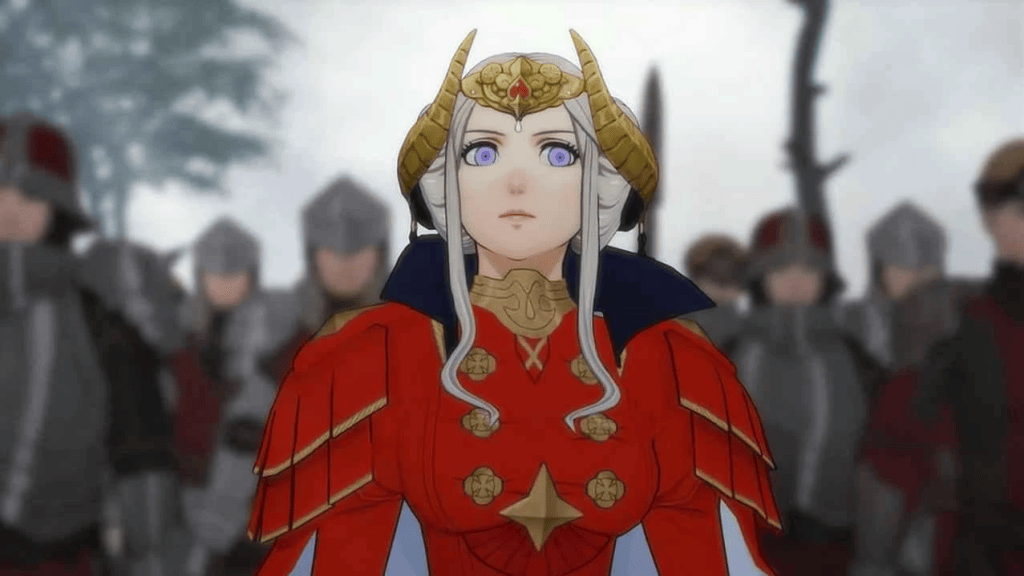
3 Houses felt like a noble experiment that didn’t quite work.
By contrast the next game, Fire Emblem Engage is the only game in the series with an English language port that I’ve never been able to bring myself to finish. Some of the more tactically minded fans hail the gameplay as brilliant and some of the finest in the series. I’m glad they found joy in this. But the story is poo-poo garbage and I hate it.
So that brings us to 2026 and Fire Emblem: Fortune’s Weave.
And it. Is. Glorious.
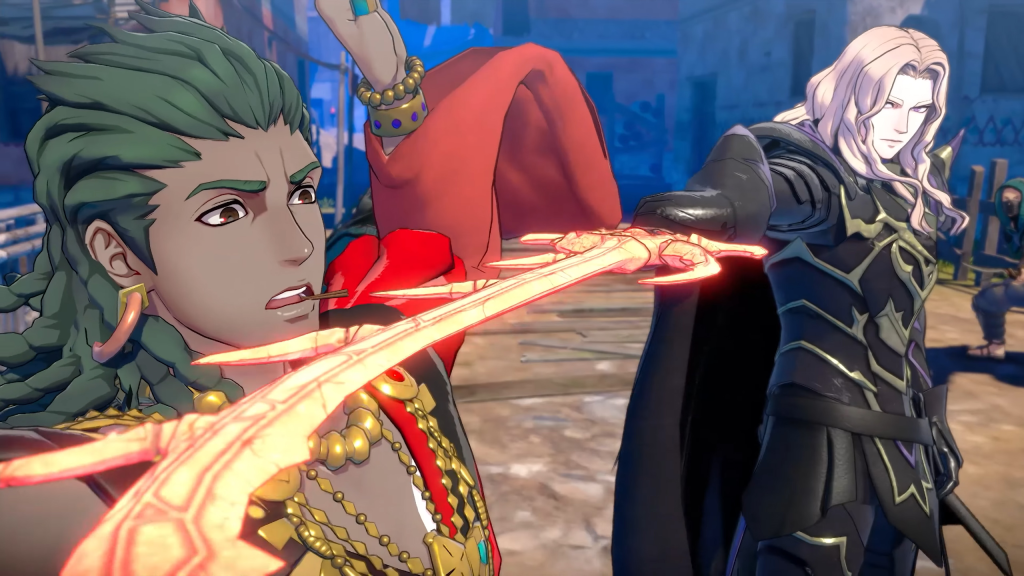
Set in the same universe as 3 Houses, FW feels like that game but with all the lessons to be learned from it taken on board. The creators have finally taken on board that no one who plays a game with branching narratives will be content with one play-through and so makes each strand unique and easy to jump between rather than the same story with a tweaks. The name proves its aptness once you realise this really is a tapestry, with different strands being woven into a single epic story. And I do mean epic, I’m already eighty hours in and I would estimate I have completed around 25% of the game at most.
The game also does a fantastic job of making each story something you want to play. You’ll have your favourites, of course, but all four have compelling protagonists, loveable supporting characters and a plot with real emotional stakes and dramatic interest.
It is, as every Fire Emblem should be, an epic story with a cast of hundreds where everyone matters.
And it’s the Fire Emblem game I’ve been waiting for my whole life.

