2010s

“Nothing’s been the same since New York.”

Before we get into the Iron Man 3 review, I should probably address the elephant in the room.
Dammit Francine, if I mean you I’ll use your name. Sit down.

Dammit Francine, if I mean you I’ll use your name. Sit down.

You may have noticed that the ads that were here for a few weeks have now vanished. The reason for that is that I was kindly informed by one of my American readers that the Trump Campaign had been advertising on my blog.
*CLICK*

*CLICK*

And good thing I acted quickly right? I mean, what more fertile pro-Trump ground than Unshaved Mouse? That’s the kind of savvy ad buy that gets you a 10% chance of winning the presidency. Unfortunately this loss of revenue has meant that I’ve had to turn to alternative sources of funding.
“Whoah. Wait a minute, you make MONEY of this?!”

“Whoah. Wait a minute, you make MONEY off this?!”

“No hablo Ingles.”

“No hablo Ingles.”

Thankfully, I’ve been able to secure investment from a less morally compromised source. Which is why I am proud to announce Unshaved Mouse’s new partner, the People’s Republic of China! Please give it up for new recurring character Fan Bing Bing!
“Hello decadent Westerners!”

“Hello decadent Westerners!”

It’s a rapidly emerging market, guys. We gotta move with the times. Anyway, review of movie.

 ***
Here’s a fun game to play with the MCU. Take each movie and imagine what would have happened if the villain had won.
  • Thor: Loki becomes King of Asgard and commits genocide against the Frost Giants.
  • Captain America:  Red Skull wipes out every major city on Earth and most likely ushers in an era of global HYDRA rule.
  • The Avengers: Aliens take over the world.
  • Guardians of the Galaxy: Whole alien planet gets wiped out and that’s just for starters.
  • Thor 2: Ummmmmm…something bad? With…elves? It’s bad, though.

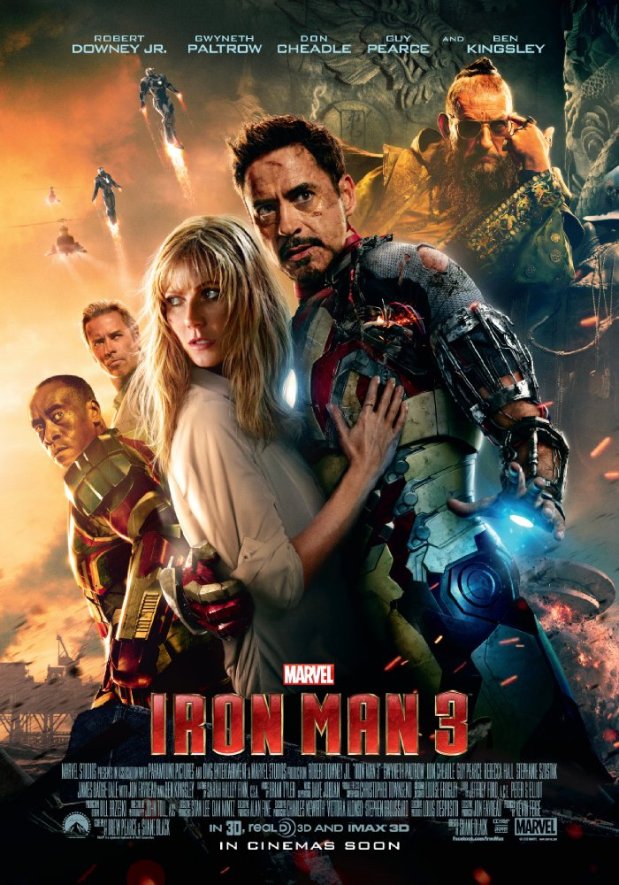
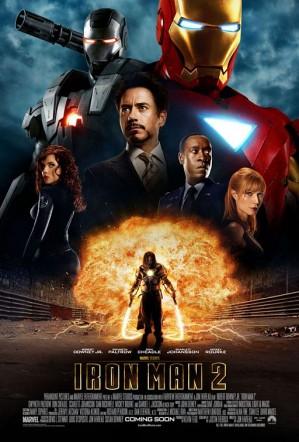
Play the game with the Iron Man movies though and you always get the same result: “Evil rich guy becomes slightly richer.” These movies are actually kinda low-stakes when compared to other entries in the canon. That’s not a criticism. The Iron Man trilogy has always been less interested in “Can Iron Man save the day?” than “Can Tony Stark save his life from being immolated by the army of obsessions, personal demons and character flaws he has jumping around in the moshpit that is his brain?” That’s fine. Refreshing even. I just think it might help explain why this movie is had possibly the least impact on the larger Marvel universe than any other instalment. I’ve been wracking my brain to think of any elements that were introduced in this movie that got carried over into the larger MCU. Extremis? Aldridge Killian? AIM? Never so much as mentioned again in any of the movies (I am waaaay behind on Agents of SHIELD so apologies if I missed anything that showed up there). The Mandarin? Mentioned in a one-shot to keep the fanboys happy. Iron Patriot? Back as War Machine by Age of Ultron. Tony Stark destroying all his suits and giving up being Iron Man? Did not exactly take. This movie is practically in quarantine, and it’s kind of weird that it’s such a dead end at the front because it is deeply wedded to what’s gone on before, to the point that it’s kinda historic in a way I don’t think people necesarrily realise.

See, this is the fourth movie to feature Robert Downey Junior’s Tony Stark, and that’s pretty exceptional. Christopher Reeves played Superman across four movies of course, but by the third installment that series was running on negative continuity. There is no character arc for Superman from Superman I to Quest for Peace, they are just four movies with Christopher Reeves playing Superman. Again, with the Burton/Schumacher Batman movies you get a little bit of character continuity (tiny references to events in previous movies mostly), but by the time you have George Clooney resplendent in Bat-nipples it’s clear that Batman has drifted considerably from Tim Burton’s original vision. This is different. We have now had four movies featuring Tony Stark where the creators are clearly intent on holding to a consistent vision for the character. Iron Man 3 is one of the most polarising movies in the canon for reasons I will get into, but personally it’s my favourite of the trilogy because it asks a question that had never really been asked in a superhero movie before now. What happens to the superhero after he saves the world?

(more…)

Disney Reviews with the Unshaved Mouse #55: Zootopia/Zootropolis


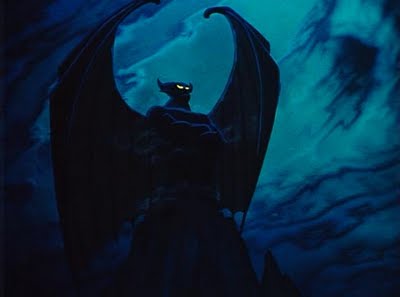
"Mr Disney? There's a Mr Chernabog here to see you?"

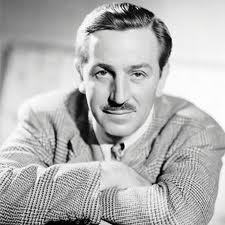
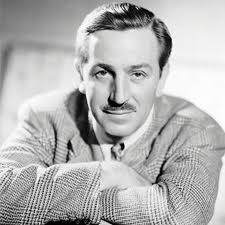
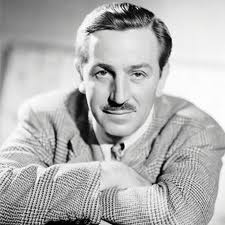
“Mr Disney? There’s someone here to see you?”

"What? But the world thinks I've been dead since the sixties, who even knows I still work here?"

“What? But the world thinks I’ve been dead since the sixties, who even knows I still work here?”

"He said his name was Mr Chernabog?"

“He said his name was Mr Chernabog?”

"CRAP. Tell him I can't see him."

“CRAP. Tell him I can’t see him.”

"I would sir, but I'm not really here. I'm just a hallucination caused by your black-magic addled mind."

“I would sir, but I’m not really here. I’m just a hallucination caused by your black-magic addled mind.”

"DISSSSSSSNEY I WOULD HAVE WORDSSSS WITH THEE."

“DISSSSSSSNEY I WOULD HAVE WORDSSSS WITH THEE.”

"Cherny! C-Train! As the world Cherns! How the fuck are you?"

“Cherny! C-Train! As the world Cherns! How the fuck are you?”

"YOU HAVE BETRAYED ME, SSSSSORCEROR. AND THE LORD OF BALD MOUNTAIN KNOWSSS NOT OF MERCY."

“YOU HAVE BETRAYED ME, SSSSSORCEROR. AND THE LORD OF BALD MOUNTAIN KNOWSSS NOT OF MERCY.”

"Whoah! Hey! Walter Elias Disney is a man of his word, so how bout you settle down and tell me what this is all about?"

“Whoah! Hey! Walter Elias Disney is a man of his word, so how ’bout you settle down and tell me what this is all about?”

"WE HAD A PACT, YOU AND I. I GAVE YOU IMMORTALITY AND IN RETURN YOU AGREED TO CREATE FOR ME AN ARMY OF THE MOST DEPRAVED, HELLISH CREATURES EVER TO WALK THE EARTH."

“WE HAD A PACT, YOU AND I. I GAVE YOU IMMORTALITY AND IN RETURN YOU AGREED TO CREATE FOR ME AN ARMY OF THE MOSSSSSST DEPRAVED, HELLISSSSSH CREATURESSSS EVER TO WALK THE EARTH.”

"What? Furries?"

“What? Furries?”

"I MUSSST HAVE MORE FURRRIESSS! MORE! THE CROP GROWSSS THIN! THE CROPS GROWSSSS THIN!"

“I MUSSST HAVE MORE FURRIESSS! MORE! THE CROP GROWSSS THIN! THE CROPS GROWSSSS THIN!”

"What are you talking about? We made Robin Hood!"

“What are you talking about? I made Robin Hood! That should have kept you balls deep in furries for years!”

"THAT WASSSS OVER FORTY YEARSSSSS AGO!"

“THAT WASSSS OVER FORTY YEARSSSSS AGO!”

"Fuck. My. Ass. Yikes, sorry. My bad. I'll get right on that."

“Fuck. My. Ass. Yikes, sorry. My bad. I’ll get right on that.”

"BE WARNED! IF I DO NOT RECEIVE AN ARMY OF FURRIESSSS BEYOND RECKONING I SHALL EAT..."

“BE WARNED! IF I DO NOT RECEIVE AN ARMY OF FURRIESSSS BEYOND RECKONING I SHALL EAT…”

"Eat my soul, yeah, got it. Laurie? Get on the phone to the boys in animation and tell them we need a movie so chock full of furry bait that half the country will be yiffing by Christmas."

“Eat my soul, yeah, got it. Laurie? Get on the phone to the boys in animation and tell them we need a movie so chock full of furry bait that half the country will be yiffing by Christmas.”

"I already told you, I'm not really here!"

“I already told you, I’m not really here!”

"Just do it woman!"

“Just do it woman!”

***

Some blogs might tell you that Zootopia/Zootropolis came about as part of an ongoing effort by Disney to address the more troubling and regressive aspects of their legacy and take on a pressing real world issue. But only I will tell you the truth, namely that it was part of a desperate ploy to pay off a faustian bargain made by immortal warlock Walt Disney by creating an army of furries for a demonic lord of evil. That is why, after all, the people come to Unshaved Mouse.

But first of all, let’s talk about the elephant in the room.

Not that one.

Sit down, Francine.

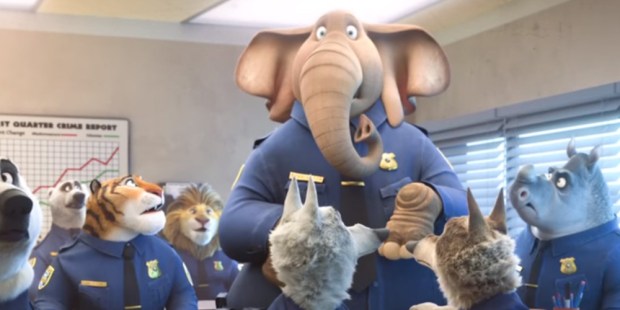
Namely, why the hell is this called “Zootropolis” on my side of the pond? Well, Disney haven’t actually given a reason for the name change. One possibility of course is that, as sophisticated Europeans, we would know that any utopia, even a zootopia, is impossible in an imperfect world and refuse to see the movie purely on the grounds of philosophical consistency. Also, there’s the fact that a zoo called “Zootopia” is opening in Denmark soon and maybe Disney’s lawyers didn’t want the hassle. Who can say?

Anyway, if you read this blog you’re probably aware that Disney have been on one hell of a hot streak for the last few years, producing movies that are both critically lauded and hugely successful. That in and of itself is nothing new, the Disney canon goes through peaks and troughs and this is just one peak of many. But one thing that is different this time around is that Disney is more and more comfortable making movies that actually have something relevant to say about the world. I once called Walt Disney the most apolitical American artist of the twentieth century. His movies were beautiful, funny and charming but they almost never had any kind of political message or agenda beyond the most broad “be nice, everybody” kind of sentiment. They were meant to appeal to the broadest audience possible in their own time which in practice meant that they were very conservative and very, very white.

Fast forward to today. In my review of Princess and the Frog I called the current era of the Disney canon “The Redemption Era”. Unlike the Lost Era that preceded it, where Disney was trying to definitively break with the past, new types of story, new styles, new animation techniques, the Redemption Era wears its classic influences with pride. It loves and respects the canon. But it is not blind to its flaws, either. The Redemption Era is a Beatles fan who has every album but never forgets that John Lennon beat his wife. It doesn’t simply ignore the more troubling aspects of the Disney canon but makes challenging them a core part of its identity, whether that’s doing a Restoration Era fairy tale with an all-minority main cast or a Renaissance Era musical where the princess doesn’t marry a prince at the end.  Zootopia takes this to a new level. Regular commenter Kahnamanko called it the most topical and socially relevant movie Disney has made since their World War 2 propaganda shorts and I think that’s probably true. But does that make it a good movie? Does the simple fact that it’s willing to tackle such a pressing and hot-button issue as racism make it a classic that will stand the test of time? Let me answer that question with a question, do you feel a burning desire to watch any of the following movies; Brokeback Mountain, Philadelphia, Crash or Lions for Lambs? Yeah, didn’t think so. Movies that directly address the great issues of the day are often very worthy endeavours but they rarely end up being particularly beloved movies. Does Zootopia defy the odds? Let’s take a look.

***
(more…)

“We’re sort of like a team. “Earth’s Mightiest Heroes” type thing.”

Superhero teams have been around for almost as long as there have been superhero comics, with the first, the Justice Society of America, debuting in 1940. Since then they’ve been a staple of the genre and for good reason. They give editors a place to test out new characters that can be spun off into their own books if readers take a liking to them and there’s simply more stories you can tell with a large group than you can when you’re focused on a single hero. One character’s not working out? Simply kill him off and replace him and the book carries on unaffected, much like the earth will keep turning inexorably after your inevitable death (wow, where did that come from, Mouse?). In fact, it’s pretty much a cast-iron rule that where you have superheroes, you will have superhero teams. My point is, Stan Lee and Jack Kirby did many ground-breaking, ingenious and innovative things with the comic book medium during their partnership in the sixties, but inventing the Avengers was not one of them. Once they had created a certain number of superheroes, putting them all in the one book was about as inevitable as the tides. And to be honest…that kinda shows. When you read those old comics you can tell when Stan and Jack were really invested and bringing their A-game to a book (Fantastic Four, Thor, Silver Surfer) and when they were kinda phoning it in (Daredevil, X-Men and the Avengers). Even the name is half-assed. The first issue literally ends with the heroes standing around and saying “What should we call ourselves?” “The…avengers?” “Sure, let’s go with that.” Like, they literally just went with the generic place-holder superhero team name.

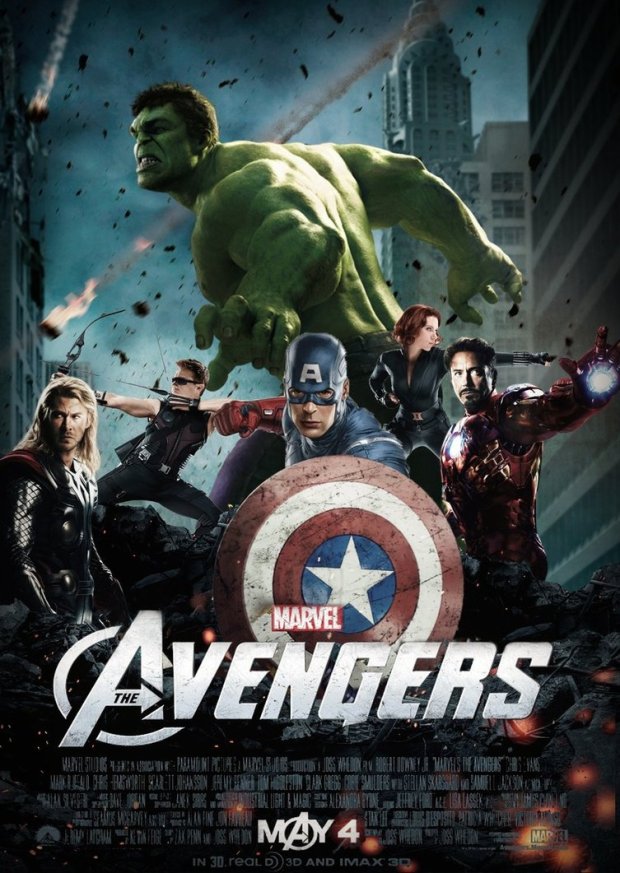
If the creation of the Avengers comic book was unremarkable and by-the -numbers, though, the movie was anything but. In fact, I’m pretty sure future movie historians will be looking back at this as the start of something entirely new. Whether that’s a good thing or not remains to be seen but regardless, this movie is a big effing deal. For the first time, audiences were expected to go to a movie that shared continuity, characters and plot with four separate pre-existing series of movies. This was something on a scale that the film industry had simply never seen before.

And, be honest, you kinda thought it would suck. Didn’t you?

Didn’t you?

C’mon. Be honest. You thought it was going to suck. You can say it.

"Yeah..."

“Yeah…”

"SEIZE HER!"

“SEIZE HER!”

Seriously though, the reaction to this movie was damn near euphoric but part of that just had to have been due to the fact that Marvel had even pulled it off. The fact that it was simply something you could point to and say “Yup, that’s a movie.” was in and of itself something to Marvel at (I ain’t ashamed). Four years later, though, when every studio and their mother is trying to ape Marvel’s shared universe concept, does it still hold up as anything other than a well-executed gimmick? Is it even a good movie in its own right? Does it have what noted film-maker Jackie Treehorn called the “little extras”?


"Story? Productions value? Feelings?"

“Story? Production values? Feelings?”

Let’s take a look.

Ad 3

(more…)

“I don’t want to kill anyone. I just don’t like bullies.”

True story. A few years ago now when I was getting ready to move out of my parents’ house, I was clearing out my stuff from my bedroom, the bulk of which was pretty much every issue of SFX magazine published between 1997 and 2004. And I found myself with two copies in my hand, one from August 2001 and the other from October 2001. I idly flicked through the August issue and found myself reading the comic reviews, one of which was a little quarter-page panning of Captain America # Fifty Bajillion drawn by Who Knows and written by Who Cares. The review was scathing; the art’s terrible, the writing’s appalling and worst of all, the main character’s just not interesting or relevant anymore. The review finished by noting that Marvel had been dropping hints that one of their oldest characters was going to be killed off and it didn’t take a genius to figure out that Cap was not long for this world. I then flicked through the October 2001 issue and again turned to the comics section. And there was a full page review of the new Captain America #1, with a top tier art and script team and a story about Steve Rogers defending Muslim New Yorkers from racist attackers while trying to track down an Al Qaeda cell.

Cometh the hour. Cometh the man.

For a character whose entire schtick is being a man out of time, when he was originally created Captain America was actually ahead of his time. In America in 1940 public opinion was firmly against become involved in another European war. In New York however, many of the men working in the comic book industry were  the children of Jewish immigrants who often still had family back in Europe and felt a personal connection to the horrors being committed by the Nazis. One of those men was Joe Simon who conceived of a patriotic, Nazi-battling character named “Super American”. Deciding that the name was a little too similar to a certain other superhero, he changed it to “Captain America”, a name so instantly iconic that nowadays you just have to put the word “captain” in front of any random noun and it sounds like a superhero name. Simon pitched the idea to his editor Martin Goodman who liked it so much that he ordered him to create a solo Captain America series, a big gamble to take on an untested character. Simon’s usual partner was artist Jack Kirby but Simon wanted to bring in two additional artists to deal with the workload of creating an entire book’s worth of stories based on one character. But Kirby was so invested in the character of Captain America that he insisted on drawing the entire book himself, which he did, and on time.

The first issue sold as well as any comic that features Hitler getting punched in the face should. The character was an immediate hit, becoming the first genuine superstar character of Timely comics (which would later become Marvel). Not all the attention was positive, however. American Nazis began sending threatening letters and one time even called the offices of Timely challenging Jack Kirby to come down and fight them in the foyer. Kirby ran down only to find they’d run off because it was Jack Frickin’ Kirby and they may have been Nazis but they weren’t crazy. Regardless, for a while the city of New York actually had to provide police protection to the building. After Pearl Harbour, Captain America became even more popular, with his comics distributed to American service men to boost morale. Many of the Timely artists and writers were drafted during this period. Stan Lee, for example, who got his break in Timely writing Captain America prose stories (he was the one who came up with the whole “throwing the shield as a weapon” thing) was put to work making propaganda. One day he was found breaking into the army post office, trying to mail a script off to Timely. He was told he’d be court-martialed, only to be released the next day when the editor of Timely rang his commanding officer to point out that jailing the writer of Captain Frickin’ America might be bad for the army’s morale.

Jack Kirby also joined the army but opted to serve on the front lines, becoming one of the few American soldiers who had experience fighting Nazis as a hobby before going pro.

Unfortunately, America won the war…I mean obviously not “unfortunately” in the grand scheme of things but unfortunate for Captain America. You see, Captain America was very much a reaction to the Nazi menace, which is what made the character so timely (pun!) and important. But of course, once that menace was defeated, Captain America didn’t really have a purpose anymore. In fact, the same could be said for the vast majority of superheroes who had followed in his wake. The superhero boom pretty much died with Hitler, with only a few characters like Superman, Batman and Wonder Woman surviving the decade. Timely tried repurposing Cap as a commie fighter, but it just wasn’t the same. Timely changed its name to Atlas, dropped the superhero genre entirely and started focusing on sci-fi and monster tales.

It wasn’t until the sixties that Cpatain America got his second origin story. The third issue of The Avengers had the newly formed team finding Captain America floating in the Arctic Sea in a block of ice having gone missing near the end of WW2 (all the stuff about him fighting communists was retconned as actually having…you know what, fuck it, no time). Captain America then joined the team as a man out of time, a morally pure Rip Van Winkle trying to adapt to a confusing and complex modern world, and that’s pretty much been his niche ever since.

Since then, Captain America has had his share of classic runs and great stories, but there’s no denying that he’s a tricky character to do right. Like Superman and Wonder Woman, it takes a writer with skill to make him work (though it’s a truly wonderful thing when he does). For a long stretches of the twentieth century it often seemed like Marvel didn’t know what to do with Captain America, often giving him to creators who really had no business writing the character, which is how we got Rob Liefeld’s godawful Heroes Reborn Captain America.
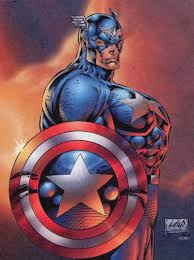
I'd say "We do not speak of the Sentinel of Libertitty" but let's be real. We never stopped.

I’d say “We do not speak of the Sentinel of Libertitty” but let’s be real. We never stopped.

 Since the beginning of the 21st century however, Cap has once again become one Marvel’s top tier characters, attracting industry leading talent and the kind of popularity he hasn’t really known since the time of his creation. Part of that is, well, yeah, obviously…
"9/11 changed EVERYTHING Brian!"

“9/11 changed EVERYTHING Brian!”

But as well as the natural impulse to rally around such a patriotic symbol in troubling times, Captain America is simply a character whose time has come again. In the forties, Cap was popular but he was by no means unique. The stands were overflowing with patriotic, square jawed do-gooders. Hell, Captain America wasn’t even the first superhero to wear the American flag and carry a shield. But the superhero genre has changed so utterly since those days that what once made Captain America almost generic now makes him almost unique. Nowadays, a superhero who’s just a genuinely decent person is refreshing and almost edgy. He may be old fashioned, but these day? Like the man said, people need a little old fashioned.

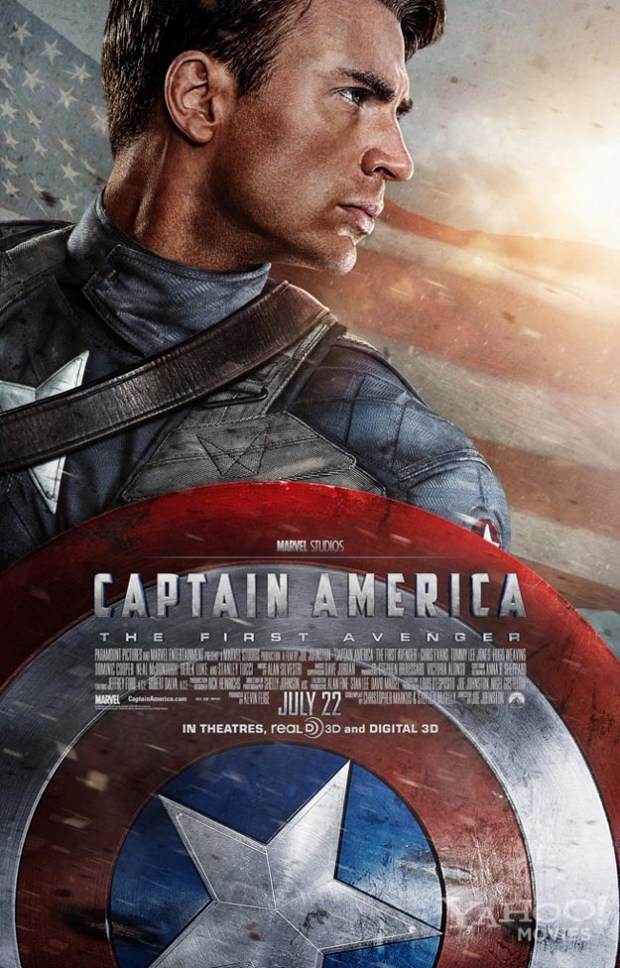
2011’s Captain America, the first movie featuring the character that fans will actually acknowledge exists, works and works so damn well, because it gets that.
Blucatt ad

(more…)
Song of the Sea (2014)

Pff. Women, amirite? One day you’re walking down the beach and you see a beautiful woman walking out of the sea, you hit it off, you get married, have a couple of kids and then BAM! Turns out she’s a seal and she’s off gallivanting with her seal buddies without even leaving a forwarding address for child support. Ain’t it always the way? Well, maybe not where you come from but in Ireland it’s practically an epidemic. The canon is full of selkie stories. Shit, if I had my druthers, every Irish exchange of marriage vows would include the sentence “And by the way, I am totally not a seal.”

Selkie stories are not exclusively Irish, of course. In fact, it’s probably more accurate to call them a Scottish tradition but you also find Selkie tales in the Faroe Islands and Iceland and despite the basic similarities (seal turns into a woman, marries a human) they run the gamut from tragic romances to horror stories. A common feature is that the Selkie has a seal-skin cloak, without which she can’t turn into a seal again. The fisherman hides the cloak from her for years, until one day their children are searching around in the attic, find the cloak and show it to her, at which point the Selkie’s all “Laters!” and makes her escape. A particularly grim version from the Faroese Island of Kalsoy has the Selkie return to her seal family, only for her human abductor to kill her husband and children in revenge. The Selkie then swears to basically kill every dude from his village until there are enough bodies to circle the entire island which she is still doing to this day.  Then there are other stories where the marriage between the fisherman and Selkie is loving and consensual, but she has to to turn into a seal to save him from drowning and so can never return to live on land. The universal theme running through these stories is loss. Happiness is transient, loss is forever. Sounds like a fun cartoon to me!

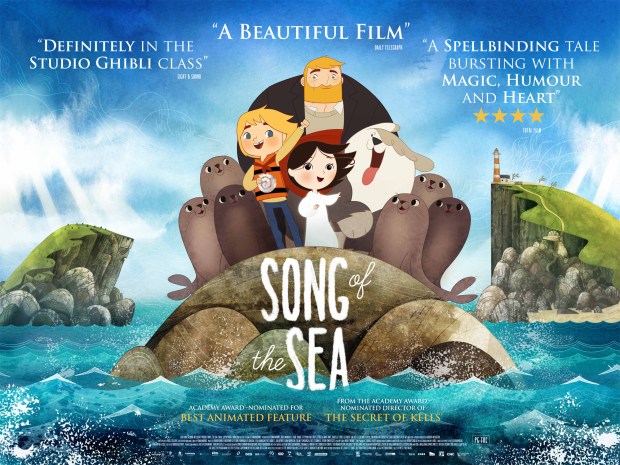
To follow up the phenomenal success of Secret of Kellsdirector Tomm Moore basically created Song of the Sea, an to homage selkie stories and to his own childhood growing up in Ireland in the eighties. I also grew up in Ireland in the eighties, but I remember it being distinctly less magical.

"Well, apart from the whole "being transformed into a mouse" thing.

“Well, apart from the whole “being transformed into a mouse” thing.”

(more…)
“You think me strange? Good strange, or bad strange?”

First dates are essentially scams. You sit down to dinner with someone you don’t know, and try to pretend that you’re someone else. Someone charming, and succesful, and definitely not into doing weird things with fish. No sir. Not you. The second and third dates are more or less the same. But by the time the fourth date rolls around you need to start being honest. That’s where you take your date on a long walk and say “Look. I really like you. I like where this is going. But if we’re going to have something together I’m going to have to tell you just how much of a freak I actually am.”
“This. This is me. This is what I get up to.”

“This. This is me. This is what I get up to.”

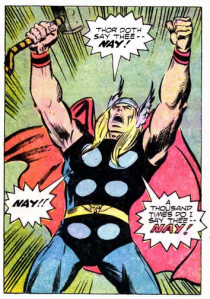
The Marvel Cinematic Universe has essentially been a long, meticulous romancing of the mainstream. Thor is the part of the relationship where Marvel finally says “I’m glad you like the snarky businessman in the robot suit and the scientist who turns into a green monster. Now here’s where we get nuts.” As a title, The Mighty Thor has always been an unapologetically melodramatic, ridiculous, camp, epic, nonsensical, glorious, mess. In short, it is one of the purest comic books ever written. It’s huge men with long flowing hair and fabulous capes yelling cod-Shakespearean insults at each other and not understanding the difference between “thee” and “thou”.
It, quite simply, does not give a fuck.
But first, a little history.
The character of Thor was created early in the first millennium by the Germanic peoples inhabiting what is now Scandinavia. Some stuff happened. Then, in 1962, the character was introduced into the Marvel universe by Stan Lee, Larry Lieber and Jack Kirby in the pages of Tales to Astonish. There’s a little bit of confusion as to who actually came up with the idea (aside from the ancient Vikings, I mean). Stan Lee claims that the idea came to him when he realised that the only way to create a character stronger than the Hulk would be to make him a god, and that rather than go with the more well-known Greek or Roman deities he decided to delve into Norse mythology.
Meanwhile, Cúchulainn sits on the damn shelf.

Meanwhile, Cúchulainn sits on the damn shelf.

Jack Kirby, on the other hand, claims that he created the character because of his love of Norse mythology and to be honest, I think the evidence is on Kirby’s side. Kirby had already created not one but two versions of Thor for DC in the golden age, so he clearly had an interest in the character. Not only that, but “comic book characters as post-industrial mythology” was kind of Jack Kirby’s whole deal. Thor’s sales have never exactly set the world on fire but this is nonetheless a character with some serious cred. There are many who consider Lee and Kirby’s run on the character the finest work of either men in the sixties (damn high praise) and he’s also had some celebrated runs, none greater than Walt Simonson’s glorious, batshit insane epic in the eighties.
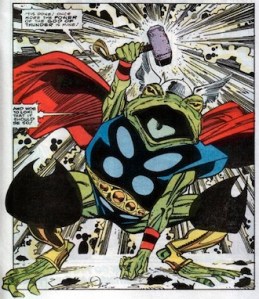
This is normally the part of the review where I would say “we do not speak of the Frog of Thunder” but even this was AWESOME.

This is normally the part of the review where I would say “we do not speak of the Frog of Thunder” but even this was AWESOME.

He’s also been a  very consistent presence in the Marvel universe, showing up in almost everyone else’s books at one time or another and, if there’s a team of Avengers that Thor’s not on, it’s probably only because he’s dead again. He’s always been one of the company’s “faces”, one of their most visible and iconic characters. And yet, Thor has always struggled outside of comics. His live action appearances before 2011 was just a single episode of The Incredible Hulk, and he hasn’t headlined his own cartoon series since the frickin’ sixties (compare that to Spider-man, who gets a new cartoon show every time Stan Lee sneezes). Same Raimi originally pitched a Thor movie to Marvel all the way back in 1990 and from there it was dropped, picked up again, briefly re-conceived as a TV show starring Tyler Mane before bouncing to Sony, then to Paramount before finally arriving back at Marvel. The decision to nominate Kenneth Branagh to direct was surprising but also kind of inspired. Branagh is famous as an interpreter of Shakespeare for the masses, and Stan Lee is of course one of the biggest Shakespeare fanboys out there.
He made Falstaff into a superhero, people.

He made Falstaff into a superhero, people.

Branagh was the perfect candidate to make the overblown, melodramatic bluster of Thor work for a mainstream audience.  Just, for the love of God, don’t subject yourself to his commentary on the DVD.
"The director's an ass."

“The director’s an ass.”

Marvel knew going in that compared to Iron Man and Hulk, this movie was the real test. This is where they’d learn if a mainstream audience could really accept all the comic book nuttiness they were about to bring. It was time to see if this relationship had legs.
Blucatt ad

(more…)
“Like all guilty men, you try to rewrite your history…”

I’m still feeling my way around reviewing these Marvel movies. I was thinking that, when I review the first movie featuring a hero I’ll give you some history and overview of that specific character, and when the time comes to review the sequel I might take a look at their rogues gallery and what their villains say about that particular hero. Problem: Iron Man has quite possibly the worst rogues gallery of any major superhero. Notoriously so. Legendarily so. If you were to make a chart of superheroes by the quality of their rogues’ gallery it would be Batman at the top, closely followed by Spider-man and the Fantastic Four, then respectable mid-carders like Captain America and Superman and then waaaaaaaaaaaay way down at the bottom Iron Man and Wonder Woman are hanging out and getting sloshed on Ouzo. Yeah, yeah, no such thing as bad characters, only bad writers. True as far as it goes. Any villain, no matter how lame, can be made compelling with the right scribe working on them.
Some, however, take more heavy lifting than others.

Some, admittedly, take more heavy lifting than others.

But Iron Man’s villains probably require more heavy lifting than probably any other hero’s. Even Tony’s arch-nemesis, The Mandarin, while certainly a cool villain, doesn’t really have that much that sets him apart from similar bad guys like Doctor Doom or Baron Mordo other than the fact that in his early days he looked like Mickey Rooney in Breakfast at Tiffany’s.

Oh sixties.

Oh sixties.

As for the rest, they were mostly just an interchangeable series of commies in robot armour and rival industrialists. I mean hell, when the time came to find a villain for Iron Man 2, they actually just slapped two of them together. Ivan Vanko is a mishmash of Whiplash and the Crimson Dynamo. And nobody even cared. Think about that for a minute. Can you imagine if they did a Batman movie and they just merged the characters of Joker and the Penguin into one guy and called him the Penker? My God, the fans would skin them alive and hang their carcasses in the online forums as a warning to others. That’s how lame Iron Man’s rogues gallery is. Not even Iron Man fans care enough to get mad about changes to the source material.  But, did it work? Were they able to reverse Iron Man’s traditionally awful luck with villains? Will our hero triumph over the Penker? Let’s find out! Right after these messages.

AD

(more…)

If I said I was happy, I’d be lion.

“Disney?”

“Disney?”

“Um…yeah?”

“Um…yeah?”

“Are you tarnishing the legacy of one of your beloved classics again? I thought we were past this.”

“Are you tarnishing the legacy of one of your beloved classics again? I thought we were past this.”

“I’m not! I swear!”

“I’m not! I swear!”

“Then what, pray tell, is this the fuck?“

“Then what, pray tell, is this the fuck?”

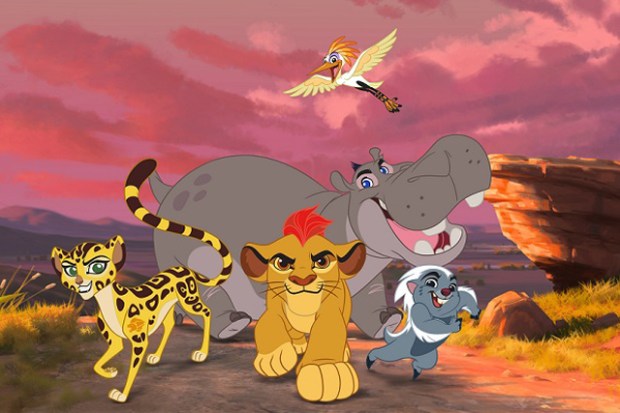
THE LION GUARD - The epic storytelling of Disney's "The Lion King" continues with "The Lion Guard: Return of the Roar," a primetime television movie event starring Rob Lowe, Gabrielle Union and James Earl Jones, reprising his iconic role as Mufasa.  Premiering this November on Disney Channel, the movie follows Kion, the second-born cub of Simba and Nala, as he assumes the role of leader of the Lion Guard, a team of animals tasked with preserving the Pride Lands. "The Lion Guard" television series will premiere in early 2016 on Disney Channels and Disney Junior channels around the globe. (Disney Junior) FULI, KION, ONO , BESHTE, BUNGA

“Oh it’s an exciting new chapter in the Lion King mythos!”

“Oh it’s an exciting new chapter in the Lion King mythos!”

“You have ten seconds to explain yourself, sir.”

“You have ten seconds to explain yourself, sir.”

“Okay, see it stars Kion, Simba and Nala’s son, as he forms the Lion Guard, an elite group of animals whose sworn duty it is to protect the Pride Lands from danger.”

“Okay, see it stars Kion, Simba and Nala’s son, as he forms the Lion Guard, an elite group of animals whose sworn duty it is to protect the Pride Lands from danger.”

“Okay. That actually sounds like a pretty decent premise if handled well...”

“Okay. That actually sounds like a pretty decent premise if handled well…”

“See, Scar used to have superpowers…”

“See, Scar used to have superpowers…”

“WOW. Stop right there.”

“WOW. Ok. Stop right there. Pull this bus over…”

“See, Scar had the magical Roar of the Elders and led the Lion Guard…”

“See, Scar had the magical Roar of the Elders and led the Lion Guard…”

“Scar? “Shallow end of the gene pool” Scar?”

“Scar? “Shallow end of the gene pool” Scar?”

“And when he tried to get the Lion Guard to turn against Mufasa and they refused he used the roar to destroy them.”

“And when he tried to get the Lion Guard to turn against Mufasa and they refused he used the roar to destroy them.”

“No. No. That never happened. You lying media conglomerate.”

“No. No. That never happened. You lying media conglomerate.”

“But then because he used the roar for evil he lost it.”

“But then because he used the roar for evil he lost it.”

“So why didn’t he just use it against Mufasa in the first…no, you know what I’m not even going to engage with the idea. So tell me, does this travesty ignore Simba’s Pride or take place in the same continuity?”

“So why didn’t he just use it against Mufasa in the first…no, you know what I’m not even going to engage with the idea. So tell me, does this travesty ignore Simba’s Pride or take place in the same continuity?”

“Neither! It canonises some aspects while blatantly contradicting others!”

“Neither! It canonises some aspects while blatantly contradicting others!”

“Ah! So everybody’s angry!”

“Ah! So everybody’s angry!”

“Yeah!”

“Yeah!”

 “WHAT ARE YOU ON?”

“WHAT ARE YOU ON?”

“Everything…everything…so much…I…I can see God…”

“Everything…everything…so much…I…I can see God…”

“Disney you’ve got to stop this. You’ve got to stop this now. You’ve got to pull every episode and pretend this never happened. When people ask, tell them it was a hoax by Dreamworks. Tell them that the perpretrators will be caught and justice will be swift.”

“Disney you’ve got to stop this. You’ve got to stop this now. You’ve got to pull every episode and pretend this never happened. When people ask, tell them it was a hoax by Dreamworks. Tell them that the perpetrators will be caught and justice will be swift.”

“But I haven’t told you the best part!”

“But I haven’t told you the best part!”

“Down we go, down and down.”

“Down we go, down and down.”

Bungaclose

"Who's the tatted up chipmunk?"

“Who’s the tatted up chipmunk?”


(more…)

Saving Mr Banks (2013)
(DISCLAIMER: This blog is not for profit. All images and footage used below are property of their respective companies unless stated otherwise. I do not claim ownership of this material. New to the blog? Start at the start with Snow White.)

Previously on Unshaved Mouse: After learning that he’d been secretly manipulated into destroying the career of Don Bluth, Mouse swore revenge against his former mentor Walt Disney, promising to review “The Worst Disney Movie”. However, it seemed that the two had finally buried the hatchet after Mouse reviewed Big Hero 6 in an attempt to boost his flagging page views just ‘cos. But then, Walt was kidnapped by Mouse’s entire rogue’s gallery who it turned out had been led by none other than…Mouse.
Now read on.
“You’re kidding. Saving Mr Banks? That’s your pick for worst Disney movie?”

“You’re kidding. Saving Mr Banks? That’s your pick for worst Disney movie?”

“Yup.”

“Yup.”

“Not one of the straight to video sequels? Not the High School Musical movies?”

“Not one of the straight to video sequels? Not the High School Musical movies?”

“Nope.”

“Nope.”

“Pff. Lemmings. Who cares? Buncha racists.”

“Pff. Lemmings. Who cares? Buncha racists.”

"FUCK YOU, MAZERUNNER!"

“FUCK YOU, MAZERUNNER!”

“Saving Mr Banks was a critical darling! It grossed over a hundred million dollars! How can it possibly be the worst Disney movie?”

Saving Mr Banks was a critical darling! It grossed over a hundred million dollars! How can it possibly be the worst Disney movie?”

"Well, "worst" can have very different meanings."

“Well, “worst” can have very different meanings.”

Pamela Lyndon Travers, born Helen Lyndon Goff was a remarkable woman who led a remarkable life. At various times a Shakespearean actor, a scholar of Native American cultures, a propagandist during the second world war, a member of the literati who rubbed shoulders with the likes of AE and WB Yeats and the creator of Mary Poppins, one of the most popular children’s characters in English language literature. She was also, by most accounts, a bit of a pill. In fact, it’s been said that she died “loving no one, and loved by no one.” Who said that? Her own grandchildren. Yikes.
A question I got asked a lot after my review of Mary Poppins was whether I had read any of the original books and the answer was “No.” I have since had a chance to rectify that, or at least, I’ve managed to read the first book, the one that the 1964 film was based on. In my opinion it’s a charmingly written, often very witty book that’s let down by a somewhat ramshackle episodic structure and the fact that the main character is WORSE THAN HITLER.
Sorry, I know a lot of people love these books and prefer the literary version of Mary Poppins but oh my God, no. No, no, no, no, no, She is awful. Vain, mean, borderline emotionally abusive, contemptuous of everything and everyone, snobbish, nakedly hostile to anyone who is not on their knees kissing her very shoes and she sniffs. Constantly. “Mary Poppins sniffed…” it was like a goddamn tic. By the end of the book I was like…
Sniff again
And today’s movie, Saving Mr Banks, is about how that book  and its fairly unlikable author and its deeply unpleasant main character were somehow corralled into making one of my favourite movies by one of my favourite film-makers. You could not engineer a safer audience for this movie than me. So how badly do you think they had to fuck it up for me to hate this movie, to hate the Disney corporation that made it and even for a little of that hate to wipe off on my memories of the original film? How hard do you have to try to fail that badly?
Let’s take a look.

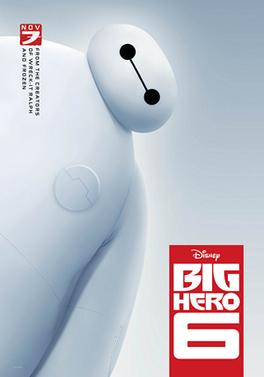
Disney Reviews with the Unshaved Mouse #54: Big Hero 6

(DISCLAIMER: This blog is not for profit. All images and footage used below are property of their respective companies unless stated otherwise. I do not claim ownership of this material. New to the blog? Start at the start with Snow White.)
And so, like putting on an old comfortable pair of shoes, I return again to the Disney canon. Good to be back everyone, feels like I never left. Unshaved Mouse doing what he was always meant to do, reviewing Disney movies! Put the Disney dance party album on repeat because the whole gang’s here! Including my collection of traitorous good for nothing maps who betrayed and abandoned me the very second things got rough and have now come crawling back like the worms they are.
“Hooray!”

“Hooray!”

“Ah, don’t be like that, Mouse.”

“Ah, don’t be like that, Mouse.”

“Don’t talk to me.”

“Don’t talk to me.”

"'S only ever love, M. You know that."

“‘S only ever love, M. You know that.”

“Where did you go anyway?”

“Where did you go anyway?”

“We just hung around with Rubber Lotus for a while. At first it was fun, but then it got a little weird. He kept asking us to call him “Mouse”. Did you know he has a shrine to you in his wardrobe?”

“We just hung around with Rubber Lotus for a while. At first it was fun, but then it got a little weird. He kept asking us to call him “Mouse”. Did you know he has a shrine to you in his wardrobe?”

“Yeah. Shrines. Never not creepy.”

“Yeah. Shrines. Never not creepy.”

And of course, since I’ll be reviewing a Disney movie that means the return of our old pal Walt Disney!
“Hello folks! Good to be back, Mouse. Glad to see there’s no hard feelings over that whole “brainwashing” thing.”

“Hello folks! Good to be back, Mouse. Glad to see there’s no hard feelings over that whole “brainwashing you to do my dark bidding” thing.”

“None. What. So. Ever.”

“None. What. So. Ever.”

"Glad to hear it. Say, you keep gritting your teeth like that you might chip your incisors."

“Glad to hear it. Say, you keep gritting your teeth like that you might chip your incisors.”

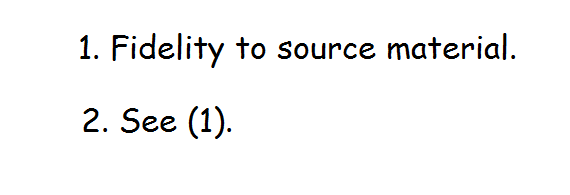
After the marriage of Disney and Marvel, the two companies did what many couples do in this situation; put their children from previous marriages in a room together and try to force them to like each other. In this case, Disney CEO Bob Iger told the Disney animators to look through Marvel’s back catalogue to see if they could find properties that would make good animated movies. Now, people who’ve followed my blog from the beginning know that when Disney adapts other properties, fidelity to the source material is not usually high on their list of priorities. Marvel fans, conversely, have a list of priorities that reads
Priorities
Marvel fans tend to get a little…um….Rain Man-esque…about movies changing even small details about their favourite characters, and films that don’t respect the source material tend to get eaten alive like a cow being dipped in a vat of piranhas.
Poor bastards never had a chance.

Poor bastards never had a chance.

So it’s not really surprising that the comic that Don Hall (director of Winnie the Pooh and writer on most of the Lost Era movies) chose the comic Big Hero 6 to adapt instead of a better known property because…well, no one gives a piping hot shit about Big Hero 6 and this way they could mess around with it as much as they needed to. In the comics Big Hero 6 is a Japanese superhero team that operates as a parody of Japanese pop culture tropes. I haven’t read the comic myself but reading up on it raised a few red flags for me, number one being that the mini-series they first appeared in was written by Scott Lobdell, a writer whose work is (if I may be horribly blunt) not my cup of tea.
Secondly…Okay, there are those who would consider this kind of broad cultural parody to be racist in and of itself. I’m not one of them. Irish people come in for a good bit of this kind of thing and I think as a nation our general attitude is…
all in good fun
But…some of the details about this book, like the fact that one of their enemies is the embodiment of all the people who were killed in the nuclear attacks on Hiroshima and Nagasaki…
New spittake
Yeah, I think we can all agree that “loose adaptation” was probably the way to go on this one.
So much for the book. What about the movie? Oh, and while I’m not in the habit of putting up spoiler warnings I’m aware this movie only came out in 2014 so yeah, I will be discussing all major plot points just like I always do. If you haven’t seen the movie yet, get on that. The rest of you? Let’s roll.