Comics

“Since when is a shortcut cheating?”

“Are you there God? It’s me. Mouse.”
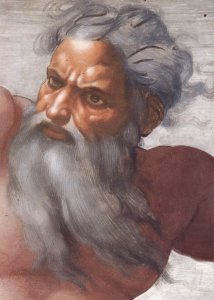
“WHAT TROUBLES YOU MY SON?”

“Well, I’m supposed to review Captain Marvel…”

“AH, AND YOU’RE WORRIED BECAUSE YOU’RE KINDA OF MEH ON IT BUT YOU DON’T WANT TO INDULGE THE MOST TOXIC ELEMENTS OF FANDOM BY GIVING IT A BAD REVIEW?”

“Actually, I was more wondering whether I really have to give an exhaustive way-too-long explanation as to why there are so many DAMN characters named Captain Marvel?”

“YES, YOU DO.”

“Why?”

“BECAUSE THAT IS WHAT I PUT YOU ON THIS EARTH TO DO.”

“Fair enough.”

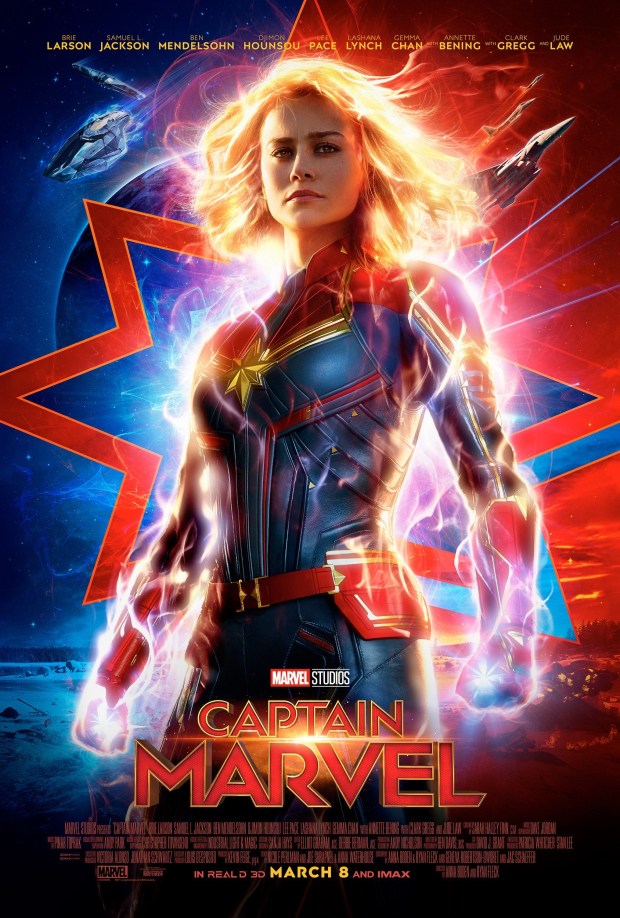
That’s right people, we’re doing this. If you want to just skip ahead to my thoughts on the movie you’re free to join us after the jump. Just know that you’re dead to me. Now, I would bet good money that there have been more characters named “Captain Marvel” than any other superhero mantle. There have been a few Batmen, a bushel of Flashes and a whole mess o’ Green Lanterns, but by my count there have been no fewer than TWELVE Captain Marvels and that’s not even counting Captain Marvel Juniors, alternate future versions and weird rip-offs like Marvelman, Marvel Boy and the Marvellous Ms Maisel. So what gives? Well, it comes down to a combination of legal shenanigans, bad luck and weird coincidences far too complicated to go into here. Nonetheless, I will go into it them here.

Okay. So. Our story begins in 1940, a mere two years after National Comics (later DC) birthed the modern superhero genre with the creation of Superman. Fawcett Comics introduced their new character, Captain Marvel, whose gimmick was that he was actually a little boy named Billy Batson who turned into a suspiciously Superman-like superhero when he shouted his magic word “SHAZAM!”.
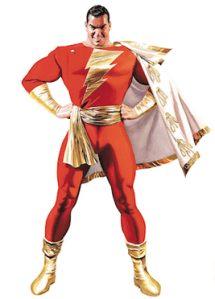
It was, and remains, one of the most perfect concepts for a superhero ever. If you subscribe to the belief that superheroes are, at their core, innocent power fantasies for small children, that is about as perfect a distillation of the concept as you can get. Kids could imagine one day growing up to be Superman. But you could be Captain Marvel now. And it was easy. Just say a magic word and you could be bigger, tougher, faster and smarter than anyone else. Which, when you’re a kid growing up in a world where everything is tough and confusing and bigger than you…that’s the dream, right? The comic also introduced the obligatory kid sidekick, Captain Marvel Junior and the almost as obligatory distaff counterpart; Mary Marvel:
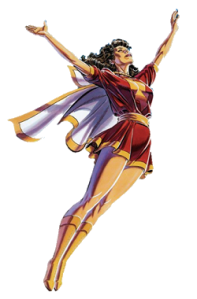
She’s Billy Batson’s long-lost sister Mary Batson with the same powers who also took the Captain Marvel mantle for a time so we’re counting her. She’s also one of the very earliest female superheroes and beat Supergirl to the punch by almost a full decade. Anyway, back to Captain Marvel.

So not surprisingly, with such a killer concept, Captain Marvel quickly became the most popular superhero in America, even outselling his inspiration, Superman. National Comics, obviously, weren’t going to let that slide and brought in a new top-tier creative team with fresh ideas to re-vamp Superman and nah just kidding they just went crying to Johnny Law. National took Fawcett to court over copyright infringement and the judge decided that two Caucasian superheroes with black hair was just too big a coincidence and ruled in National’s favour. By this point, the superhero boom was on the wane so Fawcett simply ceased publishing Captain Marvel. That was not the end of the story. In fact, that was barely the beginning of the beginning. So now, let’s talk about Marvel Comics, and how they came to acquire…
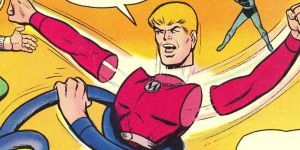
“But what about me Mouse?”

“Oh Christ, I’d forgotten about you, MF Enterprises Captain Marvel.”

Yeah, okay, weird little digression here. By 1966 the rights to the character name “Captain Marvel” were up for grabs and a comics company called MF Enterprises published three issues featuring…this.
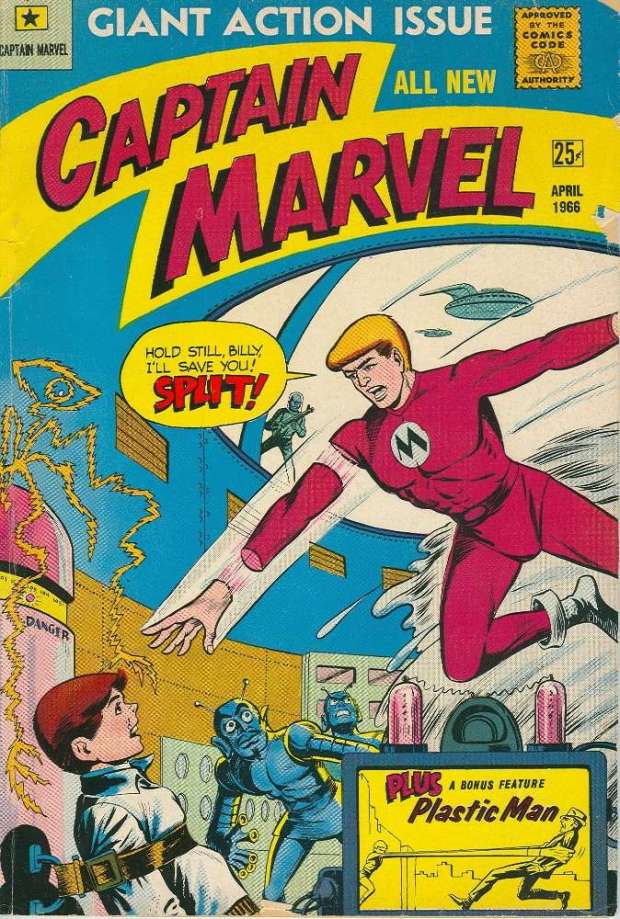
So…this is Captain Marvel. Allegedly. He’s an android who can split into his constituent parts by yelling “SPLIT!” which is a word. He reforms by yelling “XAM!”, which is not. His alter ego was Roger Winkle. He is, by near unanimous decree of the world’s foremost Marvelogists, the worst Captain Marvel. And it pains me to say this as he was created by Carl Burgos, creator of the greatest superhero of all time; the Original Human Torch.
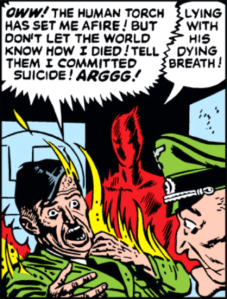
Man loved his androids. That he did.

Alright moving on.

So National’s old rival Timely Comics had, by the sixties, changed their name to Marvel. Realising that the formerly most popular superhero in America coincidentally had the same name as their company, they figured it was a no-brainer to buy the name for themselves and create their own Captain Marvel.
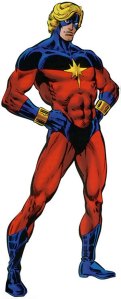
The first Marvel Marvel was Mar-Vell, an alien spy of the Kree Empire who comes to Earth to prepare the way for an invasion and ends up falling in love with this planet of psychotic apes and becomes a superhero. Mar-Vell never really caught on as he was strictly squares-ville, daddio. He was like Reed Richards without the Thing as a foil, or Captain America without the instant, irrevocable cool that comes from having punched Hitler in the face. To make Mar-Vell more Hip to the Trends, Marvel roped in Rick Jones, perennial sidekick and the Young Peoples’ favourite. Now the status quo was that Mar-Vell was trapped in the Negative Zone but could swap places with Rick Jones in the real world whenever he was needed, a premise that superficially resembled the Billy Batson/Captain Marvel set-up while simultaneously losing everything that made that concept appealing. Captain Marvel asks “what if you could turn into an all-powerful superhero” and Captain Mar-Vell asks “what if you could go to a lightless never-ending void while a strange grown man did things with your body?”

One of them is timeless wish-fulfillment, the other is the kind of thing that takes many years of costly therapy to process.

So it’s not surprising that, like Shakespeare’s Thane of Cawdor, nothing became Mar-Vell in this life like the leaving of it. The best remembered Mar-Vell story is Jim Starlin’s The Death of Captain Marvel, in which Captain Marvel applies for a mortgage just kidding he bites the big one. What made this story so unique at the time was that Mar-Vell doesn’t go down fighting some giant, world-ending threat. Instead, he succumbs to cancer and dies quietly in bed surrounded by his friends. The story was well received and is one of the reasons why Mar-Vell’s death is one of the few in comics to never have been permanently reversed (at the time of writing). And it’s at this point in our story that our Marvel-trickle becomes a full on Marvel-deluge.

So, this is the root of why there are so may DAMN Captain Marvels. Firstly, the name is versatile, gender-neutral and doesn’t nail you down. If your character is named “Batman”, for instance, you’re kind of limited in what kind of superhero he can be. Your options are basically; Weird Creature of the night, baseball-themed vigilante or British Officer’s Gentleman’s Personal Gentleman during the Great War. But for Captain Marvel, all you need is a character who is in some way marvellous and the superhero community’s famously lax attitude toward the chain of command. You can slap the name “Captain Marvel” on any random hero regardless of their power set and it makes about as much sense as any other. Secondly, it doesn’t really look good if the dude or dudette bearing the company’s name is a third string scrub (spoiler, a lot of these dudes and dudettes were third string scrubs), so when one Captain Marvel is a bust, editorial has plenty of incentive to reboot and try again. Case in point…
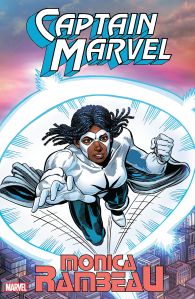
Monica Rambeau, an African American lady with energy powers, first debuted in 1982 before Mar-Vell’s sheets had even cooled. She didn’t have any connection to Mar-Vell and didn’t keep the name for too long, later being renamed Photon, Pulsar and Spectrum to the point where she’s one of those superheroes who’s better known by her civilian name. Monica is actually one of the most successful of the Marvel Marvels, rarely being off the shelves. As a diversity two-fer with a cool power set and pretty solid fanbase, she’s appeared in multiple team books such as the Ultimates, Nextwave and even lead the Avengers for a time.

Alright, how many is that? FIVE?!

Okay speed round. The Vells!
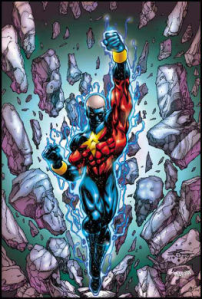
Okay, Genis-Vell. Mar-Vell’s son who took up the old man’s mantle before going crazy and then dying. Interesting titbit; Peter David and Bill Jemas had a bet to see who could get the most sales for their respective books. David at the time was writing the Genis-Vell version of Captain Marvel and Jemas was writing Marville which was…it was something. It was many things. Post modern deconstruction of superheroes. Satire of  the Aol-Time Warner Merger. Philosophical-religious treatise. Strong contender for worst comic of all time. Captain Marvel won that one, which I’m mentioning because God knows these characters need something in the win column.

I am very tired and I have not even begun the review. Phyla Vell!
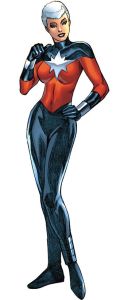
Genis-Vell’s sister. Took up the mantle after his death before becoming the new Quasar (another cosmic superhero mantle that gets around). Played a pretty big role in the Annihilation sagaaka one of the greatest comic events of all time, so she’s okay by Mouse.
“Aw, thanks Mouse.”

“SHUT UP AND KEEP MOVING THERE’S NO TIME!!”

Who’s next? Oh didn’t think I’d remember you did you, Amalgam Captain Marvel!?
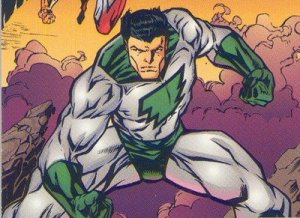
“Bless you, kind sir.”

So funny story, after killing the original Billy Batson Captain Marvel in court, DC comics actually bought the rights to Fawcett’s old characters. However, since Marvel had trademarked the name “Captain Marvel” this meant that DC could use Billy Batson’s Captain Marvel but couldn’t actually call any of the comics he was in “Captain Marvel”. And that’s why DC have desperately been trying to gaslight you into believing that the character is actually named “Shazam” for the last few decades. Incidentally, Eggman is actually named Robotnik and we have always been at war with Eurasia. Anyway, in the early nineties DC and Marvel did a crossover called DC versus Marvel where the two universes collided. This culminated in a glorious bit of silliness where the two companies created Amalgam Comics, an entire comics line of grotesque merged abominations like DarkClaw (Batman crossed with Wolverine) and Super Soldier (Superman smushed into Captain America). Billy Mar-Vell was the result of cross-breeding DC’s Captain Marvel with Marvel’s Captain Marvel and I’ve typed the word “Marvel” so often now the word has lost all meaning and has become a weird glyph.
“Mouse! We’ve got no room left for all these Captains Marvel!”

“STACK ‘EM SIDEWAYS LIKE FIREWOOD WE’RE NOT STOPPING!”

Next up is…oh not this asshole…
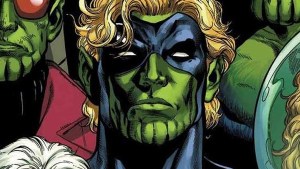
Kh’nhr. Oy. Okay, so during the Civil War event Reed Richards was building a Gitmo for superheroes in the Negative Zone and discovered that Captain Marvel (Mar-vell, obviously, why would that be confusing?) was still floating around in there because time in the Negative Zone is loopy doopy. Reed is all “hey, so you’re gonna die of cancer in the future but while you’re here, wanna help me trample on your friends’ civil liberties?” and Mar-Vell says “sure”. He then spends a few issues moping and doing absolutely feck all until it’s revealed that this Captain Marvel is actually a Skrull sleeper agent impersonating Captain Marvel named Kh’nhr. That’s right. The Skrulls sent this guy to Earth disguised as someone who was already dead. From this, we can deduce that they thought he sucked and deserved to die. They were correct.

Who’s next? Mahr-Vell from the Ultimate universe.
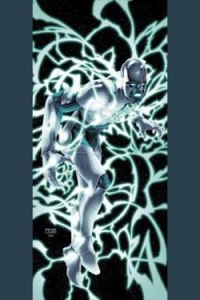
He’s like Mar-Vell. But in the Ultimate Universe. Got an extra “H” in his name. Like Mar-Vell, he turned on his Kree Masters to save the Earth. Unlike Mar-Vell, he came to regret it as everyone in the Ultimate Universe was a massive asshole.

Okay, coming up to the home stretch now.
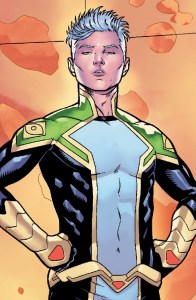
Noh-Varr! Birthed from the Victorian opium den that is the mind of Grant Morrison, Noh-Varr is yet another Kree but this time from an alternate reality who washes up on Earth like a drunken sailor. A bad experience with SHIELD has him declare war on Earth and all humanity but he was eventually convinced to become a hero by Kh’nhr, which is is basically like being inspired to pursue a career in music after a chance encounter with Kid Rock. Usually going by Marvel Boy or Protector, he is on this list solely for that one time Norman Osborn recruited him to be on his Dark Avengers team as Captain Marvel. He peaced out as soon as he realised that they were actually the bad guys. Which, considering they were called the “Dark Avengers” he really should have twigged earlier. Thank God he’s pretty.

Which brings us to drumroll please…
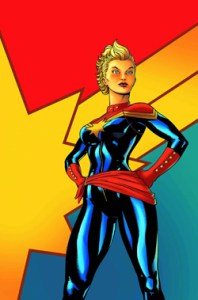
Carol Danvers. Actually one of the older characters on this list, but the newest and current Captain Marvel. Back in the seventies, Marvel was in the habit of cranking out distaff versions of their male characters just so nobody else could do it first (which is how you got She-Hulk, Spider-Woman and Womanverine)*. One of these characters was Carol Danvers, aka Ms Marvel who gains Mar-Vell’s powers after being caught in an explosion with him and getting some of his DNA (that’s their story, anyway). She had her own series written by Chris Claremont which didn’t sell but was well regarded by those who read it. After it was cancelled, she bounced around the Marvel universe for a while until the creative team decided to celebrate their #200th issue with a story where Carol is abducted, brainwashed and raped by her own child. And it’s presented as a love story.
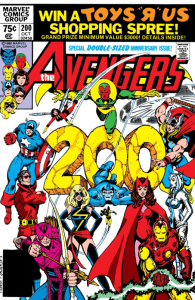
Man, I hope ToysRus got their money back.

Fortunately Chris Claremont was having none of it, and when he was handed the reigns to X-Men he had Carol deliver an epic “Fuck You” to the Avengers for basically abandoning her to her rapist and had her join the X-Men. Claremont ended up using a lot of the concepts that he had originally intended to use for Ms. Marvel, in case you were wondering why a series ostensibly about mutants fighting racism features so many aliens and giant flaming space birds. Anyway, her presence on the X-Men during Claremont’s run cemented Carol’s position as pretty much the most popular Captain Marvel-adjacent character at Marvel. So when the time came for Marvel to try for the UMPTEENTH GODDAMNED time to have a Captain Marvel that people actually gave a shit about she was pretty much the only choice. How’d that work out? Well…Marvel’s attempts at pushing her harder than Roman Frickin’ Reigns has definitely created some backlash, but there’s no denying that she’s the first Marvel Captain Marvel to have any real purchase in the popular consciousness. And of course, a big part of that is today’s movie.

Which I am finally starting to review after two and half thousand words what the hell was I thinking?

(more…)
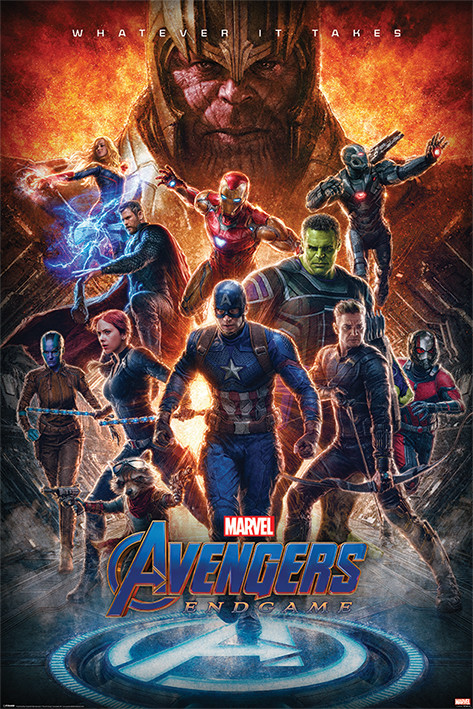
“A fourth wall break inside a fourth wall break? That’s like…sixteen walls!”

If you like Unshaved Mouse please consider supporting my Patreon.

When it comes to the various eras of comics history, the nineties have an image problem.

Get it? Because Image comics were terrible.

And that’s not fair. Not fair at all. There were some fantastic comics released during the nineties. Jeff Smith’s seminal Bone came out in this decade. You had Neil Gaiman writing Sandman over at DC. And at DC, the Batman titles were doing memorable storylines like No Man’s Land and Long Halloween. Meanwhile, at DC, Mark Waid and Alex Ross were creating one of the most visually beautiful mainstream comics of all time with Kingdom Come

“Hey, Mouse, what about Marvel?”

“…”

“HELLBLAZER WAS ANOTHER VERY WELL RECEIVED DC TITLE DURING THIS PERIOD…”

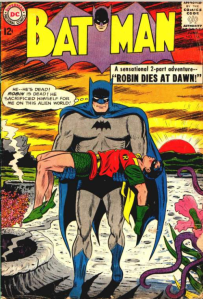
And yet, despite some very good comics being produced during this era by almost half of the two great American comic publishers, “nineties” is basically short-hand for “crap” amongst comics fans. Here’s the problem. Say I want to sum up the Golden Age of comics with one panel, it’d probably be this one:

Kirby’s cover of Captain America 1. If had to choose a panel to represent the Silver Age? Probably something like this from Sheldon Moldoff (if for no other reason than it doesn’t seem fair to have Jack Kirby define two eras):

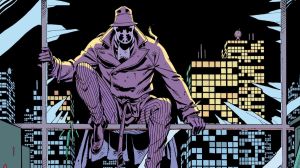
And if I want a single panel that sums up the Bronze Age? That’s easy, Rorschach entering the Comedian’s apartment by Dave Gibbons.

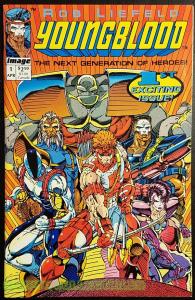
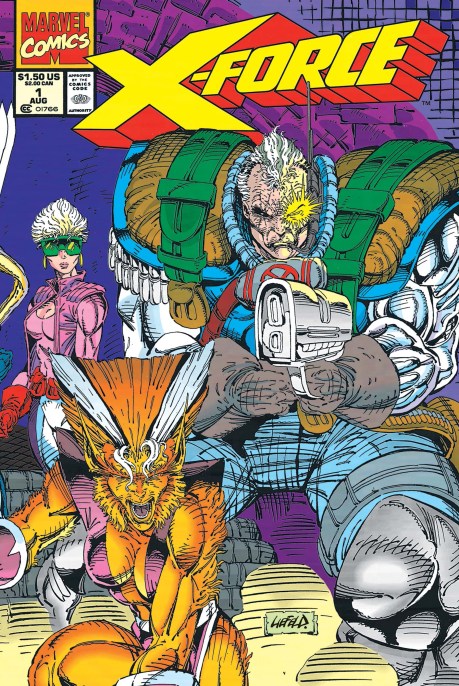
But if I want a single panel that represents the Dark Age? Probably something like this.

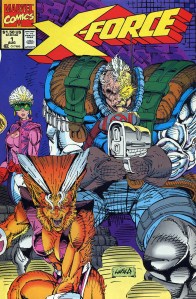
And that’s your problem right there. All these eras were incredibly diverse in terms of the comics that were actually created during them, but they’re all defined in the popular consciousness by a single aesthetic. And the aesthetic that defines the nineties, whether fairly or unfairly, is that of one man. Rob Liefeld.

And it’s pretty objectively terrible. Now, this review is not going to be me dunking on Rob Liefeld for five thousand words because obviously I’d need more words and I don’t like to half-ass things NO BAD MOUSE.

I’m not going to dunk on Liefeld because that’s just beating the fine horse powder that at some point in the distant past was (if the elders are to be believed) a dead horse. Hell, making fun of Rob Liefeld was pretty much the reason we built the internet in the first place (don’t believe the porn industry’s revisionist propaganda). Liefeld was one of a rising generation of new comic artists in the nineties, and that generation was markedly different from the ones that had come before. See, if you look at the really big names of the Silver Age, your Stan Lees, your Jack Kirbies, your Julie Schwartzes, you’ll notice that these were all dudes who had were already working in comics during the Golden Age. The Silver Age was not the New Guard taking over, it was the Old Guard refining and improving on their first draft. But by the nineties, the Old Guard was ageing out of the industry and rising to replace them was a generation that had actually grown up reading the classic comics of the Silver Age and actually had “comic book writer/artist” as their dream job rather than simply something to fall back on if that career in publishing/fine arts never panned out. These kids, unlike their forbears, had come to the comics as fans rather than just professional artists or writers who needed a steady gig. They had read all these comics when they were twelve year old boys and dreamed of creating their own.

Unfortunately, if you read the comics they were putting out, you would have been forgiven for thinking that they were still twelve year old boys. Liefeld wasn’t the only one of this generation, but he definitely epitomised them. Much as the Impressionists were identified by their use of open composition and an accurate depiction of light, the artists of the “Hot Comics” style were identifiable by blood, guts, gratuitous swearing and a…free-thinking…approach to accurate depictions of female anatomy. They also freaking idolised Jack Kirby which I find BAFFLING. Not because Jack Kirby doesn’t deserve to be idolised (and I got the shrines to prove it) but because Jack Kirby is legendary for:

  1. Technical excellence.
  2. Clarity of visual storytelling.
  3. A fearsomely original imagination.
  4. A work ethic that allowed him to smash deadlines like they’d been cracking wise about Mrs Kirby.

Basically, everything Liefeld and his ilk were not about. So you had a lot of talentless fanboys creating comics that only had merit to clueless, hormonally addled infants. So, of course, they were hugely, horrendously successful.

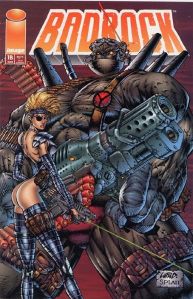
This thing sold five million copies and there’s bile in my mouth right now.

Liefeld is in this weird space of being simultaneously one of the most and least influential creators in the history of the medium. As I said, his style defined an entire era of comics history in a way very few other creators can be said to have done. Honestly, I think only Kirby rivals him in that regard. But whereas Kirby’s legacy on both the Marvel and DC universes will stand the test of time, very little of Liefeld’s influence remains in the modern Marvel universe. Certainly not his art-style, and precious few of his intellectual concepts proved to have any real staying power. Mostly because, well, his character concepts were possibly the only thing in the world that could have made you say “Jeez dude, just stick to art.”

“But Mouse” the strawman I have created for this very purpose cries out “didn’t he create Deadpool? Isn’t Deadpool a beloved character and permanent fixture in the Marvel universe?”

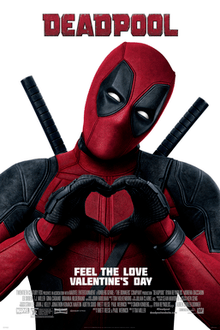
Well, the answer to both those question is indeed “Yes” but there’s a lot of history between the first “Yes” and the second. Liefeld did indeed co-create Deadpool with writer Fabien Nicieza but the character they created was impressive only in how much they managed to rip off in one sitting. So Deadpool, aka Wade Wilson is an “homage”…

…to DC’s Deathstroke aka Slade Wilson. See? It’s completely shameless. That makes it okay. They then added Spider-Man’s costume as imagined by a Taiwanese supermarket, threw in Wolverine’s healing factor because nineties, strapped a couple of guns on him and set him loose on the world. I’m not saying there weren’t the germs of a good character there, but they were just that, germs. Capable of only being seen with a microscope.

It was other writers that saw the potential in the character and added the elements that really made him click, most notably that he’s insane and that this insanity manifests in him actually being aware that he’s in a comic book. This is the version of the character that has won legions of fans the world over, including Canada.

One of said fans was actor Ryan Reynolds who is a huge Deadpool fan and was so gosh darned happy to be cast as the character in Wolverine Origin only to learn that this Deadpool would be a mute with his mouth sewn shut and THIS IS WHY WE DON’T MAKE WISHES ON CURSED MONKEY PAWS CHILDREN.

After Origins came out and did for Deadpool’s reputation what Superfriends did for Aquaman’s, Reynolds laboured with various collaborators to get his own vision of Deadpool to the big screen, with blackjack and hookers as God intended.

This movie almost died on the operating table multiple times. Consider:

  1. It’s about Deadpool, a character no one outside of comics fandom knew about unless they’d seen Origin in which case they hated him. Strike 1.
  2. Instead of being rebooted, he was still being played by the same actor. Strike 2.
  3. Said actor also made Green Lantern. Strike 3. Actually, let’s make that two strikes. Strike 4.
  4. This was going to be a Hard R rated movie full of tits and effin’ and jeffin’, likely to send dowagers across the land toppling in a epidemic of the vapours. Strike 5.

So, on paper at least, this movie was going to suck at baseball and Fox were considering scrapping the movie when somebody, some mischevious scamp, some mysterious rapscallion who shall remain forever nameless…

…leaked some test footage that saw the cry of “SHUT UP AND TAKE MY MONEY!” echo throughout the internet.

(more…)

The Adventures of Tintin: The Secret of the Unicorn (2011)

This review was requested by patron Purr Elise. If you’d like me to review a movie, please consider supporting my Patreon.

Hello all you beautiful readers! This is just a quick word to say thanks for your patience, thanks for all your congratulations and an especially big thank you for all your kind words and wishes for the wee Mump-stricken Mini Mouse (it actually turned out to not be mumps, just a viral infection so that was a relief). Anyway, at long last here is the Tintin review.

***

The popularity of Tintin fascinates me like a Victorian lady of mysterious background.

I don’t mean that I’m surprised that the Tintin books are so stupendously popular across the civilized world.

“Never heard of ‘em.”

“The devil you say?”

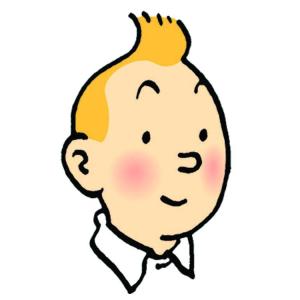
That’s just a case of the market rewarding good product. Hergé’s Tintin books are visually appealing, well-told adventures with humour that translates very well across cultures. It’s not surprising that they sell well. I mean the popularity of the character Tintin himself fascinates me, because he shouldn’t work as a protagonist. In my Asterix review I called Tintin “one of the most generic characters in all of fiction” and I stand by that. He doesn’t have a single defining trait that you can really hang your hat on. He has the traits a character needs to get reliably in and out of adventures; curiousity, bravery, quick wits and a willingness to help others, and that’s about it. He’s just Adventure Hero in its most pure and undiluted form with no distinct personality or identifying traits. And lest you think I consider him “generic” because he’s a white male, consider that he’s not even all that white or all that male. Although nominally Belgian, if I hadn’t mentioned it would you even know he was? Does he come across as particularly Belgian?

Other than that time he cut a bloody swathe across the Congo, I mean?

Nor is he particularly “male”. You could swap out Tintin for a female character and her dialogue and actions wouldn’t seem jarringly out of place. And then there’s that matter of his orientation. Despite all the fandom speculation about his relationship with Captain Haddock, I’d argue that there’s more textual evidence for Tintin being asexual, (of course, these were originally comics for children published in a conservative Catholic magazine so it’s not like you’d expect to see much of the hard fucking, regardless). Tintin is almost defiantly featureless. Even as a hero he’s distinctly middle-of-the-road. He’s a capable fighter, but he’s no Batman. An able detective, but hardly a Holmes. He’s a crack shot, but he uses a gun so infrequently you might read several books and never know. And then there’s his personal history. Who are his parents? Does he have any siblings? What paper does he, supposedly a journalist, work for?

“You ask a lot of questions, Mouse. People who ask questions often come to sticky ends, I hear.”

And it’s not like Hergé was just bad at characterisation, the stories are filled with memorable and distinct oddballs. So what gives? Why does Tintin have such appeal?

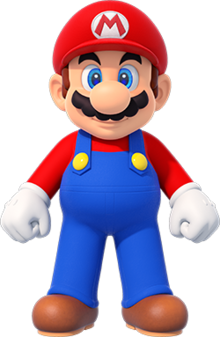
I have a theory. Do you know which character Tintin actually reminds me of more than any other?

Related image

I’d argue that Tintin, like Mario, is less a character in the conventional sense and more like a player avatar, a figure who provides an entry point into the story for the reader and is non-descript enough to allow them to be fully immersed in the adventure. I wouldn’t have thought it would work, but then I’m not the guy who’s sold 200 million copies worldwide so what do I know?

Image result for hergé

“Jacques merde, monsieur.”

Mais oui. Anyway, 200 million Tintin books have been sold worldwide and they’ve been read by people all over the globe, including five or six Americans. One of those Americans was Stephen Spielberg who first became aware of the series when reviews of Raiders of the Lost Ark kept comparing Indy to Tintin.

Hergé, luckily enough, was a big Spielberg fan and after his death his widow agreed to give Spielberg the movie rights. A live action version of Tintin went into pre-production in the early eighties, with Jack Nicholson being considered for Captain Haddock. Because it was Hollywood in the eighties and cocaine is a hell of a drug.

That version never got traction and the rights bounced back between Spielberg and the Hergé estate for a few decades until finally Spielberg committed to a CGI motion-capture film with effects work provided by Peter Jackson’s WETA workshop.

The movie finally came out in 2011. Got great reviews. Did excellent box office. And then…

That was kinda it. Call it the Avatar effect, where a movie manages to be a huge success while leaving next to no mark of the cultural landscape. Spielberg’s been talking about completing the trilogy but it’s been eight years now and I don’t think there’s any real interest or appetite for it. Call it the Avatar effect.

“You already used that.”

“It can be two things!”

(more…)

“Go fuck yourself, pretty boy.”

Like Unshaved Mouse? Please consider supporting my Patreon.

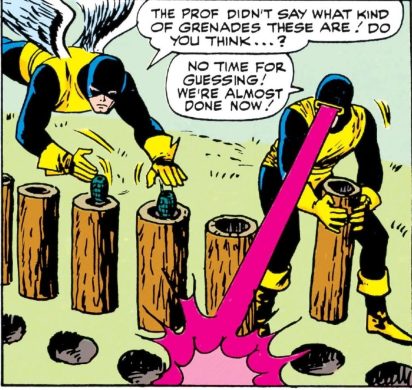
Before we get stuck in to today’s review I would like to make a few corrections. I’ve recently started reading the first original run of the X-Men from the sixties thanks to the Marvel app.The Marvel app allows you to read comics from across the company’s seventy year history and I’d recommend it!

If it wasn’t a glitchy piece of garbage.

But regardless, reading these old issues has made me realise that I had made some false assumptions about this period of the X-Men’s history which I’d now like to correct.

Firstly, I claimed that the Stan Lee/Jack Kirby run didn’t have any of the Civil Rights allegory that was so central to the franchise later on. I was wrong about that. It’s not nearly as pronounced as it would become but it is definitely there, with the mutants facing fear and prejudice from human beings from fairly early on.

Likewise, I also claimed that the much later decision to make Iceman gay was a blatant retcon that directly contradicted the character’s established history. And while we do definitely see Bobby dating women in these early issues…

Yeah. I can’t exactly say they pulled that out of thin air either.

Lastly, I implied that Professor Xavier was a dangerous lunatic putting minors in mortal peril as part of his deranged scheme to raise his own paramilitary force of super-powered child soldiers.

“Do not question Father, Warren! Or he shall put you in the box of chastisement!”

So let’s look at The Wolverine!

(more…)

“It’s a mutation. It’s a very groovy mutation.”

Like Unshaved Mouse? Please consider supporting my Patreon.

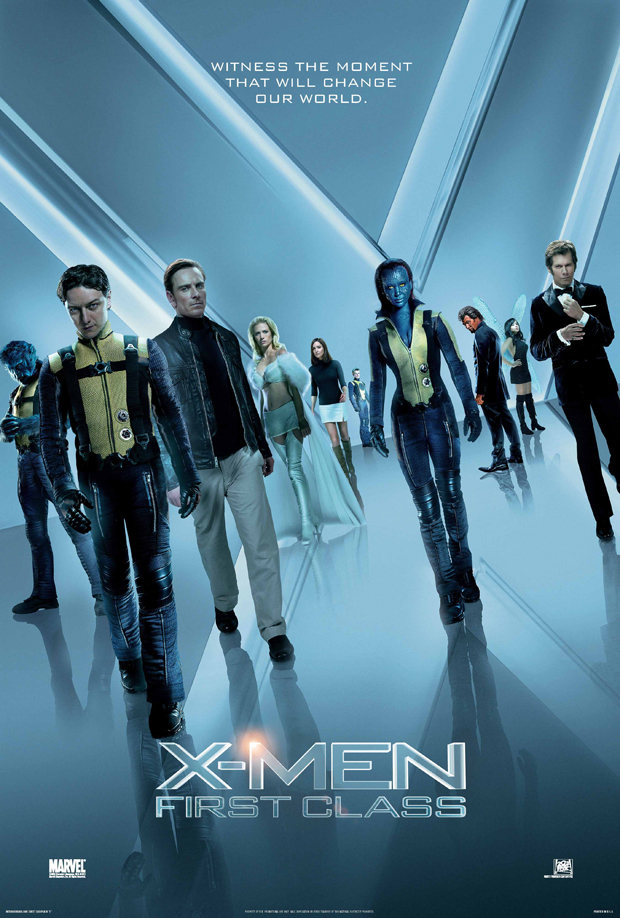
Much like an awesome party where someone suddenly showed up with a suitcase full of tainted MDMA, the X-Men film franchise got real bad, real fast. From the dizzying (well) highs of X2 the franchise had laid two massive turds in a row and was now in the unenviable position of having exactly as many bad films as good ones (also known as the Star Trek ratio). What was to be done?

“REBOOT!”

“Well hang on there, let’s not just go with the most obvious knee jerk response let’s think about the best way to erase past mistakes and inject new life into…”

“GRITTY REBOOT?”

“Okay, good, good, we’re thinking outside the box now, let’s just try a little harder…”

“Urrrrrrrrrr…”

“YOUNG AND SEXY REBOOT!”

“YES! HE CAN BE TAUGHT!”

Alright, all joking aside, the idea for a movie about the early days of Xavier’s School for Gifted Child Soldiers had been knocking about since the shooting of X2, and as an idea it’s pretty damn bad. Making a movie about the earliest adventures of the X-Men is like making a movie about John Lennon and focusing solely on his time in the Quarrymen. That was the worst part. Virtually all the good stuff came later. For a while. Then things got really, really awful.

In this analogy, Rob Liefeld is Yoko.

But First Class also shares much of its DNA with what was originally going to be the second instalment of the X-Men Origins spin off series, Magneto. After Wolverine Origins bombed so hard that the box office was glowing in the dark, the ideas for Magneto were bundled up and worked into First Class.

So how does this grab-bag of sewn together bad ideas and discarded movie bits work as a film?

Surprisingly well! Except when it doesn’t. It’s complicated.

(more…)

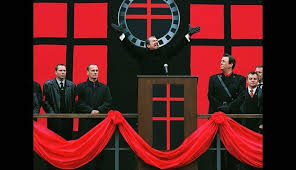
Norsefire: A Revised History

In the wake of a catastrophe as total as the rise of the Norsefire Party and its continuing control over most of the British mainland, it is only rational to consider the path that led us here and only human to look for someone to blame.

Obviously, the bulk of the blame for the atrocities of Norsefire must be laid at the feet of the party itself. Susan. Creedy. Almond. These names will forever live in infamy. But who laid the groundwork for their rise? Who, through inaction, cowardice, blindness or ignorance, set the stage for the coming horror? As the reader will soon come to realise, there is plenty of blame to go around and precious little praise.
The morning of the second Brexit referendum was greeted by the media and political establishment with a near unanimous sigh of relief. The British people, after three gruelling, terrifyingly uncertain years, had voted by a majority of 53% to reverse their 2016 decision to leave the European Union. The pro-Remain press was exultant, the pro-Brexit papers largely subdued and magnanimous in defeat. The prevailing sentiment, at least in Fleet Street and Whitehall, was that Britain had narrowly avoided economic and social catastrophe and that the entire affair was to be forgotten about as quickly as possible.
But outside London, far from the eyes and ears of nation’s rulers, there were others. These were the people who had fought tooth and nail during the 2016 referendum and who had experienced a joy verging on the ecstatic when, against all odds, they had secured a victory which (to them) had seemed miraculous. Incredible. Ordained by God. But God, apparently, was no match for Brussels.
The people had spoken. And Europe had said “Non”. Their joy now curdled into a fury as all-consuming as it was unforeseen.
To be fair, some of the complaints against the second referendum were legitimate. The choice put to the electorate was between three options:
1) A “no deal” Brexit which would have plunged the nation into immediate economic crisis and resulted in shortages of food and medicine.
2) The “soft Brexit” negotiated by Prime Minister Theresa May with the EU which was roundly despised by all sides of the debate.
3) Simply remaining in the EU.
It was pointed out that, by offering two “Brexit” choices to one “Remain” choice, the Brexit vote had been effectively split. This was a talking point often espoused by Susan in the early days of the Norsefire party. But, whatever its merits, Susan can hardly have been said to have been making the argument in good faith. While previous hard right parties had at least made a pretense towards democratic legitimacy, Norsefire had no time for such frippery. Democracy was a sham and Norsefire would not indulge it. The referendum was the final proof; if the elites (subtly and later blatantly implied to be Jewish, Muslim, people of colour, sexually non-conforming or Irish) did not care for a particular democratic result, they would simply reverse it. The secret hand that moved the world had revealed itself. Democracy itself must be discarded.
“Keep your votes” Susan famously said at the first formal meeting of the Norsefire Aesir. “Give us power.”

(more…)

“No resurrections this time.”

Like Unshaved Mouse? Please consider supporting my Patreon.

Every so often in superhero comics, a character will come along who is so ground-breakingly original, so instantly arresting, that they become an archetype. The obvious example is Superman. Supes shows up in 1938, and creates an entire genre. Every “Cape” type superhero follows in Superman’s footsteps, every “Cowl” has a bit of Batman (who, it must be said, got that bit from Zorro). Got an angsty teenage super-hero with real world problems the audience can relate to? Cut Stan Lee and Steve Ditko a check. When it comes to superheroes there are the archetypes, and the rest are copycats. And there’s absolutely nothing wrong with that. As I mentioned before, Black Panther, Daredevil and Moon Knight are all derived from Batman but manage to put a different enough spin on the archetype to be great characters in their own right.

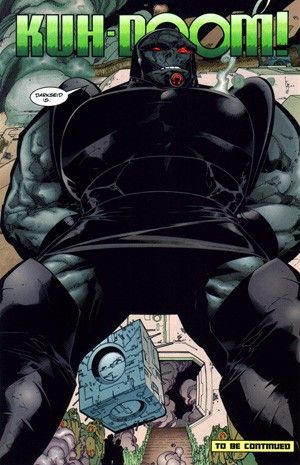
And the villains have their archetypes too. And no villain casts a longer shadow in comics than the master of Apokolips, DARKSEID.

Who is DARKSEID? Fool. DARKSEID is.

See?

Jack Kirby spent much of his career in comics attempting to create a new American mythology with all new pantheons of gods and heroes. In DARKSEID, he created his Satan, a brooding, pitiless tyrant who can never truly be defeated because he is evil itself. DARKSEID is an archetype, and you don’t have to look far to find his descendants across all comic book companies big and small.

Oh what? You think I’m not going to use this to plug my own work? You must be confusing me with someone who has shame.

The most blatant (and admitted) rip off of DARKSEID is, of course, Marvel’s Thanos. He’s also the most interesting.

Whereas DARKSEID cares for nothing but himself, Thanos is usually depicted as something of a romantic, devoted utterly to the woman of his dreams. Unfortunately, the woman in question is Death itself whom Thanos tries to woo by eradicating as many of the living as possible. There is a kind of primordial mythic scope to that which I love. I mean, imagine you get transported thousands of years into the past and you got adopted by a local tribe and they asked you to tell them one of the stories of your people. And, as you crouch around the campfire, you tell the tale of the great giant Thanos who so loved death herself that he killed half of everything that lived to woo her, and still she spurned him.

That’s the kind of story cavemen would tell each other. It feels ancient and epic. It’s deep shit man.

And of course, that is the element that the producers of the MCU decided to do away with. Now, I’m on record as predicting that the whole MCU project was going to come a cropper because it was building to a final confrontation with Movie!Thanos and that he was a boring character, an awful villain and a terrible lover.

So. Here we are.

“Quit stalling.”

Yes, I was obviously wrong (uuuuugh what is this sensation I don’t like it) but, in my defence, I do still think that Guardians of the Galaxy completely mishandled Thanos. I just didn’t reckon with the Russo Brothers, Christopher Markus and Stephen McFeely pulling out the mother of all salvage jobs. Cards on the table, Infinity War is by far my favourite Avengers movie and one of the best entries in the MCU thus far and, bizarrely, that’s mostly down to Thanos, the element I was most expecting to tank the entire endeavour.

How did they do it? Let’s take a look.

(more…)

Stan Lee (1922-2018)

Stan Lee is dead.

For any other creator, “comics legend” would seem grandiose. For Stan, it feels too small. Calling Stan Lee a comics legend feels like calling the Beatles “a popular music band”. Technically true, but truly a catastrophe of understatement.

Without question, the most famous creator to ever work in the medium, Stan Lee (née Lieber) had the quintessential American origin story. Born to impoverished Romanian Jewish refugees in a tough Manhattan neighbourhood, Lee had aspirations to be a novelist from an early age. As a teenager, he got a job as an office gopher at Timely comics where he’d meet his future collaborator, the legendary Jack Kirby. Stan found some outlet for his literary ambitions writing along with his more mundane duties, writing a Captain America prose story which saw the first use of Cap’s shield as a throwing weapon. After Pearl Harbour, Stan was drafted and set to work making propaganda. Many who only know Stan Lee as the “creator” of various comic book characters automatically assume that he was an artist, but the truth is his only professional artistic work was done during the war years, when he drew a poster of a smiling American G.I. with the logo “VD? NOT ME!”

Stan was almost court-martialed when he was discovered breaking into the post room to mail some scripts back to Timely. However, he was released when it was revealed that he was the writer for Captain America, such was the good captain’s importance to Army morale.

After the war, Stan continued to write for Timely, later Atlas, later still Marvel Comics. The forties and fifties were frustrating times for Stan as he was required to write simple, juvenile fare with one-dimensional characters and simplistic morality. By the early sixties, he was ready to leave the industry and his wife Joan convinced him to write the kind of story he would actually want to read as his swan song. The result was the Fantastic Four, and the Silver Age of comics was born.

In his excellent assessment of the life and legacy of Stan Lee, written a few years ago, Chris Simms described Stan Lee as being simultaneously the most over-rated and under-rated creators of all time. For many years Stan was regarded by the public at large as an auteur, a one man genius who singlehandedly created Spider-Man, Daredevil, the X-Men, Fantastic Four, Thor and on and on and on with little or no credit being given to his collaborators like Jack Kirby and Steve Ditko. This was flatly not the case but was understandable for a couple of reasons. Firstly, that Stan pioneered the “Marvel Method” of comic book production whereby the artist had considerably more discretion on the story than if they were simply following a script. Secondly, Stan Lee was the kind of instantly telegenic showman that any producer would kill to book whereas Kirby and Ditko were quiet reclusive men who shunned the spotlight. Guess who got the most attention?

Now, did Stan ever try to correct the record and give Ditko and Kirby the credit they were due? Sure. Did he do enough? Well…

This has led to something of a backlash in comic book circles, with die-hard Kirby and Ditko fans claiming that Stan was nothing but a talentless hack exploiting the skills of artists whose brushes he was not fit to wash. This, frankly, is bananas. Stan Lee may not have “created” Spider-Man et al in the way he was often credited with, but in a very real sense he “created” Marvel. Stan Lee created modern comic fandom as we know it. He created a distinct personality for Marvel comics (his own), and pulled back the curtain on the comics process for fans. He engaged with his readership, cracked jokes with them, he respected them and made them feel a part of something wonderful.

Then there was his writing style. Corny? Sure. Overblown at times? Most def. Severely satured in splendiferous superfluous sesquipedalian loquaciousness? Yah. But absolutely bursting with humour and energy and the simple, innocent joy of language. In the great Kirby/Lee/Ditko debate I take no sides and respect all three men. That Lee needed Kirby and Ditko is beyond dispute,. But if you honestly believe that Kirby and Ditko didn’t need Lee, there’s a very simple test.

Read anything that Kirby and Ditko did with Lee, and then read something that they did without him.

Without Lee, Spider-Man would most likely be an angry Randian ranting about how poor people just need a punch in the face to get motivated. And Kirby? Well, he would no question still be one of the all time comic greats thanks to his work for DC, but I’d be lying if I said any of that topped his runs on Fantastic Four or Thor.

If nothing else, there is no way Stan Lee would have let a character called “Glorious Godfrey” ever see the light of day.

Stan never achieved his dream of writing the Great American Novel. Instead, he re-defined the great American Art Form.

His legacy and impact on global culture is nothing short of staggering.

I was going to finish this obituary with an “Excelsior!” but that felt too obvious. So instead…hey, was that Stan Lee?

Yes. That was Stan Lee.

Putting the Hurt on: How Telltale broke Batman

Telltale games are no more.

Telltale was originally formed in 2004 by former disgruntled LucasArts employees to revive the flagging adventure genre. Over the next few years Telltale earned a reputation as the gold standard for excellent writing in computer games (excellence in how they treated their employees, not so much). But I don’t want to talk about how Telltale made great games or how they ground their employees into a fine snortable powder.  I want to talk about Batman, because I will never not find a way to talk about Batman, which you should keep in mind if you ever ask me to give a eulogy.

Telltale’s modus operandi was to take licenced properties (which is very common in the computer games industry) and to do genuinely interesting and original things with them (which, in the computer game industry, is as rare as catching a unicorn using a swear word). So when it was announced that Telltale were doing a Batman game? People. Were. Pumped.

Having been gifted a Nintendo Switch by my family last birthday I’ve finally played through both Batman games and I have feelings people. I have feelings that need to be expressed. So from here on in, spoilers abound.

(more…)

“You will suffer more pain than any other man can endure. But you will have your revenge.”

Like Unshaved Mouse? Please consider supporting my Patreon.

Wolverine. Logan. The Savage X-Man. The Adamantium Atavus. Ol Canuckle-head. The little hairy butthole.

Wolverine did not have the most auspicious start in comics, and you definitely wouldn’t have pegged him as destined to become (for a time at least) The Most Popular Superhero in all of Comics. Some superheroes arrive fully formed, some take a lot of work. Wolverine was originally introduced as a fairly bland and one-note adversary for the Incredible Hulk. From there he migrated to the new multinational X-Men team launched by Len Wein and Dave Cockrum and nobody really gave two shits about him. But, through a combination of refinement and luck, Wolverine eventually came to be the most popular character in Marvel’s stable. How did that happen? Timing. Wolverine was perfectly placed to ride the pop culture currents of not one, not two, but THREE decades.

During his time in the X-Men Wolverine’s character evolved into “Clint Eastwood but Superhero”.

“Do you feel lucky, bub?”

This allowed him to tap into the gritty anti-hero craze of the seventies.  Then, Frank Miller established that Wolverine had spent time in Japan and had trained as a ninja, allowing him to benefit from the martial arts craze of the eighties. And by the time the nineties rolled around, Wolverine was so popular that he had basically kickstarted the Dark Age of comics which of course allowed him to remain front and centre for another ten years.

Since 9/11, comics have swung back to wanting more morally pure superheroes like Captain America and Superman, and with Marvel heavily de-emphasising the X-Men in favour of the Inhumans…

LOVE US DAMN YOU!!

…the character is definitely less of a big deal than he once was. Make no mistake though, for a time, Logan was EVERYWHERE. They were organising events around him just so he could appear in every single book. He was like a lucky talisman to boost sales. He was the Crying Purple Gorilla of the Modern Age of Comics.

And I am pretty much totally sick of him.

Look, it’s not the character’s fault. He came by his popularity honestly. He’s got a killer design, a great power-set, a really intriguing backstory and some all time classic stories under his belt. But I was there at the height of Wolverine-mania and I have no desire to go back, especially when so many stories about him are just watching how much one man can be an asshole to the entire world and get away with it.

This is no longer fun.

And there is no excuse for a one-note take on Wolverine, who is honestly one of the more complex and layered heroes in comics. Like I say, this is a great character when done right. But he’s been done wrong. Oh baby. He been done wrong.

We do not speak of baboon- face Wolverine

One Wolverine story that most decidedly does not suck or have baboon faces is Origin, which is weird because everyone (including the writers) expected it to be a disaster. Wolverine was virtually unique among the major superheroes in that he didn’t have an origin story (the closest he had was Weapon X, another classic tale that showed how Logan got his Adamantium skeleton while still revealing nothing about who he was or where he came from). And that mystery was an essential part of his appeal. But when the first X-Men movie was in the works, Marvel realised that Fox would probably end up giving Wolverine an origin, and it would probably suck, so they might as well create their own and hope that it sucked a little less.

“The day the wolverines ate my family, I vowed to defeat them by becoming one of them.”

The result was Origin, a slow-burning, beautifully illustrated mystery set in 19th century Canada that did the seemingly impossible job of giving Wolverine an origin that was surprising and memorable while being appropriate for the character. So job done, right? Marvel had given Wolverine his origin, and it was excellent, and there was no way Hollywood could mess it up, right?

This is a device known as a rhetorical question.

(more…)