Comics

“You think me strange? Good strange, or bad strange?”

First dates are essentially scams. You sit down to dinner with someone you don’t know, and try to pretend that you’re someone else. Someone charming, and succesful, and definitely not into doing weird things with fish. No sir. Not you. The second and third dates are more or less the same. But by the time the fourth date rolls around you need to start being honest. That’s where you take your date on a long walk and say “Look. I really like you. I like where this is going. But if we’re going to have something together I’m going to have to tell you just how much of a freak I actually am.”
“This. This is me. This is what I get up to.”

“This. This is me. This is what I get up to.”

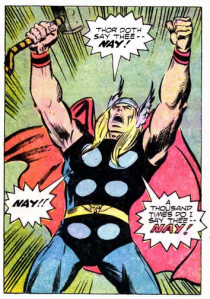
The Marvel Cinematic Universe has essentially been a long, meticulous romancing of the mainstream. Thor is the part of the relationship where Marvel finally says “I’m glad you like the snarky businessman in the robot suit and the scientist who turns into a green monster. Now here’s where we get nuts.” As a title, The Mighty Thor has always been an unapologetically melodramatic, ridiculous, camp, epic, nonsensical, glorious, mess. In short, it is one of the purest comic books ever written. It’s huge men with long flowing hair and fabulous capes yelling cod-Shakespearean insults at each other and not understanding the difference between “thee” and “thou”.
It, quite simply, does not give a fuck.
But first, a little history.
The character of Thor was created early in the first millennium by the Germanic peoples inhabiting what is now Scandinavia. Some stuff happened. Then, in 1962, the character was introduced into the Marvel universe by Stan Lee, Larry Lieber and Jack Kirby in the pages of Tales to Astonish. There’s a little bit of confusion as to who actually came up with the idea (aside from the ancient Vikings, I mean). Stan Lee claims that the idea came to him when he realised that the only way to create a character stronger than the Hulk would be to make him a god, and that rather than go with the more well-known Greek or Roman deities he decided to delve into Norse mythology.
Meanwhile, Cúchulainn sits on the damn shelf.

Meanwhile, Cúchulainn sits on the damn shelf.

Jack Kirby, on the other hand, claims that he created the character because of his love of Norse mythology and to be honest, I think the evidence is on Kirby’s side. Kirby had already created not one but two versions of Thor for DC in the golden age, so he clearly had an interest in the character. Not only that, but “comic book characters as post-industrial mythology” was kind of Jack Kirby’s whole deal. Thor’s sales have never exactly set the world on fire but this is nonetheless a character with some serious cred. There are many who consider Lee and Kirby’s run on the character the finest work of either men in the sixties (damn high praise) and he’s also had some celebrated runs, none greater than Walt Simonson’s glorious, batshit insane epic in the eighties.
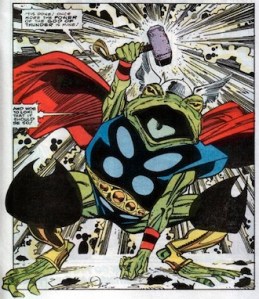
This is normally the part of the review where I would say “we do not speak of the Frog of Thunder” but even this was AWESOME.

This is normally the part of the review where I would say “we do not speak of the Frog of Thunder” but even this was AWESOME.

He’s also been a  very consistent presence in the Marvel universe, showing up in almost everyone else’s books at one time or another and, if there’s a team of Avengers that Thor’s not on, it’s probably only because he’s dead again. He’s always been one of the company’s “faces”, one of their most visible and iconic characters. And yet, Thor has always struggled outside of comics. His live action appearances before 2011 was just a single episode of The Incredible Hulk, and he hasn’t headlined his own cartoon series since the frickin’ sixties (compare that to Spider-man, who gets a new cartoon show every time Stan Lee sneezes). Same Raimi originally pitched a Thor movie to Marvel all the way back in 1990 and from there it was dropped, picked up again, briefly re-conceived as a TV show starring Tyler Mane before bouncing to Sony, then to Paramount before finally arriving back at Marvel. The decision to nominate Kenneth Branagh to direct was surprising but also kind of inspired. Branagh is famous as an interpreter of Shakespeare for the masses, and Stan Lee is of course one of the biggest Shakespeare fanboys out there.
He made Falstaff into a superhero, people.

He made Falstaff into a superhero, people.

Branagh was the perfect candidate to make the overblown, melodramatic bluster of Thor work for a mainstream audience.  Just, for the love of God, don’t subject yourself to his commentary on the DVD.
"The director's an ass."

“The director’s an ass.”

Marvel knew going in that compared to Iron Man and Hulk, this movie was the real test. This is where they’d learn if a mainstream audience could really accept all the comic book nuttiness they were about to bring. It was time to see if this relationship had legs.
Blucatt ad

(more…)

“Like all guilty men, you try to rewrite your history…”

I’m still feeling my way around reviewing these Marvel movies. I was thinking that, when I review the first movie featuring a hero I’ll give you some history and overview of that specific character, and when the time comes to review the sequel I might take a look at their rogues gallery and what their villains say about that particular hero. Problem: Iron Man has quite possibly the worst rogues gallery of any major superhero. Notoriously so. Legendarily so. If you were to make a chart of superheroes by the quality of their rogues’ gallery it would be Batman at the top, closely followed by Spider-man and the Fantastic Four, then respectable mid-carders like Captain America and Superman and then waaaaaaaaaaaay way down at the bottom Iron Man and Wonder Woman are hanging out and getting sloshed on Ouzo. Yeah, yeah, no such thing as bad characters, only bad writers. True as far as it goes. Any villain, no matter how lame, can be made compelling with the right scribe working on them.
Some, however, take more heavy lifting than others.

Some, admittedly, take more heavy lifting than others.

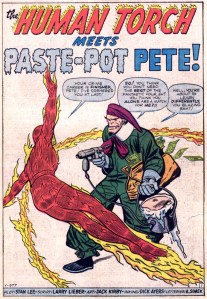
But Iron Man’s villains probably require more heavy lifting than probably any other hero’s. Even Tony’s arch-nemesis, The Mandarin, while certainly a cool villain, doesn’t really have that much that sets him apart from similar bad guys like Doctor Doom or Baron Mordo other than the fact that in his early days he looked like Mickey Rooney in Breakfast at Tiffany’s.

Oh sixties.

Oh sixties.

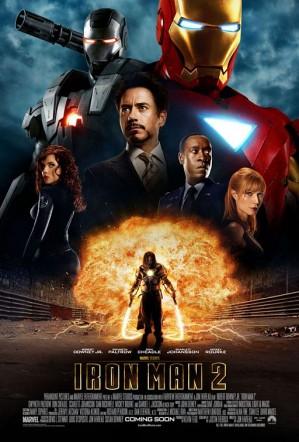
As for the rest, they were mostly just an interchangeable series of commies in robot armour and rival industrialists. I mean hell, when the time came to find a villain for Iron Man 2, they actually just slapped two of them together. Ivan Vanko is a mishmash of Whiplash and the Crimson Dynamo. And nobody even cared. Think about that for a minute. Can you imagine if they did a Batman movie and they just merged the characters of Joker and the Penguin into one guy and called him the Penker? My God, the fans would skin them alive and hang their carcasses in the online forums as a warning to others. That’s how lame Iron Man’s rogues gallery is. Not even Iron Man fans care enough to get mad about changes to the source material.  But, did it work? Were they able to reverse Iron Man’s traditionally awful luck with villains? Will our hero triumph over the Penker? Let’s find out! Right after these messages.

AD

(more…)

“I don’t want to control it. I want to get rid of it.”

When comic fans and writers talk about a character’s “status quo” they don’t  just mean the existing state of affairs in that character’s book. The Status Quo is sort of like the Platonic Ideal of a comic character, the version of the character that everyone thinks of when they hear the character’s name. For example, Spider-man’s status quo is:
  • Spider-man is mild-mannered Peter Parker, who gained incredible spider powers when he was bitten by a radioactive spider during a science presentation.
  • He wears a red and blue spider-suit.
  • He lives in Queens with his elderly Aunt May.
  • His love interest is Mary Jane Watson.
  • He works as a freelance photographer for the Daily Bugle, where his boss is J. Jonah Jameson.
  • His life is a never ending parade of misery.
Now, you could pick up any comic featuring Spider-man since 1962 and the odds are good that at least one of those bullet points is not true for the book you’re currently reading (except the last one. That never changes). Spider-man might be dating Gwen Stacy. He might be working as a science teacher. He might not be Peter Parker at all, but instead Ben Reilly or Miles Morales or Otto Octavius or Miguel O’Hara. Aunt May might be dead again. But still, that’s the default version of the character. Whenever the comic goes off the rails, chances are they’ll return Spider-man to his roots and have him back at the Daily Bugle, back with Mary Jane, living with Aunt May. Sooner or later, he will return to status quo like he’s attached to it with a bungee cord.
The Hulk, who debuted a few months prior to Spider-man in 1962 also has a default version; When he gets angry, scientist Bruce Banner turns into the Hulk, a massive rampaging green giant with the mental capacity of a three year old who destroys everything in his path. He is a man of few words, and those words are “Hulk” and “Smash”.
This is the version of the character that everyone is familiar with, and to comic fans he’s known as “Savage Hulk”. What’s interesting about the Hulk is that I can think of very few superheroes who spend less time “at status quo” than the Hulk. And the reason for that is, there’s not really that much you can do with Savage Hulk. Savage Hulk is less a character than an event that other characters react to. He’s like Godzilla. What kind of story can you do with Godzilla? What journey can he go on? Is he going to adopt an orphaned child and raise him as his ward? No. He’s going to stomp on buildings and go “SKRONK!”. Is he going to discover a shocking secret about his past that throws everything he though he knew about himself into doubt? No. He’s going to stomp on buildings and go “SKRONK!”. Is he going to serve as an allegory for the horrors of nuclear war? Yes. While he stomps on buildings and goes “SKRONK!”
That’s basically Hulk’s problem (just swap out “SKRONK” for “HULK SMASH”) and probably why the character often had trouble maintaining a series of his own while still being a very popular guest character in the books of other superheroes. Writers have gotten around this by staying as far away from the Savage Hulk status quo as they can. Often the Hulk will be made more intelligent, or a different side of Banner’s personality will emerge as a new Hulk. Or Banner and the Hulk will merge personalities. Or they’ll swap personalities. Or the writers will huff paint and do something really stupid.
We do not speak of the time Hulk tried to bang his cousin.

We do not speak of the time Hulk tried to bang his cousin.

 Despite that, Savage Hulk retains a near total grip on the general public’s perception of the character, especially since all the non-comic depictions of the (the seventies TV Show, the two cartoon series and both movies) have been pure Savage Hulk. And the reason for that is that Savage Hulk, despite the limitations he brings from a story-telling point of view, is a fanastic concept because he is so universal. Everyone can relate to the Hulk. When we see Bruce Banner finally lose his temper and transform into a huge, rampaging monster it’s cathartic as all hell because on some level we all wish we could do that.
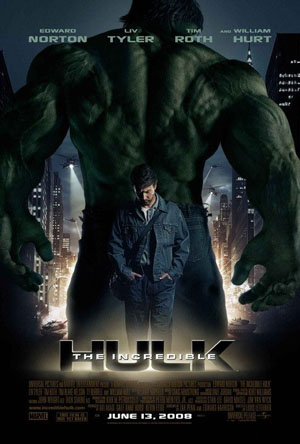
Following the success of Iron Man it was time for the difficult second album and Hulk seemed an obvious candidate for the studio’s sophomore effort. He was, without question, the highest profile character in Marvel’s stable that they owned the movie rights to, thanks to the success of the Bill Bixby series. But there was a problem, looming over the production like a big hulking…hulk.
 p32133_p_v8_aa
In a way, it would have been easier if Ang Lee’s 2003 Hulk: A Mediation on Moss has been an out and out flop. That way Marvel could have simply said “Don’t worry, we’ll fix it! The grownups are in charge now!” and completely ignore it other than to work a few sarcastic swipes at it into to the script. But here’s the thing, Lee’s Hulk might not have been popular with comic fans but it actually did fairly decently at the box office and got not a little critical love. Personally, I appreciate what Lee was going for and think that there are some beautiful moments and really good performances but yeah, the movie is kind of a snooze fest. It has its fans though, putting Marvel in a bit of a tricky position. Should they embrace Lee’s Hulk and make their version a straight up sequel, or start again with a new origin story that firmly established their Hulk as a new, separate beast?  In the end, they did neither.

(more…)

“That’s how Dad did it. That’s how America does it. And it’s worked out pretty well so far.”

Iron Man is one of the five most recognisable superheroes in the world today and that is goddamn insane.
From pretty much the early forties to the turn of the millennium there were only two comic book characters that everyone knew, even if they’d never picked up a comic in their lives and that was the two DC icons; Batman and Superman. And despite the fact that Marvel’s actual comics had consistently outsold DC’s for most of their history, no one Marvel character had ever managed to achieve that kind of cultural purchase with maybe the possible exception of Spider-man. And if you were to pick a character that would upend that status quo and be the first Marvel hero to achieve that kind of instant, iconic, worldwide recognition…you probably wouldn’t pick Iron Man.
Here’s the thing, for most of its existence, the Avengers was not the cool kids’ table at Marvel. The Avengers comic book was a support network for characters who needed exposure and whose solo titles weren’t doing so hot (if they even had their own books). Know why Spider-man and Wolverine didn’t join the Avengers until 2005? Because their books were selling just fine thank you very much. So the fact that Iron Man is a founding member of the Avengers and has been with the team for almost its entire history should tell you a lot. This guy was kind of a B-lister, with more than his fair share of knocks from the bad story stick.
We do not speak of teen Tony.

We do not speak of teen Tony.

So how did this character go from perennial also-ran to the most recognised face of the Marvel Cinematic Universe? Sit down and I’ll learn ya.
The initial idea for Iron Man was Stan Lee’s because he is a massive, massive troll and we love him for it.
See, it was the sixties and Stan knew that most of his readers were college kids who hated the military and capitalism and bathing so he thought it would be an interesting challenge to sell them on a character that embodied all those traits.
iron man 160 b

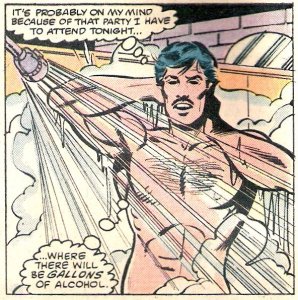
He’s a capitalist arms-dealer in the shower. Can you handle that, hippies?

I don’t think this was really a political thing (Stan seems to be a fairly middle of the road Democrat) but simply came from Stan’s unwavering ability to find niches that hadn’t been filled yet. The great Jack Kirby did the cover and so created the character’s first visual design, and then the actual first issue that Iron Man appeared in was written by Stan’s brother Larry Lieber and drawn by Don Heck. Iron Man therefore had four daddies, which probably explains why he’s trying to form a gay polyamorous harem with Steve Rogers, Rhodey and Sam Wilson in every second piece of fan fiction featuring the character.
So why was this character chosen to launch Marvel’s massively ambitious experiment in inter-movie continuity porn? Basically, he got it by default.
By the mid 2000s Marvel had sold the movie rights to most of their major properties and were starting to feel like they were getting screwed. Sony had the rights to Spider-man, Fox had X-Men, Daredevil and Fantastic Four which combined represented a huge swathe of some of Marvels’ most iconic heroes, villains and supporting characters. When the time came for Marvel to set up their own movie studio they realised they were basically left with the Avengers who, at the time at least, were very much second stringers. It was deemed that the time was not right for another Captain America movie (too soon, we needed time to heal) and the corpse of Ang Lee’s Hulk was still warm. That left…Thor? Well, Thor’s great and all but…
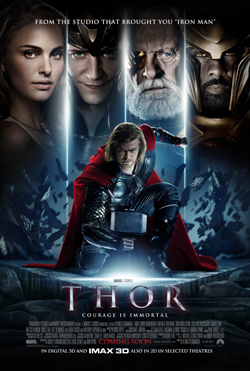
Thor
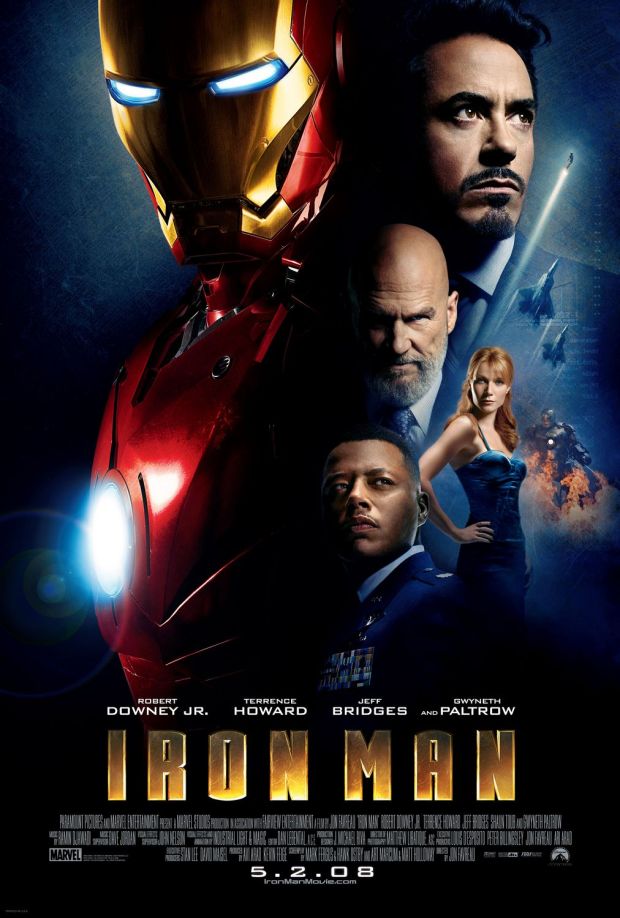
Yeah, so they went with Iron Man. How did it turn out? Weeeelllllll it was one of the most critically acclaimed movies of the year, completed Robert Downey Junior’s journey from washed up recovering drug addict to A-list superstar and created the future in which we now live. But does it hold up as a movie? Let’s take a look.

(more…)

DuckTales the Movie: Treasure of the Lost Lamp (1990)

(DISCLAIMER: This blog is not for profit. All images and footage used below are property of their respective companies unless stated otherwise. I do not claim ownership of this material. New to the blog? Start at the start with Snow White.)

Eighties kids have a tendency to loudly proclaim that the cartoons they grew up with, your Masters of the Universe, your Transformers, your My Little Ponies were so much better than the cartoons made for kids today.

Why do they say that? Lead. Lead was in everything back then. Paint, exhaust fumes, you name it. And lead is well known to have a harmful effect on intelligence. Couple this with the radiation from the hole in the ozone layer frying their brains and the still lingering effects of Chernobyl and quite frankly it’s a wonder that your typical eighties kid can tied their own shoes, much less attempt an objective assessment of the state of made for TV animation then and now. God love them, they’ve suffered through so much. Now, I am an eighties kid by birth but I converted to the church of 21st century animation a looooong time ago so let me put this one to bed. No. Cartoons were not better in the eighties than they are now. Know how I know? Because cartoons have never been as good as they are now. Pretty much every cartoon made for television from the nineteen fifties to late eighties was garbage. Sure, there were talented people working on them, but they were people, not gods, and there simply was no way to contend with the forces of microscopic budgets, corporate mandated toy-schilling and stiflingly conservative broadcast standards and create something consistently excellent or even good. Yes, occasionally an episode of Transformers might get through that still holds up today but these were very, very rare exceptions (I’m talking exclusively about American TV animation I should hasten to add). Contrast that with today: American animation studios are consistently making shows for kids that are better than most of the stuff they make for adults. Pearl from Steven Universe is one of the most fascinating, layered, tragically flawed characters on television right now, period. Gravity Falls is unfolding an ongoing mystery plot with a skill and intelligence that The X-Files and Lost could only dream about. Adventure Time takes Twin Peaks to school with its pure surrealism. Eighties, I hate to break it to you, even our remakes of your shows are a tenfold improvement. You have Transformers? We have Transformers: Prime. You have Thundercats? We have Thundercats 2011. You have My Little Pony? We have Friendship is Magic.  

GIJoeHeader

You have an army?

We have a HULK.

We have a HULK.

So what happened? Whence came this huge leap forward in quality?

Where else?

Where else?


So some time in the late eighties Disney rolled up their sleeves and decided it was time to show these chumps who the big dog was. Disney began producing high quality TV animation intended for syndication. Critics scoffed, saying that this was an expensive folly that would bring the Disney company into bankruptcy.
"Ha. Motherfuckers never learn."

“Ha. Motherfuckers never learn.”

Instead, these shows completely revolutionised the American animation TV landscape. Soon after, Warner Bros also got in on the act with Tiny Toons, Animaniacs and Batman the Animated Series to name a few. In essence, all modern TV animation owes its existence to Disney’s gamble in the late eighties, and in particular to their most popular show; DuckTales.
The massive popularity of DuckTales is something that’s always confused me a little. I mean sure, I watched the show and I liked it fine, but what is it about this story about three duck kids and their miserly grunkle that made it to 100 episodes? Couple of things. Firstly, simply by dint of the fact that it wasn’t terrible it was already head and shoulders above pretty much any other cartoon on the air. But I think another key to its longevity was the fact that it’s quite similar to Doctor Who. One of the reasons that show is older than Jesus is because, aside from the fact that they can recast the main actor, the Doctor has a machine that lets him go anywhere in space or time. There is literally no end to the stories you can tell with that basic premise. And in a way, Scrooge McDuck also has a TARDIS. He’s so wealthy that there’s literally nowhere on Earth he can’t afford to go. Want to do a story on the bottom of the ocean? Scrooge buys a submarine. Want to take him to space? Scrooge buys a spaceship. Want to do a story with dinosaurs? Scrooge gets his personal mad scientist to build him a time machine. Want Scrooge to meet Satan? He has a heart attack and goes to hell because it is easier for a camel to pass through the eye of a needle than for a rich man to see heaven. Again, you will never run out of stories.
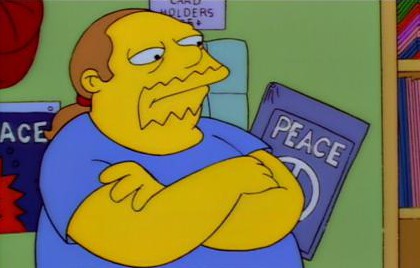
Another thing to consider is that DuckTales was based on a hugely popular comic book, by the legendary Carl Barks. Although Donald Duck was of course created by Walt Disney, it was Barks who did more than anyone else to flesh out everyone’s favourite psychotic waterfowl, creating Duckburg and a whole host of supporting characters; Scrooge McDuck, Gyro Gearloose, Flintheart Glomgold, Magica deSpell (it truly was a duck blur). The Duck comics have never really been huge in the States where the comics scene is of course SUPERHEROES SUPERHEROES SUPERHEROES NOW UNTIL THE END OF TIME but they’re very popular in what I like to call “Asterix country”, Europe, Latin America and Asia. In fact, I even tried to get my hands on a copy of The Many Lives of Scrooge McDuck for this review from my local comic shop. This lead to the following exchange. I swear to almighty God I am not making this up.
Comic_Book_Guy_WEE

“Sorry, it’s sold out. We sold the last copy to Killian Murphy.”

“…Killian Murphy? The actor?”

“…Killian Murphy? The actor?”

“The Scarecrow himself, yes. He came in here and asked specifically for anything pertaining for Scrooge McDuck. Who were we to refuse him?”

“The Scarecrow himself, yes. He came in here and asked specifically for anything pertaining to Scrooge McDuck. And who were we to refuse him?”

I SWEAR TO GOD.
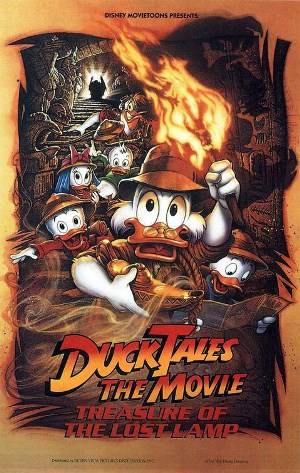
But yes, Donald Duck comics are a big effing deal in many parts of the world. Personally though, I always found the entire concept of DuckTales the TV show to be really depressing. Think about it. Hewey, Dewey and Louie get sent to live with their uncle, Donald. I don’t think we ever found out why in the show, but there is no good reason that happens. And then, after losing their parents, Donald passes them off on his uncle, a miserly one-percenter who clearly cares more about his money than his nephews while Donald is off in the navy. Those three little ducks must be carting around a metric ton of abandonment issues. The reason why Donald isn’t present in the series apart from a few cameos is that Roy Disney didn’t want any of Uncle Walt’s classic characters getting TV stink on ’em. Instead, the character of Launchpad was created to fill the role Donald usually did in the comics. Today’s movie, Treasure of the Lost Lamp, came out in 1990 and served as a season finale of shorts to the beloved series. Did DuckTales go out with a bang or a whimper? Let’s take a look.

The Fantastic Four (1994)

(DISCLAIMER: This blog is not for profit. All images and footage used below are property of their respective companies unless stated otherwise. I do not claim ownership of this material. New to the blog? Start at the start with Snow White.)

Sometimes, a movie comes along that is so notorious, so terrible, so gosh-fucked appalling that no one reviewer may safely tackle it alone. To that end, Unshaved Mouse has teamed up with the illustrious NewtCave and Erik Copper to review the never-released Roger Corman-produced superhero movie; The Fantastic Four. 

UM: Hi guys and welcome to Unshaved Mouse. Make yourselves comfortable, don’t touch the continents. They bite.

“Hssssssssssss!”


UM: So. Erik. Newt. What the fuck did we just watch?

EC: I was under the impression that we were just witness to the birth of the anti-christ of comic book movies.

NC: Pretty much. This thing gets my vote for “Worst Marvel Film.” Including Howard the Duck.

UM: Was it though? I mean, can’t we grade of a curve? There were extenuating circumstances here.

NC: Fair point, furry one. But let me put it this way. Elektra? Released in theatres. Hulk? Released in theatres. Howard the Duck? For some reason, still released in theatres. Roger Corman’s Fantastic Four? Kept secret. Kept safe.

EC: Gandalf’s wise words were still not strong enough to keep this mess off of the internet, though. Because as we all know, technology is the MOST powerful of the dark arts.

UM: Speaking of dark arts, Erik, aren’t you supposed to be dead? 

EC: Huh?

UM: Yeah. I totally fed you to a shark at the end of our last review.

EC: Oh yeah. Dick! That was the single most tortorous experience of my life! I had to chew my way out of the shark’s stomach! I still have nightmares! I

UM: Heh.

EC: It’s not funny!

UM: It was funny to everyone who wasn’t you. Which, y’know, was the entire human race. Needs of the many, Erik.

NC: Should I step outside while you two work through your prior history?

UM: Nah baby, we cool. Let’s get started. Newt, as our resident Marvel buff, what can you tell us about the good ol’ Fantastic Four?

NC: Probably more than is either necessary or interesting. But, limiting myself to relevant information, the Fantastic Four have often been referred to as “Marvel’s First Family.” and that’s only because that’s exactly what they are. Back in the ancient past of 1961, Stan Lee took it upon himself to create a team of superheroes like none that had come before. Instead of a bunch of square-jawed Super Friends, he elected to make a team that was more like a family trying to make the best of a bad situation.

UM: With Square Jaws.

EC: Rather rubbery and slightly malleable jaws, too.

NC: When The Fantastic Four #1 hit newsstands, they didn’t even have costumes or secret identities. They were all about breaking the norms of what people had come to expect from the superhero genre.

UM: I think the FF was really the big bang of the modern Marvel universe. So many of the characters and concepts that make up that world got their start in the pages of Fantastic Four. Doctor Doom, Black Panther, the Inhumans, the Skrulls, the Kree, the list just goes on and on.

NC: Exactly. The company wasn’t even called “Marvel” before the FF came along. Anything before that was published under the not-so-timeless brand of “Timely.”

EC: It was incredible how fast the superhero boom took off. Most of the heroes we know today didn’t even start off as anything other than one-off stories that were just too popular to remain that way. Spider-Man? He first appeared in Amazing Fantasy #15. Thor? He was first introduced in Journey into Mystery. Iron Man? Tales of Suspense. These heroes didn’t start off timeless, but they slowly captured our hearts. The Fantastic Four is no different.

UM: Which is kind of why it’s so sickening how Marvel are treating this title now, basically sweeping it under the rug because they can’t get the movie rights back from Fox.

NC: Well, to be fair, they’re doing that with ALL the properties they haven’t regained the movie rights to, which seems a bit like dirty pool to me.

UM: I dunno dude. The day I see Wolverine and Spidey at the dole office maybe. It seems like the Fantastic Four have gotten it worse than anyone.

EC: I don’t even know who’s side to be on. Fox is being a child not willing to share its toy, and Marvel is being a child throwing a tantrum because they want that toy SO VERY BAD.

NC: It’s a crappy situation, and I think everybody involved lost. I mean, I know we’re supposed to reserve judgement on Fant-four-stic… but yeah. ‘Nuff said, am I right?

UM: I will lay good money on it being the best Fantastic Four film ever.

EC: I will lay good money on it being an attempt. And that’s about all I can give it.

NC: I will lay good money on the team being rebooted with the SAME DAMN STORY enough times that the filmmakers all throw their hands in the air and finally adapt Neil Gaiman’s Marvel 1602.

UM: Ah, the Fantastick Four!

EC: Yes, and Peter Parquagh! (GOD WHY?!)

UM: Okay, but what about today’s movie? If I may?

NC: Go right ahead.

UM: I thank ye. So, back before Marvel decided to stop letting other companies fuck up their characters and just do it right themselves, they sold the movie rights to the Fantastic Four for a song and a wink to a German producer named Bernd Eichinger. Eichinger had a limited amount of time to make the movie or else the rights would revert to Marvel so, when he couldn’t get the money in time, he teamed up with legendary cheapo movie-maker Roger Corman to make a superhero movie in three weeks with $1 million. The resulting…thing…was never meant to be seen by human eyes. It was solely created to allow the company to hold on to the movie rights. Thankfully, such shady business practices would never occur in Hollywood today.
Ha! It's a joke! Because it happens all the damn time!

Now how did that get there?

UM: So, just how bad can it be?

(more…)
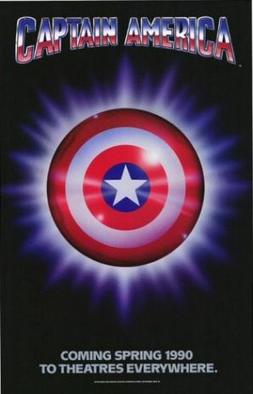
Asterix in Britain (1986)

(DISCLAIMER: This blog is not for profit. All images and footage used below are property of their respective companies unless stated otherwise. I do not claim ownership of this material. New to the blog? Start at the start with Snow White.)

TINTIN CAN SUCK A DICK!

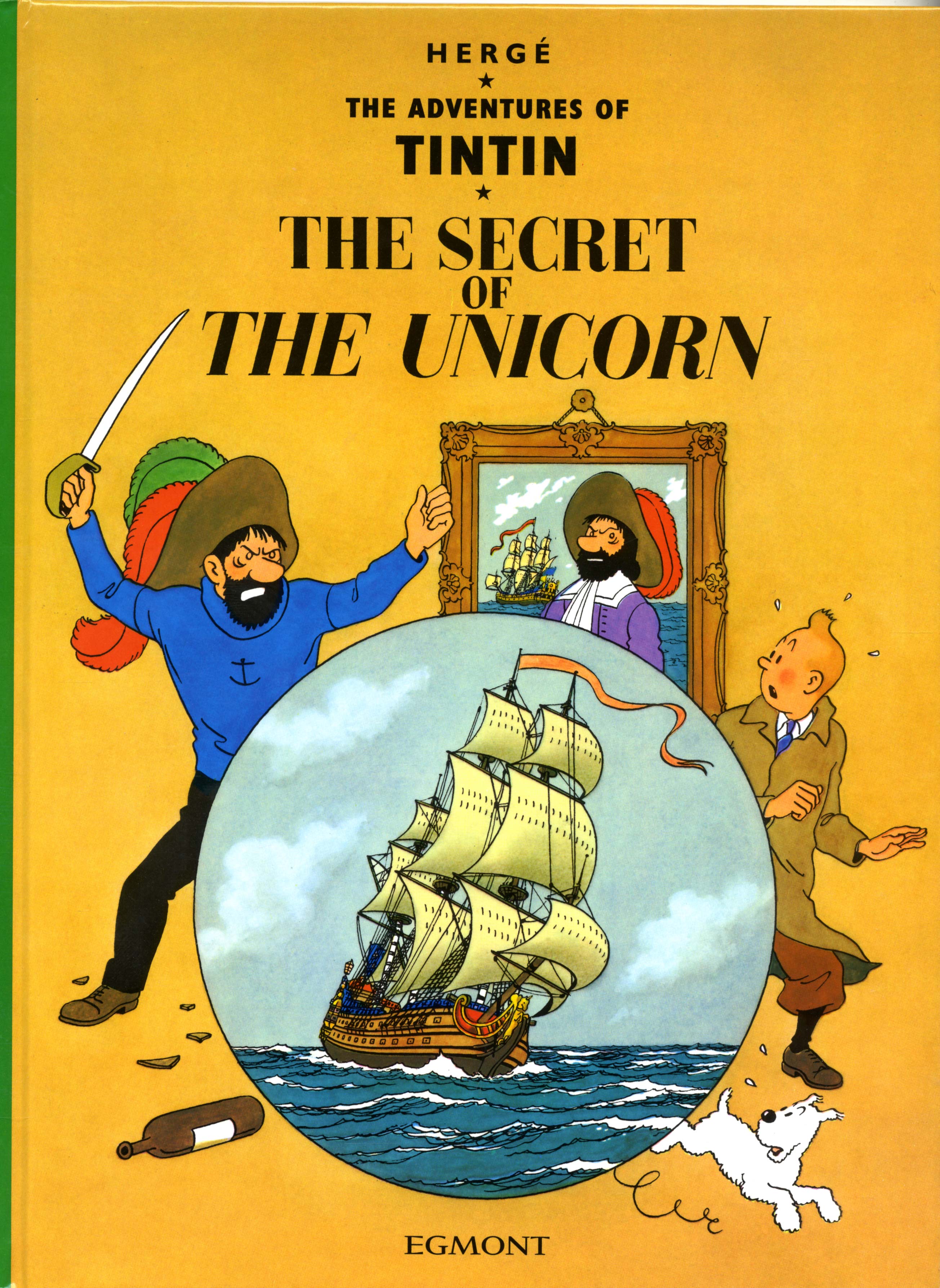
Sorry! Sorry! That was uncalled for. I apologise unreservedly. Old habits just die hard. See, when I was growing up, every public library in Ireland had a well stocked collection of both Asterix books and Tintin books (because this is the greatest damn country on Earth). And pretty much every playground was divided, Sharks and Jets style, between Tintin fans and those of us who felt that the tales of a group of superpowered Celtic warriors battling against the most powerful empire on earth might be a tad more compelling than the adventures of LITERALLY THE MOST GENERIC MAIN CHARACTER IN ALL OF FICTION…

Sorry. Sorry. Sorry.

I apologise to all fans of Tintin and Hergé and his wonderfully crisp ligne claire style.  Some wars are still being fought long after they say “We have peace.”

I acually love the Tintin books, I just wish Herge had wised up and renamed them "The Adventures of Captain Haddock and his ginger sober companion."

I acually love the Tintin books, I just wish Herge had wised up and renamed them “The Adventures of Captain Haddock and his ginger sober companion.”

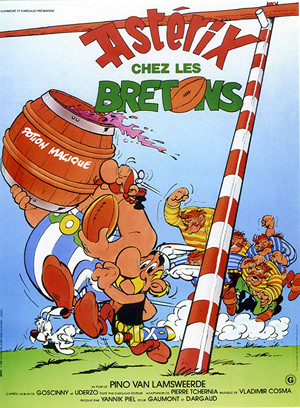
Okay. So. Asterix. When I announced two weeks ago that I’d be reviewing an Asterix movie the response was predictable mix of “Yay Asterix!” from my non-American readers and a big “who’s the blonde midget Viking?” from my American readers so now’s probably a good time to explain who and what Asterix is.

Hey, I know which side my blog is buttered.

Hey, I know which side my blog is buttered.

So Asterix is a Franco-Belgian comic that is still going since its first appearence in 1959 but was originally created by René Goscinny and Albert Uderzo. The setup is this; it’s 50 BC and Rome has conquered all of Gaul (modern day France). All? Not quite. A tiny village of indomitable Gauls stills holds out against the Roman invaders thanks to a magic potion brewed by their druid, Getafix, that gives the Gauls superhuman strength. The heroes of these stories are Asterix, the blonde short-arse, and his buddy Obelix, who was dropped in a cauldron of magic potion as a baby and so is just superhumanly strong all the time (why the Gauls don’t just do this with all their babies is never explained). The main gag is not entirely dissimilar to that of the Flintstones, the past and present are pretty much exactly the same. The series draws its humour from many sources; slapstick, political satire, puns (as in, every single character’s name is some kind of play on words) and especially from affectionate riffs on European cultural stereotypes (the Goths are always punctual, the Greeks have flat noses like figures on urns etc). Despite the basic premise being “French people make fun of foreigners” the series is hugely popular, not only in its native France but everywhere in Europe from Malta to Finland.

"I literally could not give two fucks about...holy shit, ASTERIX!?"

“I literally could not give two fucks about…holy shit, ASTERIX!? I love that guy!”

Asterix is also huge in Latin America, India and even China. How popular is he? Goscinny and Uderzo have sold more books worldwide than any other French author. That’s right. More than Victor Hugo. More than Balzac. More than Dumas.

Well, its not like DArtagnan has his own theme park, does he?

Well, D’Artagnan doesn’t have his own theme park, does he?

So why are these books so popular? Well firstly, they’re just really, really good. Seriously. The artwork is beautiful, the character designs are Disney good in terms of being expressive, appealing and versatile and they’re goddamn hilarious. Also, the Asterix series have been blessed with legendarily good translators (the series has been adapted into over 100 languages). And yet Asterix has never really found much purchase in the United States. Why is that? Culture gap, partially. A joke about how Corsicans are constantly swearing vendetta would probably prompt some head-scratching on the other side of the Atlantic.

"Youve made an enemy today, Mouse."

“You’ve made an enemy today, Mouse.”

"Oh get in line."

“Oh, get in line.”

But mostly I think it was just due to bad timing. To get a foothold in the United States comic market Asterix would have needed to become popular in the fifties, before the Silver Age began and American comics just became SUPER HEROES SUPER HEROES SUPER HEROES SUPER HEROES FROM NOW UNTIL THE END OF TIME. The distributors for European comics just weren’t there and so Asterix missed his shot unfortunately. Oh well. Fear not Americans. It may be tricky for you to track down copies of his books but you can still watch one of the many fine animated adaptations of Asterix books that have been made over the years HAHAHAHAHAHAAAAAAAAAAHAHAAAAAA …*collapses into a weeping pile.*

Oh Christ.

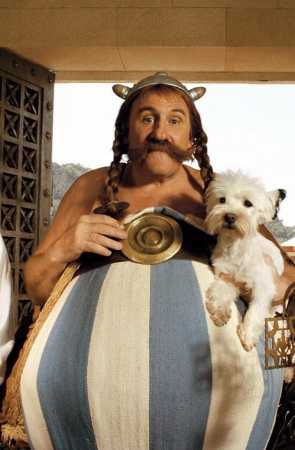
There have been nine (NINE!) animated Asterix movies and four live-action movies (all starring Gerard Depardieu as Obelix).

My God man! You were in JEAN DE FLORETTE.

My God man. You were in Jean De Florette.

Now, I haven’t seen all of the animated movies. But I have seen a LOT of them. And they can be broken down into four categories;

1) The ones with terrible animation,

2) The ones with terrible voice acting,

3) The ones with terrible animation and voice acting.

4) The ones with ALL THREE.

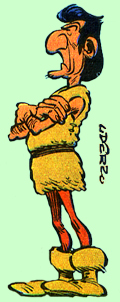
But honestly I think that even with top-notch talent in every area it would be damn hard to make a good Asterix movie that still resembled the original in any meaningful way. The comedy just doesn’t…work when you translate it to film. The timing is always off, it just doesn’t translate well (which is ironic, since Asterix is one of the most successful examples of translating comedy in human history). Today’s movie is Asterix in Britain, an adaptation of the eighth Asterix book and one of my personal favourites, firstly because it’s just classic Asterix and also because it included this guy:

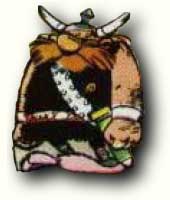
His name is Overoptimistix. He was the only Irish character to ever appear in these books. He had one line, that included the word "Begorrah". And I loved him.

His name is O’veroptimistix. He was the only Irish character to ever appear in these books. He had one line, that included the word “Begorrah”. And I loved him.

So. Will the movie be a one, a two, a three or a four? Let’s find out.

(more…)
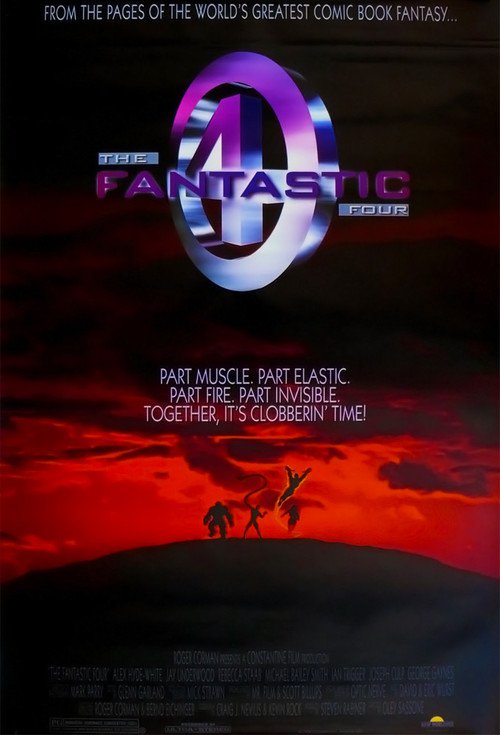
The Avengers: Age of Ultron (spoiler free review)

Okay, before we get into the actual movie let’s talk about The Ball. As in, “When are Marvel going to drop the ball?” We are now on the eleventh film set in the shared Marvel Cinematic Universe and the studio has yet to release a flick that was worse than the perfectly acceptable Incredible Hulk or the shaggy-but-still-fun Iron Man 2. And Marvel fans are starting to get paranoid. Sooner or later Marvel’s going to drop the ball, law of averages. One of these movies will eventually flop, and when it does, all we can do is hope that it doesn’t flop so badly that it puts the whole MCU project in jeopardy. And with a movie like Age of Ultron, the stakes are even higher. If Ant-Man tanks, Marvel will walk it off.

If Age of Ultron flops, or even performs below expectations, it could bring the whole thing crashing down. So, as a huge fan of these movies, I was more than a little nervous sitting down to last night’s screening and I knew I was not alone. Looking in the eyes of my fellow Marvel cinephiles I saw the same fear that would take the heart of me. Because one day, Marvel will release a colossal turd.

(more…)

Random posts combine!

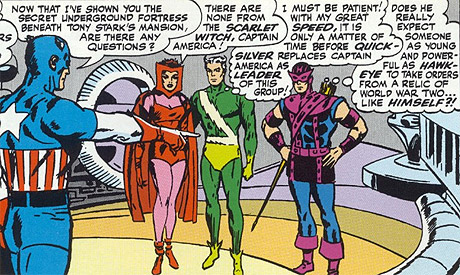
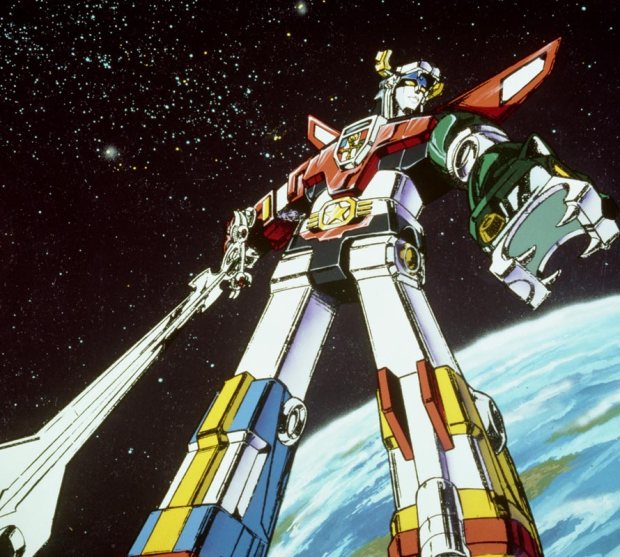
Every so often a collection of things I need to say, otherwise too bitty to put in individual posts, will combine together to form a Voltron-esque combined post. This is such a day.
Okay, first order of business…
The Hangman’s Daughter
As many of you know, I finished serialising my novel, The Hangman’s Daughter last month. Big thanks to all of you who read, commented and gave advice and encouragement. I especially want to give a shout out to Sr. Honkengoose and maxy44 who I’m pretty sure commented on every single chapter and gave me tons of good notes. Legends both. Many of you have been asking when you might be seeing more and after giving it a lot of thought I’ve decided that I’m going to start posting chapters of the second novel in the series, The Devil’s Heir.
However, there is a catch.
As I’ve already mentioned before, The Devil’s Heir is not actually finished yet. Worse, it’s still the sequel to an older draft of The Hangman’s Daughter (one where, amongst other things, Mariana was a dude). This means each chapter will have to be revised and edited so that it’s consistent with the most recent draft of HD, and I don’t have time to do that right now because my life has become an endless looping reel that goes worktoddlerblogplaycomicsleeeeeepworktoddlerblogplaycomicsleeeeeeep. So my brother Eamonn has very, very kindly agreed to edit the Devil’s Heir to get it more in line with the story so far and occasionally make changes that he feels improve the material.
“…and then they all died and the rugged, dashing, one-eyed Mouse was king of the universe. The End.”

“…and then they all died and the rugged, dashing, one-eyed Mouse was king of the universe. The End.”

So, starting soonish, there will be a new chapter of the Devil’s Heir going up every month. Yes. Month.
“Hey I gotta life too, y’know.”

“Hey I gotta life too, y’know.”

Moving on!
Age of Ultron
So Avengers 2 is being released in Europe around a week earlier than it is in the States due to…I dunno, the collapse of American hegemony or whatever. Being the massive nerds we are, my wife and I will be at the midnight screening on 23 April and I’ll be posting a review later in the day. This won’t be a full length Unshaved Mouse style review, obviously. Just a few paragraphs about my thoughts on the film and whether I thought it was any cop or not. You know…a review like actual critics do.
And lastly, revenge 
So regular readers will know that I recently learned my entire life has been a charade orchestrated by the diabolical warlock known to the world as Walter Elias Disney. You may recall I swore a blood oath of vengeance against Disney, promising to review the very, very worst movie that bears his name. And I need your help to do it. Sound off in the comments, what is the very, very, worst Disney movie that has ever been released and help me stick it to Walt but good.
See you all on the 14th of May for How I Learned to Stop Worrying and Train my Dragon. Mouse out.

Patron Saints of America (Mouse wrote a movie! Apparently…)

Back in college I wrote a play called Patron Saints of America which holds a unique position as being the oldest thing I’ve written for stage that I can now look back on and not shudder. In hindsight, while I don’t think it’s perfect by any stretch, it’s probably the first thing that I wrote that reads like something I’d write today. It’s where I think I found my voice, I guess you could say (prior to this I was just making exaggerated hand gestures). Now, that play was directed by two friends of mine Finbarr Doyle and Jimmy McNulty.
He is probably the only person on earth who hates The Wire for that very reason.

Who is probably the only person on earth who hates The Wire.

Not too long ago, Jimmy and another friend of mine, Keith Thompsons (who played the character of Bruce onstage) arrived at my house to tell me that, as a birthday present to me, they actually went and turned Patron Saints of America into a short film that they managed to shoot in one night. I know, right? Happy birthday, here is a motion picture.
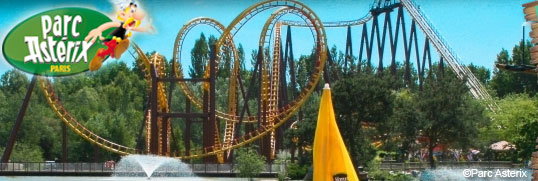
Now, while I’m obviously biased, I think this turned out kind of amazing. The movie’s below, let me know what you think.