“Oh Mouse! You are a FOOL!”

Oh goodie. Another episode where Steven eats ice-cream.

Except Ronaldo because, oh my giddy Aunt, FUCK RONALDO.


“Oh Mouse! You are a FOOL!”

Oh goodie. Another episode where Steven eats ice-cream.

Except Ronaldo because, oh my giddy Aunt, FUCK RONALDO.

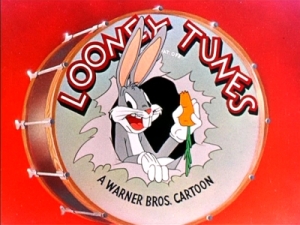
My friends, the time has come for me to tell you the tale of the last Looney Tune, and I feel less like an animation blogger and more like Red from the Shawshank Redemption. I wish I could tell you that the Looney Tunes fought the good fight. That they brought Chuck Jones and Mel Blanc and Michael Maltese back for one last time and went out with a short that could stand up with the very best of them. That when that really was all folks, those folks knew that something wonderful had gone out on a high. But animation is no fairy tale.

Well, except when it is. Look, we’re getting off track.
What animation buffs call “The Dark Age of Animation” lasted from around the late fifties to the early to mid eighties (meaning the next few reviews will most likely just be me making sounds of pain and distress) and I don’t want to exaggerate it so I’ll just say that this was the worst period in human history where everything good and pure in the world was killed and hung from a gibbet. It was around this time that TV finally came into its own and starting muscling onto cinema’s turf in a big way. Facing increasing financial pressure, cinemas had to cut back on luxuries like lavishly animated cartoon shorts of pure loveliness. Cartoons in this period had to find a new home on television, where the appetite was there (boy, was it ever) but the budgets simply weren’t. The animation studios that survived in this era did so by being cheap, lean and mean. This was the age of Hanna Barbera and Filmation. A wolf age. An axe age. Hell, even the Disney movies in this era looked dog rough.

And what of the Looney Tunes? Bugs Bunny very wisely sat the sixties out after False Hare in 1964. I don’t actually know why Warners decided to retire the character after that, but in my mind he went to Italy to pursue a celebrated career as a director of independent film. It’s what he deserved.
The Looney Tunes/Merry Melodies in this decade, at least after Chuck Jones was fired in 1963 for moonlighting on UPA’s Gay-Puree, focused more on Roadrunner and Wile E. Coyote as well as Speedy Gonzales, who was now paired with Daffy Duck, thereby capitalising on the well known and established hatred between mice and…

“…”

“…”

“…”

“…”

“Begone, pond-fiend. My kind have protected this land from you feathered scum for generations.”

“Your numbers grow few, furred one. One day you shall let your guard down, and the webbed ones shall rule over all as was foretold in the prophecy!”

“Some day, mayhap. BUT NOT THIS DAY!”
Sorry, where was I? Oh yeah. So Warners were still using a lot of the classic Looney Tunes characters but they weren’t resting on their laurels (they were doing something else on their laurels but certainly not resting). As well as featuring older established characters, the new shorts studio under the management of Alex Lovy* introduced such timeless household names to the Looney Tunes Pantheon as Merlin Mouse, Bunny and Claude and Cool Cat. Truly a who’s who of “Huh? Who?” It was like the Itchy and Scratchy and Friends Hour except that Disgruntled Goat did not have his moments. I don’t want to rip on Lovy or Robert McKimson (who directed this short) because they were both seasoned professionals who worked on some great cartoons over the years. But at the same time, COOL CAT IS THE GODDAMNED DEVIL AND SHOULD BE ON FIRE ALWAYS.

The enemy. I shall teach you to hate him.
Now, my problem is not that Cool Cat is utterly, completely, instantly dated as a concept and a character. The fact that he is a sixties pop culture creation to his very bones does not mean that he could not be a good character in his own right. Know who else is utterly a product of his time?

He’s literally a parody of a Clark Gable character from a thirties movie called It Happened One Night mixed with Groucho Marx.
But there’s a key difference. Bugs comes by it honestly, he is a product of thirties pop culture created by young men who consumed, enjoyed and understood that pop culture. And Cool Cat was created by a bunch of old men desperately trying to relate to the youth of the time in the most cynical and pandering way possible.
Also, his cartoons suck and are not funny.
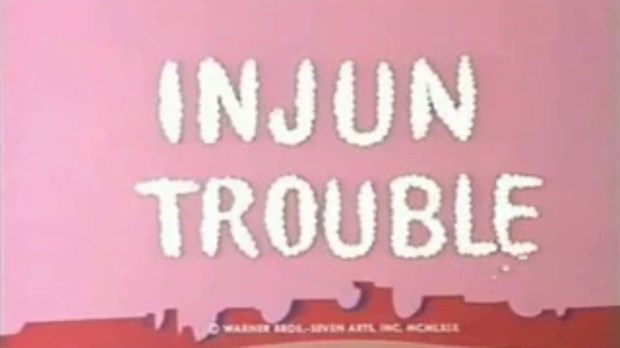
So let’s take a look at Injun Trouble.


“Who?”

“That’s them.”
Townshend adapted the story into a musical, the rights of which got picked up by Warner Bros, which had just swallowed Turner Feature Animation whole, along with most of its animators. One of those animators was a likely lad named Brad Bird, who has worked on some animation in his time and is generally understood to know what he’s doing. Bird was put in charge of adapting Townshend’s musical, which he did by making it…not a musical. ‘Kay. Regardless, when it was screened for test audiences the response was absolutely ecstatic. Unfortunately, Warner Bros had neglected to prepare any kind of marketing campaign for the movie because Quest for Camelot had tanked so badly the year before. This had convinced the excecs that audiences weren’t going to go see animated films that weren’t made by Disney.

Goddamit Warners. Quest for Camelot didn’t tank because audiences wouldn’t take a punt on non-Disney animation. Quest for Camelot tanked because sometimes God pays attention. So of course, released into theatres with zero publicity The Iron Giant crashed harder than a giant alien death machine falling from the sky. In the years since, it has become one of the most critically beloved animated American films of the 1990s. Does it live up to the hype? Let’s take a look.
Jiminy Christmas, hard to believe we’re already halfway through Shortstember. I’ve honestly been having a blast with these reviews and I hope you have too. The downside of focusing on only one short per decade, though, is that we’re now halfway through the twentieth century and I’ve already missed two chances to talk about Bugs Frickin’ Bunny and the Goddamn Looney Tunes and that shit ain’t right. The Looney Tunes series of shorts and its sister series Merry Melodies began in 1930 and 1931 respectively, as a naked attempt by Warner Bros to ride Disney’s coattails in the wake of Mickey Mouse and the Silly Symphonies Shorts. In case you’re wondering, the different between Looney Tunes and Merry Melodies originally was that the ‘Tunes were in black and white and the Melodies were in colour (kinda, Disney had Technicolour exclusively at the time) and certain characters were exclusive to each (Porky Pig and Bugs Bunny both started out in a Merry Melody despite now being the quintessential Looney Tune characters). By the forties though, both series were being done in colour and characters were freely crossing over from one series to the other and there wasn’t really any appreciable difference between the two. So, if I say “Looney Tunes” from here on in, just assume I’m talking about a Warners Brothers short that could have been either a Looney Tune or a Merry Melody. Makes no difference. They’re all beautiful, man.


Dammit Francine, if I mean you I’ll use your name. Sit down.

*CLICK*

“Whoah. Wait a minute, you make MONEY off this?!”

“No hablo Ingles.”

“Hello decadent Westerners!”
It’s a rapidly emerging market, guys. We gotta move with the times. Anyway, review of movie.
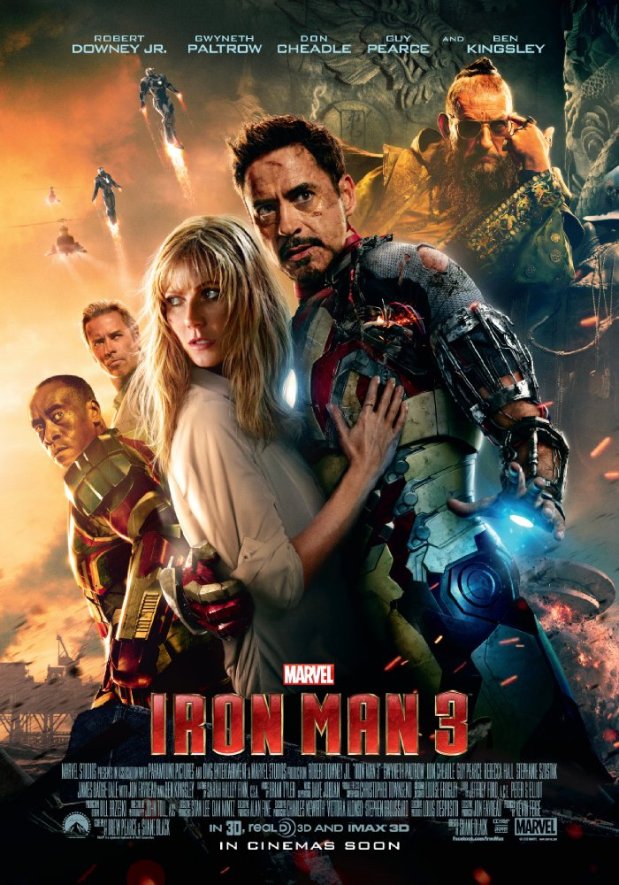
Play the game with the Iron Man movies though and you always get the same result: “Evil rich guy becomes slightly richer.” These movies are actually kinda low-stakes when compared to other entries in the canon. That’s not a criticism. The Iron Man trilogy has always been less interested in “Can Iron Man save the day?” than “Can Tony Stark save his life from being immolated by the army of obsessions, personal demons and character flaws he has jumping around in the moshpit that is his brain?” That’s fine. Refreshing even. I just think it might help explain why this movie is had possibly the least impact on the larger Marvel universe than any other instalment. I’ve been wracking my brain to think of any elements that were introduced in this movie that got carried over into the larger MCU. Extremis? Aldridge Killian? AIM? Never so much as mentioned again in any of the movies (I am waaaay behind on Agents of SHIELD so apologies if I missed anything that showed up there). The Mandarin? Mentioned in a one-shot to keep the fanboys happy. Iron Patriot? Back as War Machine by Age of Ultron. Tony Stark destroying all his suits and giving up being Iron Man? Did not exactly take. This movie is practically in quarantine, and it’s kind of weird that it’s such a dead end at the front because it is deeply wedded to what’s gone on before, to the point that it’s kinda historic in a way I don’t think people necesarrily realise.
See, this is the fourth movie to feature Robert Downey Junior’s Tony Stark, and that’s pretty exceptional. Christopher Reeves played Superman across four movies of course, but by the third installment that series was running on negative continuity. There is no character arc for Superman from Superman I to Quest for Peace, they are just four movies with Christopher Reeves playing Superman. Again, with the Burton/Schumacher Batman movies you get a little bit of character continuity (tiny references to events in previous movies mostly), but by the time you have George Clooney resplendent in Bat-nipples it’s clear that Batman has drifted considerably from Tim Burton’s original vision. This is different. We have now had four movies featuring Tony Stark where the creators are clearly intent on holding to a consistent vision for the character. Iron Man 3 is one of the most polarising movies in the canon for reasons I will get into, but personally it’s my favourite of the trilogy because it asks a question that had never really been asked in a superhero movie before now. What happens to the superhero after he saves the world?

Look.

Look at this.

Here is some more.

Do you see?

Do you see?

Look at this.

Do you understand?

Do you?

DO YOU?!
Seven years is not that long a time. Seven years ago we got the first of the Star Trek reboot movies, Michael Jackson died and Jay Z and Alicia Keyes released Empire State of Mind. Not exactly ancient history. Go back and watch Steamboat Willie. Now watch Music Land released by Disney a mere seven years later.

So what the hell, right? How did we get from that to that in a mere seven years?

“Hi. Mr Timm? Unshaved Mouse. Huge fan. Go fuck a stoat.”

“My friends call me Scottish Play.”
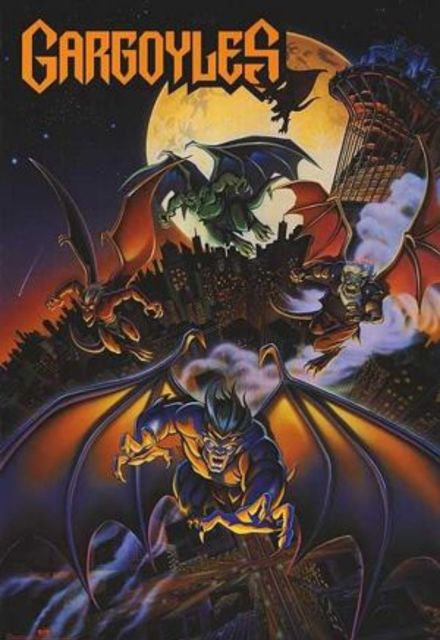
Anyway, flashforward a thousand years and David Xanatos (Jonathan Frakes), billionaire playboy philanthropist has Castle Wyvern disassembled, and rebuilt, brick by brick, at the top of his Manhattan skyscraper just to see what would happen. The spell is broken and Goliath and his surviving clan of gargoyles become the defenders of New York from all threats both human and supernatural.
I went back and forth over just how to approach this review. At first, I was going to do a general review of the whole series before remembering that there were 65 GODDAMN episodes.

And that’s not even counting the third season that never happened and which we shall never speak of again.
I then thought about reviewing one of the story arcs like “The World Tour” or “City of Stone”. But “City of Stone” focuses more on two side characters than the main Gargoyles and also there’s a lot of flashback stuff that would get really confusing and probably be boring to read. And as for “Word Tour”, I had (again) forgotten that Goliath and Eliza were putzing around on that damn boat for nineteen episodes so once again…

So finally, with the deadline approaching like an oncoming walrus on a bobsled I decide to just review one single episode which I think encapsulates the things that I most loved about this show.

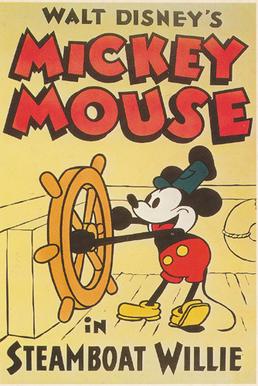
When talking about Steamboat Willie it’s almost more important to talk about what it’s not than what it is, as so many myths have sprung up about these seven minutes of animation. So, for the record Steamboat Willie is not:
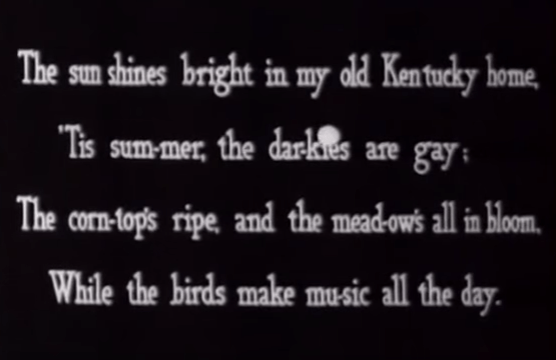
Willie’s real claim to fame is a little less sexy. It’s the first cartoon to use fully integrated sound and visuals, where the sound and pictures were recorded on the same film. There were other cartoons that used sound and music before this, but that basically involved playing the movie and the music on two separate tracks and hoping that they’d keep in sync like Wizard of Oz and Dark Side of the Moon. It doesn’t sound like it should make a huge difference but it really does. Take a look at Inkwell’s My Old Kentucky Home from 1926.

Wow, second sentence. You are so out of date in so many different ways that its almost impressive.
Now take a look at Steamboat Willie.


“Mr Disney? There’s someone here to see you?”

“What? But the world thinks I’ve been dead since the sixties, who even knows I still work here?”

“He said his name was Mr Chernabog?”

“CRAP. Tell him I can’t see him.”

“I would sir, but I’m not really here. I’m just a hallucination caused by your black-magic addled mind.”

“DISSSSSSSNEY I WOULD HAVE WORDSSSS WITH THEE.”

“Cherny! C-Train! As the world Cherns! How the fuck are you?”

“YOU HAVE BETRAYED ME, SSSSSORCEROR. AND THE LORD OF BALD MOUNTAIN KNOWSSS NOT OF MERCY.”

“Whoah! Hey! Walter Elias Disney is a man of his word, so how ’bout you settle down and tell me what this is all about?”

“WE HAD A PACT, YOU AND I. I GAVE YOU IMMORTALITY AND IN RETURN YOU AGREED TO CREATE FOR ME AN ARMY OF THE MOSSSSSST DEPRAVED, HELLISSSSSH CREATURESSSS EVER TO WALK THE EARTH.”

“What? Furries?”

“I MUSSST HAVE MORE FURRIESSS! MORE! THE CROP GROWSSS THIN! THE CROPS GROWSSSS THIN!”

“What are you talking about? I made Robin Hood! That should have kept you balls deep in furries for years!”

“THAT WASSSS OVER FORTY YEARSSSSS AGO!”

“Fuck. My. Ass. Yikes, sorry. My bad. I’ll get right on that.”

“BE WARNED! IF I DO NOT RECEIVE AN ARMY OF FURRIESSSS BEYOND RECKONING I SHALL EAT…”

“Eat my soul, yeah, got it. Laurie? Get on the phone to the boys in animation and tell them we need a movie so chock full of furry bait that half the country will be yiffing by Christmas.”

“I already told you, I’m not really here!”

“Just do it woman!”
***
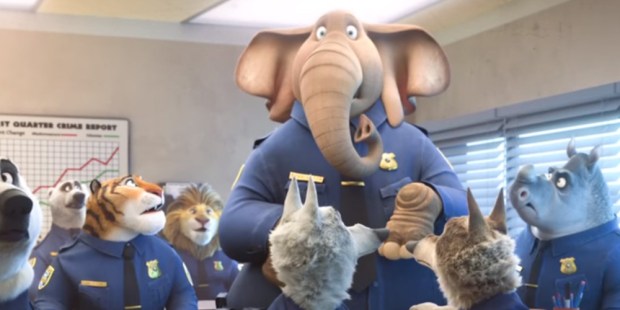
Some blogs might tell you that Zootopia/Zootropolis came about as part of an ongoing effort by Disney to address the more troubling and regressive aspects of their legacy and take on a pressing real world issue. But only I will tell you the truth, namely that it was part of a desperate ploy to pay off a faustian bargain made by immortal warlock Walt Disney by creating an army of furries for a demonic lord of evil. That is why, after all, the people come to Unshaved Mouse.
But first of all, let’s talk about the elephant in the room.

Sit down, Francine.
Namely, why the hell is this called “Zootropolis” on my side of the pond? Well, Disney haven’t actually given a reason for the name change. One possibility of course is that, as sophisticated Europeans, we would know that any utopia, even a zootopia, is impossible in an imperfect world and refuse to see the movie purely on the grounds of philosophical consistency. Also, there’s the fact that a zoo called “Zootopia” is opening in Denmark soon and maybe Disney’s lawyers didn’t want the hassle. Who can say?
Anyway, if you read this blog you’re probably aware that Disney have been on one hell of a hot streak for the last few years, producing movies that are both critically lauded and hugely successful. That in and of itself is nothing new, the Disney canon goes through peaks and troughs and this is just one peak of many. But one thing that is different this time around is that Disney is more and more comfortable making movies that actually have something relevant to say about the world. I once called Walt Disney the most apolitical American artist of the twentieth century. His movies were beautiful, funny and charming but they almost never had any kind of political message or agenda beyond the most broad “be nice, everybody” kind of sentiment. They were meant to appeal to the broadest audience possible in their own time which in practice meant that they were very conservative and very, very white.
Fast forward to today. In my review of Princess and the Frog I called the current era of the Disney canon “The Redemption Era”. Unlike the Lost Era that preceded it, where Disney was trying to definitively break with the past, new types of story, new styles, new animation techniques, the Redemption Era wears its classic influences with pride. It loves and respects the canon. But it is not blind to its flaws, either. The Redemption Era is a Beatles fan who has every album but never forgets that John Lennon beat his wife. It doesn’t simply ignore the more troubling aspects of the Disney canon but makes challenging them a core part of its identity, whether that’s doing a Restoration Era fairy tale with an all-minority main cast or a Renaissance Era musical where the princess doesn’t marry a prince at the end. Zootopia takes this to a new level. Regular commenter Kahnamanko called it the most topical and socially relevant movie Disney has made since their World War 2 propaganda shorts and I think that’s probably true. But does that make it a good movie? Does the simple fact that it’s willing to tackle such a pressing and hot-button issue as racism make it a classic that will stand the test of time? Let me answer that question with a question, do you feel a burning desire to watch any of the following movies; Brokeback Mountain, Philadelphia, Crash or Lions for Lambs? Yeah, didn’t think so. Movies that directly address the great issues of the day are often very worthy endeavours but they rarely end up being particularly beloved movies. Does Zootopia defy the odds? Let’s take a look.
***
(more…)