Hola, amigos.
Back again, am I. And off we go to watch and dissect another filmic wonder.
“What are we seeing today, Frog?”, you might screech.
Well…

///////////////////////////// Spoiler : No it isn’t.
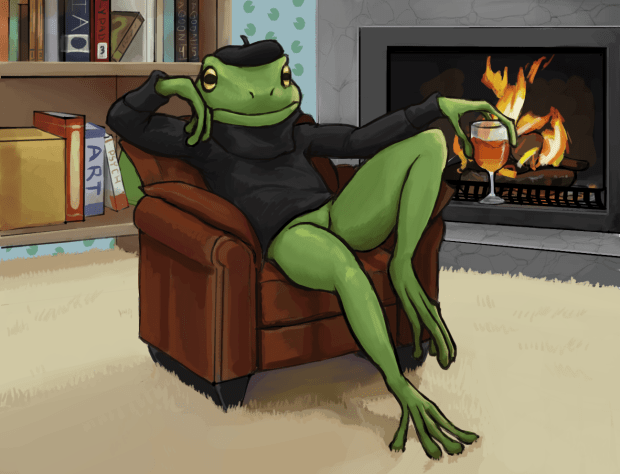
Hola, amigos.
Back again, am I. And off we go to watch and dissect another filmic wonder.
“What are we seeing today, Frog?”, you might screech.
Well…
///////////////////////////// Spoiler : No it isn’t.
Howdy-Ho, Neighboureeno.
Tis I, yond Frog. After a little Christmas/Birthday break, I am back and ready to review films for your entertainment.
What , pray tell, did I see this week?
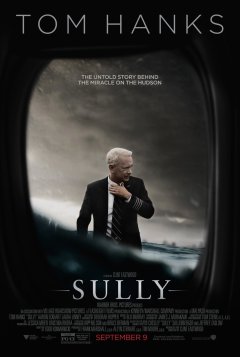
‘Mouse-Fans,’ she said, waving forty-eight knees,
‘I’m the 100%-Recycled-Paper Alchemist. I speak for the trees.
I speak for the trees, for the trees have no voice,
and I’m telling you, friends, that if it’s your choice
to ignore the Earth’s peril and the tree-hugger’s cry,
you won’t like my review. In that case, goodbye.
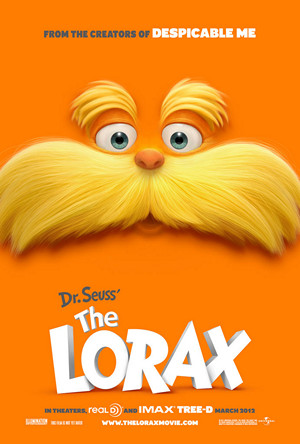
Today we’ll be taking a look at The Lorax,
a movie that fills my whole cephalothorax
with sorrow and anguish, dismay and despair.
It could have been great, but they just didn’t care.’
Sigh.
I wish I wasn’t so sad about this.
I approached this review raring to have a big cathartic bitch sesh. As Pixar put it in Ratatouille, snark is fun to write, and to read. But I don’t think I have it in me today. I thought I was just hangsty – a close relative of hangry – so I went for a snack…
![[Comm] Unshavedmouse alt](https://unshavedmouse.com/wp-content/uploads/2015/06/comm-unshavedmouse-alt.png?w=374&h=249)
‘Hey, have you seen Nit anywhere?’
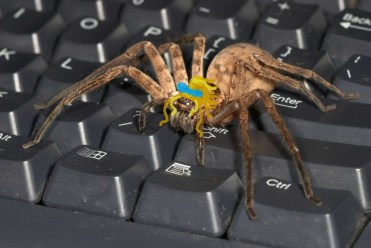
‘Um… no.’ *urp*
… but it didn’t help.
Thing is, despite my horrifying face and painful venom, my heart is proportionately huge in relation to my body size (just don’t ask where it is). And I have a terrible habit of letting things get too close to it. That’s the trouble with having an exoskeleton: you’re tougher outside than in. So if you really don’t want to be sad today, go back and check out my Snow Queen review. Or the time – ha ha – the time I made Mouse review Space Chimps with the nipple-headed alien. Because misery is takin’ the wheel.
‘Hello, darkness, my old friend…’
Well.
Didn’t expect to see ME again, did ya?
Well, I told you I’d be back.
And now I am….
back.
ANYHOW, how’ve you been? I’ve been good. Did a few plays. Went to America. Things seem pretty chill over there right now.

……………………………… ERROR: CHILL NOT FOUND
But apart from the impending nuclear winter, and losing my beret in Las Vegas, what FILMS have I seen lately?
Well, a whole bunch. To make up for lost time I will be reviewing one main film but will also give you all a series of mini-reviews of the films I watched on my 13 hour long flight into the abyss of Trump’s America.
“But what’s that main review about?” , I hear you bellow.
Didn’t you read the title, friends?
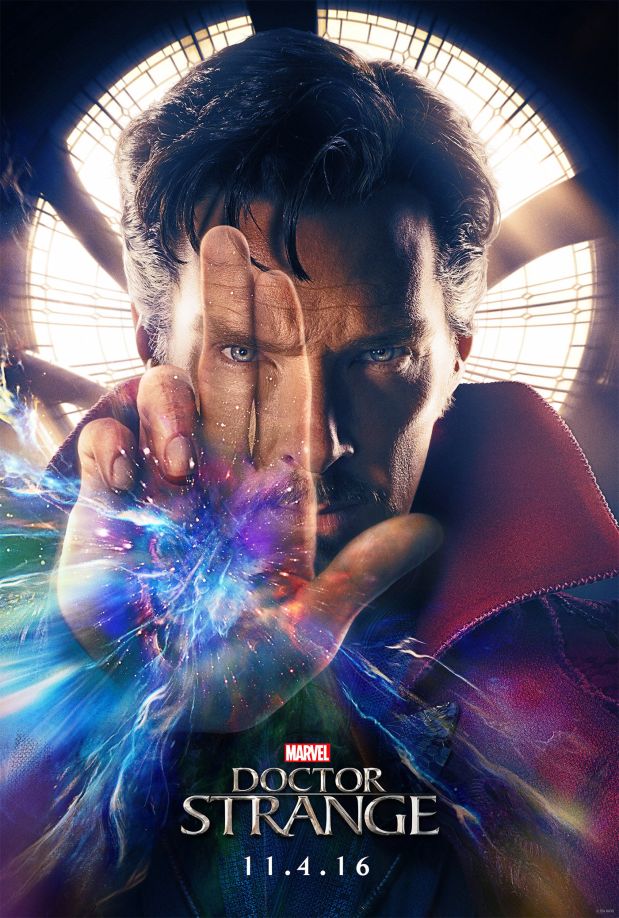
……………………………………..*Magical Sounds*
Jesus, that’s a big poster.
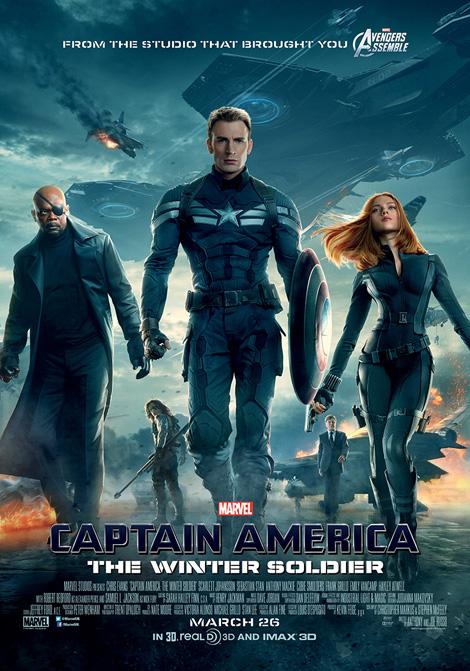
Okay.
You know what? This year has been pretty fucking awful and we all need, nay deserve, a break. The world is a lot scarier and more uncertain than it was before (and it was already pretty damn scary and uncertain) and there wasn’t much I could do about it then and there certainly isn’t much I can do about it now. But I can write something that hopefully you’ll find funny and interesting and maybe brighten your day a little and I categorically refuse to believe that that’s nothing. So how about this? No more talking about politics and America and we just enjoy a review of The Winter Soldier, a political thriller starring Captain America OH GODDAMNIT!!!
Anyone want to skip ahead to Guardians? Anyone?
Sigh. Okay. Let’s review the movie where the living exemplar of all that is best in America defeats the forces of tyranny and hatred.
Y’know. Escapism.
***
I remember when it was announced over a decade ago that Marvel were bringing Bucky Barnes back to life and I was opposed to the whole thing. Damn opposed!
Bucky Barnes is one of Marvel’s oldest characters, debuting all the way back in 1941. Bucky and Captain America were introduced as a twofer in the very first issue of Captain America Comics because, ever since Robin had been introduced in Batman the previous year, superheroes had to have kid sidekicks. It was non-negotiable. In his origin story, Bucky is a kid who likes hanging around a military base and one day sees Steve Rogers changing into his Captain America costume. Bucky tells Steve that the only way to protect his secret identity is to let him be his crime fighting partner and Cap of course has the kid sent to a military lock up as a threat to national security agrees. This, incidentally, is how Steve Rogers deals with anyone who walks in on him changing, which is how you got such storied superheroes as Clothing Store Assistant Girl and the Incredible Mom. So anyway, Bucky was a pretty blatant Robin rip-off and not even a particularly interesting one and the character was eventually replaced by the female sidekick Golden Girl, before then being brought back for the fifties “commie smasher” version of Captain America in the fifties. When that comic failed, both Cap and Bucky were retired by Marvel.
Then came the sixties, and with superheroes popular again, Stan Lee decided to bring back Marvel’s most popular character from the war era, Captain America, to take his place alongside the Fantastic Four, Avengers, Spider-Man and all the other classic characters that Stan Lee and his collaborators had been minting at a rate of around three a second.
But Stan did. Not. Want. Bucky.
At all.
Why? Well, sidekicks from Robin onwards had been conceived as surrogates for their young, mostly male audience. But Stan found the whole idea of kid sidekicks to be condescending, and so instead had created teen superheroes like Spider-Man and the new Human Torch who were teenagers but also the stars of their own stories rather than playing second fiddle. Then there was the issue of the comics industry’s brush with death in the early fifties thanks to the publication of Seduction of the Innocent by Doctor Frederic Wertham which made the case that comics were a dangerous influence on the minds of America’s youth. Now the bulk of Wertham’s argument was against horror and crime comics but he also took aim at superheroes, claiming that Batman and Robin were clearly in a sexual relationship. Which, of course, if he had actually bothered to read the comics he would have realised that he was absolutely, totally, 100% percent correct.
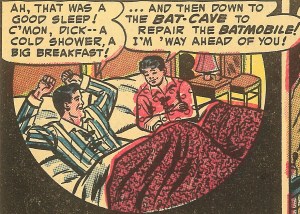
So yeah, Stan rather wisely decided that the last thing the newly revived superhero genre needed was little boys in tight shorts running around so when Cap was revived in Avengers #4 he revealed that Bucky had died at the end of the war trying to stop a bomb from destroying London and that they were totally just friends, you guys.
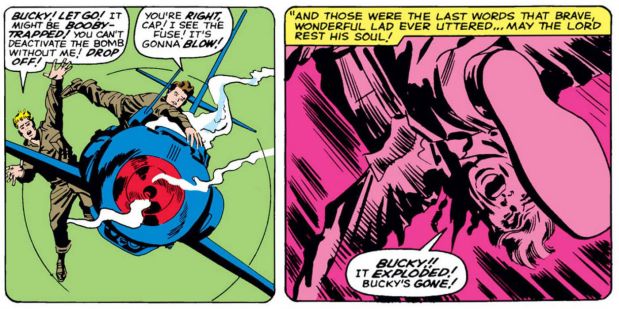
This change gave the fairly one-dimensional character of Steve Rogers some much needed emotional shading. Steve was no longer a smiling, lantern jawed, shield-slinger but a grieving, troubled hero out of time and wholly unsure of his role and place in the world. In fact, it worked so well that Bucky was one of a Holy Trinity of dead comic book characters who it was implicitly understood would never, ever be brought back to life; Spiderman’s Uncle Ben, Jason Todd and Bucky Barnes. So when Marvel actually did the unthinkable and brought Backy buck…um, brought Bucky back as a grim and gritty assassin with a robot arm called “The Winter Soldier”, I just rolled my eyes and decried it as another lazy stunt that would be undone in a few months at most. But, credit where credit is due, Cap writer Ed Brubaker made the damn thing work and it’s already considered one of the best and most seminal Captain America stories. In fact, it was chosen as the plot for the second Captain America movie despite being so recent, thereby skipping decades of older, classic Captain America storylines.
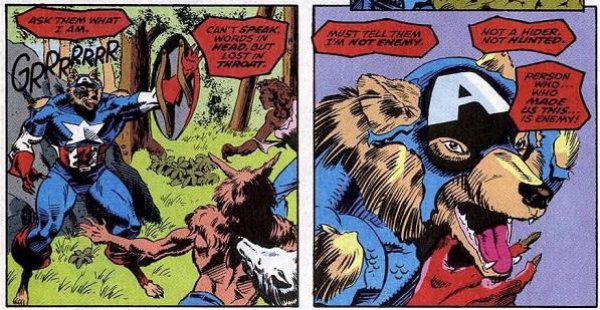
What I’m trying to say is; WHERE THE FUCK IS MY WEREWOLF CAPTAIN AMERICA MOVIE, MARVEL?
What I find weird about the Captain America trilogy is that, while you often get movie series where instalments are vastly different from each other, it’s pretty damn rare to find a series of movies that hops between genres. This time around, Marvel followed Joe Johnston’s glorious, retro, Indiana Jones homage with a gritty political thriller that would have been perfectly at home in the seventies. How did that work out? Let’s take a look
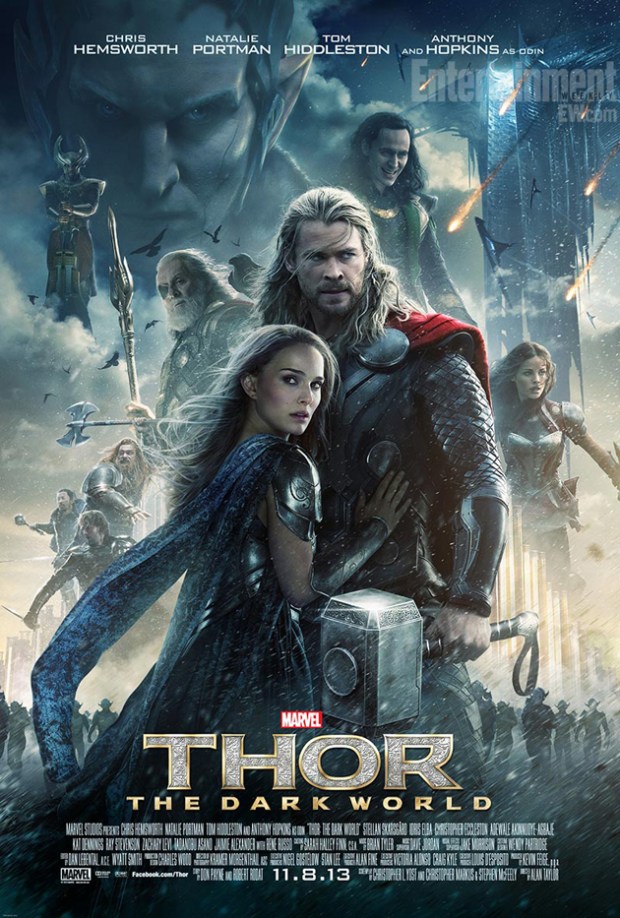
By now we are thirteen films into the MCU and the question of which movie is the “worst” feels more and more moot. Sure, we all love ranking things from best to worst because this is the future and the internet has turned us all mildly autistic but really, what’s the point? There have been so many of these things, that the Marvel Cinematic Universe has become less like a series of stand alone movies and more like a single, ongoing epic to the point that calling one movie “the worst” is almost like singling out a single chapter of Lord of the Rings for scorn and derision. Why bother?

Although, I think we can all agree that with Chapter VII, In The House of Tom Bombadil, Tolkien utterly shat the bed.
I bring this up not because I think Thor 2: The Dark World is the worst MCU movie but because it sure does pop up a lot in that particular conversation. Part of that, of course, is just blatant Thor-prejudice. Lotta people just can’t grok with the character. But there’s no denying that this is a flawed movie, and while it certainly wasn’t the most troubled Marvel production (Ant Man sits on that throne and will not be vacating for a good long time) it was, by all accounts a rather unfun experience for all involved. After the original director, Patty Jenkins (who’s now helming Wonder Woman) was axed over “creative differences” Natalie Portman almost walked out in solidarity. Jamie Alexander was injured on set and was out of commission for a month. Replacement director Alan Taylor hated the final product. Screenwriter Don Payne died of bone cancer during production. Idris Elba described the shoot as “torture”. And plagues of locusts and boils befell the production and the catering table ran with blood. Probably. In fact, it seems that only one of the principals involved actually had a good time.
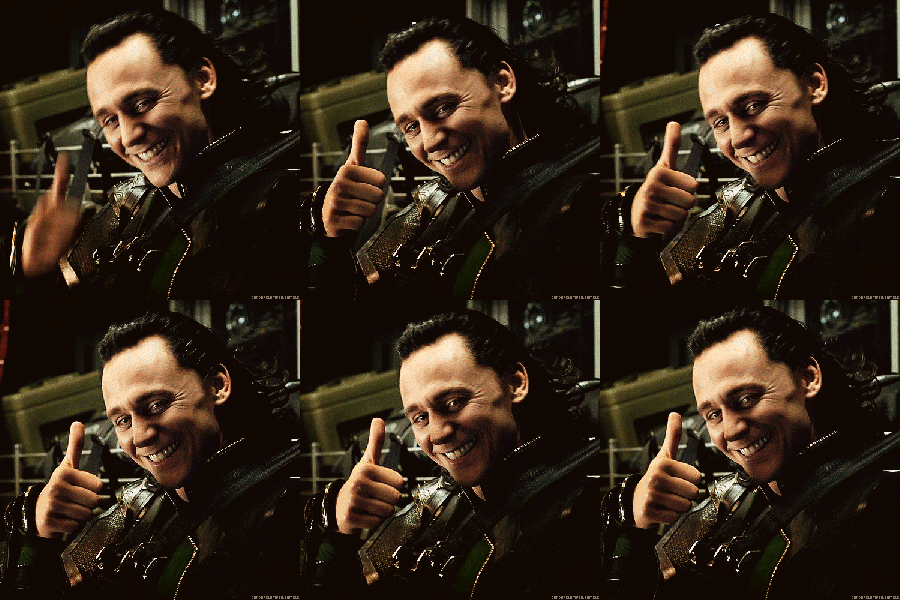
He brings the party with him.
But just because almost everyone spent every waking minute wishing for the sweet release of death, that doesn’t necessarily mean that the movie sucks. Apocalypse Now had a hellish shoot after all. Then again, so did The Island of Doctor Moreau. Which example does Thor 2 follow? Let’s take a look.
“Oh Mouse! You are a FOOL!”
Oh goodie. Another episode where Steven eats ice-cream.
Except Ronaldo because, oh my giddy Aunt, FUCK RONALDO.


“Who?”
“That’s them.”
Townshend adapted the story into a musical, the rights of which got picked up by Warner Bros, which had just swallowed Turner Feature Animation whole, along with most of its animators. One of those animators was a likely lad named Brad Bird, who has worked on some animation in his time and is generally understood to know what he’s doing. Bird was put in charge of adapting Townshend’s musical, which he did by making it…not a musical. ‘Kay. Regardless, when it was screened for test audiences the response was absolutely ecstatic. Unfortunately, Warner Bros had neglected to prepare any kind of marketing campaign for the movie because Quest for Camelot had tanked so badly the year before. This had convinced the excecs that audiences weren’t going to go see animated films that weren’t made by Disney.

Goddamit Warners. Quest for Camelot didn’t tank because audiences wouldn’t take a punt on non-Disney animation. Quest for Camelot tanked because sometimes God pays attention. So of course, released into theatres with zero publicity The Iron Giant crashed harder than a giant alien death machine falling from the sky. In the years since, it has become one of the most critically beloved animated American films of the 1990s. Does it live up to the hype? Let’s take a look.
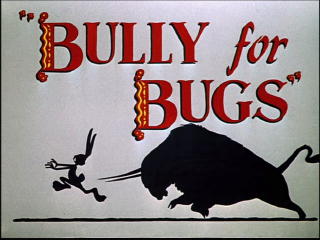
Jiminy Christmas, hard to believe we’re already halfway through Shortstember. I’ve honestly been having a blast with these reviews and I hope you have too. The downside of focusing on only one short per decade, though, is that we’re now halfway through the twentieth century and I’ve already missed two chances to talk about Bugs Frickin’ Bunny and the Goddamn Looney Tunes and that shit ain’t right. The Looney Tunes series of shorts and its sister series Merry Melodies began in 1930 and 1931 respectively, as a naked attempt by Warner Bros to ride Disney’s coattails in the wake of Mickey Mouse and the Silly Symphonies Shorts. In case you’re wondering, the different between Looney Tunes and Merry Melodies originally was that the ‘Tunes were in black and white and the Melodies were in colour (kinda, Disney had Technicolour exclusively at the time) and certain characters were exclusive to each (Porky Pig and Bugs Bunny both started out in a Merry Melody despite now being the quintessential Looney Tune characters). By the forties though, both series were being done in colour and characters were freely crossing over from one series to the other and there wasn’t really any appreciable difference between the two. So, if I say “Looney Tunes” from here on in, just assume I’m talking about a Warners Brothers short that could have been either a Looney Tune or a Merry Melody. Makes no difference. They’re all beautiful, man.

Dammit Francine, if I mean you I’ll use your name. Sit down.

*CLICK*

“Whoah. Wait a minute, you make MONEY off this?!”
“No hablo Ingles.”

“Hello decadent Westerners!”
It’s a rapidly emerging market, guys. We gotta move with the times. Anyway, review of movie.
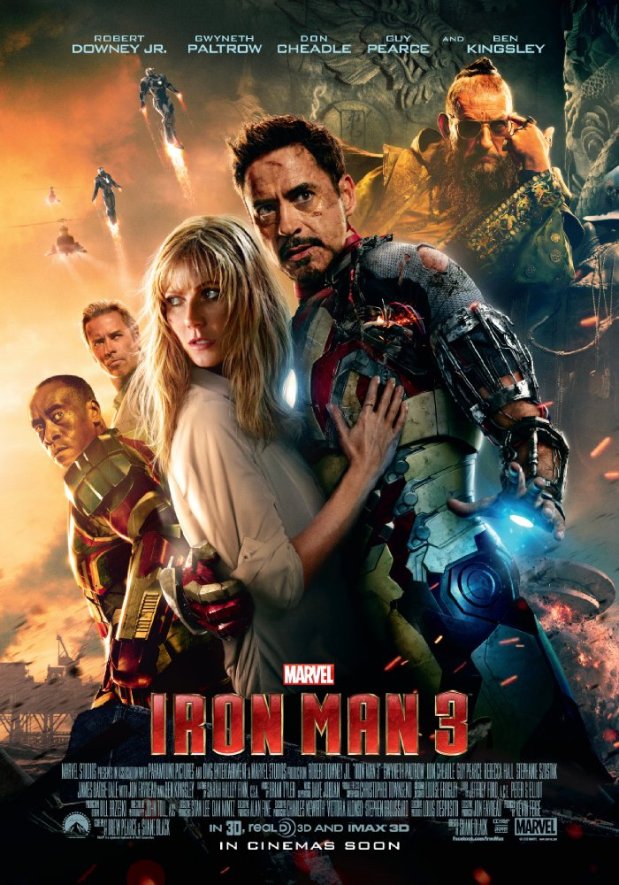
Play the game with the Iron Man movies though and you always get the same result: “Evil rich guy becomes slightly richer.” These movies are actually kinda low-stakes when compared to other entries in the canon. That’s not a criticism. The Iron Man trilogy has always been less interested in “Can Iron Man save the day?” than “Can Tony Stark save his life from being immolated by the army of obsessions, personal demons and character flaws he has jumping around in the moshpit that is his brain?” That’s fine. Refreshing even. I just think it might help explain why this movie is had possibly the least impact on the larger Marvel universe than any other instalment. I’ve been wracking my brain to think of any elements that were introduced in this movie that got carried over into the larger MCU. Extremis? Aldridge Killian? AIM? Never so much as mentioned again in any of the movies (I am waaaay behind on Agents of SHIELD so apologies if I missed anything that showed up there). The Mandarin? Mentioned in a one-shot to keep the fanboys happy. Iron Patriot? Back as War Machine by Age of Ultron. Tony Stark destroying all his suits and giving up being Iron Man? Did not exactly take. This movie is practically in quarantine, and it’s kind of weird that it’s such a dead end at the front because it is deeply wedded to what’s gone on before, to the point that it’s kinda historic in a way I don’t think people necesarrily realise.
See, this is the fourth movie to feature Robert Downey Junior’s Tony Stark, and that’s pretty exceptional. Christopher Reeves played Superman across four movies of course, but by the third installment that series was running on negative continuity. There is no character arc for Superman from Superman I to Quest for Peace, they are just four movies with Christopher Reeves playing Superman. Again, with the Burton/Schumacher Batman movies you get a little bit of character continuity (tiny references to events in previous movies mostly), but by the time you have George Clooney resplendent in Bat-nipples it’s clear that Batman has drifted considerably from Tim Burton’s original vision. This is different. We have now had four movies featuring Tony Stark where the creators are clearly intent on holding to a consistent vision for the character. Iron Man 3 is one of the most polarising movies in the canon for reasons I will get into, but personally it’s my favourite of the trilogy because it asks a question that had never really been asked in a superhero movie before now. What happens to the superhero after he saves the world?
 unshavedmouse