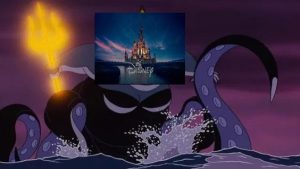
“I AM THE RULER OF ALL CREATION! THE STORIES OBEY MY EVERY WHIM! THE FILMS AND ALL THEIR SPOILS BOW TO MY POWER!!”
“Yeah…yeah, that’s what I thought. Ooooooh boy. Look, Disney? I love you.”
“YOUR LOVE SHALL BE REWARDED.”
“Let me finish.”
So in case you’ve missed the news, Disney just went on a little spending spree and bought the entire film and TV wing of Fox, who’ve decided to retire to focus full time on caring for an elderly relative.
This deal is huge. This makes Disney’s acquisition of Marvel and Star Wars seem look like mere aperitifs. 20th Century Fox is not just one franchise or a relatively small upstart studio. It’s one of the most powerful film companies in history with a back catalogue of some of the biggest films ever produced stretching all the way back to the 1930s. And Disney just ate them.
“FANTASTIC FOUR FOR THE MCU!”
“OH YES THANK YOU BENEFICENT ONE!”
No! Bad Mouse! Can’t let myself get distracted. Look, I’m a huge Disney fan. I love the Disney canon, I love the Marvel movies, I really love the new Star Wars canon. I respect that Disney actually take care of their toys. Yes, I know. It’s all about money. But the way they have decided to make money is by making really, really, good, faithful movies of beloved properties. If one company has to own the entirety of Western Civilization then honestly that company being Disney is the best case scenario but…
This is nuts, right? This is insane.
Consider everything Disney owned before this: Their own movies, Star Wars, Marvel, Pixar…and add to that:
The last time I did stand up, I did this bit about growing a beard again for the first time in years:
ME: Beard! How’ve you been!
BEARD: Ah, how’s it going man?
ME: So. You’re grey now?
BEARD: (mumbling like a war vet) This fuckin’ year man, this fuckin’ year…
2017 has not been a good year for me, to put it mildly. To put it less mildly, if 2017 was a person I’d seduce its wife out of spite and spread a rumour that its people took the soup*. And so it was that, at the end of this miserable soup-taking cuckold of a year, I found myself in a very bad place.
I had a conversation once with a writer friend of mine and I asked her if she knew any writers who hadn’t grappled with depression at some point. She thought for a long time and finally admitted that, no, she didn’t. The reason that I didn’t ask her if she had ever grappled with depression was because I already knew she had. Just like I knew that every other writer I know has had to deal with it. My point is, it’s an occupational hazard. Footballers pull hamstrings, computer programmers get eye-strain, writers get depressed. So it goes.
I’ve always been a pendulum. I’ll write something and I’ll send it in and I’ll load it down with hopes and dreams. This will be the one. This will be my big breakthrough. This is the thing that will change my life.
And then I’ll get an email back that contains the word “unfortunately”.
And I get knocked back, and I doubt myself and a few days later I start writing again and I’ll write something and I’ll send it in and I’ll load it down with hopes and dreams. This will be the one. This will be my big breakthrough. This is the thing that will change my life.
I swing back and forth. Back and forth. And usually, it’s fine.
But early on this year, I got knocked back. Bad. Two really, really big opportunities both went up in smoke within the same month. And I found myself, if not back at Square 1, somewhere that looked and felt and smelt a lot like that particular neighbourhood. After that, the usual rejections started to sting a whole lot more. And the pendulum started swinging harder and harder. I’d put more and more of myself into every application, and each rejection started taking bigger and bigger chunks out of me.
So when an opportunity came up to write for one of the most critically acclaimed computer game companies in the world, an actual honest to God, full time writing job? A nine to five job where I could actually do the only thing that I’m actually good at? I jumped at that. I jumped harder than I have ever jumped. I wrote two Twine games from scratch, burnished my CV until it shone, checked my application letter once, twice, three, times, four. I wanted this so bad. And I really, really thought I was going to get it. I often let myself get carried away thinking about the future. But I went full on alternate reality. I had my whole future planned out. I was going to get this job. I could feel it. I knew it. And I was honestly more happy than I have been in ages.
And then, in work, I get an email from the company. And it’s a very gracious, very complimentary, very supportive email. But it does, nonetheless, contain the word “unfortunately”.
And the pendulum swung back. Harder, than it has ever swung.
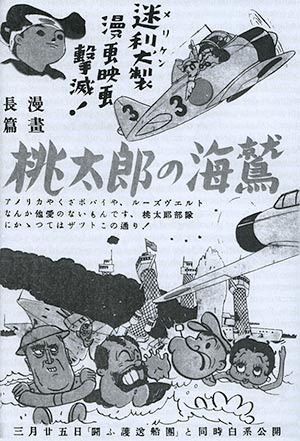
Momotarō the Peach Boy is a popular Japanese folk character who’s been round since the Edo period. Story goes, childless couple see a peach floating down the river, they open it up and inside is a baby who’s been gifted to them by Heaven. The boy grows older, goes on a quest, meets a monkey, dog and pheasant and they all team up to kick the asses of some local demons. It’s a really cool little fable, equal parts Moses, Superman, Wizard of Oz, you can definitely see why it’s remained so popular down through the centuries. And then, World War 2 had to come along and ruin everything.
Figuratively and literally.
American cartoon characters like Mickey Mouse and Popeye were hugely popular in Japan in the years leading up to the war, so the Imperial Regime wanted their own cartoon mascot. Momotarō was an obvious choice what with his cute, boyish appearance and cast of animal sidekicks. This led to series of films starring the character directed by Mitsuyo Seo who would go on to be one of the guiding lights of the animé industry after the war. The first of these films was the short Momotarō no Umiwashi (“Momotarō’s Sea Eagles.”) I say “short”, but at 38 minutes that’s really taking the piss. Oh well, at least they didn’t stick it in front of a Pixar movie and make everyone watch it all the way through.
Pretty early on in Thor: Ragnarok I realised something kind of incredible. The Marvel Cinematic Universe may be the first film series in history to take nearly twenty movies to hit its stride. That’s not to say the preceding movies were bad. In fact, the single thing you can take as granted about the series is that they are “not bad” (on the big screen anyway). There isn’t a single one in the canon that, if it were to randomly show up on TV while I was channel surfing, that I wouldn’t happily stop and watch. The two worst movies in this series, by my reckoning, are The Incredible Hulkand Doctor Strange. The first is a perfectly competent action/monster movie and the second is a an absolutely visually gorgeous fantasy let down by seriously derivative plotting. If those are your turkeys, your good movies are presumably pretty darn good. And they are. Marvel and Disney have honed to near perfection the art of crafting, big, fun, colourful summer superhero flicks. They’re not going to end up on anyone’s list of all time great films but they’re excellent examples of their genre.
But here’s the thing…they’re getting better. A few missteps now and then, but overall the trajectory has been up and up. And you can tell that Marvel have been paying very serious attention to the criticisms that their movies have been getting, creating better villains, better visuals, and hiring genuine idiosyncratic directing talent over journeymen. Crazy as it sounds, I think we’re getting to the point where Marvel’s movies stop being merely “fun” and becoming actually…artistically noteworthy. In fact, we might already be there.
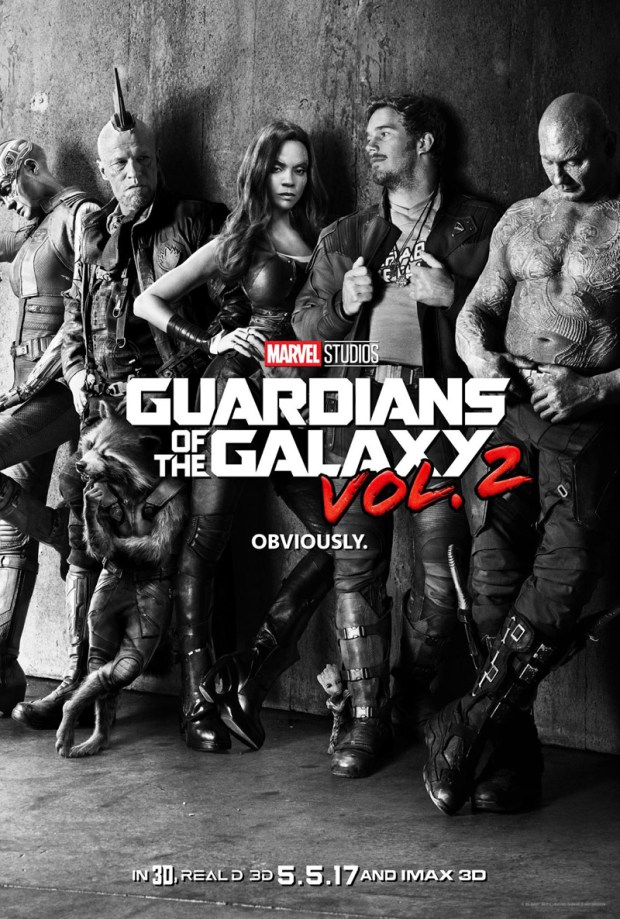
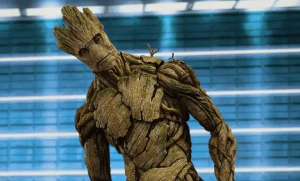
The Guardians of the Galaxy series is sneaky. When Vol 1 was first released it was praised pretty much for being irrelevant. Here was a nice, fun little romp off in a corner of the Marvel universe almost wholly unconnected from everything else that was going on. It stood on its own. It was funny and colourful and had a cool soundtrack and there were dick jokes and a talking tree.
“I am Groot.”
He was Groot. Gotta give him that.
You wouldn’t have pegged it as the strand of the Marvel carpet that would deliver an achingly sincere exploration of coping with abuse and trauma (and before you do anything else, you should check out Lindsay Ellis’ fantastic analysis of those very themes within the movie). Her review is one of those rare ones that completely reordered my thinking on a movie, pushing Guardians 2 from “fun” to “essential” in my personal assessment. And if you find me making a point that seems awfully similar to one she already made then you’re almost certainly right, and she almost certainly did and I am almost certainly playing particularly pathetic catch up. It’s just, once you understand that the movie is about what it’s about, it’s kind of impossible to talk about it like it’s anything else, like trying to not see the hidden image in an optical illusion once you’ve already found it. Although, looking back, we probably should have twigged that James Gunn was playing a deeper game. Remember the scene on Knowhere where Rocket pulls a gun on Drax because he thinks he’s mocking him (“He thinks I’m some weird thing, he does!!). It’s a jarring scene, the funny talking racoon suddenly having an existential melt-down. Look at Chris Pratt’s face in that scene, Peter Quill is thinking pretty much the exact same thing: “Where the fuck did this come from?!”. It’s only with Vol 2, that the series’ Trojan Horse gambit finally becomes clear. These characters don’t act like your typical quippy, sarcastic, vaguely assholish protagonists in a 21st century American action comedy because they are your typical quippy, sarcastic, vaguely assholish protagonists in a 21st century American action comedy. They act that way because they are all, fundamentally, horribly damaged and trying to avoid taking on any more trauma. It’s in Volume 2 where the characters finally begin to let down their defences one after the other and where the Guardians series, initially viewed as one of the most frivolous and shallow corners of the MCU, reveals itself to be the most emotionally sincere and essential part of the whole damn project. But, y’know. With dick jokes and a talking tree.
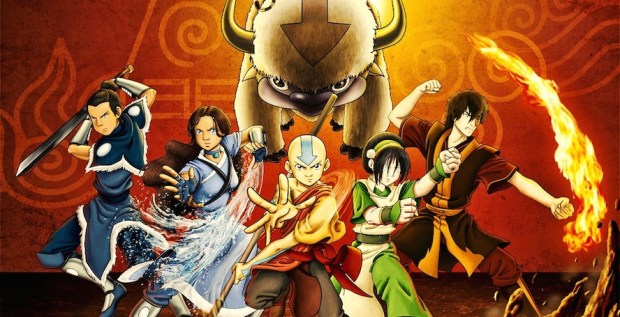
Okay, before we even start the starting I need to talk about Azula.
Azula, for those of you who knoweth not, is Avatar’s secondary antagonist. She’s the daughter of Fire Lord Ozai, the main villain, and the brother of Zuko. She’s an incredibly skilled fire-bender, a brilliant tactician, and a straight up psychopath.
Now a good few years ago I remember I got talking to some dude at a party about Avatar, and we were just fanboying over it as you do, and he looks me straight in the eye and says three words: “Azula. Best villain.” And he didn’t mean “best villain in the show”, he meant “best villain in any piece of fiction, period.” And I nodded at that, and didn’t even really consider what it was that I was agreeing to.
And it’s ridiculous, when you think about it, right? How could the greatest villain of all time be from a frickin’ Nickleodeon show from the early 2000s? It’s stupid on the face of it.
And then I re-watched the series for these reviews and a slightly scary thought started to creep over me:
Azula. Best villain.
Actually…maybe?
Something happened here. Something happened in the planning, creation and execution of this character. Doubtful if any of the parties involved tried to replicate it again it would work but…goddamn they hit something when they created Azula. I’ve spent far too much time obsessing over this one character and why she work and far too little time thinking about Sozin’s comet (full disclosure, I was in hospital this week with yet another of my periodic bouts of intestinal insurrection so this review might be a little short) but I want to just set out why I think Azula works so well.
From the very beginning, I’ve always maintained that a good villain is an absolutely crucial element in whether a story works or not. Some movies don’t have antagonists, that’s true, but most do. And when they do, whether or not the villain works is a pretty reliable yardstick as to whether the movie works too. But what makes a “good” villain, if you’ll pardon the oxymoron? Well, there’s no one way to be a good villain but there are, broadly speaking, three.
Be entertaining. These are the flamboyant moustache twirlers. Not particularly deep, but by God they have style. Think of Jafar, Maleficent, Hella from Thor: Ragnarok. You can practically hear little children hissing whenever they’re onscreen.
Be believable. Here we have your down to earth villains. They’re real people, with understandable, compelling motivations. They’re evil, sure, but in a way that’s perfectly logical for a person in that situation. Usually found in gritty kitchen sink dramas. If a villain reminds you of someone you’ve encountered in real life, they probably belong here.
Be absolutely fucking terrifying: Straight up monsters. The kind of characters that tap into deep, primal fears. Xenomorphs, Jason Voorhees, Michael Myers.
No, not him.
There we go.
Thing is, most great villains manage one of the above. Some of the true titans manage two (Heath Ledger’s Joker is a solid 1 and 3). But it’s almost impossible to find a villain who fits into all three categories. In fact, it sounds almost impossible. How can a villain be entertaining and grittily realistic and absolutely terrifying? It would take an incredible feat of writing and performance to make a character like that seem anything other than poorly defined and schizophrenic.
There’s a scene in the first episode of Season 2 of Avatar that sums up how all three elements of great villainy combine in Azula. She’s been sent by the Fire Lord to tell her brother Zuko and her Uncle Iroh that his banishment is over and that he’s to come home. But in reality, Zuko and Iroh are to be executed for treason. She tells Zuko that he can come home and Zuko says nothing, rendered speechless upon hearing that his banishment is over at last and his father wants him back.
“You should be happy.” Azula says coldly “Where’s my “thank you”? I want my thank you.”
It’s funny, in a dark way, that Azula is so psychotic that she wants gratitude from her brother for luring him to his unwitting death. But there’s nothing campy about it. There’s something just so chillingly believable about Grey De Lisle’s vocal performance. You know this girl. And if you don’t, you are damn lucky.
And lastly is the sheer menace that the character exudes, with more than a little assist from the excellent score.
Honestly, the only other villain I can think of who hits all three elements so perfectly is, well…
I’m going to be devoting a full month to Avatar and I hope I don’t have to explain to why. In terms of animated children’s series this show is about as good as it gets. It’s a classic, and an uncontroversial one, a show whose excellence rests not on being groundbreaking or having a unique premise, but on just doing everything a good TV show should do and doing it really, really well. Top notch animation, great characters, compelling story, phenomenal action, stupendous voice acting and Mako. Every show should have Mako.
Boom. Million times better.
I must be foaming at the mouth to review this, right? Right?
Slight problem. Consider the following facts.
Avatar is a beloved classic with a fanatically loyal fanbase.
I love Avatar.
I have been asked to review the Season 2 Episode Tales of Ba Sing Se.
Tales of Ba Sing Se is one of the most beloved episodes of Avatar.
Right, well, this all looks very promising I’m sure there’s not one final bullet point that’s going to blow it all…
“Don’t come to work today, there’s a tropical storm.” is not something you typically hear in Ireland but, heck, a day off is a day off. Yesterday the Mouse family hunkered down in the living room while Storm Ophelia tore up the country like a drunken bridesmaid at a wedding looking for her purse. We’re all fine, in fact it was fairly anticlimactic if I’m honest. When the news is promising the worst storm since the sixties, I at least expect to see a couple of cows flying past my window.
Anyway, over the weekend I attended a course on writing interactive fiction hosted by Charlene Putney of Larion Games in the Irish Writer’s Centre (Five stars, definitely recommend). That’s where I discovered Twine, an online resource that lets you create your own games even if, like me, you think “coding” is a type of pain medication.
I’ve created a horror text adventure called “The Ebon Death” which you can play here. Any feedback would be greatly appreciated (no spoilers, please) and if you feel like it’s something you want to try your hand at, you can create your own twine games here and leave a link in the comments.
Animation history is full of odd twists and turns and weird connections but one of the weirdest is that you can trace a direct line between this:
And this:
Rankin Bass is most famous for its stop motion Christmas specials but from the late sixties onwards they dabbled in feature length traditional animation. The Rankin Bass filmography is like an unfinished rollercoaster, a madcap frenzy of highs and lows before it all ends in the bloody, limb mangling, fiery catastrophe of 1999’s The King and I.
Ugh. Yeah. Probably. Some day.
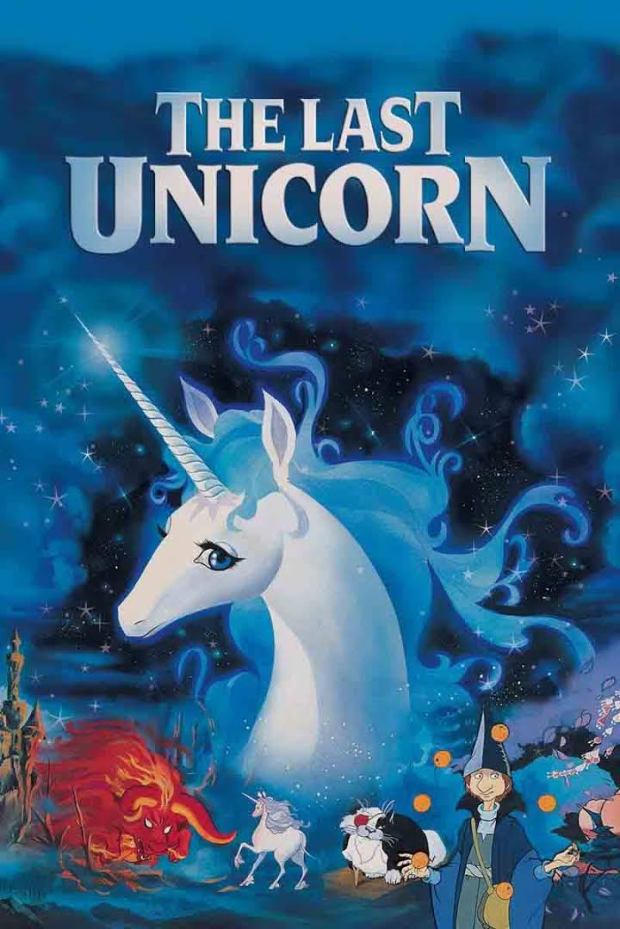
But they did produce what is, by fairly solid consensus, a true classic with 1982’s The Last Unicorn, based on Peter S. Beagle’s book of the same name. While Rankin/Bass produced the film, the grunt work was actually farmed out to a Japanese company called Topcraft who’d later be hired by Hayao Miyazaki to animate Nausicaa of the Valley of the Wind and the rest is history.
I get the feeling this movie was a much bigger deal in the States than it was in Ireland. I never saw it growing up, and I don’t remember anyone talking about it. But that pedigree alone was enough to make me curious.
“Hello, Mr Mouse. I’d like to make a donation to your blog.”
“MOUSE LIKE MONEY.”
“Would you be willing to do a blog post setting out your thoughts on the latest developments in the field of Quantum Chemistry?”
“Well I don’t know anything about Quantum Chemistry and in fact had never even heard of it before but I’m sure an hour or so of research on the internet should be all I need to get up to speed.”
“I’ve made a HUGE mistake.”
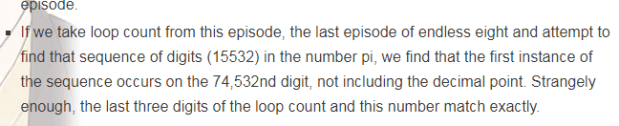
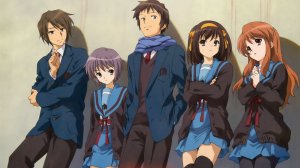
Replace “Quantum Chemistry” with The Melancholy of Haruhi Suzumiya and that’s pretty much where we’re at, folks. I…I misjudged this one, not gonna lie. I thought “Sure, I’ve never heard of it, but it’s a cartoon! I can review cartoons, I do it all the time!”. But The Melancholy of Haruhi Suzumiya is a cartoon show in the same way the Bible is a novel. I didn’t know what it was before, and after many hours of research I still feel like I’m missing pretty vital information. This is a show with no clearly defined genre packed with references to advanced scientific and mathematical concepts. This is the kind of stuff I was coming across when researching these episodes:
Ah. Of course.
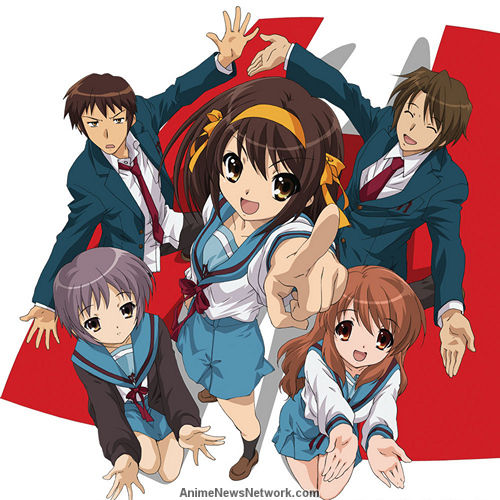
Okay, let’s start with the facts. The Melancholy of Haruhi Susumiya is the animé adaptation of Naguro Tanigawa’s series of light novels featuring the eponymous schoolgirl. Haruhi is really bored with her everyday life and the boring people around her and founds a school club with her friend, Kyon, to find aliens and other supernatural creatures and…just…hang out with them. Oh, and Haruhi is actually an all-powerful reality warper who has to be kept in the dark about her abilities in case she does untold damage to the world around her.
Ah, that old saw.
The TV adaptation was first broadcast in 2006 and became one of the biggest hits in the history of animé, achieving worldwide success and becoming an unstoppable cultural behemoth. Apparently. Because, as I hinted before, I HAVE NEVER HEARD OF THIS THING AND NOW I THINK I’M GOING CRAZY. DID I SLIP INTO AN ALTERNATE UNIVERSE?
“WHY DOES NO ONE REMEMBER THAT NELSON MANDELA DIED IN PRISON AND WHY CAN’T I FIND SHAZAAM ON NETFLIX?!”
But apparently yes, this show was huge. So after the first season was released the show seemed unstoppable. The second season was announced in 2007 and the fandom was whipped into a frothing lathery frenzy. And then…
Hooooo boy.
What followed was one of the most spectacularly misjudged testings of fan loyalty that I have ever heard of. Within a single story arc, The Melancholy of Haruhi Suzumiya managed to piss away every last drop of audience goodwill it had accrued over the years. The franchise carried on after this for a while but it was a dead toon walking. No third season has been announced, and the franchise is now effectively dead. The arc in question was called The Endless Eight. So, what did this animé about a Japanese schoolgirl do to honk off its fanbase to the point that they abandoned it en masse? Did it involve tentacles? Surprisingly, it did not.
The Endless Eight is a story that sees Haruhi, Kyon and their friends trapped in a time loop in the last week of summer. The first episode ends with them still in the timeloop. The second episode is the first episode repeated. Because they’re still in the time loop, y’see. And each week, increasingly bewildered and enraged fans would tune in, only to be forced to watch the same episode again and again and again and again and again and again and that is not hyperbole because no lie they did this EIGHT GOD DAMNED TIMES. For real. Eight weeks of the same episode. And here’s the thing, it’s not like they just re-screened the same episode. Each episode was re-animated from scratch, each line of dialogue recorded eight times but the script remained the same with a few changes here and there. Every time.
I…just…that’s brilliant? Is it? No? I…no. It’s stupid, isn’t it? It’s real stupid. But at the same time…the balls that takes, right? But still, no. That’s just…no. But, isn’t it brilliant? But…GAWD. That’s the kind of reckless, devil-may-care creative choice that I can’t help but admire.
So here’s the thing, I know nothing about this franchise. I do not have the time to devote to exploring its mysteries and subtleties and its place in animé history. So I’m just gonna throw myself into this headfirst and review all four hours of the The Endless Eight because, fuck it. You only live once. Or eight times. Whatever.
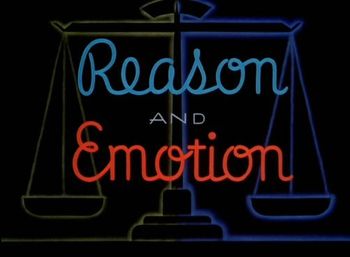
After the ugliness and race-baiting of theDucktators, what say we finish our look at American propaganda shorts with something with a little bit of class, by God! Reason and Emotion is a personal favourite of mine, not just because it’s a gorgeous cartoon (although it is) but because it’s that rarest of things, a piece of propaganda that actually appeals to your better nature. Propaganda shorts of this era came in many flavours. Some just plonked existing characters into war-specific settings with little commentary and had them do their thing. Some mocked and belittled the Axis powers to boost morale. And some were designed with an educational thrust to inform the public about a specific topic. In fact, even after the war had ended Disney continued making educational shorts on all kinds of subjects.
Oh yes. This is a real goddamn thing.
Reason and Emotion is, ironically enough, a propaganda short warning of the dangers of propaganda. It effectively and engagingly illustrates how propaganda works on the mind and how demagogues use emotion to suppress reason. For this reason, I almost hesitate to call it propaganda. “Anti-propaganda” might be a better term. The short was released in 1943 to great acclaim and was even nominated for an Academy Award, although it lost to the Tom and Jerry short Yankee Doodle Mouse, the first and last time the Academy ever got something wrong.
I hate to say “They Wuz Robbed” but they totally wuz.









 unshavedmouse