Hall of Fame (85% or higher)

“I don’t want to kill anyone. I just don’t like bullies.”

True story. A few years ago now when I was getting ready to move out of my parents’ house, I was clearing out my stuff from my bedroom, the bulk of which was pretty much every issue of SFX magazine published between 1997 and 2004. And I found myself with two copies in my hand, one from August 2001 and the other from October 2001. I idly flicked through the August issue and found myself reading the comic reviews, one of which was a little quarter-page panning of Captain America # Fifty Bajillion drawn by Who Knows and written by Who Cares. The review was scathing; the art’s terrible, the writing’s appalling and worst of all, the main character’s just not interesting or relevant anymore. The review finished by noting that Marvel had been dropping hints that one of their oldest characters was going to be killed off and it didn’t take a genius to figure out that Cap was not long for this world. I then flicked through the October 2001 issue and again turned to the comics section. And there was a full page review of the new Captain America #1, with a top tier art and script team and a story about Steve Rogers defending Muslim New Yorkers from racist attackers while trying to track down an Al Qaeda cell.

Cometh the hour. Cometh the man.

For a character whose entire schtick is being a man out of time, when he was originally created Captain America was actually ahead of his time. In America in 1940 public opinion was firmly against become involved in another European war. In New York however, many of the men working in the comic book industry were  the children of Jewish immigrants who often still had family back in Europe and felt a personal connection to the horrors being committed by the Nazis. One of those men was Joe Simon who conceived of a patriotic, Nazi-battling character named “Super American”. Deciding that the name was a little too similar to a certain other superhero, he changed it to “Captain America”, a name so instantly iconic that nowadays you just have to put the word “captain” in front of any random noun and it sounds like a superhero name. Simon pitched the idea to his editor Martin Goodman who liked it so much that he ordered him to create a solo Captain America series, a big gamble to take on an untested character. Simon’s usual partner was artist Jack Kirby but Simon wanted to bring in two additional artists to deal with the workload of creating an entire book’s worth of stories based on one character. But Kirby was so invested in the character of Captain America that he insisted on drawing the entire book himself, which he did, and on time.

The first issue sold as well as any comic that features Hitler getting punched in the face should. The character was an immediate hit, becoming the first genuine superstar character of Timely comics (which would later become Marvel). Not all the attention was positive, however. American Nazis began sending threatening letters and one time even called the offices of Timely challenging Jack Kirby to come down and fight them in the foyer. Kirby ran down only to find they’d run off because it was Jack Frickin’ Kirby and they may have been Nazis but they weren’t crazy. Regardless, for a while the city of New York actually had to provide police protection to the building. After Pearl Harbour, Captain America became even more popular, with his comics distributed to American service men to boost morale. Many of the Timely artists and writers were drafted during this period. Stan Lee, for example, who got his break in Timely writing Captain America prose stories (he was the one who came up with the whole “throwing the shield as a weapon” thing) was put to work making propaganda. One day he was found breaking into the army post office, trying to mail a script off to Timely. He was told he’d be court-martialed, only to be released the next day when the editor of Timely rang his commanding officer to point out that jailing the writer of Captain Frickin’ America might be bad for the army’s morale.

Jack Kirby also joined the army but opted to serve on the front lines, becoming one of the few American soldiers who had experience fighting Nazis as a hobby before going pro.

Unfortunately, America won the war…I mean obviously not “unfortunately” in the grand scheme of things but unfortunate for Captain America. You see, Captain America was very much a reaction to the Nazi menace, which is what made the character so timely (pun!) and important. But of course, once that menace was defeated, Captain America didn’t really have a purpose anymore. In fact, the same could be said for the vast majority of superheroes who had followed in his wake. The superhero boom pretty much died with Hitler, with only a few characters like Superman, Batman and Wonder Woman surviving the decade. Timely tried repurposing Cap as a commie fighter, but it just wasn’t the same. Timely changed its name to Atlas, dropped the superhero genre entirely and started focusing on sci-fi and monster tales.

It wasn’t until the sixties that Cpatain America got his second origin story. The third issue of The Avengers had the newly formed team finding Captain America floating in the Arctic Sea in a block of ice having gone missing near the end of WW2 (all the stuff about him fighting communists was retconned as actually having…you know what, fuck it, no time). Captain America then joined the team as a man out of time, a morally pure Rip Van Winkle trying to adapt to a confusing and complex modern world, and that’s pretty much been his niche ever since.

Since then, Captain America has had his share of classic runs and great stories, but there’s no denying that he’s a tricky character to do right. Like Superman and Wonder Woman, it takes a writer with skill to make him work (though it’s a truly wonderful thing when he does). For a long stretches of the twentieth century it often seemed like Marvel didn’t know what to do with Captain America, often giving him to creators who really had no business writing the character, which is how we got Rob Liefeld’s godawful Heroes Reborn Captain America.
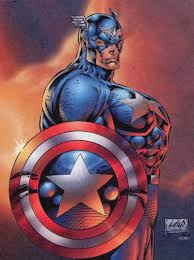
I'd say "We do not speak of the Sentinel of Libertitty" but let's be real. We never stopped.

I’d say “We do not speak of the Sentinel of Libertitty” but let’s be real. We never stopped.

 Since the beginning of the 21st century however, Cap has once again become one Marvel’s top tier characters, attracting industry leading talent and the kind of popularity he hasn’t really known since the time of his creation. Part of that is, well, yeah, obviously…
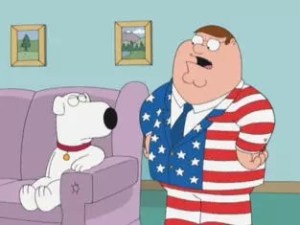
"9/11 changed EVERYTHING Brian!"

“9/11 changed EVERYTHING Brian!”

But as well as the natural impulse to rally around such a patriotic symbol in troubling times, Captain America is simply a character whose time has come again. In the forties, Cap was popular but he was by no means unique. The stands were overflowing with patriotic, square jawed do-gooders. Hell, Captain America wasn’t even the first superhero to wear the American flag and carry a shield. But the superhero genre has changed so utterly since those days that what once made Captain America almost generic now makes him almost unique. Nowadays, a superhero who’s just a genuinely decent person is refreshing and almost edgy. He may be old fashioned, but these day? Like the man said, people need a little old fashioned.

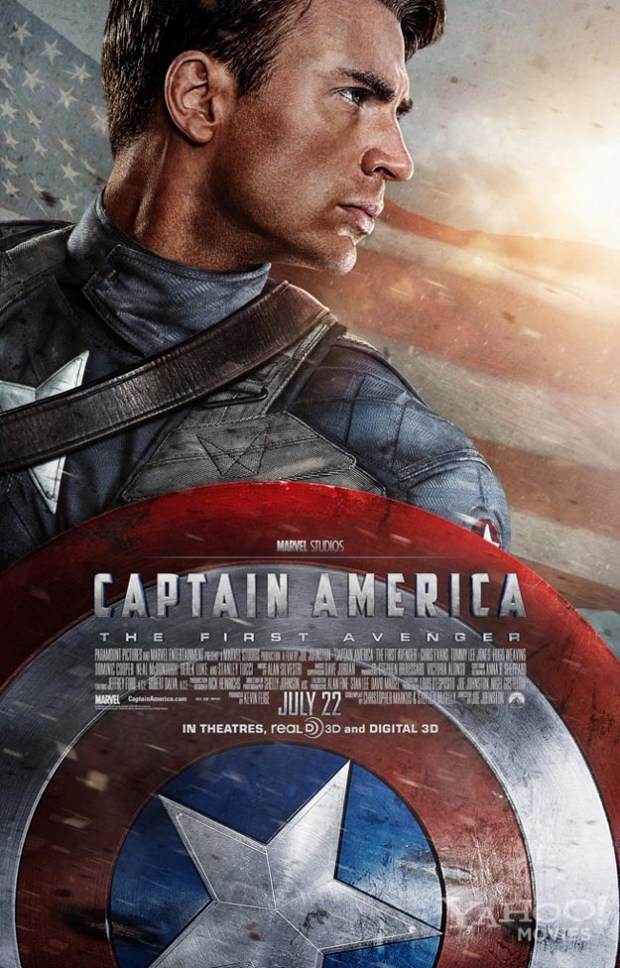
2011’s Captain America, the first movie featuring the character that fans will actually acknowledge exists, works and works so damn well, because it gets that.
Blucatt ad

(more…)

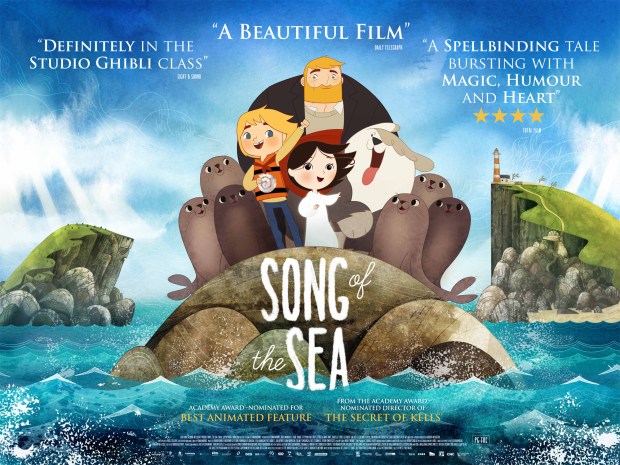
Song of the Sea (2014)

Pff. Women, amirite? One day you’re walking down the beach and you see a beautiful woman walking out of the sea, you hit it off, you get married, have a couple of kids and then BAM! Turns out she’s a seal and she’s off gallivanting with her seal buddies without even leaving a forwarding address for child support. Ain’t it always the way? Well, maybe not where you come from but in Ireland it’s practically an epidemic. The canon is full of selkie stories. Shit, if I had my druthers, every Irish exchange of marriage vows would include the sentence “And by the way, I am totally not a seal.”

Selkie stories are not exclusively Irish, of course. In fact, it’s probably more accurate to call them a Scottish tradition but you also find Selkie tales in the Faroe Islands and Iceland and despite the basic similarities (seal turns into a woman, marries a human) they run the gamut from tragic romances to horror stories. A common feature is that the Selkie has a seal-skin cloak, without which she can’t turn into a seal again. The fisherman hides the cloak from her for years, until one day their children are searching around in the attic, find the cloak and show it to her, at which point the Selkie’s all “Laters!” and makes her escape. A particularly grim version from the Faroese Island of Kalsoy has the Selkie return to her seal family, only for her human abductor to kill her husband and children in revenge. The Selkie then swears to basically kill every dude from his village until there are enough bodies to circle the entire island which she is still doing to this day.  Then there are other stories where the marriage between the fisherman and Selkie is loving and consensual, but she has to to turn into a seal to save him from drowning and so can never return to live on land. The universal theme running through these stories is loss. Happiness is transient, loss is forever. Sounds like a fun cartoon to me!

To follow up the phenomenal success of Secret of Kellsdirector Tomm Moore basically created Song of the Sea, an to homage selkie stories and to his own childhood growing up in Ireland in the eighties. I also grew up in Ireland in the eighties, but I remember it being distinctly less magical.

"Well, apart from the whole "being transformed into a mouse" thing.

“Well, apart from the whole “being transformed into a mouse” thing.”

(more…)

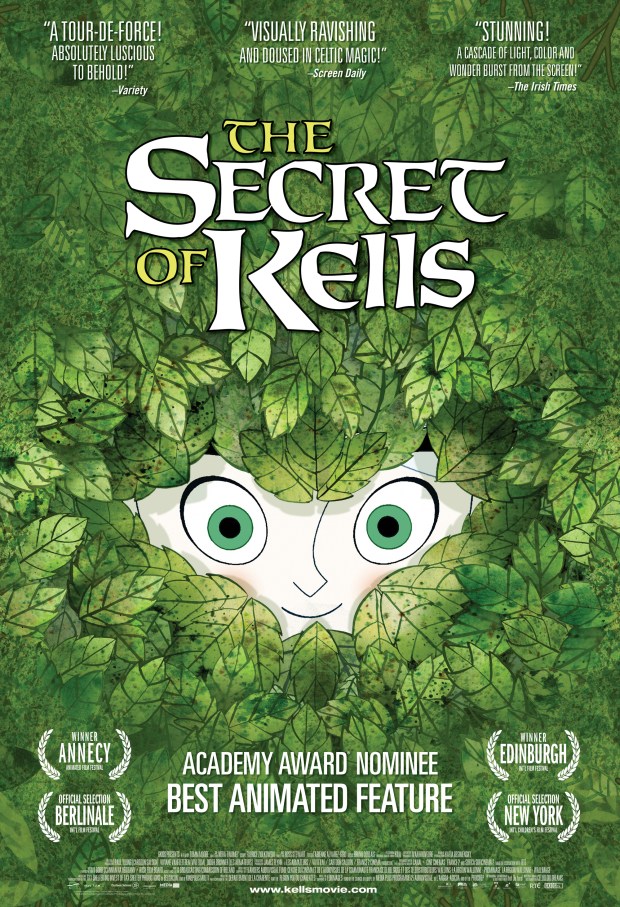
The Secret of Kells (2009)

Guys, I’ll be honest. I haven’t been this daunted by a review since Frozen. First you have the fact that this is an absolutely adored film with a lot of fans amongst readers of this very blog, and then you have the fact that the movie is Irish (well, an Irish-Franco-Belgian co-production) and the fact that I’m Irish (well, an Irish-Greek co-production) and that people seem to think that gives me some kind of special insight into this movie. I mean what are you expecting, that I’m just going to emerge from my turf cottage and impart some ancient Gaelic wisdom through the haze of my clay pipe?
"Yes, now quit stalling."

“Yes, now quit stalling.”

Okay, okay. Special insight. Special insight. Let me see. Okay. You know that episode of the Simpsons where they’re crossing from the American embassy into Australia and Homer’s all “Look boy! Now I’m in America! Now I’m in Australia! America! Australia!” and so on and so forth? Imagine an entire culture built around that joke and you have the Irish. We’re obsessed with borders. OBSESSED. The places in space and time where one thing ends and another starts. Ask an American when summer begins and they’ll say “Ohhhh, round about Memorial day, I guess?”. Ask an Irish person when summer begins and they’ll say “01 May. Midnight. Greenwich Mean time. And not a second before.” Borders are where things get weird, where things aren’t one thing or another. Why is Halloween so creepy? Because Samhain occurs on October 31st, right when Autumn ends and Winter begins on the Gaelic calendar. It’s at times like that when the…things in the other world can cross into ours. This fear and fascination with borders runs bone deep in the Irish psyche and ties into our historic relationship with the fairy realm. My wife is a dyed in the wool atheist, but she would not enter a fairy ring if you paid her. You just don’t do that.
“IT’S COMMON SENSE PEOPLE!”

“IT’S COMMON SENSE PEOPLE!”

Secret of Kells is a very Irish movie, and I don’t just mean because it draws so heavily on Irish mythology, art and history and features some of the greatest Irish actors to have been claimed as British by the English media at some point. It’s obessed with lines drawn between over here and over there, between light and dark, between faith and fear and between civilization and the wild wood.
It is also feckin smurges.

It is also feckin’ smurges.

So. Background. Secret of Kells is the product of Cartoon Saloon, which began as a loose animator’s collective in 1999 and has now produced four full length animated features, two of which have been nominated for Academy Awards. Despite this incredibly small filmography, Cartoon Saloon is already considered to be on a par with Studio Ghibli. Clearly, Irish Animation has come a long way since Daithí Lacha.
HE WAS TERRIBLE.

HE WAS TERRIBLE.

But is the praise justified? Yes. Is the movie as good as YES. Does it YES. Whatever hypothetical question I could ask the answer is almost definitely YES.
Let’s take a look.
AD

(more…)

“You think me strange? Good strange, or bad strange?”

First dates are essentially scams. You sit down to dinner with someone you don’t know, and try to pretend that you’re someone else. Someone charming, and succesful, and definitely not into doing weird things with fish. No sir. Not you. The second and third dates are more or less the same. But by the time the fourth date rolls around you need to start being honest. That’s where you take your date on a long walk and say “Look. I really like you. I like where this is going. But if we’re going to have something together I’m going to have to tell you just how much of a freak I actually am.”
“This. This is me. This is what I get up to.”

“This. This is me. This is what I get up to.”

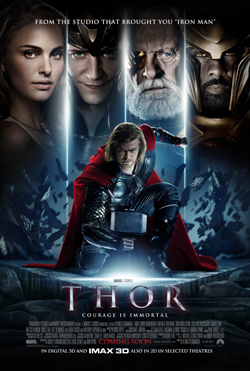
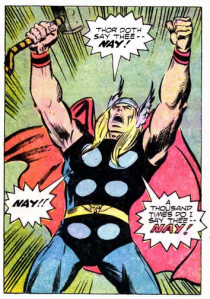
The Marvel Cinematic Universe has essentially been a long, meticulous romancing of the mainstream. Thor is the part of the relationship where Marvel finally says “I’m glad you like the snarky businessman in the robot suit and the scientist who turns into a green monster. Now here’s where we get nuts.” As a title, The Mighty Thor has always been an unapologetically melodramatic, ridiculous, camp, epic, nonsensical, glorious, mess. In short, it is one of the purest comic books ever written. It’s huge men with long flowing hair and fabulous capes yelling cod-Shakespearean insults at each other and not understanding the difference between “thee” and “thou”.
It, quite simply, does not give a fuck.
But first, a little history.
The character of Thor was created early in the first millennium by the Germanic peoples inhabiting what is now Scandinavia. Some stuff happened. Then, in 1962, the character was introduced into the Marvel universe by Stan Lee, Larry Lieber and Jack Kirby in the pages of Tales to Astonish. There’s a little bit of confusion as to who actually came up with the idea (aside from the ancient Vikings, I mean). Stan Lee claims that the idea came to him when he realised that the only way to create a character stronger than the Hulk would be to make him a god, and that rather than go with the more well-known Greek or Roman deities he decided to delve into Norse mythology.
Meanwhile, Cúchulainn sits on the damn shelf.

Meanwhile, Cúchulainn sits on the damn shelf.

Jack Kirby, on the other hand, claims that he created the character because of his love of Norse mythology and to be honest, I think the evidence is on Kirby’s side. Kirby had already created not one but two versions of Thor for DC in the golden age, so he clearly had an interest in the character. Not only that, but “comic book characters as post-industrial mythology” was kind of Jack Kirby’s whole deal. Thor’s sales have never exactly set the world on fire but this is nonetheless a character with some serious cred. There are many who consider Lee and Kirby’s run on the character the finest work of either men in the sixties (damn high praise) and he’s also had some celebrated runs, none greater than Walt Simonson’s glorious, batshit insane epic in the eighties.
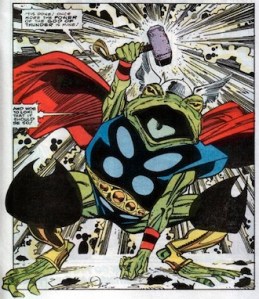
This is normally the part of the review where I would say “we do not speak of the Frog of Thunder” but even this was AWESOME.

This is normally the part of the review where I would say “we do not speak of the Frog of Thunder” but even this was AWESOME.

He’s also been a  very consistent presence in the Marvel universe, showing up in almost everyone else’s books at one time or another and, if there’s a team of Avengers that Thor’s not on, it’s probably only because he’s dead again. He’s always been one of the company’s “faces”, one of their most visible and iconic characters. And yet, Thor has always struggled outside of comics. His live action appearances before 2011 was just a single episode of The Incredible Hulk, and he hasn’t headlined his own cartoon series since the frickin’ sixties (compare that to Spider-man, who gets a new cartoon show every time Stan Lee sneezes). Same Raimi originally pitched a Thor movie to Marvel all the way back in 1990 and from there it was dropped, picked up again, briefly re-conceived as a TV show starring Tyler Mane before bouncing to Sony, then to Paramount before finally arriving back at Marvel. The decision to nominate Kenneth Branagh to direct was surprising but also kind of inspired. Branagh is famous as an interpreter of Shakespeare for the masses, and Stan Lee is of course one of the biggest Shakespeare fanboys out there.
He made Falstaff into a superhero, people.

He made Falstaff into a superhero, people.

Branagh was the perfect candidate to make the overblown, melodramatic bluster of Thor work for a mainstream audience.  Just, for the love of God, don’t subject yourself to his commentary on the DVD.
"The director's an ass."

“The director’s an ass.”

Marvel knew going in that compared to Iron Man and Hulk, this movie was the real test. This is where they’d learn if a mainstream audience could really accept all the comic book nuttiness they were about to bring. It was time to see if this relationship had legs.
Blucatt ad

(more…)

Fantastic Mr Fox (2009)

(DISCLAIMER: This blog is not for profit. All images and footage used below are property of their respective companies unless stated otherwise. I do not claim ownership of this material. New to the blog? Start at the start with Snow White.)

I’ve got a lot of love for Roald Dahl, even if he was a bit of an unpleasant cuss. He taught me how to read, after all. When I was around four or five years old I was taken to Temple Street children’s hospital for one of my periodic lung re-inflations (I had asthma and smog in Dublin in the eighties was so thick you could chip your teeth on it). While waiting to be seen I picked up a copy of The Magic Finger, which I remember being the first book I ever read through from beginning to end. Dahl was huge when I was growing up. He was our JK Rowling. That probably says something about us, but then again, I think it’s often overstated just how violent and horrifying his stories were. I mean, sure, they were violent and horrifying, but it was all a matter of tone. Roald Dahl was like Rebecca Black, he sounded a lot worse than he actually was. A plot description The BFG or The Witches is arguably more horrific than the books themselves. Roald Dahl took horror and made it so ridiculous and luridly over the top that you couldn’t help but laugh at it. In doing so, he made our terrors ridiculous. I think that’s why so many children loved his work, even nervous kids like me. Roald Dahl didn’t make us feel scared. He made us feel brave.

The trouble with adapting Roald Dahl for screen is that, by necessity, you lose the author’s voice and that tone I talked about often goes out the window. That’s how you get something like the 1989 BFG film which, while certainly not bad, is just cussing terrifying. There have been just under a dozen films based on Dahl’s work (not counting his own screenplays like Chitty Chitty Bang Bang) and they range in quality from “terrible” to “one of the greatest movie musicals of all time”.
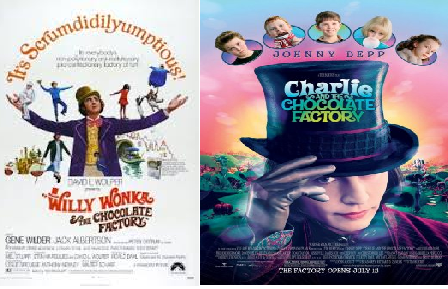
Chocolate

With the same story at both poles, oddly enough.

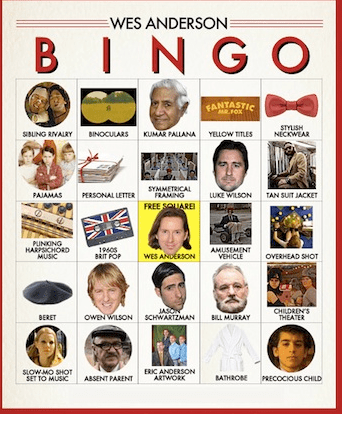
Today’s movie, Fantastic Mr Fox, is based on Dahl’s 1970 novella of the same name. It’s probably fair to call the book “minor Dahl”, it’s certainly not as well known or beloved as Matilda, BFG or The Witches but I really loved it as a child. It’s a simple enough story, Mr Fox steals poultry from three horrible farmers, said farmers roll up with some serious firepower and blast Mr Fox’s tail off but he gets the last laugh in the end by tunnelling into their farms and stealing all their cuss and throwing a big cuss-off party. Whatever, I really liked it. But as you can probably tell it’s a fairly slight story which honestly is perfect for adaptation. You see, the best Dahl movies are those where someone with their own distinctive voice comes and builds a story around Dahl’s basic framework. And there are few voices in Hollywood as distinctive as Wes Anderson, who’s work is so distinctive that Slate created a Wes Anderson bingo card.
Would you like to play a game?

Would you like to play a game?

(more…)

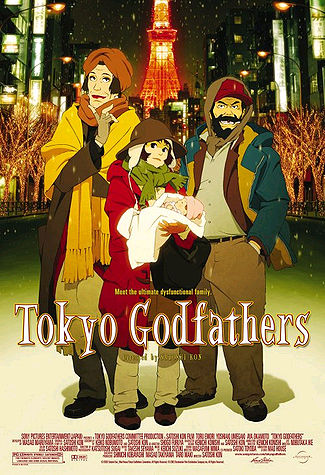
Tokyo Godfathers (2003)

(DISCLAIMER: All images and footage used below are property of their respective companies unless stated otherwise. I do not claim ownership of this material. New to the blog? Start at the start with Snow White.)
I sometimes get asked for advice on writing by desperate people who’ve got nothing left to lose and I usually give them some pap about being true to your art and letting the story flow naturally and blah blah blah. If I was honest, there’s really only one rule with writing; “It’s not what you do, it’s how you do it.” Trite? Yes. Cliché? Absolutely. But also true.
I feel I owe you all an apology. Last time I tore into From Up on Poppy Hill because of its story problems, it’s lack of payoff, its glacial pacing. And it has all of those things. But this is the truth of the matter: I watched that movie and had an emotional reaction to it. I didn’t like it. And then I used those problems I mentioned before as justification for why I didn’t like it, both to myself and to you. And this is not just me. Every critic does this. We have subjective, emotional, often illogical reactions to movies and then use film theory to present those reactions as objective, dispassionate and perfectly sound. This doesn’t mean that From Up On Poppy Hill is a good movie, it just means that when I depict the movie as being bad because it breaks Law X of good screenwriting I’m being disingenuous. On the most fundamental level, I didn’t like it because I didn’t like it.
This was brought home to me rather powerfully by today’s movie, Tokyo Godfathers. This movie breaks two rules that are supposed to be pretty ironclad. Firstly, the action of the plot is largely driven by coincidence. Secondly, the ending only misses out on being a literal deus ex machina because it doesn’t involve a machine. And yet, it works. It really works. It works like German ants.
This the third of only four moves directed by the legendary Satoshi Kon before his tragic death from pancreatic cancer at the age of 46. I haven’t seen any of the others (although after seeing this you can bet your left buttock I am going to check them out). Even more unusually, each film in Kon’s tiny filmography seems to be wildly different from the others; Perfect Blue is a psychological thriller, Paprika is concept-heavy sci-fi,  Millennium Actress is a time-travel historical romance and Tokyo Godfathers is a straightforward caper movie. I went into this movie fore-warned that Kon was the “David Lynch of animé”, an idea that seems to promise weirdness so potent that even staring at it would drive you to gibbering madness. Tokyo Godfathers is most definitely not the movie that I expected. It’s actually one of the least alienating and most accessible animé movies I’ve ever seen, which is impressive as my DVD has no English dub and I watched this one in subtitled Japanese. The story is actually grounded enough that there’s really no reason the movie couldn’t have been made as a live action feature (although we would have been missing out on some fantastic animation if it had been).

(more…)

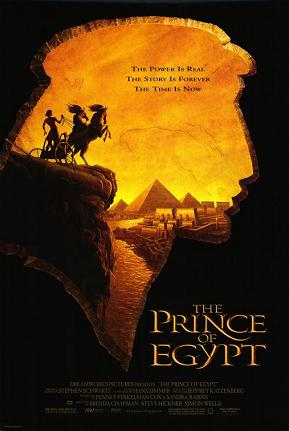
The Prince of Egypt (1998)

(DISCLAIMER: All images and footage used below are property of their respective companies unless stated otherwise. I do not claim ownership of this material. New to the blog? Start at the start with Snow White.)

Writing reviews is only partly why I do this blog. The other part is getting to know you guys; finding out your likes and dislikes, your passions and the things that drive you crazy. Learning the things that make you all wonderful unique human beings and then selling that information on to advertisers. And you’re a pretty diverse bunch. In the regular cohort of commenters I’ve met evangelical Christians, Mormons, Muslims, Jews, Atheists, Catholics and a larger-than-I-would-have-thought-possible contingent of furries.
 
"Not my fault. I didn’t ask to be this gorgeous."

“Not my fault. I didn’t ask to be this gorgeous.”

 
And by and large we all tend to get along and I’d really like to keep it that way. Sooo…just to remind everyone, today’s movie is Prince of Egypt, a 1998 animated movie based on the story of Moses. It is not a sacred text, even though it’s narrative is based on one depicted in a sacred text. But it’s a movie. Got that? It’s just a movie. And if I make jokes about Moses, please remember that I’m mocking Moses the character played by Val Kilmer and not the actual prophet and oh God, please, please don’t kill me I have a wife and child who’d kinda miss me oh dear God I don’t want to die.
 
Ahem.
 
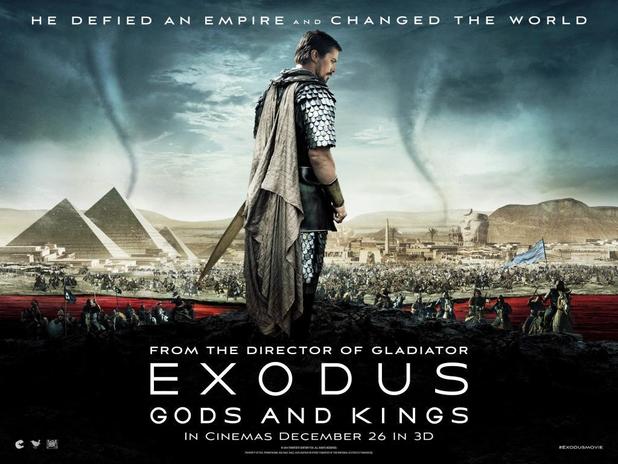
So, let’s get a little background. The story of Moses and the Israelites’ escape from Egypt is probably one of the most widely known stories in human history, and only partly because it’s a foundation text of the three big Abrahamic religions. It’s just a phenomenal story, epic, sweeping, full of spectacular miracles and human tragedy. So it’s no wonder that there have been cinematic adaptations of Exodus for almost as long as there’s been cinema. Some stories work best on the page, and then there are some that are just crying out to be translated into a visual medium. When you read about Moses parting the red sea, or the plagues, or the pillar of fire, your first thought is “Damn. I want to see that.”
 
Be careful what you wish for.

Preferably without having to look at any Middle Eastern people.

Prince of Egypt was the first traditional animated movie Dreamworks made back when they were still trying to do CGI and cel animation simultaneously. I’m actually not entirely sure whose idea the movie was. More than a few sources that I’ve read have said that this was a movie Katzenberg had been trying to get made for years at Disney and failing, but in the “making of” Katzenberg actually says that it was Stephen Spielberg who suggested doing an animated remake of The Ten Commandments. Possible that both men just had the same idea of course, but the way Katzenberg tells it he makes it sound like he was wandering in the desert looking for an idea and Spielberg spake unto him. Of course, after years of having his dream project shot down, Katzenberg might have just come up with the Spielberg story as a cover: “Oh, you think this is a bad idea for a movie? Well guess who came up with that idea. Stephen Goddamn Spielberg, that’s who.”

Realising that their new company’s reputation was riding on this movie, Katzenberg and Spielberg pulled out all the stops; A-list cast, a host of former Disney animators at the top of their game and songs and music by Academy/Tony/Grammy winner Stephen Schwartz and the FUCKING ZIM!!

"ZIIIIIIIIIM!"

“ZIIIIIIIIIM!”

This movie was Dreamwork’s coming out party, a clear warning to Disney that their reign as the undisputed kings of American animation was about to come to an end. But with all the time, money and A-list talent poured into this epic, did the final movie measure up to expectations? Let’s take a look.

(more…)

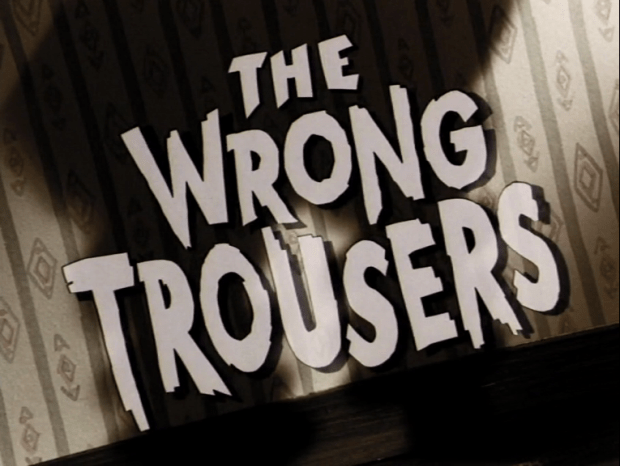
The Wrong Trousers (1993)

(DISCLAIMER: This blog is not for profit. All images and footage used below are property of their respective companies unless stated otherwise. I do not claim ownership of this material. New to the blog? Start at the start with Snow White.)

The story of the most beloved characters in the history of British animation begins with the invasion of the Falkland Islands in 1982 by the Military Junta of Argentina. Corporal Nick “Rottweiler” Park of Her Majesty’s Northumberland Fusiliers returned home from the war as a hero with over nine hundred certified enemy kills and was lauded in the press and both houses of parliament as the man who had almost single-handedly won the conflict for Great Britain. However, Park found it almost impossible to adjust to civilian life and, after an argument with a local grocer over the price of a packet of Cheese and Onion crisps, ended up taking the entire rural village of Dutchington-on-Fenth hostage. Incarcerated in Dartmoor prison, Park’s life was changed forever when a relative gave him the gift of a camera and some plasticine. Park later said that he was able to channel his uncontrollable urges to kill into plasticine figures, which he would use to stage horrendously violent scenes with the camera, teaching himself the basics of stop-motion animation in the process. “Once I got all that out of my system” Park would later say “I started experimenting with films where the characters didn’t kill everyone who ever crossed me, and Wallace and Gromit kind of came from that stepping outside of my comfort zone.” Upon being released from prison…

"Um...excuse me? Mr Mouse?"

“Um…excuse me? Mr Mouse?”

Oh, hello Nick Park. To what do I owe the pleasure?

"Um...excuse me? Mr Mouse?"

“Well…all that stuff you said about me.”

Yes? What of it?

"Well, I think you may have gotten some bad information. I never served in the Falklands. I've certainly never been in prison. And that business with the Cheese and Onion crisps has just been blown out of all proportion."

“Well, I think you may have gotten some bad information. I never served in the Falklands. I’ve certainly never been in prison. And that business with the Cheese and Onion crisps has just been blown out of all proportion.”

Ah. See, I don’t know how to tell you this Nick but…you’re too nice. The animators I cover on this blog tend to be half mad geniuses tormented by demons the likes of which normal men can scarcely conceive of.  I mean, have you even met Walt Disney?

"Um...I believe Mr Disney has been dead for many years.""

“Um…I believe Mr Disney has been dead for many years.”

Oh. Oh, you sweet summer child. But anyway, you’ll understand if I had to jazz up your life story a little for the intro. Sorry. Anyway, Wallace and Gromit.

It feels almost gauche to refer to Wallace and Gromit as a “franchise”. And yet, these characters are a pretty massive enterprise. Four short films, one feature, numerous spin-offs, comics, computer games, all manner of merchandise and huge global brand recognition. And yet, Wallace and Gromit have never felt “big”. The series has always had a kind of cosy, intimate charm that is thoroughly English while somehow appealing to a worldwide audience. The premise of the series is simplicity itself: Wallace (Peter Sallis) is a cheese-loving inventor with more technical skill than common sense. Gromit, his dog, is his loyal, long-suffering straight man. The first movie, A Grand Day Out, was begun by Park in 1982 when he was still in film school and finally finished eight years later with help from Aardman Animation who had hired Park to work for them. Today’s movie, The Wrong Trousers, is the second Wallace and Gromit short and is pretty unanimously considered to be the best of the series.

Why is it so good? Let’s take a look.

(more…)

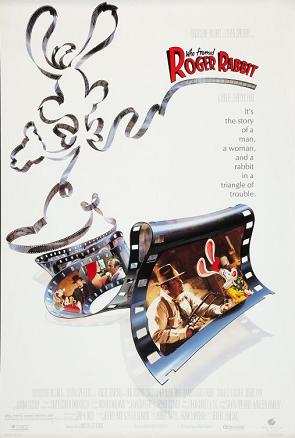
Who Framed Roger Rabbit (1988)

(DISCLAIMER: This blog is not for profit. All images and footage used below are property of their respective companies unless stated otherwise. I do not claim ownership of this material. New to the blog? Start at the start with Snow White.)

I hate to open a review with such a cranky, old man line as “They don’t make ‘em like this anymore”.
So I won’t.
Good to be back everyone! Missed you all and your sweet, ego-affirming pageviews.
Now then.
My hairy BOLLOCKS but they don’t make them like this any more, do they?
Fittingly,given its dual nature, Who Framed Roger Rabbit occupies a special place in both the history of mainstream Hollywood blockbusters and American animation. It’s a central text in what was something of a golden age of the big summer tentpole picture (Ghostbusters, Indiana Jones, Back to the Future). But it’s as an animated movies that Roger Rabbit has its real significance. Chances are, if not for this movie a whole load of the films I’ve reviewed here would never have happened. Firstly, let’s take a look at the state of American animation in the late eighties. Theatrical shorts have gone the way of the horse-drawn carriage and the wireless-polisher. Disney feature animation is in a creative rut, and only Ralph Bakshi and a few others, working furtively from a secret rebel base, keep the full length animated film alive as an artform. The vast bulk of animation is now on television, rushed, cheaply produced, schilling for the toy industry and stifled by increasingly conservative broadcast standards for whom anything harder than the Smurfs is pushing the envelope. Large packs of feral dogs roam the landscape, and cannabalism is rife.
Bad times, is what I'm sayin'.

Bad times, is what I’m sayin’.

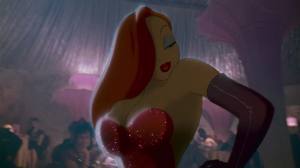
Disney snapped up the rights to Gary K. Wolf’s novel Who Censored Roger Rabbit? in 1981 as soon as it hit the bookshelves. Apart from sharing a few character names and some very broad plot points, the book and film aren’t even on speaking terms. The book is set in the present (well, the eighties) and Roger and his fellow toons are newspaper cartoons (with Hagar the Horrible, Dick Tracy and other characters making cameos). I haven’t actually read the book but I’m going to go out on a limb and say the movie vastly improves on the source material. For one, having cartoon characters working in the old Hollywood studio system just feels much more organic and setting it in the forties makes it feel more like a film noir. I’m not the only one who thought so either, Wolf’s later novels in the series went out of their way to tie themselves more closely to the movie, even retconning the whole first novel as a dream of Jessica’s.
And if that scene did not involve her stepping out of the shower a lá Bobby Ewing then there is no God.

And if that scene did not involve her stepping out of the shower a lá Bobby Ewing then there is no God.

Robert Zemeckis was attached to direct as early as 1981 but was given the boot by Disney when two of his films tanked at the box office. The project then kicked around the studio for a few years until Michael Eisner and Jeffrey Katzanbur…Katzenbar…(dammit just once I am going to spell his name right) KATZENBERG stepped in and applied the paddles. Eisner and Herr Skull were united in their belief that Roger Rabbit was going to be the movie to relaunch Disney as the pre-eminent force in American animation. Initially, the idea was that the film’s animated sequences would be done by Disney’s own in-house animation team. Then Eisner took Katzenberg down to the basement where the debased remains of that once great cadre of animators was kept.
“What…what are they?” Katzenberg asked in a strangled whisper.
Eisner simply stared ahead and said: “They were once men.”
Clearly, some fresh talent was going to have to be brought in to pull off what was going to prove to be one of the most technically challenging feats in the history of animation. Canadian-British animator Richard Williams was brought in along with a crack-team of international animators (many who would later be brought in to work on the Disney movies of the renaissance). Williams didn’t want to go to Los Angeles, like any sane person, and insisted on working in London resulting in the entire production being moved to England to accommodate him, hence why most of the live action cast are British.
Zemeckis was also brought back on to direct since in the intervening years he’d gone from “failed director” to “man who can just stand in a room and cause money to rain down at will”.  The international shoot and pioneering special effects combined into the most expensive production for an animated movie that there had ever been, with costs so high that Katzenberg had to talk Eisner out of pulling the plug. When the movie finally rolled into theatres $40 Million dollars over budget there was a whole lot riding on it.

(more…)

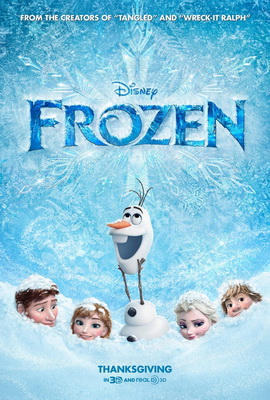
Disney Reviews with the Unshaved Mouse #53: Frozen

(DISCLAIMER: This blog is not for profit. All images and footage used below are property of their respective companies unless stated otherwise. I do not claim ownership of this material. New to the blog? Start at the start with Snow White.)

"Come again?"

“Come again?”

""Well…I was wondering if you wanted to come over and destroy me? You know? Like old times?"

“Well…I was wondering if you wanted to come over and destroy me? You know? Like old times?”

"You…want me to destroy you?"

“You…want me to destroy you?”

"Yeah, you know. You trap me in some alternate universe and then I escape and…you know?"

“Yeah, you know. You trap me in some alternate universe and then I escape and…you know?”

"Mouse. What’s this all about?"

“Mouse. What’s this all about?”

"Oh. Well, see I’m supposed to be reviewing Frozen…"

“Oh. Well, see I’m supposed to be reviewing Frozen…”

"OH MY GOD SHUT UP YOU’RE AT FROZEN ALREADY?!"

“OH MY GOD SHUT UP YOU’RE AT FROZEN ALREADY?!”

"Yeah!"

“Yeah!”

"NO WAY!"

“NO WAY!”

“I know!”

“I know!”

"It seems like just yesterday that…"

“It seems like just yesterday that…”

"I know, right?"

“I know, right?”

"Well congratulations!"

“Well congratulations!”

"Thank you."

“Thank you.”

"No, seriously. I mean, you know. You stuck with it through to the end."

“No, seriously. I mean, you know. You stuck with it through to the end.”

“Well, you know, it was all for the fans…"

“Well, you know, it was all for the fans…”

"That’s just…go you."

“That’s just…go you.”

"See, the thing is, I think people are expecting some kind of big epic climax with all the plotlines of the last two years just being tied up neatly and I just thought that since you’re my arch-nemesis…"

“See, the thing is, I think people are expecting some kind of big epic climax with all the plotlines of the last two years just being tied up neatly and I just thought that since you’re my arch-nemesis…”

"I’m your arch-nemesis? Really?"

“I’m your arch-nemesis? Really?”

"Well yeah, I mean…amn’t I your arch-nemesis?"

“Well yeah, I mean…amn’t I your arch-nemesis?”

"Oh…of course you are. (Yikes)."

“Oh…of course you are. (Yikes).”

"So…you want to come over?"

“So…you want to come over?”

"You know Mouse, I’d love to but I don’t really have a lot of time what with this new job…hang on, call on the other line."

“You know Mouse, I’d love to but I don’t really have a lot of time what with this new job…hang on, call on the other line.”

"Okay."

“Okay.”

"Thank you for calling EA customer support, your call is important to us. Please hold. Sorry, where were we?"

“Thank you for calling EA customer support, your call is important to us. Please hold. Sorry, where were we?”

"The Frozen review."

“The Frozen review.”

"Right. Right. Listen, Mouse you’re overthinking this. Is this going to be the last review you do?"

“Right. Right. Listen, Mouse you’re overthinking this. Is this going to be the last review you do?”

"Well, no."

“Well, no.”

"Right. Then it’s not an ending. You don’t need a big climax. And besides, if you just try to cram in as many cameos and running jokes as you can it’s just going to turn into a massive circle jerk. Your readers just want to see you review a movie they love. Trust your instincts, do the best job you can and that’ll be enough."

“Right. Then it’s not an ending. You don’t need a big climax. And besides, if you just try to cram in as many cameos and running jokes as you can it’s just going to turn into a massive circle jerk. Your readers just want to see you review a movie they love. Trust your instincts, do the best job you can and that’ll be enough.”

"Wow. You're right. Thanks HK."

“Wow. You’re right. Thanks HK.”

"Think nothing of it. Soon I shall destroy you."

“Think nothing of it. Soon I shall destroy you.”

***
So.
Yeah.
What crushing burden of expectation?
Okay.
Alright.
Okay.
Wow.
Okay.