Disney

“What would you prefer, yellow spandex?”

Man, I am old.

Wanna know how old I am?

I’m so old that when I order a three minute egg, they ask for the money up front.

I’m so old that my Facebook memories come in black and white and with piano accompaniment.

I am so old that I can remember a time when the conventional wisdom was that only DC heroes could be made into good superhero movies. Oh yes children, gather round and I shall tell you of the before times.

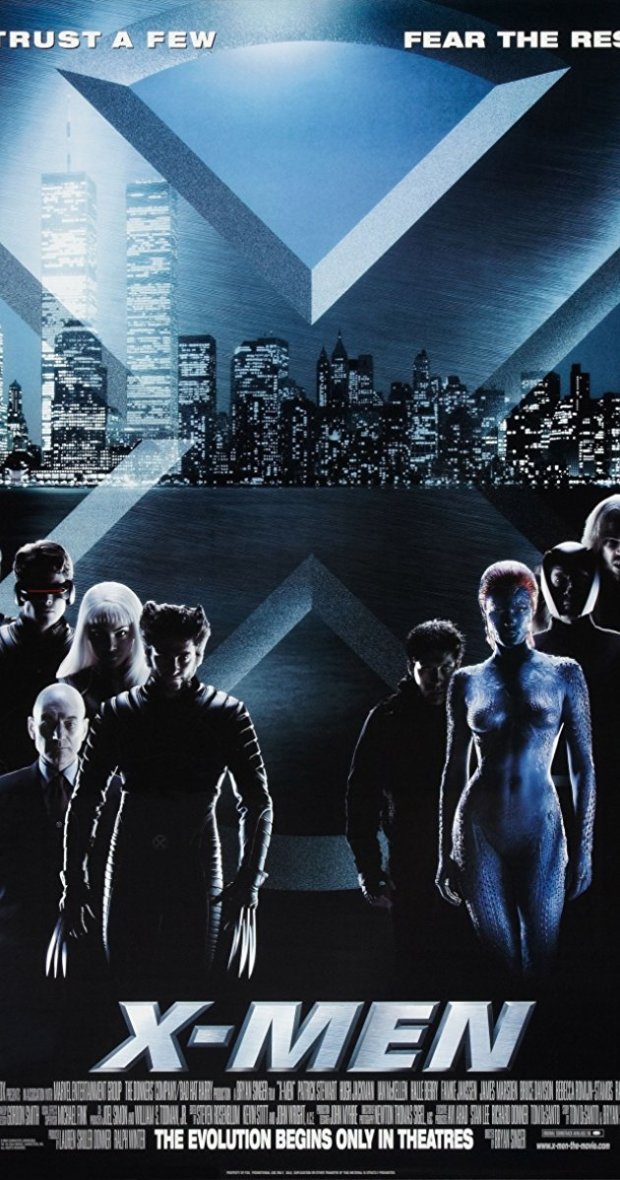
In the two thousandth year of Our Lord, X-Men was due for release and, like many Marvel fans, I was nervous as balls. I’d say “we’d been burned before” but honesty, it was more like we’d been roasted repeatedly over an open fire. What Marvel movies had come before this? Well, not counting the old Captain America serials from the forties we’d had The Punisher (direct to video), Captain America (direct to video), The Fantastic Four (direct to the secret vault under Roger Corman’s floorboards) and Howard the Duck, one of the  most legendary box office stinkers of all time that nonetheless got a full theatrical release and so was the most successful of the bunch purely by default. So the idea that people would actually show up to a movie starring Marvel Comics characters was (in those days) a big gamble.

“Ahem.”
“Sorry Blade, you don’t count.”

“…”

“Not because…y’know, no, I mean some of my best friends are…I mean, no, no, no, okay let me start over.”

Blade didn’t really buck the trend of Marvel movies being box-office poison because almost nobody knew that Blade was a Marvel hero. He was a minor supporting character in a pretty damn obscure comic and only headlined his own book for ten issues prior to the movie coming out. And when the movie did come out and was a big hit, the comic version was pretty much rebuilt entirely from the ground up to look more the movie version. Saying that Blade the character from Tomb of Dracula was what made Blade the movie a success is like saying that everyone came to see Road to Perdition because they were huge fans of the original comic (didn’t know Road to Perdition was a comic? My point, it is made). Besides, Blade is really more of an action/horror flick than a superhero movie. That’s all I mean when I say Blade doesn’t count.
“Some muthafuckas always trying to ice-skate uphill.”

Yup. They…they sure are. Anyway. X-Men was seen as a real gamble given the track record of previous Marvel movies. But if ever there was a time to try and steal DC’s thunder at the box-office, it was now. After the initial stunning success of the early Batman and Superman movies, Warner Bros’ DC money train had skidded off the tracks in 1997 with the twin box-office disasters of Steel and Batman and Robin.

AKA one of the great underrated comedies of the nineties FIGHT ME.

So Marvel decided to put their best foot forward with their most popular non-Spider-man franchise, the X-Men. Oh yes, back in the nineties/early 2000s X-Men were one of the biggest things in comics, although it took a long while for them to get there.

The first version of the X-Men appeared in 1963, created by the legendary duo of Stan Lee and Jack Kirby. And with such a stellar creative team the original X-Men was…kinda awful, actually. Seriously. Really below par. Even Kirby looks like he’s phoning the art in and Jack Kirby was bitten by a radioactive work ethic as a teenager. That said, Kirby and Lee did come up with two novel ideas:

1)      Instead of being a family like the Fantastic Four, or a group of buddies like the Avengers, the X-Men is a school for young superheroes.

2)      The X-Men and their enemies are mutants who are born with a special gene that gives them superpowers. This allowed Stan Lee to introduce new villains every week without having to explain that Hotdog Man got his powers from radioactive mustard or whatever.

In the first issue Professor Xavier, their mentor, explains that their name comes from their “eX-tra power”.
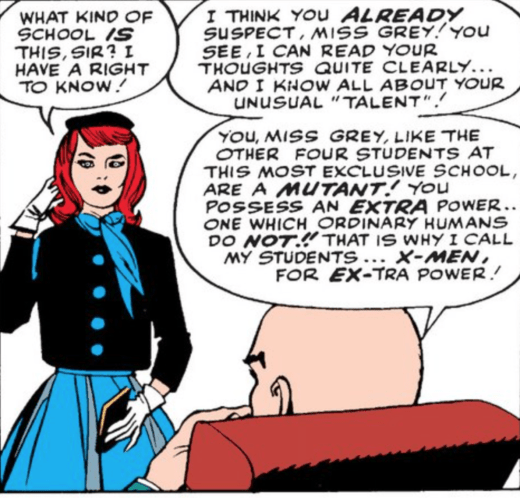
“But “extra” begins with…”
“I know, but the E-Men are a techno group from Leeds and they won’t sell me the name.”

So yeah, some novel ideas, and one or two characters (like Cyclops and Magneto) with striking designs and interesting powers. But on the whole, the early X-Men stories are considered the worst thing to come out of the Lee/Kirby partnership. Roy Thomas and Neal Adams took over in 1969 and produced what is generally considered an excellent run, but it wasn’t enough to save the comic from cancellation. Fast forward to 1975 and everything changed.
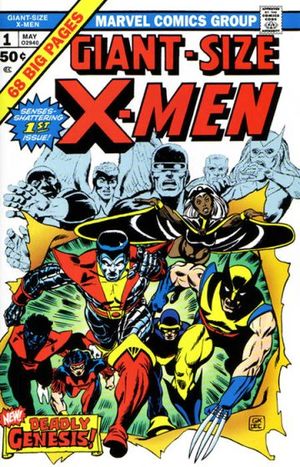
As a statement of intent, that’s pretty on the nose.

The relaunched X-Men series written by Len Wein and later Chris Claremont was a very different Beast (sorry) from the original, featuring a multinational cast of men and women from all around the world, including perennial fan favourites like Wolverine and Storm, to this day still the most iconic black female superhero. Claremont used the X-men’s status as mutants to make them an allegory for various oppressed peoples and the comic became one of the most popular in Marvel’s stable. (Yeah, I know Stan Lee says he always intended for Xavier to be Martin Luther King and Magneto to be Malcolm X but I call BS. If the early X-men really was a civil rights allegory then it went “All black people are evil except like six who live in a mansion and protect us from the evil ones”.)

Actually, if anything, it became too popular. By the nineties the X-Men franchise had grown so massive that Marvel could have cancelled every title that didn’t have an “X” in the title and still been one of the two biggest comic book publishers in America. And if there was one single franchise to blame for all the ills that befell the comic industry in the nineties it was the X-Men.

The speculator bubble? Check.

All the claws, cigars, chrome guns and armour? Check.

Unleashing Rob Liefeld on an innocent and unsuspecting world? Check.

Too. Much. Damn. Wolverine? Check. Check. Check and Check.

Seriously, the X-Men were Marvel in the nineties, not like today where they have been sent to live in the little room under the stairs while Marvel tries to sell you on the fucking Inhumans for the bajillionth time.

LOVE US DAMN YOU!!

So, my feelings on the X-Men are a little mixed. I adored the Fox cartoon growing up, and there have been plenty of stories I’ve thoroughly enjoyed. And yeah, as a concept, the X-Men are important. Really important. That there is this huge multi-media franchise about minorities fighting prejudice and oppression, that is a big frickin’ deal.

That said though, man, when the X-Men suck they really suck.

As a Catholic, I loved the story where a fringe Catholic sect tried to make Nightcrawler pope and then trick everyone into thinking the rapture had started with exploding communion wafers despite the fact that Catholics don’t actually believe in the rapture and that is literally the least stupid part of the whole thing.

In its way, the X-Men movie series is one of the most faithful in the history of the superhero genre. Because, like the comic it’s based on; when it’s good, it’s very, very good, but when it’s bad it’ll make you want to claw your eyes out. Which category does X-Men fall into? Let’s take a look.
(more…)

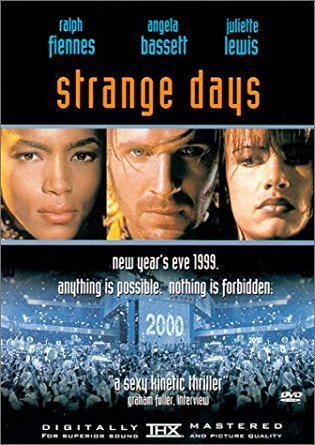
Strange Days (1995)

The future is the present, but moreso.

This is has been the guiding principle of futurist science fiction since the genre was invented; take the current status quo and extrapolate logically and presto, you have a plausible future setting for your story. Early British sci-fi is all about the ethics and difficulty of maintaining a vast empire (don’t worry lads, won’t be a problem long term). Star Trek had space hippies and an interstellar Cold War. Eighties sci-fi is really worried about these Japanese guys. Trouble is, the course of history is less an elegant upward line and more like a panicky chihuaha on meth that keeps running off in different directions. For example: The USA and USSR are locked in an inexorable arms race that can only end with nuclear anni…

Whoops. Never mind.

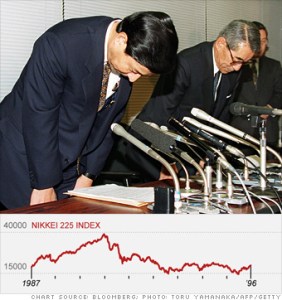
Well, the Japanese economy is an unstoppable behemoth that will crush its Western rivals and establish a new world order of corporate hegemony…

Huh.

Awesome, history is over and now America as the world’s lone superpower will rule over an endless long peace…

Where did THIS clown come from?

Ah jeez, America has moved inexorably to the right and the Republicans will maintain dominance for generations, slowly turning America into a paranoid police state…

What the hey?

Racism is over everybody! Peace love and kumbaya for all!

Okay History you are now officially taking the piss.

This is why it’s almost impossible to write science fiction that accurately predicts the future, because the present won’t sit long enough to have its picture taken. Even the works that do get props for accurately predicting the future tend to only get certain details right while getting the rest very wrong. William Gibson came damn close to predicting the internet, but he also predicted that the world would be ruled over by several competing mega-corporations when of course in reality it’s only ruled by one.

“BEHOLD MY GLORY!”

“Yes Disney, we all behold your glory.”

Which is why, as a good rule of thumb, if you’re writing sci-fi you should set it far into the future so that when you are inevitably proven wrong, you’ll be long dead and no one will be there to laugh at you (unless they use their futuristic magic tech to resurrect you purely so they can laugh at you which would be incredibly petty and, going on current trends, entirely probable).

Strange Days was released in 1995 and sets its tale of sci-fi dystopia in the misty far off time of…December 1999. That’s ballsy.

And yet, it honestly feels more prescient than any science fiction film I can recall seeing.

“Uh, Mouse?”

“Yo.”

“I just looked at this film and it has a ton of boobs Are we a boob blog now?”

“No, we are not a boob blog.”

Yeah, so I realise the movies I’m been reviewing lately have been a little more racy for a blog that rarely reviews fare rated harder than PG. Truth is, this is a review I’ve been trying to find the time to do for almost three years now (it’s one of the Joanna VR requests). This is one my friend Roger Courtney requested because he feels that it’s a ridiculously under-appreciated movie that I should review and everyone should see.

It is, I did and they should.

Let’s take a look.

(more…)

The Toxic Avenger (1984)

A Disney reviewer was asked by his brother to review a movie by the infamous Troma studios, and you won’t believe what happened next!

Actually, you probably will.

It’s garbage and I hated it.

“Ha ha ha aha! At last! I have defeated you!”

“Sigh. Hello, brother mine.”

“I knew requesting this review would finally crush your spirit!”

“Bitch, you haven’t crushed a damn thing.”

“What?! How can this be?!”

“Well firstly, because Anti-Depressants are AMAZING. But secondly, because you have fundamentally misunderstood the difference between different kinds of bad movie.”

So let’s talk about bad movies. Roughly speaking, bad movies can be broken into the following categories.

1)      Bad movies. Pretty simple. A movie that tries to be good but just fails. A comedy that is not funny, a thriller that is boring, a romance where you want all relevant parties to die in a fire. They’re common as muck and less useful.

2)      Good Bad movies. Movies that try to be good but are so bad that they’re entertaining. The Room, Plan 9, Birdemic what have you. Rare enough, but glorious.

3)      Good Good Bad movies. Okay, these are super rare. These are movies that are trying intentionally to ape Good Bad movies and do so in a way that makes them as entertaining as the real thing. Garth Marenghi’s Darkplace would be a perfect example if it wasn’t a TV Show.

4)      Bad Bad movies. These are less movies than acts of assault. The makers purposefully tried to make the most offensively awful movie possible just because. Serbian Film, The Human Centipede…if, for some reason you don’t know what those are, don’t google them, trust me.

5)      Good Bad Bad movies. A Bad Bad movies that’s actually so baroquely excessive and ridiculous that you can’t help but be entertained by it.

6)      Bad Bad Bad movies. And here is where they did it and it’s just gross and pointless and really, really boring.

The Toxic Avenger belongs in that final category. If it was just a little more competent I’d probably be doing an epic all caps takedown and trying out some of my most ingenious, Rube-Goldberg like profanity. But here’s the thing. You ever see Little Shop of Horrors? You know the bit where Steve Martin’s a sadistic dentist and Bill Murray is the patient who gets off on tooth extractions? It’s just no fun if the movie’s into it. I’m watching the movie and the movie is yelling “LOOK AT ME! I SUCK! DON’T I SUCK?! LOOK AT HOW BAD I SUCK!” and I’m just there half watching while scrolling through my Facebook feed muttering “Uh huh. Uh huh. Yeah. You sure do suck.”. I mean, why am I even here? The movie critiques itself.

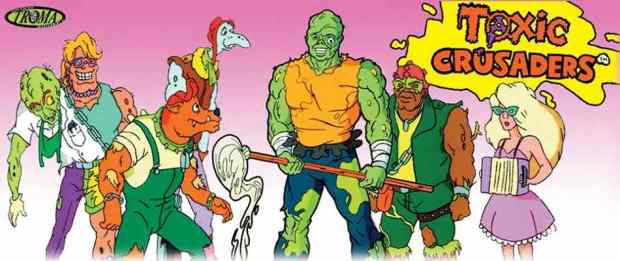
Alright, so who are Troma? They were founded in 1974 by Lloyd Kaufman, Michael Herz and Satan (he’s a silent partner). Since their founding they’ve dedicated themselves to making independent films outside of the restrictions of the studio system, executive meddling, corporate pandering, technical competency, artistic talent and human decency. Troma have a reputation amongst their fans as plucky underdogs striking a blow against the bland corporatized studio system. A reputation that is utterly bullshit, by the bye. Firstly, Troma is a frickin’ merchandizing machine. For fruck’s sale, the Toxic Avenger had a Saturday morning cartoon with its own toyline!

I wish I was joking. God in heaven, I do.

Secondly, Troma is not the Anti-Hollywood, it’s Hollywood without any of its redeeming features. Like the very worst Hollywood fare Troma’s films traffic in senseless violence, casual misogyny, homphobia and racism. They just do it worse. If Hollywood is a McDonald’s, Troma isn’t a friendly little local Mom and Pop artisanal burger joint, it’s a cheap knockoff McDonald’s where the burgers are even worse for you and chef won’t stop taking a dump in a the deep fat fryer. That said, much like Roger Corman, Troma has been responsible for giving many screen talents their first break, with folks like James Gunn, Vincent D’Onofrio and Samuel L. Jackson all making their bones with the studio. Y’know, kinda like how WW2 was terrible but at least it gave us computers and space travel. The Toxic Avenger is by far Troma’s biggest hit and the face of their brand.

Truth in advertising, folks.

How bad is it? Let’s take a look.

(more…)

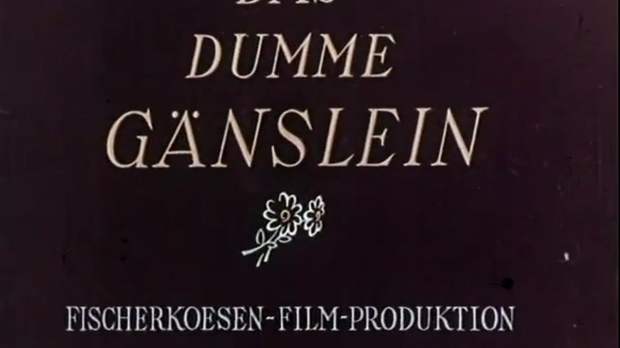
Mouse Goes to War: Das dumme Gänslein (1944)

Studio: Fischerkoesen-Film-Produktion

Country of Origin: Nazi Germany.

First Screened: 20 July 1944

I find it terrifying to consider that, ten or even five years ago, I would have had absolutely no hesitation in writing this post. I mean, of course if I’m doing a retrospective on WW2 animation shorts I’d look at Nazi animation. Why wouldn’t I? The Nazis were, after all, kinda involved in the Second World War, right?

But that would have been in a simpler time when it seemed obvious that, whatever else we might disagree on, we were all more or less on the same “Nazis are bad” page (it’s a good page, nice font, excellent paper quality, highly recommended). But then…

Well, it’s been a year. That it has.

So yes, I did honestly consider scrapping this portion of the series but ultimately I decided against it. One of the goals of the Mouse Goes to War series is to inform and I’ve always believed that knowledge is not dangerous, only ignorance. And today’s short is a fascinating demonstration as to how fascist themes and messages can be worked into seemingly benign texts.

Y’know.

Just in case that becomes a useful skill at some point in the future.

(more…)

Merger Madness

“Uh, Disney?”

“SPEAK, WORM.”

“How ya doin’, buddy?”

“I AM THE RULER OF ALL CREATION! THE STORIES OBEY MY EVERY WHIM! THE FILMS AND ALL THEIR SPOILS BOW TO MY POWER!!”

“Yeah…yeah, that’s what I thought. Ooooooh boy. Look, Disney? I love you.”

“YOUR LOVE SHALL BE REWARDED.”

“Let me finish.”

So in case you’ve missed the news, Disney just went on a little spending spree and bought the entire film and TV wing of Fox, who’ve decided to retire to focus full time on caring for an elderly relative.

This deal is huge. This makes Disney’s acquisition of Marvel and Star Wars seem look like mere aperitifs. 20th Century Fox is not just one franchise or a relatively small upstart studio. It’s one of the most powerful film companies in history with a back catalogue of some of the biggest films ever produced stretching all the way back to the 1930s. And Disney just ate them.

“FANTASTIC FOUR FOR THE MCU!”

“OH YES THANK YOU BENEFICENT ONE!”

No! Bad Mouse! Can’t let myself get distracted. Look, I’m a huge Disney fan. I love the Disney canon, I love the Marvel movies, I really love the new Star Wars canon. I respect that Disney actually take care of their toys. Yes, I know. It’s all about money. But the way they have decided to make money is by making really, really, good, faithful movies of beloved properties. If one company has to own the entirety of Western Civilization then honestly that company being Disney is the best case scenario but…

This is nuts, right? This is insane.

Consider everything Disney owned before this: Their own movies, Star Wars, Marvel, Pixar…and add to that:

  • Avatar
  • Planet of the Apes
  • Alien
  • Predator
  • Modern Family
  • Die Hard
  • The X-Men
  • The Fantastic Four

(more…)

Mouse Goes to War: Nimbus Libéré (1944(?))

Studio: Les Films Robert Macé

Country of Origin: Vichy France

First Screened: Unclear, sometime in 1943/1944

Since starting this blog I’ve reviewed just north of 150 animated films. I’ve been an avid fan of animation from literally before I could talk. I have watched thousands upon thousands of hours of animation in my lifetime.

Nimbus Libéré (“Nimbus Released”) is the worst cartoon I’ve ever seen and it’s not even close.  If Foodfight! was a perfect 0, Nimbus Libéré is a minus googol. In every technical area, animation, sound, writing, it’s abysmal. In style, it is repellent. In intent, it is pure evil.

English language sources on the cartoon’s origins are thin on the ground and to be honest, I can’t even say for certain whether it was first screened in 1943 or 1944 (going by the subject matter, I’d guess early to mid ’44). Although credited to “Cal”, it was the work of Raymond Jeannin, a young French animator in his twenties whose two surviving works are Libéré and La Nuit Enchanté (“The Enchanted Night”).

La Nuit Enchanté is a fairly terrible mish-mash of awful animation and swiped character designs (Jeannin’s moderate talent in aping other people’s designs were probably what got him roped into doing Nimbus).  But it’s not fascist. I mean, there are some deeply uncomfortable racist stereotypes but, if I’m honest, nothing noticeably worse than what Warners was doing at the time and we don’t go around calling Tex Avery and Chuck Jones Nazis.

But Nimbus…my God in heaven.

(more…)

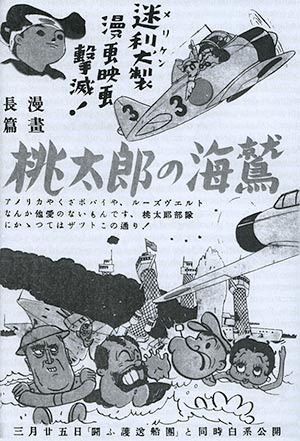
Mouse Goes to War: Momotarō no Umiwashi (1943)

Studio: Geijutsu Eigasha 

Country of Origin: Empire of Japan

First Screened: March 25th 1943

Momotarō the Peach Boy is a popular Japanese folk character who’s been round since the Edo period. Story goes, childless couple see a peach floating down the river, they open it up and inside is a baby who’s been gifted to them by Heaven. The boy grows older, goes on a quest, meets a monkey, dog and pheasant and they all team up to kick the asses of some local demons. It’s a really cool little fable, equal parts Moses, Superman, Wizard of Oz, you can definitely see why it’s remained so popular down through the centuries. And then, World War 2 had to come along and ruin everything.

Figuratively and literally.

American cartoon characters like Mickey Mouse and Popeye were hugely popular in Japan in the years leading up to the war, so the Imperial Regime wanted their own cartoon mascot. Momotarō was an obvious choice what with his cute, boyish appearance and cast of animal sidekicks. This led to series of films starring the character directed by Mitsuyo Seo who would go on to be one of the guiding lights of the animé industry after the war. The first of these films was the short Momotarō no Umiwashi  (“Momotarō’s Sea Eagles.”) I say “short”, but at 38 minutes that’s really taking the piss. Oh well, at least they didn’t stick it in front of a Pixar movie and make everyone watch it all the way through.

Disney: Worse than the Empire of Japan.

(more…)

Avatar: Sozin’s Comet

Okay, before we even start the starting I need to talk about Azula.

Azula, for those of you who knoweth not, is Avatar’s secondary antagonist. She’s the daughter of Fire Lord Ozai, the main villain, and the brother of Zuko. She’s an incredibly skilled fire-bender, a brilliant tactician, and a straight up psychopath.

Now a good few years ago I remember I got talking to some dude at a party about Avatar, and we were just fanboying over it as you do, and he looks me straight in the eye and says three words: “Azula. Best villain.” And he didn’t mean “best villain in the show”, he meant “best villain in any piece of fiction, period.” And I nodded at that, and didn’t even really consider what it was that I was agreeing to.

And it’s ridiculous, when you think about it, right? How could the greatest villain of all time be from a frickin’ Nickleodeon show from the early 2000s? It’s stupid on the face of it.

And then I re-watched the series for these reviews and a slightly scary thought started to creep over me:

Azula. Best villain.

Actually…maybe?

Something happened here. Something happened in the planning, creation and execution of this character. Doubtful if any of the parties involved tried to replicate it again it would work but…goddamn they hit something when they created Azula. I’ve spent far too much time obsessing over this one character and why she work and far too little time thinking about Sozin’s comet (full disclosure, I was in hospital this week with yet another of my periodic bouts of intestinal insurrection so this review might be a little short) but I want to just set out why I think Azula works so well.

From the very beginning, I’ve always maintained that a good villain is an absolutely crucial element in whether a story works or not. Some movies don’t have antagonists, that’s true, but most do. And when they do, whether or not the villain works is a pretty reliable yardstick as to whether the movie works too. But what makes a “good” villain, if you’ll pardon the oxymoron? Well, there’s no one way to be a good villain but there are, broadly speaking, three.

  1. Be entertaining. These are the flamboyant moustache twirlers. Not particularly deep, but by God they have style. Think of Jafar, Maleficent, Hella from Thor: Ragnarok. You can practically hear little children hissing whenever they’re onscreen.
  2. Be believable. Here we have your down to earth villains. They’re real people, with understandable, compelling motivations. They’re evil, sure, but in a way that’s perfectly logical for a person in that situation. Usually found in gritty kitchen sink dramas. If a villain reminds you of someone you’ve encountered in real life, they probably belong here.
  3. Be absolutely fucking terrifying: Straight up monsters. The kind of characters that tap into deep, primal fears. Xenomorphs, Jason Voorhees, Michael Myers.

No, not him.

There we go.

Thing is, most great villains manage one of the above. Some of the true titans manage two (Heath Ledger’s Joker is a solid 1 and 3). But it’s almost impossible to find a villain who fits into all three categories. In fact, it sounds almost impossible. How can a villain be entertaining and grittily realistic and absolutely terrifying? It would take an incredible feat of writing and performance to make a character like that seem anything other than poorly defined and schizophrenic.

There’s a scene in the first episode of Season 2 of Avatar that sums up how all three elements of great villainy combine in Azula.  She’s been sent by the Fire Lord to tell her brother Zuko and her Uncle Iroh that his banishment is over and that he’s to come home. But in reality, Zuko and Iroh are to be executed for treason. She tells Zuko that he can come home and Zuko says nothing, rendered speechless upon hearing that his banishment is over at last and his father wants him back.

“You should be happy.” Azula says coldly “Where’s my “thank you”? I want my thank you.”

It’s funny, in a dark way, that Azula is so psychotic that she wants gratitude from her brother for luring him to his unwitting death. But there’s nothing campy about it. There’s something just so chillingly believable about Grey De Lisle’s vocal performance. You know this girl. And if you don’t, you are damn lucky.

And lastly is the sheer menace that the character exudes, with more than a little assist from the excellent score.

Honestly, the only other villain I can think of who hits all three elements so perfectly is, well…

Yeah. High praise.

(more…)

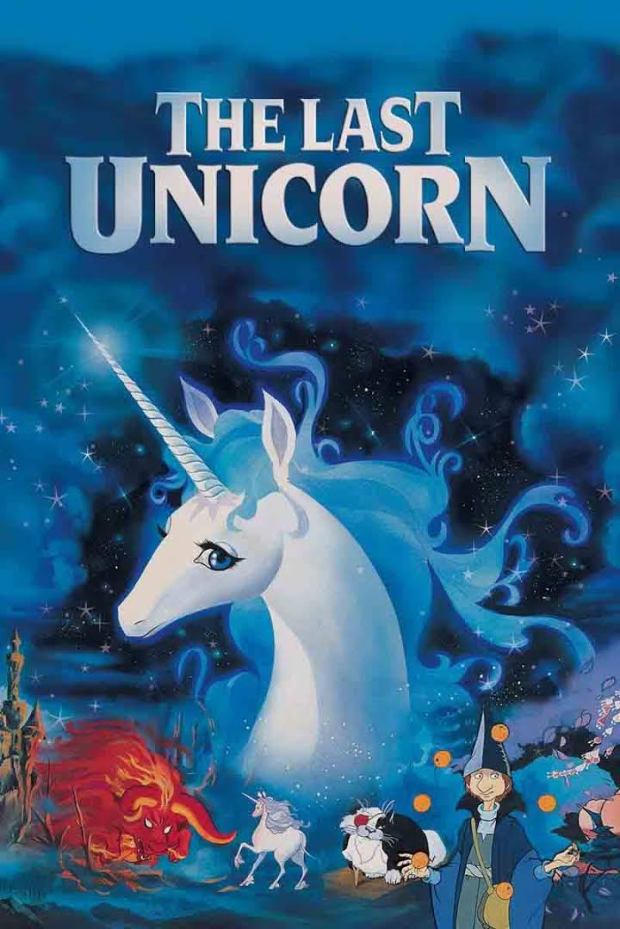
The Last Unicorn (1982)

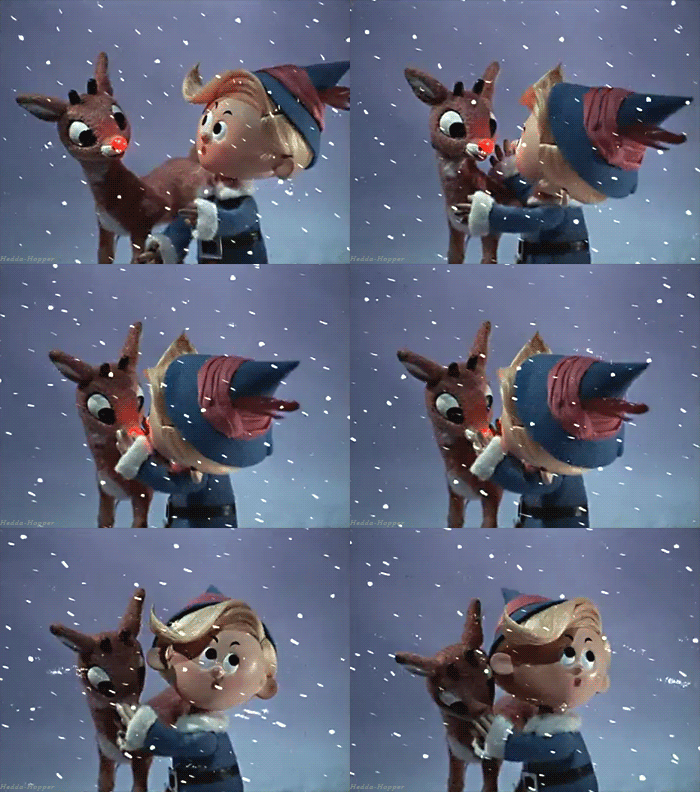
Animation history is full of odd twists and turns and weird connections but one of the weirdest is that you can trace a direct line between this:

And this:

Rankin Bass is most famous for its stop motion Christmas specials but from the late sixties onwards they dabbled in feature length traditional animation. The Rankin Bass filmography is like an unfinished rollercoaster, a madcap frenzy of highs and lows before it all ends in the bloody, limb mangling, fiery catastrophe of 1999’s The King and I.

Ugh. Yeah. Probably. Some day.

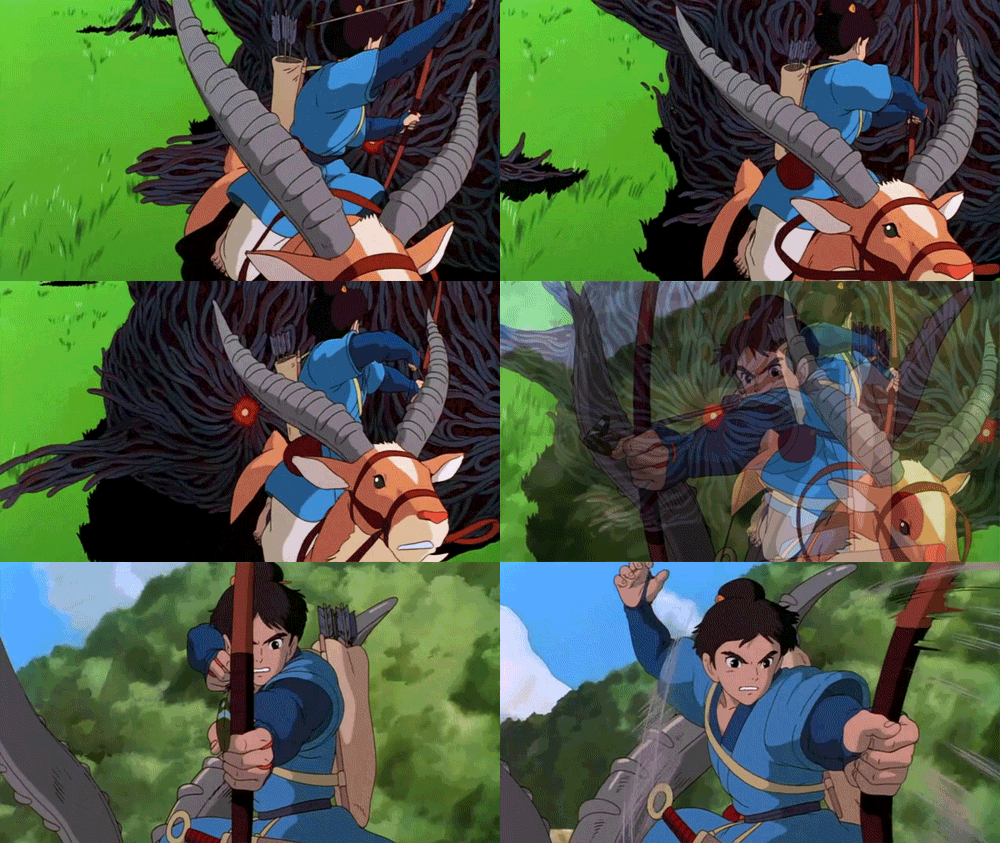
But they did produce what is, by fairly solid consensus, a true classic with 1982’s The Last Unicorn, based on Peter S. Beagle’s book of the same name. While Rankin/Bass produced the film, the grunt work was actually farmed out to a Japanese company called Topcraft who’d later be hired by Hayao Miyazaki to animate Nausicaa of the Valley of the Wind and the rest is history.

I get the feeling this movie was a much bigger deal in the States than it was in Ireland. I never saw it growing up, and I don’t remember anyone talking about it. But that pedigree alone was enough to make me curious.

Let’s take a look.

(more…)

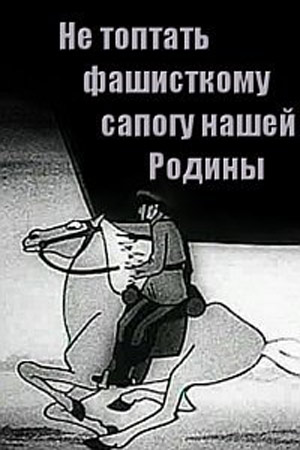
Mouse goes to War!: Fascist Jackboots Shall not Trample Our Motherland (1941)

Studio: Soyuzmultfilm

Country of Origin: Union of Soviet Socialist Republics

First Screened: 1941 (Exact date unclear)

All of the shorts we’ve looked at in this series thus far have been propaganda to a greater or lesser extent. But they weren’t just propaganda. American audiences liked their propaganda leavened with comedy or drama or catchy tunes about farting in Hitler’s face. The Russians though? They took their propaganda straight while growling at the bartender to leave the bottle.

The blunt, hammer-blow-to-the-noggin nature of Soviet propaganda is right there in the name of today’s short Fascist Jackboots Shall Not Trample Our Motherland.

“Good title.”

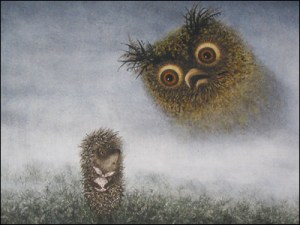
So a little background. Jackboots is one the earliest productions of Soyuzmultfilm, the pre-eminent home of Russian animation and screen puppeteering. The studio is still going to this day but its heyday was during the Soviet era where they produced beautiful and beloved animated classics like the Winnie-the Pooh trilogy and Hedgehog in the Fog.

What’s the Russian for “smurges”?

Now keep in mind, I don’t read Russian, so all my information is coming second hand from places like Wikipedia which claims, for instance, that after the fall of the Soviet Union Soyuzmultfilm’s facilities were sold to the Russian Orthodox Church and then promptly burned to the ground by Cossacks who believed that their puppets were animated with the blood of Christian children. And, while anything on the internet originating from Russia should normally be treated as purest truth from the beardy lips of God Himself, I find that a bit hard to swallow.

I mean c’mon, the blood of Christian children hasn’t been used to animate puppets since the late forties.

Anyway, that was all in the future. Although originally based in Moscow, Soyuzmultfilm was evacuated to Samarkand when the Germans invaded and were put to work creating propaganda for the war effort. And one of those films was Fascist Jackboots Shall Not Trample Our Motherland.

(more…)