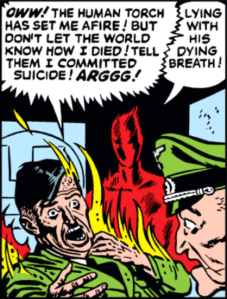
“Mouse, stop showing that panel of the Original Human torch calling Hitler a liar while burning him a…”
“NEVER!”

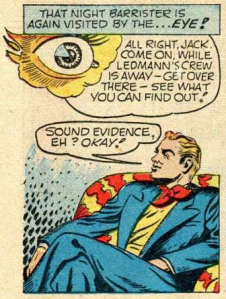
In the forties we had a superhero who was a giant flying eyeball. How’s that for diversity?

“Two words. Sput! Nik!”

“I AM THE NIGHT!”

“Mouse, stop showing that panel of the Original Human torch calling Hitler a liar while burning him a…”
“NEVER!”

In the forties we had a superhero who was a giant flying eyeball. How’s that for diversity?

“Two words. Sput! Nik!”

“I AM THE NIGHT!”
A few weeks ago I wrote a post about Donald Trump where I called him mean names and mocked the size of his tiny, tiny hands. It was fun. We all laughed. Good times.
He’s now the nominee of the Republican party.

Also, around a month ago I wrote a post on the results of the most recent Irish general election and how it was going to be damn near impossible to form a government. Let’s tie those two together almost as if that was my plan all along. *tents fingers*
Trump. What? FUCK.
Trump What FUCK indeed, amigo. There’s a whole squirming nest-of-naked-baby-rats mess of factors that have brought us to this point and account for the appeal of Donald Trump.
Like racism?

This is a big part of it, no question. Some of it is just the general home-grown racial tension that’s been apiece with the American cultural landscape since…oh, Columbus. But more specifically to this moment in history is the fact that vast swathes of white America is in full on demographic panic. Current US immigration policies have led to a huge shift in the size of the Hispanic population relative to non-Hispanic whites, something encouraged by both main parties. The Democrats, obviously, because Hispanics form a core part of their coalition, but the Republicans too because, while they make political hay from coded racist appeals to white voters, having more low skilled workers than there are low skilled jobs helps keep wages depressed which is good news for the Koch brothers and other corporate Republican donors. Throw in lingering post 9/11 Islamophobia and a candidate who promises to deal with all of the above in short order, and presto, you have a Trump rally.
So Americans are just racist and we can all go home?
No, and here’s where I think it gets scary. Because I think the rise of Trump means that we’re seeing the final days of American democracy as we know it.
To counterbalance the grimness of that last sentence, here is a picture of a kitten wearing a jaunty little hat.

Now, I don’t mean that Trump is going to win (he probably won’t) or that once he won he’d abolish democratic institutions and declare himself dictator*. Any president who tried that (particularly one whose support in his own party is as tenuous as Trump’s) would very quickly find himself impeached, arrested or shot in no particular order.
No, the problem is built into how America actually votes. Sooner or later, Trump was going to happen.

Yes. This was a real goddamn thing.

Yeah, pretty much.

“Jerry’s an alright sort. He’s just being lead by a bad egg.”

Yes. “Mild” violence. If you’re a fucking DROOG.
True story. A few years ago now when I was getting ready to move out of my parents’ house, I was clearing out my stuff from my bedroom, the bulk of which was pretty much every issue of SFX magazine published between 1997 and 2004. And I found myself with two copies in my hand, one from August 2001 and the other from October 2001. I idly flicked through the August issue and found myself reading the comic reviews, one of which was a little quarter-page panning of Captain America # Fifty Bajillion drawn by Who Knows and written by Who Cares. The review was scathing; the art’s terrible, the writing’s appalling and worst of all, the main character’s just not interesting or relevant anymore. The review finished by noting that Marvel had been dropping hints that one of their oldest characters was going to be killed off and it didn’t take a genius to figure out that Cap was not long for this world. I then flicked through the October 2001 issue and again turned to the comics section. And there was a full page review of the new Captain America #1, with a top tier art and script team and a story about Steve Rogers defending Muslim New Yorkers from racist attackers while trying to track down an Al Qaeda cell.
Cometh the hour. Cometh the man.
For a character whose entire schtick is being a man out of time, when he was originally created Captain America was actually ahead of his time. In America in 1940 public opinion was firmly against become involved in another European war. In New York however, many of the men working in the comic book industry were the children of Jewish immigrants who often still had family back in Europe and felt a personal connection to the horrors being committed by the Nazis. One of those men was Joe Simon who conceived of a patriotic, Nazi-battling character named “Super American”. Deciding that the name was a little too similar to a certain other superhero, he changed it to “Captain America”, a name so instantly iconic that nowadays you just have to put the word “captain” in front of any random noun and it sounds like a superhero name. Simon pitched the idea to his editor Martin Goodman who liked it so much that he ordered him to create a solo Captain America series, a big gamble to take on an untested character. Simon’s usual partner was artist Jack Kirby but Simon wanted to bring in two additional artists to deal with the workload of creating an entire book’s worth of stories based on one character. But Kirby was so invested in the character of Captain America that he insisted on drawing the entire book himself, which he did, and on time.
The first issue sold as well as any comic that features Hitler getting punched in the face should. The character was an immediate hit, becoming the first genuine superstar character of Timely comics (which would later become Marvel). Not all the attention was positive, however. American Nazis began sending threatening letters and one time even called the offices of Timely challenging Jack Kirby to come down and fight them in the foyer. Kirby ran down only to find they’d run off because it was Jack Frickin’ Kirby and they may have been Nazis but they weren’t crazy. Regardless, for a while the city of New York actually had to provide police protection to the building. After Pearl Harbour, Captain America became even more popular, with his comics distributed to American service men to boost morale. Many of the Timely artists and writers were drafted during this period. Stan Lee, for example, who got his break in Timely writing Captain America prose stories (he was the one who came up with the whole “throwing the shield as a weapon” thing) was put to work making propaganda. One day he was found breaking into the army post office, trying to mail a script off to Timely. He was told he’d be court-martialed, only to be released the next day when the editor of Timely rang his commanding officer to point out that jailing the writer of Captain Frickin’ America might be bad for the army’s morale.
Jack Kirby also joined the army but opted to serve on the front lines, becoming one of the few American soldiers who had experience fighting Nazis as a hobby before going pro.
Unfortunately, America won the war…I mean obviously not “unfortunately” in the grand scheme of things but unfortunate for Captain America. You see, Captain America was very much a reaction to the Nazi menace, which is what made the character so timely (pun!) and important. But of course, once that menace was defeated, Captain America didn’t really have a purpose anymore. In fact, the same could be said for the vast majority of superheroes who had followed in his wake. The superhero boom pretty much died with Hitler, with only a few characters like Superman, Batman and Wonder Woman surviving the decade. Timely tried repurposing Cap as a commie fighter, but it just wasn’t the same. Timely changed its name to Atlas, dropped the superhero genre entirely and started focusing on sci-fi and monster tales.
It wasn’t until the sixties that Cpatain America got his second origin story. The third issue of The Avengers had the newly formed team finding Captain America floating in the Arctic Sea in a block of ice having gone missing near the end of WW2 (all the stuff about him fighting communists was retconned as actually having…you know what, fuck it, no time). Captain America then joined the team as a man out of time, a morally pure Rip Van Winkle trying to adapt to a confusing and complex modern world, and that’s pretty much been his niche ever since.
Since then, Captain America has had his share of classic runs and great stories, but there’s no denying that he’s a tricky character to do right. Like Superman and Wonder Woman, it takes a writer with skill to make him work (though it’s a truly wonderful thing when he does). For a long stretches of the twentieth century it often seemed like Marvel didn’t know what to do with Captain America, often giving him to creators who really had no business writing the character, which is how we got Rob Liefeld’s godawful Heroes Reborn Captain America.
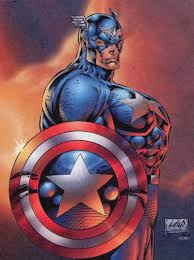
I’d say “We do not speak of the Sentinel of Libertitty” but let’s be real. We never stopped.
Since the beginning of the 21st century however, Cap has once again become one Marvel’s top tier characters, attracting industry leading talent and the kind of popularity he hasn’t really known since the time of his creation. Part of that is, well, yeah, obviously…
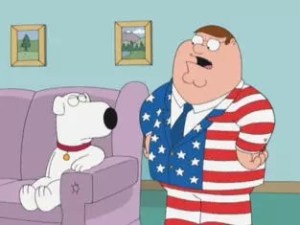
“9/11 changed EVERYTHING Brian!”
But as well as the natural impulse to rally around such a patriotic symbol in troubling times, Captain America is simply a character whose time has come again. In the forties, Cap was popular but he was by no means unique. The stands were overflowing with patriotic, square jawed do-gooders. Hell, Captain America wasn’t even the first superhero to wear the American flag and carry a shield. But the superhero genre has changed so utterly since those days that what once made Captain America almost generic now makes him almost unique. Nowadays, a superhero who’s just a genuinely decent person is refreshing and almost edgy. He may be old fashioned, but these day? Like the man said, people need a little old fashioned.
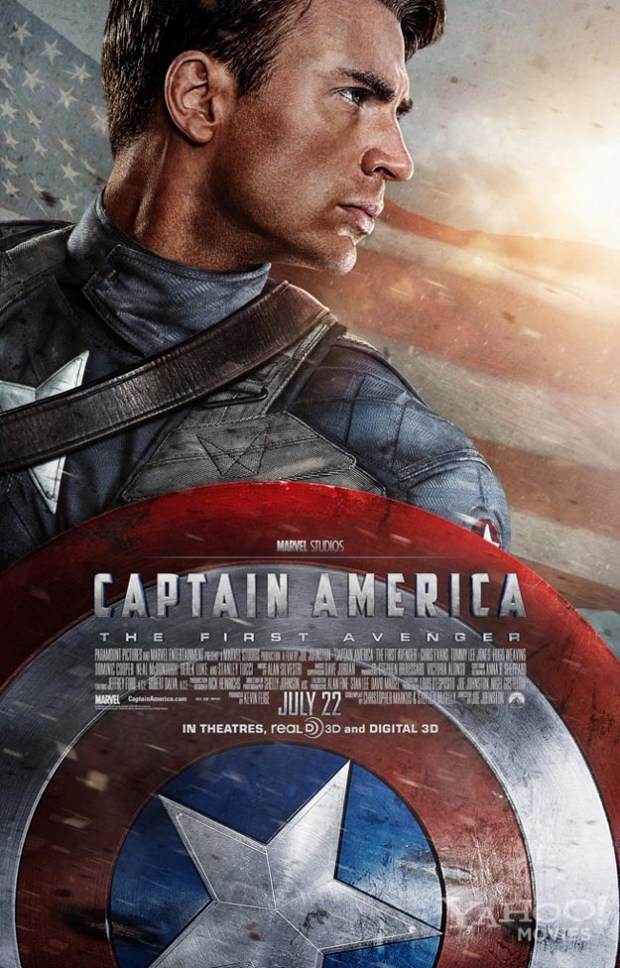
2011’s Captain America, the first movie featuring the character that fans will actually acknowledge exists, works and works so damn well, because it gets that.


“C’mon guys, we got a review to do!”

“Fuck you, mazerunner!”

“WHOAH! DUDE!”

“We don’t review movies on April 1st. We told you this.”

“Yeah dawg, this mo-fawkin day is like your personal “Friday 13th done knocked up Halloween and this here’s there ugly-ass day baby.” day”

“We all know what’s going to happen. Horned King or BluCatt or one of the bajillion evil dudes you’ve managed to piss off will make you review something terrible and who suffers?”

“Me?”

“US! So I refer you my previous “Fuck you mazerunner!” Good day!”

“Guys…”

“I said “good day” sir!”

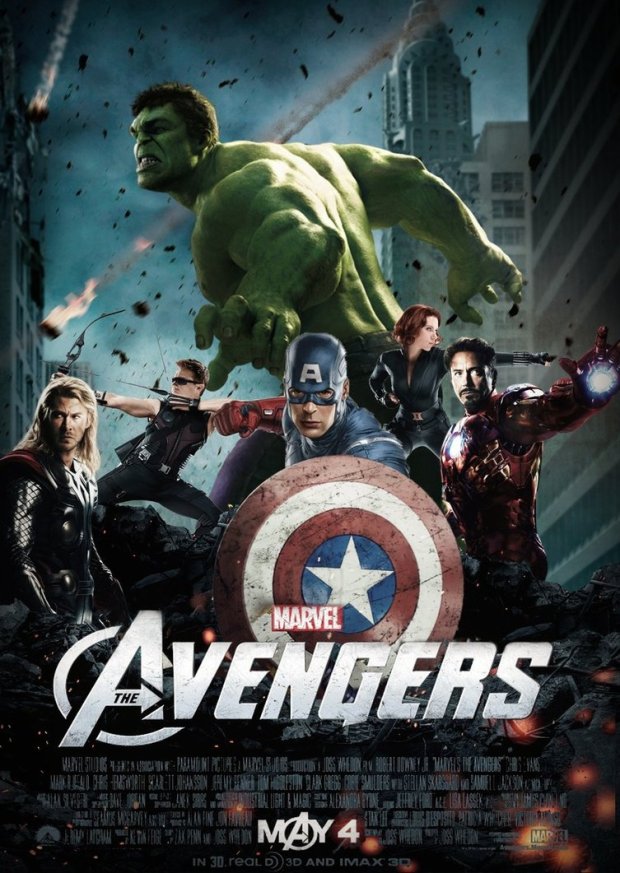
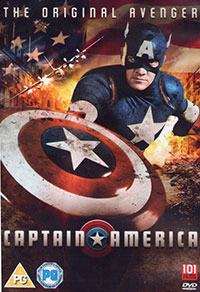
Guys c’mon. That was the old Mouse. This blog has become a lot more serious since I started reviewing Marvel movies. As the movies have become more mature, I say, so too has Mouse. Look, today’s movie is Captain America: The Original Avenger. It’s a great film, nothing bad’s going to…

“Don’t you mean “first” Avenger?”

“No, look, it says here right on the cover…”

Wait. That’s not Chris Evans and his boyish blue eyes that would melt your heart.

“Mouse. Sit down. Our game is about to begin.”

“Katzenberg?”

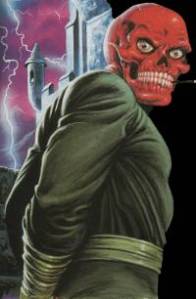
“Please. Please. Red Skull is fine. I have come to collect on that favour you owe me.”

“I owe you a favour?”

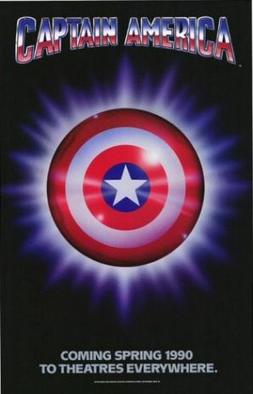
“Of course. I allowed you to review How to Train Your Dragon and now you must do something for me. You must review 1990’s Captain America, one of the worst Marvel movies ever made!”

“Shock! Gasp! That thing you said would never happen happened!”

“Skull. You forget who you’re talking to. I’ve reviewed Foodfight. Your nineties Golan-Globus schlock has no power over me.”

“Then come. And let us see if this snark of yours is stronger than my hate.”
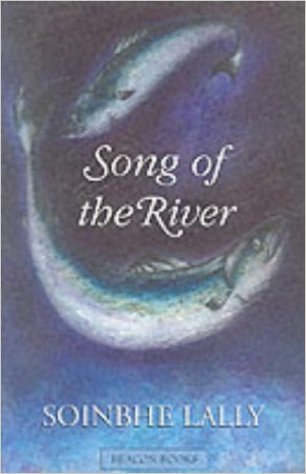
Pff. Women, amirite? One day you’re walking down the beach and you see a beautiful woman walking out of the sea, you hit it off, you get married, have a couple of kids and then BAM! Turns out she’s a seal and she’s off gallivanting with her seal buddies without even leaving a forwarding address for child support. Ain’t it always the way? Well, maybe not where you come from but in Ireland it’s practically an epidemic. The canon is full of selkie stories. Shit, if I had my druthers, every Irish exchange of marriage vows would include the sentence “And by the way, I am totally not a seal.”
Selkie stories are not exclusively Irish, of course. In fact, it’s probably more accurate to call them a Scottish tradition but you also find Selkie tales in the Faroe Islands and Iceland and despite the basic similarities (seal turns into a woman, marries a human) they run the gamut from tragic romances to horror stories. A common feature is that the Selkie has a seal-skin cloak, without which she can’t turn into a seal again. The fisherman hides the cloak from her for years, until one day their children are searching around in the attic, find the cloak and show it to her, at which point the Selkie’s all “Laters!” and makes her escape. A particularly grim version from the Faroese Island of Kalsoy has the Selkie return to her seal family, only for her human abductor to kill her husband and children in revenge. The Selkie then swears to basically kill every dude from his village until there are enough bodies to circle the entire island which she is still doing to this day. Then there are other stories where the marriage between the fisherman and Selkie is loving and consensual, but she has to to turn into a seal to save him from drowning and so can never return to live on land. The universal theme running through these stories is loss. Happiness is transient, loss is forever. Sounds like a fun cartoon to me!
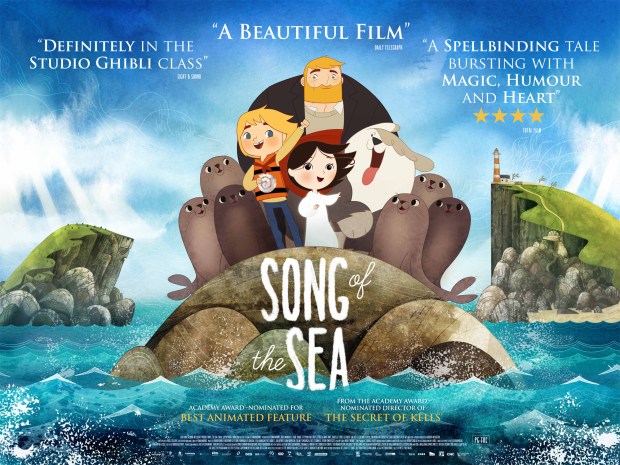
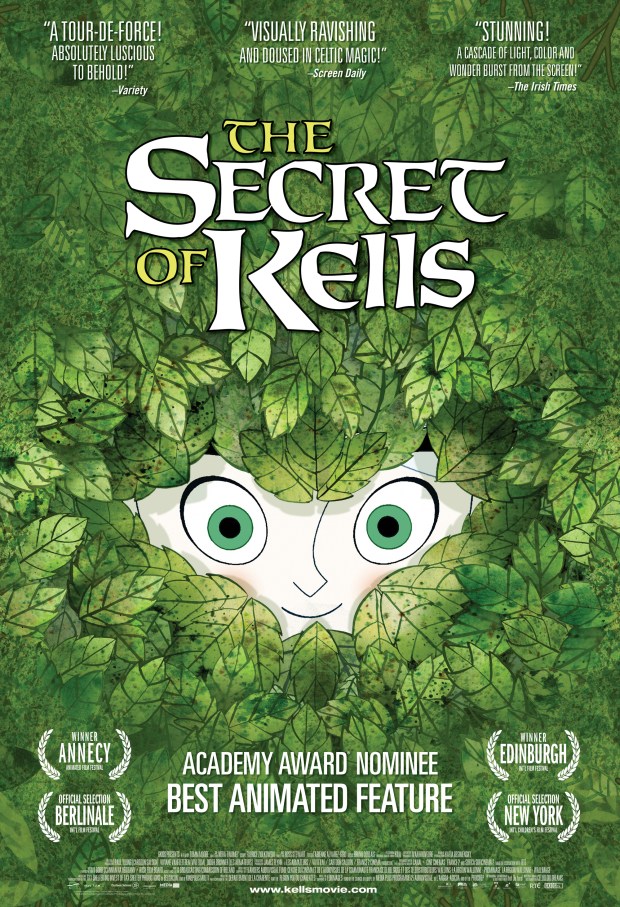
To follow up the phenomenal success of Secret of Kells, director Tomm Moore basically created Song of the Sea, an to homage selkie stories and to his own childhood growing up in Ireland in the eighties. I also grew up in Ireland in the eighties, but I remember it being distinctly less magical.

“Well, apart from the whole “being transformed into a mouse” thing.”

YOU’RE WELCOME, BARRY.

“Yes, now quit stalling.”

“IT’S COMMON SENSE PEOPLE!”

It is also feckin’ smurges.

HE WAS TERRIBLE.

“This. This is me. This is what I get up to.”

Meanwhile, Cúchulainn sits on the damn shelf.

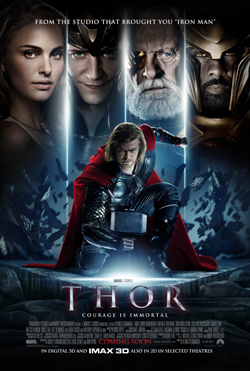
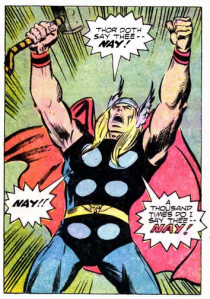
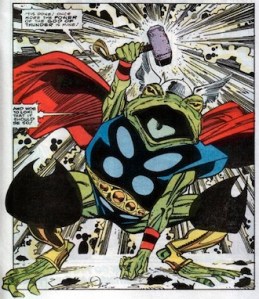
This is normally the part of the review where I would say “we do not speak of the Frog of Thunder” but even this was AWESOME.

“The director’s an ass.”


Some, admittedly, take more heavy lifting than others.
But Iron Man’s villains probably require more heavy lifting than probably any other hero’s. Even Tony’s arch-nemesis, The Mandarin, while certainly a cool villain, doesn’t really have that much that sets him apart from similar bad guys like Doctor Doom or Baron Mordo other than the fact that in his early days he looked like Mickey Rooney in Breakfast at Tiffany’s.

Oh sixties.
As for the rest, they were mostly just an interchangeable series of commies in robot armour and rival industrialists. I mean hell, when the time came to find a villain for Iron Man 2, they actually just slapped two of them together. Ivan Vanko is a mishmash of Whiplash and the Crimson Dynamo. And nobody even cared. Think about that for a minute. Can you imagine if they did a Batman movie and they just merged the characters of Joker and the Penguin into one guy and called him the Penker? My God, the fans would skin them alive and hang their carcasses in the online forums as a warning to others. That’s how lame Iron Man’s rogues gallery is. Not even Iron Man fans care enough to get mad about changes to the source material. But, did it work? Were they able to reverse Iron Man’s traditionally awful luck with villains? Will our hero triumph over the Penker? Let’s find out! Right after these messages.