Okay.
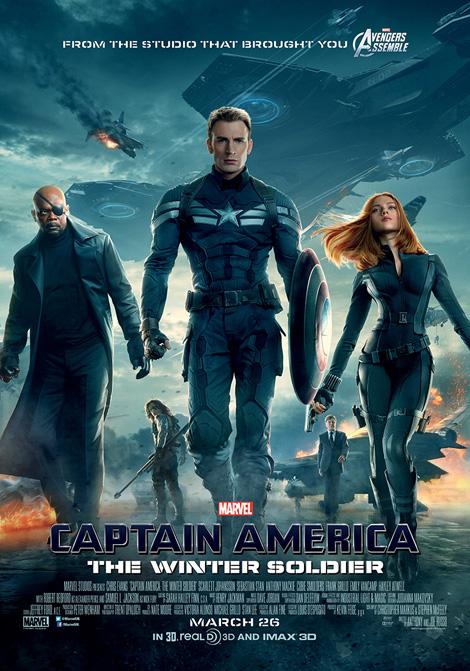
You know what? This year has been pretty fucking awful and we all need, nay deserve, a break. The world is a lot scarier and more uncertain than it was before (and it was already pretty damn scary and uncertain) and there wasn’t much I could do about it then and there certainly isn’t much I can do about it now. But I can write something that hopefully you’ll find funny and interesting and maybe brighten your day a little and I categorically refuse to believe that that’s nothing. So how about this? No more talking about politics and America and we just enjoy a review of The Winter Soldier, a political thriller starring Captain America OH GODDAMNIT!!!
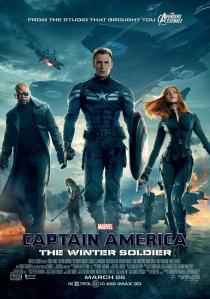
Anyone want to skip ahead to Guardians? Anyone?
Sigh. Okay. Let’s review the movie where the living exemplar of all that is best in America defeats the forces of tyranny and hatred.
Y’know. Escapism.
***
I remember when it was announced over a decade ago that Marvel were bringing Bucky Barnes back to life and I was opposed to the whole thing. Damn opposed!
Bucky Barnes is one of Marvel’s oldest characters, debuting all the way back in 1941. Bucky and Captain America were introduced as a twofer in the very first issue of Captain America Comics because, ever since Robin had been introduced in Batman the previous year, superheroes had to have kid sidekicks. It was non-negotiable. In his origin story, Bucky is a kid who likes hanging around a military base and one day sees Steve Rogers changing into his Captain America costume. Bucky tells Steve that the only way to protect his secret identity is to let him be his crime fighting partner and Cap of course has the kid sent to a military lock up as a threat to national security agrees. This, incidentally, is how Steve Rogers deals with anyone who walks in on him changing, which is how you got such storied superheroes as Clothing Store Assistant Girl and the Incredible Mom. So anyway, Bucky was a pretty blatant Robin rip-off and not even a particularly interesting one and the character was eventually replaced by the female sidekick Golden Girl, before then being brought back for the fifties “commie smasher” version of Captain America in the fifties. When that comic failed, both Cap and Bucky were retired by Marvel.
Then came the sixties, and with superheroes popular again, Stan Lee decided to bring back Marvel’s most popular character from the war era, Captain America, to take his place alongside the Fantastic Four, Avengers, Spider-Man and all the other classic characters that Stan Lee and his collaborators had been minting at a rate of around three a second.
But Stan did. Not. Want. Bucky.
At all.
Why? Well, sidekicks from Robin onwards had been conceived as surrogates for their young, mostly male audience. But Stan found the whole idea of kid sidekicks to be condescending, and so instead had created teen superheroes like Spider-Man and the new Human Torch who were teenagers but also the stars of their own stories rather than playing second fiddle. Then there was the issue of the comics industry’s brush with death in the early fifties thanks to the publication of Seduction of the Innocent by Doctor Frederic Wertham which made the case that comics were a dangerous influence on the minds of America’s youth. Now the bulk of Wertham’s argument was against horror and crime comics but he also took aim at superheroes, claiming that Batman and Robin were clearly in a sexual relationship. Which, of course, if he had actually bothered to read the comics he would have realised that he was absolutely, totally, 100% percent correct.
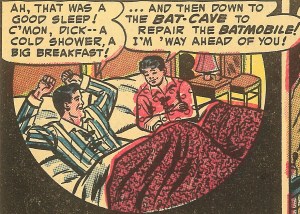
So yeah, Stan rather wisely decided that the last thing the newly revived superhero genre needed was little boys in tight shorts running around so when Cap was revived in Avengers #4 he revealed that Bucky had died at the end of the war trying to stop a bomb from destroying London and that they were totally just friends, you guys.
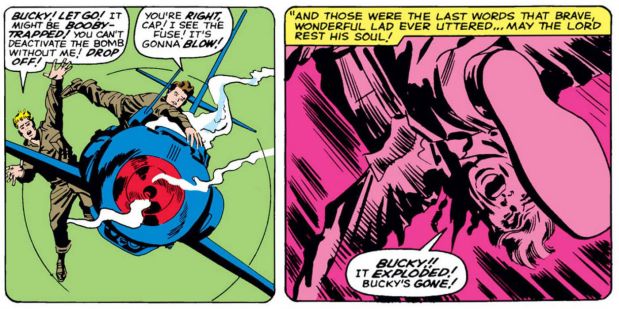
This change gave the fairly one-dimensional character of Steve Rogers some much needed emotional shading. Steve was no longer a smiling, lantern jawed, shield-slinger but a grieving, troubled hero out of time and wholly unsure of his role and place in the world. In fact, it worked so well that Bucky was one of a Holy Trinity of dead comic book characters who it was implicitly understood would never, ever be brought back to life; Spiderman’s Uncle Ben, Jason Todd and Bucky Barnes. So when Marvel actually did the unthinkable and brought Backy buck…um, brought Bucky back as a grim and gritty assassin with a robot arm called “The Winter Soldier”, I just rolled my eyes and decried it as another lazy stunt that would be undone in a few months at most. But, credit where credit is due, Cap writer Ed Brubaker made the damn thing work and it’s already considered one of the best and most seminal Captain America stories. In fact, it was chosen as the plot for the second Captain America movie despite being so recent, thereby skipping decades of older, classic Captain America storylines.
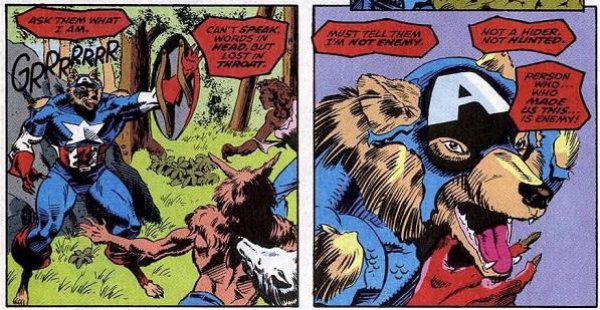
What I’m trying to say is; WHERE THE FUCK IS MY WEREWOLF CAPTAIN AMERICA MOVIE, MARVEL?
What I find weird about the Captain America trilogy is that, while you often get movie series where instalments are vastly different from each other, it’s pretty damn rare to find a series of movies that hops between genres. This time around, Marvel followed Joe Johnston’s glorious, retro, Indiana Jones homage with a gritty political thriller that would have been perfectly at home in the seventies. How did that work out? Let’s take a look
(more…)



 unshavedmouse