Humour

Make Mine Music Video Review

The Make Mine Music video review is now up and here and waiting and let’s go party YAY! Erik’s really done a fantastic job with this one so be sure to check it out.
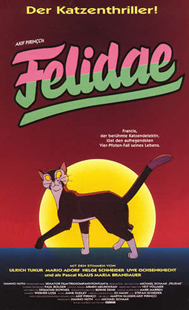
 

Felidae (1994)

(DISCLAIMER: All images and footage used below are property of their respective companies unless stated otherwise. I do not claim ownership of this material. New to the blog? Start at the start with Snow White.)
"Let me in you oversized landmass! I have to talk to Mouse!"

“Let me in you oversized landmass! I have to talk to Mouse!”

"Not happenin' man. I'm handlin' Mouse's security. And until we know who this Blucatt guy is no one sees Mouse. Got it?"

“Not happenin’, man. I’m handlin’ his security. And until we know who this Blucatt guy is no one sees Mouse. Got it?”

"But that's why I need to see him! I know who Blucatt is!"

“But that’s why I need to see him! I know who Blucatt is!”

"So spill. Who is he?"

“So spill. Who is he?”

"I can't tell you. I have to tell Mouse in person."

“I can’t tell you. I have to tell Mouse in person. He has to know why I…”

"Why you WHAT, Moustache Man?"

“Why you WHAT, Moustache Man?”

"Forget it. Just...give him this note."

“Forget it. Just…give him this note.”

"Aiight. But I won't have a chance to until he finishes reviewing Felidae."

“Aiight. But I won’t have a chance to until he finishes reviewing Felidae.”

***

Guys…I…I think I may be going crazy.

I mean, really, I think I might be starting to lose it. First there were all those weird messages appearing, and then this whole stuff with Blucatt and then suddenly there’s Foodfight! fanfiction appearing on my blog (who would even do something like that?)…

I’m starting to feel my hold on reality loosening and I don’t think it can be entirely explained away by the fact that Class A drugs were briefly legal in my country. Which brings me to today’s movie; Felidae. I knew next to nothing about this movie going in but my research seemed encouraging. Most expensive animated film ever to come out of Germany, based on one of the best selling German novels of all time. Large cult following, 7.9 rating on IMdB, 85% viewer approval on Rotten Tomatoes (though no reviews from professional critics). The consensus seems to be that this was a dark, engaging film noir murder mystery with cats. Okay, sounds cool. I can dig it.

And then I watched it.

What. The. Close. Up. Mouth. Whore. FUCK?

People like this? People? Actual people?

Because I can honestly say, without a hint of hyperbole, that I have never reviewed a movie for this blog that I hated more than this one. No. Not even Home on the Range. Not even Dinosaur. Not. Even. Foodfight!

Now I know what you’re thinking. “Mouse. You’ve lost it. You’ve gone nuts…”

Yes, did you not read the first lines of this review?

“Shut up and let me finish. You gave Foodfight! 0%. Zero. The big goose-egg. How can this possibly be worse than that?”

Well I didn’t say it was worse. I said I hated it more. Foodfight is just total, utter failure on every level. Felidae is not like that. There is a base line of competence that it never goes below. But…that actually makes it more unpleasant. Because they succeed in what they set out to do. It’s relentlessly, repulsively nasty and it’s good at it.

It sets out to appall you and it succeeds. 

How bad is it?

Let’s take a look. But you won’t thank me.
(more…)

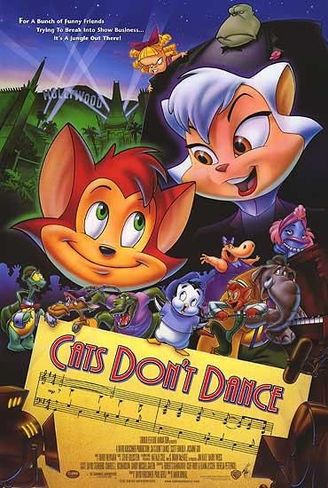
"Cats dont dance poster". Via Wikipedia - http://en.wikipedia.org/wiki/File:Cats_dont_dance_poster.jpg#mediaviewer/File:Cats_dont_dance_poster.jpg

Cats Don’t Dance (1997)

(DISCLAIMER: This blog is not for profit. All images and footage used below are property of their respective companies unless stated otherwise. I do not claim ownership of this material. New to the blog? Start at the start with Snow White.)
So I have this recurring nightmare…
Well, actually I have several recurring nightmares. You don’t live a life like mine without picking up a few ghosts in the attic. Horned King nightmares. Coachman nightmares. Foodfight nightmares. And this new one where a blue cat seems awfully mad at me for something that I can’t remember doing but I’m getting off topic.
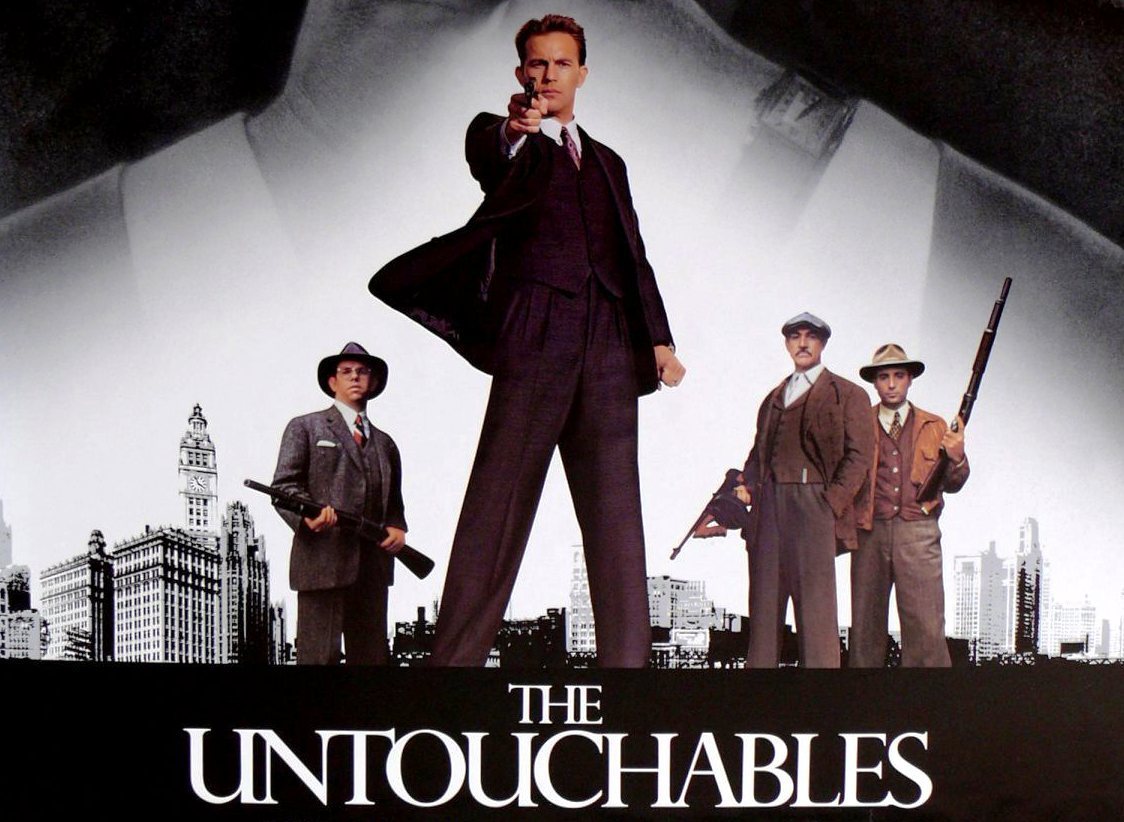
So, in this nightmare it’s like that scene from The Untouchables where all the gangsters are having a banquet except instead of gangsters it’s movie critics. All the big critics are there and I’m sitting where Jon Lovitz did in the movie. And Al Capone (Roger Ebert) is giving the big “Teamwork” speech and then he stops in mid-sentence and he looks at me.
“You.” He says.
“Yeah boss?” I say.
“You’re a critic, huh?”
“Well…yeah.”
“What did you think of Citizen Kane?”
“Uh, never actually saw it.”
The Godfather?”
“Sorry.”
Before Sunset?
“Not really into chick flicks.”
Battleship Potemkin?”
“It’s on my list, I swear to God. I’ve seen Crash though, and that won an Oscar so that’s something right?”
And then Roger Ebert beats me to death with his Pulitzer. And then I wake up in a cold sweat screaming “I’m a fraud! A FRAUD! AND THE UNTOUCHABLES SUCKED!”
More like the "The Unwatchables" amirite?

More like the “The Unwatchables” amirite?
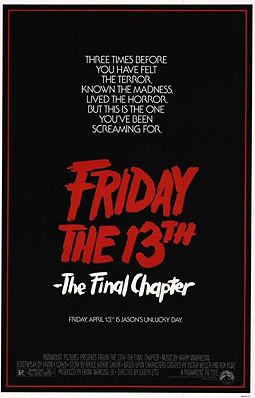
Yeah, so I’m actually quite conscious of the fact that for someone who reviews movies I’ve seen relatively few of the Greatest Movies Ever Made. I’ve been slowly working on expanding my cinematic palette beyond animated films and computer game cut scenes however, and one of the all-time classics that I recently discovered and happily found earns its hype and then some is the 1952 musical Singin’ In the Rain. You probably don’t need me to tell you this but if by some chance you let this one slip you by then I whole-heartedly recommend you change your life and get right with God because that movie is awesome. Great songs, fantastic choreography, iconic performances and fruckin’ hilarious (I use “fruckin'” when “frickin” is too mild and “fuckin'” is too coarse). Today’s movie, Cat’s Don’t Dance has a lot in common with Singin’ in the Rain. They’re both love letters to the golden age of Hollywood and they both benefited from the talents of the great Gene Kelly, who acted as choreographer for CDD. It might sound weird for a cartoon to need a choreographer, but lemme tell ya: These cats can fruckin’ dance. And they do. In fact, this movie probably has one of the most misleading titles in cinema history, right up there with The Never Ending Story and Friday the 13th: The Final Chapter.
In fairness, "Friday the 13th: There's Gonna be 8 more of these fuckin' things so get comfortable, folks" was never going to fit on the marquee.

In fairness, “Friday the 13th: There’s Gonna be 8 more of these fuckin’ things so get comfortable, folks” was never going to fit on the marquee.
This movie was part of the wave of animated features that followed in the wake of the Disney renaissance, with studios desperate to have a Lion King to call their own. CDD was produced by Turner Animation, the great American animation studio that never was. This was actually the only full length animated feature the studio ever made before Turner was merged into Time Warner but on the strength of this movie I think they could have been a serious contender. They definitely had the talent, not least of which was director Mark Dindal who later made the fantastic Emperor’s New Groove  and the actually-not-so-bad-if-you-go-in-with-an-open-mind Chicken Little. Let’s take a look. 

(more…)

Mary and Max (2009)


(DISCLAIMER: This blog is not for profit. All images and footage used below are property of their respective companies unless stated otherwise. I do not claim ownership of this material. New to the blog? Start at the start with Snow White.)
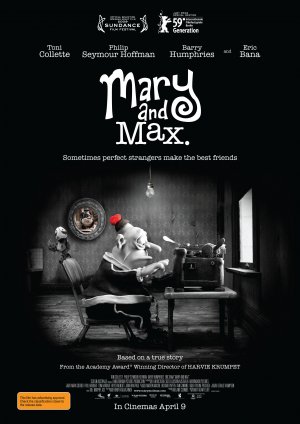
The Unshaved Mouse stared at the blank screen and tapped the keyboard lightly with one paw. His tiny brow furrowed and he twitched his whiskers anxiously. This, he knew, was going to be tough one. The movie he had to review was Mary and Max, a somewhat obscure but critically beloved Claymation film from Australia. And Mouse had not enjoyed it. Giving a bad review to a well-regarded film was always tricky, Mouse knew, as he would have to be doubly sure of every point he was making. And then there was the inconvenient fact that Mouse knew, deep down, that Mary and Max was not a bad film. So why did he dislike it?  Well, he knew that one of the things that rankled him about this film was its severe over-reliance on third person…
“Who said that?” Mouse exclaimed, looking around the room in a flurry of tiny mammalian panic. The narration continued smoothly, un-phased by the protagonist’s unprofessional behaviour.
“Okay, that is really, really intrusive and needs to stop right now” said Mouse indignantly “I do my reviews first person. Quit it.”
One might have reasonably wondered what Mouse intended to do about it, as the narration continued and Mouse realised that he would just have to learn to live with it.
“You’ll get yours, buddy.” Mouse squeaked, but in his heart of hearts he knew he had already lost. And then the thought dawned on him. Why not do the review in third person? It would be a way to shake things up, to inject some new energy into the blog and perhaps attract some news readers. The latter especially merited consideration, as Mouse was well aware that his viewing figures had cratered ever since he’d stopped reviewing Disney movies.
“That was uncalled for.” Mouse whispered, his spirit at last broken.
And perhaps there was another reason to do the review in such a manner? After all, how better to demonstrate his frustration with what he saw as the movie’s biggest failing? And maybe, just maybe, reviewing the film at such a…remove, would allow him to better confront just what it was about the film that made him so uncomfortable?
He resisted the idea at first.
“No.” he said aloud “I can’t. The joke will wear thin almost immediately. They’ll hate it. They’ll eat me alive!”
He couldn’t really do it, surely?
He couldn’t review the entire movie in third person?
Could he?

(more…)

The Wrong Trousers (1993)

(DISCLAIMER: This blog is not for profit. All images and footage used below are property of their respective companies unless stated otherwise. I do not claim ownership of this material. New to the blog? Start at the start with Snow White.)

The story of the most beloved characters in the history of British animation begins with the invasion of the Falkland Islands in 1982 by the Military Junta of Argentina. Corporal Nick “Rottweiler” Park of Her Majesty’s Northumberland Fusiliers returned home from the war as a hero with over nine hundred certified enemy kills and was lauded in the press and both houses of parliament as the man who had almost single-handedly won the conflict for Great Britain. However, Park found it almost impossible to adjust to civilian life and, after an argument with a local grocer over the price of a packet of Cheese and Onion crisps, ended up taking the entire rural village of Dutchington-on-Fenth hostage. Incarcerated in Dartmoor prison, Park’s life was changed forever when a relative gave him the gift of a camera and some plasticine. Park later said that he was able to channel his uncontrollable urges to kill into plasticine figures, which he would use to stage horrendously violent scenes with the camera, teaching himself the basics of stop-motion animation in the process. “Once I got all that out of my system” Park would later say “I started experimenting with films where the characters didn’t kill everyone who ever crossed me, and Wallace and Gromit kind of came from that stepping outside of my comfort zone.” Upon being released from prison…

"Um...excuse me? Mr Mouse?"

“Um…excuse me? Mr Mouse?”

Oh, hello Nick Park. To what do I owe the pleasure?

"Um...excuse me? Mr Mouse?"

“Well…all that stuff you said about me.”

Yes? What of it?

"Well, I think you may have gotten some bad information. I never served in the Falklands. I've certainly never been in prison. And that business with the Cheese and Onion crisps has just been blown out of all proportion."

“Well, I think you may have gotten some bad information. I never served in the Falklands. I’ve certainly never been in prison. And that business with the Cheese and Onion crisps has just been blown out of all proportion.”

Ah. See, I don’t know how to tell you this Nick but…you’re too nice. The animators I cover on this blog tend to be half mad geniuses tormented by demons the likes of which normal men can scarcely conceive of.  I mean, have you even met Walt Disney?

"Um...I believe Mr Disney has been dead for many years.""

“Um…I believe Mr Disney has been dead for many years.”

Oh. Oh, you sweet summer child. But anyway, you’ll understand if I had to jazz up your life story a little for the intro. Sorry. Anyway, Wallace and Gromit.

It feels almost gauche to refer to Wallace and Gromit as a “franchise”. And yet, these characters are a pretty massive enterprise. Four short films, one feature, numerous spin-offs, comics, computer games, all manner of merchandise and huge global brand recognition. And yet, Wallace and Gromit have never felt “big”. The series has always had a kind of cosy, intimate charm that is thoroughly English while somehow appealing to a worldwide audience. The premise of the series is simplicity itself: Wallace (Peter Sallis) is a cheese-loving inventor with more technical skill than common sense. Gromit, his dog, is his loyal, long-suffering straight man. The first movie, A Grand Day Out, was begun by Park in 1982 when he was still in film school and finally finished eight years later with help from Aardman Animation who had hired Park to work for them. Today’s movie, The Wrong Trousers, is the second Wallace and Gromit short and is pretty unanimously considered to be the best of the series.

Why is it so good? Let’s take a look.
(more…)

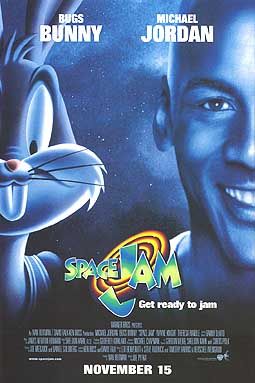
Space Jam (1996)

(DISCLAIMER: This blog is not for profit. All images and footage used below are property of their respective companies unless stated otherwise. I do not claim ownership of this material. New to the blog? Start at the start with Snow White.)

So I have a confession to make.
For the longest time, I thought it was “Looney Toons” and not “Looney Tunes”.
New spittake
Alright fine, but in my defence it makes sense, right? I mean, they’re cartoons. Why would they be called “Tunes”?
Well, why indeed.
The reason the early series of cartoon shorts have names like “Looney Tunes”, “Merrie Melodies” and “Silly Symphonies” is because that’s what they were selling. Film studios like Warner Brothers did a tidy side business off their movie soundtracks by selling phonograph records and sheet music for playin’ on the ol’ pianey.
The idea was, you go to a movie and see, say, I Love to Singa’, and say to yourself “smartass owl thinks he’s so big, I could do that.” and before you know it you’ve gone down to the local music shop and blown the money you were saving in case you got tuberculosis (spoiler, you got tuberculosis). The unpleasant truth that I’m tip-toeing around here is that the Looney Tunes were, at least in their early days, basically advertisements.
Ergo, if you hate Space Jam because you don’t like to see your favourite characters schilling, I got bad news for you friends; They were schilling when your grandparents were throwing toys out of the pram.

(more…)

The Lord of the Rings (1978)

(DISCLAIMER: This blog is not for profit. All images and footage used below are property of their respective companies unless stated otherwise. I do not claim ownership of this material. New to the blog? Start at the start with Snow White.)
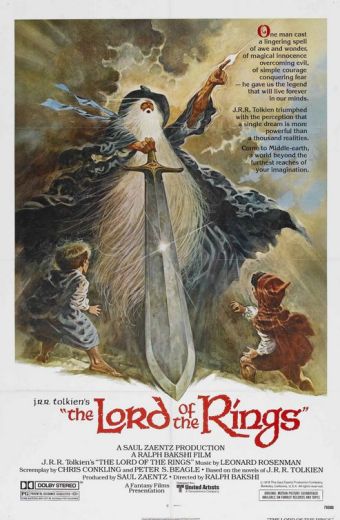
My father was the one who introduced me to JRR Tolkien, giving me a dog-eared, well-thumbed chunk called The Lord of the Rings one summer when we were on holiday (I was maybe…eight, I guess? Pre-transformation anyway). I remember there was this weird picture on the cover of the Black Riders that looked sort of animated but also sort of not and I asked my father what it was from.
“That’s from the movie.” He said.
“There’s a movie?”
“Oh yeah. You have to see it.”
“Is it any good?”
“No. No, it’s awful.”
This was really the problem you had if you were a fantasy fan any time before the turn of the millennium:
We had no good movies.
Our brothers and sisters in the science fiction fandom had it pretty bad too of course, the vast majority of their movies were cheap schlock but at least they could point to a few straight up classics that even the hoity-toity critics had to admit were the real deal; Alien, 2001, Bladerunner.
Fantasy fans though? What did we have?
Truly, our cup ranneth over.

Truly, our cup ranneth over.

So if you were a fantasy fan in the seventies, eighties or nineties and you heard there was a Lord of the Rings movie, you had to see it even if it was terrible. Because it’s not exactly like you had a whole lot of options. The Lord of the Rings, the undisputed big swingin’ dick of the high fantasy genre, used to spend most of its time on lists of “unfilmable” books and with good reason. I can think of two periods in Hollywood history where a faithful film adaptation might have been possible. The first would be in the late fifties, when studios were creating gargantuan epics like Ben Hur and The Ten Commandments. The second would be now, the current era of movie history which (not coincidentally) was largely kick-started by Peter Jackson’s own Lord of the Rings trilogy. The current movie scene owes almost as much to The Lord of the Rings as the fantasy genre does. Planned trilogies, huge runtimes, massive battle scenes, copious amounts of CGI…so much of how movies are made, look and sound in the modern era can be laid at the feet of Peter Jackson (though we won’t hold that against him).
On the flipside, if I had to choose the worst possible time to try and make a Lord of the Rings movie (aside from, I dunno, the silent era) it would be the nineteen seventies. The seventies is often lauded as the greatest movie decade and it’s won that reputation for a slew of grungy, lo-fi, morally ambiguous classics. It was that kind of era (contrast that to 2001 when Jackson’s Fellowship of the Ring came out when everything seemed a good deal more black and white). So you have a decade where no one is really spending big money on movies anymore, epics are largely a thing of the past and the cultural zeitgeist is really not grokking a simple morality tale of noble heroes trying to defeat an evil lord of darkness who lives in a black spiky castle. Who (Who, I ask you?) would be a mad enough bastard to try and make a Lord of the Rings movie in the nineteen seventies?

When not animating, he keeps his drawing arm strong by wrasslin’ grizzlies.

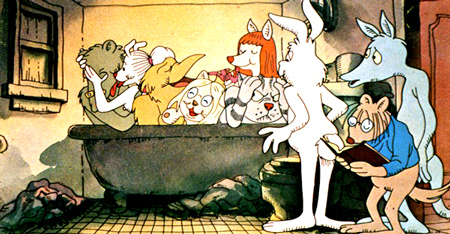
Ralph Bakshi is one of the most famous (or at least notorious) American animators out there. Having made his bones in the Terrytoons studio (Heckle and Jeckle, Mighty Mouse and the like) he went on to create the animated adaptation of R. Crumb’s comic strip Fritz the Cat.
Oh sure. I'll review it. If you can tell me what I say to my wife when she walks in on me watching the scene where all the animals have a bathtub orgy.

Oh sure. I’ll review it. If you can tell me what I say to my wife when she walks in on me watching the scene where all the animals have a bathtub orgy.

By 1969 the movie rights to The Lord of the Rings had found their way to United Artist’s, where Stanley Kubrick and John Boorman both had a crack at adapting it, with Boorman turning in a 700 page script that no one at the studio could even understand. Bakshi, who’d been obsessed with the idea of doing an animated version of the story since the fifties begged UA for the chance to direct. Impressed by Bakshi’s passion, UA junked Boorman’s script and told Ralph to go do his own version.
Bakshi was a true Tolkien die-hard and, in stark contrast to Boorman who had altered characters and plot points willy-nilly, wanted to do a movie version of the book that was as faithful as possible. Bakshi firmly believed that Tolkien was a genius who could do no wrong.
My rebuttal.

My rebuttal.

I can respect fidelity to the source material (and if anyone ever decides to do a movie of The Hangman’s Daughter I’ll probably start respecting it a whole lot more) but ultimately I think this was the movie’s undoing. Being faithful to the text is all well and good if you have hundreds of millions of dollars and a New Zealand but if you’re trying to do the story in two moderately budgeted animated features (as was the plan) then you really need to start looking at the story with a gaze of grim determination and a pair of scissors clenched in one hand. Bakshi tried to fit as much of the book as possible into the movie and we’ll see further on the problems that this caused.
Bakshi made the decision to use rotoscoping, a technique he’d first used in his earlier animated feature Wizards as a way of saving money. Rotoscoping is about as old as animation itself and basically involves drawing and painting over live action footage to create an animated effect. This has the upside of giving you more realistic movement and it tends to be cheaper and less labor intensive than traditional cel animation. Despite this, rotoscoping has traditionally been used more as a tool than a style. There’s plenty of instances of rotoscoping in animated movies (Cruella De Ville’s Car, Edgar’s motorbike in The Aristocats, The Giant Mouse of Minsk in An American Tail) but it’s rare for it to be used for extended sequences and Bakshi’s Lord of the Rings represents probably the most extensive use of the technique in a feature film until Richard Linklater’s Waking Life in 2001 (and that was digital, rather than hand-drawn rotoscoping). Why is that? Well, part of the appeal of animation is that animated characters don’t move like real people and can be stretched or distorted or flattened however the animator pleases. Another reason (and a big part of why all the examples I listed above are inanimate objects or vehicles) is that living characters that are rotoscoped tend to have their home address in the Uncanny Valley. No one had ever tried to make a movie that was almost entirely rotoscoped.
So. Untested animation techniques. Impossible to adapt source material. Certainty of death. Small chance of success.
"What are we waiting for?"

“What are we waiting for?”

(more…)

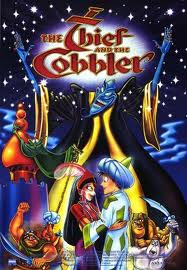
The Thief and the Cobbler (1993)

(DISCLAIMER: This blog is not for profit. All images and footage used below are property of their respective companies unless stated otherwise. I do not claim ownership of this material. New to the blog? Start at the start with Snow White.)
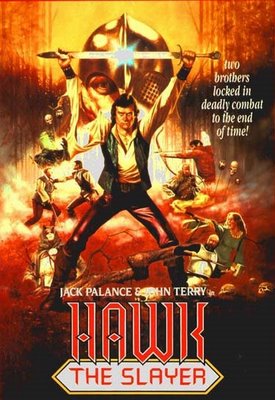
Oh boy.

Where do I start I don’t even?

Movies, as a general rule, do not happen overnight. Making a film is a long, laborious, expensive process and can take years. Even so, some movies just take this to ridiculous extremes. The longest production time on record for a live action film is the twenty years it took Leni Riefenstahl to finish Tiefland. That record is surpassed by only one other film, our subject for today, Richard Williams’ legendary, famous, infamous, infamfamous unfinished crapasterpiece The Thief and the Cobbler. Thirty one years. In the same length of time it took this movie to see theatres, I went from a sperm to a person writing these words. Thirty one years. And, keep in mind, at least Riefenstahl had the excuse of the SECOND WORLD WAR happening in mid-production.

"I honestly could not give two fucks yada yada etc and so forth."”

“I honestly could not give two fucks yada yada etc and so forth.”

So what’s Williams’ excuse?

Alright, so time for backstory.

While he doesn’t have anything like the name recognition of animators like Don Bluth or Ralph Bakshi, Richard Williams is serious business in the world of animation. He emigrated from his native Canada to Britain in the fifties and helped himself to a Bafta for his animated short The Little Island. He was twenty five. That launched a long and often highly acclaimed career in animation with Williams’ picking up an Emmy and a couple of Oscars.
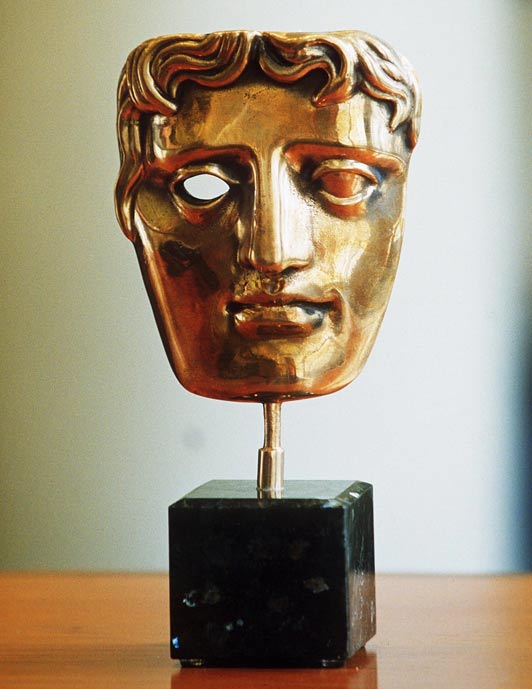
The Bafta was lonely.

The Bafta was lonely.

In 1964, Williams began work on Nasruddin! the movie that would eventually become The Thief and the Cobbler. Williams was not humble in his goals. This film was going to be his masterpiece, and raise the bar for animation as an artform. Instead it turned into a logistical nightmare that dragged on for decades, with story and characters being dropped and re-written and backers pulling out. Williams had a vision for the film; animation for adults with very little dialogue. But the various investors he found over the decades also had a vision; they wanted to make money. Williams refused to commercialize the work and for long periods of the production had to fund it himself with the proceeds from various animation gigs. A breakthrough finally came when Williams showed some footage to his friend and mentor, Disney animator Milt Kahl. Kahl, realising that his apprentice had indeed become strong in the ways of the force, showed the footage to Stephen Spielberg and Robert Zemeckis and before long they were sidling up to Williams and asking questions like “Sooooooo…how do you feel about rabbits?”

Williams’ agreed to do the animation chores for Roger Rabbit in exchange for help distributing Thief. After Roger made enough money to buy one of the nicer continents and got so much critical adoration that everyone just started feeling a little embarrassed, Warner Bros agreed to bankroll the project and Williams got to work. He recruited some of the hottest young talent from the animation schools of Europe to replace the original animators, most of whom were now gone. And I don’t mean gone as in “moved on to other projects” I mean “they were taken by the icy hand of death which comes for us all in the end.” Which is what happens when your movie takes longer to complete than, I dunno, a pyramid. But at last Williams was ready to finally finish the film. He had the money. He had the talent. What could possibly go wrong?
"He went craaaaaaazy..."

“He went craaaaaaazy…”

Yeah, so as well as being a phenomenal animator Williams was kind of an insane crazy person. He was a fanatical perfectionist and any animator who wasn’t able to meet his insanely high standards was kicked to the curb. According to one source, literally hundreds of animators were pink-slipped. Making matters worse, Williams…

I’m sorry, this is hard for me to even say.

Williams…Williams didn’t believe in using storyboards. Because he felt they were “too limiting”.
Alice Facepalm

Alright, so imagine you have two architects, okay? One sits down, draws a blueprint for a building, decides it’s crap and then throws it away. The other just starts building. And by the time he’s built twenty stories he realises that the building is crap and has to be torn down. Both architects failed to create a building. But one of them has a rolled up ball of paper, and the other has several million quids worth of wasted time and building material. Williams is the second guy.

Because he didn’t use storyboards and basically allowed his animators to improvise scenes on the fly, the only way to figure out that a particular scene wasn’t working was when it was already at least partially animated. Fail to plan, plan to fail etc.

So by 1991 the movie’s still not finished and is massively overbudget (please, no shrieks of astonishment) and Disney are prepping Aladdin for release, a movie that some might say is rather suspiciously like Thief and the Cobbler. Some might say that. I wouldn’t. I say, yeah, you take thirty one years to make a movie someone somewhere will make a movie like it. Law of averages, baby. Warner Brothers finally threw up their hands and said “Screw this, we got superheroes to ruin” and pulled out. And then The Completion Bond Company stepped in which is never a good day.
"We are the ones people call when things go wrong."

“We are the ones people call when things go wrong.”

Animation producer Fred Calvert was appointed by the bond company to hack the movie into something marketable. Calvert renamed the movie The Princess and the Cobbler and tried to make it as close to Aladdin as possible. Miramax bought the rights on behalf of Disney and then did their own hatchet job on it, casting celebrity voices and releasing it under the title Arabian Knight before finally letting it limp to video under its original title of The Thief and the Cobbler. Part of the problem with reviewing this movie is that there are so many different versions of it, the first Calvert cut, the Miramax edit and the (at time of writing) four Recobbled cuts, which are filmmaker Garret Gilchrist’s attempts to restore the film to William’s original vision or as close as possible. For clarity, I’ll be reviewing the Miramax version because that’s the one I have on DVD and it features Matthew Broderick who I haven’t made fun of recently. Come my friends, let us gaze upon the beauty and the carnage.
(more…)

Who Framed Roger Rabbit (1988)

(DISCLAIMER: This blog is not for profit. All images and footage used below are property of their respective companies unless stated otherwise. I do not claim ownership of this material. New to the blog? Start at the start with Snow White.)
I hate to open a review with such a cranky, old man line as “They don’t make ‘em like this anymore”.
So I won’t.
Good to be back everyone! Missed you all and your sweet, ego-affirming pageviews.
Now then.
My hairy BOLLOCKS but they don’t make them like this any more, do they?
Fittingly,given its dual nature, Who Framed Roger Rabbit occupies a special place in both the history of mainstream Hollywood blockbusters and American animation. It’s a central text in what was something of a golden age of the big summer tentpole picture (Ghostbusters, Indiana Jones, Back to the Future). But it’s as an animated movies that Roger Rabbit has its real significance. Chances are, if not for this movie a whole load of the films I’ve reviewed here would never have happened. Firstly, let’s take a look at the state of American animation in the late eighties. Theatrical shorts have gone the way of the horse-drawn carriage and the wireless-polisher. Disney feature animation is in a creative rut, and only Ralph Bakshi and a few others, working furtively from a secret rebel base, keep the full length animated film alive as an artform. The vast bulk of animation is now on television, rushed, cheaply produced, schilling for the toy industry and stifled by increasingly conservative broadcast standards for whom anything harder than the Smurfs is pushing the envelope. Large packs of feral dogs roam the landscape, and cannabalism is rife.
Bad times, is what I'm sayin'.

Bad times, is what I’m sayin’.

Disney snapped up the rights to Gary K. Wolf’s novel Who Censored Roger Rabbit? in 1981 as soon as it hit the bookshelves. Apart from sharing a few character names and some very broad plot points, the book and film aren’t even on speaking terms. The book is set in the present (well, the eighties) and Roger and his fellow toons are newspaper cartoons (with Hagar the Horrible, Dick Tracy and other characters making cameos). I haven’t actually read the book but I’m going to go out on a limb and say the movie vastly improves on the source material. For one, having cartoon characters working in the old Hollywood studio system just feels much more organic and setting it in the forties makes it feel more like a film noir. I’m not the only one who thought so either, Wolf’s later novels in the series went out of their way to tie themselves more closely to the movie, even retconning the whole first novel as a dream of Jessica’s.
And if that scene did not involve her stepping out of the shower a lá Bobby Ewing then there is no God.

And if that scene did not involve her stepping out of the shower a lá Bobby Ewing then there is no God.

Robert Zemeckis was attached to direct as early as 1981 but was given the boot by Disney when two of his films tanked at the box office. The project then kicked around the studio for a few years until Michael Eisner and Jeffrey Katzanbur…Katzenbar…(dammit just once I am going to spell his name right) KATZENBERG stepped in and applied the paddles. Eisner and Herr Skull were united in their belief that Roger Rabbit was going to be the movie to relaunch Disney as the pre-eminent force in American animation. Initially, the idea was that the film’s animated sequences would be done by Disney’s own in-house animation team. Then Eisner took Katzenberg down to the basement where the debased remains of that once great cadre of animators was kept.
“What…what are they?” Katzenberg asked in a strangled whisper.
Eisner simply stared ahead and said: “They were once men.”
Clearly, some fresh talent was going to have to be brought in to pull off what was going to prove to be one of the most technically challenging feats in the history of animation. Canadian-British animator Richard Williams was brought in along with a crack-team of international animators (many who would later be brought in to work on the Disney movies of the renaissance). Williams didn’t want to go to Los Angeles, like any sane person, and insisted on working in London resulting in the entire production being moved to England to accommodate him, hence why most of the live action cast are British.
Zemeckis was also brought back on to direct since in the intervening years he’d gone from “failed director” to “man who can just stand in a room and cause money to rain down at will”.  The international shoot and pioneering special effects combined into the most expensive production for an animated movie that there had ever been, with costs so high that Katzenberg had to talk Eisner out of pulling the plug. When the movie finally rolled into theatres $40 Million dollars over budget there was a whole lot riding on it.

(more…)

The Unshaved Mouse debates Noel Coonan, TD for Tipperary North

Today in the Dáil, a debate took place between Mr Noel Coonan, TD (Fine Gael, Tipperary North) and the Unshaved Mouse (Independent, Internet) on the subject of the recently introduced water charges and the public unrest and mass protest that have followed. Footage of the debate can be seen at the end of this article. Unfortunately, as Mr Mouse is a small rodent approximately 3 inches in length and has tiny, tiny little lungs, the Dáil’s recording apparatus were not sensitive enough to record his contributions to the debate. A transcript of the debate now follows.
"Because the people of Ireland have now seen what they are up against. Particularly the socialist led protest that was up there..."

“Because the people of Ireland have now seen what they are up against. Particularly the socialist led protest that was up there…”
"CRIUSH OBAMACARE! Sorry, sorry, when you use the word "socialist" it sets off my programming, I follow a lot of American politics, please continue..."

“CRUSH OBAMACARE! Sorry, sorry, when you use the word “socialist” it sets off my programming, I follow a lot of American politics, please continue…”

"The disgraceful scenes that went on, what they did to people in power..."

“The disgraceful scenes that went on, what they did to people in power…”

"Look, Im not denying that guy throwing a brick at a police car wasnt the single worst thing to every happen in the history of the Republic but that was an isolated incident..."

“Look, I’m not denying that guy throwing a brick at a police car wasn’t the single worst thing to ever happen in the history of the Republic but that was an isolated incident…”

"I come from the town of of Templemore where we train every Garda in the country?"

“I come from the town of of Templemore where we train every Garda in the country.”

"You do? Awesome. Could you train them not to bang womens heads against lamposts? And if youre already doing that, maybe some kind of refresher course to brush up on the fundamentals...?"

“You do? Awesome. Could you train them not to bang women’s heads against lamposts? And if you’re already doing that, maybe some kind of refresher course to brush up on the fundamentals…?”

"And the people round there and right across the country that Ive met across the country."

“And the people round there and right across the country that I’ve met…”

"Well in fairness, you do stretch across the country.""

“Possible, you do stretch across the country.”

"And they are now concerned by what they see as elements and socialists led by  the so-called wealth socialist party led by the Murph and company."

“And they are now concerned by what they see as elements and socialists led by the so-called wealthy socialist party led by the Murph and company…”

"Ah the Murph. M,y favourite Dr Seuss character. Oh wait, you mean Paul Murphy, the Anti-Austerity Alliance TD. Well, he does come from a wealthy background. But are you saying we shouldn't trust him ebcause he's rich? 'Cos that sounds kinda socialist. DEATH PANELS! Godammit..."

“Ah the Murph. My favourite Dr Seuss character. Oh wait, you mean Paul Murphy, the Anti-Austerity Alliance TD. Well, he does come from a wealthy background. But are you saying we shouldn’t trust him because he’s rich? ‘Cos that sounds kinda socialist. DEATH PANELS! Godammit…”

"And aided and abetted by extremists in our colleagues in Sinn Féin."

“And aided and abetted by extremists in our colleagues in Sinn Féin.”

"Political parties with their origins in violent revolutionary movements?! HOW COULD THIS COME TO PASS!? HOW, GOD?!"

“Political parties with their origins in violent revolutionary movements?! HOW COULD THIS COME TO PASS!? HOW, GOD?!”

"And the people have given us the signal that that needs to be nipped in the bud."

“And the people have given us the signal that that needs to be nipped in the bud.”

(more…)