Review

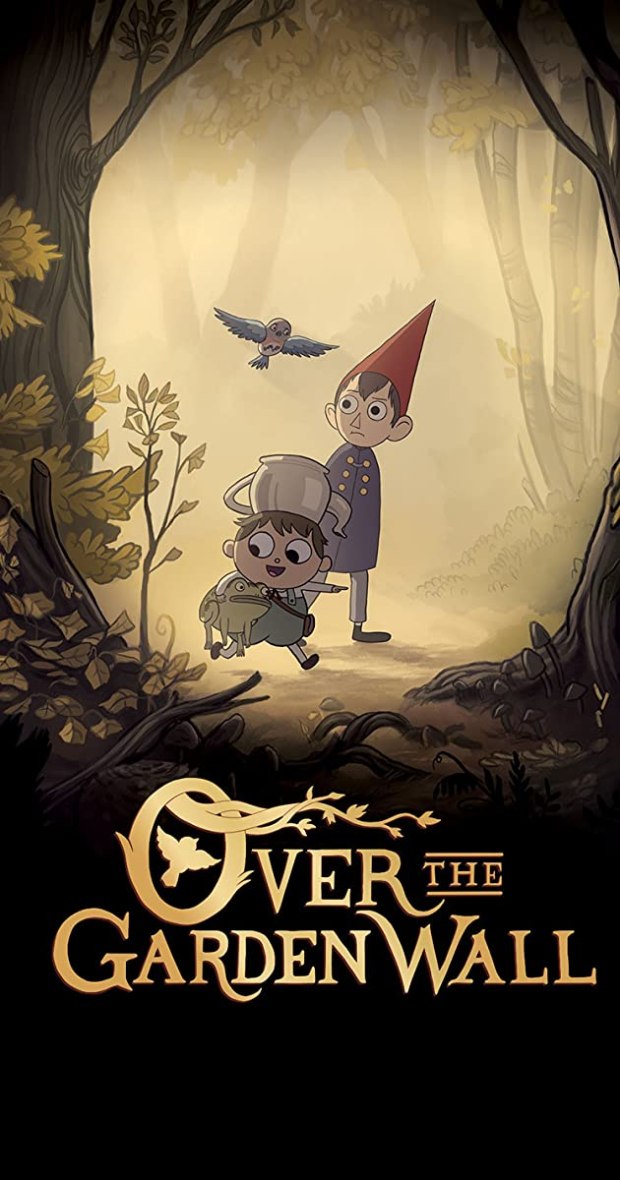
Over the Garden Wall: Songs of the Dark Lantern

Wha’ Happen’?:

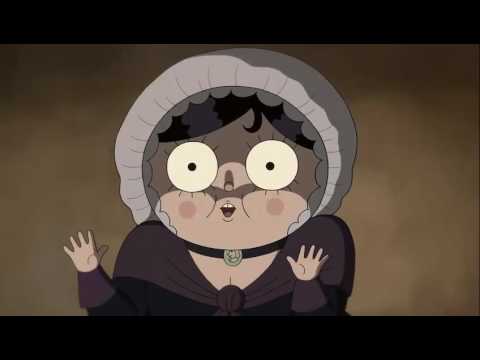
Looking for shelter in the middle of a storm, our heroes arrive at a creepy tavern full of people dressed in American colonial era garb and who apparently have no names, only job descriptions. The Tavern Keeper insists that Beatrice wait outside as birds bring bad luck. When Beatrice tries to explain that blue birds bring good luck the Tavern Keeper snaps “good luck, bad luck, I don’t need any of it!” and hits her with a broom.

Fuming, Beatrice waits outside in the stable with a weird horse that seems to be wearing lipstick. She hears the sound of someone chopping wood in the dark forest, and a deep voice singing…

In the tavern, the Tavern Keeper demands to know what Wirt and Greg’s deal is but Wirt doesn’t know what to tell them. After listening to the Highway Man’s song, Wirt asks the way to Adelaide’s House. This leads the tavern patrons to decide that he’s The Young Lover and throw him up onstage to sing his love song.

Outside, frustrated that Wirt’s not making any progress, Beatrice flies off into the dark forest in the direction of the singing and chopping, hoping to ask for directions.

(more…)

Over the Garden Wall: Schooltown Follies

Wha’ Happen’?:

After leaving Pottsfield, Wirt, Greg and Beatrice are now trying to reach the house of Adelaide, the Wise Woman of the Woods. In order to get Greg to stop singing, Beatrice tries to crush his indefatigable optimism. She tells him that the world is a miserable place and that he should be more like Wirt, a beaten down husk of a pushover who just quietly does whatever he’s told. Well, Wirt may be a triangle nosed goober cosplaying as David the Gnome’s secret abandoned lovechild, but even he has his pride. So when the trio stumble across a small school in the middle of the forest where a young woman named Miss Langtree is trying to teach a class of blank eyed animals to read, he joins the class just to spite Beatrice. Greg, who isn’t that big on book learnin’ (I know, stunned gasps all round) instead hangs around outside the school with a bunch of truant racoons, deer and possums.

As Miss Langtree explains in a wistful monologue, the school’s in real trouble. Her father, the owner of the school, is threatening to shut it down, her fiancée Jimmy Brown has done R.U.N.N.O.F.T. and there is the little matter of a mad gorilla on the loose.

Top 30 Schooltown Follies GIFs | Find the best GIF on Gfycat

(more…)

Over the Garden Wall: Hard Times at the Huskin’ Bee

Wha’ Happen’?:

Still following the Woodsman’s directions, Wirt and Greg come across the Beatrice the talking bluebird again. She’s trapped in a thornbush and offers to do the boys a good turn after Greg frees her. She tells them that she can take them to Adelaide the Magical Woman of the Woods, who could send them home, but Wirt really isn’t up for a magical Wizard of Oz esque quest and they continue looking for a town with a reluctant Beatrice in tow.

They come to a town called Pottsfield where the locals are celebrating the harvest in pumpkin costumes and dancing to music that’s ever so cheery and it’s not creepy at all…

Watch Over The Garden Wall | Pumpkin Stare GIF by reikert on Gfycat. Discover more over the garden wall GIFs on Gfycat.

(more…)

Disney(ish) reviews with the Unscrupulous Mouse: Artemis Fowl

“So I said to him: “Sir, if your attempts at neo-realism were any more bourgeois, they would have political rights in the Ancien Regime!””


NPG x133037; Martin Amis - Portrait - National Portrait Gallery

“Very droll.”


Zadie Smith - Interview Magazine

“Yes. Quite.”


“Sick burn, Salman.”


“So Mouse, before we invite you to join our exclusive club for novelists, what were you doing before you took up the quill?”


“Oh, you know. One blogs a little. Film reviews. Cultural critiques. All very serious and highbrow. No talking maps.”


“Talking…well, very good. Very good. I’m delighted to welcome you..”

Breaking Down The Wall on Make a GIF

“MWA HA HA HA! Nobody move!”


“Dude, not cool! I’m with people who matter!”


“Mouse! Who is this rakish, uncouth rodent?!”


“Sigh. This is my evil twin brother the Unscrupulous Mouse. He’s a supervillain”


“I think you should leave.”


“Yeah, no shit, Salman. Okay, asshole what are you doing here?”


“What the hell is wrong with you?! Disney release a movie set in Ireland and it’s the worst thing ever and you don’t review it?! That’s three of your wheelhouses right there!”


“I reviewed Darby O’Gill, it was fine!”


“Not that one, fool! Artemis Fowl! The new Cromwell!”


“Look, I don’t have time to drop everything every time Disney goes plop plop. I’m a busy writer now, and quite frankly too good for that sort of thing.”


“FINE! I’LL DO IT MYSELF!”

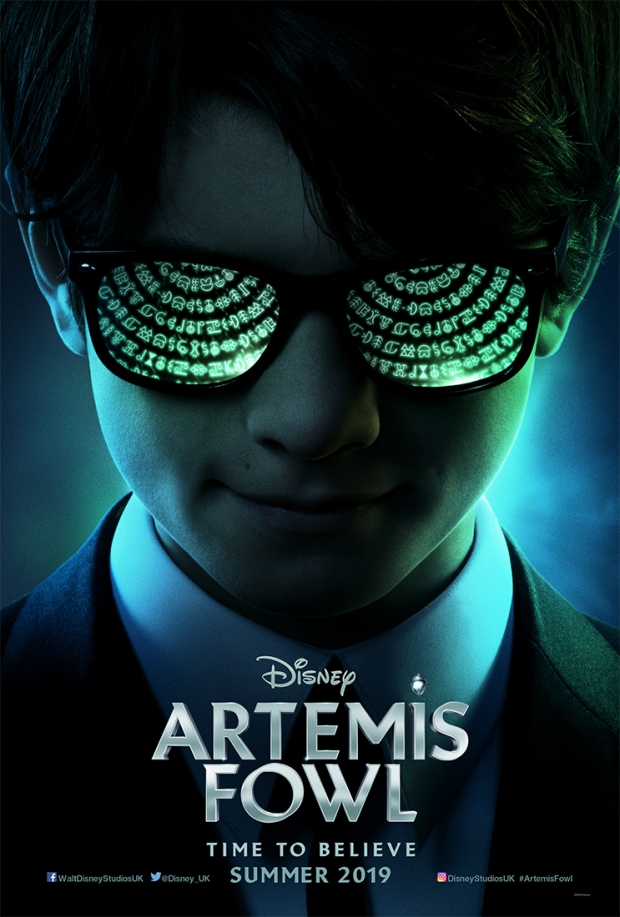
I loved the Artemis Fowl books. Growing up as an evil mouse in Ireland I didn’t have many role models. Sure, there were a few villains I aspired to. The cartoon villains that were beaten by the heroes every Saturday morning or the Irish politicians using their power for personal gain. But there wasn’t a kid villain that I could root for! I wanted someone that outsmarted the good guys! Someone who’s plans weren’t foiled every week. Then Artemis Fowl entered my life. Not only was he a smart villain, he was Irish too! Then after a few books into the series, I heard the news! They were making an Artemis Fowl movie! Holy crap! young me squeaked! I’ll finally see my hero villain on the big screen!

Originally intended to be launched as a franchise by Miramax way back in 2001, the film languished in development hell until Disney acquired the rights in 2013. And I hate them for what they have done.

“Excellent. I feed on your hate.”

Okay, let’s get this over with.

(more…)

Bats versus Bolts: The 2010s

Question: is the Dark Universe dead?

You remember the Dark Universe, surely? Universal’s attempt to create a shared cinematic universe with rebooted versions of their classic monsters? Is that still a thing? Because it seemed to be DOA with the failure of The Mummy. But then The Invisible Man came out this year and did really well and apparently is supposed to be part of the Dark Universe except the director says it isn’t and Universal are apparently refusing to admit its dead despite the fact that all of its upcoming movies appear to be either cancelled or delayed indefinitely and now the whole project seems (appropriately enough) neither alive nor dead.

And that kinda sucks. Not because I was particularly psyched for any of these proposed films but it’s gotta be galling for Universal to keep getting portrayed as failed Marvel wannabes considering they invented the whole concept of a shared cinematic universe all the way back in 1943. I mean obviously they wouldn’t be doing this if the MCU hadn’t made enough money to air condition Hell, but I personally feel that if any movie studio has a right to rip off Marvel, it’s Universal.

Turnabout, after all, is fair play.

In fact, I think you’d be hard pressed to find two non-comics characters who’ve had a bigger influence on comics as a whole than the Universal versions of Dracula and Frankenstein’s monster. For starters, as public domain characters, both DC and Marvel have incorporated their own versions of these characters into their respective universes. Marvel, in particular, made fantastic use of Dracula in their series Tomb of Dracula, which lasted a whopping 70 issues. And that’s not even counting the dozens (hundreds?) of characters in both of the Big Two publishers that take influence both subtle and overt from these two monsters. You can see Dracula’s lineage in Batman, Doctor Doom, Morbius and Count Nefaria whereas pretty much every hulking, misunderstood monster has a bit of Adam in him, whether we’re talking about the Thing, Bizarro, Solomon Grundy or the Incredible Hulk. So if Universal want to start turning their properties into ersatz superheroes to compete with Marvel, I say it’s less a case of stealing from your competitors than breaking into your neighbour’s house in the dead of night to take back the lawnmower that he “borrowed” from you eighty years ago and never bothered returning. And, like in that analogy, while it may be satisfying and even morally justified, it’s probably not a good idea.

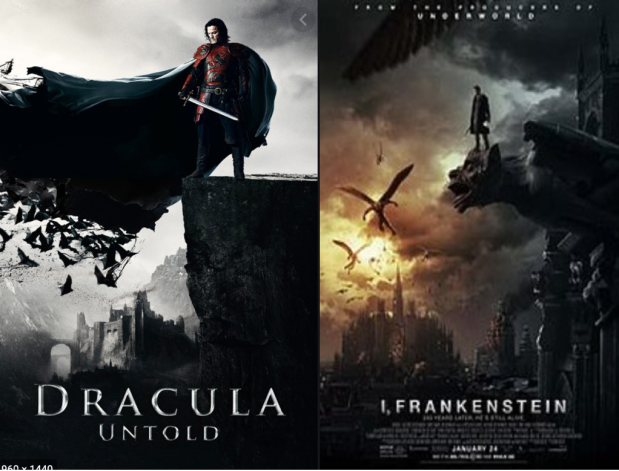
I’ve spent this entire intro talking about Universal, but truth be told only one of today’s movies, 2014’s Dracula Untold, is from that studio. I would have preferred to pit two modern Universal monster movies against each other but according to the Dark Universe wiki (which is a thing that exists) the Dark Universe Frankenstein is just putting the finishing touches on.

Suuuuuuuuure it is.

so today Team Bolts is represented by I Frankenstein, a 2014 movie from Lionsgate that’s also trying to do the “shove a public domain monster into a superhero cape and see if he flies” thing. And guys, I swear to God, I’m not setting Team Bolts up to fail deliberately. After the last installment, I really didn’t want to see another curb stomp. But there’s no getting around it, I, Frankenstein is a staggeringly bad film, and leagues worse than Dracula Untold. Cunning and savvy reader that you are, you will notice that is not the same thing as saying that Dracula Untold is good.

(more…)

Night of the Hunter (1955)

How quickly things change.

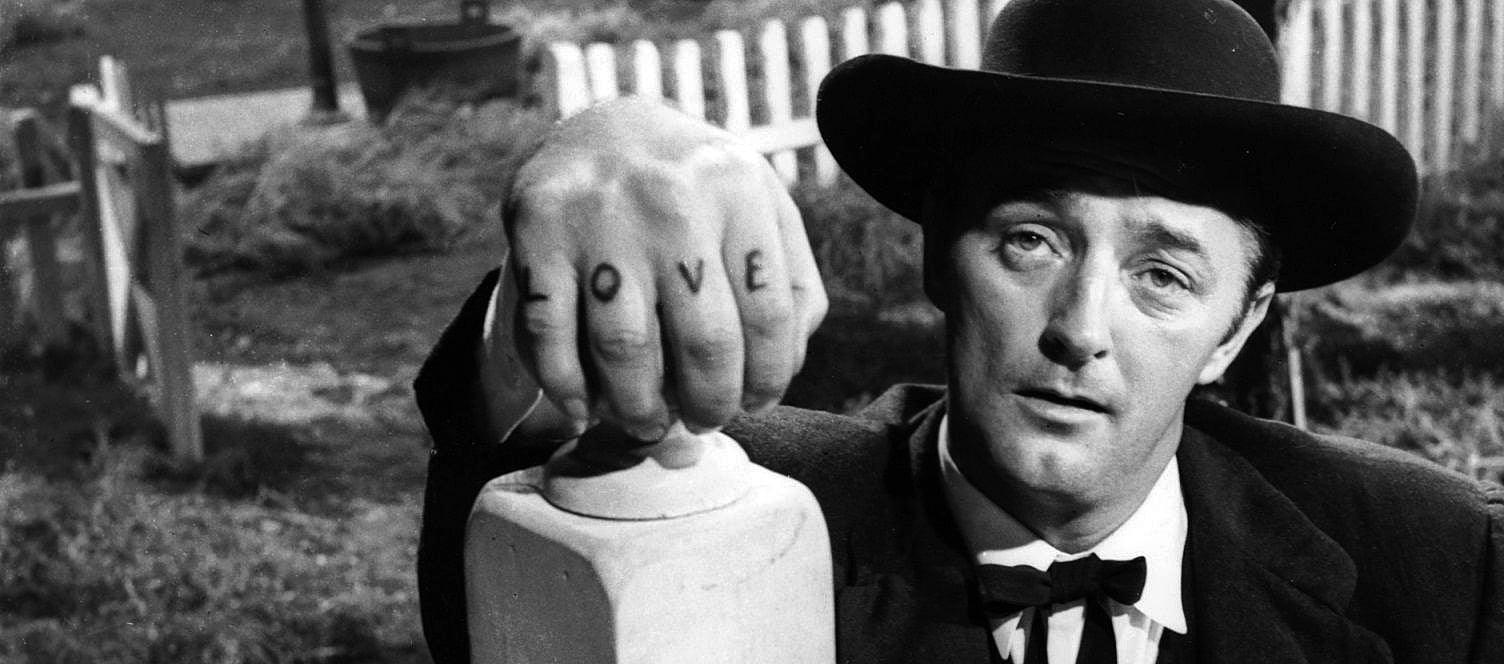
Not so long ago my awareness of Night of the Hunter boiled down, essentially, to this:

Creating The Night of the Hunter - The American Society of ...

The preacher with the tattooed fingers. I knew it was an old movie from the fifties, I vaguely knew it was a serial killer drama and that it was considered to be a real good ‘un. But that was about where my knowledge of the film began and ended.

And now? Guys, I am a full on stan. With the insufferable zeal of the newly converted I will talk your ear off about this film. I will bore you to tears describing individual scenes. Every night I shake my fist at the heavens because I now know I live in the world where Charles Laughton only got to direct one film AND IT’S NOT RIGHT IT’S NOT SUPPOSED TO BE THIS WAY THIS WORLD IS A SICK JOKE.

Guys, this movie is an absolute work of art. It is beautiful to the point of transcendence. It is an aesthetic and stylistic triumph. It is quite good.

” Gasp!”

“Right?”

The story is one of the great Hard Luck tales in Hollywood’s long, glorious history of giving talented people the shaft. Legendary English actor Charles Laughton made his directorial debut with The Night of the Hunter, now regarded as one of the greatest first films ever made. Critics panned it, audiences stayed away in droves and Laughton tearfully shelved all plans to be a director and returned to the gentle bosom of the theatre where talent is always justly rewarded (pause for hollow, bitter laugh). Actually, I’m not entirely sure that first parts totally true. The few contemporaneous reviews from the time I’ve seen are by no means pans. In fact, they’re often quite effusive in their praise of the film and its director. They’re more just…confused. Like they don’t quite know what to make of this thing. And honestly, that’s fair. It certainly doesn’t fit into any tidy little box.

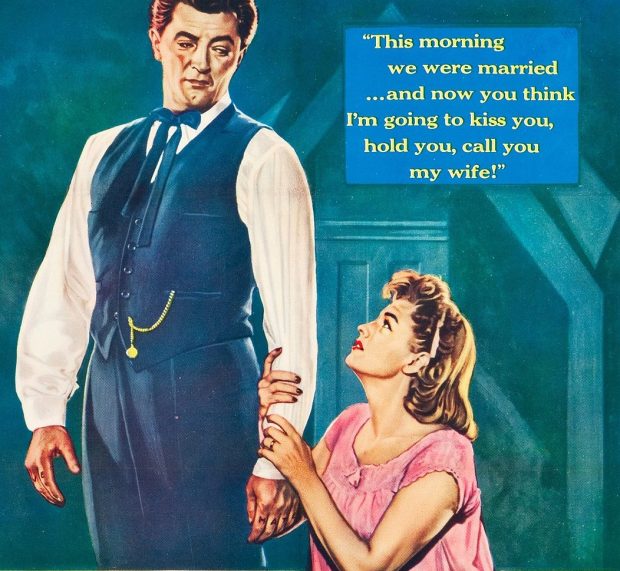
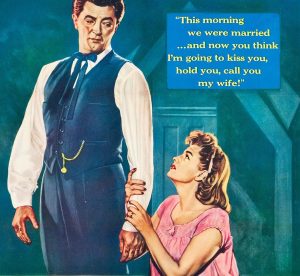
It’s a horror film, and an often extremely dark one, but from the perspective of a child and with the bulk of the film being carried by two child actors. It’s also a fairy tale, dreamlike and quite surreal in its tone. And lastly it’s an intensely Christian movie which nonetheless acts as an ascerbic and harsh critique of American Christianity. So it’s not exactly like you can do a “If you liked X, you’ll love The Night of the Hunter!“. So it’s understandable, if not not forgivable, that audiences slept on this when it first came out. Also, the poster is kind of terrible and makes it look like it’s a Lifetime drama about a man who desperately needs a dictionary.

“I don’t know what words mean!”

(more…)

“Some of it is very much me. Some of it isn’t.”

One of the most persistent and unkillable myths in the history of comics is the “saving” of Batman by Frank Miller. You’ve probably heard it. The Batman comics were just a giggling campy mess after the sixties TV show and it was only with Frank Miller’s seminal The Dark Knight Returns in 1986 that Batman became dark and gritty again. Cool story, but complete guano (and one I’m pretty sure I helped spread at a much earlier point in my career as a semi-professional nerd rodent). Truth is, the comics had been pushing back hard against the BIF BAM KAPOW image from as early as 1970 in an attempt to bring Batman back to his roots as a grim, brooding nocturnal hero.

What The Dark Knight Returns did do was bring that darker Batman that was already present in the comics to a much wider audience. DKR was published in 1986, the year that also saw the release of Watchmen, and the release of these two comics in the still relatively new graphic novel format made about as big an impact as it is possible for comics to make.

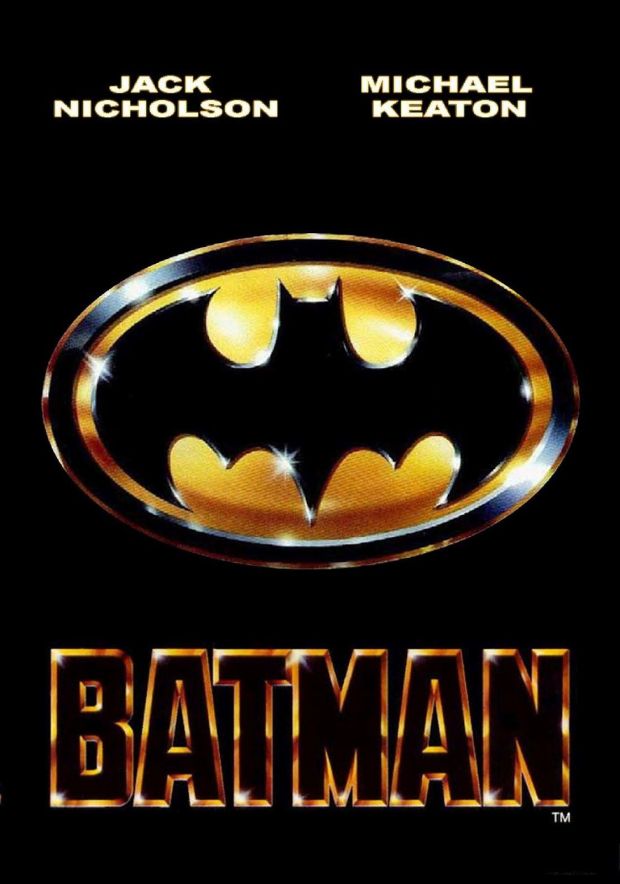
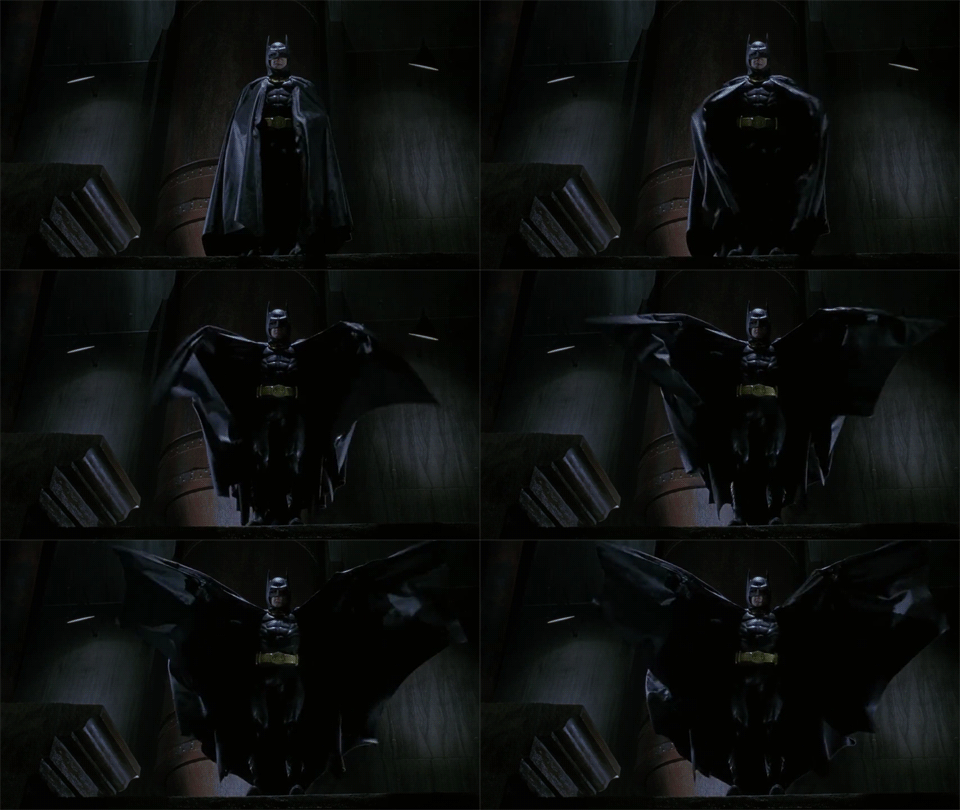
Batman was the first attempt to reframe Batman in the popular consciousness from the Adam West incarnation into something closer to his comic depictions. Did it succeed?

“Yeah. Yeah, just a bit.”

To put it another way, this is by far the single most influential depiction of Batman in any medium in the eighty year history of the character. This movie was where Batman went from “Flagship comic book character and star of a pretty popular TV show” to “Modern Secular God”. In terms of box office, merchandising revenue and pop culture impact it was on the Star Wars tier.  “Fine Mouse”, you say. “But what’s it done for us lately? Does it stand up?”

To which I say, “Yes. It does stand up. And then it flaps its wings, like a pretty, pretty butterfly.”

(more…)

“It doesn’t have to be good to be a classic.”

Let me tell you about the only comic book to ever make me cry in public.

From the first page of Amazing Spider-Man #121 something is off. There’s no title. Simply a sombre note from editorial telling the reader that they won’t actually learn what the name of the story is until the end. But it’s still very much a seventies Spider-Man story; bright primary colour palette, soap opera melodrama to burn and an exclamation point/period ratio of around 90 to 1. Norman Osbourne, who used to be the Green Goblin but has forgotten the whole thing because of amnesia, is undergoing a psychological breakdown because his son Harry went on a bad acid trip (did I mention that this came out in the seventies?). Suddenly, he relapses and remembers not only that he’s the Green Goblin, but that Peter Parker is Spider-Man. Racing to Peter’s apartment to enact his revenge, he instead finds Peter’s girlfriend Gwen Stacey who he abducts. Peter desperately pursues the Goblin to a bridge (George Washington per the text, Brooklyn according to the art) and Spider-Man and Osbourne have a desperate, thrilling mid-air battle that comes to a horrific halt when Gwen Stacey is thrown of the bridge by the Goblin.

Frantically, Peter shoots his webs to catch her before she hits the ground…and he does! He’s saved her! He’s won! Good triumphs over…
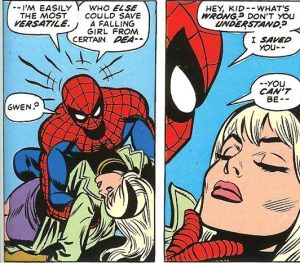
No. This time it’s different. And, on the final page, we at last learn the name of the story we’ve been reading which is, of course The Night Gwen Stacey Died. This is the panel that always makes me well up. :
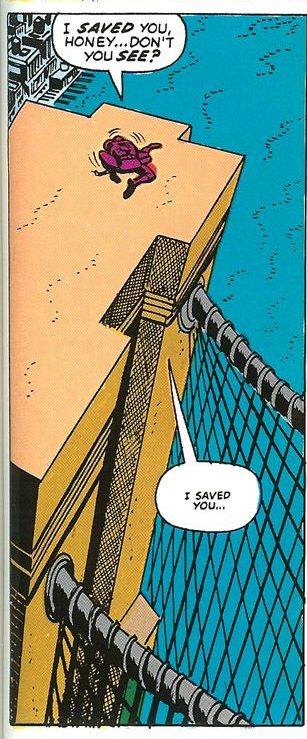
At this point in the comics, Peter Parker was no longer a teenager. He had graduated college, he was an adult. But he was still very much a children’s character. And I find something indescribably tragic about this child’s superhero cradling the body of the woman he loves, unable to comprehend that his world has changed and that the old rules don’t hold true anymore. Good does not always triumph over evil. The innocent are not always spared. The guilty are not always punished. The people you cannot live without will be taken nonetheless. It’s a story about the loss of innocence we all go through and it’s one of very few single issue comics that I would hold up as an absolute work of art. It’s a piece that’s moved me deeply and that I feel a real personal connection to. And I think one of the reasons why it is such a gut punch is because the brutal tragedy at the heart of story is contained in all this colourful, innocent Silver Age goofiness, like a hand grenade with a pink smiley face on it. It wouldn’t work a tenth as well if done in a moody, gritty “realistic” style.

The Night Gwen Stacey Died became an instant classic and to this day is usually considered the demarcation point between the Silver Age and the Bronze Age, a period marked by a more mature and literary style of comics that produced some of the greatest masterpieces in the genre. Unfortunately it also taught a generation of hacks that they could kill the hero’s girlfriend for some cheap drama and pathos. Nowadays, the phenomenon of female supporting characters being killed to provide motivation for the male lead is usually called “Women in Refrigerators”, a term coined by writer Gail Simone after a particularly notorious Green Lantern storyline, but before that it was called “Gwen Stacey Syndrome” because it was really this story that opened those floodgates. To be clear, this does not make The Night Gwen Stacey Died a bad story (or at least, I certainly don’t think it does). The problem is the raft of imitators who failed to realise that what made Gwen’s death so shocking and effective was that it was so rare. Hard as it might be to believe, prior to 1973 women almost never died in mainstream comics, and if they did (Batman’s mother for example) it was almost always off panel. So what does this have to do with The Killing Joke?

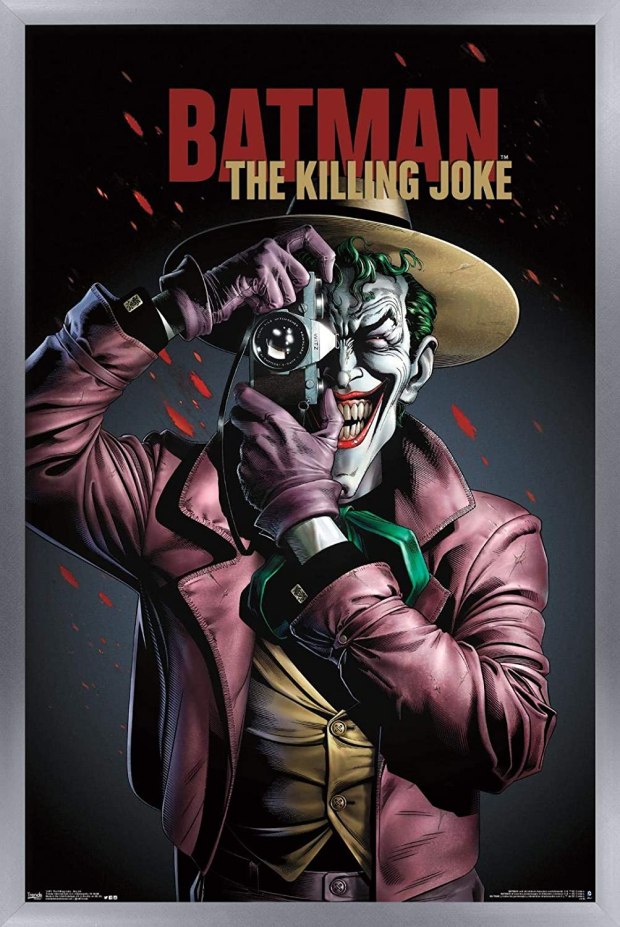
Well, The Killing Joke is a 1988 Batman story by Alan Moore with art by Brian Bolland, and since its release its been frequently lauded as one of the best Batman stories, the definitive Joker story and one of the greatest comics of all time. (thanks to Clifford who pointed out that I actually put it on my list of greatest comics which I had completely forgotten). However, it has also increasingly been viewed as being somewhat…problematic…
Frau_Blucher

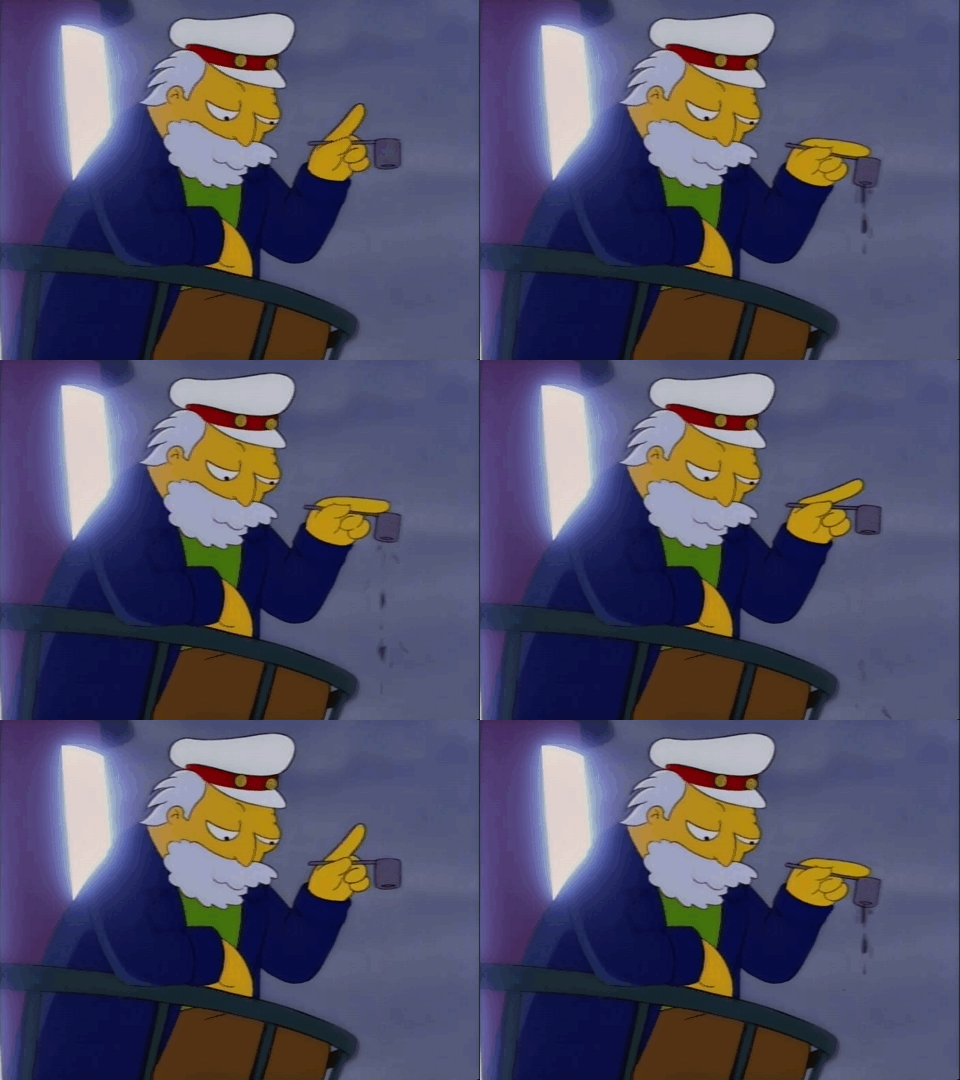
Why? Well, because in the course of this story the Joker shoots Barbara Gordon, paralysing her, (possibly) sexually assaults her and then shows her father pictures of it in an attempt to break him psychologically. Like Gwen Stacey, Barbara Gordon is brutally assaulted in order to advance the story of a male character, in this case her father and Batman. So there’s quite a bit of backlash against this book, with even Alan Moore himself effectively disowning it. Although honestly, take that with a grain of salt. Despite being the most influential writer in the history of the medium not named Lee, Siegel or Finger, Alan Moore basically now regards the entire comic book industry the way Captain McAllister views the sea.
My feelings? Well…I basically feel about The Killing Joke the way I feel about 99 Problems.

Is it misogynistic? Yes.

Noticeably so for its time and compared to the rest of its genre? Not really.

To the point where it obscures its artistic merits? No.

Of course, reading it now you have the benefit of knowing how the story ends. That Barbara Gordon was able to overcome this tragedy, and became Oracle, a wheel-chair bound superhero who became an inspiration to many disabled comic book fans and one of the most valued heroes not simply in the Bat family but in the DC universe as a whole.
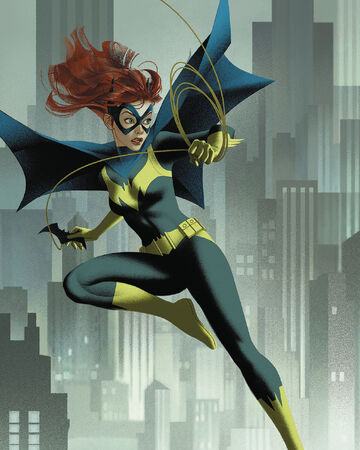
Barbara Gordon | Batman Wiki | Fandom

And then Bruce just had her fixed so she could become Batgirl again, which was inspiring to comic book fans with billionaire friends who magically solve all their problems for them.

Ultimately, despite the problematic…

Frau_Blucher

…elements of the story I still think it deserves to be considered one of the all time great Batman yarns. And I was really pumped for this animated adaptation. Look at this line up! Bruce Timm, creator of the legendary Batman the Animated Series was producing, well-regarded Batman scribe Brian Azzaerello was writing the script and the voice cast was shit shot: Conroy! Tara Strong! MARK HAMILL COMING OUT OF RETIREMENT TO DO ALAN MOORE’S JOKER YE GODS!
But then early word had it that the animated adaptation would be greatly expanding Barbara’s role in the story and I was leery. I mean, on the one hand, it’s certainly a laudable impulse to want to address criticisms of the original by giving Barbara Gordon more agency and putting her experience front and centre. On the other hand, that is a radical change to the story. Put bluntly, The Killing Joke is not a Barbara Gordon story. Hell, it’s not even really a Batman story. It’s a story about the conflict between Moral Nihilism as represented by the Joker versus Ethical Objectivism personified by Jim Gordon. So my feeling was that if the creators doubted their source material to the point that they would make such a radical change, they probably shouldn’t be adapting it in the first place.

My worry was that we would get a more progressive, more enlightened, less problematic version of The Killing Joke but probably not a better one.

Oh, oh, oh…

I wish that was what we got.

JESUS.

(more…)
The Quiet Man (1952)

Alright. Let’s get one thing straight. Damn straight.

Review Darby O’Gill and the Little People? Perfectly logical, I’m an Irish reviewer still best known for Disney reviews, who else would you be getting?

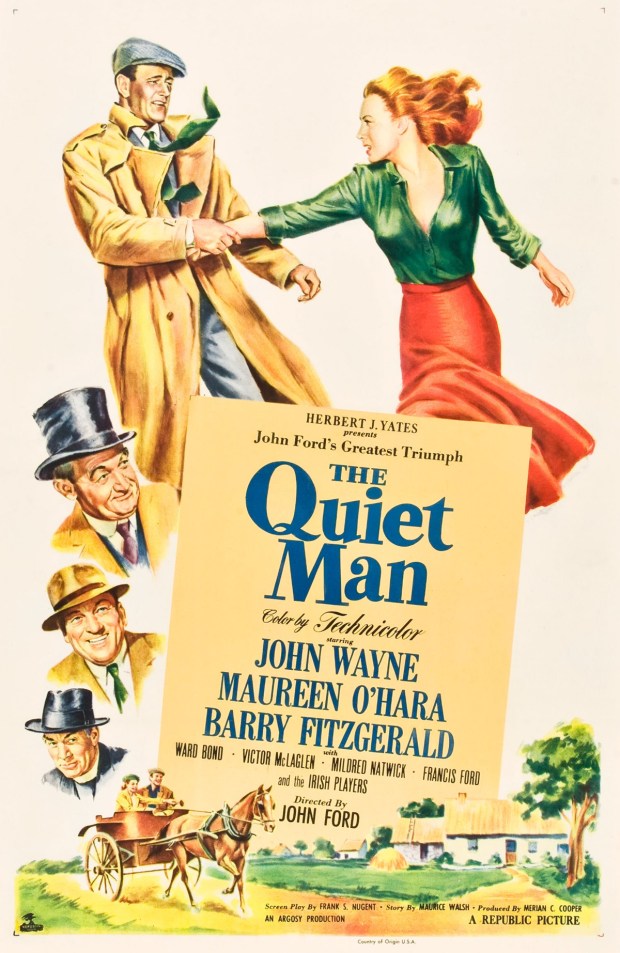
Review The Quiet Man? Waaaaay the hell out of my wheelhouse but okay, I’m Irish and you want to get my take on what is still, over half a century later, probably the most famous depiction of Ireland ever released by Hollywood, for good and ill. That’s fine. That’s fine.

But if any of you sons of bitches try and get me to review Far and Away there will be bloodshed.

Got it? Okay then.

Like any movie reviewer I have my blindspots. There are genres and actors and even whole eras of movie history that I’m just not very well up on. And one of those genres is Westerns. Just never liked them. Don’t know why. Maybe it’s because when I was growing up Irish television used to show them constantly. Every time you flipped a channel, a horse fell over. Now, obviously, I’m not saying Westerns are bad or even that I don’t like any of ’em. I really liked the Coen Brothers remake of True Grit for example. And I’ve always had plenty of time for Western comedies like Way Out West, Support Your Local Sheriff and of course Blazing Saddles (probably says something that my favourite Westerns tend to be ripping the almighty piss out of the genre). But, by and large, the 20th century’s single most popular film genre and I maintained a respectful distance, meaning I never really figured out how I feel about its most famous star, John Wayne. As an actor, I mean.  And having watched The Quiet Man, I’m still not sure. Of course, Marion Michael Morrison’s skills (or lack thereof) as an actor have been fiercely debated for decades which is a weird thing to say about one of Hollywood’s biggest ever box-office draws with a Best Actor Oscar.

(more…)

“AVENGERS! Assemble…”

Nebula Prime tries desperately to warn…

“Yeah, we’re just diving in, keep up!”

Nebula Prime tries desperately to warn Clint and Natasha but Thanos’ ship appears overhead and just scoops her up.

On Earth 2012, Scott is freaking out because they’ve lost the Tesseract and only have enough Pym particles for one more journey each. But Steve and Tony remember that Camp Lehigh (where Cap spent many an idyllic summer day knocking down flagpoles and throwing himself on grenades) held both the Tesseract and all the Pym particles they can eat. They send Scott back home with the sceptre and Steve and Tony head to their most dangerous and terrifying destination yet.

Hyuck hyuck hyuck.

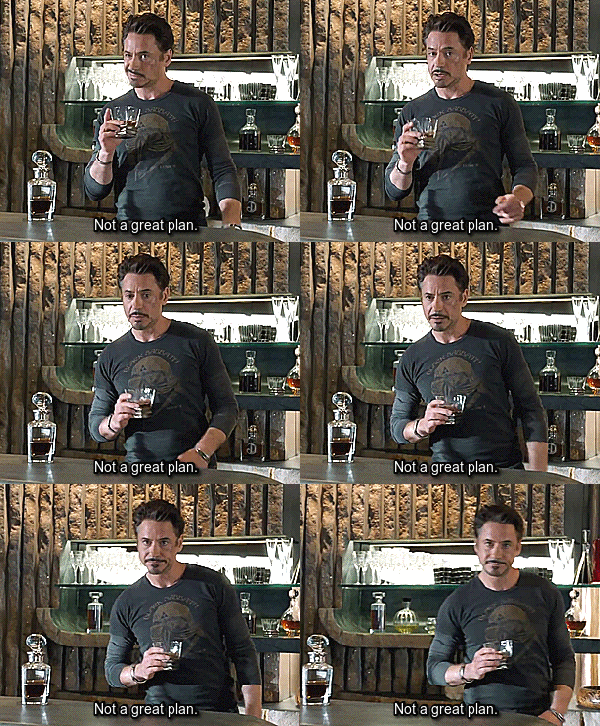
While Steve goes looking to score some Pym Particle (also known by its street names: P-Dust, Shrink-a-Dink, Tom Cruise…) Tony goes looking for the Tesseract. Fortunately, the seventies were a simpler, more trusting time where people left their doors unlocked and their children near BBC presenters and the Tesseract is just stashed in a big iron box without even an alarm or anything. I’ve known packed lunches with better security. Tony runs into his father Howard and the two men talk about parenthood.

Meanwhile, Steve distracts a young Hank Pym who the movie helpfully shows was already awful in the seventies. Steve grabs a couple of test tubes of quality Smoll (as it’s sometimes called on the mean streets of the quantum realm) but has to duck into another office to avoid base security. There, he sees Peggy Carter, the lady that he abandoned for a common iceberg, the cad.

(more…)