5 Centimetres per Second (2007)

“Mouse-san!”

“Oh, hello Otaku Oceania.”

“I am so, so glad to hear you’ve decided to review Makoto Shinkai’s instant classic Five Centimetres per Second!”

“Oh?”

“You bet! I mean, in your last few animé reviews you’ve been beating up pretty hard on my favourite genre! In fact, I was this close to running you through with my limited edition Masashi Kishimoto autographed samurai sword! Ha ha ha!”

“Ha ha.”

“But a glowing review of 5 Centimetres per Second should smooth everything over and where are you going!?”


“It sucks! Soz!”

Ohhhh I’m gonna catch a beating for this one. I’ve given bad reviews to popular movies before but, holy moly, 5cmPS is a full on critical darling. It was released in 2007and received rapturous responses, with the film press instantly hailing director Makoto Shinkai as “the next Miyazaki”, an accolade I’m sure that had nothing to do with the fact that Hiyao Miyazaki was the only animé director any of those mouth breathers knew by name harrumph harrumph harrumph harrumph harrumph!

“I didn’t get a harrumph out of that guy!”

“Give Mouse an harrumph!”

“Harrumph!”

“You watch yer ass!”

I’d never heard of the movie before I was requested to review it but I went in expecting to love it. I mean, there is a halo around this thing and all the screenshots I could see looked absolutely smurges. I mean, look at this.


But…it…just…movie…good…is…not…

(more…)

On bad people and good art

A few days back a question was put to me in the comments that I decided needed a full blog post to answer. The question was this:

“Yo Mouse. There’s something that’s been on my mind for a while regarding the whole #MeToo movement: should movies and TV shows with actors/directors/whatever who are guilty of sexual misconduct be (to borrow a quote from your Song of the South review) “sealed away, never to be seen by human eyes again”, or could they still be watched but without forgetting the actions of the people behind them?”

Before I answer I would like to introduce you to Sharpson’s law: Dogma is inherently immoral.

What I mean is, if you take any moral principal, no matter how universally agreed, and make it absolute, sooner or later it’s going to do harm.

Killing is wrong. Absolutely. No question. But is killing always wrong?

Give me a few minutes and I could probably come up with dozens if not hundreds of instances where killing would be morally justifiable. This is the problem with dogma. It creates moral laziness. It turns ascertaining right and wrong into a box ticking exercise, and if you fall into that mode of thinking sooner or later you’re going to tick the wrong box. All this is my extremely pretentious way of saying, there’s no simple “yes” or “no” answer to this one.

As a writer, I think that the notion that only good people can create good art, and therefore if someone is revealed to be a bad person their art is worthless is absurd on its face. It’s also an extremely Victorian attitude. As Oscar Wilde said “Books are neither moral or immoral, they are well written or badly written. That is all.”

But that does not mean that we should never consider morality when it comes to art. We should consider morality in everything we do, and especially in a capitalist economy where how you spend your money is, more and more, seen as a kind of imprimatur. The Weinsteins of this world operated and continue to operate because we loved the art they created too much to care about the sins they committed.

But this opens up another question:

Harvey Weinstein created Pulp Fiction. But so did literally hundreds of actors, cameramen, techies, publicists, the writer, the director and on and on and on. Should all their work be consigned to oblivion because one of their number was a scumbag? That hardly seems fair.

On the other hand, refusing to let these considerations change your viewing habits at all looks a lot like “I just don’t care”, and “I just don’t care” is not good enough anymore.

So, instead of giving a hard and fast answer as to whether or not to boycott art by made by awful people, I’ll just offer some suggestions.

1)      If the offender in question is dead, it’s irrelevant. Yes, Wagner was a terrible Anti-Semite. But he’s been dust for decades and you refusing to listen to Ride of the Valkyries accomplishes nothing but inflating your own sense of moral superiority. Speaking of.

2)      If you’ve decided to boycott a particular artist, all well and good, but don’t do it just for bragging rights because it’s not about you. And especially…

3)      Don’t brag about boycotting art you were never going to patronise anyway. I’ll never watch The Apprentice or listen to Chris Brown, but even if Trump and Chris Brown were two of the nicest guys who ever lived you couldn’t make me with a gun to my head.

4)      Don’t insult or belittle someone who continues to appreciate the work of an offender. Everyone has a right to enjoy whatever art they wish. Flip side:

5)      Don’t insult or belittle someone who refuses to patronise the work of an offender. Everyone has a line in the sand and often it’s less a logical well thought out thing than an instinctive gut reaction. John Lasseter’s “Inappropriate Hugging” isn’t enough to get me to swear off Pixar, but I’m not going to watch that Gravity Falls episode with Louis C. K again. Does that make sense? Honestly, no. But that’s where my line is.

6)      Just…just…just be nice. Jesus.

7)      It is perfectly acceptable, and indeed laudable, to pirate the work of offenders so that they don’t see a red cent.

8)      Feel free to separate the artist from the art. But “separate” is not the same as “forget”.

9)      Last one. If you know that a piece of art was actually created by harming an innocent, then it’s no longer art, it’s snuff and should not be watched ( or at least not in unedited form). I’m specifically thinking of Last Tango in Paris but there’s almost certainly others.

Anyway, that’s my answer. I look forward to the reasoned and polite debate in the comments.

“This is the building where our uncle lived. Where our father killed him.”

There are so many different places you could start with a review of Black Panther. I could go heavy and political, exploring the importance of the most famous black superhero in these troubled times. I could go historical, discussing how the character was conceived and developed over the decades. Or I could go personal, explaining how I personally discovered the character.

Instead, let’s talk about Batman.

Batman was created in the Golden Age of comics, where many of the genre’s tropes and visual languages were codified. And the Silver Age that followed was in many ways the second draft of the superhero genre, where the old characters were taken and what worked was enhanced and what didn’t work was discarded.

With the obvious exception of the Original Human Torch, who was perfect in the sight of God.

Often, this was quite literal. The Silver Age at DC saw new versions of the Flash and Green Lantern that were basically the same as their Golden Age counterparts but with some of the clunkier aspects of them sanded down. And as a Golden Age character, Batman definitely has some aspects that could be troubling.

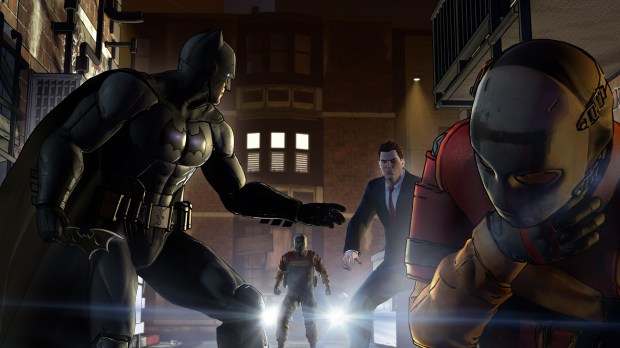
Look, I love Batman. Don’t get me wrong. One of the greatest superheroes ever created. But, as I’m hardly the first one to notice, the image of a billionaire WASP donning a bat costume to beat the ever-living tar out of the city’s poor and disenfranchised with the tacit blessing of the police can be a difficult sell. It’s not an insurmountable problem, by any means and many different writers have found different ways to deal with it.  Grant Morrison largely keeps Batman away from muggers and car-jackers and has him mostly fighting crazed supervillains. Other writers emphasise that Bruce Wayne isn’t just helping Gotham by being Batman but also contributes hugely to the city with his humanitarian work. And Frank Miller just shrugs and says “Yeah, he’s a fascist, whadyagonna do?”

“Hello chums!”

But still, that’s always going to be an issue with the character that has to be dealt with. And I would argue that the second draft of Batman that addressed these problems wasn’t created at DC at all, but at Marvel. Actually, scratch that. Marvel didn’t make an improved Batman. They made three:

Okay, he’s Batman, but instead of being a rich kid raised by his butler he was a dirt poor Irish Catholic boy with a hardscrabble working class upbringing in the roughest neighbourhood in New York who had to put himself through law school despite being blind.


Okay, he’s Batman, but instead of everyone pretending that dressing up in a costume and beating up muggers wouldn’t make you a lunatic and kind of an asshole we just acknowledge that he’s a lunatic and kind of an asshole.

Okay, he’s Batman. But he’s black. And smarter. And richer. And a king.

Like the Golden Age that preceded it, the Silver Age was initially whiter than white. But even in the early days at Marvel you can see a recognition of this and the halting, occasionally cringe-worthy but always well-motived attempts by Stan Lee and his co-creators to open up their fledgling universe to non-white characters. And undoubtedly their greatest achievement in this regard was the introduction to the Marvel universe of T’Challa, the Black Panther and the King of Wakanda.

Tsk. Buncha SJWs.

T’Challa first appeared in Fantastic Four #52 where Reed Richards and his family are invited to the mysterious African Nation of Wakanda by its equally mysterious king. The FF consistently underestimate the technology and skill of the Wakandans until they are faced with the mysterious Black Panther who manages to best one of the most powerful superhero teams in the world single-handed. Then, the Black Panther reveals himself to be T’Challa, and explains that he had to lure them to Wakanda to test his abilities against them. This first story, I think, encapsulates what’s made the character so enduring:

He’s kind of a dick.

Which doesn’t sound like a selling point, but hear me out. Too often, when white creators are trying to create positive black characters they make them a little too um…what’s the word I’m looking for?

Bagger Vancey.

Like, really friendly, eager to please, completely unthreatening and ready to lay their lives down for whitey at a moment’s notice.

Black Panther is very much not that. He may be a good guy, but he’s not your good guy. He has his own mission and agenda which is protecting Wakanda. If your agenda and his align, great. If not, he will not hesitate for a second to slit your throat if that’s what it takes to keep his people safe. He’s aloof, unknowable, one of the three of four smartest human beings on the planet, and you can never quite be sure how much you can trust him. He is a black man who is the hero of his own story, not a supporting character in someone else’s.

If there was any doubt that there was a real hunger for this kind of character, then the roaring rampage this thing cut through the global box office put it to rest. No MCU movie has flopped…

Image result for inhumans movie

No MCU movie that counts has flopped and most of them have been big hits. Some of them have been massive hits. But Black Panther was a full on cultural event. Dialogue and characters from this movie saturated the pop culture. Athletes started dressing in Wakanda inspired outfits and making the Wakandan salute. Schools and churches organised trips to see it and some commentators compared its release to cultural touchstones like Martin Luther King’s I Have a Dream speech and the election of Obama and okay guys, c’mon. It’s just a movie. But, after all the fanfare and thinkpieces, does the movie hold up? This looks like a job for an opinionated white guy on the internet! Let’s do this.

(more…)

Wizards (1977)

Ah Bakshi, the man they couldn’t tame.

I’ve reviewed two of Ralph Bakshi’s movies now, and even though my feelings on them were, oh let’s just go with “mixed” I have to say I have been looking forward to this one quite a bit. Why? Well, partially it’s because the animation reviews tend to be more fun to write, and also because, even if I don’t think they’re necessarily good films, they’re always a hell of a trip and fascinating to watch and talk about. Look, the guy walked into mainstream animation and just started throwing petrol bombs and I’ve always said I’ll take fascinatingly bad over dully competent any day.

And yet, the more I read up on Wizards (Papa Bear Bakshi’s third feature) the more anxious I got. Wizards is Ralph Bakshi’s most popular movie, and the one that, by Bakshi’s own admission, no one gave him shit over and genuinely seemed to like. This is the movie that even the squares seem to dig.

“You sold out, man.”

“Fuck you, man.”

Could that work? Could Ralph Bakshi actually make a standard, mainstream animated film? Or would his movie lose that inherent grungy Bak-shit insane quality that’s really the only thing that makes his output interesting? What happens when Ralph Bakshi shaves and puts on some damn pants? Let’s take a look.

(more…)

Steve Ditko 1927-2018

Steve Ditko was one the Silver Age’s Holy Trinity. A man who, along with Jack Kirby and Stan Lee, utterly transformed the entire genre of superhero comics which in turn have become such a bedrock of the new global culture.

Born in Pennsylvania, Ditko studied his craft under legendary Batman artist Jerry Robinson, before working under Joe Simon and Jack Kirby.

While his work lacked the polish, bombast and classicism of his Kirby, Ditko excelled in body language and naturalism and had a peerless skill in crafting visually memorable characters. His Spider-Man is a masterpiece of eye-catching, instantly iconic design. But Ditko’s contributions were by no means purely visual. Ditko, who made his bones in romance comics, understood that it was the man (or boy, really) behind the mask that made Peter Parker so compelling and pushed for the inclusion of the many soap-opera elements of the book, often over the wishes of Stan Lee who would berate his artist to get Peter into the costume and throwing punches as quickly as possible. To get around this, Ditko created the classic “Spider-Sense Half Face” where Peter’s Spider-Sense was visually represented by half of his face becoming his Spider-Man mask, a cheeky way of meeting Stan’s imposed quotas for number of panels where he was in costume. It is largely thanks to Ditko that Spider-Man has arguably the greatest supporting cast in all of comics, with even supporting players like J. Jonah Jameson, Mary Jane and Aunt May being household names, something very few superheroes can boast.

(more…)

“I’m the Juggernaut, bitch!”

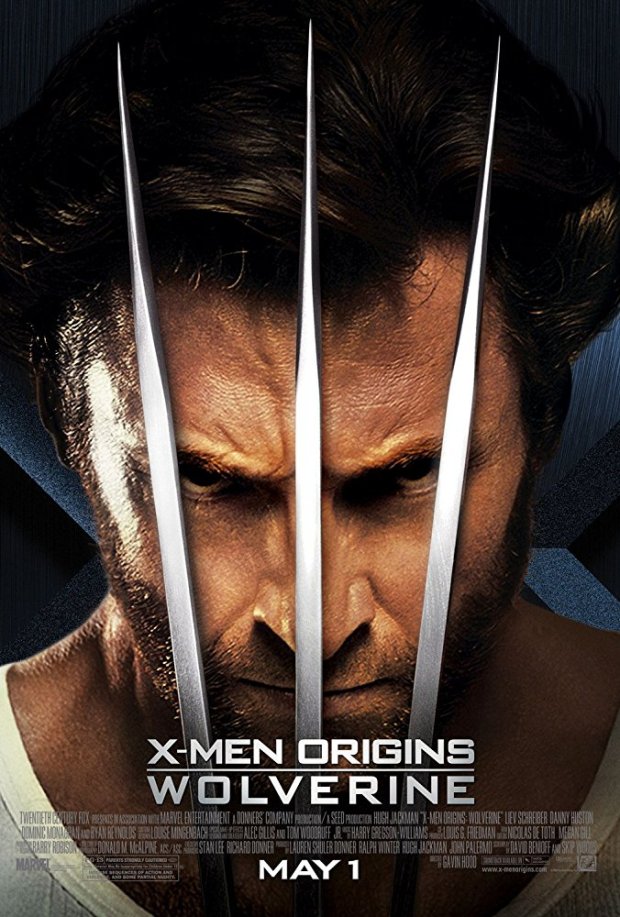
I had a weird sensation watching X-Men The Last Stand for the first time in many years. I found myself, initially, sort of enjoying it.

“Huh, that’s weird,” I thought to myself “I remember hating this. So why am I sorta finding this to be okay?”

The reason, dear reader, is because this movie is a treacherous snake.

It does a passable job of masquerading as a decent X-Men movie. The cast is all here minus Alan Cummings’ Nightcrawler (because the makeup took frickin’ forever to apply and Alan Cummings was all “Fuck this, Alan Cummings’ got shit to do”) and the new additions to the cast were mostly excellent. Ellen Paige as Kitty Pryde? Who could say “no” to that? Kelsey Grammer as Beast? Perfect. Just perfect. You could not cast that role better. Also, like X-2, the movie stakes two very well regarded X-Men stories and works them into a single story, specifically the seminal “Dark Phoenix Saga” by Chris Claremont and Joss Whedon’s “Gifted” story arc from the early 2000’s. Alright! Great cast, strong source material, what could go wrong? Why, God himself couldn’t tank this film!

“RATNER! RIGHT AHEAD!”

Yeah, so how did that happen? Alright, so Fox quite naturally wanted Bryan Singer to come back for X3 but Singer had been lured by the siren call of the Distinguished Competition.

Singer had done a little preliminary work on X3 before he left Fox for that tramp Superman, which would have been a re-telling of the Dark Phoenix with Sigourney Weaver as Emma Frost (oh fuck yeah). With Singer gone, the suits at Fox held an emergency meeting to decide who would replace him, with the understanding that they had to get someone lest they had to settle for Brett Ratner, a desperate last resort in the form of a man. And what’s really tragic about this is that they tried. They really did. A veritable directorate of directors were approached for this movie and any one of them could have made a great X-Men flick.

Darren Aronofsky’s X-Men? Sign me up.

Matthew Vaughan’s X-Men? We got it a few years later and it was awesome.

Joss Whedon’s X-Men? Oh, he could have done it in his sleep.

Zak Snyder’s X-Men?……

Alex Proyas’ X-Men? He made Dark City so he’s alright by Mouse.

But a combination of bad luck, scheduling conflicts and ego all conspired against Fox and they were left with a choice: A Brett Ratner directed X-Men movie, or no X-Men movie at all.

They chose wrong.

“That’ll teach you to believe you deserve better.”

(more…)

Day 5

So today was my reading and the reason I delayed posting this is that I’m still a little overwhelmed.

It went well. It…went really well.

It started a little rocky because that long wordy first scene that I was worried drags a bit? Well, it drags a bit. But Scene 2 kicked everything into high gear and it just motored from there. I was really happy with how it was going.

Then it ended and after the applause the three judges (sorry, sorry mentors) got up to give their feedback.

And they were crying.

As Ms Mouse said later when I told here “That could be very good or very bad”. It was good crying, not “what have you done to theatre?” crying but as I found out later, the play touched a nerve with this American audience that I didn’t anticipate.

The ending of the play is sad, to be sure. Nikolai South agrees to be framed in exchange for the freedom of Lily, an artificial intelligence whom he has come to love. He spends almost thirty years in prison and is tortured and psychologically broken, losing his sight and his mental faculties.

Finally a revolution sweeps the old order away and he is reunited with Lily, but he is so damaged by his ordeal he can scarcely even remember her. So not cheery stuff but that wasn’t what elicited such a strong reaction from the audience.

There’s a character called Nadia, comic relief in some respects, a very young functionary in the new government. She’s overwhelmed, emotional, overworked and swinging wildly between extremes of joy and grief.

She’s the first character in the play who’s not living with the perpetual fear of death. And you know that if this nation is now being run by people like her it’ll be all right. The last lines of the play are Lily and her husband looking out over a post revolutionary landscape.

HUSBAND: It’s a wreck. It’s a wreck run by children.

LILY: Yes. Let’s see what they build.

Sonetimes people read things into your work that you never thought of or expected. For these Americans, this story of young people finally taking control and casting down an old brutal order…

Well, it hit pretty hard.

It was humbling to see. And I can never repay them.

I was also roped in last minute to narrate Tom Barna’s Past, Present, Future, a post apocalyptic retelling of the nativity. Rehearsal’s today, reafing tomorrow.

Tonight’s production was Sycorax, a one woman show about the mother of Caliban. Before the show started we were informed to our shock that Demene Hall, who plays Sycorax, had had collapsed in rehearsal and had to be evacuated out of Alaska for medical treatment. Instead, the play was read by its author, Y York, and dedicated to Demene.

Day 4

Today I saw a bald eagle and it was so goddamned majestic I almost puked.

Today was also the first rehearsal of my own play The Caspian Sea which I only now realise I haven’t told you anything about. It’s about…no, you know what? I’m tired, let me just get a programme.

This is a play I’ve been working on, on and off, for six years. It’s a dense, wordy thing with a shit ton of world-building and I’ve never really been sure to what extent it works. Guess that’s why I’m here. Kim Estes, who was meant to play the main part of Nikolai South, was unfortunately delayed so instead his part will be played by Mark Robokoff, a wonderful actor from Anchorage. I really lucked out with this cast. They’re all incredibly talented and more importantly, great humans. I think we’re in good shape.

After that was my second monologue workshop, this time with Frank Collison. Frank’s a fantastic actor who’s appeared in Doctor Quinn Medicine Woman and Twin Peaks but he’s also married to Laura so he didn’t change anything about my monologue because Laura already has it how she wants it and Frank Collison is no fool.

Today I attended my first playreading where I wasn’t also acting and got to enjoy Arthur Jolly’s The Lady Demands Satisfaction which is a farce that is so funny the Joker could weaponise it.

This evening’s play was Spikes by Schatzie Schafers which is about the Enron scandal and how it destroyed the lives of ordinary Californians in retaliation for their state’s pricing policies. It’s an excellent piece but enraging and bleak as hell.

I heard someone behind me saying “I sure hope there are some comedies coming up.”

Amen brother.

Day 3

So after two days of glorious sunshine Alaska said “Hope you enjoyed that. NOW DROWN.”

It rained pretty much nonstop. Fortunately, I’m Irish and this is my natural enviroment. Today was my one to one Monologue workshop with Laura Gardener and it was amazing. By the end of it my monologue had gone through a complete change of tone, accent, delivery but it felt like a conpletely natural evolution.

After that was The Insurance Play’s reading.

Play readings are a weird experience. You’re reading from a script that’s in front of you on a music stand (a drama stand?) but you’re trying to act and make eye contact with the other actors while not losing your place in the middle of a dramatic monologue. It’s tricky.

As I already said, the play is a belter and I think we did it justice.

Every evening there is a full staged production of a play and tonight’s was “You are the Blood” by Ashley Rose Wellman (who wrote my monologue) which may well be the best play I’ve seen in years. It’s about the daughter of a serial killer who makes friends with the woman who wants to marry her still incarcerated father. It’s hilarious, and chilling and heartbreaking and perfect and I was watching it like this:

Gracia, signore.

Day 2

Alaska has changed me.

I have become someone who gets up at 6 AM.

WILLINGLY.

I can only hope that any further changes will be less drastic, like turning into a wolf and feeding on the flesh of the living.

Speaking of breakfast.

Bob and Diane just got added to my will.

Today’s schedule:

So as well as having mt play read I’m also reading for another playwright. I’ve been cast in Tamar Shai Bokvadze’s The Insurance Play as Ryan, a man who buys a cancer patient’s life insurance policy so that he gets paid out when she dies and then realises she ain’t dying quick enough. It’s an awesone part to play, a genuinely nice guy who slowly transforms into a complete monster.

Today was our first rehearsal and it all went swimmingly.

I’m also performing a monologue from Ashley Wellman’s “Living Creatures” playing a character who’s essentially death, telling a woman why she can’t take her dead child back to the world of the living. So I’m attending a monologue workshop run by actors Laura Gardner and Frank Collison, who are terrifying in the way that all incredibly talented people are. So I’m sitting there watching incredibly talented actors perform their monologues word perfectly and becoming more and aware that I’m a massive imposter and I do not have this thing learned off. Not close.

Finally I got up and stage and did the best I could. After a pause Laura looked at me and said gently.

“Now, you know you’re going to have to be word perfect on the night, right?”

“Yes. Sorry.”

“Okay. But that’s a really good start.”

And exhale…