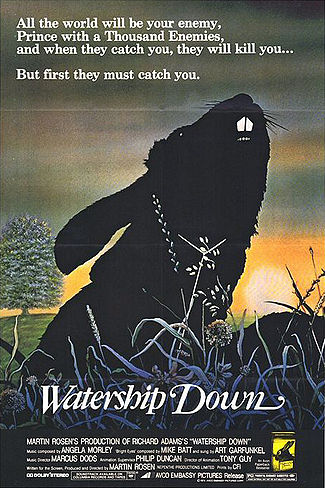
Watership Down (1978)

In the 1970s Richard Adams, a British civil servant and WW2 veteran wrote down a story about rabbits he had told to his daughters. He sent it to a few publishers who rejected it before it was finally printed by a small London based publisher, became an instant international bestseller, won the Carnegie medal and allowed Adams to quit his job and work full time as a writer.
This, and I cannot stress this enough, does not usually happen.
The book’s success was so stunning that it immediately gave birth to a sub-genre of animal fantasy stories. Colin Dann’s  The Animals of Farthing Wood was published a few years later and it feels like half the books I read growing up were about a group of some species of animal trying to get from point A to point B without getting run over by Toyotas. Seriously, there were Watership Down-esque books about hares, owls, squirrels, foxes, otters, even fish.
Yes. This was a real goddamn thing.

Yes. This was a real goddamn thing.

Some were good. Some were terrible. Some were about fish. But none were ever able to match the popularity of the original. Because there is only one Watership Down. Well, until Adams published the sequel in the nineties. Then there were two. Anyway, my point is; other books have fans. Watership Down has cultists. And I’m one of them. I fell in love with this book in primary school and checked it out of the school library so many times that the librarian finally said “You know what? Just keep it.”
Yeah, pretty much.

Yeah, pretty much.

So what makes it so good? Well at the most fundamental level Adams is just a phenomenally good writer with a lovely, clear, elegant prose style that can switch between bucolic descriptions of the English countryside to a muscular blow by blow account of two rabbits kicking the hraka out of each other. Coupled with that, the personalities of the various rabbits are simple but distinct and vivid. Adams based the personalities of the main rabbits on his squad from the war back when he was a smouldering, sensitive young officer with dark unfathomable eyes and a soft voice that could win the heart of any army nurse who crossed his path.
"Jerry's an alright sort. He's just being lead by a bad egg."

“Jerry’s an alright sort. He’s just being lead by a bad egg.”

But the most important trick of any fantasy novel is to bring you into its world. It’s why Lord of the Rings and Game of Thrones are so beloved, because the amount of detail and thought that has gone into crafting Westeros and Middle Earth makes reading the books almost like taking a holiday in a foreign country, albeit one filled with rampaging orcs (so, like Lanzarote).
This is the real genius of Watership Down. Adams gives his rabbits a language and a mythology and threads details of it throughout the larger narrative. And while they have been anthropomorphized to an extent, they’re still very much rabbits. They behave and react like wild animals, and they have difficulty understanding sophisticated concepts like art or, say, numbers higher than four.
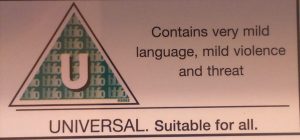
Today’s movie was released in 1978, a mere six years after the book was published. And given the length of time it takes to get an independently financed feature length animation off the ground we can probably take it that the movie was in the works almost as soon as the ink was dry on the first print run. The film is now regarded as a classic of British animation and Total Film named it as one of their greatest British films of all time. But it’s also been at the centre of controversy ever since the British censorship board rated it “U” or suitable for all ages, a decision that they are still getting complaints about almost forty years later. And loathe as I am to side with the Helen Lovejoys of the world, yeah. No way in Inlé should this have gotten a U rating.
Yes. "Mild" violence. If youre a fucking DROOG!

Yes. “Mild” violence. If you’re a fucking DROOG.


  But is the movie really as good as all that? Let’s take a look. Spoiler warnings for both the movie and book ahead.
AD

(more…)

“I don’t want to kill anyone. I just don’t like bullies.”

True story. A few years ago now when I was getting ready to move out of my parents’ house, I was clearing out my stuff from my bedroom, the bulk of which was pretty much every issue of SFX magazine published between 1997 and 2004. And I found myself with two copies in my hand, one from August 2001 and the other from October 2001. I idly flicked through the August issue and found myself reading the comic reviews, one of which was a little quarter-page panning of Captain America # Fifty Bajillion drawn by Who Knows and written by Who Cares. The review was scathing; the art’s terrible, the writing’s appalling and worst of all, the main character’s just not interesting or relevant anymore. The review finished by noting that Marvel had been dropping hints that one of their oldest characters was going to be killed off and it didn’t take a genius to figure out that Cap was not long for this world. I then flicked through the October 2001 issue and again turned to the comics section. And there was a full page review of the new Captain America #1, with a top tier art and script team and a story about Steve Rogers defending Muslim New Yorkers from racist attackers while trying to track down an Al Qaeda cell.

Cometh the hour. Cometh the man.

For a character whose entire schtick is being a man out of time, when he was originally created Captain America was actually ahead of his time. In America in 1940 public opinion was firmly against become involved in another European war. In New York however, many of the men working in the comic book industry were  the children of Jewish immigrants who often still had family back in Europe and felt a personal connection to the horrors being committed by the Nazis. One of those men was Joe Simon who conceived of a patriotic, Nazi-battling character named “Super American”. Deciding that the name was a little too similar to a certain other superhero, he changed it to “Captain America”, a name so instantly iconic that nowadays you just have to put the word “captain” in front of any random noun and it sounds like a superhero name. Simon pitched the idea to his editor Martin Goodman who liked it so much that he ordered him to create a solo Captain America series, a big gamble to take on an untested character. Simon’s usual partner was artist Jack Kirby but Simon wanted to bring in two additional artists to deal with the workload of creating an entire book’s worth of stories based on one character. But Kirby was so invested in the character of Captain America that he insisted on drawing the entire book himself, which he did, and on time.

The first issue sold as well as any comic that features Hitler getting punched in the face should. The character was an immediate hit, becoming the first genuine superstar character of Timely comics (which would later become Marvel). Not all the attention was positive, however. American Nazis began sending threatening letters and one time even called the offices of Timely challenging Jack Kirby to come down and fight them in the foyer. Kirby ran down only to find they’d run off because it was Jack Frickin’ Kirby and they may have been Nazis but they weren’t crazy. Regardless, for a while the city of New York actually had to provide police protection to the building. After Pearl Harbour, Captain America became even more popular, with his comics distributed to American service men to boost morale. Many of the Timely artists and writers were drafted during this period. Stan Lee, for example, who got his break in Timely writing Captain America prose stories (he was the one who came up with the whole “throwing the shield as a weapon” thing) was put to work making propaganda. One day he was found breaking into the army post office, trying to mail a script off to Timely. He was told he’d be court-martialed, only to be released the next day when the editor of Timely rang his commanding officer to point out that jailing the writer of Captain Frickin’ America might be bad for the army’s morale.

Jack Kirby also joined the army but opted to serve on the front lines, becoming one of the few American soldiers who had experience fighting Nazis as a hobby before going pro.

Unfortunately, America won the war…I mean obviously not “unfortunately” in the grand scheme of things but unfortunate for Captain America. You see, Captain America was very much a reaction to the Nazi menace, which is what made the character so timely (pun!) and important. But of course, once that menace was defeated, Captain America didn’t really have a purpose anymore. In fact, the same could be said for the vast majority of superheroes who had followed in his wake. The superhero boom pretty much died with Hitler, with only a few characters like Superman, Batman and Wonder Woman surviving the decade. Timely tried repurposing Cap as a commie fighter, but it just wasn’t the same. Timely changed its name to Atlas, dropped the superhero genre entirely and started focusing on sci-fi and monster tales.

It wasn’t until the sixties that Cpatain America got his second origin story. The third issue of The Avengers had the newly formed team finding Captain America floating in the Arctic Sea in a block of ice having gone missing near the end of WW2 (all the stuff about him fighting communists was retconned as actually having…you know what, fuck it, no time). Captain America then joined the team as a man out of time, a morally pure Rip Van Winkle trying to adapt to a confusing and complex modern world, and that’s pretty much been his niche ever since.

Since then, Captain America has had his share of classic runs and great stories, but there’s no denying that he’s a tricky character to do right. Like Superman and Wonder Woman, it takes a writer with skill to make him work (though it’s a truly wonderful thing when he does). For a long stretches of the twentieth century it often seemed like Marvel didn’t know what to do with Captain America, often giving him to creators who really had no business writing the character, which is how we got Rob Liefeld’s godawful Heroes Reborn Captain America.
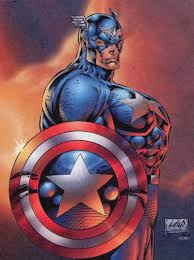
I'd say "We do not speak of the Sentinel of Libertitty" but let's be real. We never stopped.

I’d say “We do not speak of the Sentinel of Libertitty” but let’s be real. We never stopped.

 Since the beginning of the 21st century however, Cap has once again become one Marvel’s top tier characters, attracting industry leading talent and the kind of popularity he hasn’t really known since the time of his creation. Part of that is, well, yeah, obviously…
"9/11 changed EVERYTHING Brian!"

“9/11 changed EVERYTHING Brian!”

But as well as the natural impulse to rally around such a patriotic symbol in troubling times, Captain America is simply a character whose time has come again. In the forties, Cap was popular but he was by no means unique. The stands were overflowing with patriotic, square jawed do-gooders. Hell, Captain America wasn’t even the first superhero to wear the American flag and carry a shield. But the superhero genre has changed so utterly since those days that what once made Captain America almost generic now makes him almost unique. Nowadays, a superhero who’s just a genuinely decent person is refreshing and almost edgy. He may be old fashioned, but these day? Like the man said, people need a little old fashioned.

2011’s Captain America, the first movie featuring the character that fans will actually acknowledge exists, works and works so damn well, because it gets that.
Blucatt ad

(more…)

“Could you please pull over? I think I’m going to be sick.”

Captain America is old school. Real old school. One of the very earliest generation of superheroes who has managed to remain not only relevant but arguably more popular than ever…
Hello?
Hello?
Where is everyone?
“C’mon guys, we got a review to do!”

“C’mon guys, we got a review to do!”

“Fuck you, mazerunner!”

“Fuck you, mazerunner!”

“WHOAH! DUDE!”

“WHOAH! DUDE!”

“We don’t review movies on 1st April. We told you this.”

“We don’t review movies on April 1st. We told you this.”

“Yeah dawg, this mo-fawkin day is like your personal “Friday 13th done knocked up Halloween and this here’s there ugly-ass day baby.” day”

“Yeah dawg, this mo-fawkin day is like your personal “Friday 13th done knocked up Halloween and this here’s there ugly-ass day baby.” day”

“We all know what’s going to happen. Horned King or BluCatt or one of the bajillion evil dudes you’ve managed to piss off will make you review something terrible and who suffers?”

“We all know what’s going to happen. Horned King or BluCatt or one of the bajillion evil dudes you’ve managed to piss off will make you review something terrible and who suffers?”

“Me?”

“Me?”

“US! So I refer you my previous “Fuck you mazerunner!” Good day!”

“US! So I refer you my previous “Fuck you mazerunner!” Good day!”

“Guys…”

“Guys…”

“I said “good day” sir!”

“I said “good day” sir!”

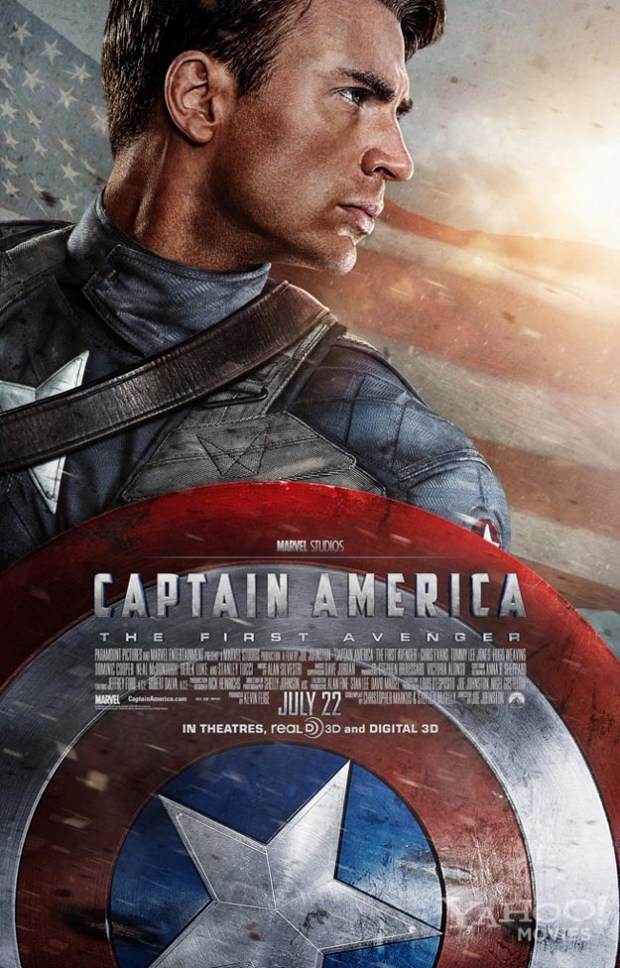
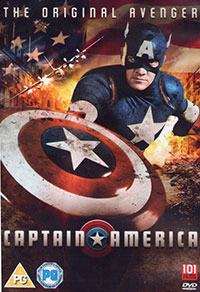
Guys c’mon. That was the old Mouse. This blog has become a lot more serious since I started reviewing Marvel movies. As the movies have become more mature, I say, so too has Mouse. Look, today’s movie is Captain America: The Original Avenger. It’s a great film, nothing bad’s going to…

Guys c’mon. That was the old Mouse. This blog has become a lot more serious since I started reviewing Marvel movies. As the movies have become more mature, I say, so too has Mouse. Look, today’s movie is Captain America: The Original Avenger. It’s a great film, nothing bad’s going to…

“Don’t you mean “first” Avenger?”

“Don’t you mean “first” Avenger?”

“No, look, it says here right on the cover…”

“No, look, it says here right on the cover…”

Wait. That’s not Chris Evans and his boyish blue eyes that would melt your heart.

Wait. That’s not Chris Evans and his boyish blue eyes that would melt your heart.

Oh no.
“Mouse. Sit down. Our game is about to begin.”

“Mouse. Sit down. Our game is about to begin.”

“Katzenberg?”

“Katzenberg?”

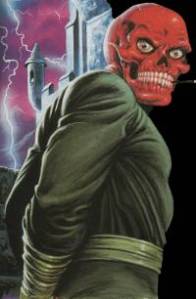
“Please. Please. Red Skull is fine. I have come to collect on that favour you owe me.”

“Please. Please. Red Skull is fine. I have come to collect on that favour you owe me.”

“I owe you a favour?”

“I owe you a favour?”

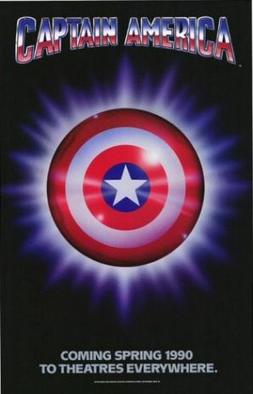
“Of course. I allowed you to review How to Train Your Dragon and now you must do something for me. You must review 1990’s Captain America, one of the worst Marvel movies ever made!”

“Of course. I allowed you to review How to Train Your Dragon and now you must do something for me. You must review 1990’s Captain America, one of the worst Marvel movies ever made!”

“Shock! Gasp! That thing you said would never happen happened!”

“Shock! Gasp! That thing you said would never happen happened!”

“Skull. You forget who you’re talking to. I’ve reviewed Foodfight. Your ninties Golan-Globus schlock has no power over me.”

“Skull. You forget who you’re talking to. I’ve reviewed Foodfight. Your nineties Golan-Globus schlock has no power over me.”

“Skull. You forget who you’re talking to. I’ve reviewed Foodfight. Your ninties Golan-Globus schlock has no power over me.”

“Then come. And let us see if this snark of yours is stronger than my hate.”

So I hope no one will object if I skip the historical overview and earnest analysis of Captain America as a character until the next review? When I review a Captain America movie that wasn’t assembled by meth-addicted gibbons? Brilliant, let’s crack on.
AD

(more…)

Song of the Sea (2014)

Pff. Women, amirite? One day you’re walking down the beach and you see a beautiful woman walking out of the sea, you hit it off, you get married, have a couple of kids and then BAM! Turns out she’s a seal and she’s off gallivanting with her seal buddies without even leaving a forwarding address for child support. Ain’t it always the way? Well, maybe not where you come from but in Ireland it’s practically an epidemic. The canon is full of selkie stories. Shit, if I had my druthers, every Irish exchange of marriage vows would include the sentence “And by the way, I am totally not a seal.”

Selkie stories are not exclusively Irish, of course. In fact, it’s probably more accurate to call them a Scottish tradition but you also find Selkie tales in the Faroe Islands and Iceland and despite the basic similarities (seal turns into a woman, marries a human) they run the gamut from tragic romances to horror stories. A common feature is that the Selkie has a seal-skin cloak, without which she can’t turn into a seal again. The fisherman hides the cloak from her for years, until one day their children are searching around in the attic, find the cloak and show it to her, at which point the Selkie’s all “Laters!” and makes her escape. A particularly grim version from the Faroese Island of Kalsoy has the Selkie return to her seal family, only for her human abductor to kill her husband and children in revenge. The Selkie then swears to basically kill every dude from his village until there are enough bodies to circle the entire island which she is still doing to this day.  Then there are other stories where the marriage between the fisherman and Selkie is loving and consensual, but she has to to turn into a seal to save him from drowning and so can never return to live on land. The universal theme running through these stories is loss. Happiness is transient, loss is forever. Sounds like a fun cartoon to me!

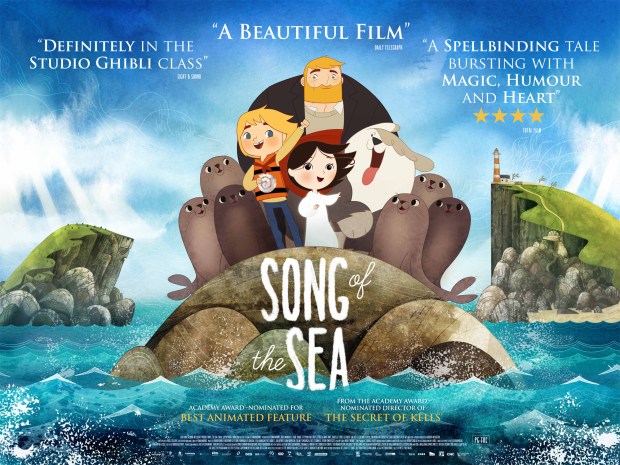
To follow up the phenomenal success of Secret of Kellsdirector Tomm Moore basically created Song of the Sea, an to homage selkie stories and to his own childhood growing up in Ireland in the eighties. I also grew up in Ireland in the eighties, but I remember it being distinctly less magical.

"Well, apart from the whole "being transformed into a mouse" thing.

“Well, apart from the whole “being transformed into a mouse” thing.”

(more…)

The Unshaved Mouse’s Presidential Endorsement: Apocalypse 2016 Edition!

The last time I gave a Presidential endorsement was October 2012, less than a month before election day. This year, with so much at stake, I feel it important to make my feelings known sooner rather than later. I am fully aware of the awesome responsibility that comes with this task. The quadrennial Unshaved Mouse presidential endorsement can and has swayed the course of the election before now,  even if the rank ingrate currently inhabiting the White House didn’t even deem it necessary to make a damn phonecall thanking me for pulling his nuts out of the fire.
YOU'RE WELCOME, BARRY.

YOU’RE WELCOME, BARRY.

It is for this reason that I have previously waited until the very end of the election season, carefully weighing the pros and cons before finally bestowing my imprimatur. This year, however, is different. Let’s not kid ourselves. The fate of the Western world is literally resting on this election. Which is why, after hours of prayerful contemplation, I have decided to make my endorsement for the Presidency of the United States a full ten months before polling day. The candidate I am about to endorse is, I believe, the only rational choice, a candidate with impeccable credentials and a history of public service literally unmatched by any of the alternatives. A face people know, a name people trust. And that candidate is:

(more…)

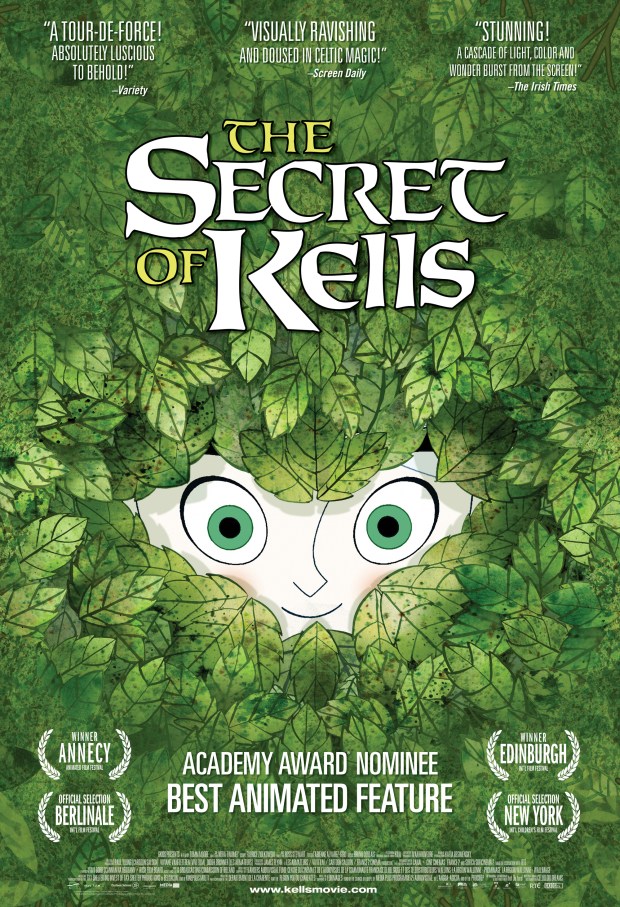
The Secret of Kells (2009)

Guys, I’ll be honest. I haven’t been this daunted by a review since Frozen. First you have the fact that this is an absolutely adored film with a lot of fans amongst readers of this very blog, and then you have the fact that the movie is Irish (well, an Irish-Franco-Belgian co-production) and the fact that I’m Irish (well, an Irish-Greek co-production) and that people seem to think that gives me some kind of special insight into this movie. I mean what are you expecting, that I’m just going to emerge from my turf cottage and impart some ancient Gaelic wisdom through the haze of my clay pipe?
"Yes, now quit stalling."

“Yes, now quit stalling.”

Okay, okay. Special insight. Special insight. Let me see. Okay. You know that episode of the Simpsons where they’re crossing from the American embassy into Australia and Homer’s all “Look boy! Now I’m in America! Now I’m in Australia! America! Australia!” and so on and so forth? Imagine an entire culture built around that joke and you have the Irish. We’re obsessed with borders. OBSESSED. The places in space and time where one thing ends and another starts. Ask an American when summer begins and they’ll say “Ohhhh, round about Memorial day, I guess?”. Ask an Irish person when summer begins and they’ll say “01 May. Midnight. Greenwich Mean time. And not a second before.” Borders are where things get weird, where things aren’t one thing or another. Why is Halloween so creepy? Because Samhain occurs on October 31st, right when Autumn ends and Winter begins on the Gaelic calendar. It’s at times like that when the…things in the other world can cross into ours. This fear and fascination with borders runs bone deep in the Irish psyche and ties into our historic relationship with the fairy realm. My wife is a dyed in the wool atheist, but she would not enter a fairy ring if you paid her. You just don’t do that.
“IT’S COMMON SENSE PEOPLE!”

“IT’S COMMON SENSE PEOPLE!”

Secret of Kells is a very Irish movie, and I don’t just mean because it draws so heavily on Irish mythology, art and history and features some of the greatest Irish actors to have been claimed as British by the English media at some point. It’s obessed with lines drawn between over here and over there, between light and dark, between faith and fear and between civilization and the wild wood.
It is also feckin smurges.

It is also feckin’ smurges.

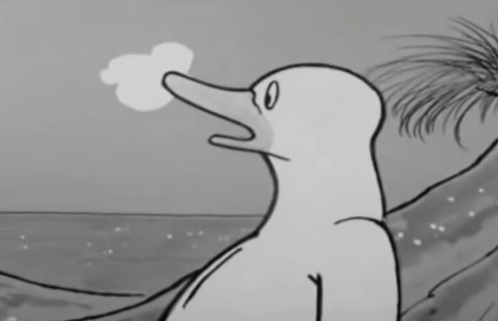
So. Background. Secret of Kells is the product of Cartoon Saloon, which began as a loose animator’s collective in 1999 and has now produced four full length animated features, two of which have been nominated for Academy Awards. Despite this incredibly small filmography, Cartoon Saloon is already considered to be on a par with Studio Ghibli. Clearly, Irish Animation has come a long way since Daithí Lacha.
HE WAS TERRIBLE.

HE WAS TERRIBLE.

But is the praise justified? Yes. Is the movie as good as YES. Does it YES. Whatever hypothetical question I could ask the answer is almost definitely YES.
Let’s take a look.
AD

(more…)

What if there was an election and nobody won?

Guys, if I can briefly distract your attention from the ongoing flaming six-train pileup that is the US elections I need you to take a look at what’s happening in Ireland right now.

What’s happening in Ireland?

We had an election, and nobody won.

What? How is that even possible? Did nobody vote?

On the contrary, turnout this election was a very healthy 60%, down from 2011 but still high for a country where voting isn’t mandatory.

So what’s the problem?

Okay, a little background. Ireland elects the Dáil (our parliament) with the Proportional Representation: Single Transferable Vote. It’s the system that most accurately reflects the views of voters and using it makes the Dáil one of the most democratic legislatures in the world. Compare that to our upper house, the Seanad, which isn’t even fully elected and is probably the least democratic legislature in the developed world. Ireland: A land of contrasts. Basically in PR:STV you are allowed to not simply vote for your favourite candidate but to rank all the candidates in order of preference. This allows people to vote for smaller parties that better align with their politics without worrying that their vote will help parties they disagree with (think, being able to vote for Nader without worrying that you’re helping Bush to win).

That sounds super complicated.

It’s really not. You put a 1 by your favourite candidate, a 2 by your second and so on. Easy peasy.

No, I didn’t mean the voting, I meant the counting the vote.

That is SUPER complicated, yes. It’s a Lovecraftian, nightmare inducing madness but hey, I just vote so it’s not my problem. Although if you’re interested, this video explains the whole process better than I ever could.

So what happened?

The people cast their ballot and at the end the vote looked like this:

Election

Holy shit that’s a lot of parties. What am I even looking at?

Okay, so the blue bar at the top is Fine Gael, currently in government in coalition with the Labour party (the lighter red bar). Second down is Fianna Fáil who’ve been the party of government for most of Ireland’s history but were banished to the land of ghosts and shadows in the 2011 election because the 2008 crash happened on their watch. They’ve bounced back in a huge way this election because apparently a quarter of the country suffered some kind of head trauma that effects medium term memory. The bright patriotic green guys three rows down are Sinn Féin who are ABSOLUTELY NOT AFFILIATED WITH THE I.R.A. IN ANY WAY AND NEVER HAVE BEEN.

Wink

And below them? That big long black 13%? The independents, just ordinary men and women without even a party who managed to collectively come in fourth over all.

(more…)
“You think me strange? Good strange, or bad strange?”

First dates are essentially scams. You sit down to dinner with someone you don’t know, and try to pretend that you’re someone else. Someone charming, and succesful, and definitely not into doing weird things with fish. No sir. Not you. The second and third dates are more or less the same. But by the time the fourth date rolls around you need to start being honest. That’s where you take your date on a long walk and say “Look. I really like you. I like where this is going. But if we’re going to have something together I’m going to have to tell you just how much of a freak I actually am.”
“This. This is me. This is what I get up to.”

“This. This is me. This is what I get up to.”

The Marvel Cinematic Universe has essentially been a long, meticulous romancing of the mainstream. Thor is the part of the relationship where Marvel finally says “I’m glad you like the snarky businessman in the robot suit and the scientist who turns into a green monster. Now here’s where we get nuts.” As a title, The Mighty Thor has always been an unapologetically melodramatic, ridiculous, camp, epic, nonsensical, glorious, mess. In short, it is one of the purest comic books ever written. It’s huge men with long flowing hair and fabulous capes yelling cod-Shakespearean insults at each other and not understanding the difference between “thee” and “thou”.
It, quite simply, does not give a fuck.
But first, a little history.
The character of Thor was created early in the first millennium by the Germanic peoples inhabiting what is now Scandinavia. Some stuff happened. Then, in 1962, the character was introduced into the Marvel universe by Stan Lee, Larry Lieber and Jack Kirby in the pages of Tales to Astonish. There’s a little bit of confusion as to who actually came up with the idea (aside from the ancient Vikings, I mean). Stan Lee claims that the idea came to him when he realised that the only way to create a character stronger than the Hulk would be to make him a god, and that rather than go with the more well-known Greek or Roman deities he decided to delve into Norse mythology.
Meanwhile, Cúchulainn sits on the damn shelf.

Meanwhile, Cúchulainn sits on the damn shelf.

Jack Kirby, on the other hand, claims that he created the character because of his love of Norse mythology and to be honest, I think the evidence is on Kirby’s side. Kirby had already created not one but two versions of Thor for DC in the golden age, so he clearly had an interest in the character. Not only that, but “comic book characters as post-industrial mythology” was kind of Jack Kirby’s whole deal. Thor’s sales have never exactly set the world on fire but this is nonetheless a character with some serious cred. There are many who consider Lee and Kirby’s run on the character the finest work of either men in the sixties (damn high praise) and he’s also had some celebrated runs, none greater than Walt Simonson’s glorious, batshit insane epic in the eighties.

This is normally the part of the review where I would say “we do not speak of the Frog of Thunder” but even this was AWESOME.

This is normally the part of the review where I would say “we do not speak of the Frog of Thunder” but even this was AWESOME.

He’s also been a  very consistent presence in the Marvel universe, showing up in almost everyone else’s books at one time or another and, if there’s a team of Avengers that Thor’s not on, it’s probably only because he’s dead again. He’s always been one of the company’s “faces”, one of their most visible and iconic characters. And yet, Thor has always struggled outside of comics. His live action appearances before 2011 was just a single episode of The Incredible Hulk, and he hasn’t headlined his own cartoon series since the frickin’ sixties (compare that to Spider-man, who gets a new cartoon show every time Stan Lee sneezes). Same Raimi originally pitched a Thor movie to Marvel all the way back in 1990 and from there it was dropped, picked up again, briefly re-conceived as a TV show starring Tyler Mane before bouncing to Sony, then to Paramount before finally arriving back at Marvel. The decision to nominate Kenneth Branagh to direct was surprising but also kind of inspired. Branagh is famous as an interpreter of Shakespeare for the masses, and Stan Lee is of course one of the biggest Shakespeare fanboys out there.
He made Falstaff into a superhero, people.

He made Falstaff into a superhero, people.

Branagh was the perfect candidate to make the overblown, melodramatic bluster of Thor work for a mainstream audience.  Just, for the love of God, don’t subject yourself to his commentary on the DVD.
"The director's an ass."

“The director’s an ass.”

Marvel knew going in that compared to Iron Man and Hulk, this movie was the real test. This is where they’d learn if a mainstream audience could really accept all the comic book nuttiness they were about to bring. It was time to see if this relationship had legs.
Blucatt ad

(more…)