Yeah, I’m sure you’re all shocked. After watching James Gunn’s Superman I decided it was high time that the big blue boy scout got the same treatment as a certain pointy eared co-worker of his.
So yes, we’re going to be looking at every live action Superman movie while we wait for Matt Reeves to finish the script for The Batman 2 roughly around the time of the heat death of the universe (I am not bitter, I am passionate.)
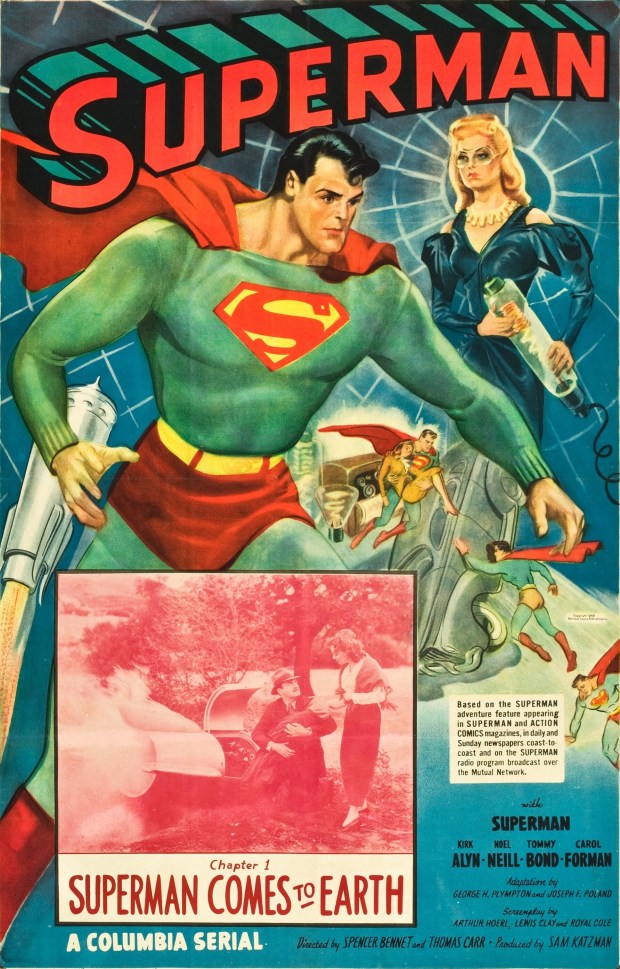
Let’s begin at the beginning. It’s 1948, a mere decade after Superman’s debut in Action Comics and the character is already a bona fide cultural icon with a radio series, newspaper strips, some of the greatest cartoon shorts ever made and a metric shit ton of merchandise. But, weirdly, despite kicking off the entire superhero genre (asterisk asterisk) Superman was actually pretty late to the party when it came to being adapted into live action.
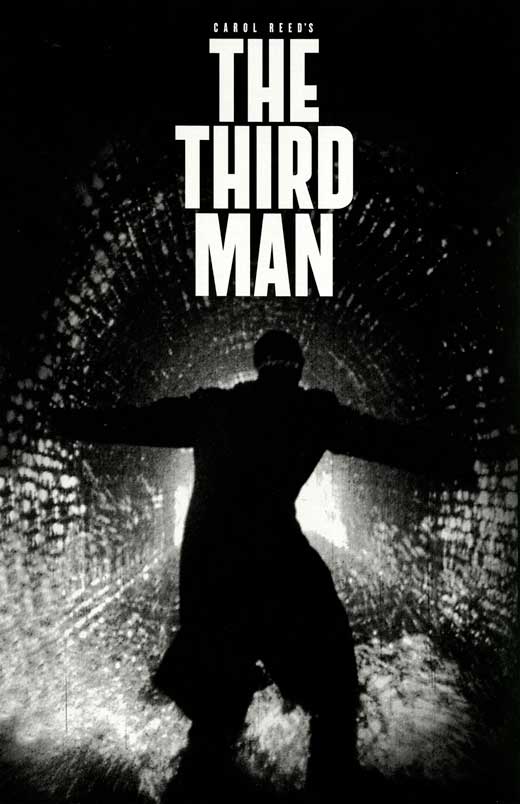
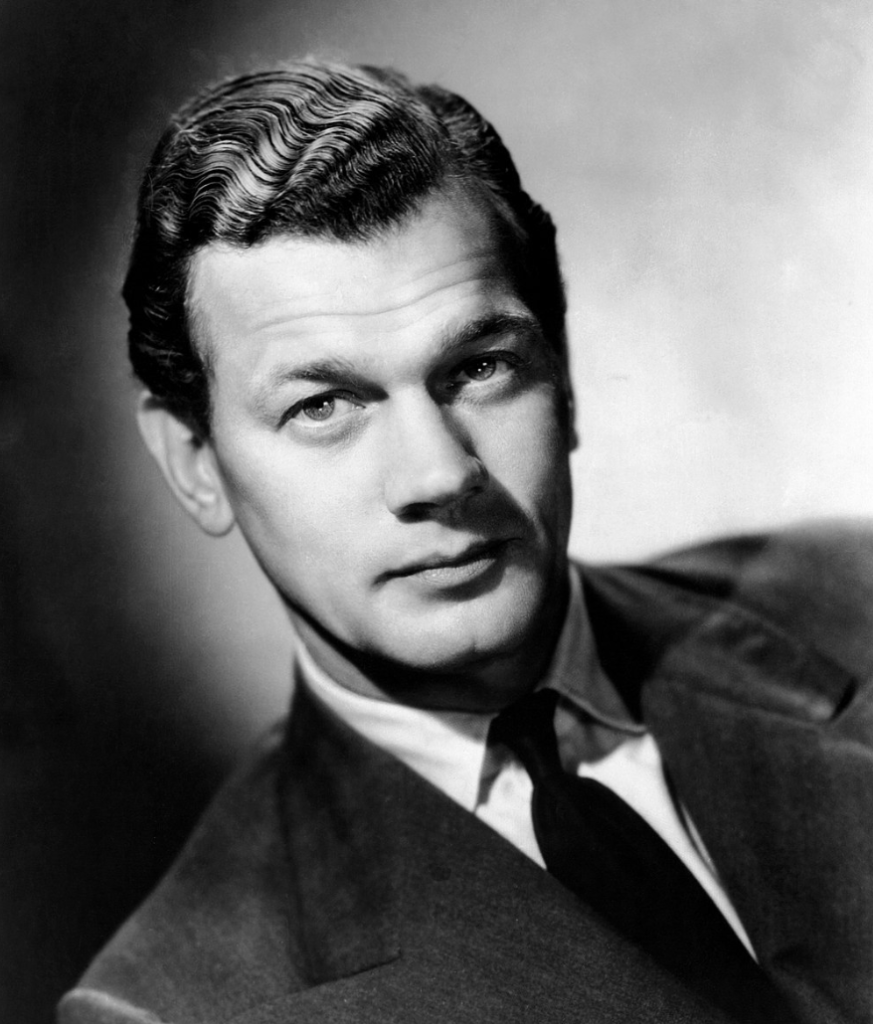
I don’t honestly know if I should feel sorry for Joseph Cotten or envy him. He had a long and storied career in theatre and film, appearing in several movies that are the mainstay of any respectable list of greatest films of all time. How could you pity any actor whose CV includes The Third Man, The Magnificent Ambersons and of course the big gorilla in the room, Kane?
At the same time, when you think of those movies Cotten’s name isn’t exactly the first one that comes to mind, is it? Of course not.
It certainly doesn’t appear that Cotten resented the fact that Orson Welles was essentially the star around which Cotten’s career orbited, as the two men maintained a close and warm friendship right up until Welles’ death in 1985. And it’s not like he was completely overlooked, either. In fact, it’s so common to say that Joseph Cotten was one of the most underrated stars of Hollywood’s Golden Age that he probably no longer even qualifies as underrated. But screw it, it’s my blog, and if I want to turn it into a Joseph Cotten appreciation corner who of you will stop me? That’s what I thought. We’ve Gotten Cotten Fever up in here!
Oh, fun fact. His hair was the model for Norman Osborn in Spider-Man. Orson Welles can’t say that, can he?
I keep doing this, y’know. This is like when I reviewed the Universal Dracula and Frankenstein, and just assumed that because they were both horror movies made in the thirties by the same studio they must be roughly equivalent in quality.
Not so, dear reader. Not so.
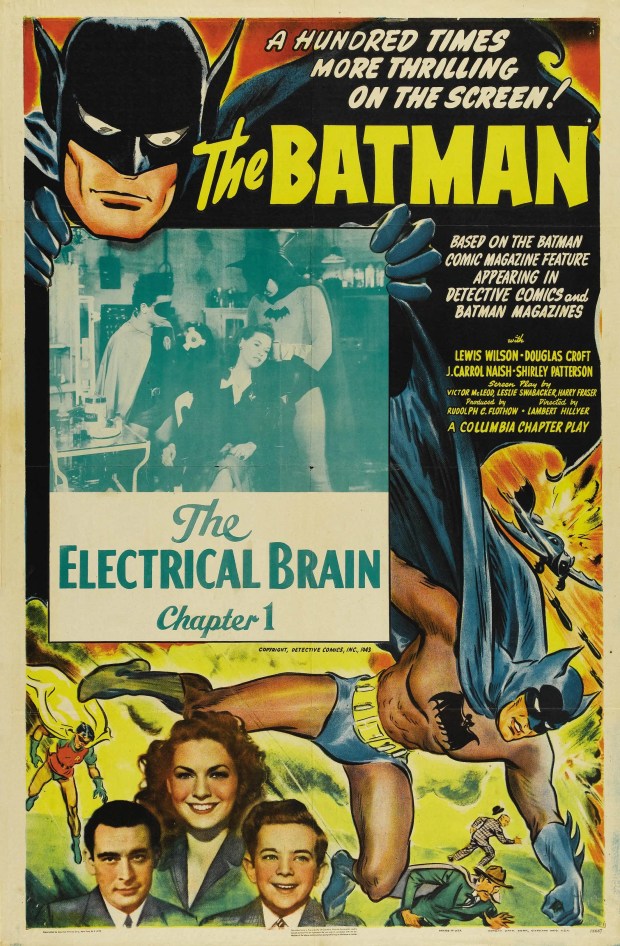
Now, The Batman, the first big screen outing of the caped crusader, was not a good film. Even looking past its use of yellowface and a stance on the internment of Japanese Americans that could charitably be called “a bit unwoke”, it was very much a movie serial of its time: cheap, poorly paced and of interest to the modern viewer mostly as a curiosity. But hot damn, compared to its sequel it is a masterpiece.
Take it from me, the gap in quality between The Batman (1943) and Batman and Robin (1949) is on par with that between The Batman (2022) and Batman and Robin (1997).
So much so, that I genuinely needed to resort to watching the Rifftrax version to even make it through the damn thing.
Hello everyone, and welcome to a new series here on Unshaved Mouse where I review every Batman movie except for the ones thatI’vealreadyreviewed. Well, most of them. I mean, some of them. Look, the character’s been featured in over eighty films at this point and I have a life, allegedly. But let’s kick this off with a thematically appropriate question. Riddle me this! What is the first superhero movie?
Well, not to get all Bill Clinton on ya, but that really depends on your definition of “movie”, “superhero”, “first” and “the”. You can argue, and many do, that the superhero genre has always been with us. That Superman and Batman are just the latest iterations of characters like Enkidu, Herakles, Thor and Cúchulainn. At the opposite end of that maximalist take is the concept that the first superhero was Superman, because he was the first to embody three fundamental elements; a secret identity, superhuman powers and a comic book origin. And between these two poles there are characters that are kinda liminal, sort of superheroes and sort of not. Characters like Zorro and The Shadow. Pulp heroes? Superheroes? It’s not entirely clear. I know one guy who claimed that the first true superhero was Baroness Orczy’s 1905 creation the Scarlet Pimpernel. And since that guy was frickin’ Stan Lee. Yup. Good enough for Mouse.
If so, that would make the now-lost 1917 silent film The Scarlet Pimpernel the first superhero movie.
Well, clearly all the pieces are in place.
So, (if you’re willing to stretch your definitions), the superhero movie genre is over a century old, and even pre-dates superhero comics. And yet, if you ask the average person what the first superhero movie is, what do you think they’ll say? 1978’s Superman? The 1966 Batman? Why has around half of the genre’s history been essentially memory holed?
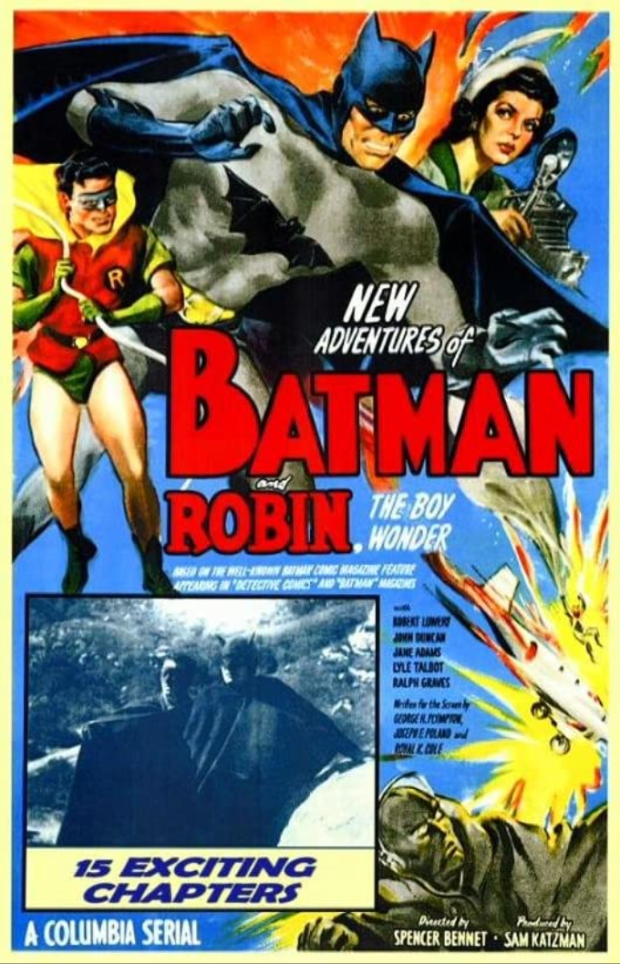
Well, part of the problem is that most superhero cinema prior to the 1950s came in the form of serials. Serials were essentially the precursors to TV shows. A cinema would screen a new episode every week. Each episode was typically between 10 and 30 minutes long, low-budget and would end with a cliff-hanger to get you back in next week. In the forties, many famous superheroes were adapted to the form, including Captain Marvel, Captain America, Superman and, of course, Batman.
The second reason why this era of superhero cinema is so obscure is that they were all mostly terrible.
Okay, let me walk that back a little. They are products of their time. Because of the nature of the format, serial plots tends to cycle in place for around ten episodes before abruptly sprinting to the climax. This makes them, as you might imagine, not exactly bingeable.
And yet, I feel like Colombia’s 1943 picture The Batman should have a bigger pop culture presence. It’s the first Batman film, after all. And it was influential, in its way. It created several hugely important parts of Batman’s mythos. And the sixties series was arguably more an adaptation of this serial than the actual comic it claimed to be based on. And yet, if fans even know about it it’s usually “that weird old Batman movie that’s super racist”. And you know what? That’s unfair.
It’s not just racist. It’s also very boring.
And look, I’m just going to say this up front. I’m not doing my usual scene by scene analysis on this one. Why?
BECAUSE THIS BEAST IS THREE AND A HALF GODDAMN HOURS LONG
I find it terrifying to consider that, ten or even five years ago, I would have had absolutely no hesitation in writing this post. I mean, of course if I’m doing a retrospective on WW2 animation shorts I’d look at Nazi animation. Why wouldn’t I? The Nazis were, after all, kinda involved in the Second World War, right?
But that would have been in a simpler time when it seemed obvious that, whatever else we might disagree on, we were all more or less on the same “Nazis are bad” page (it’s a good page, nice font, excellent paper quality, highly recommended). But then…
Well, it’s been a year. That it has.
So yes, I did honestly consider scrapping this portion of the series but ultimately I decided against it. One of the goals of the Mouse Goes to War series is to inform and I’ve always believed that knowledge is not dangerous, only ignorance. And today’s short is a fascinating demonstration as to how fascist themes and messages can be worked into seemingly benign texts.
Y’know.
Just in case that becomes a useful skill at some point in the future.
Since starting this blog I’ve reviewed just north of 150 animated films. I’ve been an avid fan of animation from literally before I could talk. I have watched thousands upon thousands of hours of animation in my lifetime.
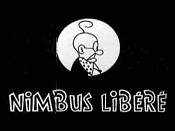
Nimbus Libéré (“Nimbus Released”) is the worst cartoon I’ve ever seen and it’s not even close. If Foodfight!was a perfect 0, Nimbus Libéré is a minus googol. In every technical area, animation, sound, writing, it’s abysmal. In style, it is repellent. In intent, it is pure evil.
English language sources on the cartoon’s origins are thin on the ground and to be honest, I can’t even say for certain whether it was first screened in 1943 or 1944 (going by the subject matter, I’d guess early to mid ’44). Although credited to “Cal”, it was the work of Raymond Jeannin, a young French animator in his twenties whose two surviving works are Libéré and La Nuit Enchanté(“The Enchanted Night”).
La Nuit Enchanté is a fairly terrible mish-mash of awful animation and swiped character designs (Jeannin’s moderate talent in aping other people’s designs were probably what got him roped into doing Nimbus). But it’s not fascist. I mean, there are some deeply uncomfortable racist stereotypes but, if I’m honest, nothing noticeably worse than what Warners was doing at the time and we don’t go around calling Tex Avery and Chuck Jones Nazis.
Momotarō the Peach Boy is a popular Japanese folk character who’s been round since the Edo period. Story goes, childless couple see a peach floating down the river, they open it up and inside is a baby who’s been gifted to them by Heaven. The boy grows older, goes on a quest, meets a monkey, dog and pheasant and they all team up to kick the asses of some local demons. It’s a really cool little fable, equal parts Moses, Superman, Wizard of Oz, you can definitely see why it’s remained so popular down through the centuries. And then, World War 2 had to come along and ruin everything.
Figuratively and literally.
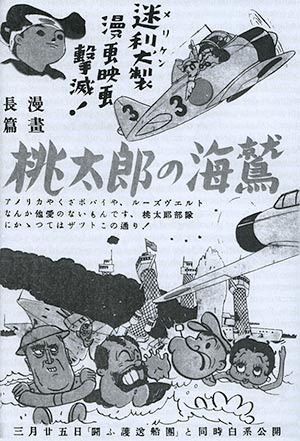
American cartoon characters like Mickey Mouse and Popeye were hugely popular in Japan in the years leading up to the war, so the Imperial Regime wanted their own cartoon mascot. Momotarō was an obvious choice what with his cute, boyish appearance and cast of animal sidekicks. This led to series of films starring the character directed by Mitsuyo Seo who would go on to be one of the guiding lights of the animé industry after the war. The first of these films was the short Momotarō no Umiwashi (“Momotarō’s Sea Eagles.”) I say “short”, but at 38 minutes that’s really taking the piss. Oh well, at least they didn’t stick it in front of a Pixar movie and make everyone watch it all the way through.
Country of Origin: Union of Soviet Socialist Republics
First Screened: 1941 (Exact date unclear)
All of the shorts we’ve looked at in this series thus far have been propaganda to a greater or lesser extent. But they weren’t just propaganda. American audiences liked their propaganda leavened with comedy or drama or catchy tunes about farting in Hitler’s face. The Russians though? They took their propaganda straight while growling at the bartender to leave the bottle.
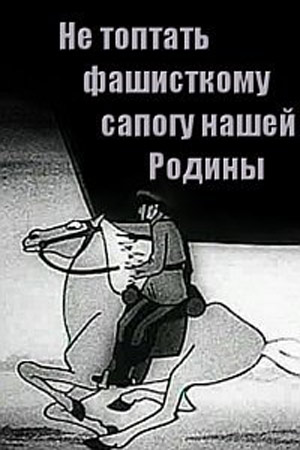
The blunt, hammer-blow-to-the-noggin nature of Soviet propaganda is right there in the name of today’s short Fascist Jackboots Shall Not Trample Our Motherland.
“Good title.”
So a little background. Jackboots is one the earliest productions of Soyuzmultfilm, the pre-eminent home of Russian animation and screen puppeteering. The studio is still going to this day but its heyday was during the Soviet era where they produced beautiful and beloved animated classics like the Winnie-the Pooh trilogy and Hedgehog in the Fog.
What’s the Russian for “smurges”?
Now keep in mind, I don’t read Russian, so all my information is coming second hand from places like Wikipedia which claims, for instance, that after the fall of the Soviet Union Soyuzmultfilm’s facilities were sold to the Russian Orthodox Church and then promptly burned to the ground by Cossacks who believed that their puppets were animated with the blood of Christian children. And, while anything on the internet originating from Russia should normally be treated as purest truth from the beardy lips of God Himself, I find that a bit hard to swallow.
I mean c’mon, the blood of Christian children hasn’t been used to animate puppets since the late forties.
Anyway, that was all in the future. Although originally based in Moscow, Soyuzmultfilm was evacuated to Samarkand when the Germans invaded and were put to work creating propaganda for the war effort. And one of those films was Fascist Jackboots Shall Not Trample Our Motherland.
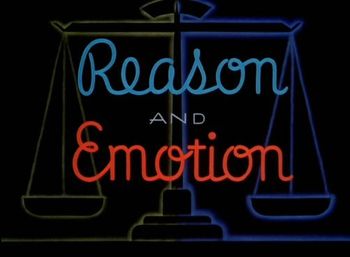
After the ugliness and race-baiting of theDucktators, what say we finish our look at American propaganda shorts with something with a little bit of class, by God! Reason and Emotion is a personal favourite of mine, not just because it’s a gorgeous cartoon (although it is) but because it’s that rarest of things, a piece of propaganda that actually appeals to your better nature. Propaganda shorts of this era came in many flavours. Some just plonked existing characters into war-specific settings with little commentary and had them do their thing. Some mocked and belittled the Axis powers to boost morale. And some were designed with an educational thrust to inform the public about a specific topic. In fact, even after the war had ended Disney continued making educational shorts on all kinds of subjects.
Oh yes. This is a real goddamn thing.
Reason and Emotion is, ironically enough, a propaganda short warning of the dangers of propaganda. It effectively and engagingly illustrates how propaganda works on the mind and how demagogues use emotion to suppress reason. For this reason, I almost hesitate to call it propaganda. “Anti-propaganda” might be a better term. The short was released in 1943 to great acclaim and was even nominated for an Academy Award, although it lost to the Tom and Jerry short Yankee Doodle Mouse, the first and last time the Academy ever got something wrong.
I hate to say “They Wuz Robbed” but they totally wuz.
Hey guys, sorry for the missed update. Still up to my furry little armpits in other writing at the moment so I’m afraid the Snow White review is gonna have to be pushed back until next Thursday. By recompense, here is the next of the WW2 propaganda short reviews. Enjoy!
***
Studio: Warner Bros
Country of Origin: United States
First Screened: August 1, 1942
As I mentioned in my last series of short reviews, you can break down the history of the Looney Tunes/Merrie Melodies shorts into four eras roughly corresponding to the nineteen thirties, forties, fifties and sixties. Call them the Poor Man’s Disney, Wiseass Disney, Apex and Nadir eras, respectively. WW2 broke out in the middle of the Wiseass Disney era, where the studio had successfully reinvented itself as the sarcastic, irreverent joker to those squares in Burbank with their high falutin’ ideals of animation being art. While Disney were getting Deems Taylor to introduce abstract animation to the strains of Bach, Warner Bros were slouched in the corner smokin’ ceegars and yellin’ “Ah, yer muddah wears lederhosen!”. The Warner Bros shorts of this era are acclaimed by many fans as the greatest of the series but, with respect, those fans are liars and fools and once grown, their children shall change their names out of shame.
“Mouse, what did we agree?”
“Sigh. No telling people that their children will change their names out of shame just because they disagree with me on the respective merits of different eras of animated shorts in the Warner Bros filmography.”
“You lasted ONE DAY.”
Okay, that’s harsh. There are many fantastic cartoons from this era but, honestly, the shorts from the fifties (including but not limited to What’s Opera Doc, One Froggy Evening and the Hunter Trilogy) leave them in the dirt.
The shorts of the forties had a lot going for them, namely some of the finest animators, directors and voice talent to ever work in the medium, but compared to the later fifties shorts they’re sorely lacking in one thing.
Class.
To be blunt, there’s a nastiness to a lot of the Warner Bros shorts of this era, and not just because of the racism (although, jeez louise, it’s like they thought there was an Olympics for racism and they had their heart set on winning gold for their country). Propaganda is dirty business, but some cartoon studios came out a lot cleaner than others, if you catch my drift.
Of all the major American cartoon studios, Warners seemed to succumb to their worst instincts the easiest. Disney, Fleischer et al certainly produced cartoons in this era that make for uncomfortable viewing but Warner’s took it to another level. For a good example, let’s take a look at the Ducktators.




 unshavedmouse